
173 Results for "

Target ability

" in MedChemExpress (MCE) Product Catalog:
Products (173)

173 Results for "Target ability" in MCE Product Catalog:

Cat. No.: HY-161647
Antitumor agent-156 (Compound 20) causes DNA damage and mitochondrial dysfunction, promotes reactive oxygen species generation, activates endoplasmic reticulum stress, and induce apoptosis, autophagy and ferroptosis. Antitumor agent-156 shows superior antitumor activity against cancer cells including Cisplatin (HY-17394) resistance cells. Antitumor agent-156 displayS good liver-targeting ability .
loading...
    loading...
Cat. No.: HY-171317
CAS No.: 1616370-52-5
Target:  

Bacterial

Research Areas:  

Infection Neurological Disease

SMARt751 targets the transcriptional regulatory factor VirS, inhibits its DNA binding ability, upregulates the mymA operon expression, thereby activating Ethionamide (HY-B0276), enhancing the antimicrobial activity of Ethionamide. SMARt751 enhances the antibacterial activity of Ethionamide against M. tuberculosis, reverses the Ethionamide resistance. SMARt751 improves the antibacterial effect of Ethionamide and reduces its effective dose in mouse models .
loading...
    loading...
Cat. No.: HY-19916
CAS No.: 1263384-43-5
Synonyms: BAL-101553
Research Areas:  

Cancer

Lisavanbulin (BAL-101553) is the prodrug of the microtubule targeting agent Avanbulin (BAL 27862) (HY-106008). Lisavanbulin is a BBB-penetrant and orally active antitumor agent, especially in tumors that express high levels of end-binding protein 1. Lisavanbulin has ability to target tumor cell proliferation and affects the tumor microenvironment by reducing tumor microvasculature. Lisavanbulin is also a spindle assembly checkpoint activator. Lisavanbulin induces cell cycle arrest and subsequent death or aberrant chromosome segregation. Lisavanbulin can be studied in research for diffuse large B cell lymphoma (DLBCL) and glioblastoma .
loading...
    loading...
Cat. No.: HY-P10989
CAS No.: 241478-23-9
Target:  

Inhibitory Antibodies

Research Areas:  

Cancer

NG2 binding peptide is a short peptide that specifically recognizes NG2 proteoglycan and can be obtained by phage screening technology. NG2 binding peptide interacts with NG2 binding sites to achieve precise targeting of tumor angiogenesis in vitro and in vivo. NG2 binding peptide exhibits significant homing ability in wild-type tumor-bearing mice, but has no localization effect in NG2 knockout mice. Due to the tissue specificity of NG2 expression, NG2 binding peptide can be used in scenarios such as tumor targeted therapy, drug delivery, and molecular imaging diagnosis .
loading...
    loading...
Cat. No.: HY-P991440

Target:  

TNF Receptor

Research Areas:  

Inflammation/Immunology

AMG-966 is a human bispecific antibody (bsAb) targeting TNFSF15/TL1A & TNFα. AMG 966 restores the ability of the aglycosylated Fc domain to bind FcγRIa and FcγRIIa, leading to the formation of anti-drug antibodies (ADA). AMG 966 can be used in research on Crohn's disease and ulcerative colitis. Recommended isotype control: Human IgG1 kappa, Isotype Control (HY-P99001) .
loading...
    loading...
Cat. No.: HY-P992358

Target:  

ADAMTS

Research Areas:  

Cardiovascular Disease

GSK2394002 is an antibody inhibitor targeting ADAMTS-4 and ADAMTS-5, with cartilage-penetrating ability following systemic administration. GSK2394002 inhibits the release of aggrecan-derived neoepitopes and reduces cartilage degradation, exhibiting the potential to relieve pain, alleviate hyperalgesia and inhibit the progression of joint damage. GSK2394002 also induces potentially irreversible cardiovascular effects such as increased mean arterial pressure and myocardial ischemia in cynomolgus monkeys .
loading...
    loading...
Cat. No.: HY-W013386R
CAS No.: 91300-60-6
LY83583 (Standard) is the analytical standard of LY83583 (HY-W013386). This product is intended for research and analytical applications. LY83583 is inhibitor of soluble guanylate cyclase (sGC) with the ability to target the cGMP signaling pathway. LY83583 inhibits the kinase activity-related proliferation of tumor cells by inducing the Cdk inhibitor p21. LY83583 can be used for the study of cancers (colorectal cancer, breast cancer and melanoma) and cardiovascular disease .
loading...
    loading...
Cat. No.: HY-174445
CAS No.: 3107801-96-4
Research Areas:  

Cancer

C199 is a PROTAC degrader targeting PRMT4 (DC50 = 106 nM). C199 shows high selectivity for PRMT4 over other protein arginile methyltransferases. C199 exhibits strong cell degradation ability. C199 induces apoptosis in MM cell lines. C199 efficiently clears PRMT4 protein via the VHL-proteasome pathway. C199 has a relatively long half-life and shows strong anti-multiple myeloma (MM) tumor activity .
loading...
    loading...
Cat. No.: HY-181846
CAS No.: 1065567-62-5
Target:  

DNA/RNA Synthesis

Research Areas:  

Neurological Disease

nTRD22 is an RNA-binding allosteric modulator targeting TDP-43. nTRD22 binds to the N-terminal domain of TDP-43, thereby allosterically regulating the RNA-binding domain of TDP-43 and reducing its RNA-binding ability. nTRD22 decreases the TDP-43 protein level in primary motor neurons. nTRD22 alleviates motor dysfunction in amyotrophic lateral sclerosis models. nTRD22 is applicable to related research on amyotrophic lateral sclerosis .
loading...
    loading...
Cat. No.: HY-186233
Research Areas:  

Others

CS-1-174 is a biotin-modified probe derived from KCC-07 (HY-131031), with specific binding activity to enrich MBD2. CS-1-174 captures MBD2 in cell lysates via pull-down by binding streptavidin magnetic beads through its terminal biotin tag. CS-1-174 serves as a functional tool probe in the development of TRACER technology, and is used to verify the target binding ability of MBD2 in tumor cells .
loading...
    loading...
Cat. No.: HY-L063
282 compounds

Chemical probes are simply reagents with high potency, selectivity and cell-permeability which play important roles in both fundamental and applied biological research. In their most common application, chemical probes can establish the tractability of a specific target. They are used to interrogate the relationship between a target and its phenotype (biological tractability) as well as an ability to modulate that phenotype using a small molecule. Otherwise, chemical probes also have had a major impact in enabling and accelerating discoveries along the path to pioneer medicines. They have helped to improve the understanding of targets and pathways and have created opportunities for proprietary drug discovery efforts to an extent that would not have been possible otherwise.

MCE provides a unique collection of 282 chemical probes with high potency (at least 100 nM potency), selectivity (at least 10-fold selectivity against any other target) and cell-permeability (at least 10 μM potency). MCE Chemical probe library is a useful tool for target identification and mechanism research.

Cat. No.: HY-112624J
CAS No.: 9004-54-0
Synonyms: Dextran 4; Dextran D4; Dextran T4(MW 3200-4800)
Dextran 4,000 is a mucus rheology modifier. The dextran molecules in Dextran 4,000 can reduce the cross-link density of mucus through osmotic effects and hydrogen bond substitution, and reduce viscoelasticity and improve the mucociliary/cough clearance index by destroying the DNA-mucin network structure in mucus. Dextran 4,000 has the ability to improve the rheological properties and clearance ability of cystic fibrosis (CF) sputum, and can be used in the study of inhalation therapy or aerosol delivery of mucostatic respiratory diseases. The Dextran series of compounds are also natural polysaccharide drug carriers that can be connected to drugs through covalent bonding methods such as ester bonds, amide bonds or click chemistry, or self-assembled to form carriers such as nanoparticles and hydrogels. Dextran is biodegradable and biocompatible, and can achieve targeted delivery and controlled release of drugs. Dextran derivatives can prolong the half-life of drugs, increase local concentrations, and reduce the activity of immune clearance .
loading...
    loading...
Cat. No.: HY-159884
CAS No.: 328540-44-9
Target:  

Tim3 TNF Receptor IFNAR

Research Areas:  

Cancer

MG-T-19 is a potent small-molecule inhibitor targeting human TIM-3. MG-T-19 blocks the interactions between TIM-3 and its ligands such as phosphatidylserine, CEACAM1 and Galectin-9. MG-T-19 promotes the secretion of TNF-α and IFN-γ by peripheral blood mononuclear cells, and significantly enhances their ability to inhibit cancer cell proliferation. MG-T-19 can be used in studies related to acute myeloid leukemia .
loading...
    loading...
Cat. No.: HY-168710
CAS No.: 3050836-94-4
TLR4/NF-κB-IN-1 (Compound 7x) is an orally available inhibitor that specifically targets the TLR4/NF-κB signaling pathway, offering anti-inflammatory effects and the ability to cross the blood-brain barrier. TLR4/NF-κB-IN-1 can reduce acute neuroinflammation in mice caused by LPS (HY-D1056) and downregulate the expression of TLR4, P-NF-κB and P-IκB-α proteins .
loading...
    loading...
Cat. No.: HY-44809
CAS No.: 1303512-02-8
Izilendustat is a potent prolyl hydroxylase inhibitor. Izilendustat competitively inhibits HIFPH2 activity, blocks HIF-1α degradation, stabilizes HIF-1α and HIF-2α proteins, and upregulates downstream target gene expression. Izilendustat can reduce intestinal inflammation and damage, enhance the ability of phagocytes to clear pathogens, and improve ischemia-related pathological phenotypes. Izilendustat can be used for the research of inflammatory bowel disease, ischemic vascular disease and anemia .
loading...
    loading...
Cat. No.: HY-44809A
CAS No.: 1303513-80-5
Izilendustat hydrochloride is a potent prolyl hydroxylase inhibitor. Izilendustat hydrochloride competitively inhibits HIFPH2 activity, blocks HIF-1α degradation, stabilizes HIF-1α and HIF-2α proteins, and upregulates downstream target gene expression. Izilendustat hydrochloride can reduce intestinal inflammation and damage, enhance the ability of phagocytes to clear pathogens, and improve ischemia-related pathological phenotypes. Izilendustat hydrochloride can be used for the research of inflammatory bowel disease, ischemic vascular disease and anemia .
loading...
    loading...
Cat. No.: HY-159771
CAS No.: 3095069-75-0
Target:  

FAP

Research Areas:  

Cancer

FAP6-19 is a fibroblast activation protein (FAP) targeting radioligand with a Kd of 18.2 nM. FAP6-19 selectively delivers therapeutic radioactive nuclides (such as 177Lu) to the tumor site by targeting the overexpressed FAP protein in the tumor microenvironment, achieving precise killing of cancer cells while minimizing radiation damage to healthy tissues. FAP6-19 exhibits extremely high total cellular uptake and good intracellular retention ability in HT1080 cells. After being labeled with 111In, FAP6-19 produced extremely high tumor/kidney and tumor/liver dose ratios in the mouse model with 4T1 tumors. FAP6-19 can be used in the research of solid tumors expressing FAP.
loading...
    loading...
Cat. No.: HY-100433R
CAS No.: 1401089-31-3
Target:  

PDI Reference Standards

Research Areas:  

Cancer

PACMA 31 (Standard) is the analytical standard of PACMA 31 (HY-100433). This product is intended for research and analytical applications. PACMA 31 is an irreversible, orally active protein disulfide isomerase (PDI) inhibitor with an IC50 of 10 μM. PACMA 31 forms a covalent bond with the active site cysteines of PDI. PACMA 31 shows tumor targeting ability and significantly suppresses ovarian tumor growth without causing toxicity to normal tissues . PACMA 31 is a click chemistry reagent, it contains an Alkyne group and can undergo copper-catalyzed azide-alkyne cycloaddition (CuAAc) with molecules containing Azide groups.
loading...
    loading...
Cat. No.: HY-106991
CAS No.: 878189-87-8
Synonyms: S-303
Research Areas:  

Infection

Amustaline (S-303) is a compound used for inactivating pathogens in blood components and belongs to the category of nucleic acid-targeted chemical decontaminants. Amustaline has the ability to inactivate viruses and is effective against mosquito-borne viruses such as Chikungunya virus (CHIKV), Dengue virus (DENV), and Zika virus (ZIKV). When combined with glutathione (Glutathione, GSH), which acts as a neutralizer to counteract adverse reactions, Amustaline ensures the stability of red blood cell membranes. Amustaline is mainly used for inactivating pathogens in red blood cell concentrates (RBCC) to reduce the risk of transfusion-transmitted infections (TTI) .
loading...
    loading...
Cat. No.: HY-108036A
CAS No.: 868156-46-1
Purity:  ≥98.0%
Synonyms: (S)-Hydroxypropyl tetrahydropyrantriol
Research Areas:  

Metabolic Disease

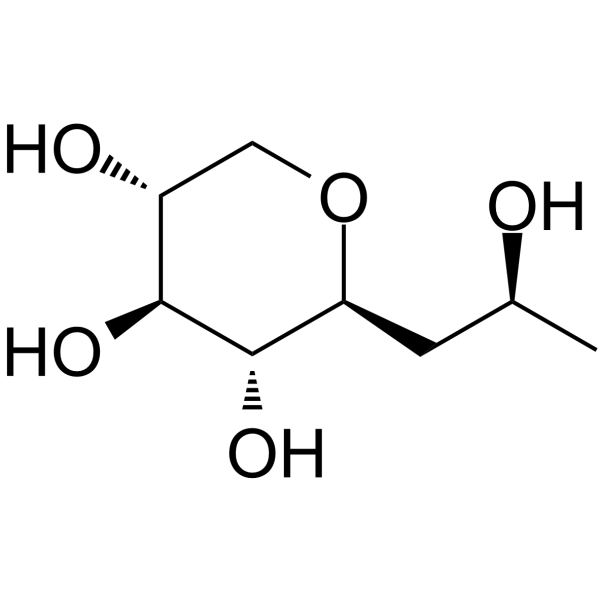
(S)-Pro-xylane ((S)-Hydroxypropyl tetrahydropyrantriol) is a bioactive C-glycoside that targets the biosynthesis pathway of glycosaminoglycans/mucopolysaccharides (GAGs) in the skin matrix and can be absorbed transdermally. (S)-Pro-xylane stimulates the biosynthesis of GAGs in fibroblasts, enhances the structural stability of the skin extracellular matrix, improves skin elasticity and moisturizing ability, and delays wrinkle formation. (S)-Pro-xylane can effectively promote the synthesis of collagen fibers and hyaluronic acid in the dermis. (S)-Pro-xylane is used in the field of anti-aging cosmetics to improve skin hydration and elasticity. (S)-Pro-xylane is eco-friendly and biodegradable .
loading...
    loading...

