1618 Results for "

migration

" in MedChemExpress (MCE) Product Catalog:
Products (1618)

1618 Results for "migration" in MCE Product Catalog:

Cat. No.: HY-135564
CAS No.: 332131-32-5
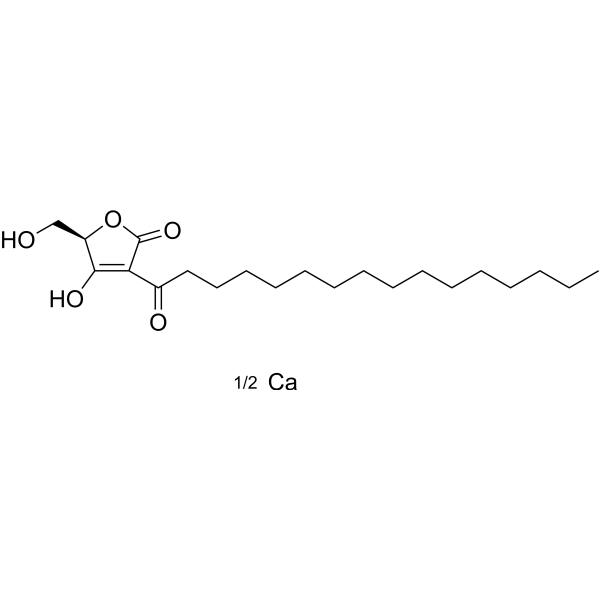
RK-682 hemicalcium is the hemicalcium salt form of RK-682 (HY-135564A). RK-682 hemicalcium is the inhibitor for protein tyrosine phosphatase (PTPase), heparanase, phospholipase A2 and HIV-1 protease. RK-682 hemicalcium inhibits the dephosphorylation of CD45 (IC50 is 54 μM) and VHR (IC50 is 2.0 μM), and thereby inhibits the ERK signaling pathway. RK-682 hemicalcium inhibits the cell viability of cancer cell MGH-U3, T24 and UROtsa with IC50s of 78.2, 43.2 and 145 nM, respectively, arrests the cell cycle at G1/S phase, inhibits the cell migration and autophagy in MGH-U3 and T24 [2] .
loading...
    loading...
Cat. No.: HY-147913
CAS No.: 2457245-94-0
Target:  

PI3K Akt mTOR Apoptosis

Research Areas:  

Cancer

PI3K/Akt/mTOR-IN-3 (compound 3d) is a potent PI3K/AKT/mTOR inhibitor. PI3K/Akt/mTOR-IN-3 displays the inhibitory activity in MCF-7, HeLa and HepG2 cells, with IC50 values of 0.77, 1.23, and 4.57μM, respectively. PI3K/Akt/mTOR-IN-3 inhibits the migration of MCF-7 and HeLa cells at the concentration of 4 μM. PI3K/Akt/mTOR-IN-3 induces cell apoptosis and S phase arrest .
loading...
    loading...
Cat. No.: HY-158029
Target:  

PI3K Apoptosis

Research Areas:  

Cancer

PI3Kα-IN-21 (compound 8) is a PI3Kα inhibitor, and its selectivity for PI3Kα is 10.41/16.99/37.53 times higher than PI3Kβ/γ/δ respectively (IC50: 96.89/568.24/397.48 nM ). PI3Kα-IN-21 inhibits cancer cell activity, proliferation, and migration, and induces mitochondrial apoptosis through the PI3K/Akt/mTOR pathway. PI3Kα-IN-21 exhibits in vivo antitumor potency in a mouse model of non-small cell lung cancer .
loading...
    loading...
Cat. No.: HY-164530
CAS No.: 1970149-05-3
Target:  

Src VEGFR Raf p38 MAPK

Research Areas:  

Cancer

SKLB646 is an orally active multi-target kinase inhibitor. SKLB646 shows significant inhibitory effects on SRC and VEGFR2 with IC50 values ??of 0.002 μmol/L and 0.012 μmol/L, respectively. SKLB646 also shows significant inhibitory effects on B-Raf and C-Raf with IC50 values ??of 0.022 μmol/L and 0.019 μmol/L, respectively. SKLB646 inhibits the activation of the SRC signaling pathway and blocks the MAPK signaling pathway by inhibiting Raf kinase. In addition, SKLB646 can inhibit the proliferation, migration and invasion of human umbilical vein endothelial cells (HUVEC) to inhibit tumor-induced angiopoietic formation. SKLB646 shows significant anti-proliferative and anti-survival activities against triple-negative breast cancer (TNBC) cell lines .
loading...
    loading...
Cat. No.: HY-170924
Research Areas:  

Cancer

Tubulin polymerization-IN-76 (compound 20b) is a potent and orally active Tubulin polymerization inhibitor. Tubulin polymerization-IN-76 inhibits Tubulin polymerization with an IC50 of 2.505 μM by acting on the colchicine binding site, thereby disrupting intracellular Microtubule networks and interfering with cell mitosis. Tubulin polymerization-IN-76 demonstrates exceptional efficacy against MGC-803 and HGC-27 cells with IC50s of 1.61 and 1.82 nM, respectively. Tubulin polymerization-IN-76 effectively inhibits the colony formation and cell migration activities, and induces G2/M phase cycle arrest and Apoptosis in MGC-803 and HGC-27 cells.Tubulin polymerization-IN-76 shows a broad-spectrum antiproliferative activity .
loading...
    loading...
Cat. No.: HY-174425
CAS No.: 3077254-39-5
Target:  

Cytochrome P450

Research Areas:  

Cancer

CYP1B1-IN-9 is a highly selective and competitive CYP1B1 Inhibitor with IC50 values of 1.48 nM, > 100 μM, and > 80 μM for CYP1B1, CYP1A1, and CYP1A2, respectively. CYP1B1-IN-9 significantly inhibits the migration and invasion of A549/T cells. CYP1B1-IN-9 has the ability to resensitize Paclitaxel (HY-B0015)-resistant cells, and good metabolic stability and safety, and shows favorable pharmacokinetic parameters. CYP1B1-IN-9 can be used for the study of tumor-drug resistance .
loading...
    loading...
Cat. No.: HY-175207
CAS No.: 3109469-27-1
Target:  

Glycosidase

Research Areas:  

Cancer

CHI3L1-IN-3 is a CHI3L1 inhibitor. CHI3L1-IN-3 binds to CHI3L1 with Kds of 13.76 μM and 13.5 μM in MST and SPR assays, respectively. CHI3L1-IN-3 demonstrates extended plasma half-lives and microsomal stability, along with reduced intrinsic clearance. CHI3L1-IN-3 induces dose-dependent cytotoxicity, reduces spheroid mass and inhibits migration in a 3D multicellular glioblastoma (GBM) spheroid model. CHI3L1-IN-3 can be used for the study of GBM .
loading...
    loading...
Cat. No.: HY-175275
CAS No.: 488815-65-2
Synonyms: BEM
10-Butyl Ether Minocycline (BEM), a Minocycline (HY-17412A) derivative, is an MMP-8 and MMP-9 inhibitor with IC50s of 69.4 µM and 47.0 µM, respectively. 10-Butyl Ether Minocycline suppresses LPS (HY-D1056)-induced microglial activation. 10-Butyl Ether Minocycline inhibits VEGF-induced endothelial cell migration and L-Glutamine (HY-N0390)-induced ROS levels. 10-Butyl Ether Minocycline significantly reduces alcohol consumption in the Chronic Intermittent Ethanol (CIE) mouse model of alcohol dependence. 10-Butyl Ether Minocycline can be used for the study of neuroimmune-inflammatory diseases and Alcohol use disorder (AUD) .
loading...
    loading...
Cat. No.: HY-175320
Research Areas:  

Cancer

PROTAC c-Met degrader-5 is an orally active c-Met PROTAC degrader. PROTAC c-Met degrader-5 induces c-Met degradation via Cullin-CRBN, with a DC50 value of 0.32 nM, and inhibits the phosphorylation of c-Met and its downstream signaling molecule STAT3. PROTAC c-Met degrader-5 inhibits cancer cell proliferation, migration and invasion, induces apoptosis, alters cell cycle distribution, and suppresses the growth of EBC-1 xenograft tumors. PROTAC c-Met degrader-5 can be used to study MET-driven cancers as well as Tepotinib (HY-14721)-resistant cancers harboring c-Met D1228N and c-Met Y1230H mutations .
loading...
    loading...
Cat. No.: HY-175821
CAS No.: 892570-48-8
Research Areas:  

Cancer

PRMT1-IN-3 is a potent protein arginine methyltransferase 1 (PRMT1) inhibitor with an IC50 of 4.11 μM. PRMT1-IN-3 inhibits PRMT6 and PRMT8 with IC50s of 23.3 and 30.1 μM. PRMT1-IN-3 suppresses asymmetric dimethylarginine (ADMA) levels and histone H4R3me2a modification in triple-negative breast cancer (TNBC) cells. PRMT1-IN-3 induces cell cycle arrest, apoptosis, and inhibits migration and colony formation in MDA-MB-231 cells. PRMT1-IN-3 acts as chemotherapeutic sensitizers for Paclitaxel (HY-B0015). PRMT1-IN-3 can be used for the study of TNBC .
loading...
    loading...
Cat. No.: HY-178485
Research Areas:  

Cancer

SJY26 is a PI3K/HDAC dual-target inhibitor with IC50s of 0.59 nM (PI3Kα and PI3Kδ), 2.02 nM (PI3Kγ), 12.69 nM (PI3Kβ) and 114 nM (HDAC1). SJY26 exhibits potent broad-spectrum anti-proliferative activity, and is particularly sensitive to Jurkat and PC9R cells. SJY26 inhibited the migration of PC9R cells, arrested the cell cycle and induced cell apoptosis. SJY26 reduces AKT phosphorylation, and decreases histone H3 deacetylation (Ac-H3). SJY26 can be used for the studies of non-small cell lung cancer and leukemia .
loading...
    loading...
Cat. No.: HY-178989
CAS No.: 3054148-68-1
Research Areas:  

Cancer

PGK1-IN-2 (Compound 60) is a PGK1 inhibitor with an IC50 of 8.24 μM. PGK1-IN-2 demonstrates a significant ability to inhibit the proliferation of osteosarcoma cells. PGK1-IN-2 interferes with the glycolytic pathway of tumor cells by inhibiting PGK1. PGK1-IN-2 inhibits cell migration and invasion, and induces cell S phase and G2-M phase cycle arrest. PGK1-IN-2 may kill cells by inducing cuproptosis. PGK1-IN-2 shows a significant anti-tumor effect in the MNNG-HOS osteosarcoma xenograft mouse model. PGK1-IN-2 can be used for the study of osteosarcoma .
loading...
    loading...
Cat. No.: HY-179386
PARP1/EZH2-IN-1 is a selective PARP1 and EZH2 dual inhibitor. PARP1/EZH2-IN-1 has IC50s of 28 nM, 414 nM and 74 nM for PARP1, PARP2 and EZH2, respectively. PARP1/EZH2-IN-1 inhibits the proliferation and migration of TNBC cells (triple-negative breast Cancer cells). PARP1/EZH2-IN-1 induces PANoptosis (Apoptosis, Pyroptosis and Necroptosis), increases the level of reactive oxygen species (ROS), and activates related inflammatory pathways. PARP1/EZH2-IN-1 can be used in triple-negative breast cancer research .
loading...
    loading...
Cat. No.: HY-179388
CAS No.: 3123329-68-7
Research Areas:  

Cancer

PROTAC Sirt2 Degrader-2 is a highly efficient and selective PROTAC degrader targeting SIRT2. PROTAC Sirt2 Degrader-2 demonstrates the most potent anti-proliferative activity both in vitro and in vivo. PROTAC Sirt2 Degrader-2 leads to a marked increase in H4K16Ac levels. PROTAC Sirt2 Degrader-2 significantly suppresses clonogenic formation and migration, induces cell cycle arrest, and promotes apoptosis. PROTAC Sirt2 Degrader-2 inhibits the AKT/mTOR signaling pathway by indirectly degrading SIRT2 and blocking downstream protein phosphorylation, thereby disrupting the signaling cascade and suppressing tumor development. PROTAC Sirt2 Degrader-2 can be used for the study of ovarian cancer .
loading...
    loading...
Cat. No.: HY-180292
CAS No.: 2882998-56-1
Tubulin/VEGFR-2-IN-2 is an orally active tubulin and VEGFR-2 inhibitor with IC50s of 3.27 and 0.09 μM, respectively. Tubulin/VEGFR-2-IN-2 exerts the antitumor effects through multifaceted pathways, including enhancing reactive oxygen species (ROS) generation, disrupting mitochondrial membrane potential, inducing apoptosis, and arresting the cell cycle. Tubulin/VEGFR-2-IN-2 demonstrates anti-angiogenic properties by significantly impairing endothelial cell migration, invasion, and tube formation in vitro. Tubulin/VEGFR-2-IN-2 suppresses angiogenesis, tumor growth, and metastasis in vivo. Tubulin/VEGFR-2-IN-2 can be used for non-small lung cancer, breast cancer, gastric cancer and lymphoma .
loading...
    loading...
Cat. No.: HY-181076
Target:  

FOXM1 PI3K CDK Apoptosis

Research Areas:  

Cancer

FOXM1-IN-3 is a potent FOXM1 inhibitor. FOXM1-IN-3 downregulates FOXM1 expression at protein and mRNA levels, suppressing downstream effectors CCNB1 and CDC25. FOXM1-IN-3 induces G2/M cell cycle arrest and apoptosis in colorectal cancer cells. FOXM1-IN-3 inhibits colony formation and cell migration in colorectal cancer cells. FOXM1-IN-3 targets the cancer stem cell phenotype in colorectal cancer cells, reducing cancer stem cell marker expression. FOXM1-IN-3 reduces tumor growth in a zebrafish xenograft model. FOXM1-IN-3 can be used for the research of colorectal cancer .
loading...
    loading...
Cat. No.: HY-182365
EED-IN-4 is an orally active, EZH2-selective immunomodulator and EED-H3K27me3 inhibitor (EED, IC50=28.21 nM) with anti-inflammatory activity. In mouse models, EED-IN-4 preferentially and persistently accumulates in lymph nodes after oral administration. By reducing the H3K27me3 level of dendritic cells and inhibiting their migration, EED-IN-4 reduces the infiltration of immune cells into the central nervous system and effectively alleviates spinal cord inflammation. EED-IN-4 shows weak inhibitory activity against hERG channels and is non-mutagenic, with no obvious toxicity observed upon long-term oral administration. EED-IN-4 can be used for the research of multiple sclerosis .
loading...
    loading...
Cat. No.: HY-182902
Target:  

BMX Kinase Apoptosis

Research Areas:  

Cancer

IHMT-15137 is a BMX inhibitor with an IC50 of 26.97 nM. IHMT-15137 covalently binds to BMX Cys496 within the ATP-binding pocket, inhibits BMX phosphorylation at Tyr566, and disrupts the BMX-ERK1/2-Cyclin D1/CDK4/6-E2F1 signaling axis. IHMT-15137 reduces E2F1 protein stability via decreased Ser332/337 phosphorylation, increased ubiquitination, and ubiquitin-proteasome pathway degradation. IHMT-15137 induces cell cycle arrest, apoptosis, DNA damage, and suppresses cell migration and invasion. IHMT-15137 can be used for the research of small cell lung cancer .
loading...
    loading...
Cat. No.: HY-184965
CAS No.: 2020058-38-0
Target:  

Calcium Channel

Research Areas:  

Inflammation/Immunology

S-Y048 is an orally active OXE receptor-selective antagonist with picomolar-level IC50 values (0.02-30 nM) and pIC50 values of (10.47-10.81) against human receptors. S-Y048 selectively blocks the 5-oxo-ETE signaling pathway, inhibits actin polymerization, calcium mobilization, leukocyte migration, as well as allergen-induced leukocyte infiltration in skin and lung tissues, and reduces mucin-producing bronchial epithelial cells. S-Y048 undergoes benzyl, N-methyl and α-hydroxylation reactions to form metabolites in monkeys. S-Y048 can be used in research related to asthma, allergic asthma, allergic eosinophilic diseases, atopic dermatitis and allergic rhinitis .
loading...
    loading...
Cat. No.: HY-187184
Target:  

PD-1/PD-L1 Apoptosis

Research Areas:  

Cancer

PD-1/PD-L1-IN-67 is a PD-L1/PD-L1 interaction inhibitor with an IC50 of 55.11 nM. PD-1/PD-L1-IN-67 directly blocks the PD-1/PD-L1 interaction and downregulates PD-L1 expression at both mRNA and protein levels. PD-1/PD-L1-IN-67 acts synergistically with radiotherapy to inhibit cancer cell viability, clonogenic survival, migration and invasion, and induce apoptosis. PD-1/PD-L1-IN-67 can be used in the research of non-small cell lung cancer .
loading...
    loading...

