1568 Results for "

Kinase Selectivity

" in MedChemExpress (MCE) Product Catalog:
Products (1568)

1568 Results for "Kinase Selectivity" in MCE Product Catalog:

Cat. No.: HY-DY1120
Research Areas:  

Cancer

ZY-2 (solution) is a fluorescent probe targeting pyruvate kinase M2 (PKM2) with an excitation wavelength of 419 nm. ZY-2 (solution) significantly activates purified PKM2 protein. ZY-2 (solution) exhibits enhanced fluorescence emission in low-polarity or high-viscosity environments. ZY-2 (solution) enables highly sensitive and selective fluorescence imaging of PKM2 in live PKM2-positive cancer cells, with no significant side effects on cell viability within its effective concentration range. ZY-2 (solution) can be used for cervical cancer research .
Solvent and concentration: DMSO: 10 mM
loading...
    loading...
Cat. No.: HY-100754A
CAS No.: 2140301-97-7
Synonyms: PF-06651600 malonate
Research Areas:  

Inflammation/Immunology

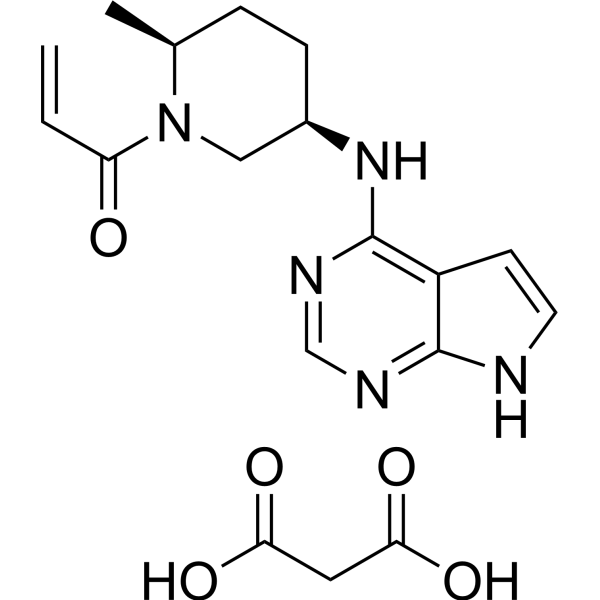
Ritlecitinib (PF-06651600) malonate is a highly selective, orally active, irreversible covalent JAK3 inhibitor (IC50=33 nM) without inhibitory activity towards JAK1, JAK2, and TYK2 (IC50 >10 μ M). Ritlecitinib malonate rapidly inactivates the JAK3 kinase, and blocks signaling and downstream STAT phosphorylation mediated by common gamma chain cytokines such as IL-2 and IL-15. Ritlecitinib malonate can inhibit Th1/Th17 cell differentiation and function, and effectively suppress preclinical animal models such as alopecia areata, adjuvant-induced arthritis (AIA), and experimental autoimmune encephalomyelitis (EAE) .
loading...
    loading...
Cat. No.: HY-108543R
CAS No.: 93718-83-3
Research Areas:  

Cancer

NSC 95397 (Standard) is the analytical standard of NSC 95397 (HY-108543). This product is intended for research and analytical applications. NSC 95397 is a potent, selective Cdc25 dual specificity phosphatase inhibitor (Ki=32 nM (Cdc25A), 96 nM (Cdc25B), 40 nM (Cdc25C); IC50=22.3 nM (human Cdc25A), 56.9 nM (human Cdc25C), 125 nM (Cdc25B)) . NSC 95397 inhibits mitogen-activated protein Kinase phosphatase-1 (MKP-1) and suppresses proliferation and induces apoptosis in colon cancer cells through MKP-1 and ERK1/2 pathway .
loading...
    loading...
Cat. No.: HY-11009R
CAS No.: 164658-13-3
Research Areas:  

Cancer

CGP60474 (Standard) is the analytical standard of CGP60474 (HY-11009). This product is intended for research and analytical applications. CGP60474, a highly potent anti-endotoxemic agent, is a potent cyclin-dependent Kinase (CDK) inhibitor (IC50 values are 26, 3, 4, 216, 10, 200 and 13 nM for CDK1/B, CDK2/E, CDK2/A, CDK4/D, CDK5/p25, CDK7/H and CDK9/T, respectively). CGP60474 is a selective and ATP-competitive PKC inhibitor .
loading...
    loading...
Cat. No.: HY-117068S
Synonyms: (R,E)-Bromoenol lactone-d7
(R)-Bromoenol lactone-d7 ((R,E)-Bromoenol lactone-d7) is the deuterated-labeled (R)-Bromoenol lactone (HY-117068). (R)-Bromoenol lactone ((R,E)-Bromoenol lactone) is an isomer of Bromoenol lactone (HY-107411). (R)-Bromoenol lactone acts as a selective inhibitor of microsomal calcium-independent phospholipase A2γ (iPLA2γ). (R)-Bromoenol lactone induces mild activation of p38 mitogen-activated protein kinase in prostate cancer cells, resulting in slight increases in the expressions of phosphorylated p53, total p53 and p21. (R)-Bromoenol lactone is applicable to prostate cancer-related research .
loading...
    loading...
Cat. No.: HY-145408
CAS No.: 2747919-19-1
Target:  

CDK

Research Areas:  

Cancer

CDK7/9-IN-1 is a cyclin-dependent kinases 7/9 (CDK7/9) inhibitor. CDK7/9-IN-1 selectively inhibits CDK7 over CDK9. CDK7/9-IN-1 inhibits CDK7 with IC50s of 0.0656 μM and 0.00574 μM without pre-incubation and after 3 hours pre-incubation, respectively. CDK7/9-IN-1 inhibits CDK9 with an IC50 of 2.14 μM after 3 hours pre-incubation. CDK7/9-IN-1 can be used for the research of cancer .
loading...
    loading...
Cat. No.: HY-15260C
CAS No.: 1169562-71-3
Synonyms: BMS-863233 hydrochloride
Research Areas:  

Infection Cancer

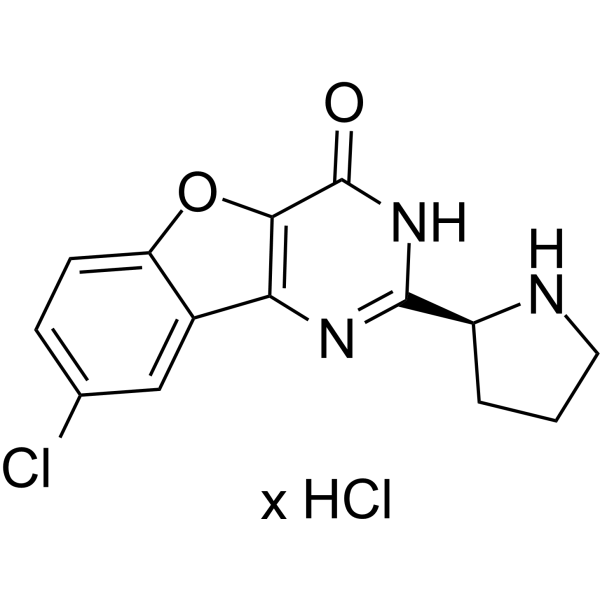
XL413 hydrochloride (BMS-863233 hydrochloride) is an orally active, ATP-competitive, selective CDC7 kinase inhibitor. XL413 hydrochloride reduces MCM2 phosphorylation levels, decreases DNA replication origin activation, and inhibits CD69 upregulation in stimulated lymphocytes. XL-413 possesses cell-dependent antiproliferative and pro-apoptotic activities. XL413 hydrochloride attenuates ATR inhibitor-induced excessive origin activation, altered replication fork speed, and antiproliferative effects in sensitive cancer cells. XL413 hydrochloride inhibits SARS-CoV-2 infection. XL413 hydrochloride can be used for research related to cancer and SARS-CoV-2 infection .
loading...
    loading...
Cat. No.: HY-159643
CAS No.: 2628486-22-4
NDI-101150 is an orally active, potent and selective hematopoietic progenitor cell kinase 1 (HPK1) inhibitor with an IC50 of 0.7 nM. NDI-101150 blocks HPK1-mediated negative regulation of immune receptor signaling, inhibits immunosuppression of T cell activation, enhances antigen-specific antibody production and augments B-cell activation. NDI-101150 inhibits tumor growth in syngeneic tumor models, establishes durable antitumor immune memory, and synergizes with anti-PD1 to enhance exhausted T cell activity and drive tumor regressions. NDI-101150 can be used for the research of cancer, such as breast cancer and colon cancer .
loading...
    loading...
Cat. No.: HY-169072
CAS No.: 3103327-20-1
PROTAC MLKL Degrader-2 is an orally active and highly selective mixed lineage kinase domain-like pseudokinase (MLKL) PROTAC degrader with a DC50 of 0.012 μM. PROTAC MLKL Degrader-2 recruits the CRBN E3 ubiquitin ligase to form a ternary complex, leading to ubiquitination of MLKL and its degradation via a proteasome-dependent pathway. PROTAC MLKL Degrader-2 inhibits necroptosis, reduces ROS production, restores mitochondrial function, and ameliorates lysosomal dysfunction induced by necroptotic stimuli. PROTAC MLKL Degrader-2 degrades MLKL in xenograft mouse models. PROTAC MLKL Degrader-2 can be used in cancer-related research .
loading...
    loading...
Cat. No.: HY-179381
CAS No.: 3053546-73-6
Target:  

FGFR

Research Areas:  

Cancer

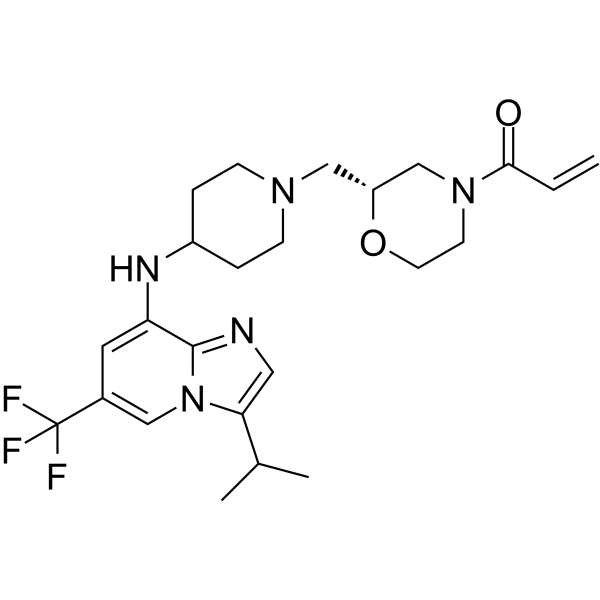
FGFR4-IN-24 is a selective irreversible covalent FGFR4 inhibitor (IC50 = 1.2 nM). FGFR4-IN-24 shows much weaker activity against the other three FGFR family kinases (FGFR1-3). FGFR4-IN-24 inhibits the FGF19/FGFR4 signaling pathway, effectively suppressing the proliferation of the HuH-7 HCC cell line (GI50 = 17 nM). FGFR4-IN-24 exhibits significant antitumor activity in a HuH-7 mouse xenograft model. FGFR4-IN-24 can be used for the research of hepatocellular carcinoma .
loading...
    loading...
Cat. No.: HY-179430
Target:  

Mps1

Research Areas:  

Cancer

TTK-IN-5 is an orally active covalent threonine tyrosine kinase (TTK) inhibitor with selectivity (IC50 = 8.918 nM). TTK-IN-5 exhibits anti-proliferative potencies against MDA-MB-231, A2780, HCT116, HCC1569 and MKN1 cell lines (IC50 values of 0.113 μM, 0.476 μM, 3.136 μM, 3.649 μM, and 1.856 μM, respectively). TTK-IN-5 potently suppresses tumor growth without notable toxicity in A2780 and MDA-MB-231 xenograft mouse models. TTK-IN-5 can be used for the research of cancer such as breast cancer and ovarian cancer .
loading...
    loading...
Cat. No.: HY-180197
PICK1 PDZ-IN-1 (Compound 6b) is a selective and brain-penetrant protein interacting with C kinase 1 (PICK1) PDZ domain inhibitor with a Ki of 27.73 μM. PICK1 PDZ-IN-1 can competitively inhibit the interaction between PICK1 and the GluA2 subunit of AMPA receptors. PICK1 PDZ-IN-1 can increase the survival rate of HT22 cells and primary cortical neuron cells induced by glutamate and inhibit ROS production. PICK1 PDZ-IN-1 exhibits neuroprotective effect and reduces the area of cerebral infarction. PICK1 PDZ-IN-1 can be used for the research of ischemic stroke .
loading...
    loading...
Cat. No.: HY-180523
PKM2-IN-13 is a selective PKM2 inhibitor inhibiting PKM2 with an IC50 value of 55.13 μM. PKM2-IN-13 exhibits broad-spectrum anticancer activity with low toxicity to normal cells. PKM2-IN-13 induces apoptosis by elevated ROS levels and activation of caspases 3/7, and interacts with and inhibits the glycolytic activity of Pyruvate Kinase M2 in virto. PKM2-IN-13 demonstrates a favorable safety profile with no significant adverse effects in vivo. PKM2-IN-13 can be used for oral squamous cell carcinoma (OSCC), colon carcinoma, breast cancer and melanoma research .
loading...
    loading...
Cat. No.: HY-180583
CAS No.: 3061801-11-1
GRK5-IN-5 (Compound 4a) is a selective G protein-coupled receptor (GPCR) kinase 5 (GRK5) inhibitor with an IC50 of 0.03 μM. GRK5-IN-5 shows IC50 values of 2.2 and 0.036 μM for GRK2 and GRK6. GRK5-IN-5 has potent anti-myocardial hypertrophy activity and also inhibits the proliferation of non-myocardial cells. GRK5-IN-5 can inhibit the abnormal upregulation of hypertrophy marker genes Nppa and Nppb, thus blocking pathological myocardial remodeling. GRK5-IN-5 can be used for the research of cardiac hypertrophy .
loading...
    loading...
Cat. No.: HY-184274
Target:  

Apoptosis EGFR Src

Research Areas:  

Cancer

EGFR/c-SRC-IN-1 is a blood-brain barrier-impermeable, ATP-competitive dual-target inhibitor of EGFR/c-SRC, with an IC50 of 0.05 μM against EGFR and an IC50 of 0.07 μM against c-SRC. EGFR/c-SRC-IN-1 shows selectivity toward ABL-2 and VEGFR-2 kinases. EGFR/c-SRC-IN-1 triggers endogenous apoptosis by upregulating p53 and Bax, downregulating Bcl-2, and altering the Bax/Bcl-2 ratio. EGFR/c-SRC-IN-1 can be used in the research of non-small cell lung cancer, hepatocellular carcinoma, and triple-negative breast cancer .
loading...
    loading...
Cat. No.: HY-187506
ZSL-M028 is an orally active and selective Polo-like kinase 4 (PLK4) inhibitor with an IC50 value of 1.1 nM. ZSL-M028 exhibits anti-tumor activity against TRIM37-amplified neuroblastoma, downregulates SAS6, upregulates FBXW5, induces G2-phase cell cycle arrest and apoptosis, activates the p53 signaling pathway, and inhibits tumor cell colony formation and migration. ZSL-M028 shows significant tumor growth inhibitory activity in the IMR-32 neuroblastoma xenograft model. ZSL-M028 can be used in neuroblastoma-related research .
loading...
    loading...
Cat. No.: HY-P1752A
Research Areas:  

Metabolic Disease

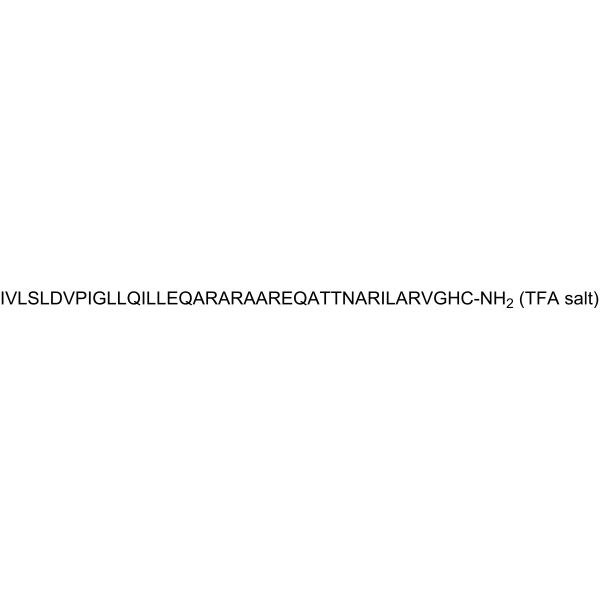
Urocortin II, human TFA is a selective endogenous peptide agonist of type-2 corticotropin-releasing factor (CRF2) receptor. Urocortin II, human TFA has an effect of promoting satiet and neuroprotective effect. Urocortin II, human TFA also has bactericidal, antiparasitic and pro-inflammation activity. Urocortin II, human TFA can activate NF-κB pathway and ERK1/2 MAP kinase. Urocortin II, human TFA can reduce pulmonary arterial hypertension and shows cardiac protection effect. Urocortin II, human TFA can be used for the researches of infection, inflammation, metabolic, neurological and cardiovascular disease .
loading...
    loading...
Cat. No.: HY-W010451
CAS No.: 533-73-3
Synonyms: Hydroxyhydroquinone
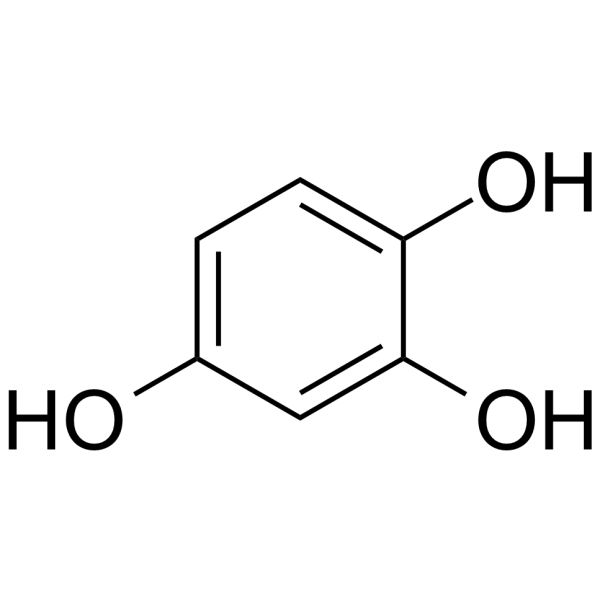
1,2,4-Trihydroxybenzene (Hydroxyhydroquinone) is an ER stress inducer that targets proteins such as PKR-like ER kinase PERK to induce cytotoxicity. 1,2,4-Trihydroxybenzene selectively activates eIF2α phosphorylation, activates the PERK-eIF2α signaling pathway and induces stress granule formation. 1,2,4-Trihydroxybenzene subsequently exacerbates oxidative stress and causes DNA double-strand breaks, destroying organelles such as mitochondria and ER, and inducing cell death. 1,2,4-Trihydroxybenzene also has the potential to exhibit anti-tumor effect, increase blood pressure, and relieve spasm .
loading...
    loading...
Cat. No.: HY-184931
Research Areas:  

Cancer

PTPN22-IN-3 is a potent, selective, and orally active inhibitor of PTPN22 with an IC50 of 0.49 μM and a Ki of 0.28 μM. PTPN22-IN-3 exhibits over 14-fold selectivity against a broad panel of PTPs and shows no significant inhibition against SRC/CSK kinases or IDO1/Arginase metalloenzymes. PTPN22-IN-3 enhances TCR signaling, increases IL-2 expression and secretion, and promotes mouse splenic T cell proliferation. In immune-competent C57BL/6J mice, PTPN22-IN-3 suppresses MC38 syngeneic tumor growth and synergizes with Pembrolizumab (anti-PD-1) (HY-P9902A) therapy. PTPN22-IN-3 can be used for the study of colorectal cancer and other solid tumors responsive to T cell-mediated anti-tumor immunity .
loading...
    loading...
Cat. No.: HY-L941
4,236 compounds

Orthosteric sites are highly conserved, leading to poor subtype selectivity, off-target toxicity and drug resistance in traditional drugs. By contrast, allosteric sites show low conservation, high hydrophobicity, weak polarity, confined geometry and dynamic cryptic properties, granting modulators high selectivity, functional tunability and safety. Thus, allosteric therapy has become a major focus in drug discovery.

MCE curated nearly 1,000 clinical-stage allosteric modulators, analyzed PDB complex structures to identify key pharmacophores and privileged scaffolds, then designed and filtered compounds using rational “scaffold derivation + physicochemical screening” with strict property criteria. The resulting compounds show high rigidity and shape complementarity to shallow, dynamic, hydrophobic allosteric pockets.

This library comprises 4,315 diverse, lead-like compounds ideal for allosteric drug discovery and target screening, covering kinases, GPCRs and more. All are analogs of clinical-stage molecules with similarity > 0.6, combining high druggability and allosteric binding potential to support efficient early-stage R&D.

