
163 Results for "

emulsification

" in MedChemExpress (MCE) Product Catalog:
Products (163)

163 Results for "emulsification" in MCE Product Catalog:

Cat. No.: HY-W131101
CAS No.: 26658-19-5
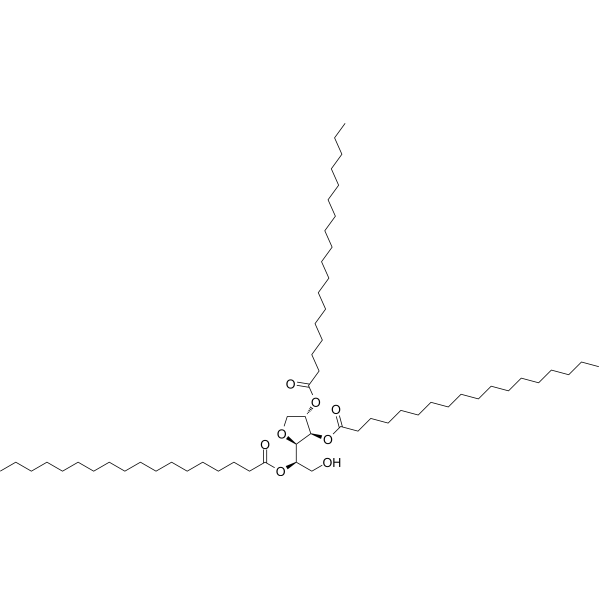
Sorbitan tristearate is a non-ionic surfactant, with a synergistic effect on skin permeability. Sorbitan tristearate can be used as an excipient, such as emulsifier. Pharmaceutical excipients, or pharmaceutical auxiliaries, refer to other chemical substances used in the pharmaceutical process other than pharmaceutical ingredients. Pharmaceutical excipients generally refer to inactive ingredients in pharmaceutical preparations, which can improve the stability, solubility and processability of pharmaceutical preparations. Pharmaceutical excipients also affect the absorption, distribution, metabolism, and elimination (ADME) processes of co-administered drugs .
loading...
    loading...
Cat. No.: HY-101530B
CAS No.: 171286-89-8
Synonyms: PEG 40 stearate
Research Areas:  

Others

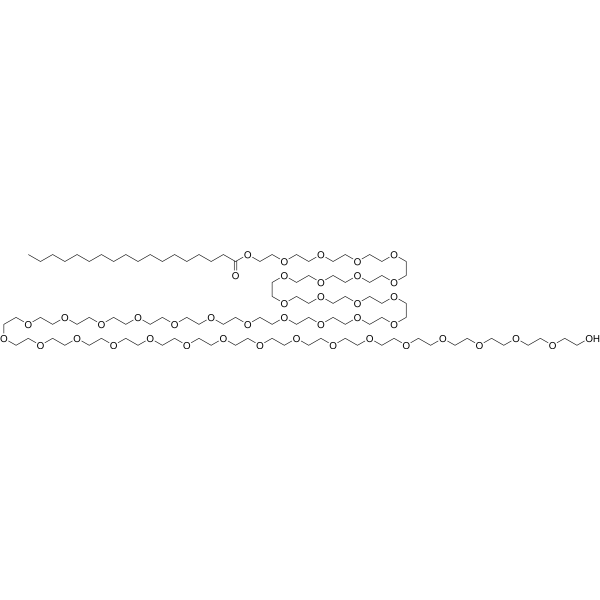
Polyoxyl 40 stearate (PEG 40 stearate) is a nonionic surfactant formed by the esterification of stearic acid with polyethylene glycol (PEG) containing approximately 40 ethoxy units, it is widely used in pharmaceutical preparations, nanodrug carriers, emulsification systems and biomedical materials. Polyoxyl 40 stearate can serve as a matrix component of solid lipid nanoparticles to achieve controlled release of encapsulated antifungal drugs; it can also act as a base material for solid lipid nanoparticles for vaginal administration, and polymerizable groups can be introduced via modification with acryloyl chloride .
loading...
    loading...
Cat. No.: HY-131119
CAS No.: 3700-67-2
Purity:  ≥98.0%
Synonyms: Dioctadecyldimethylammonium bromide; DODAB
Target:  

Liposome

Research Areas:  

Others

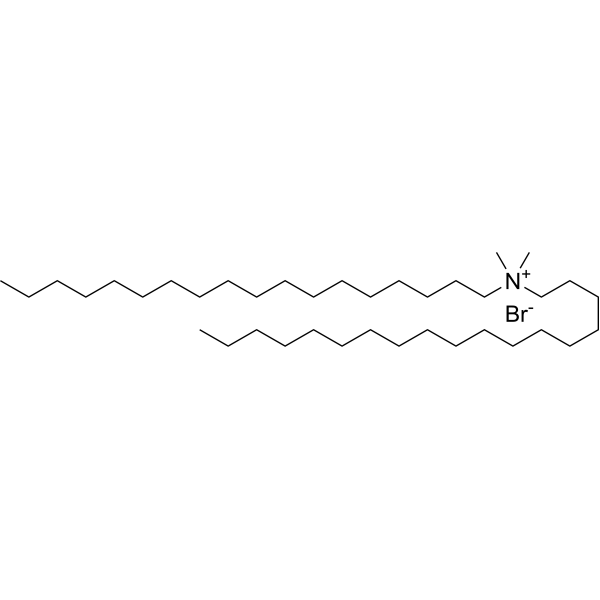
Dimethyldioctadecylammonium bromide is a synthetic cationic lipid commonly used in gene delivery and vaccine development. Also known as DODAB or DDAB, it consists of a positively charged ammonium head group and two long hydrophobic tails. These properties make it useful for forming liposomes and other lipid-based nanoparticles that can efficiently deliver genetic material into cells. In addition to its applications in biotechnology, DDAB is also used in surfactants, emulsifiers and fabric softeners. However, due to its potential toxicity and irritation, extreme care should be taken when handling DDAB.
loading...
    loading...
Cat. No.: HY-153808B
CAS No.: 9007-81-2
Research Areas:  

Inflammation/Immunology

Complete Freund's adjuvant (CFA, 1 mg/ml) is an immunoadjuvant emulsified with antigen that can enhance an animal's immune response to an antigen. Complete Freund's adjuvant (CFA, 1 mg/ml) is also an inducer of the Th1 immune response and a ligand of TLRs. Complete Freund's adjuvant (CFA, 1 mg/ml) contains heat-killed inactive tuberculosis bacilli and consists of a paraffin oil-in-water emulsion. Complete Freund's adjuvant (CFA, 1 mg/ml) stimulates a strong and durable immune response and can be used to induce rheumatoid arthritis in rats, and more .
loading...
    loading...
Cat. No.: HY-N1428CA
CAS No.: 3522-50-7
Ferric citrate, suitable for cell culture is a natural preservative and food tartness enhancer. Ferric citrate, suitable for cell culture induces apoptosis and cell cycle arrest at G2/M phase and S phase in HaCaT cells. Ferric citrate, suitable for cell culture causes oxidative damage of the liver by means of the decrease of antioxidative enzyme activities. Ferric citrate, suitable for cell culture is also an acidulant, emulsifier, sequestrant and buffering agent widely used across many industries .
loading...
    loading...
Cat. No.: HY-W127841
CAS No.: 121633-50-9
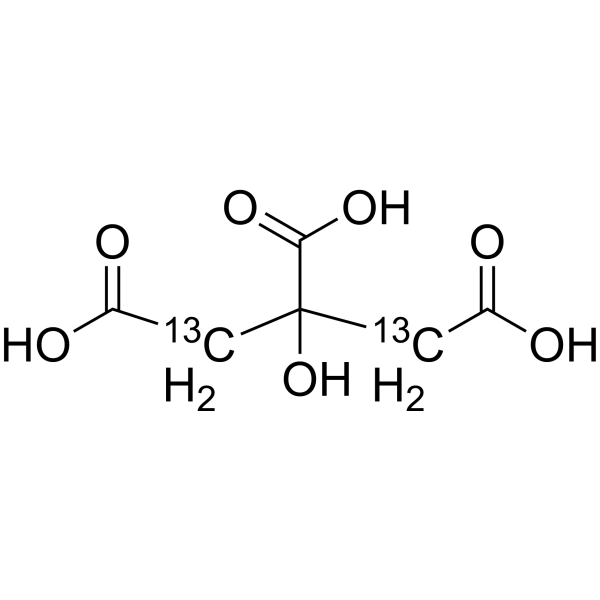
Citric acid-2,4- 13C2 is the 13C-labeled Citric acid (HY-N1428). Citric acid is a natural preservative and food tartness enhancer. Citric acid induces apoptosis and cell cycle arrest at G2/M phase and S phase in HaCaT cells. Citric acid cause oxidative damage of the liver by means of the decrease of antioxidative enzyme activities. Citric acid is also an acidulant, emulsifier, sequestrant and buffering agent widely used across many industries .
loading...
    loading...
Cat. No.: HY-W250168
CAS No.: 9004-98-2
Synonyms: Polyethylene glycol oleyl ether, average Mn~709; Polyethylene glycol monooleyl ether, n~10
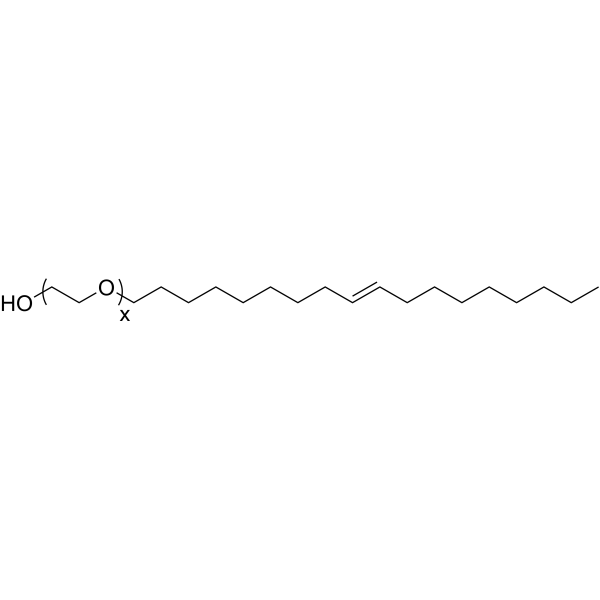
Polyoxyethylene(10) oleyl ether, also known as POE(10) monooleate, is a nonionic surfactant consisting of a polyethylene glycol chain with 10 ethylene oxide units and an oleic acid residue. It has excellent emulsifying, wetting and dispersing properties, making it suitable for a variety of applications including personal care products and pharmaceutical formulations. POE(10) monooleate is commonly used as a solubilizer to improve the solubility and bioavailability of poorly soluble drugs. Furthermore, it is biodegradable and has low toxicity, making it an environmentally friendly ingredient suitable for various industrial applications.
loading...
    loading...
Cat. No.: HY-W250195
CAS No.: 5157-04-0
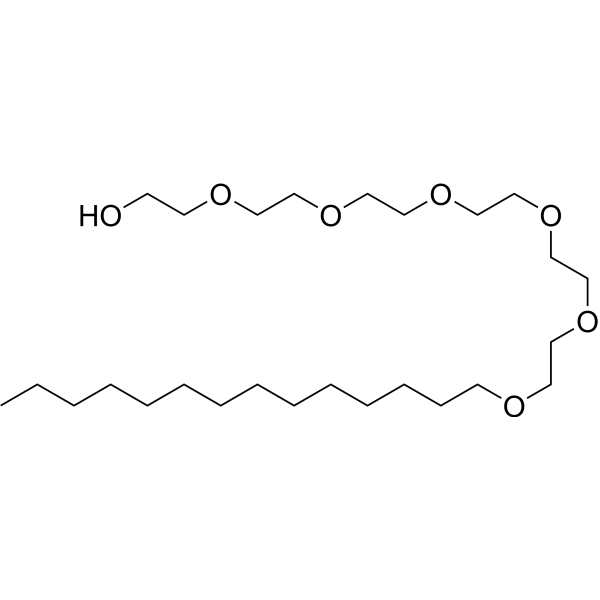
Hexaethylene glycol monotetradecyl ether is a kind of nonionic surfactant with hydrophilic head and lipophilic tail. It belongs to the class of polyethylene glycol (PEG) ethers and is widely used in different industrial and research applications. Due to its unique properties, Hexaethylene glycol monotetradecyl ether is commonly used in lotions, detergents and solubilizers. It is particularly useful in the study of membrane proteins and can be used to stabilize and solubilize proteins for use in structural analysis techniques. Due to its moisturizing and emulsifying properties, Hexaethylene glycol monotetradecyl ether is also used in personal care and cosmetics.
loading...
    loading...
Cat. No.: HY-B1295R
CAS No.: 6080-58-6
Synonyms: Litarex tetrahydrate (Standard)
Lithium citrate (tetrahydrate) (Standard) is the analytical standard of Lithium citrate (tetrahydrate). This product is intended for research and analytical applications. Lithium citrate (Litarex) tetrahydrate is a natural preservative and food tartness enhancer. Lithium citrate tetrahydrate induces apoptosis and cell cycle arrest at G2/M phase and S phase in HaCaT cells. Lithium citrate tetrahydrate cause oxidative damage of the liver by means of the decrease of antioxidative enzyme activities. Lithium citrate tetrahydrate is also an acidulant, emulsifier, sequestrant and buffering agent widely used across many industries .
loading...
    loading...
Cat. No.: HY-W009156R
CAS No.: 6100-05-6
Synonyms: Potassium citrate monohydrate (Standard)
Citric acid tripotassium hydrate (Standard) (Potassium citrate monohydrate (Standard)) is the analytical standard of Citric acid tripotassium hydrate (HY-W009156). This product is intended for research and analytical applications. Citric acid tripotassium hydrate is a natural preservative and food tartness enhancer. Citric acid tripotassium hydrate induces apoptosis and cell cycle arrest at G2/M phase and S phase in HaCaT cells. Citric acid tripotassium hydrate cause oxidative damage of the liver by means of the decrease of antioxidative enzyme activities. Citric acid tripotassium hydrate is also an acidulant, emulsifier, sequestrant and buffering agent widely used across many industries .
loading...
    loading...
Cat. No.: HY-W127785R
CAS No.: 1643-20-5
Synonyms: N,N-Dimethyldodecan-1-amine oxide (Standard); Dodecyldimethylamine oxide (Standard)
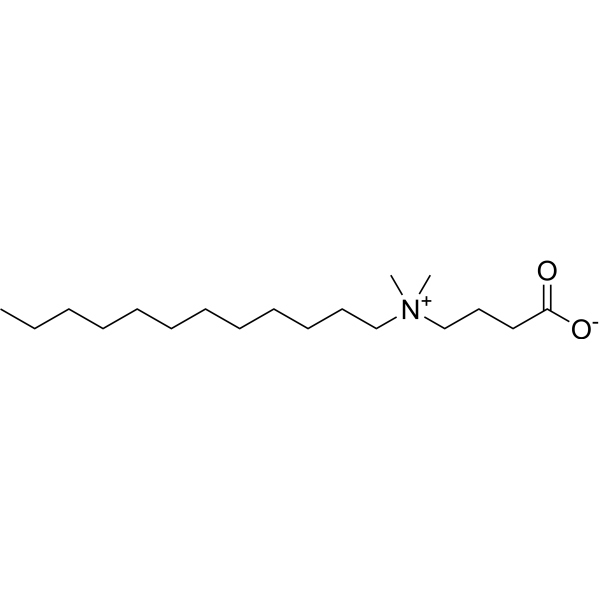
N,N-Dimethyldodecylamine N-oxide (Standard) is the analytical standard of N-ethyl-N-oxido-dodecan-1-amine. This product is intended for research and analytical applications. N,N-Dimethyldodecylamine N-oxide is an amine oxide surfactant commonly used as a detergent, emulsifier and wetting agent in various industrial processes, especially in personal care products and household cleaning in the production of agents. N,N-Dimethyldodecylamine N-oxide has unique chemical properties that make it an effective ingredient in many product formulations to help reduce surface tension and enhance cleaning power.
loading...
    loading...
Cat. No.: HY-W250187
CAS No.: 15163-30-1
DDMAB, or didodecyldimethylammonium bromide, is a cationic surfactant commonly used in a variety of industrial and research applications. It belongs to the family of quaternary ammonium compounds and has a positively charged head and a hydrophobic tail, which allows it to be used as a detergent, emulsifier and antimicrobial. Known for its ability to disrupt cell membranes, DDMAB is commonly used in microbiology to selectively isolate and identify bacteria. It is also used in nanotechnology to synthesize metal nanoparticles and other materials. In addition, DDMAB has the ability to interact with and penetrate cell membranes, which has potential applications in drug delivery, gene therapy, and other medical fields.
loading...
    loading...
Cat. No.: HY-W724319
CAS No.: 2704-20-3
Synonyms: Sodium citrate-d4; Trisodium citrate anhydrous-d4
Citric acid-d4 trisodium (Sodium citrate-d4) is the deuterium labeled Citric acid trisodium (HY-B2201). Citric acid trisodium (Sodium citrate) is a natural preservative and food tartness enhancer. Citric acid trisodium induces apoptosis and cell cycle arrest at G2/M phase and S phase in HaCaT cells. Citric acid trisodium cause oxidative damage of the liver by means of the decrease of antioxidative enzyme activities. Citric acid trisodium is also an acidulant, emulsifier, sequestrant and buffering agent widely used across many industries .
loading...
    loading...
Cat. No.: HY-W710279
N-ethyl-N-oxido-dodecan-1-amine-d6 is the deuterium labeled N-ethyl-N-oxido-dodecan-1-amine (HY-W127785). N-ethyl-N-oxido-dodecan-1-amine is an amine oxide surfactant commonly used as a detergent, emulsifier and wetting agent in various industrial processes, especially in personal care products and household cleaning in the production of agents. N,N-Dimethyldodecylamine N-oxide has unique chemical properties that make it an effective ingredient in many product formulations to help reduce surface tension and enhance cleaning power.
loading...
    loading...
Cat. No.: HY-W127785S
CAS No.: 161562-43-2
Synonyms: N,N-Dimethyldodecylamine N-oxide-d31; Dodecyldimethylamine oxide-d31
N-Ethyl-N-oxido-dodecan-1-amine-d31 (N,N-Dimethyldodecylamine N-oxide-d31) is the deuterium labeled N-Ethyl-N-oxido-dodecan-1-amine. N-ethyl-N-oxido-dodecan-1-amine is an amine oxide surfactant commonly used as a detergent, emulsifier and wetting agent in various industrial processes, especially in personal care products and household cleaning in the production of agents. N,N-Dimethyldodecylamine N-oxide has unique chemical properties that make it an effective ingredient in many product formulations to help reduce surface tension and enhance cleaning power.
loading...
    loading...
Cat. No.: HY-W250121
CAS No.: 9000-65-1
Tragacanth gum is an orally active anionic composite polysaccharide and multifunctional biomaterial. Tragacanth gum exhibits biocompatibility, mucoadhesion and renoprotective effects, and effectively promotes wound closure and tissue healing. Tragacanth gum can be isolated from Astragalus gummifer. Tragacanth gum acts as an emulsifier and drug delivery carrier, and is also widely used in fields such as 3D scaffolds, tissue engineering and green nanoparticle preparation. High doses of Tragacanth gum may induce reversible forestomach squamous epithelial hyperplasia in mice, but show no mutagenic or carcinogenic activity. Tragacanth gum is commonly used in studies related to diseases including systemic candidiasis, rheumatoid arthritis and osteosarcoma .
loading...
    loading...
Cat. No.: HY-W724291
Synonyms: Dioctadecyldimethylammonium-d3 bromide; DODAB-d3
Research Areas:  

Others

Dimethyldioctadecylammonium-d3 bromide (Dioctadecyldimethylammonium-d3 bromide) is the deuterium labeled Dimethyldioctadecylammonium bromide (HY-131119). Dimethyldioctadecylammonium bromide is a synthetic cationic lipid commonly used in gene delivery and vaccine development. Also known as DODAB or DDAB, it consists of a positively charged ammonium head group and two long hydrophobic tails. These properties make it useful for forming liposomes and other lipid-based nanoparticles that can efficiently deliver genetic material into cells. In addition to its applications in biotechnology, DDAB is also used in surfactants, emulsifiers and fabric softeners. However, due to its potential toxicity and irritation, extreme care should be taken when handling DDAB.
loading...
    loading...
Cat. No.: HY-D1005A7
CAS No.: 9003-11-6
Synonyms: PEG-PPG-PEG, 2400 (Average)
Poloxamer 125 (L45) (PEG-PPG-PEG, 2400 (Average)) is a block polymer of polyoxyethylene and polyoxypropylene, belonging to water-soluble non-ionic biosurfactants with properties such as emulsification and wetting. Poloxamer 125 (L45) has thermosensitive characteristics and can form thermoreversible hydrogels in aqueous solutions, presenting a fluid state at room temperature and transforming into a viscous gel under body temperature conditions; when its concentration is higher than the critical micelle concentration, it can also self-assemble into micelles in aqueous systems. Poloxamer 125 (L45) enables controlled drug release, prolongs the local retention time of drugs, and is often used as a drug delivery carrier. Poloxamer 125 (L45) can be applied in the fields of cosmetics, biomedicine and tissue engineering .
loading...
    loading...
Cat. No.: HY-W094846
CAS No.: 629-59-4
Synonyms: n-Tetradecane
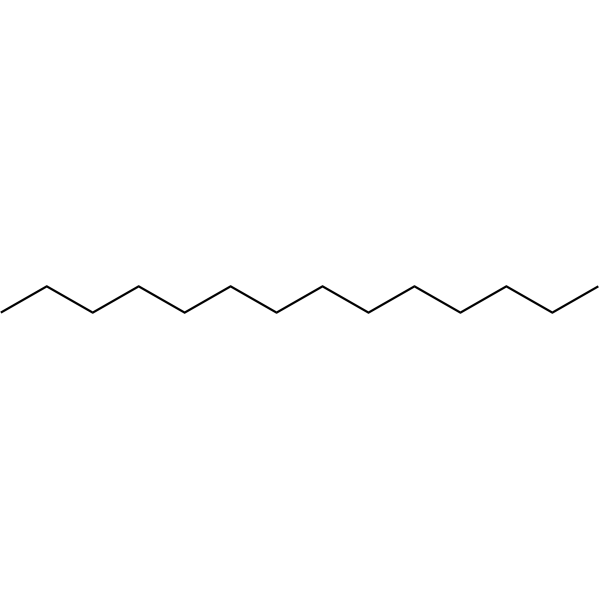
Tetradecane (n-Tetradecane) is a low-temperature phase change material with a phase change temperature of 5°C and a latent heat of phase change of 220 J/g. Tetradecane undergoes solid-liquid phase transition around 5°C, and achieves temperature regulation by absorbing or releasing latent heat .
loading...
    loading...
Cat. No.: HY-W276164
CAS No.: 1120-04-3
Synonyms: Sodium stearyl sulfate
Sodium octadecyl sulfate (Sodium stearyl sulfate) is a long-chain alkyl sodium sulfate that functions as an emulsifier, crosslinking agent, and regulator. Sodium octadecyl sulfate has high safety, with a LD50 greater than 3.00 Gm./Kg for both intraperitoneal injection in mice and oral administration in rats. Sodium octadecyl sulfate enhances continuous contraction of the gastrocnemius muscle in frogs and boosts intestinal smooth muscle activity in albino rats. However, Sodium octadecyl sulfate exerts no significant effect on isolated tortoise myocardium and does not alter the conduction function of frog sciatic nerves. Sodium octadecyl sulfate can also be used to coat the surface of starch aggregates, promote crosslinking and increase aggregate size through hydrophobic and electrostatic interactions, and further form a coexistent B-V type crystalline structure with acid-hydrolyzed gelatinized starch, thereby effectively modifying the structure and surface properties of high-starch systems .
loading...
    loading...

