
195 Results for "

tissue damage

" in MedChemExpress (MCE) Product Catalog:
Products (195)

195 Results for "tissue damage" in MCE Product Catalog:

Cat. No.: HY-N0260R
CAS No.: 110642-44-9
Synonyms: Epimedin-C (Standard); Baohuoside-VI (Standard)
Epmedin C (Standard) is the analytical standard of Epmedin C. This product is intended for research and analytical applications. Epmedin C (Epimedin-C; Baohuoside-VI) is an orally active anti-inflammatory agent and immunomodulator that binds to multiple key proteins including UCP1, Caspase-1, CDK2 and Keap1. Epmedin C inhibits epithelial cell proliferation by disrupting the complex function of CDK2/Cyclin E. Epmedin C also upregulates Nrf2 expression, reduces ROS levels and inhibits pro-inflammatory cytokine secretion, thereby effectively restoring antibody production and alleviating tissue damage. Epmedin C has good safety with no hepatotoxicity or skin sensitization, and it has been used in studies on diseases such as obesity, Deoxynivalenol (HY-N6684)-induced immunotoxicity and mammary hyperplasia .
loading...
    loading...
Cat. No.: HY-P992060
Target:  

CD20 NF-κB

Research Areas:  

Inflammation/Immunology Cancer

Anti-Mouse CD20 Antibody (18B12) is a B cell depleting agent that targets mouse CD20. Anti-Mouse CD20 Antibody (18B12) not only inhibits the growth of mesothelioma, lung cancer and thymoma, but also significantly enhances the efficacy of adenoviral tumor antigen vaccines and induces tumor regression by increasing the number of tumor-specific CD8 + T cells. Anti-Mouse CD20 Antibody (18B12) reduces B cell infiltration into the central nervous system of mice with experimental autoimmune encephalomyelitis, and delays motor dysfunction and neuronal death after spinal cord injury by alleviating inflammatory responses and tissue damage. Anti-Mouse CD20 Antibody (18B12) is widely applicable to research in fields related to mesothelioma, lung cancer, thymoma, experimental autoimmune encephalomyelitis and spinal cord injury .
loading...
    loading...
Cat. No.: HY-W012846
CAS No.: 2418-52-2
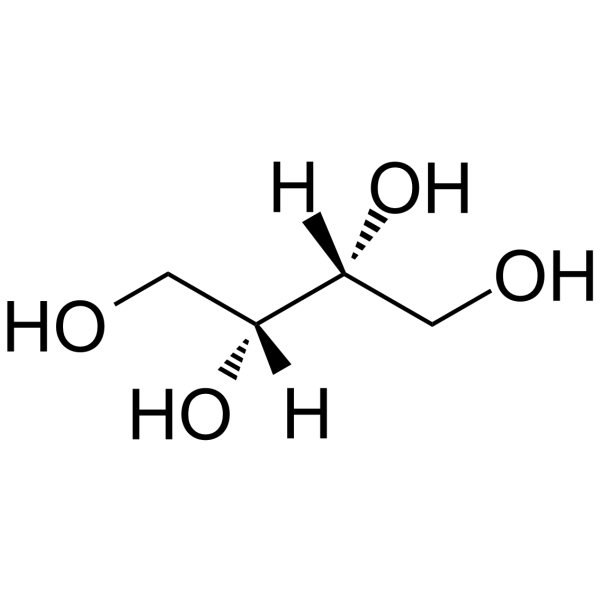
D-Threitol is a naturally occurring four-carbon sugar alcohol and an α-glucosidase (α‑glucosidase) inhibitor with an IC50 of 49 mM against yeast α-glucosidase, and it is orally active. D-Threitol modulates gut microbiota composition, increases microbial diversity, enriches beneficial bacterial genera, and restores fecal short-chain fatty acid levels. D-Threitol reduces body weight gain and fat accumulation, improves glucose tolerance and insulin sensitivity, and alleviates liver, kidney, and pancreatic tissue damage. D-Threitol inhibits hepatic accumulation of ceramides and diacylglycerols. D-Threitol preserves glomerular morphology and islet structure in diabetes models. D-Threitol is also a low-calorie sweetener. D-Threitol serves as a cryoprotective polyol that stabilizes protein structure at low temperatures. D-Threitol is used in research on type 2 diabetes and as an antifreeze agent for the Alaskan beetle .
loading...
    loading...
Cat. No.: HY-21197
CAS No.: 375-85-9
Synonyms: Perfluoroheptanoic acid; Tridecafluoroheptanoic acid; PFHpA
Perfluoroenanthic acid (Perfluoroheptanoic acid) is a kind of perfluoroalkyl carboxylic acid organic pollutant. Perfluoroenanthic acid has environmental persistence and bioaccumulation, and exposure can occur via oral, dermal and other routes. Perfluoroenanthic acid exhibits reproductive toxicity, neurotoxicity, hepatotoxicity, immunotoxicity and endocrine-disrupting effects. Perfluoroenanthic acid exerts definite adverse effects on development, spermatogenesis, neuronal activity and liver tissue .
loading...
    loading...
Cat. No.: HY-181088
CAS No.: 3088024-27-2
PDE3/4-IN-4 is an orally active PDE3A and PDE4B inhibitor with IC50 values of 10 nM and 9.4 nM, respectively. PDE3/4-IN-4 shows selective activity relative to most other PDE family members. PDE3/4-IN-4 modulates the cAMP/PKA/CREB signaling pathway. PDE3/4-IN-4 inhibits pro-inflammatory factor IL-6. PDE3/4-IN-4 reduces expression of inflammatory markers in liver tissue. PDE3/4-IN-4 attenuates liver fibrosis. PDE3/4-IN-4 limits liver damage in cholestatic and sepsis-induced liver disease mice models. PDE3/4-IN-4 can be used for the research of liver injury, cholestatic liver diseases, sepsis-induced liver injury .
loading...
    loading...
Cat. No.: HY-L007
8,643 compounds

The immune system is a host defense system comprising many biological structures and processes within an organism that protects against disease. To function properly, an immune system must detect a wide variety of agents, known as pathogens, from viruses to parasitic worms, and distinguish them from the organism's own healthy tissue. Inflammation is also the body's attempt at self-protection to remove harmful stimuli and begin the healing process. It’s part of the body's immune response. The immune system recognizes damaged cells, irritants, and pathogens, and inflammation begins the healing process. Inflammatory abnormalities are a large group of disorders that underlie a vast variety of human diseases. The immune system is often involved with inflammatory disorders, demonstrated in both allergic reactions and some myopathies, with many immune system disorders resulting in abnormal inflammation.

MCE designs a unique collection of 8,643 compounds that are useful tool for Immunology/Inflammation research or autoimmune inflammatory diseases drug discovery.

Cat. No.: HY-L175
178 compounds

Inflammasomes are classic pattern recognition receptors for natural immune responses. Inflammasomes are polymeric protein complexes that regulate inflammatory responses and pyrolytic cell death, thereby exerting the host's defense against microorganisms. Inflammasomes sensors are associated with adapter proteins, activating inflammatory caspase-1, releasing inflammatory cytokines and inducing cell death, endowing the host with defense against pathogens. NLRP1, NLRP3, NLRC4, AIM2, and pyrin are considered typical inflammasomes because they convert cysteine asparaginase-1 into catalytically active capsaicin-1. In addition to infectious diseases, the importance of inflammasomes is also related to various clinical diseases, such as autoimmune diseases, neurodegeneration and metabolic disorders, and the development of cancer. Therefore, it is necessary to strictly regulate the activation and function of inflammasomes to avoid accidental host tissue damage while inducing pathogens to kill the inflammatory response.

MCE designs a unique collection of 178 inflammasomes related compounds. It is a good tool to be used for research on Inflammation, cancer and other diseases.

Cat. No.: HY-189215
CAS No.: 3087067-85-1
Anti-Influenza agent 12 is an orally active inhibitor of influenza A virus infection. Anti-Influenza agent 12 inhibits RIG-I-mediated innate immune signaling and TLR3-mediated signaling pathways. Anti-Influenza agent 12 inhibits NF-κB phosphorylation and downregulates the expression levels of IRF3, ASC, iNOS, IL-4, IL-6, and IFN-α inflammatory genes. Anti-Influenza agent 12 inhibits viral nucleoprotein (NP) and matrix protein 2 (M2) mRNA transcription and protein synthesis. Anti-Influenza agent 12 inhibits virus-induced apoptosis, reduces ROS and NO production, and maintains mitochondrial membrane potential. Anti-Influenza agent 12 exhibits broad-spectrum activity against H1N1 and H3N2 subtypes, reduces viral load, and alleviates lung tissue damage. Anti-Influenza agent 12 can be used for research on influenza A virus infection .
loading...
    loading...
Cat. No.: HY-B0377A
CAS No.: 125193-62-6
Synonyms: MK-208 hydrochloride
Famotidine hydrochloride (MK-208 hydrochloride) is an orally active and highly selective histamine H2 receptor antagonist. It inhibits gastric acid secretion by blocking the Gs signaling pathway, and regulates intracellular cAMP and ERK pathways. Famotidine hydrochloride inhibits TLR3-mediated inflammatory pathways, and reduces the expression of various inflammatory mediators and interferon-related genes. Famotidine hydrochloride scavenges DPPH and nitric oxide free radicals, alleviates oxidative stress damage in gastric tissue, inhibits proMMP-9, improves vascular endothelial permeability, and restores the normal physiological functions of neutrophils and eosinophils. Famotidine hydrochloride crosses intestinal epithelial cells via facilitated diffusion and passive diffusion, blocks paracellular cation transport, and increases intestinal transepithelial electrical resistance. Famotidine hydrochloride reduces serum levels of transaminases and alkaline phosphatase, exerts analgesic effects and gastric protective effects simultaneously. Famotidine hydrochloride can be used in studies related to COVID-19, liver injury and acute gastric ulcer .
loading...
    loading...
Cat. No.: HY-P10862
Target:  

Exosomes Virus Protease

Research Areas:  

Infection Cancer

AH-D peptide is a brain-penetrant antiviral agent disrupting highly curved lipid membranes. AH-D peptide exhibits broad-spectrum antiviral activity against ZIKV, Dengue virus, Chikungunya virus, yellow fever virus and Japanese encephalitis virus, with
IC50
values of 11.9, 12.5, 35.7, 206 and 136 nM, respectively. AH-D peptide reduces the viral load in the brain, suppresses inflammation, protects neurons, and does not damage the blood brain barrier. AH-D peptide restores antitumor immunity by decreasing circulating PD-L1 + exosomes, reducing intratumoral immunosuppressive cells (regulatory T cells, myeloid-derived suppressor cells), and enhancing T cell function. AH-D peptide inhibits membrane-enveloped viruses and cancer cell metastasis in vivo. AH-D peptide exhibits no immunogenicity and has negligible effects on normal tissues. AH-D peptide can be used for research in Zika virus and other mosquito-borne viruses, cancer immunotherapy and metastasis .
loading...
    loading...
Cat. No.: HY-P990955
CAS No.: 2839652-75-2
Synonyms: ADX-097

Target:  

CD3 Complement System

Research Areas:  

Inflammation/Immunology

Ebribafusp alfa (ADX-097) comprising a humanized anti-C3d monoclonal antibody linked to two moieties of the first five consensus repeats of factor H (fH1-5). Ebribafusp alfa binds C3d and related fragments, catalyzes AP convertase dissociation, acts as a factor I co-factor for C3b cleavage, and delivers fH1-5 moieties to C3d-deposited tissues for local complement inhibition without systemic blockade. Ebribafusp alfa reduces glomerular C3 deposition, proteinuria, urine albumin-creatinine ratios, and urine soluble C5b-9 levels, preserves podocyte foot-process architecture, inhibits skin complement activation, and localizes to UVB-damaged primate skin. Ebribafusp alfa can be used for the research of membranous nephropathy, bullous pemphigoid, discoid lupus erythematosus, C3 glomerulopathy, IgA nephropathy, and lupus nephritis .
loading...
    loading...
Cat. No.: HY-W012846R
CAS No.: 2418-52-2
D-Threitol (Standard) is the analytical standard of D-Threitol (HY-W012846). This product is intended for research and analytical applications. D-Threitol is a naturally occurring four-carbon sugar alcohol and an α-glucosidase (α‑glucosidase) inhibitor with an IC50 of 49 mM against yeast α-glucosidase, and it is orally active. D-Threitol modulates gut microbiota composition, increases microbial diversity, enriches beneficial bacterial genera, and restores fecal short-chain fatty acid levels. D-Threitol reduces body weight gain and fat accumulation, improves glucose tolerance and insulin sensitivity, and alleviates liver, kidney, and pancreatic tissue damage. D-Threitol inhibits hepatic accumulation of ceramides and diacylglycerols. D-Threitol preserves glomerular morphology and islet structure in diabetes models. D-Threitol is also a low-calorie sweetener. D-Threitol serves as a cryoprotective polyol that stabilizes protein structure at low temperatures. D-Threitol is used in research on type 2 diabetes and as an antifreeze agent for the Alaskan beetle .
loading...
    loading...
Cat. No.: HY-L161
1,416 compounds

Cytokines are a kind of low molecular soluble proteins synthesized and secreted by immunogen, mitogen or other factors. They have functions of regulating innate and adaptive immune responses, promoting hematopoiesis, stimulating cell activation, proliferation and differentiation. The process of releasing a large number of cytokines is also called “Cytokine storm”, which can cause damage to many tissues and organs in the body. Cytokine is involved in the pathogenesis of many human diseases, including cancer, diabetes, chronic inflammatory diseases and so on. Cytokine inhibitors are a class of essential compounds that act by directly inhibiting the synthesis and release of cytokine or blocking the binding of cytokine to their receptors. Cytokine inhibitors are important compounds for the study of tumor and autoimmune diseases.

MCE designs a unique collection of 1,416 cytokine inhibitors, mainly targeting the receptor interleukin (IL), colony-stimulating factor (CSF), interferon (IFN), tumor necrosis factor (TNF), growth factor (GF) and chemokine, which is an effective tool for development and research of anti-cancer, anti-chronic inflammatory diseases and anti-autoimmune diseases compounds.

Cat. No.: HY-150270
CAS No.: 1239578-79-0
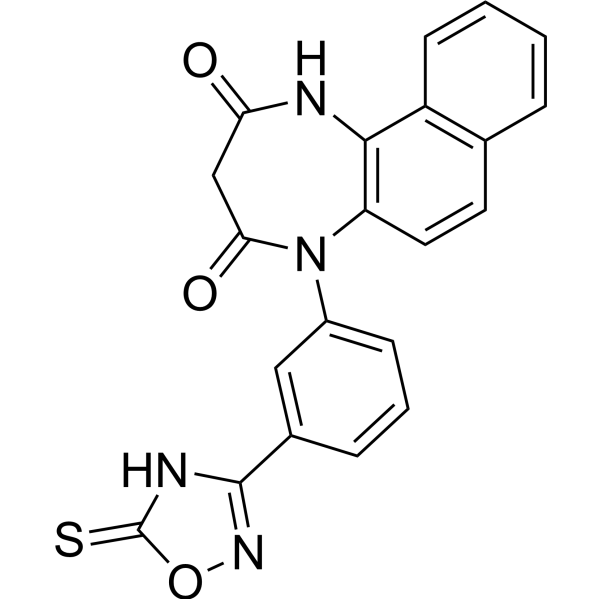
NP-1815-PX is an orally active dual inhibitor of P2X4 and prostaglandin TP receptors, with an IC50 of 0.26 μM against human P2X4 receptors. NP-1815-PX specifically inhibits ATP-mediated prostaglandin production, TP receptor-induced calcium elevation, and the canonical/non-canonical NLRP3 inflammasome signaling pathway. NP-1815-PX selectively blocks smooth muscle contractions induced by ATP, U46619 (HY-108566) and prostaglandin F2α. NP-1815-PX not only produces anti-allodynic effects in vivo, but also significantly alleviates symptoms of DNBS (HY-W324435)-induced colitis (such as weight loss and tissue damage). NP-1815-PX exerts anti-inflammatory effects by downregulating IL-1β levels and Caspase-1 activity. NP-1815-PX is used in studies related to asthma and inflammatory bowel disease (colitis) .
loading...
    loading...
Cat. No.: HY-150270A
CAS No.: 1239578-80-3
Purity:  99.62%
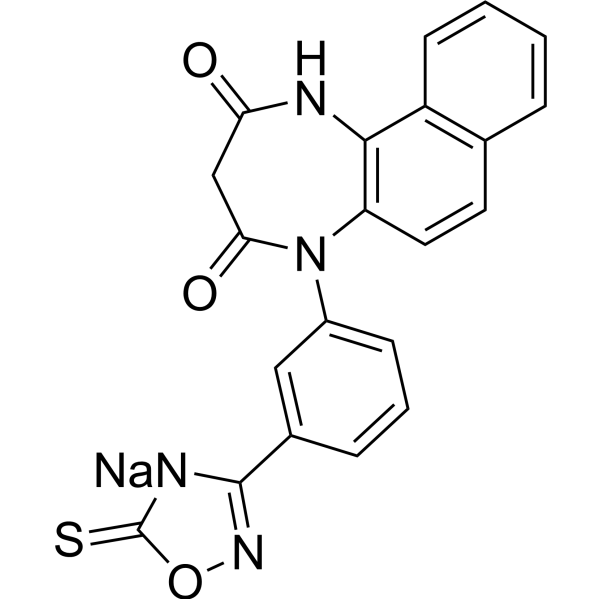
NP-1815-PX sodium is an orally active dual inhibitor of P2X4 and prostaglandin TP receptors, with an IC50 of 0.26 μM against human P2X4 receptors. NP-1815-PX sodium specifically inhibits ATP-mediated prostaglandin production, TP receptor-induced calcium elevation, and the canonical/non-canonical NLRP3 inflammasome signaling pathway. NP-1815-PX sodium selectively blocks smooth muscle contractions induced by ATP, U46619 (HY-108566) and prostaglandin F2α. NP-1815-PX sodium not only produces anti-allodynic effects in vivo, but also significantly alleviates symptoms of DNBS (HY-W324435)-induced colitis (such as weight loss and tissue damage). NP-1815-PX sodium exerts anti-inflammatory effects by downregulating IL-1β levels and Caspase-1 activity. NP-1815-PX sodium is used in studies related to asthma and inflammatory bowel disease (colitis) .
loading...
    loading...
Cat. No.: HY-B0377G
CAS No.: 76824-35-6
Synonyms: MK-208 (GMP)
Famotidine GMP (MK-208 GMP) is Famotidine (HY-B0377) produced in GMP guideline. Famotidine is an orally active and highly selective histamine H2 receptor antagonist. It inhibits gastric acid secretion by blocking the Gs signaling pathway, and regulates intracellular cAMP and ERK pathways. Famotidine inhibits TLR3-mediated inflammatory pathways, and reduces the expression of various inflammatory mediators and interferon-related genes. Famotidine scavenges DPPH and nitric oxide free radicals, alleviates oxidative stress damage in gastric tissue, inhibits proMMP-9, improves vascular endothelial permeability, and restores the normal physiological functions of neutrophils and eosinophils. Famotidine crosses intestinal epithelial cells via facilitated diffusion and passive diffusion, blocks paracellular cation transport, and increases intestinal transepithelial electrical resistance. Famotidine reduces serum levels of transaminases and alkaline phosphatase, exerts analgesic effects and gastric protective effects simultaneously. Famotidine can be used in studies related to COVID-19, liver injury and acute gastric ulcer .
loading...
    loading...
Cat. No.: HY-FLB0377
CAS No.: 76824-35-6
Synonyms: MK-208 solution
Famotidine solution is mainly composed of Famotidine (HY-B0377). Famotidine (MK-208) is an orally active and highly selective histamine H2 receptor antagonist. It inhibits gastric acid secretion by blocking the Gs signaling pathway, and regulates intracellular cAMP and ERK pathways. Famotidine inhibits TLR3-mediated inflammatory pathways, and reduces the expression of various inflammatory mediators and interferon-related genes. Famotidine scavenges DPPH and nitric oxide free radicals, alleviates oxidative stress damage in gastric tissue, inhibits proMMP-9, improves vascular endothelial permeability, and restores the normal physiological functions of neutrophils and eosinophils. Famotidine crosses intestinal epithelial cells via facilitated diffusion and passive diffusion, blocks paracellular cation transport, and increases intestinal transepithelial electrical resistance. Famotidine reduces serum levels of transaminases and alkaline phosphatase, exerts analgesic effects and gastric protective effects simultaneously. Famotidine can be used in studies related to COVID-19, liver injury and acute gastric ulcer .
loading...
    loading...
Cat. No.: HY-N8693
CAS No.: 362472-81-9
Withanoside IV is an orally active, blood-brain barrier-permeable withanolide derivative. Withanoside IV specifically binds to the Sudlow I site of HSA, induces secondary structural changes in HSA, and forms stable HSA complexes. Withanoside IV inhibits the enzymatic activity of COX-2. Withanoside IV induces axonal regeneration, peripheral nervous system myelination and increased axonal density in spinal cord tissue, reduces reactive gliosis-related changes, and improves hindlimb motor function. Withanoside IV binds to amyloid-β 1-42 to inhibit its aggregation, induces neurite outgrowth and synapse reconstruction, repairs damaged axons and dendrites, enhances mitochondrial biogenesis, exerts neuroprotective effects via the BDNF and SIRT1 signaling pathways, reduces ROS production and neuronal apoptosis, and ameliorates memory deficits. Withanoside IV inhibits the activity of the SARS-CoV-2 main protease. Withanoside IV can be used in research related to spinal cord injury, Alzheimer's disease, and coronavirus disease 2019 (COVID-19) .
loading...
    loading...
Cat. No.: HY-P3009
CAS No.: 9002-05-5
Bovine Factor Xa is a serine protease that plays a central role in blood coagulation, with prothrombin as its physiological substrate. Bovine Factor Xa catalyzes the conversion of prothrombin to thrombin, activates factor VIII, and hydrolyzes peptide, thioester, and amide substrates. Bovine Factor Xa cleaves protease-activated receptors 1 and 2 to activate intracellular signal transduction. Bovine Factor Xa regulates multiple cellular pathways, mediates various cellular activities, tissue remodeling and cancer cell migration, and inhibits apoptosis in some cancer cells. Bovine Factor Xa protects hippocampal neurons against glutamate-induced damage. Bovine Factor Xa participates in embryonic vascular development and regulates immune hematopoiesis; its activity is inhibited by soybean trypsin inhibitor, and cannot be enhanced by phospholipids. Bovine Factor Xa regulates immune responses and macrophage polarization, and participates in fibrosis, vascular remodeling and tumor progression through non-coagulant effects. Bovine Factor Xa can be used in research related to atherosclerosis, fibrosis, asthma, cancer, thromboinflammation, sepsis, etc .
loading...
    loading...
Cat. No.: HY-P3009A
CAS No.: 9002-05-5
Canine Factor Xa is a serine protease that plays a central role in blood coagulation, with prothrombin as its physiological substrate. Canine Factor Xa catalyzes the conversion of prothrombin to thrombin, activates factor VIII, and hydrolyzes peptide, thioester, and amide substrates. Canine Factor Xa cleaves protease-activated receptors 1 and 2 to activate intracellular signal transduction. Canine Factor Xa regulates multiple cellular pathways, mediates various cellular activities, tissue remodeling and cancer cell migration, and inhibits apoptosis in some cancer cells. Canine Factor Xa protects hippocampal neurons against glutamate-induced damage. Canine Factor Xa participates in embryonic vascular development and regulates immune hematopoiesis; its activity is inhibited by soybean trypsin inhibitor, and cannot be enhanced by phospholipids. Canine Factor Xa regulates immune responses and macrophage polarization, and participates in fibrosis, vascular remodeling and tumor progression through non-coagulant effects. Canine Factor Xa can be used in research related to atherosclerosis, fibrosis, asthma, cancer, thromboinflammation, sepsis, etc .
loading...
    loading...

