24 Results for "

4-nitrophenol

" in MedChemExpress (MCE) Product Catalog:
Products (24)

24 Results for "4-nitrophenol" in MCE Product Catalog:

1
1 Cited Publications
Cat. No.: HY-W039892
CAS No.: 10344-94-2
Synonyms: pNPG_1
Target:  

β-glucuronidase

Research Areas:  

Others

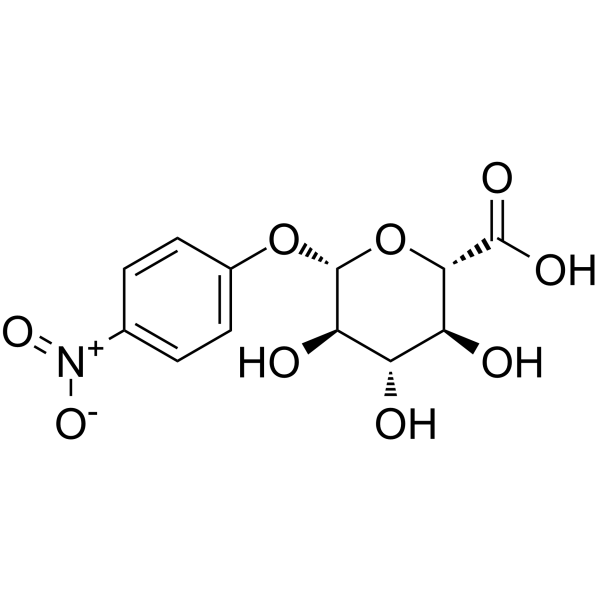
4-Nitrophenyl β-D-glucuronide (pNPG_1) is aderivative of 4-Nitrophenol. 4-Nitrophenyl β-D-glucuronide is the chromogenic substrate for β-glucuronidase .
loading...
    loading...
Cat. No.: HY-W014449
CAS No.: 2635-84-9
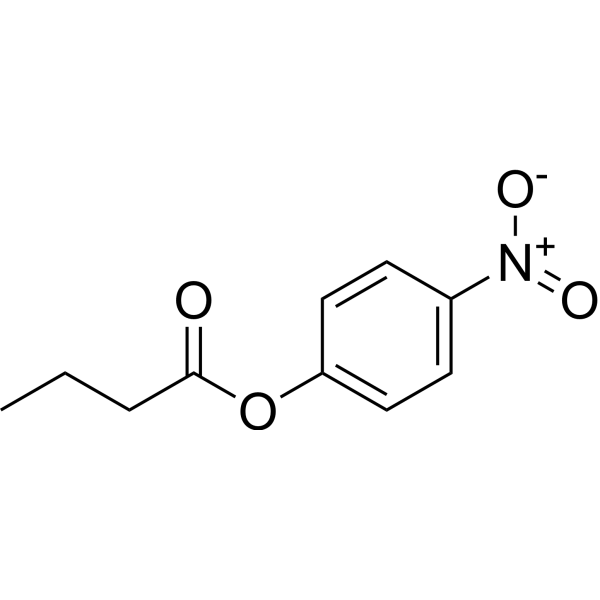
4-Nitrophenyl butyrate consists of butyric acid chains esterified with 4-nitrophenol groups, thus giving it a yellow color. This compound is commonly used as a substrate in enzyme assays to measure esterase and lipase activity. When these enzymes cleave the ester bond, the nitrophenol group is released and the color changes from yellow to orange. Thus, the rate of color change can be used to determine enzyme activity. In addition, 4-Nitrophenyl butyrate can also be used as organic synthesis reagent and dye intermediate.
loading...
    loading...
Cat. No.: HY-153102
CAS No.: 118291-90-0
Purity:  99.62%
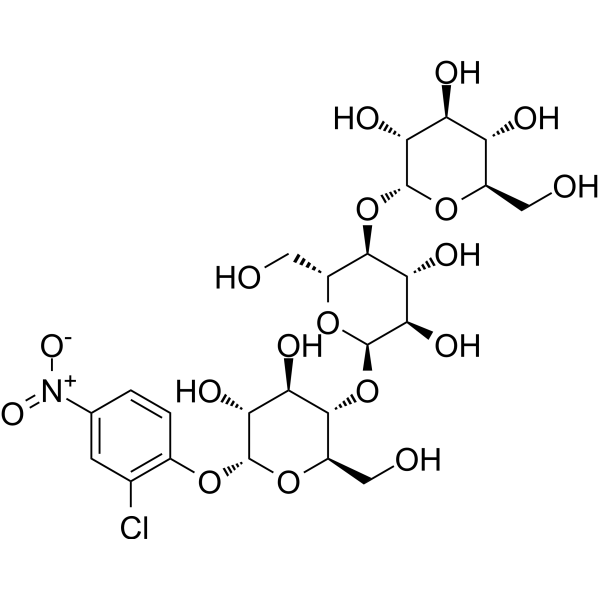
G3-CNP is an α-amylase substrate. The absorbance of G3-CNP cleavage product 2-chloro-4-nitrophenol is measured at 405 nm, which can be used to detect enzyme activity .
loading...
    loading...
Cat. No.: HY-112835
CAS No.: 96597-16-9
Purity:  99.42%
Synonyms: pNP-G7
Target:  

Amylases Glycosidase

Research Areas:  

Inflammation/Immunology

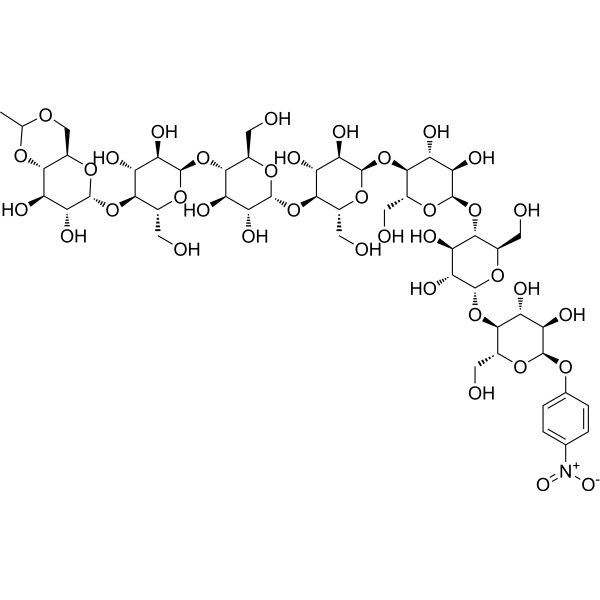
Ethylidene-4-nitrophenyl-α-D-Maltoheptaoside (EPS; pNP-G7) serves as a substrate for α-amylase. In the presence of an auxiliary enzyme such as α-glucosidase (α-glucosidase), Ethylidene-4-nitrophenyl-α-D-Maltoheptaoside is degraded by amylase (Amylase) to release a chromophore, enabling the measurement of amylase activity. Ethylidene-4-nitrophenyl-α-D-Maltoheptaoside is applicable for the diagnosis of pancreatitis [2].
loading...
    loading...
Cat. No.: HY-W014566
CAS No.: 88-30-2
Synonyms: 3-(Trifluoromethyl)-4-nitrophenol; TFM
4-Nitro-3-(trifluoromethyl)phenol (TFM) is a piscicide that is toxic to lampreys (P. marinus) (LC50 values are 1.97-2.11 for cysts, 2.05-2.21 for fry, 1.6-2.45 for juveniles, and 1.6-1.63 for adults, respectively). 4-Nitro-3-(trifluoromethyl)phenol is also toxic to juvenile lake sturgeons (A. fulvescens) less than 100 mm, but is nontoxic to a variety of other fish species. 4-Nitro-3-(trifluoromethyl)phenol (50 μM) dissociates oxidative phosphorylation by 22% and 28% in isolated livers of lampreys and rainbow trout (O. mykiss), respectively. 4-Nitro-3-(trifluoromethyl)phenol can be used to control lamprey larval populations.
loading...
    loading...
Cat. No.: HY-W042337
CAS No.: 2581-34-2
Research Areas:  

Others

3-Methyl-4-nitrophenol, an environmental contaminant, is a well-known constituent of diesel exhaust particles and degradation products of insecticide fenitrothion. 3-Methyl-4-nitrophenol can induce nasal epithelial cell apoptosis and increase the permeability of the nasal epithelial barrier. 3-Methyl-4-nitrophenol is also toxic to the female reproductive system.
loading...
    loading...
Cat. No.: HY-Y0510
CAS No.: 619-08-9
Synonyms: 2-Chloro-4-nitrophenol
Target:  

Fungal

Research Areas:  

Infection

Nitrofungin (2-Chloro-4-nitrophenol) is an antifungal agent, and can also be degraded by some bacteria .
loading...
    loading...
Cat. No.: HY-P4545
CAS No.: 67482-93-3
Target:  

Angiotensin Receptor

Research Areas:  

Others

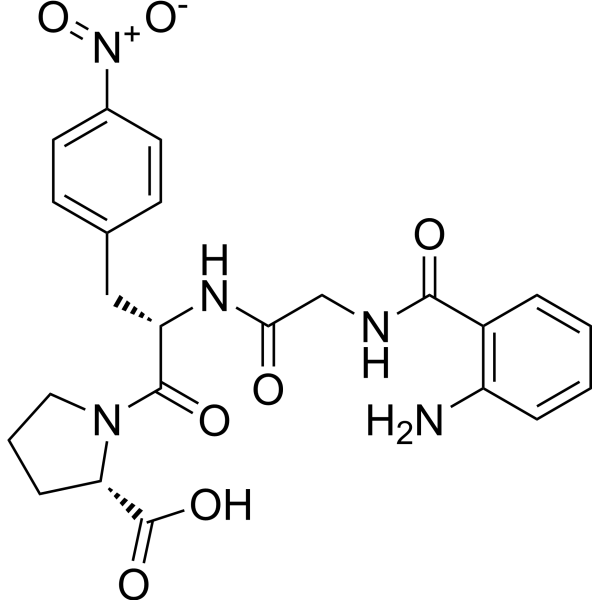
Abz-Gly-p-nitro-Phe-Pro-OH is the fluorescent substrate angiotensin I converting enzyme (ACE-I) with 355 nm excitation and 405 nm emission wavelengths .
loading...
    loading...
Cat. No.: HY-P4561
CAS No.: 90331-82-1
Target:  

Cathepsin

Research Areas:  

Others

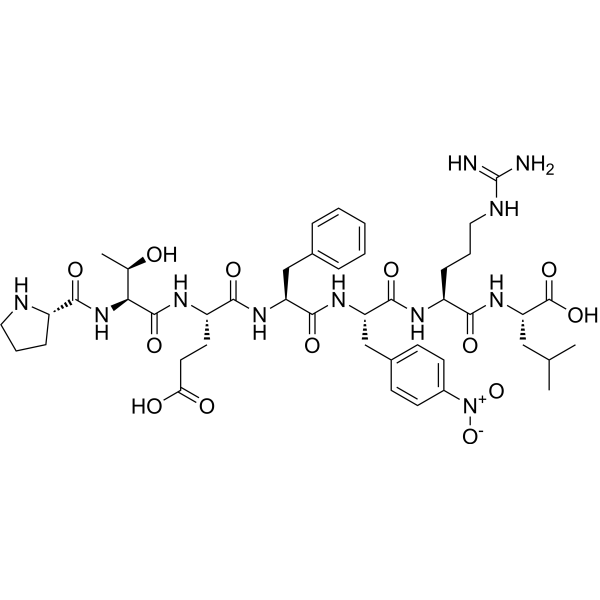
H-Pro-Thr-Glu-Phe-p-nitro-Phe-Arg-Leu-OH is a water-soluble polypeptide that can serve as a substrate for cathepsin D, pepsin and pepsinogen. H-Pro-Thr-Glu-Phe-p-nitro-Phe-Arg-Leu-OH has potential applications in biochemical analysis .
loading...
    loading...
Cat. No.: HY-P4725
CAS No.: 133233-38-2
Target:  

Fluorescent Dye

Research Areas:  

Others

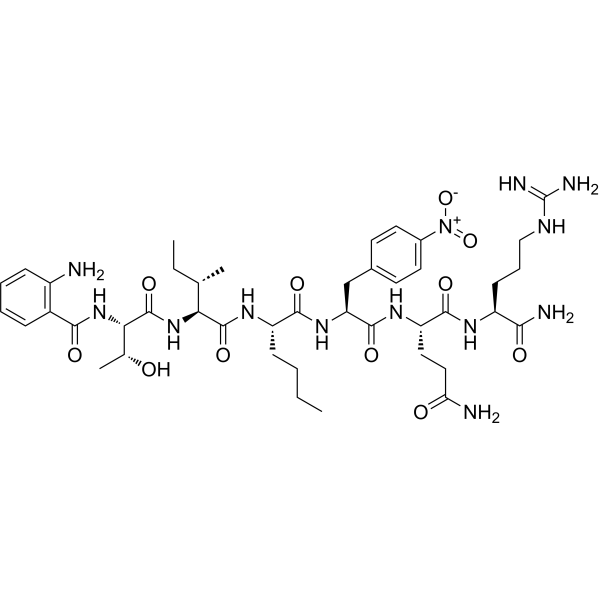
Abz-Thr-Ile-Nle-p-nitro-Phe-Gln-Arg-NH2 is a fluorogenic substrate, that can be used for the fluorescence screening assay .
loading...
    loading...
Cat. No.: HY-E71872
Research Areas:  

Others

4-Nitrophenol 2-monooxygenase (EC 1.14.13.29) is an oxidoreductase that can convert 4-nitrophenol, NADH, O2 and H + into 4-nitrocatechol, NAD + and H2O.
loading...
    loading...
Cat. No.: HY-E71873
Research Areas:  

Others

4-Nitrophenol 4-monooxygenase (EC 1.14.13.167) is an oxidoreductase that can convert 4-nitrophenol, NADPH, O2 and H + into 1,4-benzoquinone, nitrite, NADP + and H2O.
loading...
    loading...
Cat. No.: HY-124324
CAS No.: 106927-48-4
Synonyms: p-Nitopheyl β-D-cellotioside
4-Nitrophenyl β-D-cellotrioside (p-Nitopheyl β-D-cellotioside) is a chromogenic substrate for endoglucanases and cellulose biohydrolases. As a fluorescent dye, nitrophenyl β-D-Cellotrioside can be hydrolyzed by enzymes to release 4-nitrophenol, producing a yellow color. The activity of the enzyme can be quantitatively analyzed by monitoring the change in absorbance at 405 nm .
loading...
    loading...
Cat. No.: HY-W099563
CAS No.: 14617-86-8
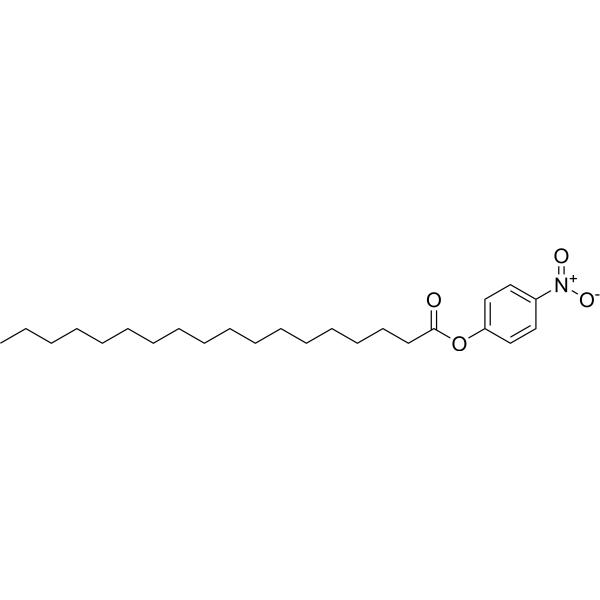
4-Nitrophenyl stearate, which is an ester formed by the condensation of stearic acid and 4-nitrophenol, is commonly used as a substrate for enzymatic assays, where the hydrolysis of ester bonds by esterase and lipase can be measured by absorbance or ratio In addition, 4-Nitrophenyl stearate has been used as a model compound to study the enzymatic activity and selectivity of lipases and esterases from various sources. The long hydrophobic tail of the molecule makes it suitable for use in lipophilic Good solubility in the environment makes it a useful probe for studying lipid metabolism.
loading...
    loading...
Cat. No.: HY-W066579
CAS No.: 2305-79-5
4,5,6,7-Tetrahydroindazole acts as an Antimicrobial agent, an interleukin-2-induced T-cell kinase inhibitor, a positive allosteric modulator of AMPA receptors, and a ligand for CYP2E1, with a Kd1 value of 0.023 μM for its binding to rabbit-derived CYP2E1. 4,5,6,7-Tetrahydroindazole scavenges DPPH free radicals. It exhibits anti-tumor, anti-tuberculosis, and anti-inflammatory activities .
loading...
    loading...
Cat. No.: HY-138111
CAS No.: 129411-62-7
Synonyms: p-Nitopheyl β-D-cellotetaoside
4-Nitrophenyl β-D-cellotetraoside (p-Nitopheyl β-D-cellotetaoside) is a small molecule cellulose mimetic consisting of a tetramer of D-glucose units linked by β-1-4 glycosidic bonds. The fragmentation pattern of 4-Nitrophenyl β-D-cellotetraoside after enzymatic hydrolysis can be analyzed by TLC or by the release of 4-nitrophenol, which has a strong absorbance at 395 nm in alkaline solutions. 4-Nitrophenyl β-D-cellotetraoside can be used in cellulose degradation studies to determine the specificity of cellulases .
loading...
    loading...
Cat. No.: HY-W014566R
CAS No.: 88-30-2
Synonyms: 3-(Trifluoromethyl)-4-nitrophenol (Standard); TFM (Standard)
Research Areas:  

Infection

Moxifloxacin (hydrochloride monohydrate) (Standard) is the analytical standard of Moxifloxacin (hydrochloride monohydrate). This product is intended for research and analytical applications. Moxifloxacin (BAY 12-8039) hydrochloride monohydrate is an orally active bacterial inhibitor that is effective against Streptococcus pneumoniae. Moxifloxacin hydrochloride monohydrate can be used in tuberculosis research .
loading...
    loading...
Cat. No.: HY-W042337S
3-Methyl-4-nitrophenol-d3 is the deuterium labeled 3-Methyl-4-nitrophenol (HY-W042337). 3-Methyl-4-nitrophenol, an environmental contaminant, is a well-known constituent of diesel exhaust particles and degradation products of insecticide fenitrothion. 3-Methyl-4-nitrophenol can induce nasal epithelial cell apoptosis and increase the permeability of the nasal epithelial barrier. 3-Methyl-4-nitrophenol is also toxic to the female reproductive system.
loading...
    loading...
Cat. No.: HY-W014531S
2,6-Dichloro-4-nitrophenol-sup>13C6 is the 13C-labeled 2,6-Dichloro-4-nitrophenol.
loading...
    loading...
Cat. No.: HY-W074977S
2,6-Dibromo-4-nitrophenol-sup>13C6 is the 13C-labeled 2,6-Dibromo-4-nitrophenol.
loading...
    loading...

