1. Search Result
Search Result
Results for "

50S ribosomal

" in MedChemExpress (MCE) Product Catalog:

48

Inhibitors & Agonists

1

Biochemical Assay Reagents

1

Peptides

5

Natural
Products

9

Isotope-Labeled Compounds

Targets Recommended:
Cat. No. Product Name Target Research Areas Chemical Structure
  • HY-B0220
    Erythromycin
    Maximum Cited Publications
    24 Publications Verification

    Bacterial Antibiotic DNA/RNA Synthesis Infection Cancer
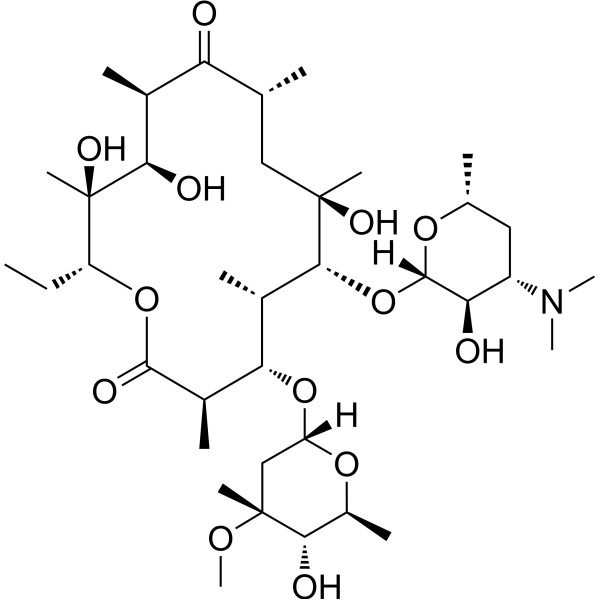
    Erythromycin is a macrolide antibiotic produced by actinomycete?Streptomyces erythreus?with a broad spectrum of antimicrobial activity. Erythromycin binds to bacterial 50S ribosomal subunits and inhibits?RNA-dependent protein synthesis?by blockage of transpeptidation and/or translocation reactions, without affecting synthesis of nucleic acid [1][2]. Erythromycin also exhibits antitumor and neuroprotective effect in different fields of research [3][4].
    Erythromycin
  • HY-B1455
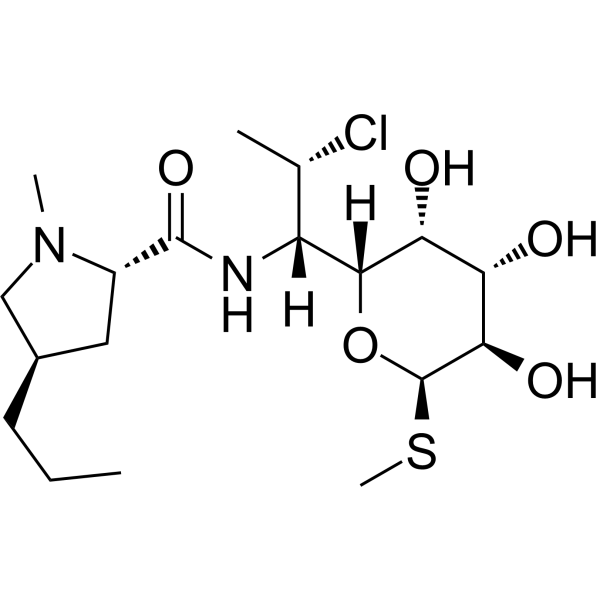
    Clindamycin
    10+ Cited Publications

    Bacterial Antibiotic Parasite Infection Cancer
    Clindamycin is an orally active and broad-spectrum bacteriostatic lincosamide antibiotic. Clindamycin can inhibit bacterial protein synthesis, possessing the ability to suppress the expression of virulence factors in Staphylococcus aureus at sub-inhibitory concentrations (sub-MICs). Clindamycin resistance results from enzymatic methylation of the antibiotic binding site in the 50S ribosomal subunit (23S rRNA). Clindamycin decreases the production of Panton-Valentine leucocidin (PVL), toxic-shock-staphylococcal toxin (TSST-1) or alpha-haemolysin (Hla). Clindamycin also can be used for researching malaria .
    Clindamycin
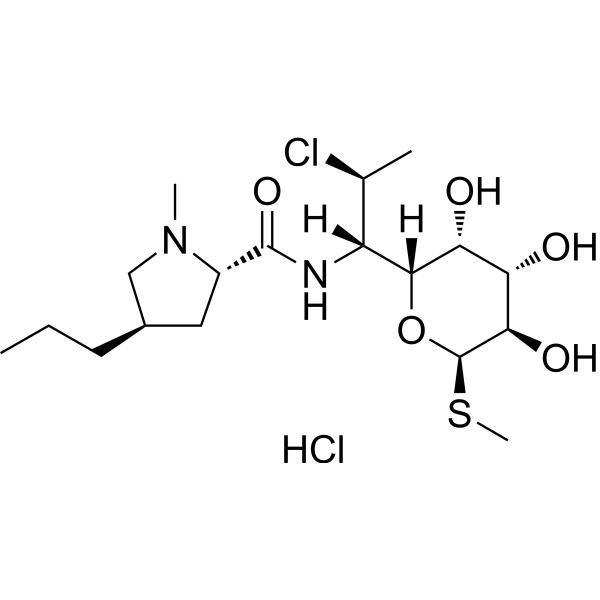
  • HY-B0408A
    Clindamycin hydrochloride
    10+ Cited Publications

    Bacterial Antibiotic Infection Cancer
    Clindamycin (hydrochloride) is a semisynthetic lincosamide antibiotic, which inhibits protein synthesis by acting on the 50S ribosomal.
    Clindamycin hydrochloride
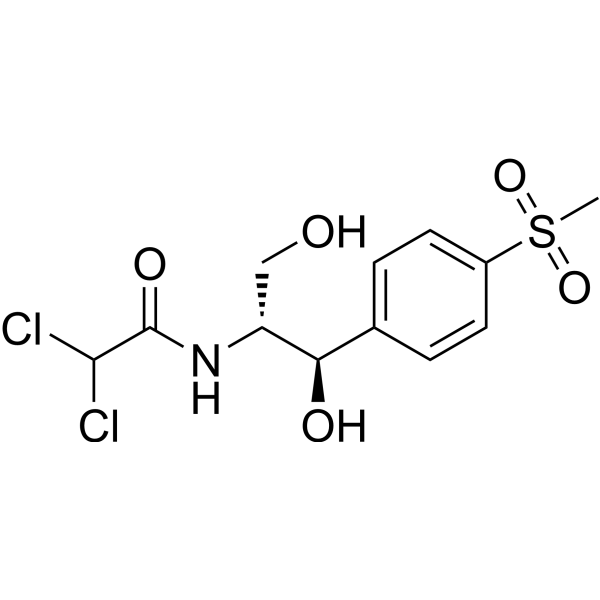
  • HY-B0479

    Thiophenicol; Dextrosulphenidol

    Beta-lactamase Bacterial Antibiotic Infection
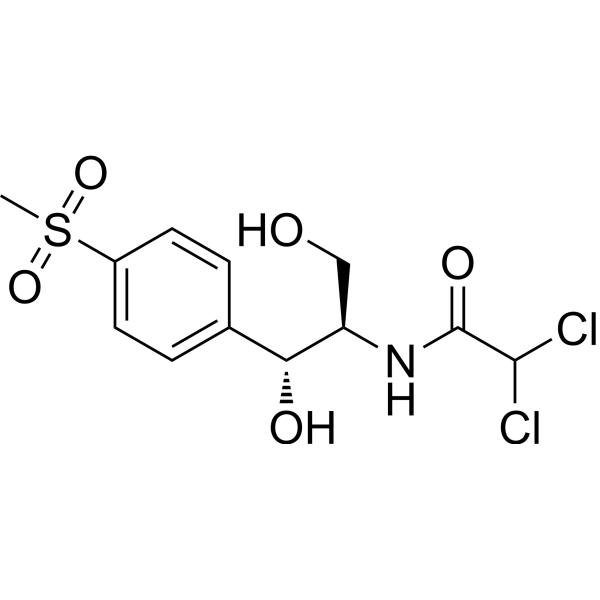
    Thiamphenicol (Thiophenicol), a methyl-sulfonyl derivative of Chloramphenicol, is a broad-spectrum antimicrobial antibiotic. Thiamphenicol acts by binding to the 50S ribosomal subunit, leading to inhibition of protein synthesis and bacteriostatic effect (against Gram-negative, Gram-positive aerobic and anaerobic bacteria) .
    Thiamphenicol
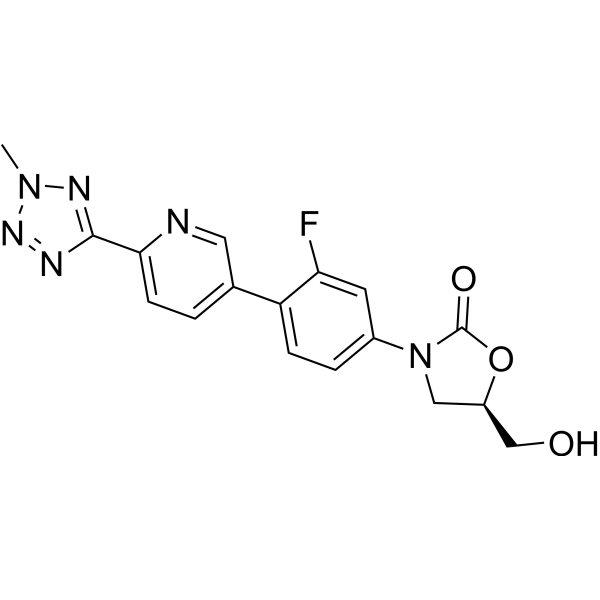
  • HY-14855
    Tedizolid
    15+ Cited Publications

    TR 700; Torezolid; DA-7157

    Bacterial Antibiotic Infection
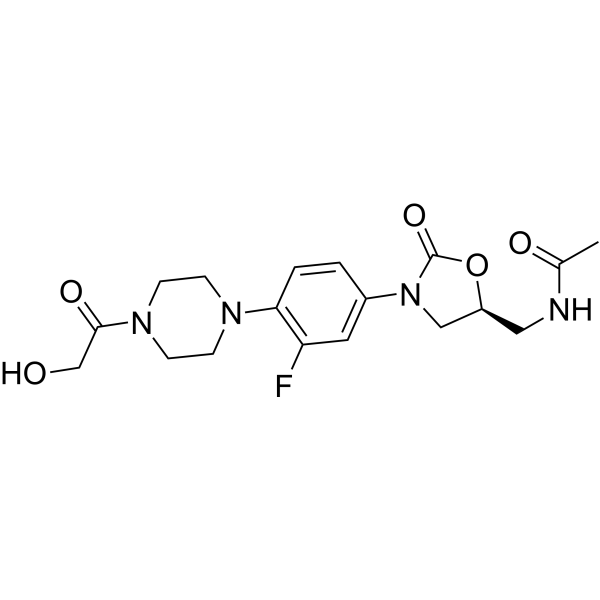
    Tedizolid (TR 700; Torezolid; DA-7157) is a novel oxazolidinone, acting through inhibition of bacterial protein synthesis by binding to 23S ribosomal RNA (rRNA) of the 50S subunit of the ribosome.
    Tedizolid
  • HY-B0509B
    Amikacin disulfate
    Maximum Cited Publications
    26 Publications Verification

    BAY 41-6551 disulfate

    Bacterial Antibiotic Infection Cancer
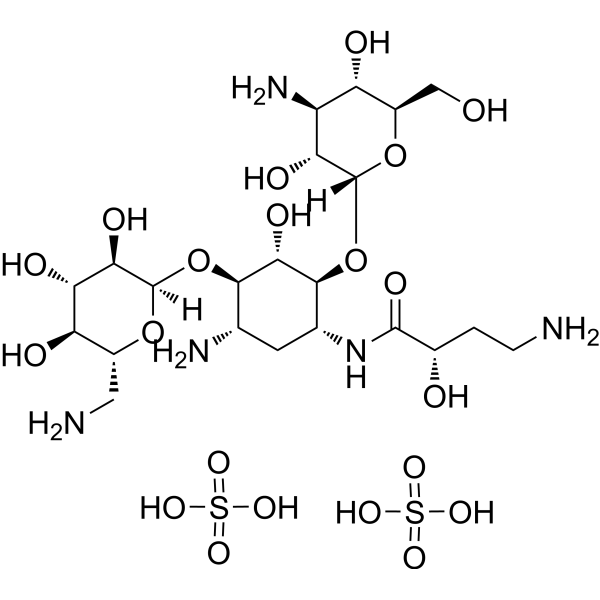
    Amikacin disulfate (BAY 41-6551 dissulfate) is an aminoglycoside antibiotic and a semisynthetic analog of kanamycin. Amikacin disulfate is bactericidal, acting directly on the 30S and 50S bacerial ribosomal subunits to inhibit protein synthesis. Amikacin disulfate is very active against most Gram-negative bacteria including gentamicin- and tobramycin-resistant strains. Amikacin disulfate also inhibits the infections caused by susceptible Nocardia and nontuberculous mycobacteria .
    Amikacin disulfate
  • HY-B0220A
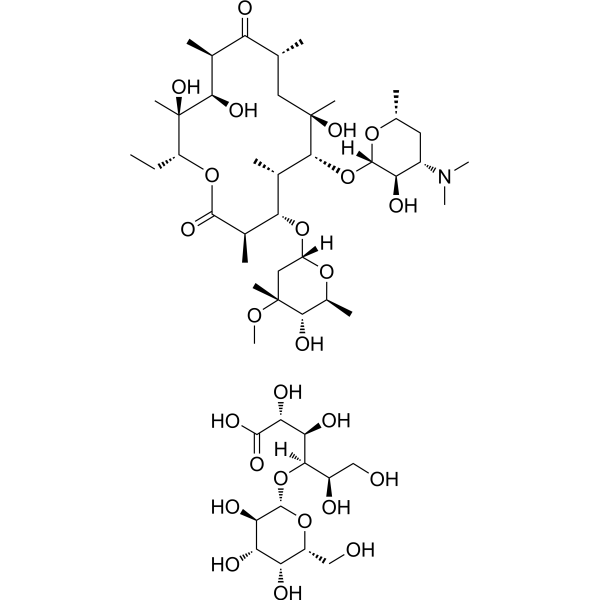
    Erythromycin lactobionate
    20+ Cited Publications

    Antibiotic Bacterial DNA/RNA Synthesis Infection Cancer
    Erythromycin lactobionate is a macrolide antibiotic produced by actinomycete Streptomyces erythreus with a broad spectrum of antimicrobial activity. Erythromycin lactobionate binds to bacterial 50S ribosomal subunits and inhibits RNA-dependent protein synthesis by blockage of transpeptidation and/or translocation reactions, without affecting synthesis of nucleic acid [1][2]. Erythromycin lactobionate also exhibits antitumor and neuroprotective effect in different fields of research [3][4].
    Erythromycin lactobionate
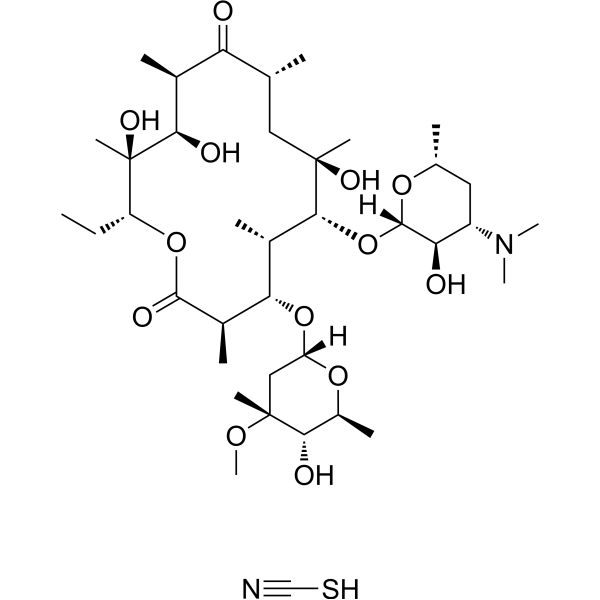
  • HY-B0220D
    Erythromycin thiocyanate
    Maximum Cited Publications
    24 Publications Verification

    Bacterial Antibiotic DNA/RNA Synthesis Infection Cancer
    Erythromycin thiocyanate is a macrolide antibiotic produced by actinomycete Streptomyces erythreus with a broad spectrum of antimicrobial activity. Erythromycin thiocyanate binds to bacterial 50S ribosomal subunits and inhibits RNA-dependent protein synthesis by blockage of transpeptidation and/or translocation reactions, without affecting synthesis of nucleic acid [1][2]. Erythromycin thiocyanate also exhibits antitumor and neuroprotective effect in different fields of research [3][4].
    Erythromycin thiocyanate
  • HY-107813
    Amikacin sulfate
    Maximum Cited Publications
    26 Publications Verification

    BAY 41-6551 sulfate

    Bacterial Antibiotic Infection Cancer
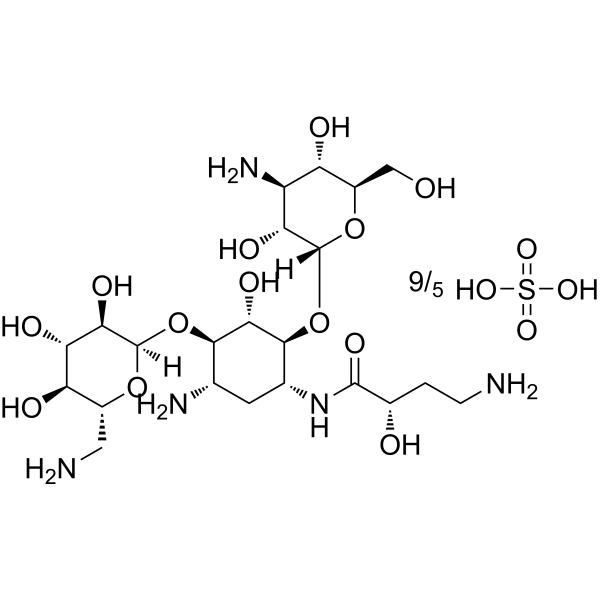
    Amikacin sulfate (BAY 41-6551 sulfate) is an aminoglycoside antibiotic and a semisynthetic analog of kanamycin. Amikacin sulfate is bactericidal, acting directly on the 30S and 50S bacerial ribosomal subunits to inhibit protein synthesis. Amikacin sulfate is very active against most Gram-negative bacteria including gentamicin- and tobramycin-resistant strains. Amikacin sulfate also inhibits the infections caused by susceptible Nocardia and nontuberculous mycobacteria .
    Amikacin sulfate
  • HY-19713
    LJI308
    4 Publications Verification

    Ribosomal S6 Kinase (RSK) YB-1 Cancer
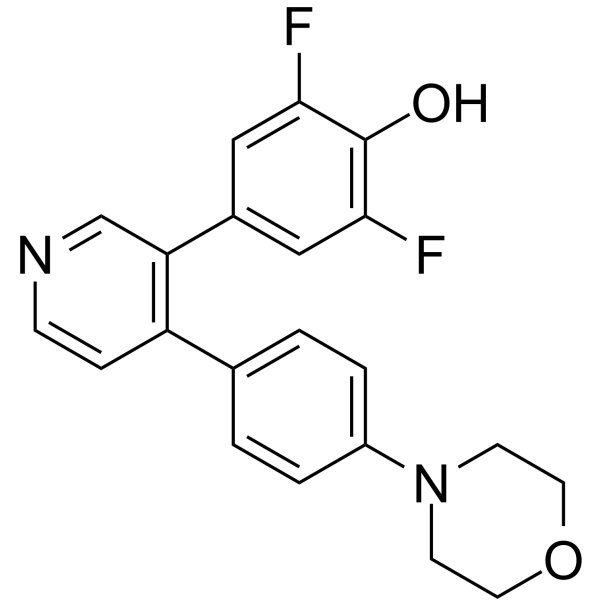
    LJI308 is a potent pan-ribosomal S6 kinase (RSK) inhibitor, with IC50s of 6 nM, 4 nM, and 13 nM for RSK1, RSK2, and RSK3, respectively. LJI308 inhibits the phosphorylation of RSK (T359/S363) and YB-1 (S102) after irradiation, treatment with EGF, and in cells expressing a KRAS mutation .
    LJI308
  • HY-10393

    PNU-100592

    Bacterial Antibiotic Infection
    Eperezolid (PNU-100592) is an orally active protein synthesis inhibitor that targets the bacterial 50S ribosomal subunit. Eperezolid competitively binds to a specific site on the ribosomal 50S subunit (overlapping with the binding sites of chloramphenicol (HY-B0239) and lincomycin (HY-117660)) to inhibit the translation initiation stage and exert antibacterial activity. Eperezolid can induce host cell autophagy to enhance the clearance of intracellular mycobacteria, and its MIC90 for Staphylococcus aureus and Enterococcus is 1-4 μg/mL. Eperezolid is mainly used for antibacterial research on infections with Gram-positive bacteria such as methicillin-resistant (HY-121544) Staphylococci and vancomycin-resistant (HY-B0671) Enterococci, as well as infections with intracellular bacteria such as Mycobacterium tuberculosis .
    Eperezolid
  • HY-B0509
    Amikacin hydrate
    Maximum Cited Publications
    26 Publications Verification

    BAY 41-6551 hydrate

    Bacterial Antibiotic Infection Cancer
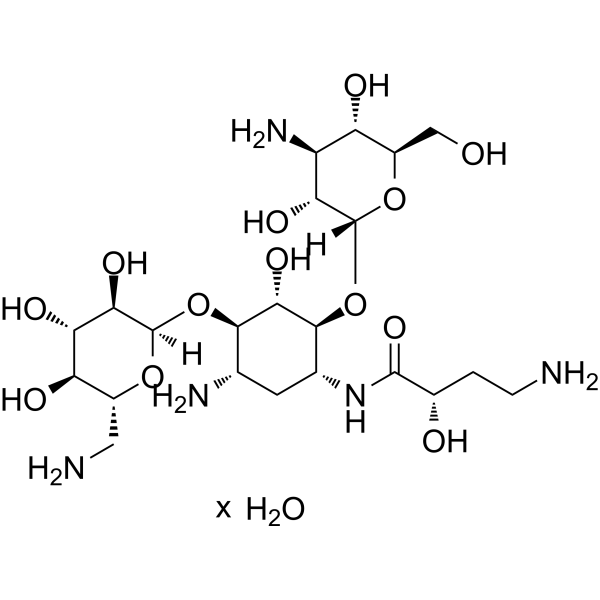
    Amikacin hydrate (BAY 41-6551 hydrate) is an aminoglycoside antibiotic and a semisynthetic analog of kanamycin. Amikacin hydrate is bactericidal, acting directly on the 30S and 50S bacerial ribosomal subunits to inhibit protein synthesis. Amikacin hydrate is very active against most Gram-negative bacteria including gentamicin- and tobramycin-resistant strains. Amikacin hydrate also inhibits the infections caused by susceptible Nocardia and nontuberculous mycobacteria .
    Amikacin hydrate
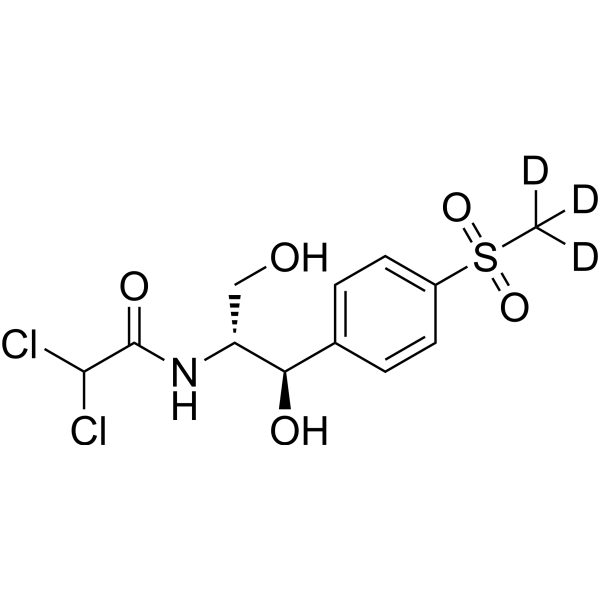
  • HY-B0479S

    Thiophenicol-d3; Dextrosulphenidol-d3

    Isotope-Labeled Compounds Bacterial Antibiotic Infection
    Thiamphenicol-d3 is a deuterium labeled Thiamphenicol. Thiamphenicol, a methyl-sulfonyl derivative of Chloramphenicol, is a broad-spectrum antimicrobial antibiotic. Thiamphenicol acts by binding to the 50S ribosomal subunit, leading to inhibition of protein synthesis and bacteriostatic effect (against Gram-negative, Gram-positive aerobic and anaerobic bacteria) .
    Thiamphenicol-d3
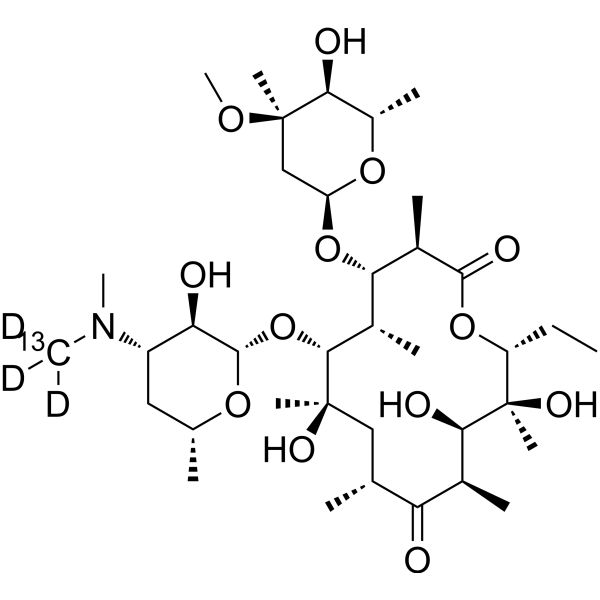
  • HY-B0220S1

    Isotope-Labeled Compounds Bacterial Antibiotic Infection
    Erythromycin- 13C,d3 is the 13C- and deuterium labeled Erythromycin. Erythromycin is a macrolide antibiotic produced by actinomycete?Streptomyces erythreus?with a broad spectrum of antimicrobial activity. Erythromycin acts by binding to bacterial 50S ribosomal subunits and inhibits?RNA-dependent protein synthesis?by blockage of transpeptidation and/or translocation reactions, without affecting synthesis of nucleic acid .
    Erythromycin-13C,d3
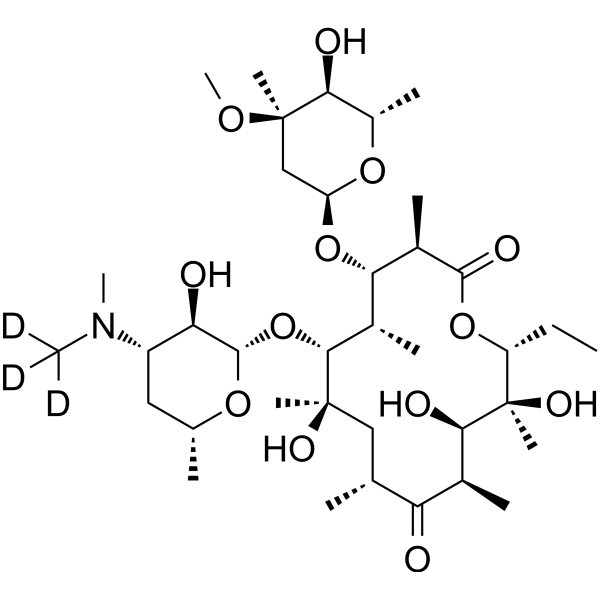
  • HY-B0220S2

    Bacterial DNA/RNA Synthesis Antibiotic Infection
    Erythromycin-d3 is the deuterium labeled Erythromycin . Erythromycin is a macrolide antibiotic produced by actinomycete Streptomyces erythreus with a broad spectrum of antimicrobial activity. Erythromycin binds to bacterial 50S ribosomal subunits and inhibits RNA-dependent protein synthesis by blockage of transpeptidation and/or translocation reactions, without affecting synthesis of nucleic acid. Erythromycin also exhibits antitumor and neuroprotective effect in different fields of research .
    Erythromycin-d3
  • HY-B0479R

    Thiophenicol (Standard); Dextrosulphenidol (Standard)

    Beta-lactamase Reference Standards Bacterial Antibiotic Infection
    Thiamphenicol (Standard) is the analytical standard of Thiamphenicol. This product is intended for research and analytical applications. Thiamphenicol (Thiophenicol), a methyl-sulfonyl derivative of Chloramphenicol, is a broad-spectrum antimicrobial antibiotic. Thiamphenicol acts by binding to the 50S ribosomal subunit, leading to inhibition of protein synthesis and bacteriostatic effect (against Gram-negative, Gram-positive aerobic and anaerobic bacteria) .
    Thiamphenicol (Standard)
  • HY-N7118

    Bacterial Antibiotic Infection Cancer
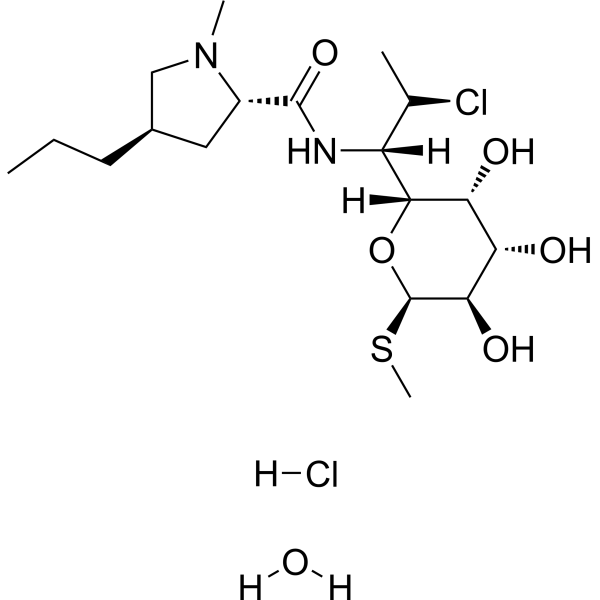
    Clindamycin hydrochloride monohydrate is an oral protein synthesis inhibitory agent that has the ability to suppress the expression of virulence factors in Staphylococcus aureus at sub-inhibitory concentrations (sub-MICs). Clindamycin hydrochloride monohydrate resistance results from enzymatic methylation of the antibiotic binding site in the 50S ribosomal subunit (23S rRNA). Clindamycin hydrochloride monohydrate decreases the production of Panton-Valentine leucocidin (PVL), toxic-shock-staphylococcal toxin (TSST-1) or alpha-haemolysin (Hla) .
    Clindamycin hydrochloride monohydrate
  • HY-B1455S1

    Isotope-Labeled Compounds Bacterial Antibiotic Parasite Infection
    Clindamycin- 13C,d3 is the 13C- and deuterium labeled Clindamycin. Clindamycin is an orally active and broad-spectrum bacteriostatic lincosamide antibiotic. Clindamycin can inhibit bacterial protein synthesis, possessing the ability to suppress the expression of virulence factors in Staphylococcus aureus at sub-inhibitory concentrations (sub-MICs). Clindamycin resistance results from enzymatic methylation of the antibiotic binding site in the 50S ribosomal subunit (23S rRNA). Clindamycin decreases the production of Panton-Valentine leucocidin (PVL), toxic-shock-staphylococcal toxin (TSST-1) or alpha-haemolysin (Hla). Clindamycin also can be used for researching malaria .
    Clindamycin-13C,d3
  • HY-B0408AR

    Reference Standards Bacterial Antibiotic Infection Cancer
    Clindamycin (hydrochloride) (Standard) is the analytical standard of Clindamycin (hydrochloride). This product is intended for research and analytical applications. Clindamycin (hydrochloride) is a semisynthetic lincosamide antibiotic, which inhibits protein synthesis by acting on the 50S ribosomal.
    Clindamycin hydrochloride (Standard)
  • HY-13787

    Akt Ribosomal S6 Kinase (RSK) GSK-3 Cancer
    XL-418 is an orally active dual Akt and p70S6K inhibitor with IC50s of 1 nM for Akt1 and 2 nM for p70S6K. XL-418 inhibits the phosphorylation of ribosomal protein S6 and GSK3β. XL-418 can be used for the study of prostate carcinoma and breast cancer .
    XL-418
  • HY-B0220B

    Antibiotic Bacterial Infection Cancer
    Erythromycin gluceptate is a macrolide antibiotic produced by actinomycete Streptomyces erythreus with a broad spectrum of antimicrobial activity. Erythromycin gluceptate binds to bacterial 50S ribosomal subunits and inhibits RNA-dependent protein synthesis by blockage of transpeptidation and/or translocation reactions, without affecting synthesis of nucleic acid [1][2]. Erythromycin gluceptate also exhibits antitumor and neuroprotective effect in different fields of research [3][4].
    Erythromycin (gluceptate)
  • HY-119405

    Antibiotic Bacterial Infection Inflammation/Immunology
    Niddamycin, a macrolide antibiotic, binds 50S ribosomal subunits to inhibit protein synthesis .
    Niddamycin
  • HY-B0220E

    Bacterial Antibiotic DNA/RNA Synthesis Infection Cancer
    Erythromycin A dihydrate is a macrolide antibiotic produced by actinomycete Streptomyces erythreus with a broad spectrum of antimicrobial activity. Erythromycin A dihydrate binds to bacterial 50S ribosomal subunits and inhibits RNA-dependent protein synthesis by blockage of transpeptidation and/or translocation reactions, without affecting synthesis of nucleic acid [1][2]. Erythromycin A dihydrate also exhibits antitumor and neuroprotective effect in different fields of research [3][4].
    Erythromycin A dihydrate
  • HY-108875

    Antibiotic Bacterial DNA/RNA Synthesis Infection Cancer
    Erythromycin stearate is a macrolide antibiotic produced by actinomycete Streptomyces erythreus with a broad spectrum of antimicrobial activity. Erythromycin stearate binds to bacterial 50S ribosomal subunits and inhibits RNA-dependent protein synthesis by blockage of transpeptidation and/or translocation reactions, without affecting synthesis of nucleic acid [1][2]. Erythromycin stearate also exhibits antitumor and neuroprotective effect in different fields of research [3][4].
    Erythromycin stearate
  • HY-B0220R
    Erythromycin (Standard)
    Maximum Cited Publications
    24 Publications Verification

    Reference Standards Bacterial Antibiotic DNA/RNA Synthesis Infection Cancer
    Erythromycin (Standard) is the analytical standard of Erythromycin. This product is intended for research and analytical applications. Erythromycin is a macrolide antibiotic produced by actinomycete?Streptomyces erythreus?with a broad spectrum of antimicrobial activity. Erythromycin binds to bacterial 50S ribosomal subunits and inhibits?RNA-dependent protein synthesis?by blockage of transpeptidation and/or translocation reactions, without affecting synthesis of nucleic acid . Erythromycin also exhibits antitumor and neuroprotective effect in different fields of research .
    Erythromycin (Standard)
  • HY-19428A

    RBx-7644

    Antibiotic Bacterial Infection Cardiovascular Disease
    Ranbezolid (RBx7644 free base) is an orally active, oxazolidinone antibiotic against Gram-positive and Gram-negative anaerobes including Staphylococcus aureus, Staphylococcus epidermidis and Bacteroides fragilis. Ranbezolid can inhibit the 50s ribosomal subunit with an IC50 of 17 μM for bacterial ribosomes. Ranbezolid interferes cell wall and lipid synthesis. Ranbezolid can rapidly kill bacteria, significantly reduce bacterial load, and has better cardiovascular safety. Ranbezolid can be used for the study of antibiotics for anaerobic bacteria .
    Ranbezolid hydrochloride
  • HY-19428

    RBx7644 free base

    Antibiotic Bacterial Infection Cardiovascular Disease
    Ranbezolid (RBx7644 free base) is an orally active, oxazolidinone antibiotic against Gram-positive and Gram-negative anaerobes including Staphylococcus aureus, Staphylococcus epidermidis and Bacteroides fragilis. Ranbezolid can inhibit the 50s ribosomal subunit with an IC50 of 17 μM for bacterial ribosomes. Ranbezolid interferes cell wall and lipid synthesis. Ranbezolid can rapidly kill bacteria, significantly reduce bacterial load, and has better cardiovascular safety. Ranbezolid can be used for the study of antibiotics for anaerobic bacteria .
    Ranbezolid
  • HY-B1455S

    Bacterial Antibiotic Parasite Infection
    Clindamycin-d3 (hydrochloride) is the deuterium labeled Clindamycin. Clindamycin is an orally active and broad-spectrum bacteriostatic lincosamide antibiotic. Clindamycin can inhibit bacterial protein synthesis, possessing the ability to suppress the expression of virulence factors in Staphylococcus aureus at sub-inhibitory concentrations (sub-MICs). Clindamycin resistance results from enzymatic methylation of the antibiotic binding site in the 50S ribosomal subunit (23S rRNA). Clindamycin decreases the production of Panton-Valentine leucocidin (PVL), toxic-shock-staphylococcal toxin (TSST-1) or alpha-haemolysin (Hla). Clindamycin also can be used for researching malaria .
    Clindamycin-d3 hydrochloride
  • HY-B0479S1

    Thiophenicol-d3-1; Dextrosulphenidol-d3-1

    Isotope-Labeled Compounds Infection
    Thiamphenicol-d3-1 (Thiophenicol-d3-1; Dextrosulphenidol-d3-1) is the deuterium-labeled Thiamphenicol (HY-B0479) . Thiamphenicol (Thiophenicol),a methyl-sulfonyl derivative of Chloramphenicol,is a broad-spectrum antimicrobial antibiotic. Thiamphenicol acts by binding to the 50S ribosomal subunit,leading to inhibition of protein synthesis and bacteriostatic effect (against Gram-negativeGram-positive aerobic and anaerobic bacteria) .
    Thiamphenicol-d3-1
  • HY-N2301R

    Drosophilin B (Standard); Mutilin 14-glycolate (Standard)

    Reference Standards Antibiotic Bacterial Infection
    Pleuromutilin (Standard) is the analytical standard of Pleuromutilin. This product is intended for research and analytical applications. Pleuromutilin (Drosophilin B) inhibits bacterial protein synthesis by binding to the 50S ribosomal subunit of bacteria.
    Pleuromutilin (Standard)
  • HY-163967

    Biochemical Assay Reagents Bacterial Infection
    Clindamycin 2,4-diphosphate is a related impurity of Clindamycin phosphate (HY-B1064), a prodrug of Clindamycin (HY-B1455). Clindamycin phosphate inhibits protein synthesis by targeting the bacterial ribosomal 50S subunit .
    Clindamycin 2,4-diphosphate
  • HY-W749665

    Isotope-Labeled Compounds Bacterial Antibiotic Cancer
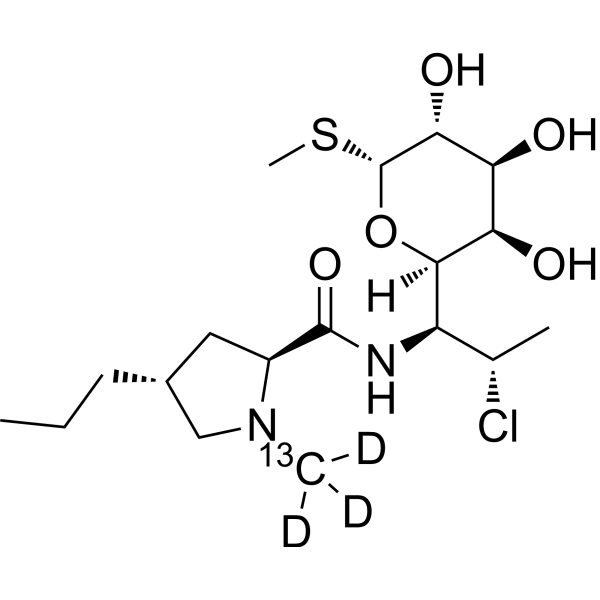
    Clindamycin Hydrochloride- 13C,d3 is the deuterium and 13C-labeled Clindamycin hydrochloride (HY-B0408A). Clindamycin hydrochloride is a semisynthetic lincosamide antibiotic, which inhibits protein synthesis by acting on the 50S ribosomal.
    Clindamycin Hydrochloride-13C,d3
  • HY-14855R

    TR 700 (Standard); Torezolid (Standard); DA-7157 (Standard)

    Reference Standards Bacterial Antibiotic Infection
    Tedizolid (Standard) is the analytical standard of Tedizolid. This product is intended for research and analytical applications. Tedizolid (TR 700; Torezolid; DA-7157) is a novel oxazolidinone, acting through inhibition of bacterial protein synthesis by binding to 23S ribosomal RNA (rRNA) of the 50S subunit of the ribosome.
    Tedizolid (Standard)
  • HY-14855S

    TR 700-13C,d3; Torezolid-13C,d3; DA-7157-13C,d3

    Isotope-Labeled Compounds Bacterial Antibiotic Infection
    Tedizolid- 13C,d3 is the 13C- and deuterium labeled Tedizolid. Tedizolid (TR 700; Torezolid; DA-7157) is a novel oxazolidinone, acting through inhibition of bacterial protein synthesis by binding to 23S ribosomal RNA (rRNA) of the 50S subunit of the ribosome.
    Tedizolid-13C,d3
  • HY-B0220S

    Bacterial Antibiotic Infection
    Erythromycin-d6 is the deuterium labeled Erythromycin. Erythromycin is a macrolide antibiotic produced by actinomycete?Streptomyces erythreus?with a broad spectrum of antimicrobial activity. Erythromycin acts by binding to bacterial 50S ribosomal subunits and inhibits?RNA-dependent protein synthesis?by blockage of transpeptidation and/or translocation reactions, without affecting synthesis of nucleic acid .
    Erythromycin-d6
  • HY-116974

    ent-Thiophenicol; ent-Dextrosulphenidol

    Antibiotic Others
    ent-Thiamphenicol (ent-Dextrosulphenidol) is a enantiomer of Thiamphenicol (HY-B0479). Thiamphenicol, a methyl-sulfonyl derivative of Chloramphenicol, is a broad-spectrum antimicrobial antibiotic. Thiamphenicol acts by binding to the 50S ribosomal subunit, leading to inhibition of protein synthesis and bacteriostatic effect (against Gram-negative, Gram-positive aerobic and anaerobic bacteria) .
    ent-Thiamphenicol
  • HY-163486

    Bacterial Infection
    Antituberculosis agent-10 (Compound 9) has excellent antibacterial activity against Mycobacterium tuberculosis (MIC = 0.3 μM). Antituberculosis agent-10 inhibits protein synthesis by targeting the 50S ribosomal subunit of the bacterium, thus exerting its antibacterial effect. Antituberculosis agent-10 is orally active .
    Antituberculosis agent-10
  • HY-12770R

    Mebeverine metabolite Mebeverine alcohol (Standard)

    Reference Standards Drug Metabolite Neurological Disease
    Mebeverine alcohol (Standard) is an analytical standard for Mebeverine alcohol. This product is intended for research and analytical applications. Eperezolid (PNU-100592) is an orally active protein synthesis inhibitor that targets the bacterial 50S ribosomal subunit. Eperezolid competitively binds to a specific site on the ribosomal 50S subunit (overlapping with the binding sites of Chloramphenicol (HY-B0239) and Lincomycin (HY-117660)) to inhibit the translation initiation stage and exert antibacterial activity. Eperezolid can induce host cell autophagy to enhance the clearance of intracellular mycobacteria, and its MIC90 for Staphylococcus aureus and Enterococcus is 1-4 μg/mL. Eperezolid is mainly used for antibacterial research on infections with Gram-positive bacteria such as methicillin-resistant (HY-121544) Staphylococci and vancomycin-resistant (HY-B0671) Enterococci, as well as infections with intracellular bacteria such as Mycobacterium tuberculosis .
    Mebeverine alcohol (Standard)
  • HY-B0220C

    Antibiotic Bacterial DNA/RNA Synthesis Infection Cancer
    Erythromycin aspartate is a macrolide antibiotic produced by actinomycete?Streptomyces erythreus?with a broad spectrum of antimicrobial activity. Erythromycin aspartate binds to bacterial 50S ribosomal subunits and inhibits?RNA-dependent protein synthesis?by blockage of transpeptidation and/or translocation reactions, without affecting synthesis of nucleic acid [1][2]. Erythromycin aspartate also exhibits antitumor and neuroprotective effect in different fields of research [3][4].
    Erythromycin (aspartate)
  • HY-B0220F

    Bacterial Antibiotic DNA/RNA Synthesis Infection Cancer
    Erythromycin glutamate is a macrolide antibiotic produced by actinomycete Streptomyces erythreus with a broad spectrum of antimicrobial activity. Erythromycin glutamate binds to bacterial 50S ribosomal subunits and inhibits RNA-dependent protein synthesis by blockage of transpeptidation and/or translocation reactions, without affecting synthesis of nucleic acid [1][2]. Erythromycin glutamate also exhibits antitumor and neuroprotective effect in different fields of research [3][4].
    Erythromycin (glutamate)
  • HY-178717

    Fungal Infection
    WML-01 is a fungicide with EC50s of 0.079, 0.72 and 2.02 μg/mL against F. graminearum, F. fujikuroi and S. sclerotiorum. WML-01 disrupts the cell membrane of F. graminearum and induces deposition of lipid droplets. WML-01 inhibits Deoxynivalenol (DON) (HY-N6684) biosynthesis with no cross-resistance and strongly suppresses ribosomal subunit assembly, impairing protein synthesis. WML-01 effectively controls the fusarium head blight (FHB) epidemic .
    WML-01
  • HY-B0220DR

    Reference Standards Bacterial Antibiotic DNA/RNA Synthesis Infection Cancer
    Erythromycin (thiocyanate) (Standard) is the analytical standard of Erythromycin (thiocyanate). This product is intended for research and analytical applications. Erythromycin thiocyanate is a macrolide antibiotic produced by actinomycete Streptomyces erythreus with a broad spectrum of antimicrobial activity. Erythromycin thiocyanate binds to bacterial 50S ribosomal subunits and inhibits RNA-dependent protein synthesis by blockage of transpeptidation and/or translocation reactions, without affecting synthesis of nucleic acid[1][2]. Erythromycin thiocyanate also exhibits antitumor and neuroprotective effect in different fields of research[3][4].
    Erythromycin thiocyanate (Standard)
  • HY-B0509BR

    BAY 41-6551 disulfate (Standard)

    Reference Standards Bacterial Antibiotic Infection Cancer
    Amikacin (disulfate) (Standard) is the analytical standard of Amikacin (disulfate). This product is intended for research and analytical applications. Amikacin disulfate (BAY 41-6551 dissulfate) is an aminoglycoside antibiotic and a semisynthetic analog of kanamycin. Amikacin disulfate is bactericidal, acting directly on the 30S and 50S bacerial ribosomal subunits to inhibit protein synthesis. Amikacin disulfate is very active against most Gram-negative bacteria including gentamicin-and tobramycin-resistant strains. Amikacin disulfate also inhibits the infections caused by susceptible Nocardia and nontuberculous mycobacteria .
    Amikacin disulfate (Standard)
  • HY-N7118R

    Reference Standards Bacterial Antibiotic Infection Cancer
    Clindamycin (hydrochloride monohydrate) (Standard) is the analytical standard of Clindamycin (hydrochloride monohydrate). This product is intended for research and analytical applications. Clindamycin hydrochloride monohydrate is an oral protein synthesis inhibitory agent that has the ability to suppress the expression of virulence factors in Staphylococcus aureus at sub-inhibitory concentrations (sub-MICs). Clindamycin hydrochloride monohydrate resistance results from enzymatic methylation of the antibiotic binding site in the 50S ribosomal subunit (23S rRNA). Clindamycin hydrochloride monohydrate decreases the production of Panton-Valentine leucocidin (PVL), toxic-shock-staphylococcal toxin (TSST-1) or alpha-haemolysin (Hla) .
    Clindamycin hydrochloride monohydrate (Standard)
  • HY-B1455R

    Reference Standards Bacterial Antibiotic Parasite Infection Cancer
    Clindamycin (Standard) is the analytical standard of Clindamycin. This product is intended for research and analytical applications. Clindamycin is an orally active and broad-spectrum bacteriostatic lincosamide antibiotic. Clindamycin can inhibit bacterial protein synthesis, possessing the ability to suppress the expression of virulence factors in Staphylococcus aureus at sub-inhibitory concentrations (sub-MICs). Clindamycin resistance results from enzymatic methylation of the antibiotic binding site in the 50S ribosomal subunit (23S rRNA). Clindamycin decreases the production of Panton-Valentine leucocidin (PVL), toxic-shock-staphylococcal toxin (TSST-1) or alpha-haemolysin (Hla). Clindamycin also can be used for researching malaria .
    Clindamycin (Standard)
  • HY-105374

    Bacterial Infection
    PNU 101099 is a 50S ribosomal subunit inhibitor. PNU 101099 has antibacterial activity. PNU 101099 can be used for infection research .
    PNU 101099
  • HY-170993

    Antibiotic Bacterial Infection Inflammation/Immunology
    Antimicrobial agent-39 (Compound 8i) is an antibiotic that targets 50S ribosomal subunit and inhibits bacterial protein synthesis. Antimicrobial agent-39 disrupts bacterial cell membranes, leads to leakage of cell contents, thereby exhibiting board-spectrum actibacterial activity. Antimicrobial agent-39 targets organic cation transporters (OCTs), accumulates in infected kidneys, thereby ameliorating pyelonephritis in mouse models .
    Antimicrobial agent-39
  • HY-P11040

    Bacterial Antibiotic Infection
    Peptide P2.2, a non-ribosomal peptide, is an antimicrobial peptide. Peptide P2.2 has potent antibacterial activity with MIC50s of 4 and 32 μM for V. parahaemolyticus and V. alginolyticus, respectively. Peptide P2.2 increases synergistic antibacterial effects with antibiotics (such as Ofloxacin (HY-B0125) and Linezolid (HY-10394)) with negligible hemolytic activity. Peptide P2.2 disrupts bacterial membranes and increases permeability by modulating proteins involved in the type VI and III secretion systems. Peptide P2.2 can be used for bacterial infections research .
    Peptide P2.2

Inquiry Online

Your information is safe with us. * Required Fields.

Salutation


Country or Region *

Applicant Name *


Organization Name *

Department *


Email Address *


Product Name *

Cat. No.


Requested quantity *

Phone Number *


Remarks

Inquiry Online

Inquiry Information

Product Name:
Cat. No.:
Quantity:
MCE Japan Authorized Agent:

