10 Results for "

AchR-α7

" in MedChemExpress (MCE) Product Catalog:
Products (10)

10 Results for "AchR-α7" in MCE Product Catalog:

1
1 Cited Publications
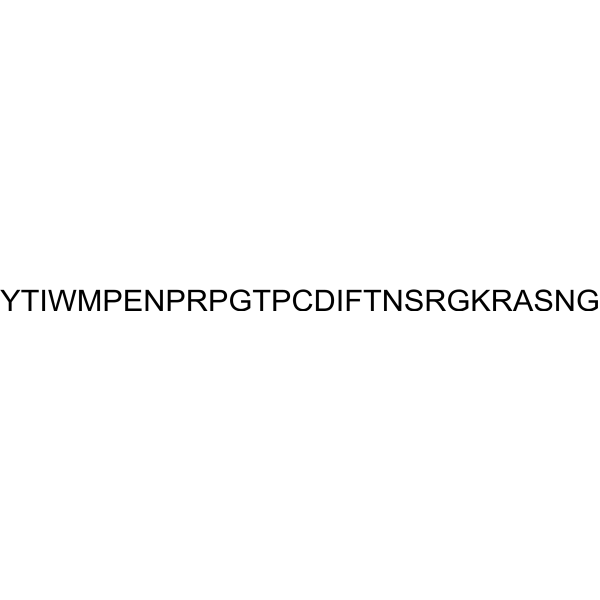
Cat. No.: HY-P5623
CAS No.: 115136-25-9
Synonyms: RVG29; RDP; Rabies Virus Glycoprotein-29
RVG (RVG29) is a blood-brain barrier-permeable peptide derived from rabies virus glycoprotein, which binds to the α-7 subunit of neuronal nicotinic acetylcholine receptor (AchR). RVG efficiently delivers drugs to nerve cells and antigen-presenting cells in a targeted manner, and enhances the efficiency of antigen presentation and drug delivery .
loading...
    loading...
1
1 Cited Publications
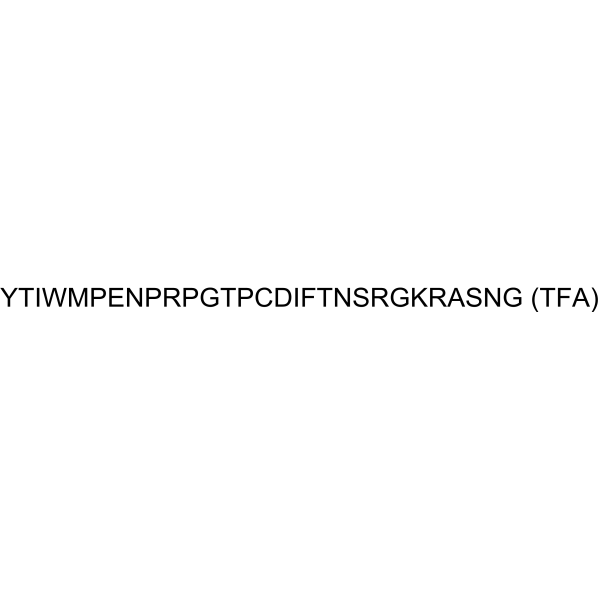
Cat. No.: HY-P5623B
Synonyms: RVG29 TFA; RDP TFA; Rabies Virus Glycoprotein-29 TFA
Target:  

Bacterial

Research Areas:  

Infection

RVG TFA is a peptide derived from Rabies Virus Glycoprotein that binds to the α-7 subunit of nicotinic acetylcholine receptors (AchR) of neuronal cells. RVG enhances delivery of Mycobacterium tuberculosis antigens to antigen-presenting cells .
loading...
    loading...
1
1 Cited Publications
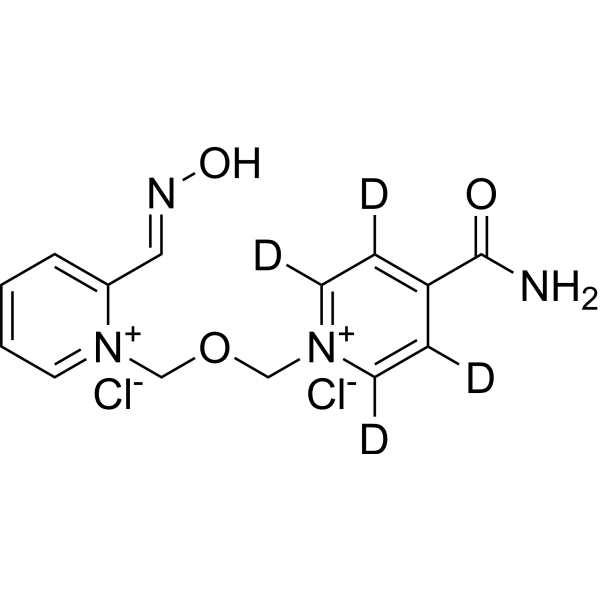
Cat. No.: HY-106901AS
Purity:  ≥96.0%
Synonyms: HI-6-d4
Asoxime-d4 dichloride (HI-6-d4) is the deuterium labeled Asoxime dichloride. Asoxime dichloride is an orally active thiosemicarbazone-based antidote. Asoxime dichloride is a reversible inhibitor of AChE, and its core mechanism of action is to re-activate AChE inhibited by nerve toxins, thereby restoring the cholinergic nerve function. Asoxime dichloride significantly restores the function of poisoned muscles without reactivating AChE. Asoxime dichloride is an antagonist of acetylcholine receptors (AChRs), including nicotinic receptor and α7 nAChR. Asoxime dichloride can serve as an effective immunomodulator, improving the immune effect of the nervous system.
loading...
    loading...
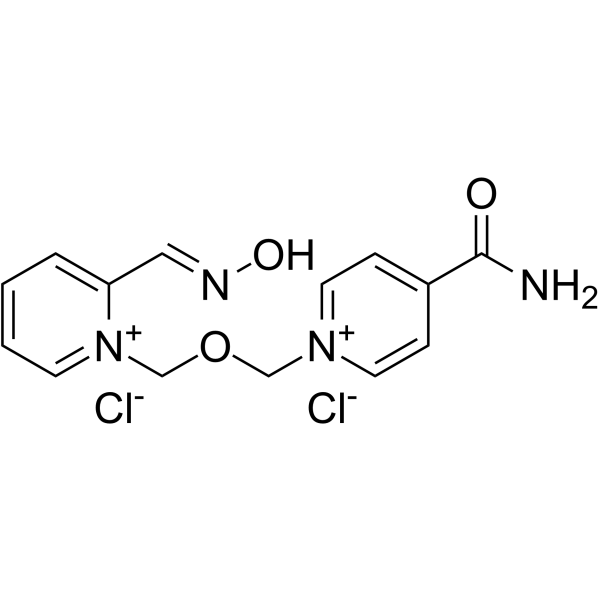
Cat. No.: HY-106901A
CAS No.: 34433-31-3
Purity:  98.47%
Synonyms: HI-6
Research Areas:  

Neurological Disease

Asoxime dichloride (HI-6) is an orally active thiosemicarbazone-based antidote. Asoxime dichloride is a reversible inhibitor of AChE, and its core mechanism of action is to re-activate AChE inhibited by nerve toxins, thereby restoring the cholinergic nerve function. Asoxime dichloride significantly restores the function of poisoned muscles without reactivating AChE. Asoxime dichloride is an antagonist of acetylcholine receptors (AChRs), including nicotinic receptor and α7 nAChR. Asoxime dichloride can serve as an effective immunomodulator, improving the immune effect of the nervous system .
loading...
    loading...
Cat. No.: HY-19411
CAS No.: 446031-79-4
Target:  

nAChR

Research Areas:  

Neurological Disease

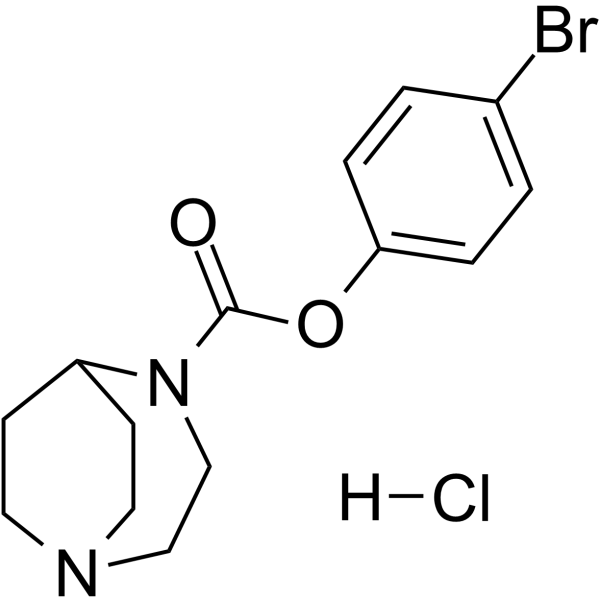
SSR180711 hydrochloride is an orally active, selective and reversible α7 acetylcholine nicotinic receptor (n-AChRs) partial agonist. SSR180711 hydrochloride can act on rat α7 n-AChR (Ki=22 nM; IC50=30 nM) and human α7 n-AChR (Ki=14 nM; IC50=18 nM). SSR180711 hydrochloride increases glutamatergic neurotransmission, ACh release and long-term potentiation (LTP) in the hippocampus .
loading...
    loading...
Cat. No.: HY-115766
CAS No.: 3471-05-4
Purity:  ≥96.0%
Target:  

nAChR

Research Areas:  

Neurological Disease

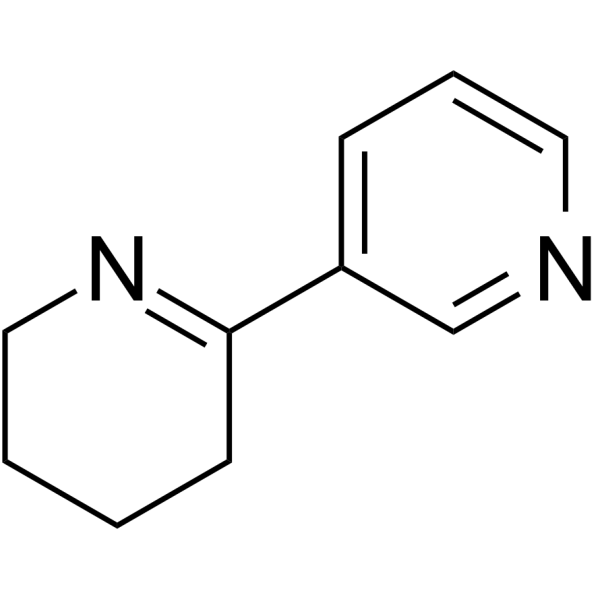
Anabaseine, a brain-penetrant occurring alkaloid toxin, is potent agonist of multiple nicotinic acetylcholine receptors (AChRs). Anabaseine stimulates the neuromuscular α12β1γδ or α12β1γɛ and α7 AChRs. Anabaseine is also a weak partial agonist at α4β2 nAChRs .
loading...
    loading...
Cat. No.: HY-115766S
CAS No.: 1020719-05-4
Anabaseine-d4 is the deuterium labeled Anabaseine (HY-115766). Anabaseine is a non-selective nicotinic agonist. Anabaseine stimulates all AChRs, preferentially stimulates skeletal muscle and brain α7 subtypes . Anabaseine is also a weak partial agonist at α4β2 nAChRs .
loading...
    loading...
Cat. No.: HY-115766R
CAS No.: 3471-05-4
Research Areas:  

Neurological Disease

Anabaseine (Standard) is the analytical standard of Anabaseine. This product is intended for research and analytical applications. Anabaseine is a non-selective nicotinic agonist. Anabaseine stimulates all AChRs, preferentially stimulates skeletal muscle and brain α7 subtypes . Anabaseine is also a weak partial agonist at α4β2 nAChRs .
loading...
    loading...
Cat. No.: HY-106901B
CAS No.: 144252-71-1
Synonyms: HI-6 dimesylate
Research Areas:  

Neurological Disease

Asoxime dimesylate (HI-6 dimesylate) is an orally active thiosemicarbazone-based antidote. Asoxime dimesylate is a reversible inhibitor of AChE, and its core mechanism of action is to re-activate AChE inhibited by nerve toxins, thereby restoring the cholinergic nerve function. Asoxime dimesylate significantly restores the function of poisoned muscles without reactivating AChE. Asoxime dimesylate is an antagonist of acetylcholine receptors (AChRs), including nicotinic receptor and α7 nAChR. Asoxime dimesylate can serve as an effective immunomodulator, improving the immune effect of the nervous system .
loading...
    loading...
Cat. No.: HY-188044
Target:  

mAChR

Research Areas:  

Neurological Disease

DC-98-LC74 is a selective modulator of adult skeletal muscle-type nicotinic acetylcholine receptor (α1β1δε), with an EC50 value of 6.5 µM for the human receptor and an IC50 of 13.45 µM for the human α3β4 nicotinic acetylcholine receptor. DC-98-LC74 increases the ligand-free opening probability of the receptor via the ε subunit M2-M3 loop, and prolongs the burst duration and opening probability of wild-type and fast-channel mutant AChR. DC-98-LC74 exerts weak effects on neuronal AChR subtypes and has no agonist activity. DC-98-LC74 prolongs the mouse diaphragm endplate current and improves muscle contractility in isolated neuromuscular preparations from sarcopenic mice. DC-98-LC74 can be used for studies on neuromuscular junction function and myasthenia-related diseases .
loading...
    loading...

