1. Search Result
Search Result
Pathways Recommended: PI3K/Akt/mTOR
Results for "

Akt/mTOR-IN-1

" in MedChemExpress (MCE) Product Catalog:

9

Inhibitors & Agonists

1

Fluorescent Dyes

5

Natural
Products

Targets Recommended:
Cat. No. Product Name Target Research Areas Chemical Structure
  • HY-N0559
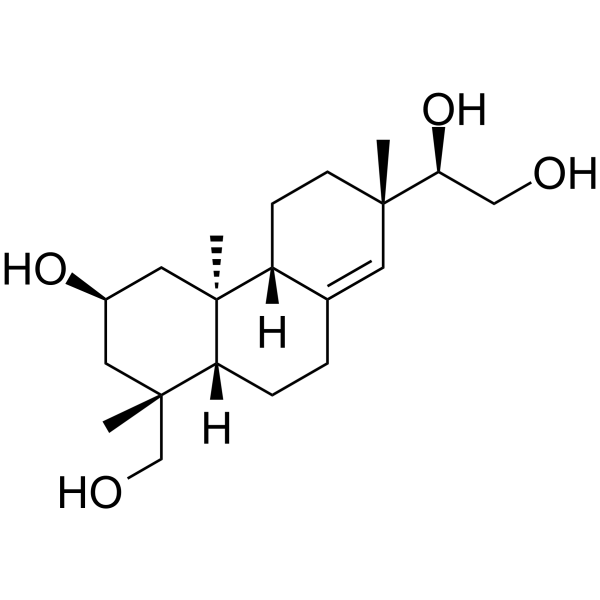
    Kirenol
    1 Publications Verification

    Casein Kinase Apoptosis AMPK Akt NF-κB TGF-beta/Smad Cardiovascular Disease Neurological Disease Metabolic Disease Inflammation/Immunology Cancer
    Kirenol is a diterpenoid compound, an orally active apoptosis inducer and signaling pathway regulator, with a Kd value of 5.47 μM against the target CK2. Kirenol promotes the cleavage of Bid into tBid, regulates the protein levels/phosphorylation of Bax, Bcl-2, p53 and p21, and induces caspase-independent apoptosis, S-phase cell cycle arrest, ROS accumulation and cytotoxicity in cancer cells. Kirenol activates the CK2/AKT and AMPK-mTOR-ULK1 pathways, inhibits the signaling of NF-κB, TGF-β/Smads and NLRP3 inflammasome, and regulates the GSK3β, BMP and Wnt/β-catenin pathways. Kirenol induces autophagy, mitophagy and osteoblast differentiation, promotes mitochondrial fusion, and exerts antioxidant, anti-inflammatory, antifibrotic, renoprotective, cardioprotective, neuroprotective and analgesic effects. Kirenol is applicable to research related to chronic myeloid leukemia, ischemic stroke, diabetic nephropathy, heart failure, acute lung injury and osteoporosis .
    Kirenol
  • HY-N0901
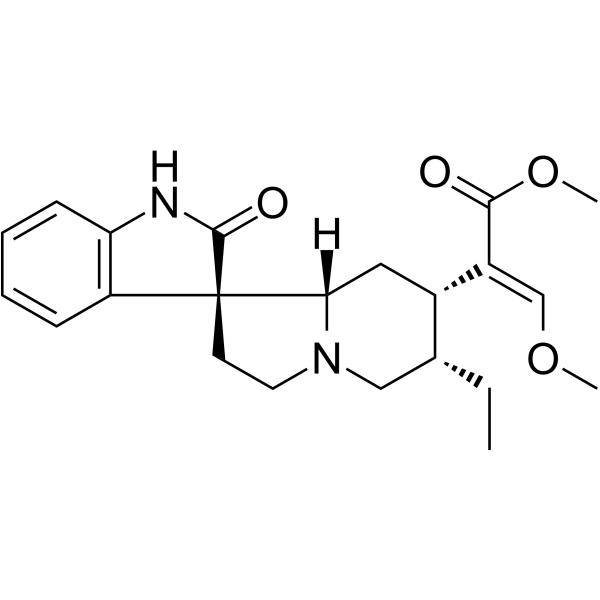
    Corynoxine
    3 Publications Verification

    Autophagy Neurological Disease Cancer
    Corynoxine, a tetracyclic oxindole alkaloid, is isolated from the hooks of Uncaria rhynchophylla. Corynoxine is a natural autophagy enhancer that promotes the clearance of alpha-synuclein via Akt/mTOR pathway .
    Corynoxine
  • HY-N3354

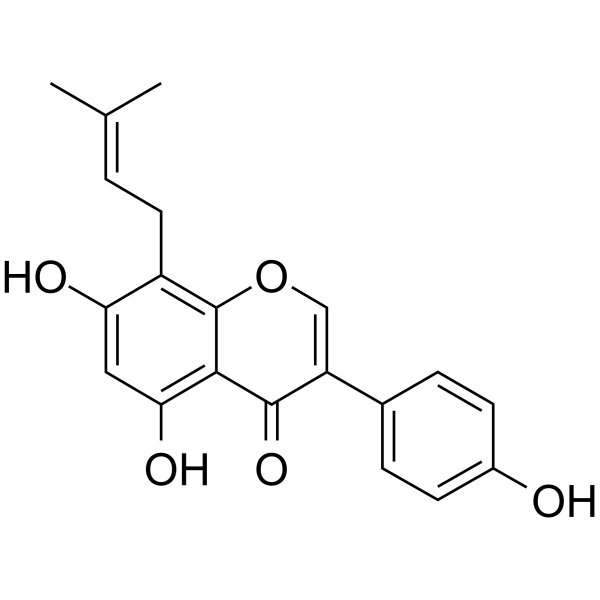
    8-prenylgenisteIN

    Apoptosis Cancer
    Lupiwighteone is an isoflavone present widely in wild-growing plants, with antioxidant, antimicrobial and anticancer effects. Lupiwighteone induces caspase-dependent and -independent apoptosis on human breast cancer cells via inhibiting PI3K/Akt/mTOR pathway .
    Lupiwighteone
  • HY-161857

    Akt mTOR Caspase CDK Cancer
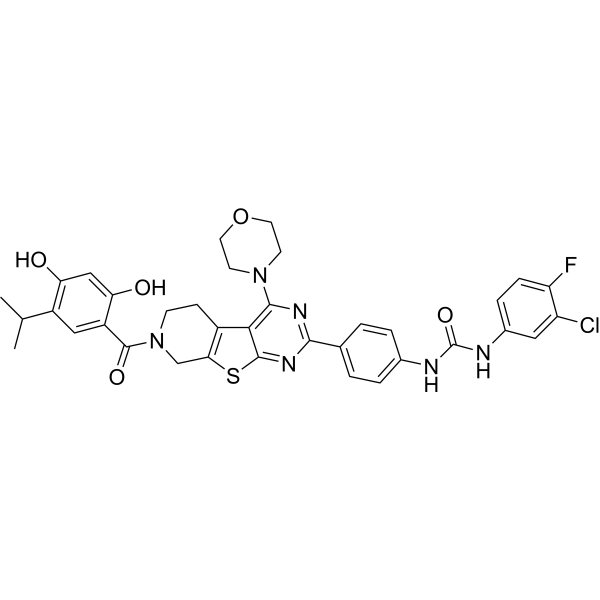
    Akt/mTOR-IN-1 (Compound 8r) is an AKT/mTOR signaling pathway inhibitor exhibiting an IC50 value of 0.8 µM with anticancer activity. Akt/mTOR-IN-1 can decrease the expression of Caspase 3 and increase the expression of the autophagic protein Cyclin B1, thereby inducing cell autophagy and apoptosis. Akt/mTOR-IN-1 can be used in research related to non-small cell lung cancer (NSCLC) .
    Akt/mTOR-IN-1
  • HY-151137

    mTOR HSP Apoptosis Autophagy Cancer
    HSP90/mTOR-IN-1 is a potent and orally active Hsp90 and mTOR inhibitor with IC50 values of 69 nM and 29 nM, respectively. HSP90/mTOR-IN-1 suppresses the proliferation of SW780 cells through the over-activation of the PI3K/AKT/mTOR pathway. HSP90/mTOR-IN-1 induces apoptosis and autophagy via selective Hsp90 and mTOR inhibition. HSP90/mTOR-IN-1 also has considerable in vivo anti-tumor activity. HSP90/mTOR-IN-1 can be used for researching bladder cancer .
    HSP90/mTOR-IN-1
  • HY-D2227

    Autophagy Apoptosis Cancer
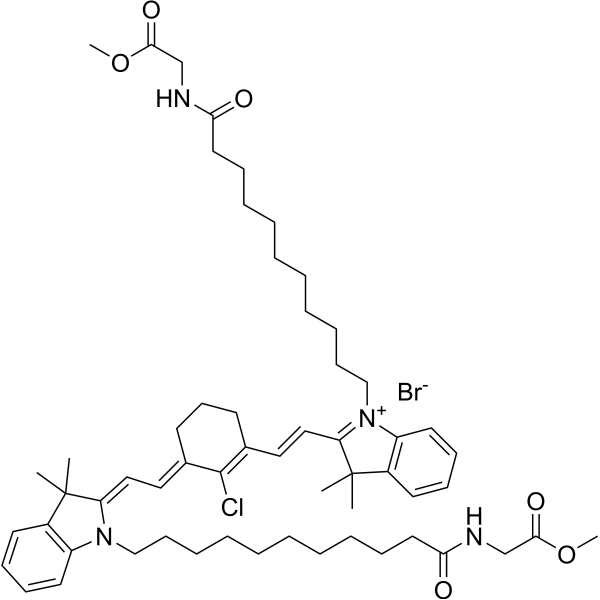
    IR-58, a mitochondria-targeting near-infrared (NIR) fluorophore, is an autophagy enhancer. IR-58 kills tumour cells and induces apoptosis via inducing excessive autophagy, which is mediated through the reactive oxygen species (ROS)-Akt-mTOR pathway .
    IR-58
  • HY-N0901B

    Autophagy Neurological Disease Cancer
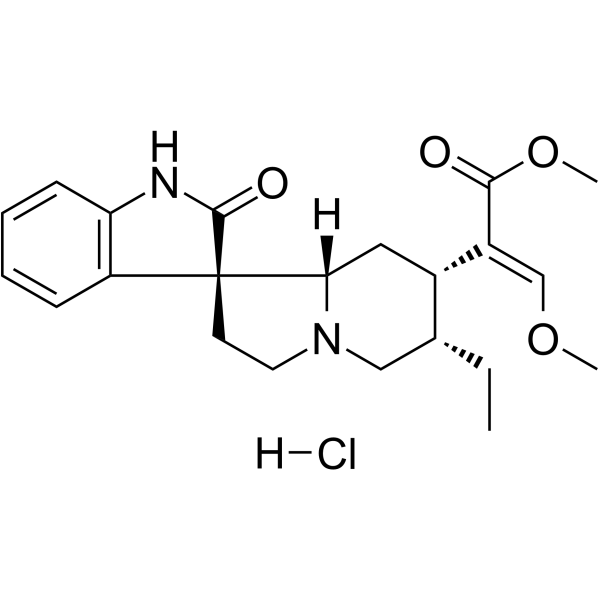
    Corynoxine hydrochloride, a tetracyclic oxindole alkaloid, is isolated from the hooks of Uncaria macrophylla. Corynoxine hydrochloride is a natural autophagy enhancer that promotes the clearance of alpha-synuclein via Akt/mTOR pathway .
    Corynoxine hydrochloride
  • HY-168893

    Src Apoptosis IAP Survivin Akt mTOR JAK STAT Ras p38 MAPK Cancer
    K882 (Compound 4e) is a Src inhibitor, with KD of 0.315 μM. K882 induces Apoptosis. K882 inhibits XIAP and Survivin. K882 inhibits the activation of PI3K/Akt/mTOR, Jak1/Stat3, Ras/MAPK signaling pathways. K882 shows anti-tumor activity against non-small cell lung cancer .
    K882
  • HY-N0559R

    Reference Standards Casein Kinase Apoptosis AMPK Akt NF-κB TGF-beta/Smad Cardiovascular Disease Neurological Disease Metabolic Disease Inflammation/Immunology Cancer
    Kirenol (Standard) is the analytical standard of Kirenol (HY-N0559). This product is intended for research and analytical applications. Kirenol is a diterpenoid compound, an orally active apoptosis inducer and signaling pathway regulator, with a Kd value of 5.47 μM against the target CK2. Kirenol promotes the cleavage of Bid into tBid, regulates the protein levels/phosphorylation of Bax, Bcl-2, p53 and p21, and induces caspase-independent apoptosis, S-phase cell cycle arrest, ROS accumulation and cytotoxicity in cancer cells. Kirenol activates the CK2/AKT and AMPK-mTOR-ULK1 pathways, inhibits the signaling of NF-κB, TGF-β/Smads and NLRP3 inflammasome, and regulates the GSK3β, BMP and Wnt/β-catenin pathways. Kirenol induces autophagy, mitophagy and osteoblast differentiation, promotes mitochondrial fusion, and exerts antioxidant, anti-inflammatory, antifibrotic, renoprotective, cardioprotective, neuroprotective and analgesic effects. Kirenol is applicable to research related to chronic myeloid leukemia, ischemic stroke, diabetic nephropathy, heart failure, acute lung injury and osteoporosis.
    Kirenol (Standard)

Inquiry Online

Your information is safe with us. * Required Fields.

Salutation


Country or Region *

Applicant Name *


Organization Name *

Department *


Email Address *


Product Name *

Cat. No.


Requested quantity *

Phone Number *


Remarks

Inquiry Online

Inquiry Information

Product Name:
Cat. No.:
Quantity:
MCE Japan Authorized Agent:

