1. Search Result
Search Result
Results for "

Apoptotic

" in MedChemExpress (MCE) Product Catalog:

676

Inhibitors & Agonists

2

Screening Libraries

11

Fluorescent Dye

9

Biochemical Assay Reagents

37

Peptides

1

MCE Kits

12

Inhibitory Antibodies

176

Natural
Products

5

Recombinant Proteins

25

Isotope-Labeled Compounds

20

Antibodies

2

Click Chemistry

3

Oligonucleotides

Cat. No. Product Name Target Research Areas Chemical Structure
  • HY-108635
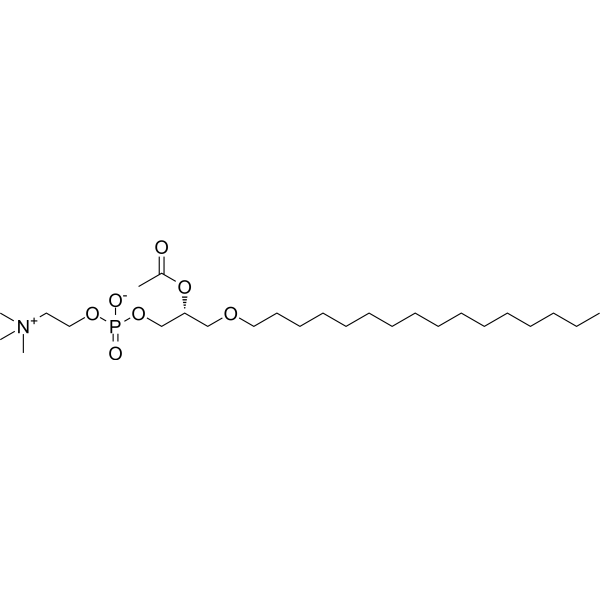
    C16-PAF
    35+ Cited Publications

    PAF (C16)

    p38 MAPK MEK ERK Endogenous Metabolite Cardiovascular Disease Inflammation/Immunology
    C16-PAF (PAF (C16)), a phospholipid mediator, is a platelet-activating factor and ligand for PAF G-protein-coupled receptor (PAFR). C16-PAF exhibits anti-apoptotic effect and inhibits caspase-dependent death by activating the PAFR. C16-PAF is a potent MAPK and MEK/ERK activator. C16-PAF induces increased vascular permeability .
    C16-PAF
  • HY-N6791
    KT5823
    10+ Cited Publications

    PKA PKC Bacterial Apoptosis Antibiotic Infection Inflammation/Immunology
    KT5823, a selective the cGMP-dependent protein kinase (PKG) inhibitor with an Ki value of 0.23 μM, it also inhibits PKA and PKC with Ki values of 10 μM and 4 μM, respectively. KT5823 is a Staurosporine-related protein kinase inhibitor, increases thyroid-stimulating hormone-induced (Na +/I - symporter) NIS expression, and iodide uptake in thyroid cells. KT5823 arrests cells after the G0/G1 boundary and causes increases in the levels of apoptotic DNA fragmentation .
    KT5823
  • HY-138188
    KRA-533
    1 Publications Verification

    Ras Cancer
    KRA-533 is a potent KRAS agonist. KRA-533 binds to the GTP/GDP binding pocket in the KRAS protein to prevent GTP cleavage, resulting in the accumulation of constitutively active GTP-bound KRAS that triggers both apoptotic and autophagic cell death pathways in cancer cells.
    KRA-533
  • HY-125527
    Resolvin D1
    1 Publications Verification

    RvD1

    Endogenous Metabolite Inflammation/Immunology
    Resolvin D1 (RvD1), an endogenous pro-resolving mediator of inflammation, is derived from omega-3 docosahexaenoic acid during the resolution phase of acute inflammation. Resolvin D1 blocks proinflammatory neutrophil migration by regulating actin polymerization, reduces TNF-α–mediated inflammation in macrophages, and enhances phagocytosis of apoptotic cells by macrophages .
    Resolvin D1
  • HY-W674241

    Endogenous Metabolite Apoptosis Bcl-2 Family Reactive Oxygen Species (ROS) Neurological Disease Cancer
    4-Ethylphenyl sulfate is an orally active and brain-penetrant gut microbial metabolite. 4-Ethylphenyl sulfate downregulates Bcl2 expression, upregulates Bax expression, and induces cancer cell apoptosis via the endogenous apoptotic pathway. 4-Ethylphenyl sulfate induces G2/M cell cycle arrest and reactive oxygen species (ROS) production. 4-Ethylphenyl sulfate impairs oligodendrocyte maturation, reduces oligodendrocyte-neuron interactions, decreases axonal myelination levels, and shifts the oligodendrocyte population toward immature precursor cells. 4-Ethylphenyl sulfate alters brain region-specific neural activity and functional connectivity in mice, and correlates with anxiety-like behaviors in mice .
    4-Ethylphenyl sulfate
  • HY-N0272
    Eleutheroside E
    2 Publications Verification

    Apoptosis NF-κB Neurological Disease Inflammation/Immunology
    Eleutheroside E is an important component of ginseng that can be taken orally. Eleutheroside E has anti-inflammatory and antioxidant properties, and it helps reduce apoptosis in heart cells caused by hypoxia-reoxygenation (H/R) damage. Eleutheroside E can improve type 2 diabetes, enhance cognitive function, and has neuroprotective effects .
    Eleutheroside E
  • HY-50868
    Bafetinib
    10+ Cited Publications

    INNO-406; NS-187

    Bcr-Abl Src Apoptosis Cancer
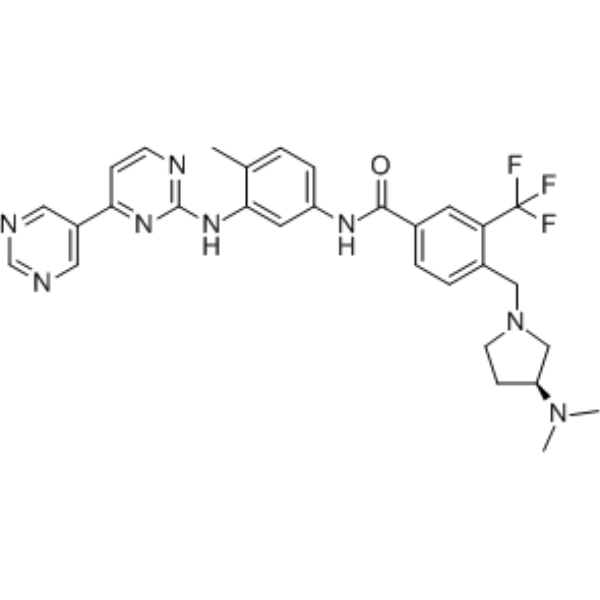
    Bafetinib is an orally active Lyn/Bcr-Abl tyrosine kinase inhibitor. Bafetinib enhances the activity of several pro-apoptotic Bcl-2 homology (BH) 3-pure proteins (Bim, Bad, Bmf, and Bik) through intrinsic apoptotic pathways regulated by the Bcl-2 family, and induces apoptosis of Ph + leukemia cells. Bafetinib has antitumor activity .
    Bafetinib
  • HY-113015

    Endogenous Metabolite Neurological Disease
    Stearoylethanolamide is an endocannabinoid-like compound with pro-apoptotic activity.
    Stearoylethanolamide
  • HY-10982
    Amonafide
    4 Publications Verification

    AS1413

    Topoisomerase Cancer
    Amonafide is a topoisomerase II inhibitor and DNA intercalator that induces apoptotic signaling by blocking the binding of Topo II to DNA.
    Amonafide
  • HY-B1374
    Florfenicol
    5+ Cited Publications

    (-)-Florfenicol; SCH-25298

    Antibiotic Bacterial Infection Inflammation/Immunology
    Florfenicol ((-)-Florfenicol) is an orally active broad-spectrum antibacterial antibiotic with anti-inflammatory, pro apoptotic, and immunomodulatory functions [6][7].
    Florfenicol
  • HY-126679

    ATP Synthase Apoptosis Cancer
    Apoptolidin is a polyketide isolated from Nocardiopsis bacteria . Apoptolidin is a selective mitochondrial F1FO ATPase inhibitor. Apoptolidin is an apoptosis inducer and induces apoptotic cell death in cells transformed with the adenovirus type 12 oncogenes including ElA (IC50=10-17 ng/ml) but not in normal cells .
    Apoptolidin
  • HY-126213

    18:1 Lyso-PS

    NADPH Oxidase Interleukin Related Apoptosis Inflammation/Immunology
    Oleoyl-2-hydroxy-sn-glycero-3-phospho-L-serine sodium (18:1 Lyso-PS) is a modified PS product generated following NADPH oxidase activation and Lyso-PS signal transduction. 1-Oleoyl-2-hydroxy-sn-glycero-3-phospho-L-serine sodium signals through macrophage G2A to enhance the phagocytic uptake of PS-dependent apoptotic (apoptosis) neutrophils and PS-exposed activated neutrophils. 1-Oleoyl-2-hydroxy-sn-glycero-3-phospho-L-serine sodium enhances macrophage phagocytic uptake of apoptotic cells, carboxylate-modified microspheres, and PS-exposed non-apoptotic activated neutrophils. 1-Oleoyl-2-hydroxy-sn-glycero-3-phospho-L-serine sodium serves as an acyl acceptor substrate for the lysophosphatidyltransferase At1g78690p to generate diacylphosphatidylserine. 1-Oleoyl-2-hydroxy-sn-glycero-3-phospho-L-serine sodium reduces the secretion of IL-8 and decreases the proportion of viable colon cancer cells. 1-Oleoyl-2-hydroxy-sn-glycero-3-phospho-L-serine sodium is applicable to studies on peritonitis and inflammatory bowel disease .
    1-Oleoyl-2-hydroxy-sn-glycero-3-phospho-L-serine sodium
  • HY-109185
    Pelcitoclax
    1 Publications Verification

    APG-1252

    Bcl-2 Family Apoptosis Cancer
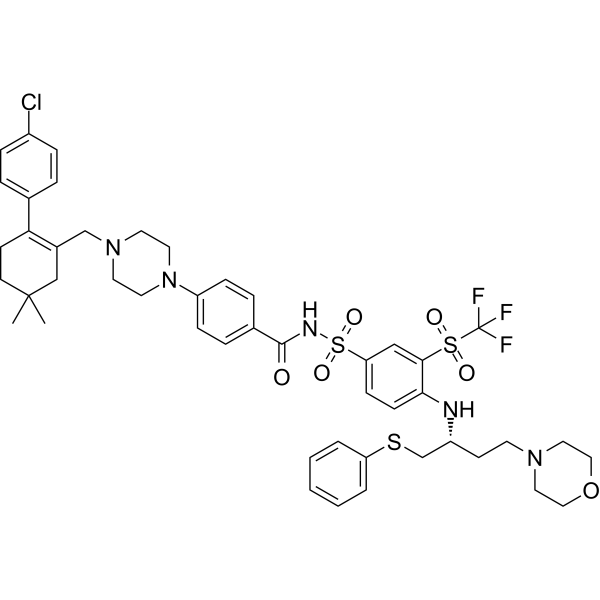
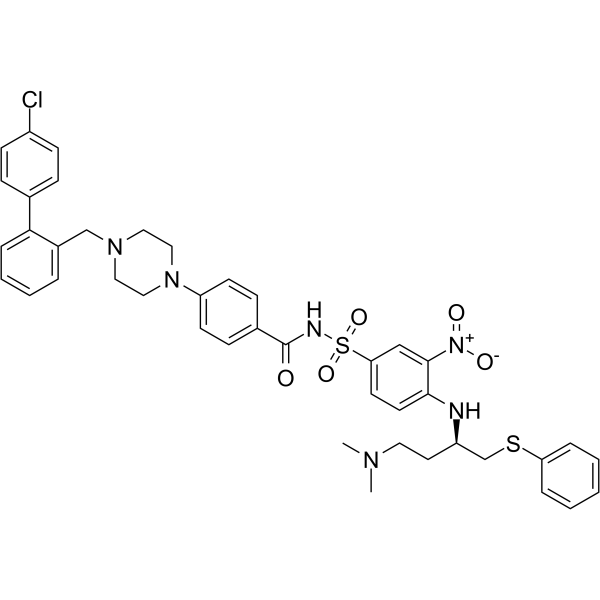
    Pelcitoclax (APG-1252) is a potent Bcl-2/Bcl-xl inhibitor with antineoplastic and pro-apoptotic effects .
    Pelcitoclax
  • HY-B0862

    Environmental Pollutants Herbicide Apoptosis Bcl-2 Family Caspase SOD Mitochondrial Metabolism Others
    Pendimethalin is an orally active herbicide that controls annual grasses and certain broadleaf weeds. Pendimethalin induces Apoptotic cell death through activating ER stress-mediated mitochondrial dysfunction in human umbilical vein endothelial cells .
    Pendimethalin
  • HY-101073
    Salermide
    3 Publications Verification

    Sirtuin Apoptosis Cancer
    Salermide is an inhibitor of Sirt1 and Sirt2; can cause strong cancer-specific apoptotic cell death.
    Salermide
  • HY-101997

    Orthopoxvirus Apoptosis Caspase Bcl-2 Family Akt Infection Cancer
    BEPP hydrochloride is a double-stranded RNA-dependent protein kinase (PKR) modulator. BEPP hydrochloride enhances the phosphorylation levels of PKR and eIF2α, activates caspase-3, upregulates the pro-apoptotic protein BAX, and downregulates the anti-apoptotic protein Bcl-2. BEPP hydrochloride inhibits vaccinia virus replication and exhibits selective cytotoxicity in cells expressing PKR. BEPP hydrochloride can be used in research related to cancer and viral infections .
    BEPP hydrochloride
  • HY-D0918

    Fluorescent Dye Others
    YO-PRO-1 is a non-cell-membrane-penetrating green fluorescent dye. YO-PRO-1 cannot penetrate normal cell membranes but can penetrate the membranes of apoptotic and necrotic cells. YO-PRO-1 has a high affinity for DNA. When it is not bound to DNA, it emits almost no fluorescence, and when it binds to DNA, it can emit green fluorescence (Ex/Em: 488/530±30 nM). YO-PRO-1 is often used together with Propidium Iodide (HY-D0815) to analyze and identify apoptotic and necrotic cells .
    YO-PRO-1
  • HY-129478
    TC11
    2 Publications Verification

    Caspase Bcl-2 Family CDK Cancer
    TC11 is a MCL1 degrader and Caspase-9 and CDK1 activator. TC11 functions as a phenylacetylamide derivative and is structurally related to immunomodulatory active molecules. TC11 induces degradation of MCL1 leading to apoptotic death during prolonged mitotic arrest.
    TC11
  • HY-N1778
    3,4-Dimethoxycinnamic acid
    1 Publications Verification

    O-Methylferulic acid

    Reactive Oxygen Species (ROS) Virus Protease Infection Cancer
    3,4-Dimethoxycinnamic acid (O-Methylferulic acid) is a monomer extracted and purified from Securidaca inappendiculata Hassk. 3,4-Dimethoxycinnamic acid exerts anti-apoptotic effects on L-02 cells via the ROS-mediated signaling pathway . Anti-apoptotic effects .
    3,4-Dimethoxycinnamic acid
  • HY-119357

    Microtubule/Tubulin Apoptosis Autophagy Neurological Disease Cancer
    TN-16 is a Microtubule polymerization inhibitor. TN-16 induces G2/M cell cycle arrest, metaphase mitotic arrest and Apoptotic cell death in cells, and blocks late Autophagic flux by inhibiting autophagosome-lysosome fusion. TN-16 suppresses tumor growth in syngeneic mouse breast cancer models. TN-16 can be used in research related to neuroblastoma, cervical cancer, breast cancer and other tumors .
    TN-16
  • HY-P1527
    Bim BH3
    1 Publications Verification

    Bcl-2 Family Others
    Bim BH3 is a biological active peptide. (This Bim peptide belongs to the pro-apoptotic Bcl-2 family of proteins.)
    Bim BH3
  • HY-W017424

    Drug Intermediate Caspase Apoptosis Neurological Disease Cancer
    2-Aminobenzothiazole acts as a caspase 3/7 activator, an anticancer cytotoxic agent, and also exhibits neurotoxicity. 2-Aminobenzothiazole drives the apoptotic pathway by activating caspase 3/7, induces mitochondrial inner membrane depolarization, and triggers both early and late apoptosis via a caspase-dependent pathway. In zebrafish models, 2-Aminobenzothiazole induces oxidative damage in brain tissues and inhibits genes related to GABA and 5-HT synthesis pathways. Long-term exposure to 2-Aminobenzothiazole impairs motor ability, social behavior, anxiety-like state and cognitive function. 2-Aminobenzothiazole can be used in studies of human laryngeal carcinoma and related neurotoxicity .
    2-Aminobenzothiazole
  • HY-N10544

    (+)-δ-Cadinene

    Bacterial Parasite Fungal Apoptosis Infection Cancer
    δ-Cadinene ((+)-δ-Cadinene) is a sesquiterpene in essential oils. δ-Cadinene shows antiproliferative and pro-apoptotic effects on human ovary cancer (OVCAR-3) cells. δ-Cadinene has trichomonacidal, antimicrobial, antifungal and anticancer properties .
    δ-Cadinene
  • HY-N8198

    Apoptosis Ferroptosis Cancer
    Ardisiacrispin B displays cytotoxic effects in multi-factorial agent resistant cancer cells via ferroptotic and apoptotic cell death .
    Ardisiacrispin B
  • HY-147929

    Apoptosis Caspase Bcl-2 Family Cancer
    Apoptotic agent-3 (compound 15f) promotes apoptosis through the potential mitochondria-mediated Bcl-2/Bax pathway and activation of the Caspase 3 pathway. Apoptotic agent-3 exhibits anti-proliferative activities and can be used for cancer research .
    Apoptotic agent-3
  • HY-125305

    Caspase Apoptosis Cancer
    Z-AEVD-FMK is a caspase-10 inhibitor. Z-AEVD-FMK can inhibit the activation of Bid and the release of apoptosis-inducing factor (AIF) in mitochondria in cells, resulting in a significant decrease in the number of apoptotic cells .
    Z-AEVD-FMK
  • HY-113963

    Apoptosis Cancer
    Ac- IETD- CHO is a potent, reversible inhibitor of granzyme B and caspase-8. Ac- IETD- CHO inhibits Fas-mediated apoptotic cell death, hemorrhage, and liver failure. Ac- IETD- CHO also inhibits cytotoxic T lymphocytes induced cell death .
    Ac-​IETD-​CHO
  • HY-129751

    Difurazon hydrochloride

    Bacterial TrxR Apoptosis Infection Cancer
    Nitrovin hydrochloride is an antibacterial growth promoter. Nitrovin hydrochloride induces ROS-mediated non-apoptotic and apoptotic-like cell death by targeting TrxR1. Nitrovin hydrochloride has anticancer activity, with IC50 values of 1.31-6.60 μM for tumor and normal cells .
    Nitrovin hydrochloride
  • HY-N3062

    3,5,7-Trihydroxyflavanone

    Apoptosis Others
    Pinobanksin has apoptotic induction in a B-cell lymphoma cell line .
    Pinobanksin
  • HY-N1778A
    (E)-3,4-Dimethoxycinnamic acid
    1 Publications Verification

    (E)-O-Methylferulic acid

    Reactive Oxygen Species (ROS) Virus Protease Infection Cancer
    (E)-3,4-Dimethoxycinnamic acid is the less active isomer of 3,4-Dimethoxycinnamic acid. 3,4-Dimethoxycinnamic acid exerts anti-apoptotic effects on L-02 cells via the ROS-mediated signaling pathway . Anti-apoptotic effects .
    (E)-3,4-Dimethoxycinnamic acid
  • HY-P2343

    Apoptosis Cancer
    BH3 hydrochloride, a BBB penetrated peptide, provoke apoptosis either by direct activation of pro-apoptotic Bax/Bak or by neutralizing anti-apoptotic Bcl-2 proteins (Bcl-2, Bcl-XL, Bcl-w, Mcl-1 and A-1) via their BH3 domian .
    BH3 hydrochloride
  • HY-U00446

    Apoptosis Microtubule/Tubulin Cancer
    PBOX 6 is a pyrrolo-1,5-benzoxazepine (PBOX) compound, acts as a microtubule-depolymerizing agent and an apoptotic agent.
    PBOX 6
  • HY-123950

    MDM-2/p53 Apoptosis Cancer
    MMRi64 disrupts Mdm2-MdmX interactions. MMRi64 downregulates Mdm2 and MdmX in leukemia cells. MMRi64 induces p53 accumulation, and induces the apoptotic arm of the p53 pathway in leukemia/lymphoma cells. MMRi64 can be used for cancer research .
    MMRi64
  • HY-158149

    EGFR Apoptosis Cancer
    T-1-PMPA is a potent EGFR inhibitor with apoptotic properties. T-1-PMPA effectively inhibits EGFR WT and EGFR 790m, with IC50 values of 86 nM and 561.73 nM, respectively .
    T-1-PMPA
  • HY-P990820

    Transmembrane Glycoprotein Inflammation/Immunology Cancer
    Anti-Mouse TIM-4 Antibody (RMT4-53) is a rat-derived IgG2b κ type antibody inhibitor, targeting to mouse TIM-4. Anti-Mouse TIM-4 Antibody (RMT4-53) can block T cell immunoglobulin and mucin domain 4 (TIM-4). Anti-Mouse TIM-4 Antibody (RMT4-53) can inhibit the engulfment of apoptotic cells and T cell proliferation. Anti-Mouse TIM-4 Antibody (RMT4-53) can be used for the researches of cancer, immunology and metabolic disease, such as MC38 tumor and graft .
    Anti-Mouse TIM-4 Antibody (RMT4-53)
  • HY-130326

    Ru(η6-p-cymene)Cl2(pta)

    Apoptosis Caspase Cardiovascular Disease Cancer
    RAPTA-C (Ru(η6-p-cymene)Cl2(pta)) acts as an anti-cancer and anti-angiogenic agent. RAPTA-C exhibits anti-metastatic, anti-angiogenic, and anti-tumoral activities through protein and histone-deoxyribonucleic acid alterations. RAPTA-C exhibits cell growth inhibition by triggering G(2)/M phase arrest in cancer cells. RAPTA-C also enhances the levels of p53 and triggers the mitochondrial Apoptotic pathway, resulting in cytochrome C release and caspase-9 activation. RAPTA-C reduces the growth of tumors with the inhibition of angiogenesis in a ovarian carcinoma model .
    RAPTA-C
  • HY-131993

    RvE4

    Endogenous Metabolite Inflammation/Immunology
    Resolvin E4 (RvE4) is an endogenous metabolite that stimulates efferocytosis of apoptotic neutrophils and senescent erythrocytes. Resolvin E4 enhances resolution of hemorrhagic exudates and inflammation in vivo .
    Resolvin E4
  • HY-108695B

    Apoptosis Endogenous Metabolite Cancer
    (±)-Enterodiol is the racemate of Enterodiol (HY-108695). Enterodiol is transformed by human intestinal bacteria from lignans contained in various whole-grain cereals, nuts, legumes, flaxseed, and vegetables. Enterodiol has an apoptotic effect in colorectal cancer (CRC) cells. Enterodiol has anti-cancer activities .
    (±)-Enterodiol
  • HY-117359

    PAI-1 Apoptosis Cancer
    UCD38B hydrochloride is a cell permeant, competitive enzymatic uPA inhibitor with an IC50 value of 7 μM. UCD38B hydrochloride targets intracellular uPA causing mistrafficking of uPA into perinuclear mitochondria, reducing the mitochondrial membrane potential, and followed by the release of apoptotic inducible factor (AIF). UCD38B hydrochloride induces apoptosis .
    UCD38B hydrochloride
  • HY-113091

    Apoptosis Neurological Disease
    Alpha-Tocotrienol is a vitamin E analog with anti-apoptotic neuroprotective action and antioxidant properties. Alpha-Tocotrienol prevents oxidative stress-independent apoptotic cell death, DNA cleavage, and nuclear morphological changes .
    DL-α-Tocotrienol
  • HY-P11374

    Bcl-2 Family Apoptosis Cancer
    Bid BH3-Gly-r8 is Bid BH3 linked to eight arginine residues. Bid BH3-Gly-r8 shows no difference in apoptotic effects compared to its unmodified peptide homologue. Bid BH3 has high affinity for Bax and Bcl-2. Bid BH3-Gly-r8 can be used in the research of tumors .
    Bid BH3-Gly-r8
  • HY-144037

    DNA-PK Cancer
    DNA-PK-IN-4 is a potent inhibitor of DNA-PK. DNA-PK-IN-4 is a imidazolinone derivative compound. DNA-PK-IN-4 inhibits DNA-PKcs activity, thus greatly reducing tumor DNA repair and inducing cells to enter the apoptotic program. DNA-PK-IN-4 has the potential for the research of cancer disease (extracted from patent WO2021209055A1, compound 27) .
    DNA-PK-IN-4
  • HY-D2422B

    Fluorescent Dye Microtubule/Tubulin Cancer
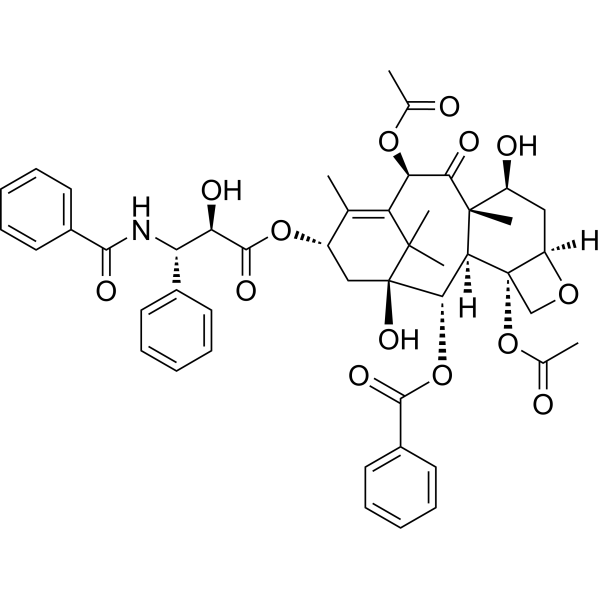
    Cy5-Paclitaxel is a Cyanine5 carboxylic acid bromide (HY-D1319) labeled Paclitaxel (HY-B0015) conjugate. Cyanine5 carboxylic acid bromide is a fluorescent dye containing a non-activated carboxylic acid (Ex=646 nm, Em=662 nm) that can be used for molecular labeling and microscopy imaging. Paclitaxel stabilizes tubulin polymerization. Paclitaxel can cause both mitotic arrest and apoptotic cell death. Paclitaxel also induces autophagy .
    Cy5-Paclitaxel
  • HY-P5320

    Apoptosis Others
    TAT-BH4 (Bcl-xL) localized mainly at the mitochondria, prevents apoptotic cell death. TAT-BH4 (Bcl-xL) is a fusion peptide that combines the N-terminal cysteine conjugated protein transduction domain of HIV TAT protein (amino acids 49 to 57) with the Bcl-xL BH4 peptide. TAT-BH4 can be used for research of diseases caused by accelerated apoptosis .
    TAT-BH4 (Bcl-xL)
  • HY-151429

    Apoptosis Ferroptosis Bcl-2 Family COX Cancer
    Antitumor agent-77 is an antitumor agent, inhibits cancer cells growth and migration. Antitumor agent-77 triggers ferroptosis by inhibiting GPx-4 and elevating COX2. Antitumor agent-77 also activates intrinsic apoptotic pathway (Bax-Bcl-2-caspase-3) and hinders Epithelial-mesenchymal transition (EMT) process of cancer cells .
    Antitumor agent-77
  • HY-176836

    Endonuclease Cancer
    PNR-3-82 is a selective Apoptotic endonuclease G (EndoG) inhibitor with an IC50 of 0.61  μM for EndoG over DNase I. PNR-3-82 does not inhibit five cell death-related enzymes including DNase II, RNase A, proteinase, lactate dehydrogenase and superoxide dismutase 1. PNR-3-82 has a cytoprotective activity and blocks Cisplatin (HY-17394) and Docetaxel (HY-B0011)-induced cell death. PNR-3-82 can be used for cell injuries research .
    PNR-3-82
  • HY-W504391

    Difurazon

    Bacterial TrxR Apoptosis Infection Cancer
    Nitrovin is an antibacterial growth promoter. Nitrovin induces ROS-mediated non-apoptotic and apoptotic-like cell death by targeting TrxR1. Nitrovin has anticancer activity, with IC50 values of 1.31-6.60 μM for tumor and normal cells .
    Nitrovin
  • HY-177076

    Bcl-2 Family Cancer
    Dalvotoclax (Example 8) is a selective inhibitor of BCL-2. Dalvotoclax has good liver microsomal stability. Dalvotoclax inhibits the activity of anti-apoptotic BCL-2 protein and anti-apoptotic BCL-XL protein. Dalvotoclax can be studied in research for B cell leukemia .
    Dalvotoclax
  • HY-N3171

    (-)-Wikstromol; (-)-Nortrachelogenin

    Apoptosis Cancer
    Nortrachelogenin ((-)-Wikstromol) from Partrinia scabiosaefolia elicits an apoptotic response in Candida albicans .
    Nortrachelogenin
  • HY-116938

    Apoptosis Cancer
    Farnesiferol C is a sesquiterpene coumarin with anti-cancer activity. Farnesiferol C inhibits the proliferative and apoptotic of AGS cells .
    Farnesiferol C

Inquiry Online

Your information is safe with us. * Required Fields.

Salutation


Country or Region *

Applicant Name *


Organization Name *

Department *


Email Address *


Product Name *

Cat. No.


Requested quantity *

Phone Number *


Remarks

Inquiry Online

Inquiry Information

Product Name:
Cat. No.:
Quantity:
MCE Japan Authorized Agent:

