1. Search Result
Search Result
Results for "

BRD4 (BD1)

" in MedChemExpress (MCE) Product Catalog:

105

Inhibitors & Agonists

1

Fluorescent Dyes

1

Natural
Products

2

Click Chemistry

Cat. No. Product Name Target Research Areas Chemical Structure
  • HY-107425
    MZ 1
    20+ Cited Publications

    PROTACs Epigenetic Reader Domain Cancer
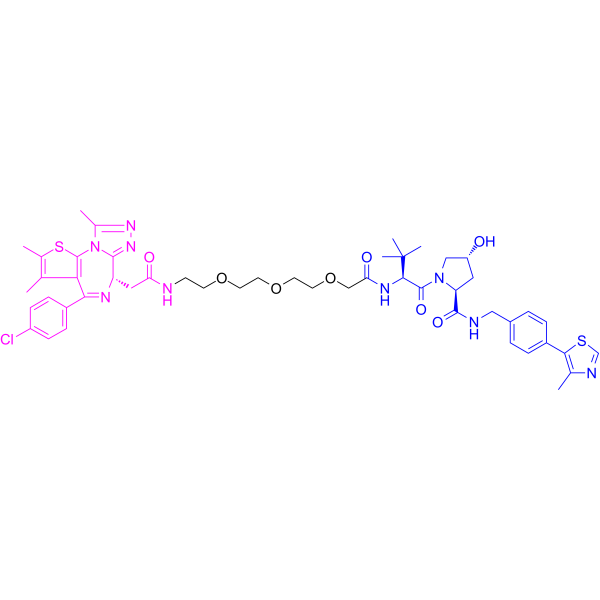
    MZ 1 is a PROTAC connected by ligands for von Hippel-Lindau and BRD4. MZ 1 potently and rapidly induces reversible, long-lasting, and selective removal of BRD4 over BRD2 and BRD3. Kds of 382/120, 119/115, and 307/228 nM for BRD4 BD1/2, BRD3 BD1/2, and BRD2 BD1/2, respectively [1].
    MZ 1
  • HY-16954
    ARV-825
    Maximum Cited Publications
    35 Publications Verification

    PROTACs Epigenetic Reader Domain Cancer
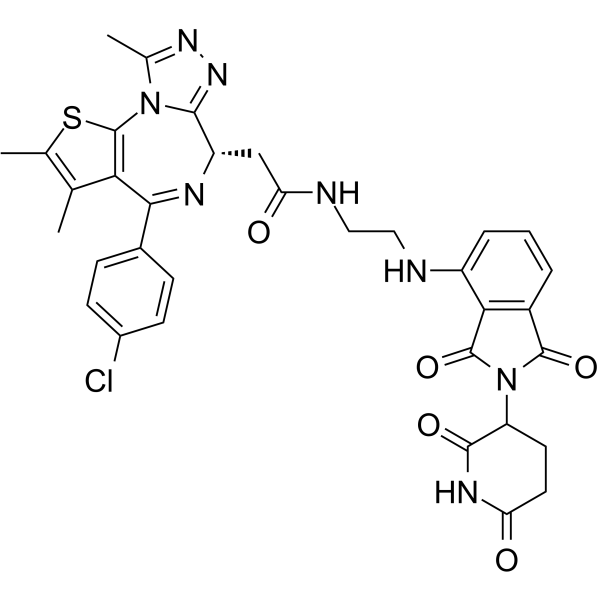
    ARV-825 is a PROTAC connected by ligands for Cereblon and BRD4. ARV-825 binds to BD1 and BD2 of BRD4 with Kds of 90 and 28 nM, respectively.
    ARV-825
  • HY-12863

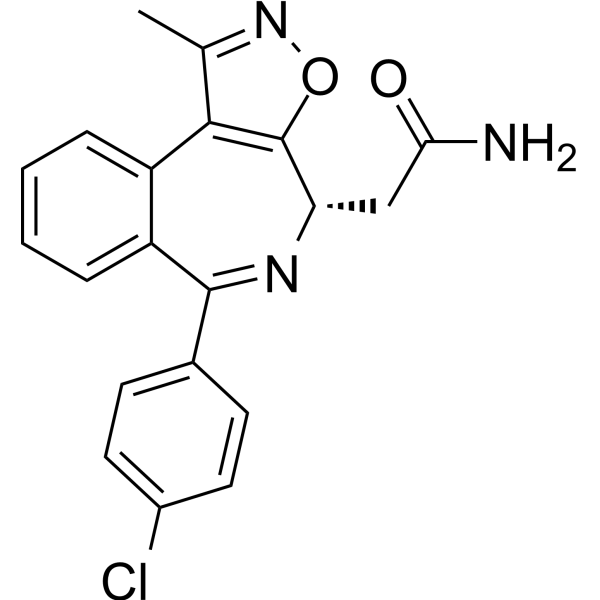
    CPI-0610

    Epigenetic Reader Domain Cancer
    Pelabresib (CPI-0610) is a potent, selective, orally active and cell-active BET inhibitor. Pelabresib inhibits BRD4-BD1 with an IC50 of 39 nM, and with an EC50 value of 0.18 μM for MYC [1].
    Pelabresib
  • HY-136570
    GSK778
    1 Publications Verification

    iBET-BD1

    Epigenetic Reader Domain Apoptosis Inflammation/Immunology Cancer
    GSK778 (iBET-BD1), a chemical probe, is a potent and selective BD1 bromodomain inhibitor of the BET proteins, with IC50s of 75 nM (BRD2 BD1), 41 nM (BRD3 BD1), 41 nM (BRD4 BD1), and 143 nM (BRDT BD1), respectively. GSK778 phenocopies the effects of pan-BET inhibitors in cancer models [1].
    GSK778
  • HY-111139
    MS417
    4 Publications Verification

    GTPL7512

    Epigenetic Reader Domain HIV Infection Inflammation/Immunology
    MS417 is a selective BET-specific BRD4 inhibitor, binds to BRD4-BD1 and BRD4-BD2 with IC50s of 30, 46 nM and Kds of 36.1, 25.4 nM, respectively, with weak selectivity at CBP BRD (IC50, 32.7 μM).
    MS417
  • HY-112609

    PROTACs Epigenetic Reader Domain Cancer
    QCA570 is a PROTAC connected by ligands for Cereblon and BET, with an IC50 of 10 nM for BRD4 BD1 Protein.
    QCA570
  • HY-114204
    GSK8814
    1 Publications Verification

    Epigenetic Reader Domain Cancer
    GSK8814 is a potent and selective ATAD2 bromodomain chemical probe and inhibitor (IC50 = 0.059 μM), with a binding constant pKd = 8.1 and a pKi = 8.9 in BROMOscan. GSK8814 binds to ATAD2 and BRD4 BD1 with pIC50s of 7.3 and 4.6, respectively. GSK8814 shows 500-fold selectivity for ATAD2 over BRD4 BD1. GSK8814 can be researched for cancer associated with ATAD2 bromodomain [1] .
    GSK8814
  • HY-129937A
    GNE-987
    1 Publications Verification

    PROTACs Epigenetic Reader Domain Cancer
    GNE-987 is a VHL-dependent BRD4 PROTAC degrader. GNE-987 exhibits picomolar cell BRD4 degradation activity (DC50=0.03 nM for EOL-1 AML cell line). GNE-987 binds equipotently to the BD1 and BD2 bromodomains of BRD4 with low nanomolar affinities (IC50=4.7 and 4.4 nM, respectively). GNE-987 can be used for the research of cancer [1].
    GNE-987
  • HY-100482
    CPI-637
    10+ Cited Publications

    Epigenetic Reader Domain Histone Acetyltransferase Cancer
    CPI-637 is a selective and potent CBP/EP300 bromodomain inhibitor with IC50 values of 0.03 μM, 0.051 μM and 11.0 μM for CBP, EP300 and BRD4 BD-1, respectively, and an EC50 of 0.3 μM for CBP [1].
    CPI-637
  • HY-111422
    PLX51107
    3 Publications Verification

    Epigenetic Reader Domain Cancer
    PLX51107 is a potent and selective BET inhibitor, with Kds of 1.6, 2.1, 1.7, and 5 nM for BD1 and 5.9, 6.2, 6.1, and 120 nM for BD2 of BRD2, BRD3, BRD4, and BRDT, respectively; PLX51107 also interacts with the bromodomains of CBP and EP300 (Kd, in the 100 nM range).
    PLX51107
  • HY-151594

    Epigenetic Reader Domain Inflammation/Immunology Cancer
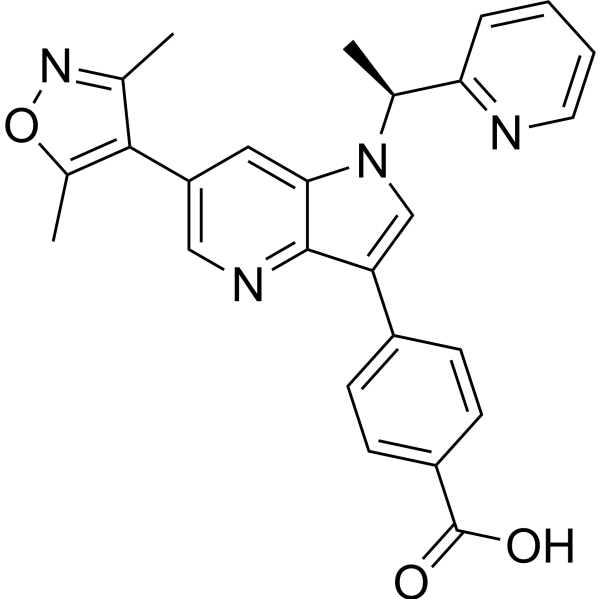
    iBRD4-BD1 is selective BRD4 bromodomain inhibitor. iBRD4-BD1 has inhibition activity for BRD4 bromodomain with an IC50 value of 12 nM. iBRD4-BD1 can be used for the research of inflammation and oncology [1].
    iBRD4-BD1
  • HY-136857

    Epigenetic Reader Domain Cancer
    BRD4 degrader-3 is a potent bromodomain BRD4 degrader extracted from patent WO2020055976A1, example 1a, has IC50s of 15.5 and 12.3 nM for BRD4-BD1 and BRD4-BD2, respectively [1]. PROTAC BRD4 Degrader-7 is a click chemistry reagent, it contains an Alkyne group and can undergo copper-catalyzed azide-alkyne cycloaddition (CuAAc) with molecules containing Azide groups.
    BRD4 degrader-3
  • HY-145550

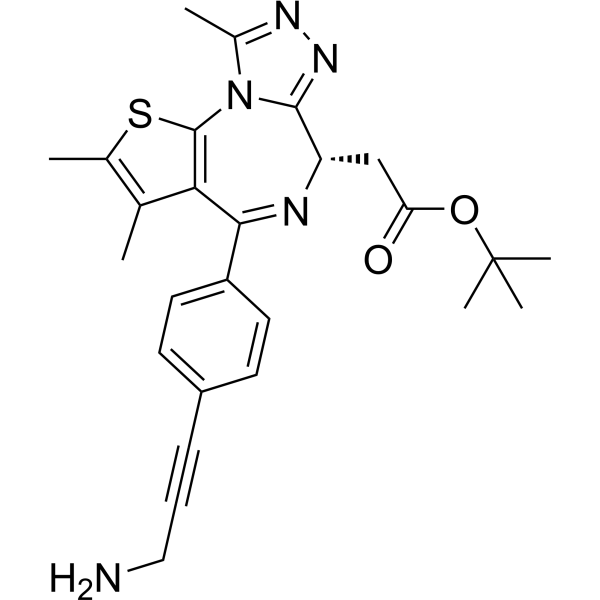
    BI894999

    Epigenetic Reader Domain Cancer
    Amredobresib (BI894999) is an orally active BET inhibitor. Amredobresib inhibits the binding of BRD4-BD1 and BRD4-BD2 bromodomains to acetylated histones with IC50 values of 5 nM and 41 nM, respectively. Amredobresib exhibits anticancer activity against acute myeloid leukemia (AML) and NUT cancer [1] [4] .
    Amredobresib
  • HY-162514

    Epigenetic Reader Domain Inflammation/Immunology
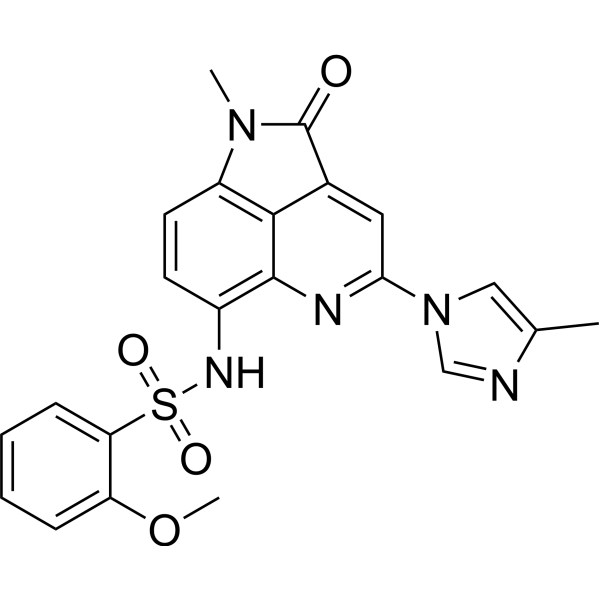
    BBC0403 is a selective BRD2 inhibitor with Kds of 7.64 μM and 41.37 μM for BRD2 (BD2) and BRD2 (BD1), respectively. BBC0403 exhibitS higher binding specificity for BRD2 compared to BRD3 and BRD4. BBC0403 has the potential for osteoarthritis (OA) research [1].
    BBC0403
  • HY-120000
    MS402
    2 Publications Verification

    Epigenetic Reader Domain Inflammation/Immunology Cancer
    MS402 is a BD1-selective BET BrD inhibitor with Kis of 77 nM, 718 nM, 110 nM, 200 nM, 83 nM, and 240 nM for BRD4(BD1), BRD4(BD2), BRD3(BD1), BRD3(BD2), BRD2(BD1) and BRD2(BD2), respectively. MS402 blocks Th17 cell differentiation and ameliorates colitis in mice [1].
    MS402
  • HY-133131

    PROTACs Epigenetic Reader Domain Cancer
    PROTAC BRD4 Degrader-1 is a PROTAC connected by ligands for Cereblon and BRD4 with an IC50 of 41.8 nM against BRD4 BD1. PROTAC BRD4 Degrader-1 can effectively degrade BRD4 protein and suppress c-Myc expression [1].
    PROTAC BRD4 Degrader-1
  • HY-112429
    HJB97
    2 Publications Verification

    Ligands for Target Protein for PROTAC Epigenetic Reader Domain Cancer
    HJB97 is a high-affinity BET inhibitor with Ki values of 0.9 nM (BRD2 BD1), 0.27 nM (BRD2 BD2), 0.18 nM (BRD3 BD1), 0.21 nM (BRD3 BD2), 0.5 nM (BRD4 BD1), and 1.0 nM (BRD4 BD2) [1]. HJB97 can serve as a ligand for target protein (Ligands for Target Protein for PROTAC) for the development of PROTAC BET degraders with antitumor activity [1]. HJB97 can be used for the synthesis of BETd-260 (HY-101519).
    HJB97
  • HY-133136

    PROTACs Epigenetic Reader Domain Cancer
    PROTAC BRD4 Degrader-2 is a PROTAC connected by ligands for Cereblon and BRD4 with an IC50 of 14.2 nM against BRD4 BD1 [1].
    PROTAC BRD4 Degrader-2
  • HY-125232
    MS645
    1 Publications Verification

    Epigenetic Reader Domain Cancer
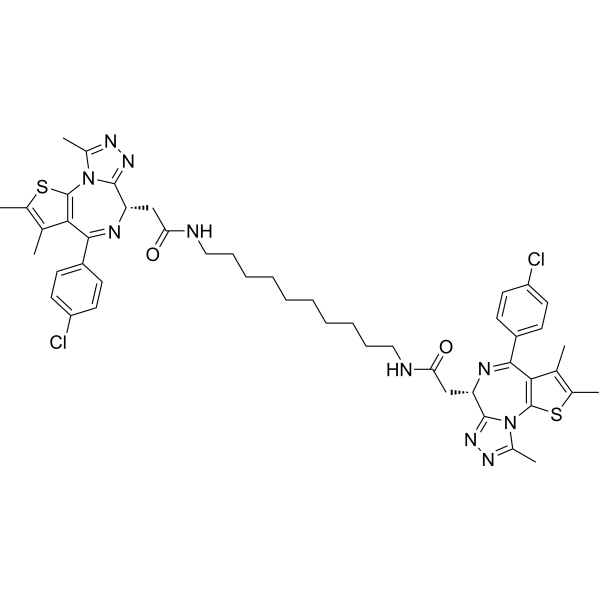
    MS645 is a bivalent BET bromodomains (BrD) inhibitor with a Ki of 18.4 nM for BRD4-BD1/BD2. MS645 spatially constrains bivalent inhibition of BRD4 BrDs resulting in a sustained repression of BRD4 transcriptional activity in solid-tumor cells [1].
    MS645
  • HY-138555

    PROTACs Epigenetic Reader Domain Cancer
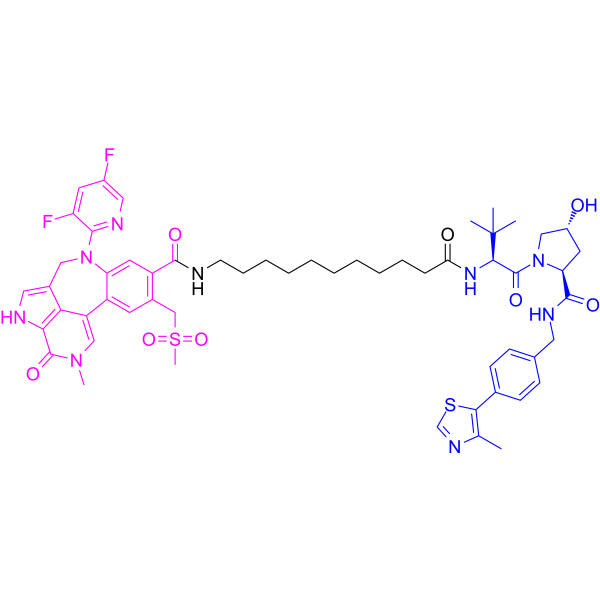
    PROTAC BRD4 Degrader-8 is a PROTAC connected by ligands for von Hippel-Lindau and BRD4, with IC50s of 1.1 nM and 1.4 nM for BRD4 BD1 and BD2, respectively. PROTAC BRD4 Degrader-8 is capable of potently degrading the BRD4 protein in PC3 prostate cancer cells [1].
    PROTAC BRD4 Degrader-8
  • HY-151593

    PROTACs Epigenetic Reader Domain Cancer
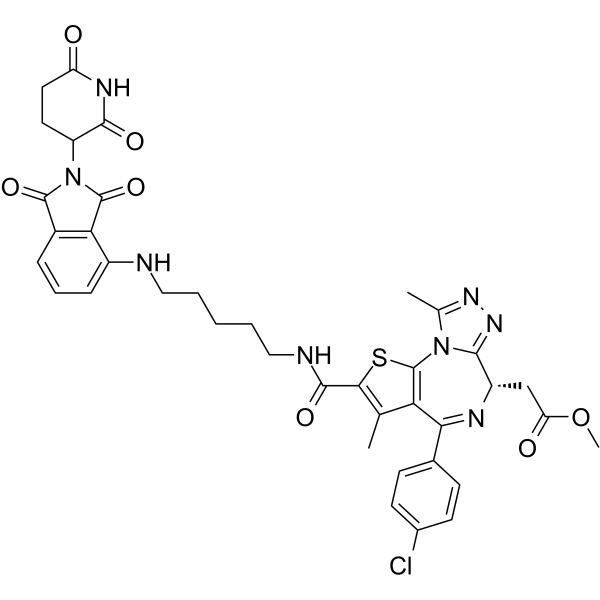
    dBRD4-BD1 is a selective and durable BRD4 degrader with an DC50 value of 280 nM (Dmax=77%). dBRD4-BD1 upregulates BRD2/3 protein level and shows low cytotoxicity than iBRD4-BD1 [1].
    dBRD4-BD1
  • HY-112610

    Epigenetic Reader Domain Histone Acetyltransferase Cancer
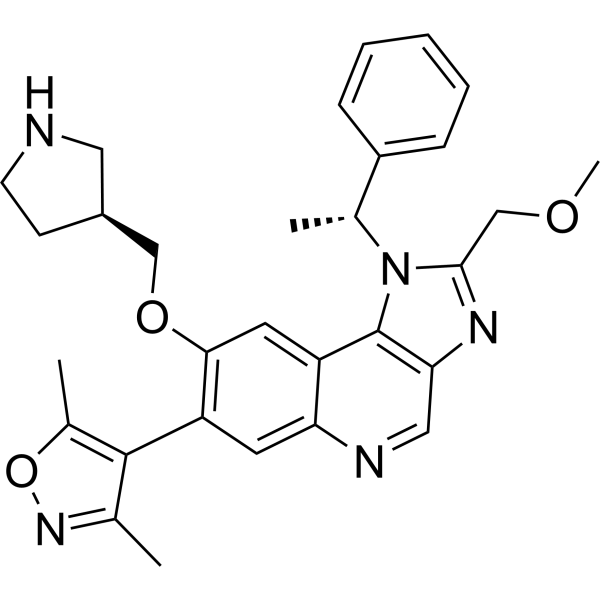
    CF53 is a highly potent, selective and orally active inhibitor of BET protein, with a Ki of <1 nM, Kd of 2.2 nM and an IC50 of 2 nM for BRD4 BD1. CF53 binds to both the BD1 and BD2 domains of BRD2, BRD3, BRD4, and BRDT BET proteins with high affinities, very selective over non-BET bromodomain-containing proteins. CF53 shows potent anti-tumor activity both in vitro and in vivo [1].
    CF53
  • HY-156820

    Epigenetic Reader Domain Cancer
    HLDA-221 is a non-covalent regulated induced proximity targeting chimeras (RIPTAC). The binding of HLDA-221 to BRD4-BD1 is significantly increased after pre-incubation with FKBP. HLDA-221 can be used in cancer research [1].
    HLDA-221
  • HY-19760

    Epigenetic Reader Domain Inflammation/Immunology
    I-BET282 is a pan-inhibitor of all eight BET bromodomains, and selectivity over other representative bromodomain-containing proteins. I-BET282 shows pIC50s ranging 6.4-7.7 for BRD2 (BD1/BD2), BRD2 (BD1/BD), BRD3 (BD1/BD), and BRD4 (BD1/BD) .
    I-BET282
  • HY-126428
    ZL0580
    1 Publications Verification

    HIV Epigenetic Reader Domain Infection Inflammation/Immunology
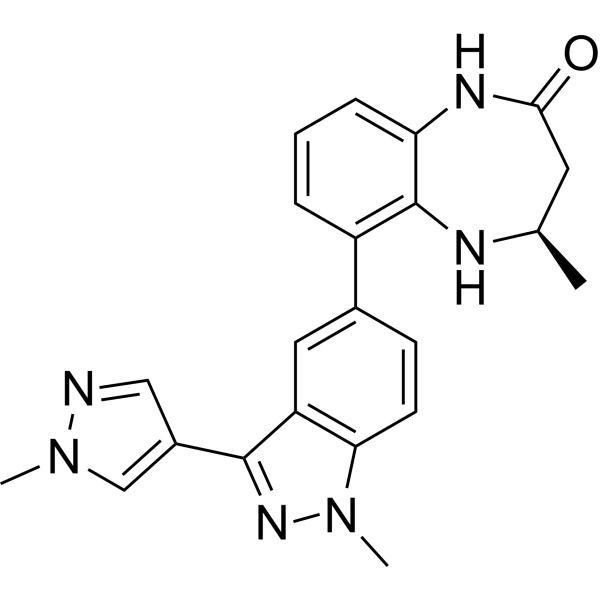
    ZL0580, a structurally close analog of ZL0590, induces epigenetic suppression of HIV via selectively binding to BD1 domain of BRD4. ZL0580 induces HIV suppression by inhibiting Tat transactivation and transcription elongation as well as by inducing repressive chromatin structure at the HIV promoter [1] .
    ZL0580
  • HY-178041

    Epigenetic Reader Domain Interleukin Related c-Fms NF-κB TNF Receptor Inflammation/Immunology
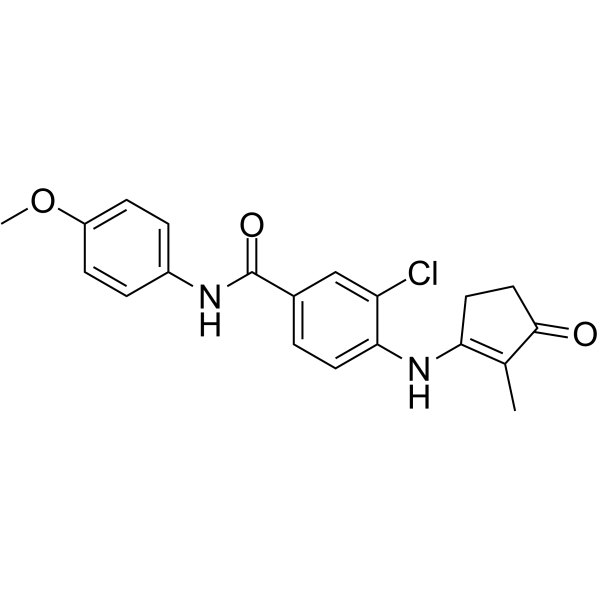
    BRD4-BD1/2-IN-3 (Compound B6) is a selective BRD4 BD2 inhibitor with an IC50 of 0.41  nM for BRD4 BD2 over BRD4 BD1. BRD4-BD1/2-IN-3 significantly inhibits the LPS (HY-D1056)-induced expression of IL-6. BRD4-BD1/2-IN-3 shows anti-inflammatory activities by modulating the TNF and NF-κB signaling pathway. BRD4-BD1/2-IN-3 can be used for inflammatory diseases research [1].
    BRD4-BD1/2-IN-3
  • HY-117491

    Epigenetic Reader Domain Cancer
    BRD4 Inhibitor-10 (Compound II-25) is a potent BRD4-BD1 inhibitor with an IC50 of 8 nM. BRD4 Inhibitor-10 can be used to study diseases caused by abnormal or excessive cell proliferation, such as cancer [1].
    BRD4 Inhibitor-10
  • HY-146208
    BRD4 Inhibitor-20
    1 Publications Verification

    Epigenetic Reader Domain Cancer
    BRD4 Inhibitor-20 is a potent orally active bromodomain protein 4 (BRD4) inhibitor. BRD4 Inhibitor-20 has inhibitory activity for BRD4 (BD1) and BRD4 (BD2) with IC50 values of 19 nM and 28 nM, respectively. BRD4 Inhibitor-20 also has anti-proliferation activities in cancer cell lines. BRD4 Inhibitor-20 can be used for the research of kinds of cancer, such as colon cancer [1].
    BRD4 Inhibitor-20
  • HY-145310

    Epigenetic Reader Domain Inflammation/Immunology
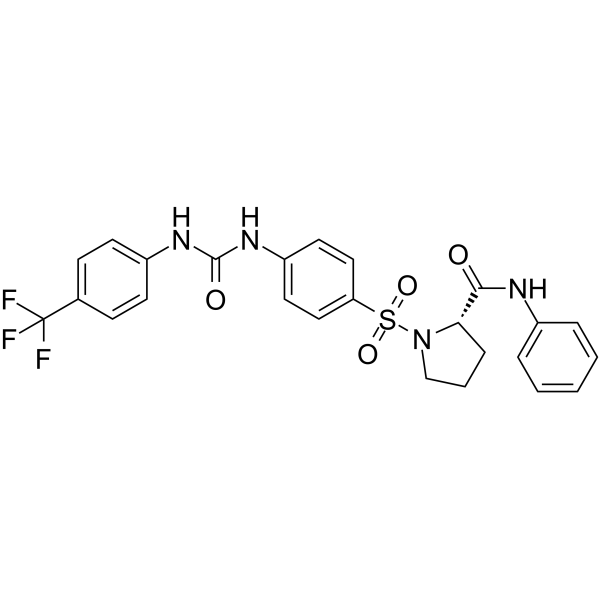
    ZL0590 is a potent, orally active BRD4 BD1-selective inhibitor with an IC50 of 90 nM for human BRD4 BD1. ZL0590 exhibits significant anti-inflammatory activities. ZL0590 can reduce mucosal inflammation in animal models of inflammatory bowel disease and restores tissue architecture. ZL0590 can be used in research on inflammatory diseases such as inflammatory bowel disease [1] .
    ZL0590
  • HY-130622
    LT052
    1 Publications Verification

    Epigenetic Reader Domain Inflammation/Immunology
    LT052 is a highly selective BET BD1 inhibitor with an IC50 of 87.7 nM. LT052 exhibits nanomolar BRD4 BD1 potency and 138-fold selectivity over BRD4 BD2 (IC50=12.130 μM). LT052 has anti-inflammatory?activity and can be used for acute gout arthritis research [1].
    LT052
  • HY-112150
    ZL0454
    2 Publications Verification

    Epigenetic Reader Domain Inflammation/Immunology
    ZL0454 is a potent and selective Bromodomain-containing protein 4 (BRD4) inhibitor with an IC50 of 49 and 32 nM for BD1 and BD2.
    ZL0454
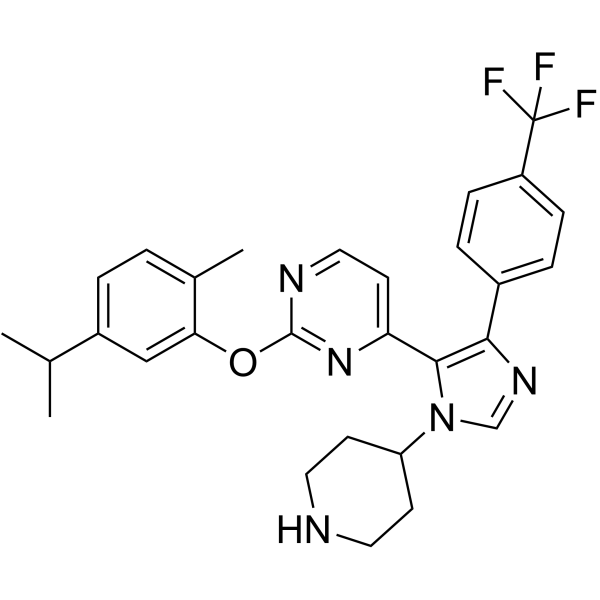
  • HY-124596

    Epigenetic Reader Domain Cancer
    CD161 is a potent, selective and orally bioavailable bromodomain and extra-terminal (BET) bromodomain inhibitor with an IC50s of 28.2 nM and 7.2 nM for BRD4 BD1 and BRD4 BD2, respectively. CD161 has good anticancer activity [1].
    CD161
  • HY-163729

    Epigenetic Reader Domain Inflammation/Immunology Cancer
    I-BET787 is a orally active BET bromine domain inhibitor with pIC50s of 7.1 and 5.9 for BRD4 BD1 and BRD4 BD2, respectively. I-BET787 has anti-inflammatory activity in mice [1].
    I-BET787
  • HY-133138

    E3 Ligase Ligand-Linker Conjugates Cancer
    Pomalidomide-PEG1-azide is an E3 ligase lgand-linker conjugate. Pomalidomide-PEG1-azide incorporates the Pomalidomide based cereblon ligand and a linker. Pomalidomide-PEG1-azide can be used to synthesis PROTAC BRD4 Degrader-1 (HY-133131) [1]. PROTAC BRD4 Degrader-1 is a PROTAC connected by ligands for Cereblon and BRD4 with an IC50 of 41.8 nM against BRD4 BD1. PROTAC BRD4 Degrader-1 can effectively degrade BRD4 protein and suppress c-Myc expression.
    Pomalidomide-PEG1-azide
  • HY-153894

    CDK Epigenetic Reader Domain PI3K NF-κB SARS-CoV Infection Neurological Disease Metabolic Disease Inflammation/Immunology Cancer
    SRX3177 is a triple inhibitor of CDK4/6, PI3K, and BRD4, with IC50s of <2.5 nM (CDK4), 3.3 nM (CDK6), 33 nM (BRD4 BD1), 89 nM (BRD4 BD2), 79 nM (PI3Kα), 83 nM (PI3Kδ), 3.18 μM (PI3Kγ) , respectively. SRX3177 blocks the interaction between the SARS-CoV-2 E protein and the BRD2/4 BD1 domain, restores E protein-attenuated NF-κB activity. SRX3177 exerts broad cytotoxic activity against cancer cells. SRX3177 can be used for the study of anti-SARS-CoV-2 and cancer [1] .
    SRX3177
  • HY-138563

    Epigenetic Reader Domain Cancer
    GSK973, a chemical probe, is a highly selective, orally bioavailable inhibitor of the BD2s (second bromodomains) of the BET family, with a pIC50 of 7.8 and a pKd of 8.7 for BRD4 BD2. GSK973 displays a 1600-fold selectivity for BRD4 BD2 over BRD4 BD1. GSK973 shows good potency against BRD2 BD2, BRD3 BD2, and BRDT BD2 (pIC50=7.4~7.8; pKd=8.3~8.5) [1].
    GSK973
  • HY-142520

    Epigenetic Reader Domain Inflammation/Immunology Cancer
    I-BET567 is a potent and orally active inhibitor of pan-BET candidate with pIC50s of 6.9 and 7.2 for BRD4 BD1 and BD2, respectively. I-BET567 has been demonstrated efficacy in mouse models of oncology and inflammation [1].
    I-BET567
  • HY-160558

    Epigenetic Reader Domain Polo-like Kinase (PLK) Cancer
    PLK1/BRD4-IN-3 (Compound 21) is a selective dual inhibitor for bromodomain 4 (BRD4) and polo-like kinase 1 (PLK1). PLK1/BRD4-IN-3 inhibits BRD4-BD1, PLK1 and BRDT-BD1, with IC50s of 0.059, 0.127 and 0.245 μM, respectively [1].
    PLK1/BRD4-IN-3
  • HY-112149

    Epigenetic Reader Domain Inflammation/Immunology
    ZL0420 is a potent and selective bromodomain-containing protein 4 (BRD4) inhibitor with IC50 values of 27 nM against BRD4 BD1 and 32 nM against BRD4 BD2.
    ZL0420
  • HY-143328

    PROTACs Epigenetic Reader Domain Apoptosis Cancer
    PROTAC BRD4 Degrader-17 (compound 13i) is a potent PROTAC BRD4 Degrader, with IC50 values of 29.54 nM (BRD4 (BD1)) and 3.82 nM (BRD4 (BD2)). PROTAC BRD4 Degrader-17 significantly attenuates G2/M progression associated Cyclin B1 expression. PROTAC BRD4 Degrader-17 significantly induces apoptosis in MV-4-11 cells [1].
    PROTAC BRD4 Degrader-17
  • HY-112149A

    Epigenetic Reader Domain Inflammation/Immunology Cancer
    (E/Z)-ZL0420 is a racemic compound of (Z)-ZL0420 and (E)-ZL0420 isomers. (E)-ZL0420 is a potent and selective bromodomain-containing protein 4 (BRD4) inhibitor with IC50 values of 27 nM against BRD4 BD1 and 32 nM against BRD4 BD2 [1].
    (E/Z)-ZL0420
  • HY-131203

    PROTACs Epigenetic Reader Domain Apoptosis c-Myc Caspase Cancer
    PROTAC BRD4 Degrader-6 (compound 32a) is a potent small-molecule BRD4PROTAC degrader with IC50 value of 2.7 nM for BRD4 BD1. PROTAC BRD4 Degrader-6 potently degrades BRD4 protein and inhibits the expression of c-Myc. PROTAC BRD4 Degrader-6 inhibits the proliferation of pancreatic cancer cell line BxPC3 and induces apoptosis. PROTAC BRD4 Degrader-6 can be used for human pancreatic cancer research (Pink: Mivebresib (HY-100015); Black: linker, Azido-PEG1-CH2CO2H (HY-108369); Blue: Lenalidomide (HY-A0003)) [1].
    PROTAC BRD4 Degrader-6
  • HY-143300

    Epigenetic Reader Domain Cardiovascular Disease Cancer
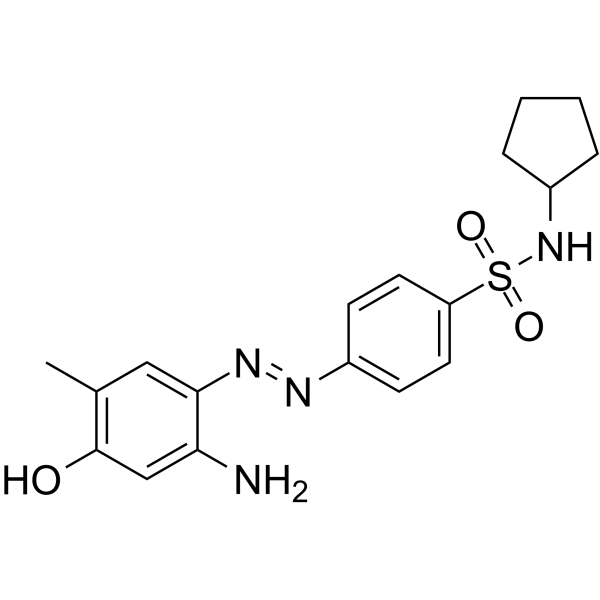
    BRD4-BD1-IN-2 is a selective BRD4-BD1 inhibitor, with an IC50 of 2.51 µM (20-times greater than that of BD2). BRD4-BD1-IN-2 can be used in studies of cancer and cardiovascular diseases [1].
    BRD4-BD1-IN-2
  • HY-142675

    Epigenetic Reader Domain Cancer
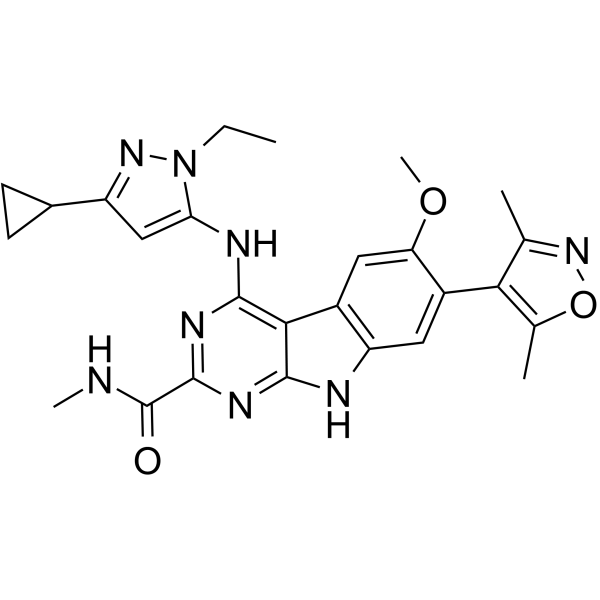
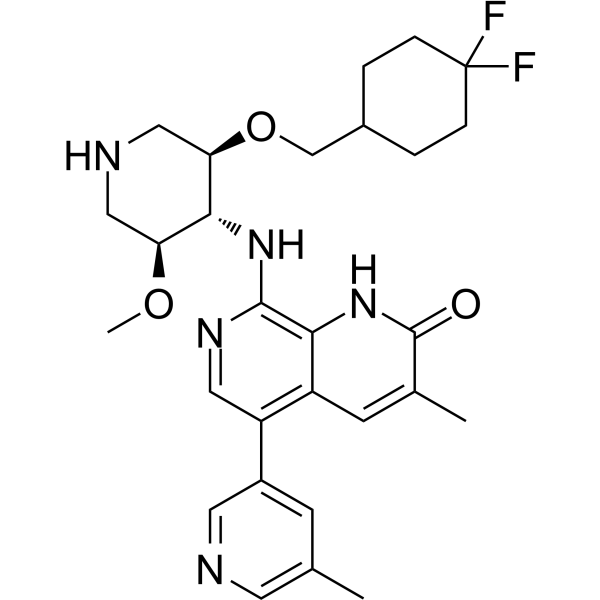
    BRD4-BD1/2-IN-2 is a potent BRD4 BD2 inhibitor with IC50s of <0.5 nM and <300 nM for BRD4 BD2 and BRD4 BD1, respectively (WO2021233371A1, compound 2) [1].
    BRD4-BD1/2-IN-2
  • HY-146739

    Epigenetic Reader Domain Cancer
    BRD4 Inhibitor-19 is a BET inhibitor with an IC50 of 55 nM for BRD4-BD1. BRD4 Inhibitor-19 can be used for multiple myeloma research [1].
    BRD4 Inhibitor-19
  • HY-111977

    Epigenetic Reader Domain Cancer
    ZEN-3219 is a BET inhibitor with IC50s of 0.48, 0.16 and 0.47 μM for BRD4(BD1), BRD4(BD2) and BRD4(BD1BD2), respectively. ZEN-3219 can be used to form PROTACs to induce degradation of BRD4 [1].
    ZEN-3219
  • HY-111979

    Epigenetic Reader Domain Cancer
    ZEN-3411 is a BET inhibitor with IC50s of 0.05, 0.05 and 0.06 μM for BRD4(BD1), BRD4(BD2) and BRD4(BD1BD2), respectively. ZEN-3411 can be used to form PROTACs to induce degradation of BRD4 [1].
    ZEN-3411
  • HY-111978

    Epigenetic Reader Domain Cancer
    ZEN-3862 is a BET inhibitor with IC50s of 0.16 and 0.13 μM for BRD4(BD1) and BRD4(BD2) , respectively. ZEN-3862 can be used to form PROTACs to induce degradation of BRD4 [1].
    ZEN-3862
  • HY-173450

    Epigenetic Reader Domain Inflammation/Immunology
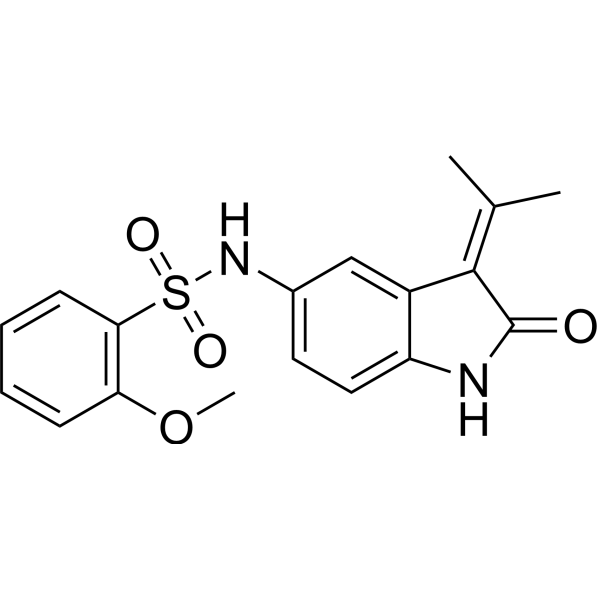
    ZL0516 is a potent, selective, and orally active BRD4 BD1 inhibitor. ZL0516 suppresses inflammatory bowel disease (IBD) by inhibiting BRD4/NF-κB signaling [1].
    ZL0516
  • HY-107425B

    Epigenetic Reader Domain Cancer
    cis-MZ 1 hydrate is a negative control for BRD4-targeted PROTAC MZ 1 (HY-107425). cis-MZ 1 or MZ 1 is a combination of the von Hippel-Lindau ligand (red part in the structural formula) and the BRD4 ligand (blue part in the structural formula). The Kd of MZ 1 for BRD4 BD1/2 was 382 nM and 120 nM, respectively [1].
    cis-MZ 1 hydrate

Inquiry Online

Your information is safe with us. * Required Fields.

Salutation


Country or Region *

Applicant Name *


Organization Name *

Department *


Email Address *


Product Name *

Cat. No.


Requested quantity *

Phone Number *


Remarks

Inquiry Online

Inquiry Information

Product Name:
Cat. No.:
Quantity:
MCE Japan Authorized Agent:

