
1. Search Result
Search Result
Results for "

Bodies

" in MedChemExpress (MCE) Product Catalog:

621

Inhibitors & Agonists

40

Screening Libraries

11

Fluorescent Dyes

45

Biochemical Assay Reagents

66

Peptides

1

MCE Kits

6

Inhibitory Antibodies

136

Natural
Products

43

Isotope-Labeled Compounds

1

Click Chemistry

23

Oligonucleotides

2

GMP Molecules

Cat. No. Product Name Target Research Areas Chemical Structure
  • HY-107910
    Hyaluronidase, Bovine testes
    15+ Cited Publications

    Hyaluronate 4-glycanohydrolase, Bovine testes; Hyaluronoglucosaminidase, Bovine testes

    NF-κB Inflammation/Immunology Cancer
    Hyaluronidase, Bovine testes (Hyaluronate 4-glycanohydrolase; Hyaluronoglucosaminidase) is an endoglycosidase that depolymerizes Hyaluronic acid (HA) (HY-B0633A) by cleavage of glycosidic bonds. Hyaluronidase degrades HA and activates membrane receptors that trigger pathways converging in NF-κB activation. Hyaluronidase is employed in the research of granulomatous foreign body reactions, soft-tissue necrosis caused by vascular compromise and uncomplicated nodules, overcorrection, inflamed nodules or tissue ischemia associated with HA filler injection .
    Hyaluronidase, Bovine testes
  • HY-B0332
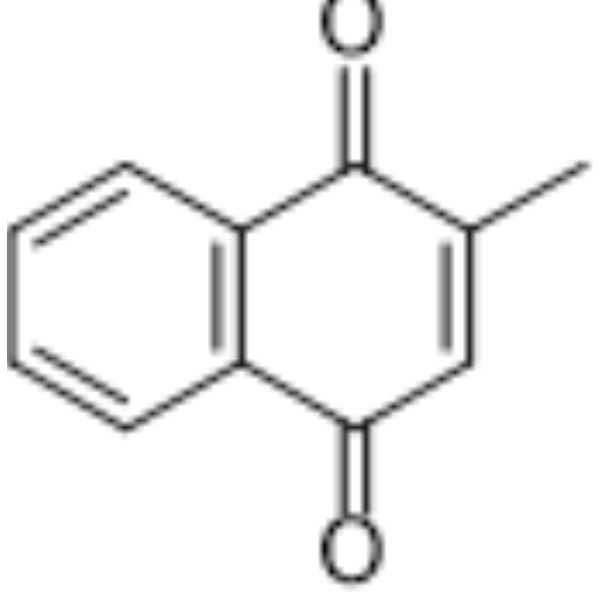
    Menadione
    25+ Cited Publications

    Vitamin K3

    Environmental Pollutants Endogenous Metabolite Cancer
    Menadione is a naphthoquinone that is converted into active vitamin K2 in the body. Menadione is a potential anticancer agent and radiosensitizer .
    Menadione
  • HY-W007606

    Endogenous Metabolite Cardiovascular Disease
    Tyramine is an amino acid that helps regulate blood pressure. Tyramine occurs naturally in the body, and it's found in certain foods .
    Tyramine
  • HY-113228
    Isocitric acid
    2 Publications Verification

    Endogenous Metabolite Neurological Disease
    Isocitric acid is an endogenous metabolite present in Saliva and Cellular_Cytoplasm that can be used for the research of Alzheimer's Disease, Lewy Body Dementia and Anoxia .
    Isocitric acid
  • HY-Y1110I

    Magnogene, for insect cell culture, 97%

    Environmental Pollutants Biochemical Assay Reagents Infection
    Magnesium chloride, for insect cell culture, 97% is an orally active inorganic mineral salt. Magnesium chloride combined with Potassium chloride (HY-Y0537E) increases the fat body glycogen, protein, total lipids and haemolymph protein and trehalose in the silkworm, Bombyx mori L .
    Magnesium chloride, for insect cell culture, 97%
  • HY-145632

    ALT-801

    GLP Receptor GCGR Metabolic Disease
    Pemvidutide (ALT-801) is a GLP-1R/GCGR dual agonist, shows striking reductions in body weight, liver fat and serum lipids. Pemvidutide can be used in non-alcoholic steatohepatitis (NASH) and obesity research .
    Pemvidutide
  • HY-160116

    Radionuclide-Drug Conjugates (RDCs) Fluorescent Dye α-synuclein Neurological Disease
    α-Synuclein aggregate binder 1 (Compound C05-05) is a specific binder for α-synuclein aggregates and can inhibit α-synuclein aggregation. α-Synuclein aggregate binder 1 can be used as a fluorescent probe (excitation wavelength 900 nm, detection wavelength 500-550 nm) for optical imaging, and can also inhibit α-synuclein fibril formation by blocking the aggregation process. α-Synuclein aggregate binder 1 can be used for positron emission tomography (PET) imaging after being labeled with 18F. α-Synuclein aggregate binder 1 can be used for visual diagnosis of brain lesions and mechanism research of neurodegenerative diseases such as Parkinson's disease and Lewy body dementia .
    α-Synuclein aggregate binder 1
  • HY-B2212

    Bentiamine

    Drug Derivative Others
    Dibenzoyl Thiamine (Bentiamine), a derivative of thiamine, is rapidly absorbed into the body and converted to thiamine.
    Dibenzoyl Thiamine
  • HY-W016823

    Endogenous Metabolite Cardiovascular Disease
    Tyramine hydrochloride is an amino acid that helps regulate blood pressure. Tyramine hydrochloride occurs naturally in the body, and it's found in certain foods .
    Tyramine hydrochloride
  • HY-B2172

    Endogenous Metabolite Cardiovascular Disease Cancer
    Vitamin K, the blood-clotting vitamin, is important for the function of numerous proteins within the body, such as the coagulation factors, osteocalcin and matrix-Gla protein.
    Vitamin K
  • HY-P2994

    3-HBDH

    Endogenous Metabolite Metabolic Disease
    3-Hydroxybutyrate dehydrogenase (3-HBDH), a mitochondrial enzyme, is a key enzyme in the ketone body metabolism pathway. 3-Hydroxybutyrate dehydrogenase is the last enzyme for ketone synthesis in the liver and the first enzyme for ketone breakdown in extracellular tissues. The absence of 3-Hydroxybutyrate dehydrogenase leads to the inhibition of fatty acid oxidation in the liver during fasting in mice, resulting in lipid accumulation and the development of fatty liver .
    3-Hydroxybutyrate dehydrogenase
  • HY-116797

    MS0015203

    GPR171 Metabolic Disease
    MS15203 is a potent and selective GPR171 agonist. MS15203 increases food intake and body weight. MS15203 increases neuronal activity. MS15203 significantly increases the abundance of the mRNAs encoding proSAAS, NPY, AgRP .
    MS15203
  • HY-108751
    Aripiprazole Lauroxil
    2 Publications Verification

    Dopamine Receptor Neurological Disease
    Aripiprazole lauroxil, an N-acyloxymethyl proagent of Aripiprazole (HY-14546), is a Long-acting injectable (LAI) typical antipsychotic for schizophrenia and a ligand of dopamine receptor D2R/D4R. Aripiprazole lauroxil is cleaved by body’s enzyme esterase to N-hydroxymethyl aripiprazole (plus lauric acid) and then to aripiprazole (plus formaldehyde), no toxicity.
    Aripiprazole Lauroxil
  • HY-D0060

    Fluorescent Dye Others
    4-Di-2-ASP, a styryl pyridinium fluorescent dye, is a vital mitochondrial marker. 4-Di-2-ASP shows reliable and specific labelling of pulmonary NEBs (neuroepithelial bodies) .
    4-Di-2-ASP
  • HY-W004546

    MOFs MMP Parasite Infection
    Abametapir is a metalloproteinase (MMP) inhibitor which is able to target metalloproteinases critical to egg hatching and louse development. Abametapir can inhibit hatching of both head and body louse .
    Abametapir
  • HY-14342
    MK-5046
    2 Publications Verification

    Bombesin Receptor Metabolic Disease
    MK-5046 is a potent, selective and orally active Bombesin receptor subtype-3 (BRS-3) allosteric agonist with an IC50 and an EC50 value of 27 and 25 nM for hBRS-3, respectively. MK-5046 inhibits food intake and reduces body weight of diet-induced obese (DIO) mouse models. MK-5046 can be used for the research of obesity .
    MK-5046
  • HY-N0698

    Endogenous Metabolite α-synuclein Neurological Disease Cancer
    Crocin II is an inhibitor targeting α-synuclein aggregation, with a IC50 of 0.541 μM and a EC50 of 3.63 μM. Crocin II inhibits α-synuclein aggregation and dissociates pre-formed α-synuclein fibrils. Crocin II possesses antioxidant, anticancer and antidepressant activities. Crocin II is applicable to research related to neurological disorders such as Parkinson's disease, dementia with Lewy bodies and multiple system atrophy, as well as cancers .
    Crocin II
  • HY-W010104

    H-Met(O)-OH

    Endogenous Metabolite Metabolic Disease
    L-Methionine sulfoxide is an orally active oxidation product of Methionine (HY-N0326). L-Methionine sulfoxide can be partially converted into Methionine in the body and participate in the synthesis of glutathione in the liver. L-Methionine sulfoxide provides the body with sulfur activity and can participate in the synthesis of proteins and sulfur-containing compounds .
    L-Methionine sulfoxide
  • HY-118594

    Ferrochelatase Metabolic Disease
    Diethyl 2,4,6-trimethyl-1,4-dihydropyridine-3,5-dicarboxylate is an orally active porphyrin inducer and ferrochelatase inhibitor. Diethyl 2,4,6-trimethyl-1,4-dihydropyridine-3,5-dicarboxylate can induce small bile duct obstruction in mice, resulting in blocked bile excretion and causing cholestasis. Long-term use of Diethyl 2,4,6-trimethyl-1,4-dihydropyridine-3,5-dicarboxylate can cause damage to bile duct epithelial cells, inflammatory responses, and liver fibrosis. Diethyl 2,4,6-trimethyl-1,4-dihydropyridine-3,5-dicarboxylate can be used to simulate the pathological features of cholestatic liver diseases such as sclerosing cholangitis (PSC) .
    Diethyl 2,4,6-trimethyl-1,4-dihydropyridine-3,5-dicarboxylate
  • HY-117348

    HDAC Neurological Disease
    NCC-149 is a selective HDAC8 inhibitor and can be used for neural differentiation research .
    NCC-149
  • HY-D2335

    Fluorescent Dye Neurological Disease
    SERTlight is a fluorescent agent that can specifically label serotonergic neuronal cell bodies, dendrites, and axonal projections as fluorescent substrates of the serotonin transporter (SERT). SERTlight is orthogonal to various genetically encoded sensors in terms of optics, pharmacology, and operation, enabling multiple imaging. SERTlight allows the use of GRAB5HT sensors to label distal 5HT axonal projections and simultaneously image the release of endogenous 5HT, providing a new multifunctional molecular tool for studying serotonergic systems .
    SERTlight
  • HY-145612

    Biochemical Assay Reagents Others
    Sudan red 7B is a red non-fluorescent stain that can be used to stain fat bodies .
    Sudan red 7B
  • HY-145632A

    ALT-801 TFA

    GLP Receptor GCGR Metabolic Disease
    Pemvidutide (ALT-801) TFA is a GLP-1R/GCGR dual agonist, shows striking reductions in body weight, liver fat and serum lipids. Pemvidutide TFA can be used in non-alcoholic steatohepatitis (NASH) and obesity research .
    Pemvidutide TFA
  • HY-167846

    JAK Cancer
    YLIU-4-105-1 is a Type II JAK2 inhibitor. YLIU-4-105-1 binds to the ATP-binding pocket of JH1. YLIU-4-105-1 has in vivo pharmacodynamic activity as evidenced by inhibiting pSTAT5, reducing spleen to body weight, and lowering blood reticulocyte counts in a dose-dependent manner .
    YLIU-4-105-1
  • HY-W009411

    Fluorescent Dye Others
    Dansyl hydrazine is a carbohydrate-specific fluorescent dye (Ex/Em = 340 nm/525 nm). Dansyl hydrazine undergoes a condensation reaction with aldehyde groups generated by periodate oxidation on carbohydrate-containing structures to form fluorescent hydrazone compounds. Dansyl hydrazine selectively stains polysaccharides in formalin-fixed, paraffin-embedded human post-mortem brain tissues, revealing detailed structural features. Dansyl hydrazine is applicable to research related to Alzheimer's disease, Lafora disease, and polyglucosan body disease .
    Dansyl hydrazine
  • HY-N4169

    Others Inflammation/Immunology
    Trametenolic acid is a lanostanol glycoside that isolated from the EtOH extract of the fruit bodies of Laetiporus versisporus .
    Trametenolic acid
  • HY-12392

    Opioid Receptor Neurological Disease
    Iprindole, an opioid receptor agonist, is a tricyclic antidepressant. Iprindole shortens the immobility time in mice forced swimming test, which can be reversed by the opiate antagonist Naloxone (HY-17417A). Iprindole induces lamellar body formation but devoid of lamellar bodies. Iprindole can be used for the research of depression .
    Iprindole
  • HY-W010104R

    H-Met(O)-OH (Standard)

    Reference Standards Endogenous Metabolite Metabolic Disease
    L-Methionine sulfoxide is an orally active oxidation product of Methionine (HY-N0326). L-Methionine sulfoxide can be partially converted into Methionine in the body and participate in the synthesis of glutathione in the liver. L-Methionine sulfoxide provides the body with sulfur activity and can participate in the synthesis of proteins and sulfur-containing compounds .
    L-Methionine sulfoxide (Standard)
  • HY-113118

    5-Acetylamino-6-amino-3-methyluracil

    Endogenous Metabolite Others
    AAMU (5-Acetylamino-6-amino-3-methyluracil) is the main metabolite of caffeine in the human body .
    AAMU
  • HY-P3570

    Lom-AKH-II

    Endogenous Metabolite Metabolic Disease
    Adipokinetic hormone II (Locusta migratoria) (Lom-AKH-II) is a insect adipokinetic hormone (AKH), enhances fat body cAMP levels in vitro. Insect adipokinetic hormones (AKHs) controls flight-directed mobilization of carbohydrate and lipid from fat body stores, which depends on AKH receptor(s) coupling to cAMP formation and glycogen phosphorylase activation via the stimulatory guanine nucleotide-binding protein (Gs) .
    Adipokinetic hormone II (Locusta migratoria)
  • HY-N3571

    Others Others
    Cerevisterol is a steroid isolated from the fruiting bodies of Agaricus blazei .
    Cerevisterol
  • HY-117787

    Free Fatty Acid Receptor Neurological Disease Metabolic Disease
    TUG-905 is a potent GPR40 agonist with an pEC50 value of 7.03. TUG-905 increases hypothalamic cell proliferation and survival. TUG-905 reduces body mass and increases the POMC mRNA expression .
    TUG-905
  • HY-107949

    Flumethasone 21-pivalate

    Glucocorticoid Receptor Cardiovascular Disease Inflammation/Immunology
    Flumethasone pivalate (Flumethasone 21-pivalate) is a glucocorticoid and a topical corticosteroid with anti-inflammatory, antipruritic, and vasoconstrictive actions. Flumethasone pivalate inhibits foreign body granuloma formation. Flumethasone pivalate can be used for the researches of dermatitis, eczema, and psoriasis .
    Flumethasone pivalate
  • HY-P3388

    GLP Receptor Cardiovascular Disease Metabolic Disease
    Utreglutide is an effective glucagon-like peptide 1 (GLP-1) receptor agonist. Utreglutide can lower blood pressure, blood lipids and body weight, and improve cardiovascular metabolism. Utreglutide can be used for research on type 2 diabetes or non-type 2 diabetes obesity .
    Utreglutide
  • HY-109513
    Ioxilan
    1 Publications Verification

    Biochemical Assay Reagents Others
    Ioxilan is a low-osmolar, nonionic and tri-iodinated diagnostic contrast agent. Ioxilan is also an X-ray contrast agent for excretory urography and contrast enhanced computed tomographic (CECT) imaging of the head and body. Intravascular injection results in opacification of vessels in the path of flow of the contrast medium, permitting radiographic visualization of the internal structures of the human body until significant hemodilution occurs .
    Ioxilan
  • HY-P3572

    Lom-AKH-I

    Endogenous Metabolite Endocrinology
    Adipokinetic hormone I (Locusta migratoria) (Lom-AKH-I) is a insect adipokinetic hormone (AKH), enhances fat body cAMP levels in vitro. Insect adipokinetic hormones (AKHs) controls flight-directed mobilization of carbohydrate and lipid from fat body stores, which depends on AKH receptor(s) coupling to cAMP formation and glycogen phosphorylase activation via the stimulatory guanine nucleotide-binding protein (Gs) .
    Adipokinetic hormone I (Locusta migratoria)
  • HY-W002450

    Drug Derivative Cardiovascular Disease
    L-Cyclohexylalanine is an amino acid derivative. L-Cyclohexylalanine modifies an atrial natriuretic peptide, regulates homeostasis of body fluid and blood pressure homeostasis and vasodilation activity .
    L-Cyclohexylalanine
  • HY-178920

    α-synuclein Neurological Disease
    α-Synuclein-IN-17 (Compound 10) is an α-Synuclein inhibitor, with an IC50 value of 9 μM. α-Synuclein-IN-17 exhibits potent inhibitory activity against both in-vitro assembled asyn fibrils and LBD brain tissue-amplified asyn fibrils. α-Synuclein-IN-17 can be used for the study of Parkinson's disease (PD) and Lewy Body Disease (LBD) .
    α-Synuclein-IN-17
  • HY-P2537
    Apelin-12
    2 Publications Verification

    HIV Apelin Receptor (APJ) Others
    Apelin-12 is one of the most potent C-terminal fragments of the polypeptide that possesses a high affinity to orphan receptor APJ receptor. Apelin-12 is involved in the regulation of body fluid homeostasis and in the central control of feeding. Apelin-12 blocks HIV-1 entry through APJ receptor. Apelin-12 exerts neuroprotective effect .
    Apelin-12
  • HY-14342A

    Bombesin Receptor Metabolic Disease
    (R)-MK-5046 is the isomer of MK-5046 (HY-14342), and can be used as an experimental control. MK-5046 is a potent, selective and orally active Bombesin receptor subtype-3 (BRS-3) allosteric agonist with an IC50 and an EC50 value of 27 and 25 nM for hBRS-3, respectively. MK-5046 inhibits food intake and reduces body weight of diet-induced obese (DIO) mouse models. MK-5046 can be used for the research of obesity .
    (R)-MK-5046
  • HY-N1515

    Others Cancer
    Ganoderenic acid C is a triterpenoid isolated from Ganoderma lingzhi. Ganoderenic acid C is abundant in fruit bodies at an early growth stage .
    Ganoderenic acid C
  • HY-163039

    Biochemical Assay Reagents Inflammation/Immunology
    DOTA-biotin is a DOTA-based small molecule hapten. DOTA-biotin has low tissue and whole-body retention in mice 4 h postinjection .
    DOTA-biotin
  • HY-137007

    Interleukin Related Others Inflammation/Immunology
    SMA-12b is a small molecule analogue of the parasitic worm compound ES-62. SMA-12b has immunomodulatory activity, acting by regulating the expression of multiple inflammatory response genes, especially those associated with inflammatory bodies. SMA-12b significantly reduces the expression of cytokine IL-1β associated with inflammatory bodies and inhibites the production of IL-1β through a mechanism mediated by NRF2. SMA-12b can be used in the study of rheumatoid arthritis (RA) and other autoimmune diseases .
    SMA-12b
  • HY-120872

    Glycosyltransferase Metabolic Disease
    AJS1669 free acid is a potent and orally available glycogen synthase (GS) activator. AJS1669 improves glucose metabolism and reduces body fat mass in mice[1].
    AJS1669 free acid
  • HY-142441

    Thyroid Hormone Receptor Endocrinology
    THR-β Agonist 1 is a potent and selective agonist of THRβ. Thyroid hormone receptor mediates the physiological activity of thyroid hormones which plays a key role in normal growth and development of the body and in maintaining metabolic balance. THR-β Agonist 1 has the potential for the research of thyroid hormone receptor-related diseases (extracted from patent WO2021104288A1, compound 2) .
    THR-β agonist 1
  • HY-104061

    TRP Channel Others
    AMG8788 is a potent, selective, orally active antagonist of TRPM8 with an IC50 of 63.2 nM .
    AMG8788
  • HY-B2202R

    Biochemical Assay Reagents Reference Standards Others
    Choline dihydrogen citrate (Standard) is the analytical standard of Choline dihydrogen citrate. This product is intended for research and analytical applications. Choline dihydrogen citrate is a choline-rich hydrochloride that can be absorbed by the body and converted into acetylcholine, which enhances the function of the nervous system and muscles and promotes good health. In addition, this compound is widely used in supplements such as certain energy drinks and protein powders to help improve the body's metabolism and exercise capacity.
    Choline dihydrogen citrate (Standard)
  • HY-W704031

    Drug Metabolite Metabolic Disease
    Prasugrel metabolite 1 (M7 (R-119251)) is one of the inactive metabolites of Prasugrel (HY-15284) in the human body .
    Prasugrel metabolite 1
  • HY-U00340

    PPAR Metabolic Disease
    PPAR agonist 1 is an agonist of PPAR α and PPAR γ, used for reducing blood glucose, lipid levels, lowering cholesterol and reducing body weight.
    PPAR agonist 1
  • HY-P1421A

    GPR39 Metabolic Disease
    Obestatin(human) TFA is an endogenous peptide derived from the same prepropeptide as ghrelin. Obestatin(human) suppresses food intake and reduce body weight-gain in rats.
    Obestatin(human) TFA

Inquiry Online

Your information is safe with us. * Required Fields.

Salutation


Country or Region *

Applicant Name *


Organization Name *

Department *


Email Address *


Product Name *

Cat. No.


Requested quantity *

Phone Number *


Remarks

Inquiry Online

Inquiry Information

Product Name:
Cat. No.:
Quantity:
MCE Japan Authorized Agent:

