
10 Results for "

CD8 cytotoxic T lymphocyte

" in MedChemExpress (MCE) Product Catalog:
Products (10)

10 Results for "CD8 cytotoxic T lymphocyte" in MCE Product Catalog:

Cat. No.: HY-P4193
CAS No.: 181272-91-3
Target:  

MHC

Research Areas:  

Inflammation/Immunology Cancer

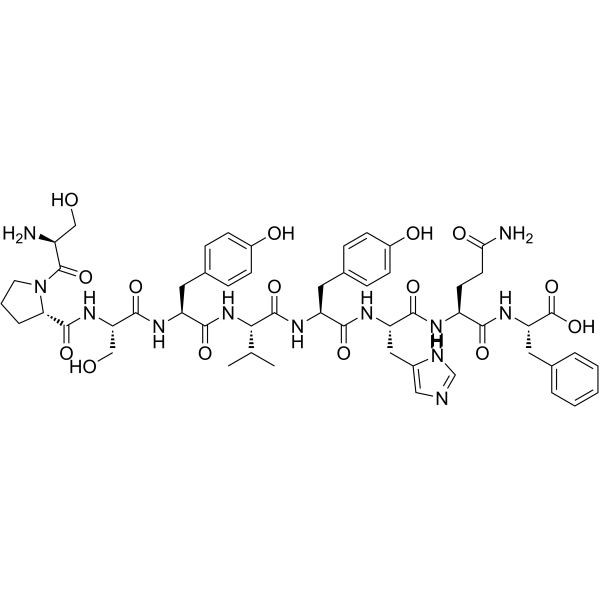
AH1 is an immunodominant MHC class I-restricted nonamer peptide recognized by CD8 + cytotoxic T lymphocytes. AH1 derives from the envelope protein (gp70) of an endogenous ecotropic murine leukemia virus and is presented by the MHC class I L d molecule. AH1 can be used for the research of colorectal carcinoma .
loading...
    loading...
Cat. No.: HY-175802
CAS No.: 2982574-79-6
Synonyms: HYBI-084
Target:  

WDR5 Potassium Channel

Research Areas:  

Inflammation/Immunology Cancer

HBI-2375 (HYBI-084) is a brain-penetrant WDR5 inhibitor with an IC50 of 4.48 nM. HBI-2375 binds to the WINR5 and disrupts MLL1-WDR5 protein-protein interactions. HBI-2375 inhibits cancer cells proliferation and shows anti-tumor activity in AML mouse models, and increases tumor CD8 + cytotoxic T lymphocyte infiltration. HBI-2375 inhibits hERG with an IC50 of 17 µM .
loading...
    loading...
Cat. No.: HY-P0277
CAS No.: 168635-85-6
Synonyms: CEA peptide
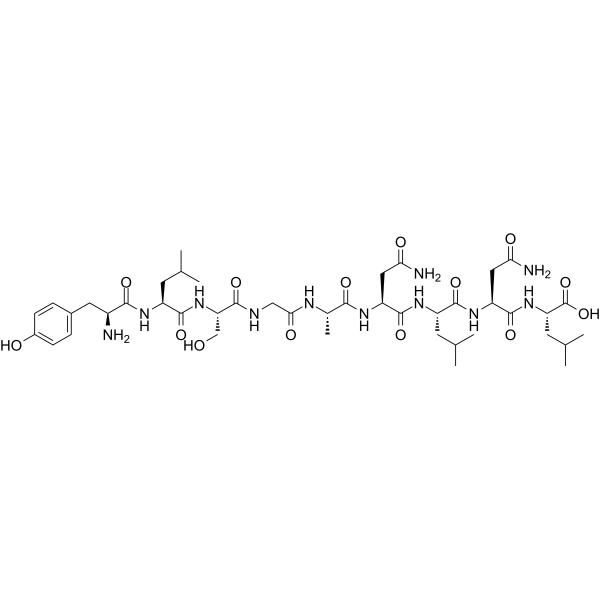
Carcinoembryonic antigen peptide 1 (CEA peptide) is a 9-amino acid HLA-A0201-binding cytotoxic T lymphocyte (CTL) epitope peptide derived from carcinoembryonic antigen (CEA). The IC50 of Carcinoembryonic antigen peptide 1 binding to HLA-A0201 is 2 μM. Carcinoembryonic antigen peptide 1 binds to HLA-A0201 to form a peptide-MHC I complex, which is recognized by the T cell receptor (TCR) of CAP1-specific CD8 + CTLs, thereby inducing antigen-specific T cell activation, IFN-γ production, and CTL-mediated lysis of target cells. Carcinoembryonic antigen peptide 1 is used in research on CEA-specific CTL responses and colorectal cancer .
loading...
    loading...
Cat. No.: HY-P5470
CAS No.: 152274-91-4
Target:  

EBV IFNAR

Research Areas:  

Inflammation/Immunology

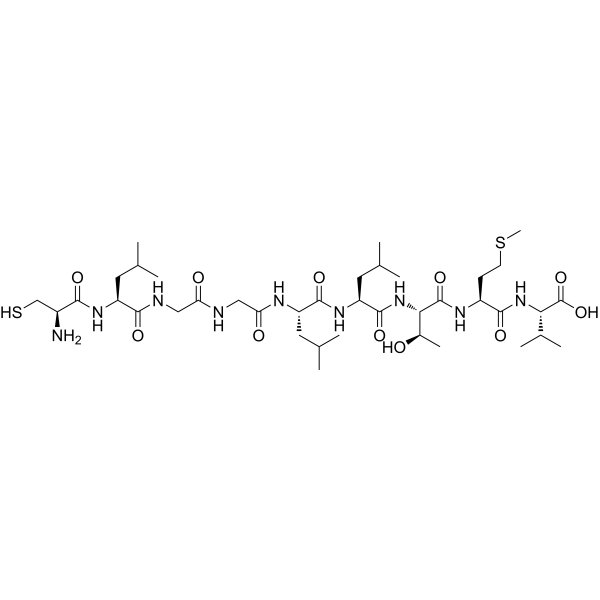
LMP2A (426-434) is a HLA-A2-restricted cytotoxic T lymphocyte (CTL) epitope of Epstein-Barr virus (EBV) latent membrane protein 2A (LMP2A). LMP2A (426-434) can trigger an immune response in individuals expressing different HLA-A*02 subtypes (A*02:01, A*02:03, A*02:06 and A*02:07). LMP2A (426-434) can induce a strong IFN-γ secretion response, stimulating the production of a high proportion of CD8 + IFN-γ + T cells. LMP2A (426-434) induces specific CTLs to effectively kill target cells expressing LMP2A. LMP2A (426-434) can be used to study EBV-related malignant tumors (such as Hodgkin's disease and nasopharyngeal carcinoma) .
loading...
    loading...
Cat. No.: HY-P10593
CAS No.: 126779-14-4
Research Areas:  

Cancer

Influenza A NP (383-391) (HLA-B27) is a peptide sequence derived from tetanus toxin. Influenza A NP (383-391) (HLA-B27) is a broadly immunogenic CD4+ T helper cell epitope that enhances CD8+ cytotoxic T lymphocyte (CTL) responses. Influenza A NP (383-391) (HLA-B27) can be used in breast cancer research .
loading...
    loading...
Cat. No.: HY-P2521
CAS No.: 184763-32-4
Target:  

Influenza Virus

Research Areas:  

Infection Inflammation/Immunology

NS2 (114-121), Influenza, the 114-121 fragment of influenza nonstructural protein 2 (NS2), is a influenza-derived epitope. NS2 (114-121), Influenza can be used for the research of CD8 + cytotoxic T lymphocyte (CTL) in antiviral immune responses .
loading...
    loading...
Cat. No.: HY-P11145
CAS No.: 216876-10-7
Target:  

Influenza Virus

Research Areas:  

Infection Inflammation/Immunology

Influenza HA (529-537) is the amino acid sequence (IYATVAGSL) at positions 529-537 of the hemagglutinin (HA) of the influenza A virus. Influenza HA (529-537) can be recognized by three different specificities (H1-specific, H2-specific, H1/H2 cross-reactive) of CD8 + cytotoxic T-lymphocyte (CTL) clones. Influenza HA (529-537) can be used to understand T-cell immune specificity and to design new vaccines .
loading...
    loading...
Cat. No.: HY-P3070
CAS No.: 132326-74-0
Target:  

MHC

Research Areas:  

Infection Others

H2-D b restricted epitopes VSV Nucleoprotein (52-59) is a 9-mer peptide derived from the nucleoprotein of Vesicular Stomatitis Virus (VSV). H2-D b restricted epitopes VSV Nucleoprotein (52-59) binds to MHC class I molecules and presents itself to CD8+ T cells, thereby activating cytotoxic T lymphocytes (CTLs), which can recognize and kill cells expressing the corresponding antigen. H2-D b restricted epitopes VSV Nucleoprotein (52-59) can be used in the development of CTL vaccines against Ebola virus .
loading...
    loading...
Cat. No.: HY-P991911

Research Areas:  

Cancer

PLT012 is a humanized IgG4 antibody targeting CD36. PLT012 inhibits the lipid-binding domain of CD36. PLT012 blocks CD36-mediated metabolic adaptation in regulatory T cells (Tregs) and CD8 + tumor-infiltrating lymphocytes (TILs), thereby inhibiting tumor growth and shifting the tumor microenvironment from immunosuppressive to immunosupportive. PLT012 reduces intratumoral Tregs, enhances CD8 + T cell infiltration and cytotoxic function, and increases the abundance of progenitor-exhausted T cells. PLT012 exerts robust antitumor activity and synergizes with anti-PD-L1 or standard-of-care regimens (anti-VEGF + anti-PD-L1). PLT012 can be used for hepatocellular carcinoma, colorectal cancer and solid tumor research .
loading...
    loading...
Cat. No.: HY-D3181
CyGbPF is a granzyme B-specific near-infrared fluorescent probe. CyGbPF can be cleaved by granzyme B to remove the peptide cage group, restoring near-infrared fluorescence. CyGbPF passively accumulates in mouse tumors, and its activated fluorescence correlates with granzyme B expression, CD8 + cytotoxic T lymphocyte populations, and CD4 + helper T lymphocyte populations in tumor tissues. CyGbPF is efficiently cleared by the kidneys, enabling the assessment of immune activation via optical urine analysis. CyGbPF allows real-time non-invasive evaluation of cancer immunotherapeutic efficacy in living animals. CyGbPF can be used in research on cancers such as breast cancer. Excitation wavelength/emission wavelength: approximately 658 nm/approximately 717 nm .
loading...
    loading...

