1. Search Result
Search Result
Results for "

Complexing agent

" in MedChemExpress (MCE) Product Catalog:

197

Inhibitors & Agonists

3

Screening Libraries

5

Fluorescent Dye

35

Biochemical Assay Reagents

7

Peptides

3

Inhibitory Antibodies

11

Natural
Products

13

Isotope-Labeled Compounds

2

Click Chemistry

2

Oligonucleotides

Cat. No. Product Name Target Research Areas Chemical Structure
  • HY-114299
    Salcaprozate sodium
    4 Publications Verification

    SNAC

    Biochemical Assay Reagents Others
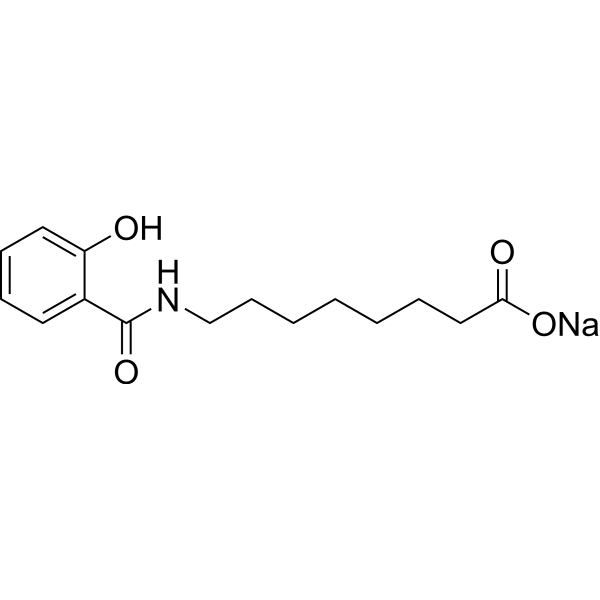
    Salcaprozate sodium (SNAC), an oral absorption promoter, and has the potential as a delivery agent for oral forms of heparin and insulin. Salcaprozate sodium could increase passive transcellular permeation across small intestinal epithelia based on increased lipophilicity arising from non-covalent macromolecule complexation .
    Salcaprozate sodium
  • HY-13832
    Atovaquone
    4 Publications Verification

    Atavaquone

    Parasite Cytochrome P450 Antibiotic Bacterial Infection Cancer
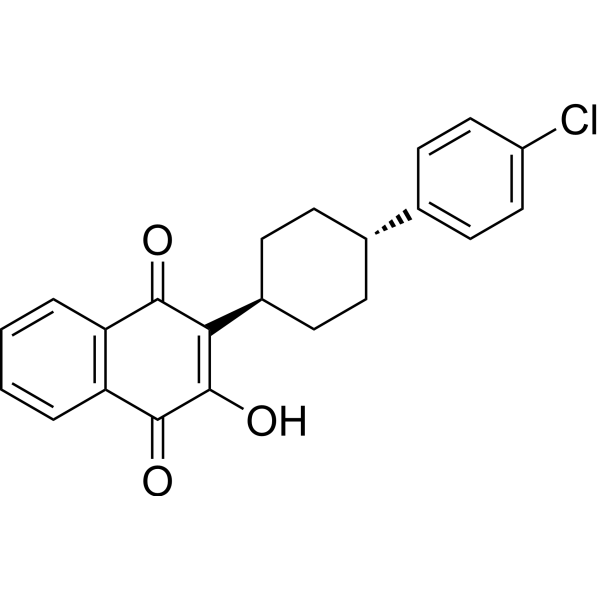
    Atovaquone (Atavaquone) is a potent, selective and orally active inhibitor of the parasite’s mitochondrial cytochrome bc1 complex. Atovaquone is against human and  P. falciparum cytochrome bc1 activity with IC50 values of 460 nM and 2.0 nM, respectively. Atovaquone is an antimalarial agent and has the potential for the investigation of neumocystis pneumonia, toxoplasmosis, malaria, and babesia .
    Atovaquone
  • HY-126653
    Atpenin A5
    5+ Cited Publications

    Potassium Channel Cardiovascular Disease
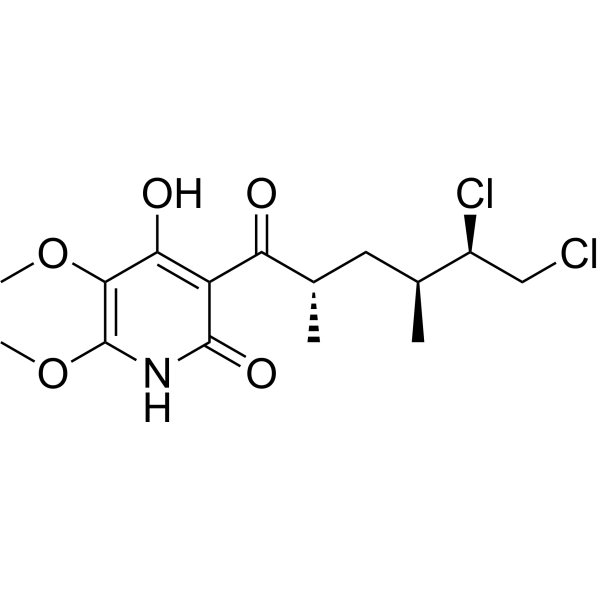
    Atpenin A5 is a potent and highly specific complex II inhibitor (IC50 ~10 nM), and is an effective mKATP channel agonist and cardioprotective agent .
    Atpenin A5
  • HY-W053583
    Tetraxetan
    1 Publications Verification

    DOTA

    Biochemical Assay Reagents Radionuclide-Drug Conjugates (RDCs) Cancer
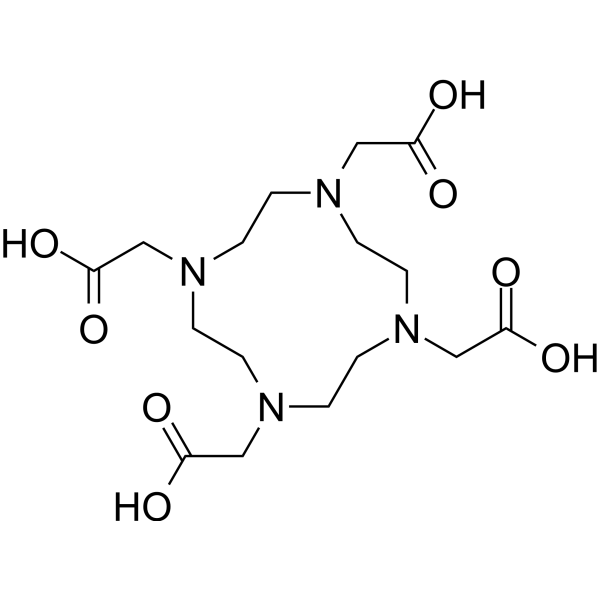
    Tetraxetan (DOTA) is a macrocyclic chelating agent. Tetraxetan can form stable coordination complexes with a variety of metal ions (e.g., 68Ga, 111In, 177Lu). Tetraxetan can be conjugated with targeting molecules (e.g., RGD peptide, folic acid) to enable the complex to target specific biomolecules or cells. Tetraxetan can be used for imaging studies of tumors, including melanoma and folate receptor-positive tumors (e.g., cervical cancer) .
    Tetraxetan
  • HY-126387

    Bacterial Antibiotic Penicillin-binding protein (PBP) Infection
    Moenomycin complex is a class of antibacterial agents and PBP inhibitors, with Kd values ranging from 94 nM to 1690 nM against various bacterial PBPs. Moenomycin complex inhibits bacterial growth by blocking the transglycosylase activity of class A penicillin-binding proteins (PBPs). Moenomycin complex is used in the research of bacterial infections .
    Moenomycin complex
  • HY-12533
    Disopyramide
    2 Publications Verification

    Dicorantil; SC-7031

    Sodium Channel Potassium Channel Cardiovascular Disease
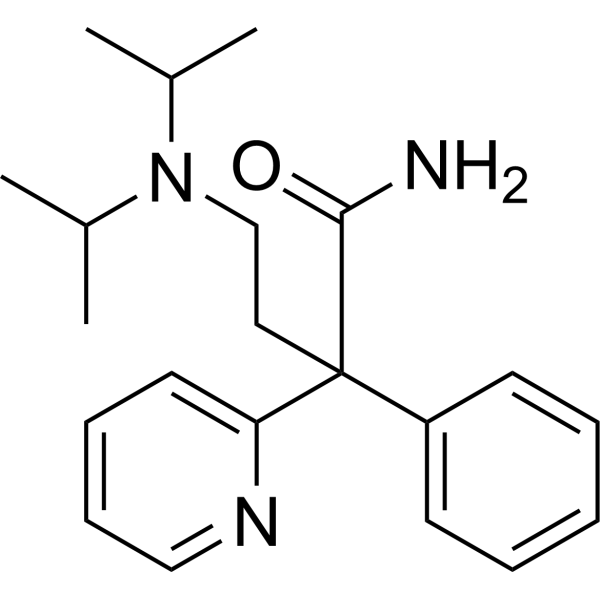
    Disopyramide (Dicorantil) is a class IA antiarrhythmic agent with efficacy in ventricular and atrial arrhythmias. Disopyramide blocks the fast inward sodium current of cardiac muscle and prolongs the duration of cardiac action potentials. Disopyramide inhibits HERG encoded potassium channels. Disopyramide also exhibits complex protein binding, and has a potent negative inotropic action .
    Disopyramide
  • HY-133513

    (±)-H3L28

    Drug Derivative Cancer
    (±)-H3RESCA-TFP ((±)-H3L28) is a tetrafluorophenyl ester derivative of restrained complexing agent (RESCA). (±)-H3RESCA-TFP can be used to conjugate the chelator with a biomolecule via amine coupling (e.g., N terminus and/or the ε-amino groups of lysine) .
    (±)-H3RESCA-TFP
  • HY-Y0607

    Bacterial Drug Intermediate Infection
    4-Nitrobenzoic acid is a nitroaromatic compound that can be used in the synthesis of other active compounds. 4-Nitrobenzoic acid is also an inhibitor agent, which can be used for the recognition of the Mycobacterium tuberculosis complex and differentiation from non-tuberculous mycobacteria .
    4-Nitrobenzoic acid
  • HY-D0202

    Fluorescent Dye Others
    Arsenazo III is an azo derivative of chromotropic acid, a metal chrome dye, a chelating agent, and a cation complexing agent. Arsenazo III forms stable 1:1 complexes with Ca 2+, Mg 2+, Sr 2+, Ba 2+, K +, and Na +, and its binding affinity for Ca 2+ depends on pH, alkali metal cation concentration, and buffer parameters. Arsenazo III serves as a colorimetric indicator for micromolar ionized Ca 2+ in cells .
    Arsenazo III
  • HY-12533A
    Disopyramide phosphate
    2 Publications Verification

    Dicorantil phosphate; SC-7031 phosphate

    Potassium Channel Sodium Channel Cardiovascular Disease
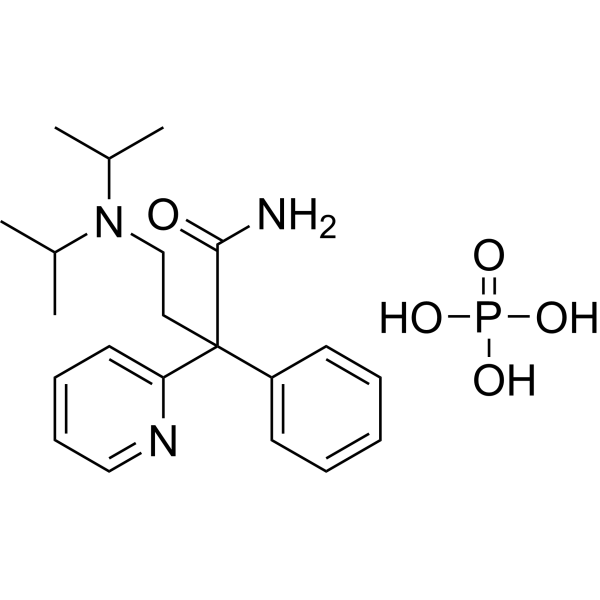
    Disopyramide phosphate is a class IA antiarrhythmic agent with efficacy in ventricular and atrial arrhythmias. Disopyramide phosphate blocks the fast inward sodium current of cardiac muscle and prolongs the duration of cardiac action potentials. Disopyramide phosphate inhibits HERG encoded potassium channels. Disopyramide phosphate also exhibits complex protein binding, and has a potent negative inotropic action .
    Disopyramide phosphate
  • HY-W250149

    Biochemical Assay Reagents Cancer
    Chlorophosphonazo III is a cell membrane-permeable contrast agent and spectrophotometric reagent. Chlorophosphonazo III forms stable 1:1 complexes with intracellular calcium, magnesium, uranium, titanium, zirconium, thorium, scandium, equivalent actinides and protactinium. Chlorophosphonazo III generates photoacoustic signals correlated with Ca 2+ concentrations, which is applicable for imaging 3D tumor cell cultures and tumor spheroids. Chlorophosphonazo III exhibits no cytotoxicity, can be used for spectrophotometric detection of target ions, and the absorbance of its complexes remains stable for up to one week within the pH range of 2.2 to 7.0 .
    Chlorophosphonazo III
  • HY-W034674

    Silver(1+) diethyldithiocarbamate

    Biochemical Assay Reagents Others
    Silver diethyldithiocarbamate (SDDC) is an organic compound consisting of silver ions complexed with the ligand diethyldithiocarbamate. SDDC is mainly used as a reagent in analytical chemistry to detect the presence of copper, iron and other heavy metals in various materials. It acts as a chelating agent, binding to metal ions and forming stable complexes that can be easily analyzed using techniques such as UV-Vis spectroscopy.
    Silver diethyldithiocarbamate
  • HY-19024

    NSC 336628

    Topoisomerase Cancer
    Merbarone (NSC 336628) is an orally active inhibitor of topoisomerase II. Merbarone acts primarily by blocking topoisomerase II-mediated DNA cleavage without stabilizing topo II-DNA covalent complexes. Merbarone is an anticancer agent .
    Merbarone
  • HY-W030778
    Nitrilotriacetic acid
    1 Publications Verification

    Triglycollamic acid

    Biochemical Assay Reagents Others
    Nitrilotriacetic acid is an orally active chelating agent for metal ions. Nitrilotriacetic acid is an aminotricarboxylic acid that can sequester metal ions as water soluble complexes. Nitrilotriacetic acid reacts with strong oxidizing agents such as hypochlorite, chlorine, ozone, or oxygen in the presence of palladium/carbon catalyst. Nitrilotriacetic acid interacts with solid phases such as cell membranes and bone matrices in the mammalian system. Nitrilotriacetic acid is classified as an epigenetic rodent carcinogen .
    Nitrilotriacetic acid
  • HY-139324
    Cu(II)GTSM
    1 Publications Verification

    GSK-3 Amyloid-β Neurological Disease Cancer
    Cu(II)GTSM, a cell-permeable Cu-complex, significantly inhibits GSK3β. Cu(II)GTSM inhibits Amyloid-β oligomers (AβOs) and decreases tau phosphorylation. Cu(II)GTSM also decreases the abundance of Amyloid-β trimers. Cu(II)GTSM is a potential anticancer and antimicrobial agent .
    Cu(II)GTSM
  • HY-115853

    Biochemical Assay Reagents Others
    Pyclen forms kinetically and thermodynamically stable nine-coordinate Ln (III) complexes, as well as Mn (II)-based MRI contrast agents. Pyclen-Based Mn(II) Complexes can be used for liver-specific MRI .
    Pyclen
  • HY-P2920

    Biochemical Assay Reagents Thrombin Bacterial Infection Cardiovascular Disease
    Protamine from salmon is a biochemical agent with antioxidant, antiheparin and antimicrobial activities. Protamine from salmon neutralizes the anticoagulant effect of heparin, thereby preventing the formation of antithrombin complexes in canine samples pretreated with heparin in vitro .
    Protamine from salmon
  • HY-W357818

    GX

    Sodium Channel ERK MEK NF-κB Drug Metabolite Cancer
    Glycinexylidide (GX) is the active metabolite of Lidocaine. Lidocaine is a local agent that can suppress or relieve pain, that inhibits sodium channels involving complex voltage and dependence. Lidocaine also reduces the growth, migration and invasion of gastric cancer cells. Glycinexylidide has research potential for use in anesthesia, cancer, and cardiovascular disease .
    Glycinexylidide
  • HY-109098

    LYC30937

    ATP Synthase Apoptosis Inflammation/Immunology
    Parimifasor (LYC-30937) is an orally active agent for inflammatory bowel disease. Parimifasor targets F1F0-ATPase. Parimifasor acts on respiratory complex V, slows ATP production and induces Apoptosis. Parimifasor can be used in the research of inflammatory bowel disease .
    Parimifasor
  • HY-W016693

    Biochemical Assay Reagents Others
    12-Crown-4 is an effective phase-transfer catalyst and complexing agent for lithium .
    12-Crown-4
  • HY-W096169D

    Biochemical Assay Reagents Drug Intermediate Cancer
    Platinum is a metallic element, and its complexes act as orally active anticancer agents. Platinum-based complexes used for tumors include Cisplatin (HY-17394), Carboplatin (HY-17393), and Oxaliplatin (HY-17371) .
    Platinum
  • HY-W017165

    Biochemical Assay Reagents Others
    Sodium malonate hydrate is a complexing agent for the determination of beryllium and copper. Sodium malonate hydrate is a kind of biological materials or organic compounds that are widely used in life science research .
    Sodium malonate hydrate
  • HY-B1250

    Biochemical Assay Reagents Cancer
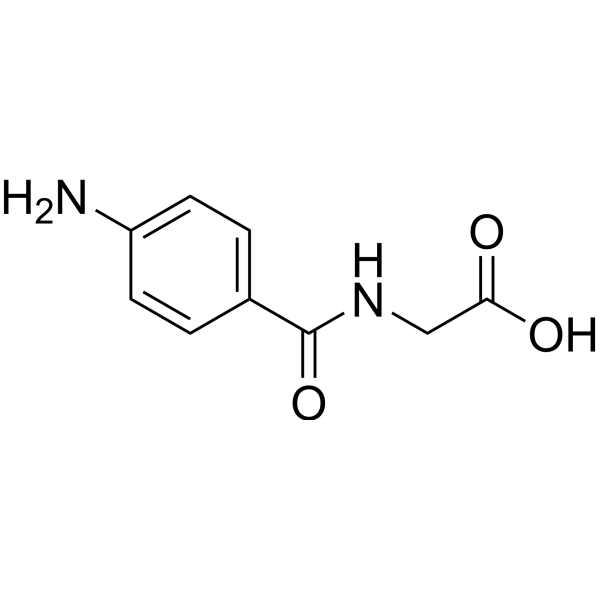
    Acedoben is a biochemical agent. Acedoben and iron ions can construct a fast self-assembled coordination complex. The Fe-Ace coordination complex can not only serve as a carrier of tumor antigens, but also enhance antigen-specific anti-tumor immunity due to its inherent adjuvant properties .
    Acedoben
  • HY-Y1102A

    Environmental Pollutants Biochemical Assay Reagents Others
    Copper(II) acetate, 99.99% trace metals basis is a dinuclear metal complex that can be used a source of copper and oxidizing agent in inorganic synthesis, and as a catalyst in organic synthesis .
    Copper(II) acetate, 99.99% trace metals basis
  • HY-32100

    Quinolin-5(1H)-one

    Biochemical Assay Reagents Others
    5-Hydroxyquinoline is an organic compound commonly used in certain chemical reactions and biological research. It can be used in the manufacture of dyes, cellulase, oxidants and passivators, etc., and is widely used in the pigment, paint and rubber industries. In addition, the compound is also used as the precursor, intermediate and metal ion complexing agent of certain drugs.
    5-Hydroxyquinoline
  • HY-P4118

    Penetrating analog

    Amino Acid Derivatives Peptide-Drug Conjugates (PDCs) Others
    EB1 peptide (Penetrating analog) is an endosomolytic agent and siRNA delivery agent. EB1 peptide forms an amphipathic alpha helix upon protonation in early-late endosomes, drives endosomal membrane permeabilization, and enables endocytosed siRNA escape into the cytosol. EB1 peptide facilitates biologically active siRNA cellular uptake and targeted gene silencing. EB1 peptide forms complexes with siRNA. EB1 peptide can be used for drug delivery research .
    EB1 peptide
  • HY-W031536

    2-Oxoimidazolidine, 96%

    Biochemical Assay Reagents Others
    2-Imidazolidone, 96% is a chelating agent that forms complexes with metal ions, enabling its use in catalytic processes.
    2-Imidazolidone, 96%
  • HY-W102545

    Biochemical Assay Reagents Others
    Diaza-15-crown-5 extends the lifetime of M intermediates in BR membranes. Diaza-15-crown-5 is a crown ether compound that alters the surface charge of BR membranes. Diaza-15-crown-5 changes the surface charge of the BR film. and overall membrane stability. Diaza-15-crown-5 allows the M state to be maintained for a longer period of time .
    Diaza-15-crown-5
  • HY-W009311

    4,4'-Bis(dimethylamino)thiobenzophenone

    Biochemical Assay Reagents Others
    Thiomichler's ketone (4,4'-Bis (dimethylamino) thiobenzophenone) is a heavy metal complexing agent and a colorimetric/spectrophotometric reagent. Thiomichler's ketone shows selectivity for Hg 2+ at pH 3, and exhibits activity towards Pd 2+ and Ag + at pH 3.5. Thiomichler's ketone enables accurate detection of trace Pd 2+ by forming an extractable Hg 2+ complex via micelle-mediated cloud point extraction, or generating a red coordination complex including Pd (TMK)4. Thiomichler's ketone is applicable for the determination of trace Pd 2+ in antibiotics and catalysts of automobile exhaust purifiers .
    Thiomichler's ketone
  • HY-W053583R

    DOTA (Standard)

    Biochemical Assay Reagents Reference Standards Radionuclide-Drug Conjugates (RDCs) Cancer
    Tetraxetan (Standard) is the analytical standard of Tetraxetan (HY-W053583). This product is intended for research and analytical applications. Tetraxetan (DOTA) is a macrocyclic chelating agent. Tetraxetan can form stable coordination complexes with a variety of metal ions (e.g., 68Ga, 111In, 177Lu). Tetraxetan can be conjugated with targeting molecules (e.g., RGD peptide, folic acid) to enable the complex to target specific biomolecules or cells. Tetraxetan can be used for imaging studies of tumors, including melanoma and folate receptor-positive tumors (e.g., cervical cancer) .
    Tetraxetan (Standard)
  • HY-P3566

    Biochemical Assay Reagents Others
    (D-Lys16)-ACTH (1-24) (human, bovine, mouse, ovine, porcine, rabbit, rat) is the reaction product with gadolinium tetraazacyclododecanetriacetate derivative. (D-Lys16)-ACTH (1-24) (human, bovine, mouse, ovine, porcine, rabbit, rat) involves in preparation of tetraazacyclododecane macrocycle metal complexes for production of conjugates with biomolecules and for use as NMR contrast agents, radiodiagnostic agents and for radioresearch .
    (D-Lys16)-ACTH (1-24) (human, bovine, mouse, ovine, porcine, rabbit, rat)
  • HY-157335

    Biochemical Assay Reagents Others
    Mn(II)-DO3A sodium is a Mn(II) complex and a potential alternative to Gd-based MRI contrast agents .
    Mn(II)-DO3A sodium
  • HY-W011816

    Biochemical Assay Reagents Others
    1,2-Hexadecanediol is a reducing agent. 1,2-Hexadecanediol facilitates the decomposition of the metal-organic precursor, forms an intermediate Co 2+Fe 3+-oleate complex .
    1,2-Hexadecanediol
  • HY-105454

    Wy-42362

    Sodium Channel Cardiovascular Disease
    Recainam (Wy-42362) is an orally active anti-arrhythmic agent with Class I electrophysiological properties. Recainam suppresses complex ventricular arrhythmias. Racainam exhibits a good pharmacokinetic character in Sprague Dawley rats .
    Recainam
  • HY-118942

    ARC 111

    Topoisomerase Cancer
    Topovale (ARC 111) is a topoisomerase I inhbitor. Topovale is an antitumor agent, and shows low nM cytotoxicity against a panel of cancer cells. Topovale induces reversible topoisomerase I (TOP1) cleavage complexes in tumor cells .
    Topovale
  • HY-145385

    Fluorescent Dye Others
    Coelenteramide is a oxidative product of Coelenterazine (HY-18743). Coelenteramide can form a complex with apoAequorin/Ca 2+, which is known as blue fluorescent protein (BFP) and shows continuous weak luminescence with Coelenterazine like a luciferase. Coelenteramide can be used as an imaging agent .
    Coelenteramide
  • HY-W110896

    Phthalein Purple

    Biochemical Assay Reagents Others
    Phthalate complexing agent [Chelation indicator] is a class of organic compounds belonging to the category of chelation indicators. It is commonly used in analytical chemistry to detect and quantify metal ions in aqueous solutions, especially in complexometric titration. Phthalate complexing agent [Chelation indicator] works by forming stable complexes with metal ions, which can then be measured using various spectroscopic or electrochemical techniques. In addition, it also has potential applications in wastewater treatment and environmental monitoring.
    Phthalate complexing agent [Chelation indicator]
  • HY-B0682

    KAD-1229 free acid anhydrous; S21403 free acid anhydrous

    Potassium Channel Metabolic Disease
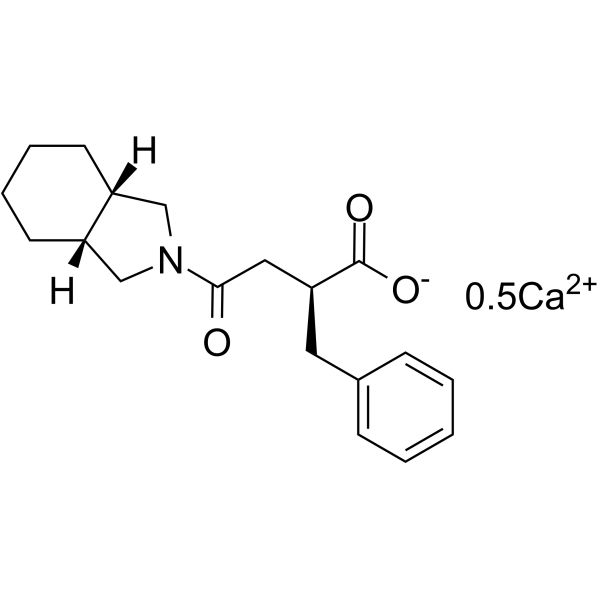
    Mitiglinide (KAD-1229), an insulinotropic agent, is an ATP-sensitive K + (KATP) channel antagonist. Mitiglinide is highly specific to the Kir6.2/SUR1 complex (the pancreatic beta-cell KATP channel). Mitiglinide can be used for the research of type 2 diabetes .
    Mitiglinide
  • HY-D0223

    1-Pyridylazo-2-naphthol

    Biochemical Assay Reagents Others
    1-(2-Pyridylazo)-2-naphthol (1-Pyridylazo-2-naphthol) is an azo compound. 1-(2-Pyridylazo)-2-naphthol can be used as a chelating precipitant, flocculant, auxiliary complexing agent, and as a ligand for anchoring on other supports with the purpose of introducing chelating property .
    1-(2-Pyridylazo)-2-naphthol
  • HY-W673626

    Etidronate monohydrate; HEDPA monohydrate; HEDP monohydrate

    Biochemical Assay Reagents Others
    Etidronic acid,60% in water (Etidronate) monohydrate is a strong complexing agent that can be used as a chelating agent to remove heavy metals from water .
    Etidronic acid,60% in water monohydrate
  • HY-W013327

    Biochemical Assay Reagents Others
    Cyclohexyldiphenylphosphine is a chemical compound commonly used as a ligand in coordination chemistry and organometallic synthesis. Cyclohexyldiphenylphosphine facilitates various catalytic reactions through acting as a stabilizing agent. Cyclohexyldiphenylphosphine is a ligand for some nickel(II) complexes. Cyclohexyldiphenylphosphine exhibits anti-cancer properties against SNO cancer cells when formed complex with silver .
    Cyclohexyldiphenylphosphine
  • HY-125637

    Aabomycin A2

    Antibiotic Fungal ATP Synthase Infection
    Venturicidin B (Aabomycin A2) is a macrolide antibiotic isolated from Streptomyces sp., used as an antifungal agent, a potent inhibitor of the mitochondrial F0-ATP synthase complex .
    Venturicidin B
  • HY-120791

    L-Lysyl-L-lysine

    Drug Intermediate Others
    Lysyllysine (L-Lysyl-L-lysine) is a dipeptide composed of two L-lysine amino acids linked together. Lysyllysine is often used as an enzyme cleavage linker for connecting bioactive peptides, or as a component of more complex antibacterial agents .
    Lysyllysine
  • HY-13832R

    Atavaquone (Standard)

    Reference Standards Parasite Cytochrome P450 Antibiotic Bacterial Infection Cancer
    Atovaquone (Standard) is the analytical standard of Atovaquone. This product is intended for research and analytical applications. Atovaquone (Atavaquone) is a potent, selective and orally active inhibitor of the parasite’s mitochondrial cytochrome bc1 complex. Atovaquone is against human and  P. falciparum cytochrome bc1 activity with IC50 values of 460 nM and 2.0 nM, respectively. Atovaquone is an antimalarial agent and has the potential for the investigation of neumocystis pneumonia, toxoplasmosis, malaria, and babesia .
    Atovaquone (Standard)
  • HY-W009906

    Aminopeptidase Inflammation/Immunology
    2-(2’-Pyridyl)benzimidazole is a potentially tridentate ligand that can form stable complexes with various transition metal ions. 2-(2’-Pyridyl)benzimidazole can be used as an anti-inflammatory agent and an inhibitor of Escherichia coli methionine aminopeptidase .
    2-(2′-Pyridyl)benzimidazole
  • HY-19688B

    WR 6026 tosylate

    Parasite Mitochondrial Metabolism Infection
    Sitamaquine (WR6026) tosylate, an orally active 8-aminoquinoline analog, is an antileishmanial agent. Sitamaquine tosylate inhibits mitochondrial complex II (succinate dehydrogenase). Sitamaquine tosylate is a lipophilic weak base that rapidly accumulates in acidic compartments of Leishmania spp., mainly in acidocalcisomes .
    Sitamaquine tosylate
  • HY-19688A

    WR 6026 hydrochloride

    Parasite Mitochondrial Metabolism Infection
    Sitamaquine (WR6026) hydrochloride, an orally active 8-aminoquinoline analog, is an antileishmanial agent. Sitamaquine hydrochloride inhibits mitochondrial complex II (succinate dehydrogenase). Sitamaquine hydrochloride is a lipophilic weak base that rapidly accumulates in acidic compartments of Leishmania spp., mainly in acidocalcisomes .
    Sitamaquine hydrochloride
  • HY-124116

    DNA/RNA Synthesis Cancer
    PD 121373 is a DNA complexing agent with antitumor activity. PD 121373 can bind tightly to DNA and RNA and inhibit the synthesis of DNA and RNA. The IC50 values of PD 121373 for inhibiting DNA and RNA synthesis in L1210 cells are 0.5 μM and 0.3 μM, respectively .
    PD 121373
  • HY-163077

    Reactive Oxygen Species (ROS) Apoptosis Cancer
    Anticancer agent 175 (complex 1) ia a near-infrared (NIR) luminescent theranostic complex. Anticancer agent 175 induces ROS accumulation, mitochondrial damage, disruption of Bax/Bcl-2 equilibrium, and tumor cell apoptosis in HepG2 cell line .
    Anticancer agent 175
  • HY-150966

    Mitochondrial Metabolism Cancer
    Antiproliferative agent-10 (compound 8) is an anti-tumour ruthenium(II)-tris-pyrazolylmethane complex that inhibits the growth of cancer cells by inhibiting mitochondrial calcium uptake .
    Antiproliferative agent-10

Inquiry Online

Your information is safe with us. * Required Fields.

Salutation


Country or Region *

Applicant Name *


Organization Name *

Department *


Email Address *


Product Name *

Cat. No.


Requested quantity *

Phone Number *


Remarks

Inquiry Online

Inquiry Information

Product Name:
Cat. No.:
Quantity:
MCE Japan Authorized Agent: