1796 Results for "

Crbn

" in MedChemExpress (MCE) Product Catalog:
Products (1796)

1796 Results for "Crbn" in MCE Product Catalog:

63
63 Publications Verification
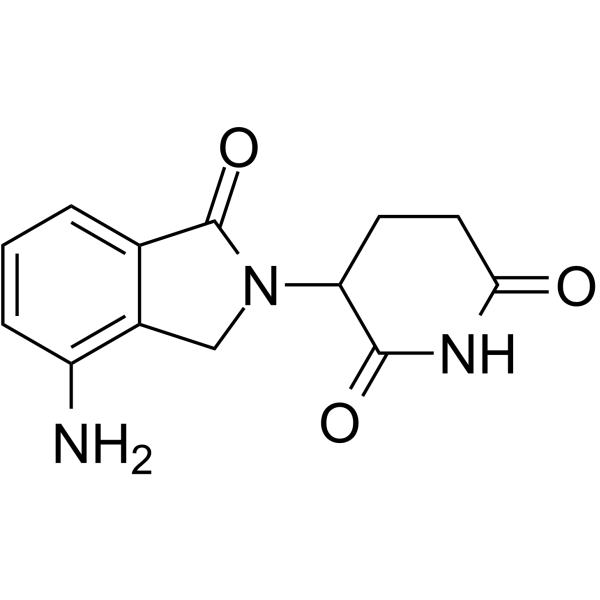
Cat. No.: HY-A0003
CAS No.: 191732-72-6
Synonyms: CC-5013
Lenalidomide (CC-5013) is an orally active immunomodulatory agent that binds CRBN as a molecular glue to alter substrate specificity, inducing ubiquitination and proteasome-dependent degradation of IKZF1, IKZF3 and CK1α. Lenalidomide induces apoptosis by degrading IKZF1/3, and activates p53 by degrading CK1α. Lenalidomide promotes IL-2 release and effector functions of CD8 + T/NK cells, while inhibiting TNF-α secretion and M1-type pyroptosis. Lenalidomide can be used in research related to hematological malignancies, acute liver failure and acute kidney injury .
loading...
    loading...
63
63 Publications Verification
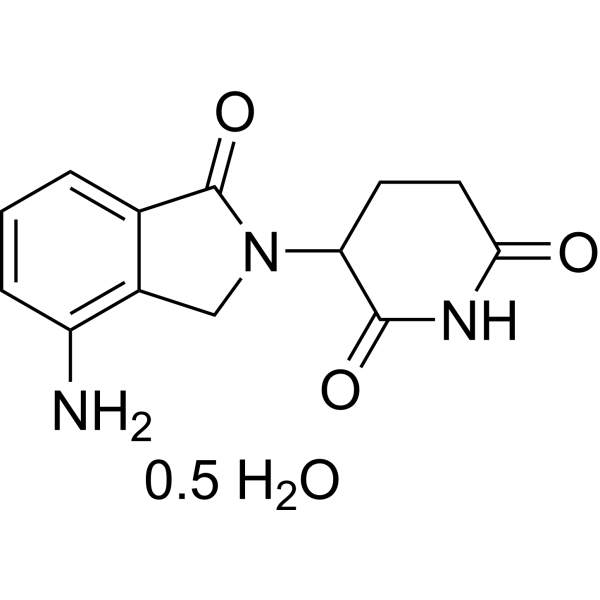
Cat. No.: HY-A0003B
CAS No.: 847871-99-2
Synonyms: CC-5013 hemihydrate
Lenalidomide hemihydrate (CC-5013 hemihydrate) is an orally active immunomodulatory agent that binds CRBN as a molecular glue to alter substrate specificity, inducing ubiquitination and proteasome-dependent degradation of IKZF1, IKZF3 and CK1α. Lenalidomide hemihydrate induces apoptosis by degrading IKZF1/3, and activates p53 by degrading CK1α. Lenalidomide hemihydrate promotes IL-2 release and effector functions of CD8 + T/NK cells, while inhibiting TNF-α secretion and M1-type pyroptosis. Lenalidomide hemihydrate can be used in research related to hematological malignancies, acute liver failure and acute kidney injury .
loading...
    loading...
41
41 Cited Publications
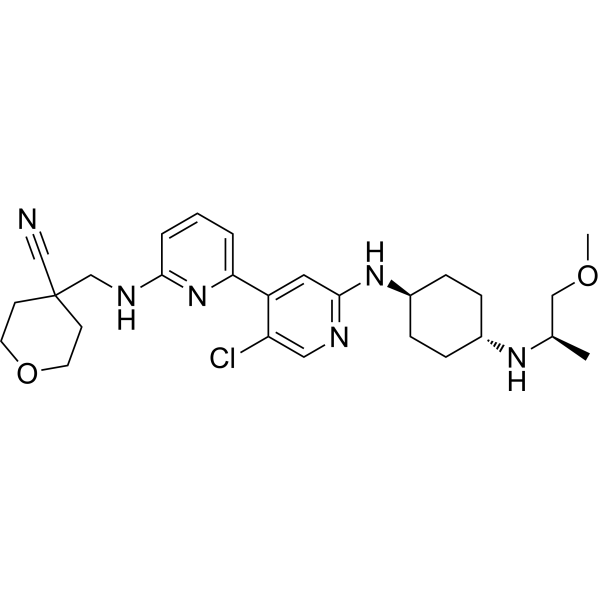
Cat. No.: HY-12214A
CAS No.: 1263373-43-8
Purity:  99.60%
Target:  

CDK Apoptosis

Research Areas:  

Cancer

NVP-2 is a potent and selective ATP-competitive cyclin dependent kinase 9 (CDK9) probe, inhibits CDK9/CycT activity with an IC50 of 0.514 nM. NVP-2 displays inhibitory effcts on CDK1/CycB, CDK2/CycA and CDK16/CycY kinases with IC50 values of 0.584 μM, 0.706 μM, and 0.605 μM, respectively. NVP-2 induces cell apoptosis.
loading...
    loading...
27
27 Cited Publications
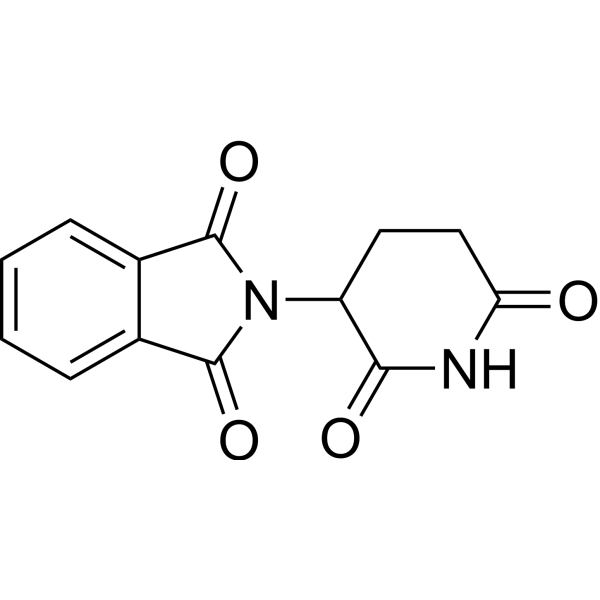
Cat. No.: HY-14658
CAS No.: 50-35-1
Purity:  99.98%
Thalidomide inhibits cereblon (CRBN), a part of the cullin-4 E3 ubiquitin ligase complex CUL4-RBX1-DDB1, with a Kd of ∼250 nM, and has immunomodulatory, anti-inflammatory and anti-angiogenic cancer properties. Thalidomide can work as molecular glue to potentiate substrate.
loading...
    loading...
20
20 Cited Publications
Cat. No.: HY-101488
CAS No.: 1010100-07-8
Purity:  99.85%
CC-885, a cereblon (CRBN) modulator, acts as a molecular glue degrader targeting GSPT1 with a Kd of 350 nM. CC-885 binds to CRBN to alter the substrate specificity of the CRL4 E3 ligase, promoting the ubiquitination and proteasomal degradation of GSPT1, BNIP3L, PLK1, CDK4, IKZF1/3, GSPT2, WIZ, CHD7, GOLM1, CK1α and ETS1. CC-885 induces apoptosis, cell cycle arrest, transcriptional downregulation and antiproliferation in cancer cells. CC-885 is applicable to research related to relapsed/refractory acute myeloid leukemia, MYC-driven tumors, metastatic castration-resistant prostate cancer, multiple myeloma, hepatocellular carcinoma, glioblastoma, VHL-deficient clear cell renal cell carcinoma and non-small cell lung cancer .
loading...
    loading...
12
12 Cited Publications
Cat. No.: HY-101291
CAS No.: 1323403-33-3
Purity:  99.54%
Synonyms: CC-220
Iberdomide (CC-220) is an orally active and potent cereblon (CRBN) E3 ligase modulator (CELMoD) with an IC50 of ~150 nM for cereblon-binding affinity. Iberdomide, a derivative of Thalidomide (HY-14658), has antitumor and immunostimulatory activities .
loading...
    loading...
11
11 Cited Publications
Cat. No.: HY-134582
CAS No.: 2484739-25-3
Purity:  99.37%
dCBP-1 is a potent and selective heterobifunctional degrader of p300/CBP based on Cereblon ligand. dCBP-1 is exceptionally potent at killing multiple myeloma cells and ablates oncogenic enhancer activity driving MYC expression .
loading...
    loading...
11
11 Cited Publications
Cat. No.: HY-114421
CAS No.: 2064175-41-1
Purity:  99.89%
Synonyms: dTAG-13
Research Areas:  

Cancer

FKBP12 PROTAC dTAG-13 (dTAG-13) is a FKBP12 F36V PROTAC degrader and a PXR partial agonist. FKBP12 PROTAC dTAG-13 induces ubiquitination and proteasomal degradation of proteins tagged with FKBP12 F36V, without degrading wild-type FKBP12 or un-fused PXR. It weakly promotes the recruitment of SRC-1, strongly inhibits the interaction between NCoR and PXR, and upregulates the expression of CYP3A4 and other drug metabolism-related genes. FKBP12 PROTAC dTAG-13 is applicable to research related to breast cancer and leukemia [1] .
loading...
    loading...
10
10 Cited Publications
Cat. No.: HY-123937
CAS No.: 2139287-33-3
Purity:  99.16%
Research Areas:  

Infection Cancer

THAL-SNS-032 is a selective CDK9 PROTAC degrader. THAL-SNS-032 recruits CRBN to form a ternary complex with CDK9, thereby triggering ubiquitination and proteasomal degradation of CDK9. THAL-SNS-032 also induces the degradation of CDK1, CDK2 and CDK7. THAL-SNS-032 elevates pH2AX levels, reduces MCL1s expression, and activates caspase-3. THAL-SNS-032 induces cancer cell apoptosis, regulates transcription, and inhibits the replication of human cytomegalovirus (CMV) and SARS-CoV-2. THAL-SNS-032 can be used in research related to breast cancer, leukemia, cytomegalovirus infection and SARS-CoV-2 infection .
loading...
    loading...
7
7 Cited Publications
Cat. No.: HY-130800
CAS No.: 1860875-51-9
Purity:  99.76%
Synonyms: CC-90009
Eragidomide (CC-90009) is a GSPT1 Molecular Glue degrader. Eragidomide exhibits antiproliferative and pro-apoptotic (apoptosis) activities against acute myeloid leukemia cells. Eragidomide recruits the CRL4CRBN E3 ubiquitin ligase complex to selectively target GSPT1 for ubiquitination and proteasomal degradation. Eragidomide reduces leukemia cell engraftment and eliminates leukemia stem cells. Eragidomide promotes the activation of the GCN1/GCN2/ATF4 pathway and the integrated stress response pathway, inhibits global protein translation, promotes preferential translation of ATF4, and induces the accumulation of ATF4, CHOP and ATF3. The response to Eragidomide is regulated by the ILF2/ILF3 heterodimer complex, the mTOR signaling pathway and the integrated stress response. Eragidomide can be used in research related to acute myeloid leukemia and relapsed/refractory acute myeloid leukemia .
loading...
    loading...
5
5 Cited Publications
Cat. No.: HY-123844
CAS No.: 1883863-52-2
Purity:  99.94%
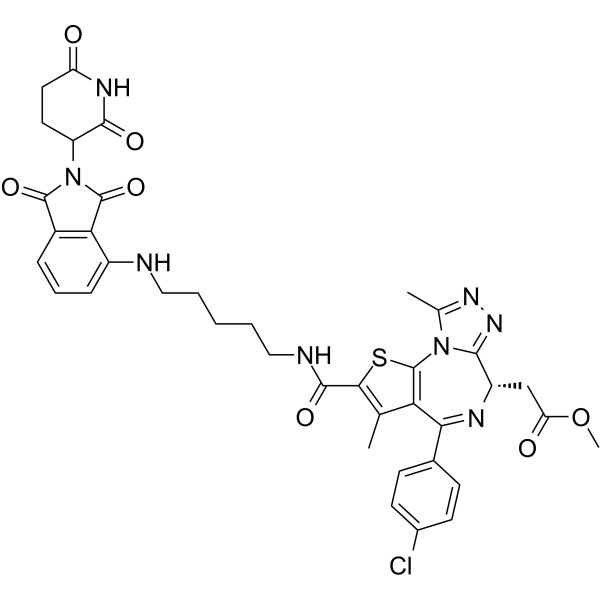
dBET57 is a potent and selective BRD4BD1 PROTAC degrader with a DC50 of approximately 500 nM. dBET57 forms a ternary complex with CRL4 CRBN and BRD4BD1, induces the ubiquitination and degradation of BRD4, and indirectly inhibits the transcription of MYCN, c-Myc and PD-L1, ultimately leading to cell cycle arrest and apoptosis. dBET57 can be used in related research on neuroblastoma, non-small cell lung cancer and colorectal cancer .
loading...
    loading...
5
5 Cited Publications
Cat. No.: HY-111556
CAS No.: 2361493-16-3
Purity:  ≥98.0%
Target:  

PROTACs CDK Apoptosis

Research Areas:  

Cancer

BSJ-03-123 is a selective PROTAC degrader of CDK6. BSJ-03-123 degrades CDK6, thereby inhibiting Rb S780 phosphorylation and inducing G1 phase arrest, while remodeling cell cycle and transcriptional signaling, with no effect on CDK4-dependent cancer cells. BSJ-03-123 reduces CDK6 protein levels in mouse ovarian tissues, increases the proportion of primordial follicles, and induces granulosa cell apoptosis, without impairing the ability of oocytes to resume meiosis and mature to the MII stage. BSJ-03-123 alleviates uveitis by blocking the HDACs-CDK6/ID2 axis. BSJ-03-123 can be used in studies related to acute myeloid leukemia, mantle cell lymphoma and autoimmune uveitis .
loading...
    loading...
5
5 Cited Publications
Cat. No.: HY-122562
CAS No.: 2231744-29-7
Purity:  98.35%
Target:  

PROTACs Btk

Research Areas:  

Cancer

MT-802 is a BTK PROTAC degrader. MT-802 degrades wild-type BTK (DC50 = 14.6 nM) and BTK mutants including E41K, C481S (DC50 = 14.9 nM), C481R, C481Y, C481T, C481F, L528W, and inhibits their Y223 phosphorylation. BI-4732 can be used for the study of Ibrutinib (HY-10997)-resistant chronic lymphocytic leukemia (CLL). (Pink: BTK ligand (HY-150885), Blue: CRBN Ligand (HY-14658), Black: Linker (HY-141371), E3 ligase ligand-linker conjugate (HY-176340)) .
loading...
    loading...
4
4 Cited Publications
Cat. No.: HY-153321
CAS No.: 2649400-34-8
Purity:  98.67%
Synonyms: NX-5948; BTK-IN-24
Target:  

PROTACs Btk

Research Areas:  

Inflammation/Immunology

Bexobrutideg (NX-5948) is an orally active chimeric targeting molecule (CTM) that induces specific BTK protein degradation by the cereblon E3 ligase (CRBN) complex without degradation of other cereblon neo-substrates. Bexobrutideg mediates potent anti-inflammatory activity via BTK degradation with resultant inhibition of B cell activation. Bexobrutideg exhibits potent tumor growth inhibition in TMD8 xenograft models that contain either wild-type BTK or BTKi-resistant mutations. Bexobrutideg is efficacious in a mouse collageninduced arthritis (CIA) model. Bexobrutideg can cross the blood brain barrier (BBB). Bexobrutideg is a PROTAC composed of the ligand for target protein, a linker, and a cereblon E3 ligase (CRBN) complex (Red: BTK ligand (HY-170324); Blue: CRBN ligand (HY-171893); Black: linker) .
loading...
    loading...
4
4 Cited Publications
Cat. No.: HY-123941
CAS No.: 2064175-32-0
Purity:  98.78%
Synonyms: dTAG-7
FKBP12 PROTAC dTAG-7 (dTAG-7) is a FKBP12 F36V PROTAC degrader. FKBP12 PROTAC dTAG-7 binds FKBP12 F36V and CRBN to form a complex, mediating degradation via the ubiquitin-proteasome system. FKBP12 PROTAC dTAG-7 mediates the degradation of FKBP12 F36V-tagged nuclear and cytoplasmic proteins, including BRD4, HDAC1, EZH2, MYC, PLK1, KRAS G12V, and antigen fusion proteins. FKBP12 PROTAC dTAG-7 enhances MHC class I antigen presentation. FKBP12 PROTAC dTAG-7 is applicable to leukemia-related research .
loading...
    loading...
4
4 Cited Publications
Cat. No.: HY-101519
CAS No.: 2093388-62-4
Purity:  99.59%
Synonyms: ZBC 260
BETd-260 (ZBC 260) is a BET PROTAC degrader. BETd-260 recruits BRD2, BRD3, and BRD4 to the CUL4-RBX1-DDB1-CRBN E3 ubiquitin ligase complex, driving cereblon-, proteasome-, and NEDD8-activating enzyme-dependent ubiquitination and degradation, with a DC50 of approximately 30-100 pM in RS4;11 cells. BETd-260 induces cancer cell apoptosis via endogenous signaling pathways, regulates the expression of the Bcl-2 family, inhibits the oncogene c-Myc, and reduces cell viability. BETd-260 suppresses tumor growth in mouse xenograft models with good biosafety. BETd-260 can be used in research related to acute leukemia, hepatocellular carcinoma, osteosarcoma, and triple-negative breast cancer .
loading...
    loading...
3
3 Cited Publications
Cat. No.: HY-126534
CAS No.: 2704316-81-2
Purity:  98.01%
Synonyms: LSN3106729
Research Areas:  

Cancer

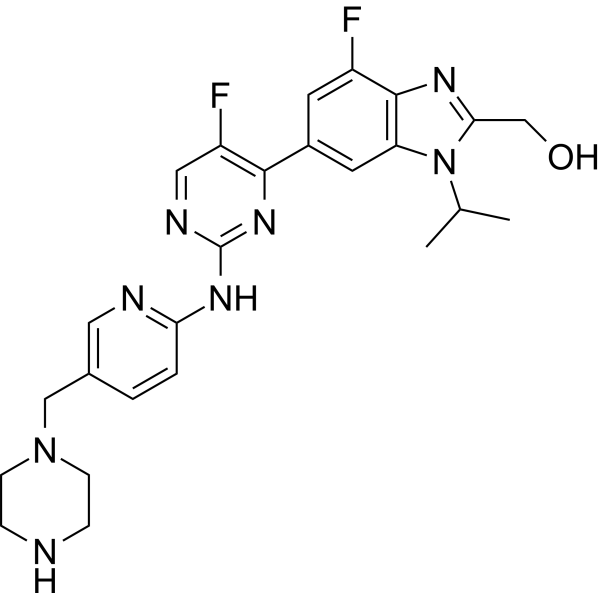
Abemaciclib metabolite M18 (LSN3106729), the metabolite of Abemaciclib (HY-16297A), is a CDK inhibitor with antitumor activity. Abemaciclib metabolite M18 and a CRBN ligand have been used to design PROTAC CDK4/6 degrader .
loading...
    loading...
3
3 Cited Publications
Cat. No.: HY-122826
CAS No.: 2243076-67-5
Purity:  98.90%
ZXH-3-26 is a CRBN-recruiting BRD4 PROTAC degrader with a DC50/5h of approximately 5 nM. ZXH-3-26 drives the ubiquitination and degradation of BRD4 by recruiting BRD4BD1 to the CRL4 CRBN E3 ubiquitin ligase complex, thereby inhibiting the dynamic distribution of super-enhancers. ZXH-3-26 reverses TNF-α-induced impairment of the immunosuppressive function of mesenchymal stem cells, and affects RNA synthesis and the transcriptional elongation process of Pol II. ZXH-3-26 can be used in studies related to inflammatory arthritis, malignant tumors, and HIV latency .
loading...
    loading...
3
3 Cited Publications
Cat. No.: HY-145925B
CAS No.: 2704617-96-7
Purity:  98.10%
Research Areas:  

Cancer

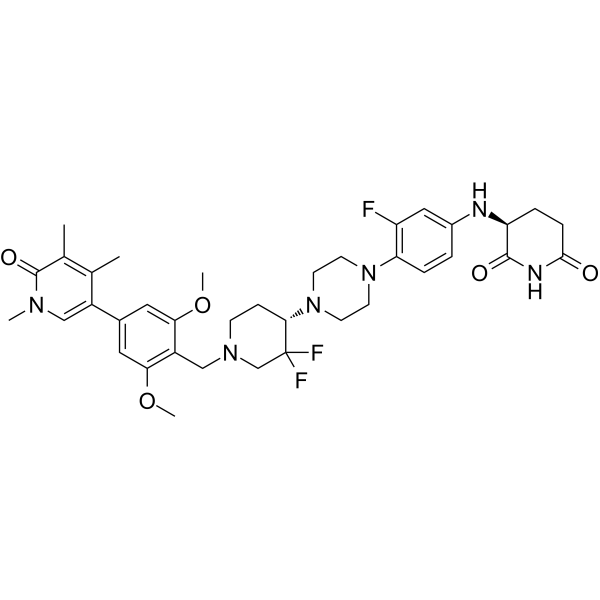
CFT8634 is an orally active BRD9 PROTAC degrader with a DC50 of 0.003 μM (HEK293T.166). CFT8634 recruits the CRBN E3 ubiquitin ligase to form a ternary complex, triggering CRBN-catalyzed BRD9 polyubiquitination and 26S proteasome-mediated degradation. CFT8634 induces sustained tumor regression and inhibits tumor growth in mouse models. CFT8634 can be used in research related to synovial sarcoma, SMARCB-1-deficient cancers, acute myeloid leukemia, malignant rhabdoid tumors, and multiple myeloma .
loading...
    loading...
3
3 Cited Publications
Cat. No.: HY-126534A
CAS No.: 2704316-82-3
Purity:  98.18%
Synonyms: LSN3106729 hydrochloride
Research Areas:  

Cancer

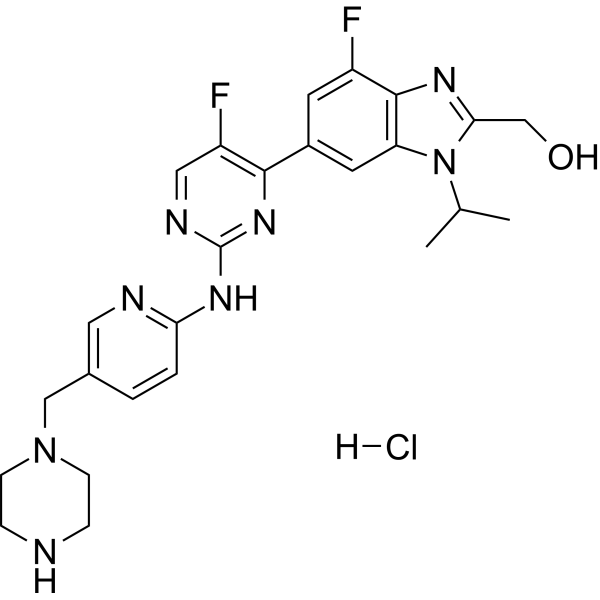
Abemaciclib metabolite M18 (LSN3106729) hydrochloride, the metabolite of Abemaciclib (HY-16297A), is a CDK inhibitor with antitumor activity. Abemaciclib metabolite M18 hydrochloride and a CRBN ligand have been used to design PROTAC CDK4/6 degrader .
loading...
    loading...

