



MT-802
Based on 5 publication(s) in Google Scholar
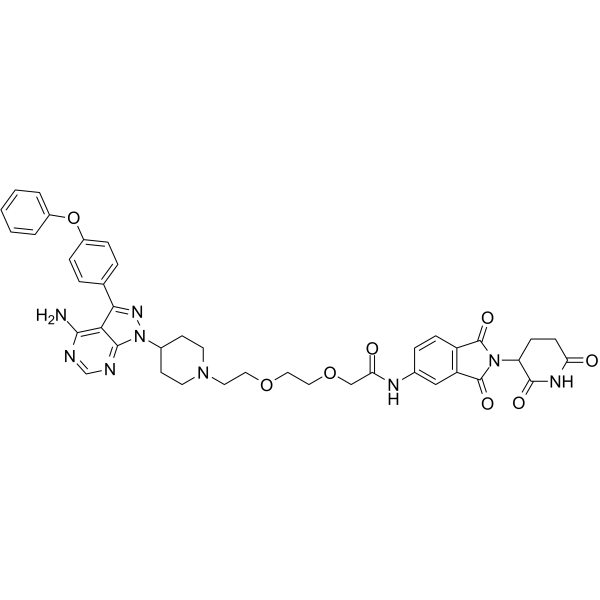
MT-802 is a BTK PROTAC degrader. MT-802 degrades wild-type BTK (DC50 = 14.6 nM) and BTK mutants including E41K, C481S (DC50 = 14.9 nM), C481R, C481Y, C481T, C481F, L528W, and inhibits their Y223 phosphorylation. BI-4732 can be used for the study of Ibrutinib (HY-10997)-resistant chronic lymphocytic leukemia (CLL). (Pink: BTK ligand (HY-150885), Blue: CRBN Ligand (HY-14658), Black: Linker (HY-141371), E3 ligase ligand-linker conjugate (HY-176340)).
(Pink: Btk ligand (HY-150885); Blue: Cereblon ligand (HY-14658); Black: linker (HY-141371)).
For research use only. We do not sell to patients.
- Purity : 98.35%
- CAS No.: 2231744-29-7
- Formula: C41H41N9O8
- Molecular Weight:787.82
-
Storage:Powder -20°C, 3 years , 4°C, 2 years ; In solvent -80°C, 2 years , -20°C, 1 year

To place orders, for customer services and technical support, please contact: MedChemExpress USA
Tel: 609-228-6898 E-mail: [email protected] [email protected]


-
 Biological Activity
-
Chemical Information
-
Solvent & Solubility
- Protocols
- Purity & Documentation
- References
-
 Help & FAQs


-
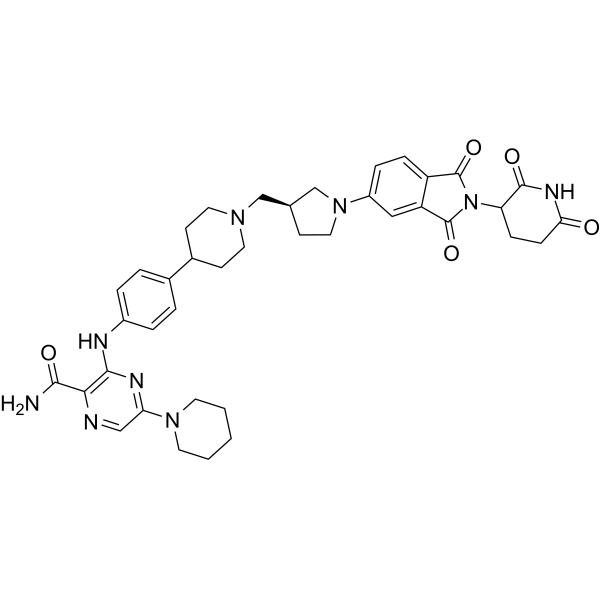
HY-153220
ZelebrudomideBTK PROTAC Degrader -
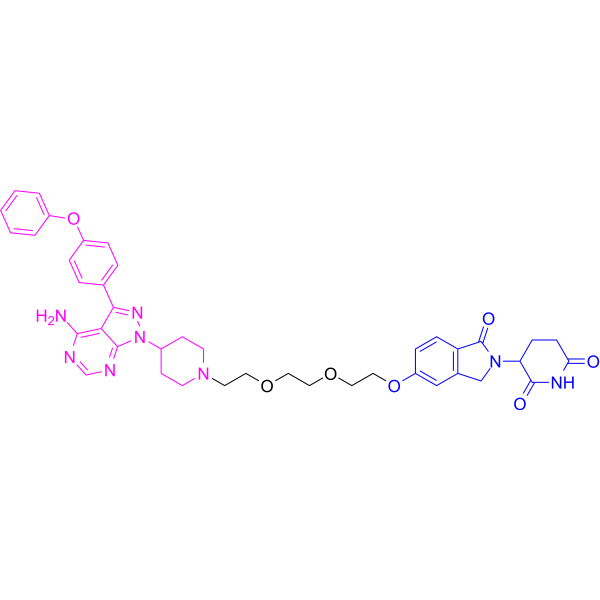
HY-133137
SJF620PROTAC Btk Degrader -
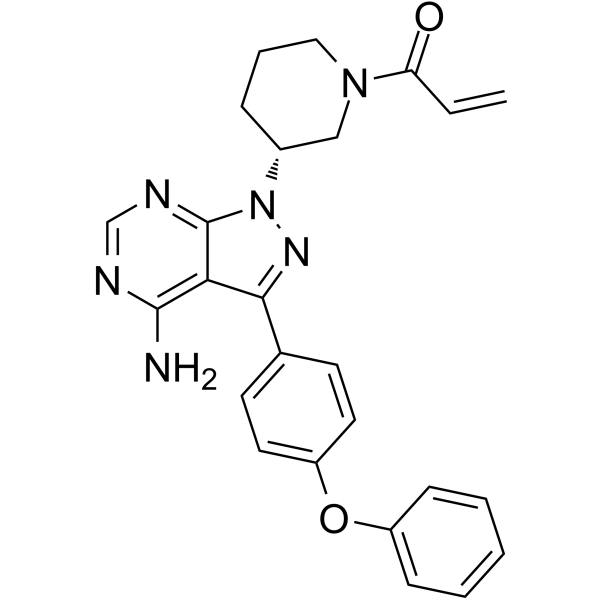
HY-10997
IbrutinibBtk Inhibitor -
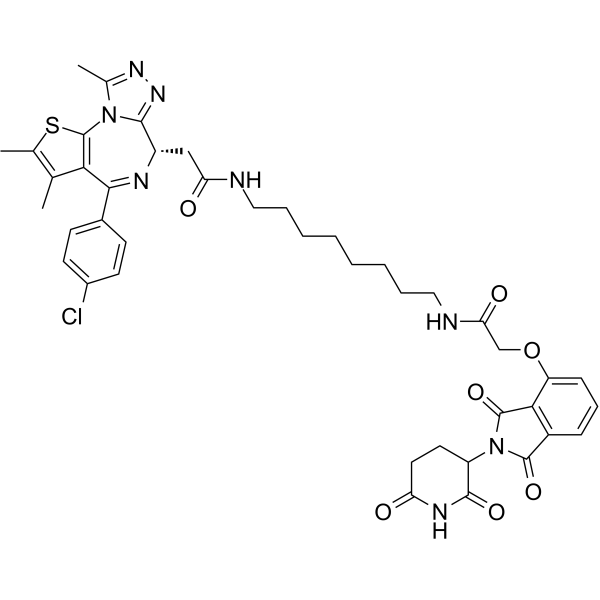
HY-112588
dBET6PROTAC BET Degrader -
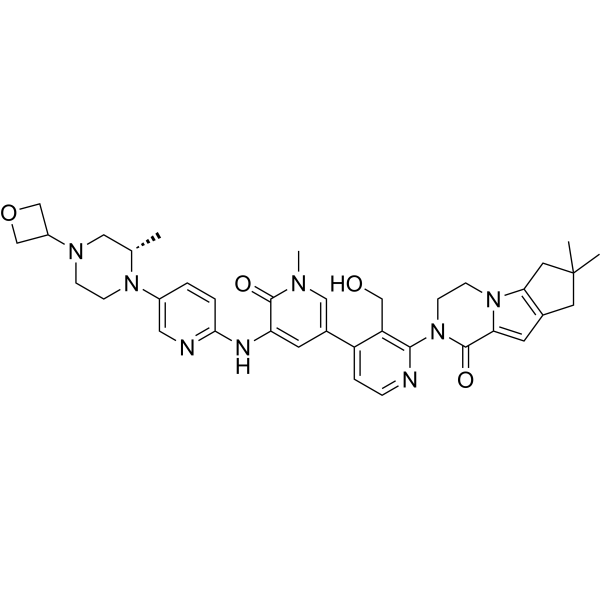
HY-19834
FenebrutinibBtk Inhibitor -
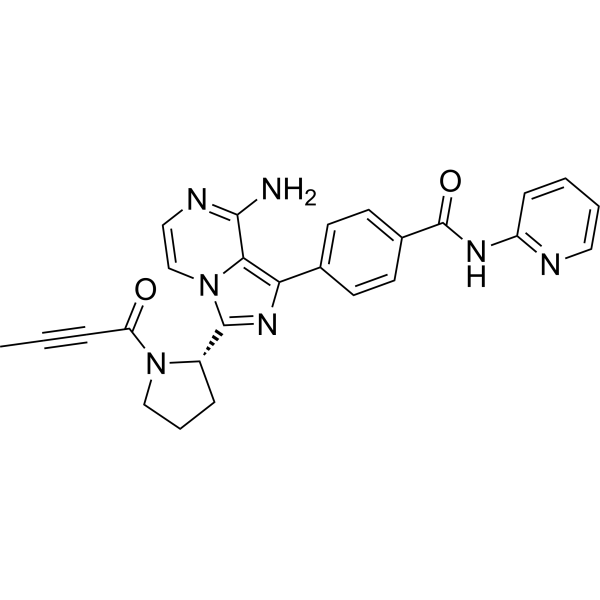
HY-17600
AcalabrutinibBTK Inhibitor -
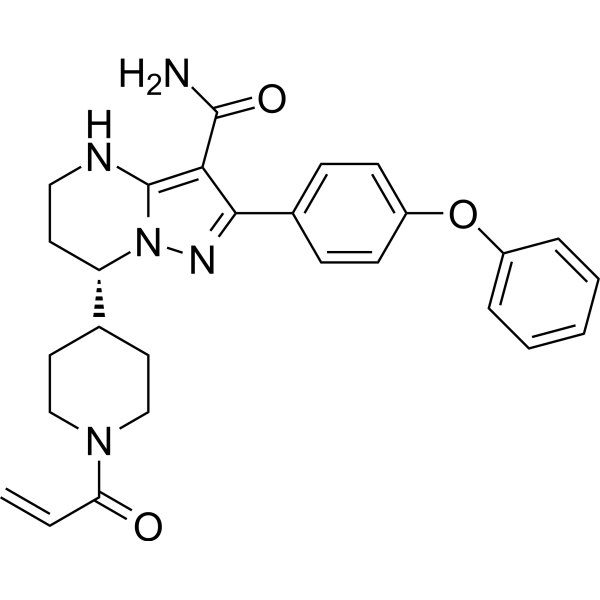
HY-101474A
ZanubrutinibBtk Inhibitor -
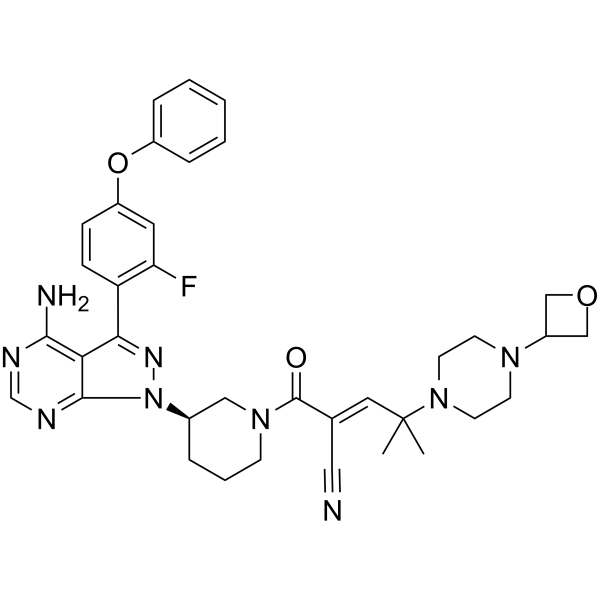
HY-112166
RilzabrutinibBTK Inhibitor -
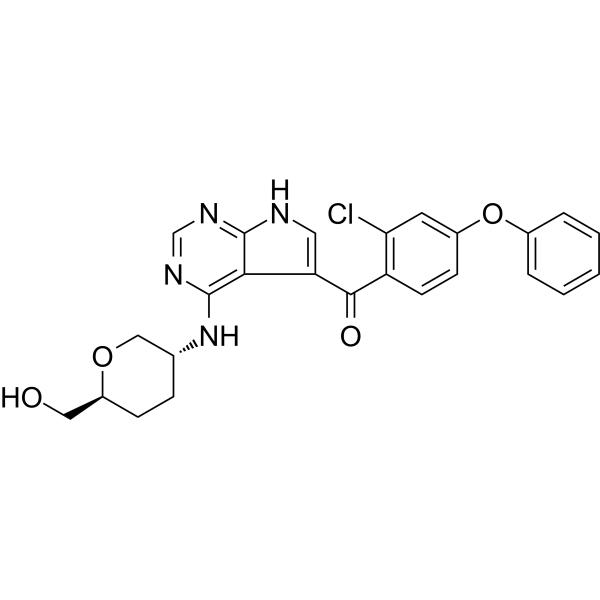
HY-112215
NemtabrutinibBTK Inhibitor -
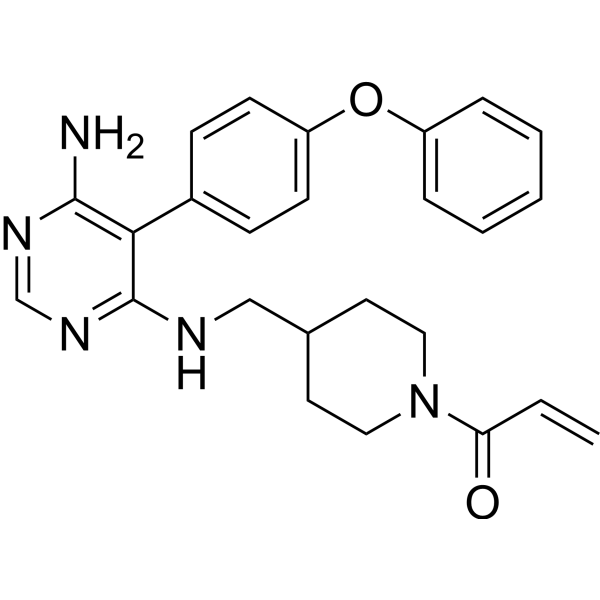
HY-101215
Evobrutinib -
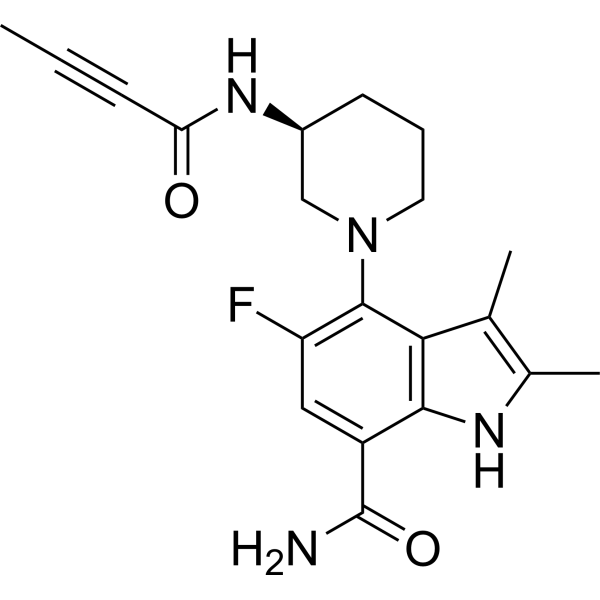
HY-112161
BranebrutinibBTK Inhibitor -
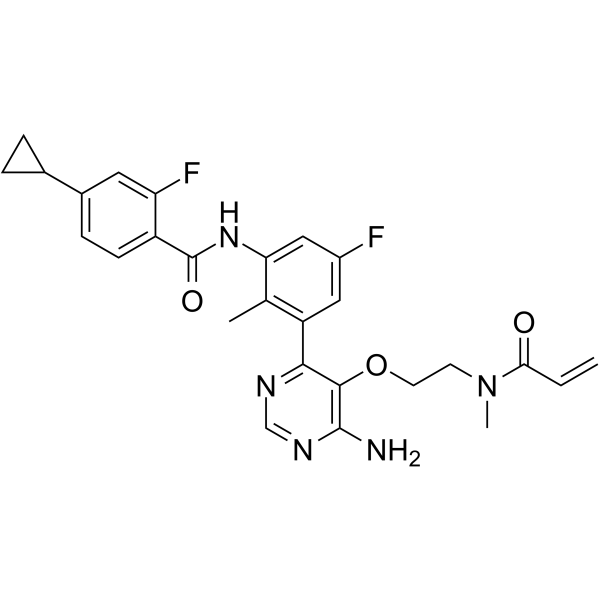
HY-128757
RemibrutinibBTK Inhibitor
Publications Citing Use of MedChemExpress (MCE) MT-802
MoreAll PROTACs Isoforms
More

Biological Activity
Description
IC50 & Target
[1][2]|
Cereblon |
Cellular Effect
|
Cell Line

|
Type | Value | Description | References |
|---|---|---|---|---|
| NAMALVA | DC50 |
6.2 nM
Compound: MT802
|
Protac activity at CRBN/BTK in human NAMALWA cells assessed as induction of BTK protein degradation incubated for 24 hrs by immunoblotting method
Protac activity at CRBN/BTK in human NAMALWA cells assessed as induction of BTK protein degradation incubated for 24 hrs by immunoblotting method
|
[PMID: 31879210] |
| TMD8 | IC50 |
12 nM
Compound: MT-802
|
Cytotoxicity against human TMD8 cells incubated for 48 hrs by celltitre glo 2.0 assay
Cytotoxicity against human TMD8 cells incubated for 48 hrs by celltitre glo 2.0 assay
|
[PMID: 37195170] |
In Vitro
MT-802 shows binding affinity to BTK with an IC50 of 18.11 nM and to CRBN with an IC50 of 1.258 μM in TR-FRET-based binding assays[1].
MT-802 (0.1-10 μM, 24 h) degrades wild-type BTK and BTK mutants including E41K, C481S, C481R, C481Y, C481T, C481F, L528W, and inhibits their Y223 phosphorylation, but fails to degrade T474I mutant BTK in HEK293 cells with transient expression of BTK variants[1].
MT-802 (0.25-250 nM, 24 h) induces degradation of BTK in NAMALWA cells and induces equivalent degradation of WT BTK (DC50 = 14.6 nM) and C481S mutant BTK (DC50 = 14.9 nM) in WT BTK XLAs cells and C481S BTK XLAs cells, respectively[2].
MT-802 (0.01-10 μM, 24 h) degrades BTK and does not induce degradation of IKZF1 and IKZF3 transcription factors in primary cells from CLL samples[2].
MT-802 (1 μM, 0.0042-4 h) degrades WT BTK and C481S mutant BTK, and reduces the level of phosphorylated BTK (pBTK, Y223) in WT BTK XLAs cells and C481S BTK XLAs cells, respectively[2].
MedChemExpress (MCE) has not independently confirmed the accuracy of these methods. They are for reference only.
-
Cell Line:NAMALWA cells, WT BTK XLAs cells and C481S BTK XLAs cells
-
Concentration:0.25, 1, 10, 25, 100, 250 nM
-
Incubation Time:24 h
-
Result:Induced degradation of BTK in NAMALWA cells.
Induced equivalent degradation of WT BTK (DC50 = 14.6 nM) and C481S mutant BTK (DC50 = 14.9 nM) in WT BTK XLAs cells and C481S BTK XLAs cells, respectively.


Chemical Information
-
CAS No. 2231744-29-7
-
Appearance Solid
-
Molecular Weight 787.82
-
Formula C41H41N9O8
-
Color White to off-white
-
SMILES
O=C(NC1=CC2=C(C(N(C(CC3)C(NC3=O)=O)C2=O)=O)C=C1)COCCOCCN4CCC(N5N=C(C6=CC=C(OC7=CC=CC=C7)C=C6)C8=C(N)N=CN=C85)CC4
-
Shipping
Room temperature in continental US; may vary elsewhere.
-
Storage
Powder -20°C 3 years 4°C 2 years In solvent -80°C 2 years -20°C 1 year


Publications (5)
-
Journal Impact Factor
-
Most Recent
-
Anal Chem
Hydrogen/Deuterium Exchange for Chiral Stability Assessment in Acidic Methine-Containing Compounds. [Abstract]2025 Dec 2;97(47):26097-26107. PMID: 41243541 -
J Med Chem
Discovery of Novel Bruton's Tyrosine Kinase PROTACs with Enhanced Selectivity and Cellular Efficacy. [Abstract]2023 Jun 8;66(11):7454-7474. PMID: 37195170 -
Cell Signal
BTK-independent regulation of calcium signalling downstream of the B-cell receptor in malignant B-cells. [Abstract]2022 Aug:96:110358. PMID: 35597428 -
Structure
PROTAC-mediated activation, rather than degradation, of a nuclear receptor reveals complex ligand-receptor interaction network. [Abstract]2024 Dec 5;32(12):2352-2363.e8. PMID: 39389062 -


Solvent & Solubility
In Vitro:
DMSO : 100 mg/mL (126.93 mM; Need ultrasonic; Hygroscopic DMSO has a significant impact on the solubility of product, please use newly opened DMSO)
Please refer to the solubility information to select the appropriate solvent. Once prepared, please aliquot and store the solution to prevent product inactivation from repeated freeze-thaw cycles.
Storage method and period of stock solution: -80°C, 2 years; -20°C, 1 year. When stored at -80°C, please use it within 2 years. When stored at -20°C, please use it within 1 year.
Please refer to the solubility information to select the appropriate solvent. Once prepared, please aliquot and store the solution to prevent product inactivation from repeated freeze-thaw cycles.
Storage method and period of stock solution: -80°C, 2 years; -20°C, 1 year. When stored at -80°C, please use it within 2 years. When stored at -20°C, please use it within 1 year.
Concentration (start) × Volume (start) = Concentration (final) × Volume (final)
In Vivo:
Select the appropriate dissolution method based on your experimental animal and administration route.
- For the following dissolution methods, please ensure to first prepare a clear stock solution using an In Vitro approach and then sequentially add co-solvents:
- To ensure reliable experimental results, the clarified stock solution can be appropriately stored based on storage conditions. As for the working solution for In Vivo experiments, it is recommended to prepare freshly and use it on the same day.
- The percentages shown for the solvents indicate their volumetric ratio in the final prepared solution. If precipitation or phase separation occurs during preparation, heat and/or sonication can be used to aid dissolution.
Add each solvent one by one: 10% DMSO 40% PEG300 5% Tween-80 45% Saline
Solubility: ≥ 2.5 mg/mL (3.17 mM); Clear solution
This protocol yields a clear solution of ≥ 2.5 mg/mL (saturation unknown).
Taking 1 mL working solution as an example, add 100 μL DMSO stock solution (25.0 mg/mL) to 400 μL PEG300, and mix evenly; then add 50 μL Tween-80 and mix evenly; then add 450 μL Saline to adjust the volume to 1 mL.
Preparation of Saline: Dissolve 0.9 g sodium chloride in ddH₂O and dilute to 100 mL to obtain a clear Saline solution.
Add each solvent one by one: 10% DMSO 90% (20% SBE-β-CD in Saline)
Solubility: ≥ 2.5 mg/mL (3.17 mM); Clear solution
This protocol yields a clear solution of ≥ 2.5 mg/mL (saturation unknown).
Taking 1 mL working solution as an example, add 100 μL DMSO stock solution (25.0 mg/mL) to 900 μL 20% SBE-β-CD in Saline, and mix evenly.
Preparation of 20% SBE-β-CD in Saline (4°C, storage for one week): 2 g SBE-β-CD powder is dissolved in 10 mL Saline, completely dissolve until clear.
In Vivo Dissolution Calculator
Please enter the basic information of animal experiments:
-
-
-
-
Recommended: Prepare an additional quantity of animals to account for potential losses during experiments.
Please enter your animal formula composition:
-
%DMSO +
Recommended: Keep the proportion of DMSO in working solution below 2% if your animal is weak.
-
%+
-
+%Tween-80 + +
-
%Saline +
The co-solvents required include: DMSO, . All of co-solvents are available by MedChemExpress (MCE). , Tween 80. All of co-solvents are available by MedChemExpress (MCE).
Working solution concentration: 0.22 mg/mL
Method for preparing stock solution: mg drug dissolved in μL DMSO. Stock solution concentration: mg/mL.
1. Take μL DMSO stock solution;
2. Add μL .
μL , mix evenly;
3. Then add μL Tween 80, mix evenly;
4. Then add μL
Please ensure that the stock solution in the first step is dissolved to a clear state, and add co-solvents in sequence. You can use ultrasonic heating (ultrasonic cleaner, recommended frequency 20-40 kHz), vortexing, etc. to assist dissolution.


Purity & Documentation
-
Data Sheet (274 KB)
-
SDS (480 KB)
- English - EN (480 KB)
- Français - FR (480 KB)
- Deutsch - DE (480 KB)
- Norwegian - NO (480 KB)
- Español - ES (480 KB)
- Swedish - SV (480 KB)
- Italian - IT (480 KB)
- Korean - KR (480 KB)
- Portuguese - PT (480 KB)
-
Handling Instructions (2659 KB)
References
[1]. Lim YS, et al. Orally bioavailable BTK PROTAC active against wild-type and C481 mutant BTKs in human lymphoma CDX mouse models. Blood Adv. 2023 Jan 10;7(1):92-105. [Content Brief]
[2]. Buhimschi AD, et al. Targeting the C481S Ibrutinib-Resistance Mutation in Bruton's Tyrosine Kinase Using PROTAC-Mediated Degradation. Biochemistry. 2018 Jul 3;57(26):3564-3575. [Content Brief]


Complete Stock Solution Preparation Table
Please refer to the solubility information to select the appropriate solvent. Once prepared, please aliquot and store the solution to prevent product inactivation from repeated freeze-thaw cycles.
Storage method and period of stock solution: -80°C, 2 years; -20°C, 1 year. When stored at -80°C, please use it within 2 years. When stored at -20°C, please use it within 1 year.
| Optional Solvent | Concentration Solvent Mass | 1 mg | 5 mg | 10 mg | 25 mg |
|---|---|---|---|---|---|
| DMSO | 1 mM | 1.2693 mL | 6.3466 mL | 12.6933 mL | 31.7331 mL |
| 5 mM | 0.2539 mL | 1.2693 mL | 2.5387 mL | 6.3466 mL | |
| 10 mM | 0.1269 mL | 0.6347 mL | 1.2693 mL | 3.1733 mL | |
| 15 mM | 0.0846 mL | 0.4231 mL | 0.8462 mL | 2.1155 mL | |
| 20 mM | 0.0635 mL | 0.3173 mL | 0.6347 mL | 1.5867 mL | |
| 25 mM | 0.0508 mL | 0.2539 mL | 0.5077 mL | 1.2693 mL | |
| 30 mM | 0.0423 mL | 0.2116 mL | 0.4231 mL | 1.0578 mL | |
| 40 mM | 0.0317 mL | 0.1587 mL | 0.3173 mL | 0.7933 mL | |
| 50 mM | 0.0254 mL | 0.1269 mL | 0.2539 mL | 0.6347 mL | |
| 60 mM | 0.0212 mL | 0.1058 mL | 0.2116 mL | 0.5289 mL | |
| 80 mM | 0.0159 mL | 0.0793 mL | 0.1587 mL | 0.3967 mL | |
| 100 mM | 0.0127 mL | 0.0635 mL | 0.1269 mL | 0.3173 mL |


MT-802 Related Classifications
HY-122562 Related Classifications
 Powered by Bioz