1. Search Result
Search Result
Results for "

D1 ligand

" in MedChemExpress (MCE) Product Catalog:

21

Inhibitors & Agonists

1

Inhibitory Antibodies

2

Natural
Products

2

Isotope-Labeled Compounds

Cat. No. 상품명 Target 연구분야 Chemical Structure
  • HY-136250

    PROTACs CDK Cancer
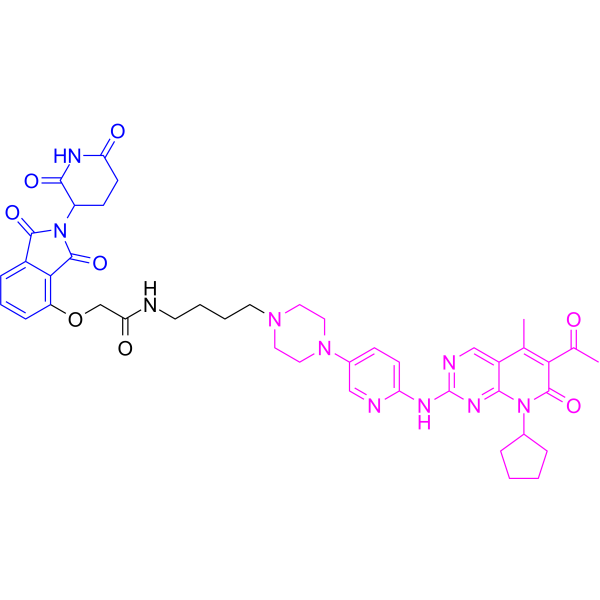
    BSJ-03-204 is a PROTAC connected by ligands for Cereblon and CDK. BSJ-03-204 is a potent and selective Palbociclib-based CDK4/6 dual degrader (PROTAC), with IC50s of 26.9 nM and 10.4 nM for CDK4/D1 and CDK6/D1, respectively. BSJ-03-204 does not induce IKZF1/3 degradation and has anti-cancer activity .
    BSJ-03-204
  • HY-N15721

    Trp-CA

    Orphan GPCR GLP Receptor Metabolic Disease
    Tryptophan-cholic acid (Trp-CA) is a microbial amino acid-conjugated bile acid that acts as an endogenous ligand and agonist (EC50=9.6 μM) for the orphan G protein-coupled receptor (GPCR) MRGPRE (Mas-related G protein-coupled receptor family member E). Tryptophan-cholic acid is orally effective but has poor oral absorption and does not cross the blood-brain barrier. Tryptophan-cholic acid promotes the secretion of glucagon-like peptide GLP-1, thereby improving glucose tolerance in diabetic mice. Tryptophan-cholic acid improves glucose tolerance, promotes insulin secretion, and alleviates high-fat diet-induced hepatic steatosis without causing pruritus side effects. Tryptophan-cholic acid is primarily used in research on type 2 diabetes (T2D) .
    Tryptophan-cholic acid
  • HY-136252

    PROTACs CDK Cancer
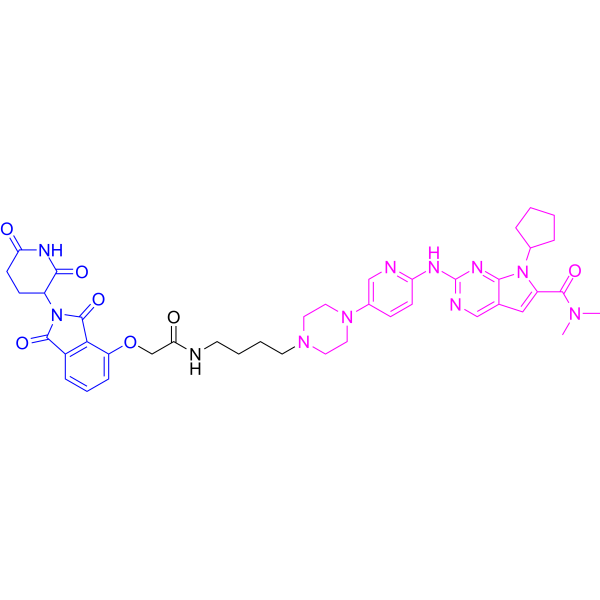
    BSJ-04-132 is a PROTAC connected by ligands for Cereblon and CDK. BSJ-04-132 is a potent and selective Ribociclib-based CDK4 degrader (PROTAC), with IC50s of 50.6 nM and 30 nM for CDK4/D1 and CDK6/D1, respectively. BSJ-04-132 does not induce CDK6 and IKZF1/3 degradation. BSJ-04-132 has anti-cancer activity .
    BSJ-04-132
  • HY-12397
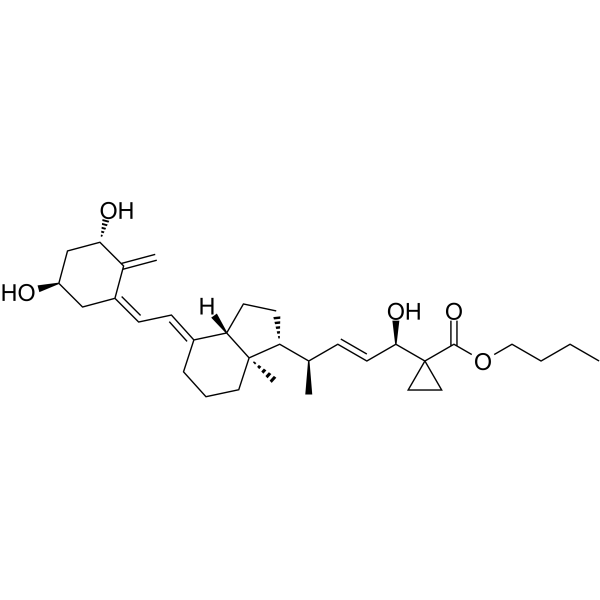
    ZK159222
    1 Publications Verification

    VD/VDR Endocrinology
    ZK159222, a 25-carboxylic ester analogue of 1α,25-(OH)2D3, is a potent 1α,25-(OH)2D3 receptor (VDR) antagonist. The mechanism of ZK159222 antagonistic action is mediated by a lack of ligand-induced vitamin D receptor interaction with coactivators. ZK159222 has a partial agonistic character .
    ZK159222
  • HY-163502

    PROTACs STAT Cancer
    PROTAC STAT3 degrader-3 (S3D1) is a STAT3 PROTAC degrader with anticancer activity (Structural notes: (Blue: Cereblon ligand (HY-10984), Black: linker; Pink: Pentafluorobenzenesulfonamide(Me)-CH2-CONH-benzamide (HY-163526)) .
    PROTAC STAT3 degrader-3
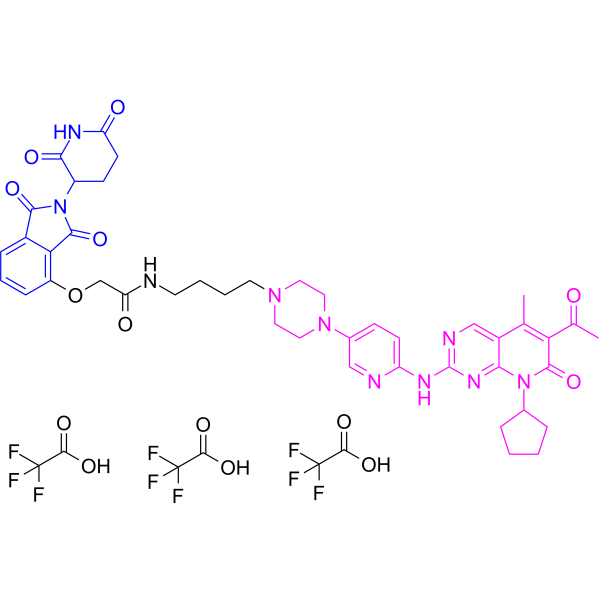
  • HY-136250A

    PROTACs CDK Cancer
    BSJ-03-204 triTFA is a PROTAC connected by ligands for Cereblon and CDK. BSJ-03-204 triTFA is a potent and selective Palbociclib-based CDK4/6 dual degrader (PROTAC), with IC50s of 26.9 nM and 10.4 nM for CDK4/D1 and CDK6/D1, respectively. BSJ-03-204 triTFA does not induce IKZF1/3 degradation and has anti-cancer activity .
    BSJ-03-204 triTFA
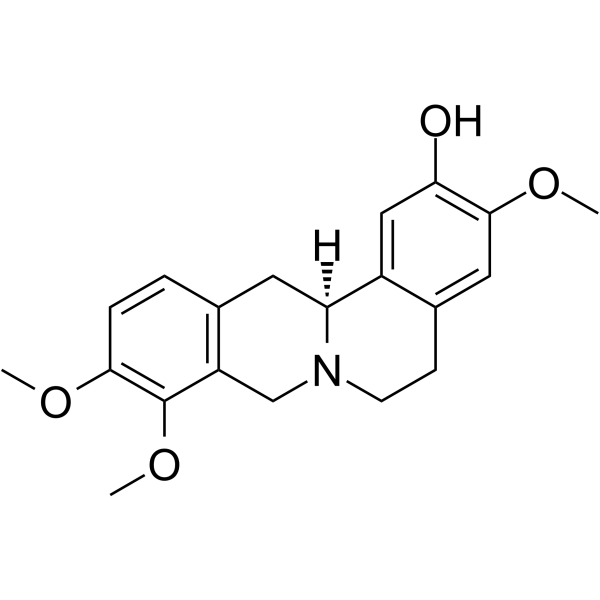
  • HY-N0927

    Tetrahydrocolumbamine; (S)-Tetrahydrocolumbamine

    Dopamine Receptor Others Neurological Disease
    (-)-Isocorypalmine (Tetrahydrocolumbamine; (S)-Tetrahydrocolumbamine) is a dopamine receptor ligand and modulator capable of crossing the blood-brain barrier. (-)-Isocorypalmine exhibits receptor selectivity, acting as a partial agonist of dopamine D1 and D5 receptors (coupled via Gs proteins), as well as an antagonist of D2, D3 and D4 receptors (by blocking Gi protein-mediated signaling). (-)-Isocorypalmine shows no significant binding to various non-dopamine receptors, ion channels and transporters. (-)-Isocorypalmine is metabolically stable in vivo, effectively inhibits spontaneous and cocaine-induced hyperlocomotion, sensitization and conditioned place preference in mice, and does not induce addictive place preference when administered alone. (-)-Isocorypalmine can be used in addiction research .
    (-)-Isocorypalmine
  • HY-141495A

    (-)-PW0464

    Drug Isomer Dopamine Receptor Neurological Disease
    Razpipadon ((-)-PW0464) is an isomer of (Rac)-Razpipadon (HY-141495).
    Razpipadon
  • HY-W088065S1

    Isotope-Labeled Compounds Others
    Sodium formate- 13C,d1 is the deuterium and 13C labeled Sodium formate.Sodium formate is a biochemical assay reagent. Sodium formate can react with zinc sources (such as ZnCl2) on the surface of alpha alumina support to form a zinc oxide layer. Sodium formate acts as a deprotonating agent, promoting the deprotonation of ligands (such as 2-methylimidazole) at high temperatures. Sodium formate provides the required reducing force in the catalytic oxidation of methane to methanol by methane monooxygenase (sMMO) and inhibits further oxidation of methanol .
    Sodium formate-13C,d1
  • HY-169914

    JO 1784 hydrochloride

    Sigma Receptor Neurological Disease
    Igmesine hydrochloride (JO 1784) is an orally active σ-receptor ligand capable of blocking the increase in colonic electromechanical activity induced by emotional stress. Igmesine hydrochloride also eliminates the colonic motility stimulation induced by dopamine, as well as the stimulation induced by centrally injected D1 or D2 receptor agonists. Furthermore, Igmesine hydrochloride can block the colonic motility responses induced by corticotropin-releasing factor (CRF) and ES through central cholecystokinin (CCK) release and/or activation of supraspinal CCK pathways .
    Igmesine hydrochloride
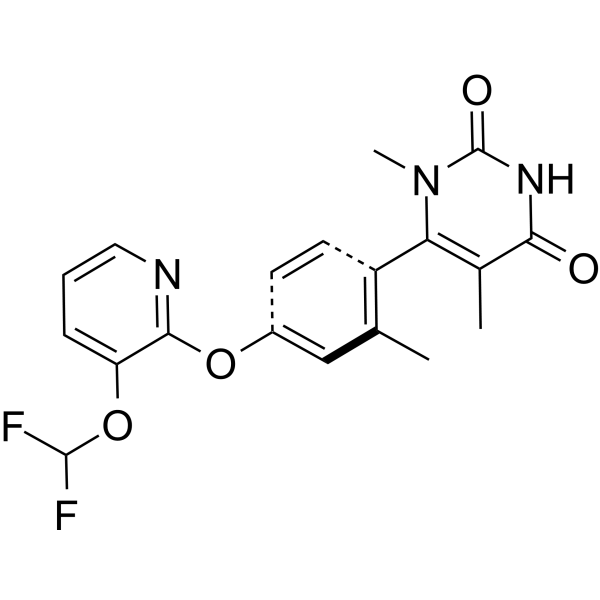
  • HY-141495
    (Rac)-Razpipadon
    1 Publications Verification

    PW0464

    Dopamine Receptor Neurological Disease
    PW0464, a nanomolar potent complete G protein biased ligand, is a noncatechol D1R agonist, with an EC50 of 5.8 nM (Gs-cAMP) .
    (Rac)-Razpipadon
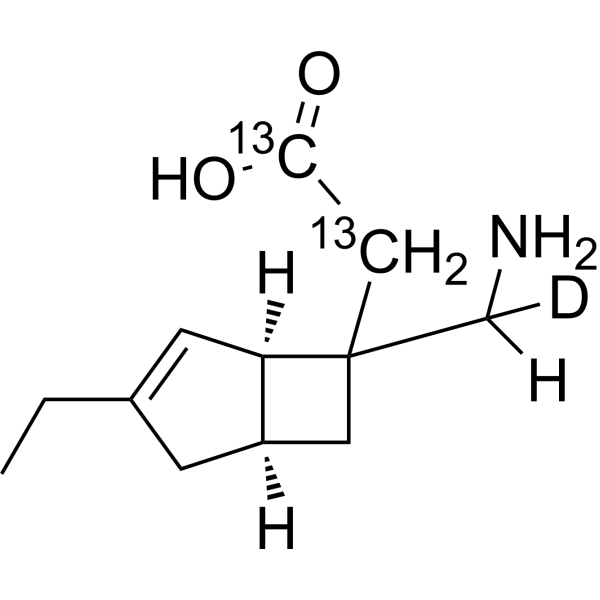
  • HY-12650S

    DS5565-13C2,d1 (Mixture of Diastereomers)

    Isotope-Labeled Compounds Others
    Mirogabalin- 13C2,d1 (Mixture of Diastereomers) is a 13C and deuterium labeled Mirogabalin. Mirogabalin (DS-5565) is a preferentially selective α2δ-1 ligand characterized by high potency and selectivity to the α2δ-1 subunit of voltage-sensitive calcium channel complexes in the CNS .
    Mirogabalin-13C2,d1 (Mixture of Diastereomers)
  • HY-120879

    Dopamine Receptor Neurological Disease
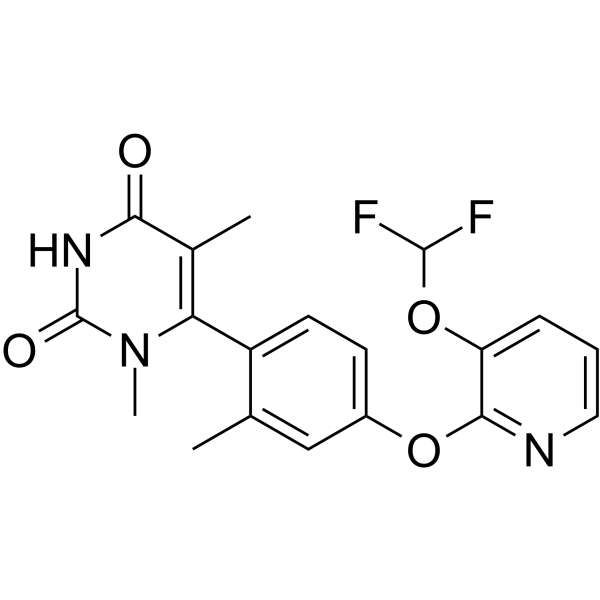
    PF2562 (Example 6), a dopamine D1 ligand, ascts as a dopamine D1 agonist or partial agonist. PF2562 binds to human D1 receptor with a Ki of 113 nM. PF2562 exhibits activity against human D1 cAMP with an EC50 of 568 nM in HTRF assay .
    PF2562
  • HY-176476

    Epigenetic Reader Domain FKBP Cancer
    BRD4/FKBP12 degrader-1(a1d) is a BRD4/FKBP12 degrader with anti-cancer activity (BRD4 ligand: HY-78695, FKBP12 ligand: HY-176501, linker: HY-140212) .
    BRD4/FKBP12 degrader-1
  • HY-116450

    Dopamine Receptor Neurological Disease
    TISCH is a potent and selective iodinated ligand with high affinity and selectivity for CNS D1 dopamine receptors. TISCH showed a Kd value of 0.205 nM in rat striatal tissue, indicating its effectiveness in biological activity. TISCH is able to easily cross the blood-brain barrier and show distribution in specific areas with D1 receptor density. TISCH is considered to be useful as a pharmacological tool for characterizing D1 dopamine receptors. When labeled with I-123, TISCH has the potential to be used as an in vivo imaging agent for CNS D1 dopamine receptors .
    TISCH
  • HY-129089

    Dopamine Receptor Neurological Disease
    (-)-MDO-NPA is an N-propylnorapomorphine analog and a D1R/D2R dual-target ligand. (-)-MDO-NPA has EC50 values of 1949 nM (D1R) and 520 nM (D2R) for β-arrestin. (-)-MDO-NPA has EC50 values of 717.5 nM (D1R) and 7.7 nM (D2R) for cAMP. (-)-MDO-NPA can be used in the research of dopamine-related diseases such as Parkinson’s disease .
    (-)-MDO-NPA
  • HY-P991148

    PD-1/PD-L1 Cancer
    Moflerafusp alfa is a fusion protein targeting the human signal regulatory protein α (SIRPα) variant V2 D1 domain and human programmed death ligand 1 (PD-L1). Moflerafusp alfa is promising for research of various cancers .
    Moflerafusp alfa
  • HY-167701

    Ligands for Target Protein for PROTAC Apoptosis Estrogen Receptor/ERR Cancer
    OBHSA is a selective estrogen receptor (ERα) degrader. OBHSA blocks the cell cycle by degrading cyclin D1, thereby overcoming Tamoxifen (HY-13757A) resistance. OBHSA also triggers excessive activation of the unfolded protein response (UPR) by inducing an increase in intracellular reactive oxygen species, ultimately leading to cell apoptosis. In addition, OBHSA can also be used as an ERα ligand to synthesize PROTAC degraders .
    OBHSA
  • HY-171334A

    PROTACs PIN1 CDK Akt c-Myc Apoptosis Reactive Oxygen Species (ROS) Cancer
    P1D-34 is a Pin1 PROTAC degrader with a DC50 value of 177 nM. P1D-34 also down-regulates Pin1 client proteins such as Cyclin D1, Rb, Mcl-1, Akt, and c-Myc. P1D-34 shows anti-proliferative activities in a panel of acute myeloid leukemia (AML) cell lines. P1D-34 induces cell DNA damage and apoptosis by releasing ROS generation. Pink: PIN1 ligand (HY-171442A), Blue: CRBN ligand (HY-14658), Black: Linker (HY-W014883) .
    P1D-34
  • HY-148611

    iGluR Neurological Disease
    NSC339614 potassium is a selective GluN1/GluN2C and GluN1/GluN2D receptor enhancer with the activity of enhancing neuronal responses to specific NMDA receptors. NSC339614 potassium can selectively enhance the signaling of GluN1/GluN2C and GluN1/GluN2D receptors without affecting other NMDA receptors. The mechanism of action of NSC339614 potassium does not compete with agonists of L-glutamate or glycine, nor does it depend on membrane potential. The activity of NSC339614 potassium depends on the specific structure of the agonist ligand binding domain, showing its potential as a novel pharmacological agent for studying the function of NMDA receptor subtypes and providing new lead compounds for a variety of neurological diseases .
    NSC339614 potassium
  • HY-183927

    Dopamine Receptor Neurological Disease
    Spectramide is a blood-brain barrier-permeable, reversible, and selective dopamine D2 receptor ligand. Spectramide shows no strong interactions with dopamine D1 receptors, dopamine uptake sites, adrenergic receptor systems, cholinergic receptor systems, or 5-HTR systems. Spectramide can be labeled with 11C or 123I isotopes for use in PET or SPECT. Spectramide preferentially accumulates in the striatum with low uptake in other brain regions, and its accumulation can be blocked by pre-administration of Haloperidol (HY-14538) .
    Spectramide

온라인 문의

Your information is safe with us. * Required Fields.

호칭


Country or Region *

고객명 *


회사명 *

Department *


메일주소 *


상품명 *

Cat. No.


Requested quantity *

전화번호 *


비고

온라인 문의

Inquiry Information

상품명:
Cat. No.:
수량:
MCE Japan Authorized Agent:

