1. Search Result
Search Result
Results for "

DAT inhibitor

" in MedChemExpress (MCE) Product Catalog:

61

Inhibitors & Agonists

1

Biochemical Assay Reagents

3

Natural
Products

6

Isotope-Labeled Compounds

Targets Recommended:
Cat. No. Product Name Target Research Areas Chemical Structure
  • HY-13217
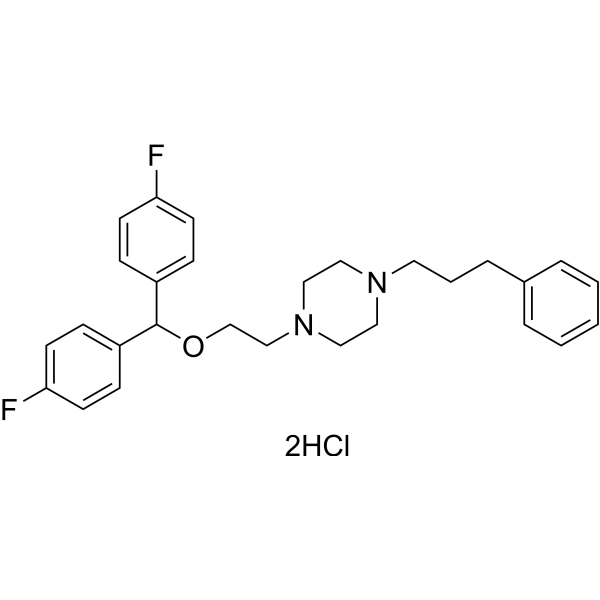
    Vanoxerine dihydrochloride
    5+ Cited Publications

    GBR-12909 dihydrochloride; I893 dihydrochloride

    Dopamine Transporter Neurological Disease
    Vanoxerine dihydrochloride (GBR-12909 dihydrochloride) is a competitive, potent, and highly selective dopamine reuptake inhibitor (Ki=1 nM). Vanoxerine dihydrochloride (GBR-12909 dihydrochloride) binds to the target site on the dopamine transporter (DAT) .
    Vanoxerine dihydrochloride
  • HY-B0527A
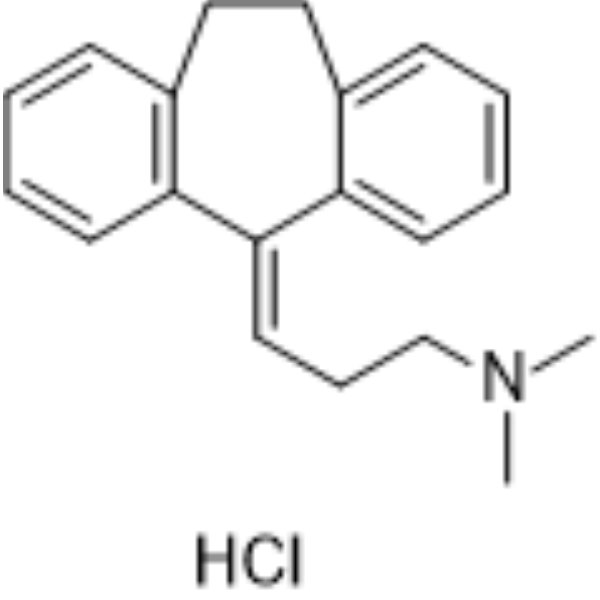
    Amitriptyline hydrochloride
    5+ Cited Publications

    Serotonin Transporter 5-HT Receptor mAChR Histamine Receptor Adrenergic Receptor Trk Receptor Sodium Channel Potassium Channel Dopamine Transporter Apoptosis Neurological Disease Inflammation/Immunology Endocrinology
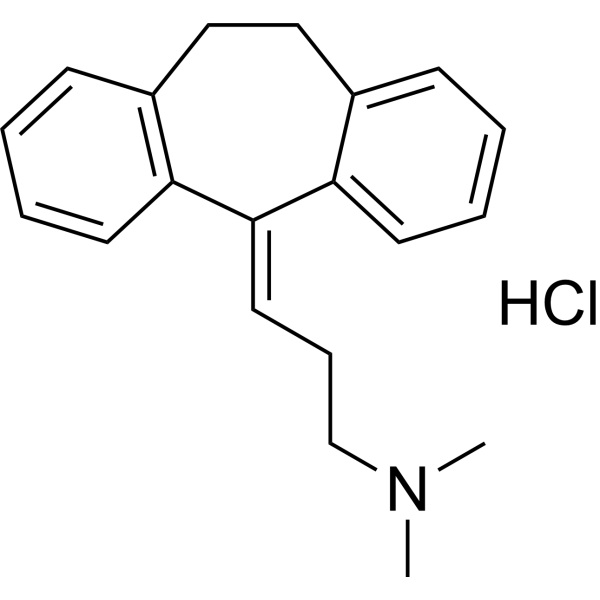
    Amitriptyline hydrochloride is an orally active tricyclic antidepressant (TCA). Amitriptyline hydrochloride mainly exerts its antidepressant effect by blocking SERT (Ki = 3.45 nM) and NET (Ki = 13.3 nM), thereby increasing the concentrations of 5-hydroxytryptamine (5-HT) and norepinephrine (NE) in the synaptic cleft. Amitriptyline hydrochloride is also an agonist at α2A and TrkA/TrkB receptors, thereby exerting analgesic and neurotrophic activities (inhibiting cell apoptosis). Amitriptyline hydrochloride can reduce inflammation, angiogenesis and fibrosis. Amitriptyline hydrochloride binds to DAT (with Ki = 2.58 μM). Amitriptyline hydrochloride has high affinity for a series of receptors and can antagonize muscarinic cholinergic receptors (M1/M2/M3/M4/M5 receptors) (Ki = 11-24 nM), H1 receptors (Ki = 0.5-1.1 nM), adrenergic α1 receptors (Ki = 4.4 nM), etc., resulting in a series of side effects. Amitriptyline hydrochloride can block sodium channels and hERG potassium channel (IC50 = 4.78 μM) and it has cardiotoxicity .
    Amitriptyline hydrochloride
  • HY-14258
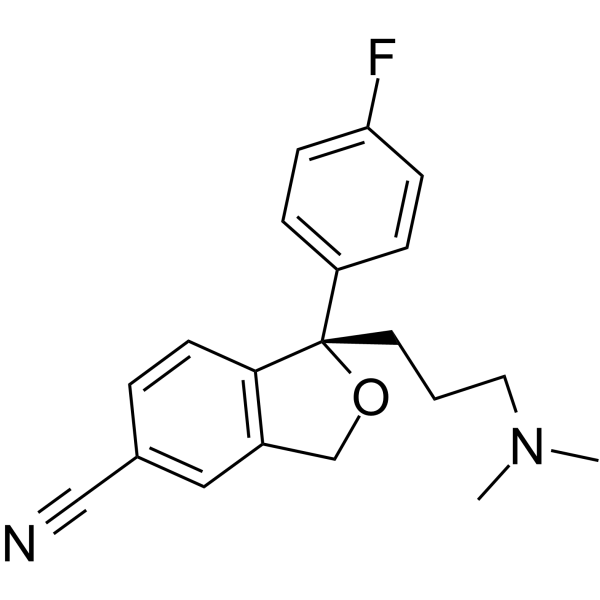
    Escitalopram
    10+ Cited Publications

    (S)-Citalopram; (S)-(+)-Citalopram

    Serotonin Transporter Neurological Disease
    Escitalopram ((S)-Citalopram), the S-enantiomer of racemic Citalopram, is a selective serotonin reuptake inhibitor (SSRI) with a Ki of 0.89 nM. Escitalopram has ∼30 fold higher binding affinity than its R(-)-enantiomer and shows selectivity over both dopamine transporter (DAT) and norepinephrine transporter (NET). Escitalopram is an antidepressant for the research of major depression .
    Escitalopram
  • HY-B0527
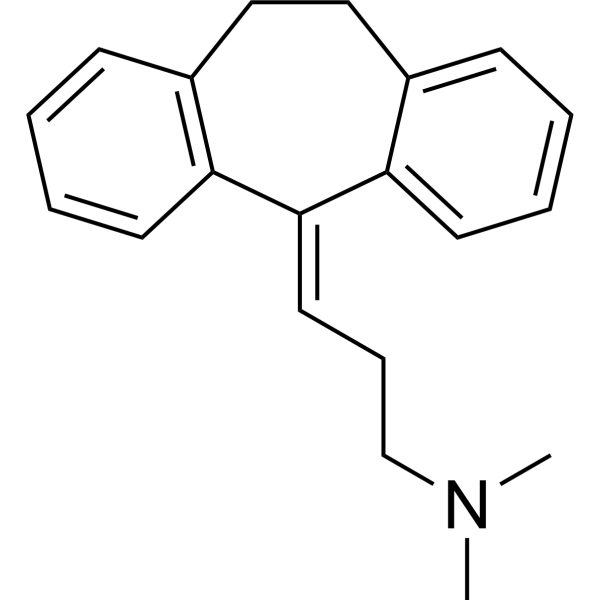
    Amitriptyline
    5+ Cited Publications

    Serotonin Transporter Trk Receptor Sodium Channel 5-HT Receptor Histamine Receptor Adrenergic Receptor mAChR Potassium Channel Dopamine Transporter Apoptosis Neurological Disease Inflammation/Immunology Endocrinology
    Amitriptyline is an orally active tricyclic antidepressant (TCA). Amitriptyline mainly exerts its antidepressant effect by blocking SERT (Ki = 3.45 nM) and NET (Ki = 13.3 nM), thereby increasing the concentrations of 5-hydroxytryptamine (5-HT) and norepinephrine (NE) in the synaptic cleft. Amitriptyline is also an agonist at α2A and TrkA/TrkB receptors, thereby exerting analgesic and neurotrophic activities (inhibiting cell apoptosis). Amitriptyline can reduce inflammation, angiogenesis and fibrosis. Amitriptyline binds to DAT (with Ki = 2.58 μM). Amitriptyline has high affinity for a series of receptors and can antagonize muscarinic cholinergic receptors (M1/M2/M3/M4/M5 receptors) (Ki = 11-24 nM), H1 receptors (Ki = 0.5-1.1 nM), adrenergic α1 receptors (Ki = 4.4 nM), etc., resulting in a series of side effects. Amitriptyline can block sodium channels and hERG potassium channel (IC50 = 4.78 μM) and it has cardiotoxicity .
    Amitriptyline
  • HY-14258A
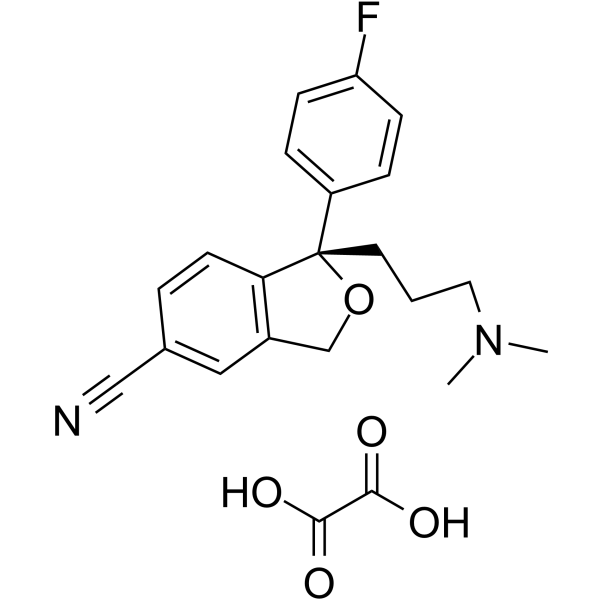
    Escitalopram oxalate
    Maximum Cited Publications
    11 Publications Verification

    (S)-Citalopram oxalate; (S)-(+)-Citalopram oxalate

    Serotonin Transporter Neurological Disease Cancer
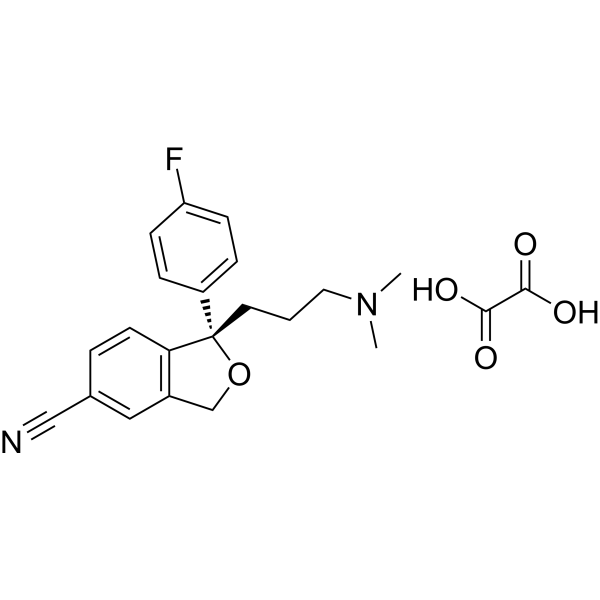
    Escitalopram ((S)-Citalopram) oxalate, the S-enantiomer of racemic Citalopram, is a selective serotonin reuptake inhibitor (SSRI) with a Ki of 0.89 nM. Escitalopram oxalate has ∼30 fold higher binding affinity than its R(-)-enantiomer and shows selectivity over both dopamine transporter (DAT) and norepinephrine transporter (NET). Escitalopram oxalate is an antidepressant for the research of major depression .
    Escitalopram oxalate
  • HY-W016388

    9-Hydroxyfluorene

    Dopamine Receptor Drug Metabolite Neurological Disease
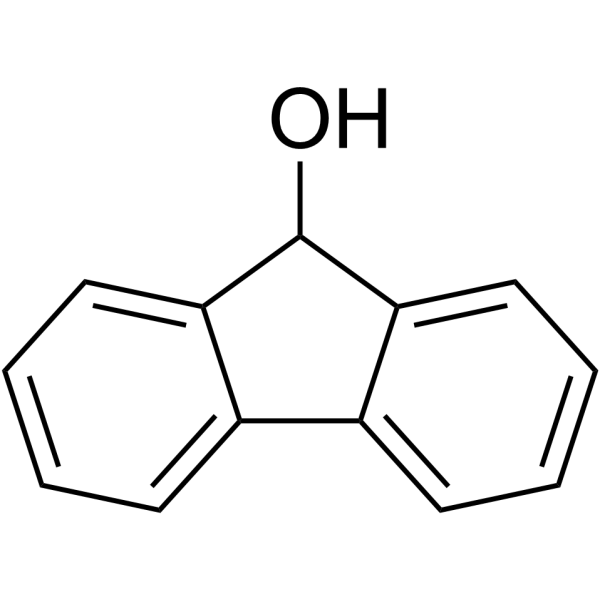
    9-Fluorenol (9-Hydroxyfluorene; compound 3) is a dopamine (DAT) inhibitor with IC50 value of 9 µM. 9-Fluorenol is a major metabolite of compound developed as a wake promoting agent. 9-Fluorenol shows wake promotion activity in vivo .
    9-Fluorenol
  • HY-Y1191

    EEDQ

    Biochemical Assay Reagents 5-HT Receptor Dopamine Transporter Neurological Disease
    EEDQ is a carboxylate activator and irreversible antagonist of 5HT2c receptors. EEDQ reduces [ 3H]β-CIT binding to the dopamine transporter (DAT) in rat caudate-putamen (CPu) homogenates (IC50 = 78.3 μM). EEDQ inhibits contralateral rotation behavior .
    EEDQ
  • HY-19907

    BMS-820836

    Dopamine Transporter Monoamine Transporter Serotonin Transporter Neurological Disease
    Liafensine (BMS-820836) is an orally active, blood-brain barrier-permeable monoamine reuptake inhibitor, with an IC50 of 5.67 nM against DAT, 1.08 nM against SERT, and 7.99 nM against NET. Liafensine binds to DAT to block dopamine reuptake. Liafensine binds to SERT to block serotonin reuptake. Liafensine binds to NET to block norepinephrine reuptake. Liafensine can be used in studies related to depression .
    Liafensine
  • HY-101315
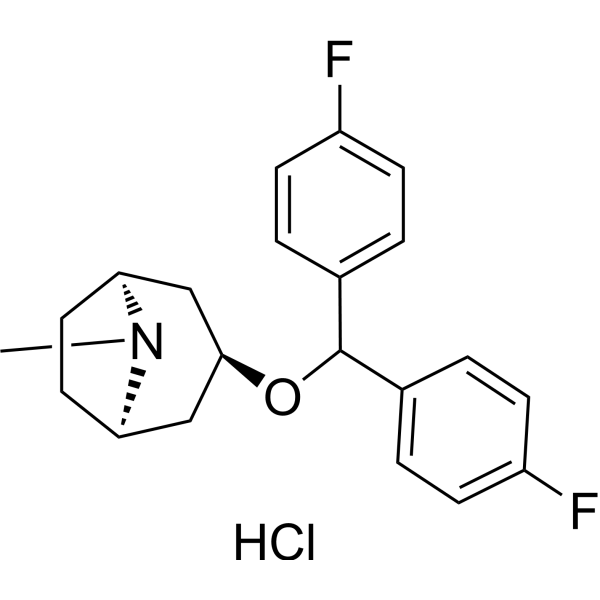
    AHN 1-055 hydrochloride
    3 Publications Verification

    3α-Bis-(4-fluorophenyl) Methoxytropane hydrochloride

    Dopamine Transporter Neurological Disease
    AHN 1-055 hydrochloride is a dopamine uptake inhibitor that can cross the blood-brain barrier, with an IC50 of 71 nM. AHN 1-055 hydrochloride binds with high affinity to the dopamine transporter (DAT) .
    AHN 1-055 hydrochloride
  • HY-103430A
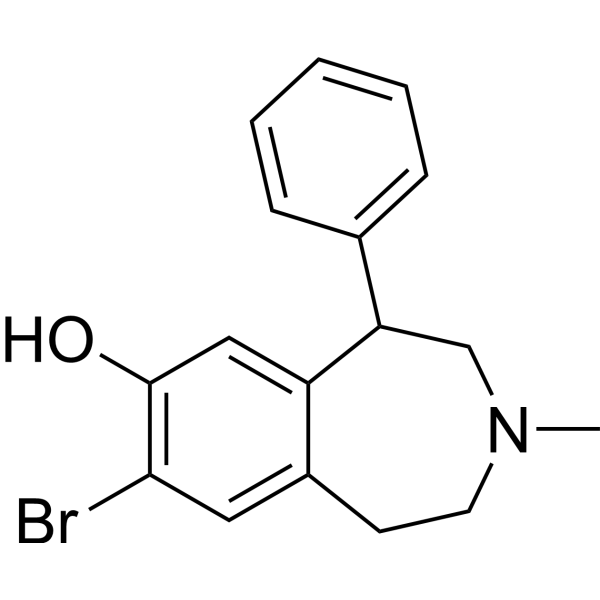
    SKF-83566
    2 Publications Verification

    Dopamine Receptor 5-HT Receptor Adenylate Cyclase Neurological Disease
    SKF-83566 is a potent, blood-brain permeable and orally active D1-like dopamine receptor (D1DR) antagonist and a weaker competitive antagonist at the vascular 5-HT2 receptor (Ki=11 nM) . SKF-83566 is a competitive DAT (dopamine transporter) inhibitor with an IC50 of 5.7 μM . SKF-83566 also shows selective inhibition for adenylyl cyclase 2 (AC2) over AC1 and AC5 in the isolated rabbit thoracic aorta . SKF-83566 can be used for research of parkinson’s disease and nicotine craving alleviation .
    SKF-83566
  • HY-161723

    Dopamine Transporter CDK Neurological Disease
    LH2-051, a lysosome-enhancing compound (LYEC), is a brain-penetrant dopamine transporter (DAT) inhibitor (Ki: 0.95 μM). LH2-051 inhibits DAT-mediated dopamine uptake with an IC50 of 3.0 μM. LH2-051 promotes nuclear translocation of TFEB and lysosome biogenesis. LH2-051 improves the memory of amyloid precursor protein (APP)/Presenilin 1 (PS1) mice. LH2-051 can be used for the study of Alzheimer’s disease .
    LH2-051
  • HY-13217A
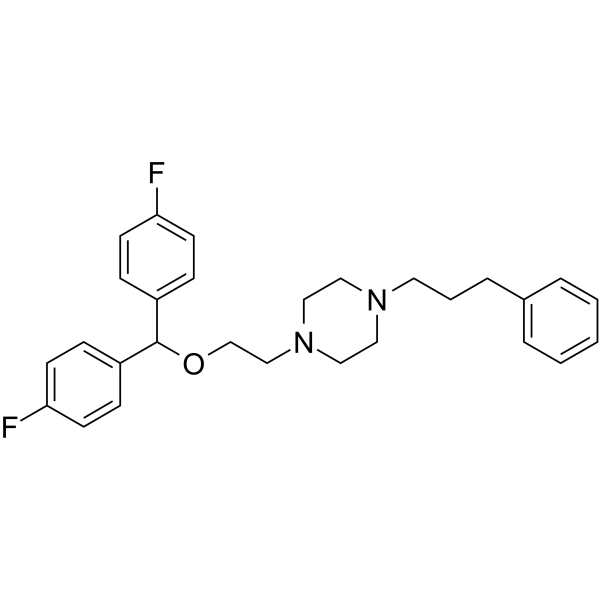
    Vanoxerine
    5+ Cited Publications

    GBR 12909; I893

    Dopamine Transporter Neurological Disease
    Vanoxerine (GBR-12909) is a competitive, potent, and highly selective dopamine reuptake inhibitor (Ki=1 nM). Vanoxerine (GBR-12909) binds to the target site on the dopamine transporter (DAT) .
    Vanoxerine
  • HY-133116

    Adrenergic Receptor Neurological Disease
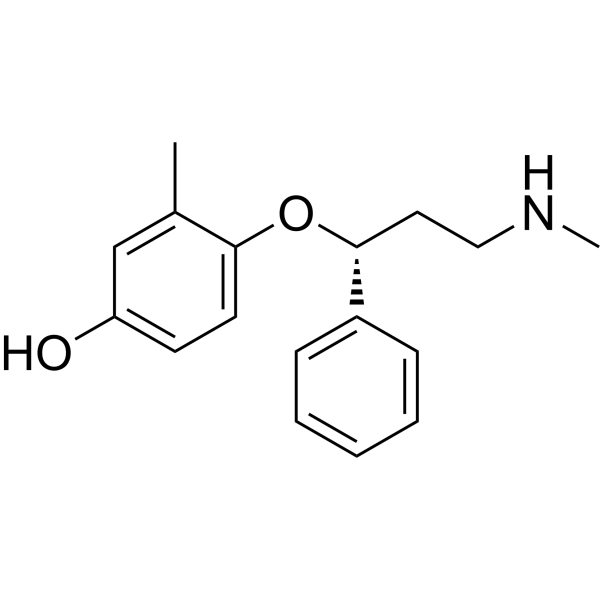
    4-Hydroxyatomoxetine is an active metabolite of Atomoxetine. 4-Hydroxyatomoxetine is metabolized by the enzyme cytochrome P450 2D6 (CYP2D6). Atomoxetine hydrochloride is a potent and selective noradrenalin re-uptake inhibitor (Ki values are 5 nM, 77 nM and 1451 nM for inhibition of radioligand binding to human NET, SERT and DAT respectively) .
    4-Hydroxyatomoxetine
  • HY-158013A

    Dopamine Transporter Neurological Disease
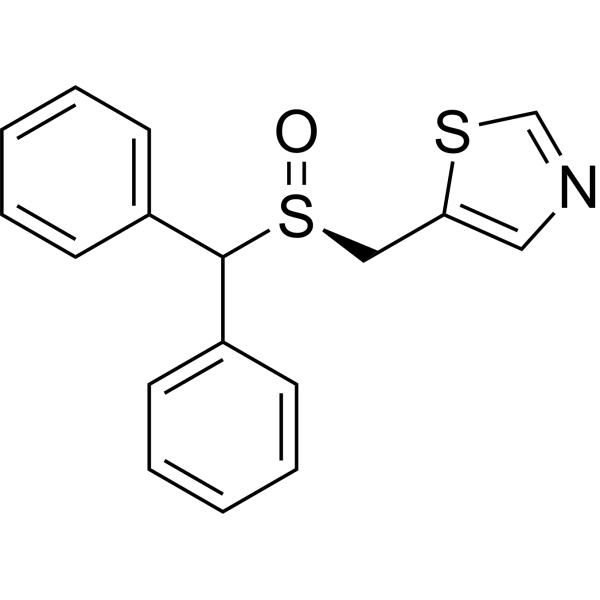
    JJC8-088 dioxalate is the dioxalate salt form of JJC8-088 (HY-158013). JJC8-088 dioxalate is a derivative of modafinil. JJC8-088 dioxalate is an inhibitor for dopamine transporter (DAT). JJC8-088 dioxalate exhibits behavioral characteristics similar to cocaine in rat models, and can be to study psychostimulant use disorders .
    JJC8-088 dioxalate
  • HY-14258AR

    (S)-Citalopram oxalate (Standard); (S)-(+)-Citalopram oxalate (Standard)

    Reference Standards Serotonin Transporter Neurological Disease Cancer
    Escitalopram (oxalate) (Standard) is the analytical standard of Escitalopram (oxalate). This product is intended for research and analytical applications. Escitalopram ((S)-Citalopram) oxalate, the S-enantiomer of racemic Citalopram, is a selective serotonin reuptake inhibitor (SSRI) with a Ki of 0.89 nM. Escitalopram oxalate has ∼30 fold higher binding affinity than its R(-)-enantiomer and shows selectivity over both dopamine transporter (DAT) and norepinephrine transporter (NET). Escitalopram oxalate is an antidepressant for the research of major depression .
    Escitalopram oxalate (Standard)
  • HY-N7506

    Delta3,2-Hydroxylbakuchiol

    Monoamine Transporter Dopamine Transporter Neurological Disease
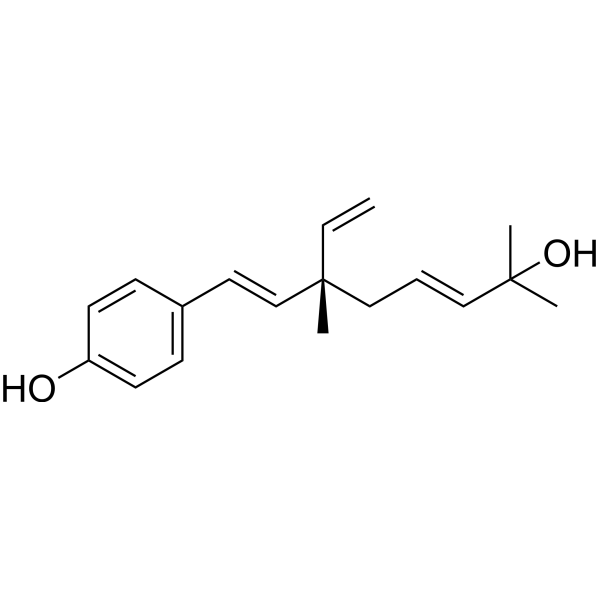
    13-Hydroxyisobakuchiol (Delta3,2-Hydroxylbakuchiol), an analog of Bakuchiol (HY-N0235) that can be isolated from Psoralea corylifolia (L.), is a potent selective monoamine transporter inhibitor. 13-Hydroxyisobakuchiol is more selective for the dopamine transporter (DAT) (IC50 = 0.58 μM) and norepinephrine transporter (NET) (IC50 = 0.69 μM) than for the serotonin transporter (SERT) (IC50 = 312.02 μM). 13-Hydroxyisobakuchiol increases the activity of intact mice and improves the decreased activity of reserpinized mice in vivo. 13-Hydroxyisobakuchiol can be used for the research of disorders such as Parkinson's disease and depression .
    13-Hydroxyisobakuchiol
  • HY-B0527AR
    Amitriptyline hydrochloride (Standard)
    4 Publications Verification

    Reference Standards Serotonin Transporter 5-HT Receptor Histamine Receptor mAChR Adrenergic Receptor Trk Receptor Sodium Channel Potassium Channel Dopamine Transporter Apoptosis Neurological Disease Inflammation/Immunology Endocrinology
    Amitriptyline hydrochloride (Standard) is the analytical standard of Amitriptyline hydrochloride (HY-B0527A). This product is intended for research and analytical applications. Amitriptyline hydrochloride is an orally active tricyclic antidepressant (TCA). Amitriptyline hydrochloride mainly exerts its antidepressant effect by blocking SERT (Ki = 3.45 nM) and NET (Ki = 13.3 nM), thereby increasing the concentrations of 5-hydroxytryptamine (5-HT) and norepinephrine (NE) in the synaptic cleft. Amitriptyline hydrochloride is also an agonist at α2A and TrkA/TrkB receptors, thereby exerting analgesic and neurotrophic activities (inhibiting cell apoptosis). Amitriptyline hydrochloride can reduce inflammation, angiogenesis and fibrosis. Amitriptyline hydrochloride binds to DAT (with Ki = 2.58 μM). Amitriptyline hydrochloride has high affinity for a series of receptors and can antagonize muscarinic cholinergic receptors (M1/M2/M3/M4/M5 receptors) (Ki = 11-24 nM), H1 receptors (Ki = 0.5-1.1 nM), adrenergic α1 receptors (Ki = 4.4 nM), etc., resulting in a series of side effects. Amitriptyline hydrochloride can block sodium channels and hERG potassium channel (IC50 = 4.78 μM) and it has cardiotoxicity.
    Amitriptyline hydrochloride (Standard)
  • HY-17590
    Radafaxine hydrochloride
    1 Publications Verification

    (S,S)-Hydroxybupropion hydrochloride; GW-353162A; BW-306U

    Monoamine Transporter Neurological Disease
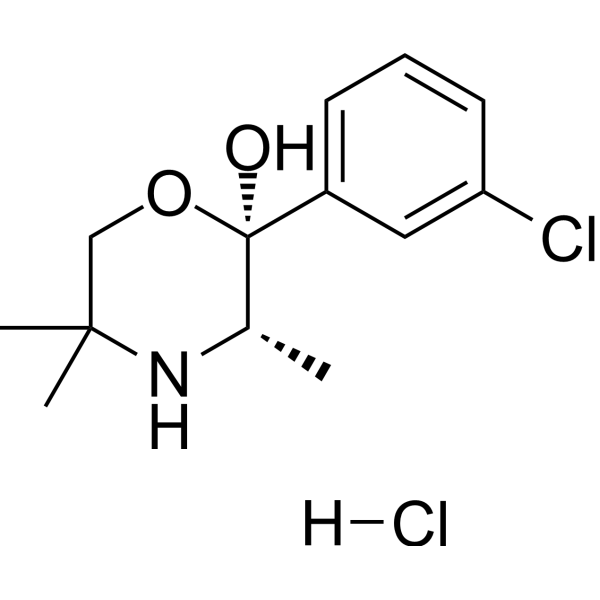
    Radafaxine hydrochloride (GW-353162A) is a DAT (dopamine transporter) and NET(norepinephrine transporter) transporters inhibitor, and nAChR family modulator.
    Radafaxine hydrochloride
  • HY-163384

    Dopamine Transporter Neurological Disease
    (S)-CE-123 is a potent, selective, and novel atypical dopamine transporter (DAT) inhibitor with an EC50 of 2.76 μM in uptake inhibition assays conducted in HEK293 cells stably expressing human isoforms of DAT. (S)-CE-123, a Modafinil analogue, is able to penetrate the blood–brain barrier. (S)-CE-123 improves cognitive and motivational processes in experimental animals .
    (S)-CE-123
  • HY-14840A

    MRZ 9547

    Dopamine Transporter Neurological Disease Inflammation/Immunology
    (R)-Phenylpiracetam (MRZ 9547) is a dopamine transporter (DAT) inhibitor (Ki: 14.8 μM; IC50: 65.5 μM). (R)-Phenylpiracetam can be used for the research of the neurological or neuropsychiatric disorders .
    (R)-Phenylpiracetam
  • HY-135096

    Serotonin Transporter 5-HT Receptor Histamine Receptor mAChR Adrenergic Receptor Sodium Channel Trk Receptor Neurological Disease
    Amitriptyline-d3 hydrochloride is the deuterium labeled Amitriptyline (hydrochloride). Amitriptyline hydrochloride is an inhibitor of serotonin reuptake transporter (SERT) and noradrenaline reuptake transporter (NET), with Kis of 3.45 nM and 13.3 nM for human SERT and NET, respectively. Amitriptyline hydrochloride also weakly binds to dopamine reuptake transporter (DAT) with a Ki of 2.58 μM. Amitriptyline hydrochloride also inhibits adrenergic, muscarinic, histamine and 5-HT receptors. Amitriptyline hydrochloride is a TrkA and TrkB receptors agonist with potent neurotrophic activity. Amitriptyline hydrochloride has antidepressant activity .
    Amitriptyline-d3 hydrochloride
  • HY-117902

    Dopamine Transporter Neurological Disease
    SRI-31142 is a putative, brain-penetrant allosteric inhibitor of the dopamine transporter (DAT). In behavioral studies using intracranial self-stimulation (ICSS), SRI-31142 did not produce the abuse-related effects seen with cocaine and GBR-12935, but instead reduced ICSS responses and dopamine levels in the nucleus accumbens (NAc) at effective doses. SRI-31142 also blocked cocaine-induced increases in ICSS and NAc dopamine .
    SRI-31142
  • HY-B0527AS

    Isotope-Labeled Compounds Serotonin Transporter 5-HT Receptor Histamine Receptor mAChR Adrenergic Receptor Trk Receptor Sodium Channel Potassium Channel Dopamine Transporter Apoptosis Neurological Disease Inflammation/Immunology Endocrinology
    Amitriptyline-d6 hydrochloride is the deuterium labeled Amitriptyline hydrochloride (HY-B0527A). Amitriptyline hydrochloride is an orally active tricyclic antidepressant (TCA). Amitriptyline hydrochloride mainly exerts its antidepressant effect by blocking SERT (Ki = 3.45 nM) and NET (Ki = 13.3 nM), thereby increasing the concentrations of 5-hydroxytryptamine (5-HT) and norepinephrine (NE) in the synaptic cleft. Amitriptyline hydrochloride is also an agonist at α2A and TrkA/TrkB receptors, thereby exerting analgesic and neurotrophic activities (inhibiting cell apoptosis). Amitriptyline hydrochloride can reduce inflammation, angiogenesis and fibrosis. Amitriptyline hydrochloride binds to DAT (with Ki = 2.58 μM). Amitriptyline hydrochloride has high affinity for a series of receptors and can antagonize muscarinic cholinergic receptors (M1/M2/M3/M4/M5 receptors) (Ki = 11-24 nM), H1 receptors (Ki = 0.5-1.1 nM), adrenergic α1 receptors (Ki = 4.4 nM), etc., resulting in a series of side effects. Amitriptyline hydrochloride can block sodium channels and hERG potassium channel (IC50 = 4.78 μM) and it has cardiotoxicity.
    Amitriptyline-d6 hydrochloride
  • HY-158013

    Dopamine Transporter Neurological Disease
    JJC8-088, a Modafinil-derived ligand, is a dopamine transporter (DAT) inhibitor with a Ki of 2.53 nM. JJC8-088 dioxalate can be to study psychostimulant use disorders .
    JJC8-088
  • HY-14258AS

    Serotonin Transporter Neurological Disease
    Escitalopram-d6 (oxalate) is the deuterium labeled Escitalopram oxalate. Escitalopram ((S)-Citalopram) oxalate, the S-enantiomer of racemic Citalopram, is a selective serotonin reuptake inhibitor (SSRI) with a Ki of 0.89 nM. Escitalopram oxalate has ~30 fold higher binding affinity than its R(-)-enantiomer and shows selectivity over both dopamine transporter (DAT) and norepinephrine transporter (NET). Escitalopram oxalate is an antidepressant for the research of major depression .
    Escitalopram-d6 oxalate
  • HY-107055

    Dopamine Transporter Neurological Disease
    RTI 336 is a phenyltropane analog, as well as a potent and selective dopamine transporter (DAT) inhibitor. RTI 336 inhibits addictive agent induced locomotor activity and self-administration in Lewis rats. RTI 336 exhibits inhibitory effects depending on inherent NAc DAT levels .
    RTI 336
  • HY-172421

    Monoamine Transporter Serotonin Transporter Dopamine Transporter Neurological Disease
    Cendifensine is the inhibitor for monoamine reuptake that inhibits the serotonin transporter (SERT), norepinephrine transporter (NET), and dopamine transporter (DAT) .
    Cendifensine
  • HY-107128

    TD-9855 hydrochloride

    Serotonin Transporter Neurological Disease
    Ampreloxetine (TD-9855) hydrochloride is an orally active and CNS-penetrant inhibitor of Norepinephrine transporter (NET) and Serotonin 5-HT uptake transporter (SERT), but not Dopamine transporter (DAT). Ampreloxetine hydrochloride binds norepinephrine transporters (NET) and serotonin transporters (SERT) with EC50 values of 11.7 ng/mL and 50.8 ng/mL, respectively, in plasma .
    Ampreloxetine hydrochloride
  • HY-158014

    Dopamine Transporter Neurological Disease
    JJC8-089 is a dopamine transporter (DAT) inhibitor that may improve motivational dysfunction and increase effortful behavior in goal-directed activities. JJC8-089 significantly reversed the low-effort effects induced by the VMAT-2 inhibitor Tetrabenazine (HY-B0590) in rats and increased the choice of high-effort fixed-ratio 5-bar presses versus food intake. .
    JJC8-089
  • HY-18332B

    Dopamine Transporter Adrenergic Receptor 5-HT Receptor Neurological Disease
    DOV-102,677 is an orally sctive triple monoamine neurotransmitter reuptake inhibitor that simultaneously inhibits the dopamine (DAT) (IC50 = 129 nM; Ki = 222 nM), norepinephrine (NET) (IC50 = 103 nM; Ki = 1030 nM), and serotonin (SERT) (IC50 = 133 nM; Ki = 740 nM) transporters. DOV-102,677 demonstrated significant antidepressant-like activity and sensory-motor gating regulatory effects in mouse experiments. DOV-102,677 can be used for research on depression .
    DOV-102,677
  • HY-14258AS1

    (S)-Citalopram-d4 oxalate; (S)-(+)-Citalopram-d4 oxalate

    Isotope-Labeled Compounds Serotonin Transporter Neurological Disease
    Escitalopram-d4 (oxalate) is deuterium labeled Escitalopram (oxalate). Escitalopram ((S)-Citalopram) oxalate, the S-enantiomer of racemic Citalopram, is a selective serotonin reuptake inhibitor (SSRI) with a Ki of 0.89 nM. Escitalopram oxalate has ~30 fold higher binding affinity than its R(-)-enantiomer and shows selectivity over both dopamine transporter (DAT) and norepinephrine transporter (NET). Escitalopram oxalate is an antidepressant for the research of major depression .
    Escitalopram-d4 oxalate
  • HY-178907

    Serotonin Transporter 5-HT Receptor Neurological Disease
    SERT/5-HT-IN-1 (compound D17) is an orally active and potent dual target inhibitor of SERT/5-HT3A (SERT IC50 = 1.5 nM, NET IC50 = 49 nM, DAT IC50 = 91 nM, 5-HT3A Ki = 12 nM). SERT/5-HT-IN-1 has an IC50 of 39 nM to 5-HT3A. SERT/5-HT-IN-1 has a lower risk of liver, kidney, and cardiac toxicity. SERT/5-HT-IN-1 can be used for research on depressive disorders .
    SERT/5-HT-IN-1
  • HY-163156

    Dopamine Transporter Neurological Disease
    JJC12-009 is a dopamine transporter (DAT) inhibitor, with a Ki of 5.45 nM .
    JJC12-009
  • HY-117473

    Microtubule/Tubulin Apoptosis Cancer
    DAT-230 is a microtubule inhibitor. DAT-230 induces cell apoptosis and results in microtubule de-polymerization and G2/M phase arrest. DAT-230 inhibits cell growth in vitro and in vivo .
    DAT-230
  • HY-163138

    Dopamine Transporter Neurological Disease
    DAT-IN-1 (Coumpound 12b) is an atypical DAT inhibitor with a Ki of 8.37 nM. DAT-IN-1 can be used in the study of psychostimulant use disorder (PSUD) .
    DAT-IN-1
  • HY-169807

    Dopamine Transporter Others
    O-2172, a carbacyclic analog, is a DAT inhibitor, with IC50 values of 47 nM and 7000 nM for DAT and SERT, respectively .
    O-2172
  • HY-163155

    Dopamine Transporter Neurological Disease
    RDS03-94 is a dopamine transporter (DAT) inhibitor. RDS03-94 reduces hERG/DAT ratio .
    RDS03-94
  • HY-126158

    Dopamine Transporter Serotonin Transporter Neurological Disease
    SRI-29574 is an allosteric modulator of the dopamine transporter (DAT). SRI-29574 partially inhibits the uptake of the DAT (IC50=2.3 nM) and also partially inhibits the uptake of the serotonin transporter (SERT) and norepinephrine transporter (NET). SRI-29574 may serve as a useful probe to study the function and regulatory mechanisms of DAT .
    SRI-29574
  • HY-163154

    Dopamine Transporter Neurological Disease
    JJC8-091 is a potent dopamine transporter (DAT) inhibitor with Ki values of 230, 97800 nM for DAT, SERT, respectively. JJC8-091 has the potential for the research of psychostimulant use disorders (PSUD) .
    JJC8-091
  • HY-161913

    Dopamine Transporter Neurological Disease
    AC-4-248 is an atypical non-competitive dopamine transporter (DAT) inhibitor and reduces the potency of cocaine to inhibit DAT. AC-4-248 is a non-selective inhibitor of SLC6 transporters with IC50 values for hDAT, hSERT, and hNET of 45.5 μM, 96.2 μM, and 250 μM, respectively .
    AC-4-248
  • HY-117512

    Dopamine Transporter Serotonin Transporter Neurological Disease
    UWA-101 hydrochloride is a selective and non-cytotoxic DAT/SERT inhibitor, with EC50 values of 3.6 µM and 2.3 µM for inhibiting DAT and SERT, respectively. UWA-101 hydrochloride can alleviate the side effects of dopaminergic agents (such as L-DOPA), such as motor disorders, and lacks psychotropic activity. UWA-101 hydrochloride can be used for research on neurodegenerative diseases such as Parkinson's disease .
    UWA-101 hydrochloride
  • HY-174282

    Dopamine Transporter Neurological Disease
    RDS-04-010 is an atypical dopamine transporter (DAT) inhibitor. RDS-04-010 has the effect of inhibiting cocaine intake and seeking behavior. RDS-04-010 exerts its modulatory effect mainly by binding to the inward conformation of DAT, thereby reducing the reinforcing effect of cocaine. RDS-04-010 can be used in the study of cocaine use disorder (CUD) .
    RDS-04-010
  • HY-173475

    Sigma Receptor Dopamine Transporter Neurological Disease
    CM699 is a potent Dopamine Transporter (DAT) and Sigma-receptor (σR) dual inhibitor with IC50s of 311 and 14.1 nM, respectively .
    CM699
  • HY-172029

    Monoamine Transporter Neurological Disease
    3,4-Methylenedioxy pyrovalerone metabolite 2 hydrochloride is an analog of Pyrovalerone. Pyrovalerone inhibits the dopamine transporter (DAT),serotonin transporter (SERT),and the norepinephrine transporter (NET) .
    3,4-Methylenedioxy pyrovalerone metabolite 2 hydrochloride
  • HY-110223

    Adrenergic Receptor Neurological Disease
    Atomoxetine-d3 hydrochloride is the deuterium labeled Atomoxetine hydrochloride. Atomoxetine hydrochloride is a potent and selective noradrenalin re-uptake inhibitor (Ki values are 5, 77 and 1451 nM for inhibition of radioligand binding to human NET, SERT and DAT respectively) .
    Atomoxetine-d3 hydrochloride
  • HY-17385S

    Tomoxetine-d5 hydrochloride; LY 139603-d5 ; (R)-Tomoxetine-d5 hydrochloride

    Isotope-Labeled Compounds Adrenergic Receptor Neurological Disease
    Atomoxetine-d5 (hydrochloride) is the deuterium labeled Atomoxetine hydrochloride. Atomoxetine hydrochloride is a potent and selective noradrenalin re-uptake inhibitor (Ki values are 5, 77 and 1451 nM for inhibition of radioligand binding to human NET, SERT and DAT respectively) .
    Atomoxetine-d5 hydrochloride
  • HY-107370AS

    (Rac)-Tomoxetine d7 hydrochloride; (Rac)-LY 139603 d7

    Serotonin Transporter Sodium Channel Isotope-Labeled Compounds Neurological Disease
    (Rac)-Atomoxetine-d7 (hydrochloride) is a deuterium labeled (Rac)-Atomoxetine hydrochloride. (Rac)-Atomoxetine hydrochloride is a racemic form of Atomoxetine hydrochloride. Atomoxetine hydrochloride is a potent and selective noradrenalin re-uptake inhibitor (Ki values are 5 nM, 77 nM and 1451 nM for inhibition of radioligand binding to human NET, SERT and DAT respectively) .
    (Rac)-Atomoxetine-d7 hydrochloride
  • HY-13217R

    GBR-12909 dihydrochloride (Standard); I893 dihydrochloride (Standard)

    Dopamine Transporter Reference Standards Neurological Disease
    Vanoxerine (dihydrochloride) (Standard) is the analytical standard of Vanoxerine (dihydrochloride). This product is intended for research and analytical applications. Vanoxerine dihydrochloride (GBR-12909 dihydrochloride) is a competitive, potent, and highly selective dopamine reuptake inhibitor (Ki=1 nM). Vanoxerine dihydrochloride (GBR-12909 dihydrochloride) binds to the target site on the dopamine transporter (DAT) .
    Vanoxerine dihydrochloride (Standard)
  • HY-116062A

    Histone Methyltransferase Neurological Disease
    JNJ-7925476 is a triple reuptake inhibitor that selectively and potently inhibits the activity of the serotonin transporter (SERT), norepinephrine transporter (NET), and dopamine transporter (DAT). JNJ-7925476 is rapidly absorbed into the blood and its concentration in the brain is 7-fold higher than that in plasma. The occupancy ED(50) values of JNJ-7925476 for SERT, NET, and DAT in the rat brain are 0.18, 0.09, and 2.4 mg/kg, respectively. JNJ-7925476 rapidly induces a significant increase in the levels of extracellular serotonin, dopamine, and norepinephrine in the rat cerebral cortex in a dose-dependent manner. JNJ-7925476 exhibits potent antidepressant-like activity in the mouse tail suspension test. These results suggest that JNJ-7925476 has in vivo efficacy in biochemical and behavioral models of depression .
    JNJ-7925476
  • HY-W016388R

    9-Hydroxyfluorene (Standard)

    Reference Standards Dopamine Receptor Drug Metabolite Neurological Disease
    9-Fluorenol (Standard) is the analytical standard of 9-Fluorenol. This product is intended for research and analytical applications. 9-Fluorenol (9-Hydroxyfluorene; compound 3) is a dopamine (DAT) inhibitor with IC50 value of 9 μM. 9-Fluorenol is a major metabolite of compound developed as a wake promoting agent. 9-Fluorenol shows wake promotion activity in vivo .
    9-Fluorenol (Standard)

Inquiry Online

Your information is safe with us. * Required Fields.

Salutation


Country or Region *

Applicant Name *


Organization Name *

Department *


Email Address *


Product Name *

Cat. No.


Requested quantity *

Phone Number *


Remarks

Inquiry Online

Inquiry Information

Product Name:
Cat. No.:
Quantity:
MCE Japan Authorized Agent:

