1. Search Result
Search Result
Results for "

Electrophorus electricus

" in MedChemExpress (MCE) Product Catalog:

9

Inhibitors & Agonists

3

Natural
Products

Cat. No. Product Name Target Research Areas Chemical Structure
  • HY-W278867

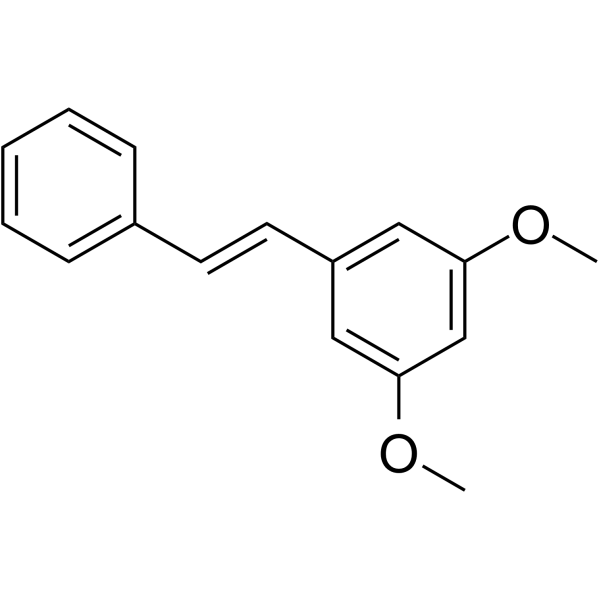
    trans-Pinosylvin dimethyl ether

    Cholinesterase (ChE) Neurological Disease Inflammation/Immunology
    trans-3,5-Dimethoxystilbene (trans-Pinosylvin dimethyl ether) is a natural stilbenoid metabolite. trans-3,5-Dimethoxystilbene acts as an acetylcholinesterase inhibitor with a IC50 of 9 μM against Electrophorus electricus acetylcholinesterase. trans-3,5-Dimethoxystilbene binds to acetylcholinesterase and blocks acetylcholine hydrolysis, thereby increasing acetylcholine levels in the cholinergic synaptic cleft. trans-3,5-Dimethoxystilbene can be used in the research of neurodegenerative diseases such as Alzheimer's disease .
    trans-3,5-Dimethoxystilbene
  • HY-164130

    Cholinesterase (ChE) Neurological Disease
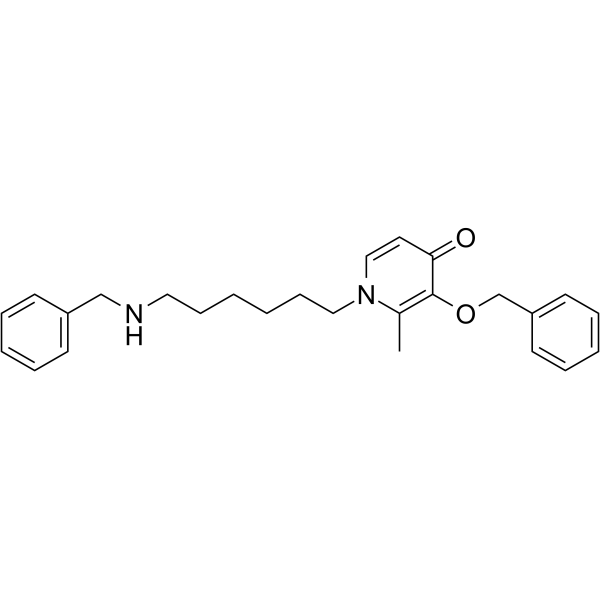
    AChE-IN-65 (Compound DABA_1) is a mixed inhibitor for acetylcholinesterase (AChE), with a Ki of 556.4 μM for Electrophorus electricus AChE.
    AChE-IN-65
  • HY-146668

    Cholinesterase (ChE) Neurological Disease
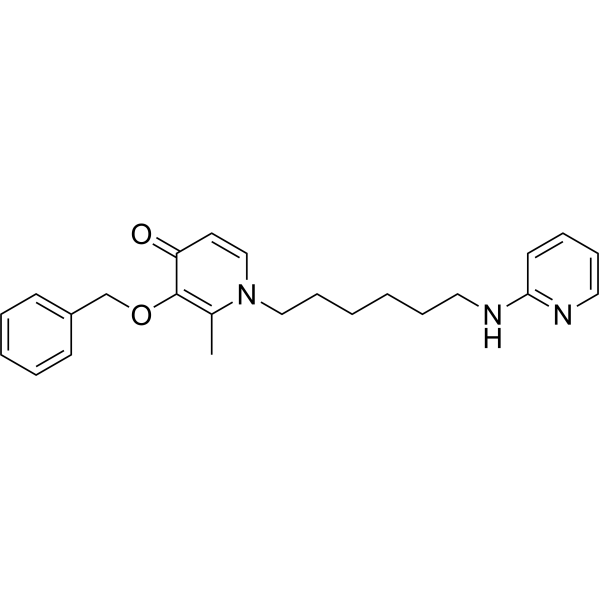
    AChE/BChE-IN-8 (Compound 5a) is an uncompetitive AChE and mixed BChE inhibitor with Ki values of 0.788 μM and 2.364 μM against Electrophorus electricus AChE (EeAChE) and equine BChE (eqBChE), respectively. AChE/BChE-IN-8 can cross the BBB and has low cytotoxicity .
    AChE/BChE-IN-8
  • HY-151885

    Cholinesterase (ChE) Monoamine Oxidase Neurological Disease
    Dual AChE-MAO B-IN-3 (compound C10) is a potent dual AChE/MAO-B inhibitior, with IC50 values of 0.58 and 0.41 μM, respectively. Dual AChE-MAO B-IN-3 is a dual-binding inhibitor bound to both the catalytic anionic site and peripheral anionic site of AChE. Dual AChE-MAO B-IN-3 can be used for Alzheimer’s disease (AD) research .
    Dual AChE-MAO B-IN-3
  • HY-175658

    Cholinesterase (ChE) Amyloid-β Tau Protein Neurological Disease
    AChE/BChE-IN-29 is an AChE/BChE inhibitor. AChE/BChE-IN-29 exhibits balanced dual cholinesterase inhibitory activity with IC50 values of 2.1 μM for Electrophorus electricus AChE (eeAChE) and 6.3 μM for equine serum butyrylcholinesterase (eqBChE). AChE/BChE-IN-29 effectively inhibits amyloid-β (42) aggregation and tau protein aggregation in E. coli cell models. AChE/BChE-IN-29 can be used for the study of Alzheimer’s disease (AD) .
    AChE/BChE-IN-29
  • HY-W278867R

    trans-Pinosylvin dimethyl ether (Standard)

    Reference Standards Cholinesterase (ChE) Neurological Disease
    trans-3,5-Dimethoxystilbene (Standard) is the analytical standard of trans-3,5-Dimethoxystilbene (HY-W278867). This product is intended for research and analytical applications. trans-3,5-Dimethoxystilbene (trans-Pinosylvin dimethyl ether) is a natural stilbenoid metabolite. trans-3,5-Dimethoxystilbene acts as an acetylcholinesterase inhibitor with a IC50 of 9 μM against Electrophorus electricus acetylcholinesterase. trans-3,5-Dimethoxystilbene binds to acetylcholinesterase and blocks acetylcholine hydrolysis, thereby increasing acetylcholine levels in the cholinergic synaptic cleft. trans-,5-Dimethoxystilbene can be used in the research of neurodegenerative diseases such as Alzheimer's disease .
    trans-3,5-Dimethoxystilbene (Standard)
  • HY-146669

    Cholinesterase (ChE) Neurological Disease
    BChE-IN-6 (compound 12) is a potent BChE inhibitor, with a Ki of 0.182 μM. BChE-IN-6 shows chelating capacity on Zn 2+. BChE-IN-6 can be used for Alzheimer’s disease (AD) research .
    BChE-IN-6
  • HY-N19855

    Geranicardic acid

    Cholinesterase (ChE) Neurological Disease
    Merulinic acid (Geranicardic acid) is an acetylcholinesterase (AChE) inhibitor with an IC50 >94 μM against electric eel-derived AChE. Merulinic acid can be used for the research of alzheimer’s disease .
    Merulinic acid
  • HY-181811

    Cholinesterase (ChE) GSK-3 Neurological Disease
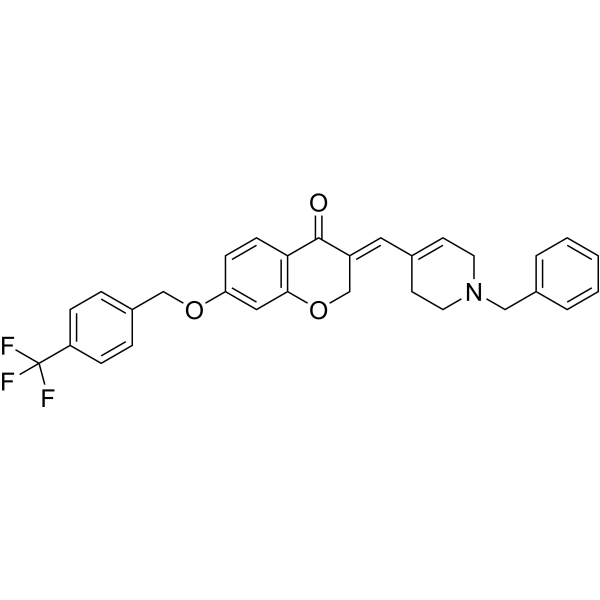
    PJ17 is a potent dual-target inhibitor of AChE and GSK-3β, with IC50 values of 8.84 μM and 4.19 μM, respectively. PJ17 shows no significant neurotoxic effect in primary cerebellar granule neuron cultures. PJ17 serves as a template for the design of multitarget drugs. PJ17 can be used for the research of Alzheimer's disease .
    PJ17

Inquiry Online

Your information is safe with us. * Required Fields.

Salutation


Country or Region *

Applicant Name *


Organization Name *

Department *


Email Address *


Product Name *

Cat. No.


Requested quantity *

Phone Number *


Remarks

Inquiry Online

Inquiry Information

Product Name:
Cat. No.:
Quantity:
MCE Japan Authorized Agent:

