5 Results for "

FAK-AKT signaling pathway

" in MedChemExpress (MCE) Product Catalog:
Products (5)

5 Results for "FAK-AKT signaling pathway" in MCE Product Catalog:

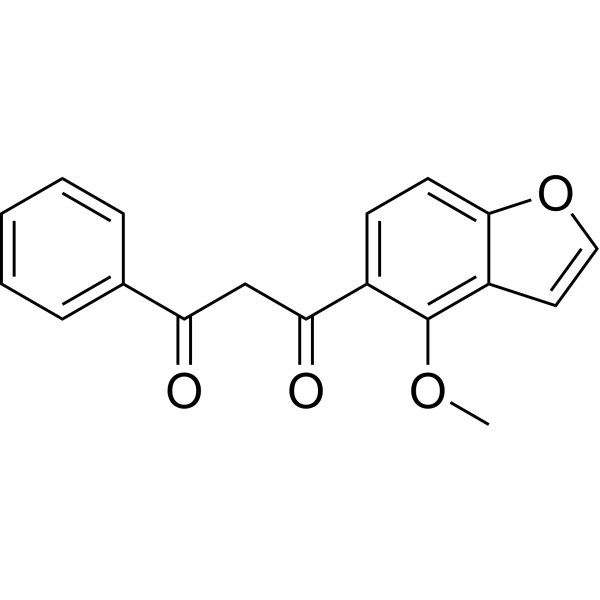
Cat. No.: HY-121811
CAS No.: 484-33-3
Purity:  99.81%
Synonyms: Lanceolatin C
Pongamol (Lanceolatin C) is an orally active flavonoid with an IC50 of 75 μM and a Ki of 58 μM against PTPase-1B, and an IC50 of 103.5 μM against intestinal α-Glycosidase. Pongamol reduces the release of IL‑1β, TNF‑α, COX‑2 and iNOS in cells, reverses the nuclear translocation of NF‑κB, and upregulates the levels of Beclin 1 and LC3 Ⅱ/LC3 Ⅰ. Pongamol promotes glucose uptake by increasing the level of GLUT4 on the surface of skeletal muscle cells. Pongamol inhibits epithelial-mesenchymal transition by suppressing the FAK/Akt-mTOR signaling pathway. Pongamol inhibits neuronal cytotoxicity, suppresses cell apoptosis and extends the lifespan of Caenorhabditis elegans by activating the MAPKs/Nrf2 signaling pathway. Pongamol exerts hypoglycemic effects in diabetic mouse models. Pongamol exhibits antibacterial activity. Pongamol alleviates oxidative stress, neuroinflammation, deposition and excessive phosphorylation of Tau Protein, and restores autophagy function in Alzheimer's disease mouse models by inhibiting the Akt/mTOR signaling pathway. Pongamol is applicable to research related to Alzheimer's disease, type 2 diabetes, non-small cell lung cancer and postprandial hyperglycemia .
loading...
    loading...
Cat. No.: HY-116497
CAS No.: 1627843-95-1
Target:  

FAK

Research Areas:  

Cancer

PH11 is a novel focal adhesion kinase (FAK) inhibitor that rapidly induces apoptosis in TRAIL-resistant PANC-1 cells when combined with TRAIL, but has no effect on normal human fibroblasts. The study found that PH11 downregulates c-FLIP through inhibition of FAK and phosphatidylinositol-3-kinase (PI3K)/AKT pathways, thereby restoring the TRAIL apoptotic pathway, suggesting that this combination therapy may provide an attractive therapeutic strategy for the safe and effective treatment of pancreatic cancer. PH11 selectively inhibits c-FLIP expression by modulating upstream signaling pathways and may represent an innovative therapeutic strategy. Although further work is needed to fully elucidate the mechanism of PH11-induced TRAIL sensitization, we believe that our results will provide a new approach to target c-FLIP without the risk of interfering with caspase-8 processing, which could potentially lead to TRAIL resistance. This study also suggests a role for the FAK/AKT signaling pathway in regulating c-FLIP expression in TRAIL-induced apoptosis, and this understanding will provide important clues to control the resistance mechanism to optimize the potential of TRAIL-based pancreatic cancer treatment.
loading...
    loading...
Cat. No.: HY-P10984
CAS No.: 206536-96-1
FNIII14 is a β1-integrin inhibitory peptide. FNIII14 induces the conformational shift of β1-integrin from the active form to the inactive form, blocks integrin-mediated signaling pathways, disrupts the interaction between VLA-4 and fibronectin, inhibits the phosphorylation of FAK/Akt, suppresses cell adhesion, fibronectin fibril formation and chondrocyte proliferation, induces chondrocyte apoptosis and cartilage degeneration, upregulates the pro-apoptotic protein Bim, and binds to membrane-bound eEF1A. FNIII14 reversibly disrupts cell adhesion without reducing cell viability, accelerates adipocyte differentiation, and loosens tumor matrix architecture to enhance the permeability of nanotherapeutic agents. FNIII14 can be used in research related to neuroblastoma, pancreatic cancer, acute myeloid leukemia, colitis-associated colorectal cancer, osteoarthritis, and atherosclerosis .
loading...
    loading...
Cat. No.: HY-184902
CAS No.: 3110809-62-3
Target:  

FAK Akt Apoptosis

Research Areas:  

Cancer

FAK-IN-32 is an orally active, selective and highly potent FAK inhibitor (IC50 = 10.87 nM). FAK-IN-32 can induce cell cycle arrest at the G2/M phase, inhibit FAK-AKT signaling pathway activity, and promote apoptosis to some extent. FAK-IN-32 can be used for research on KRAS-mutant colorectal cancer .
loading...
    loading...
Cat. No.: HY-N17888
CAS No.: 135545-86-7
Ephemeranthol A is a phenanthrene compound with anticancer and anti-inflammatory activities. Ephemeranthol A exerts significant anti-inflammatory effects in macrophages by inhibiting the NF-κB and MAPK signaling pathways. Ephemeranthol A induces apoptosis and inhibits metastasis of lung cancer cells by suppressing the FAK/Akt signaling and EMT processes. Ephemeranthol A can be used for the research of acute and chronic inflammatory diseases and non-small cell lung cancer .
loading...
    loading...

