

1. Search Result
Search Result
Results for "

Food industry

" in MedChemExpress (MCE) Product Catalog:

248

Inhibitors & Agonists

2

Screening Libraries

40

Fluorescent Dyes

84

Biochemical Assay Reagents

2

Peptides

33

Natural
Products

38

Isotope-Labeled Compounds

10

Oligonucleotides

2

GMP Molecules

Cat. No. Product Name Target Research Areas Chemical Structure
  • HY-P2738

    MMP Inflammation/Immunology
    Collagen, Type I, from bovine achilles tendon are extracellular matrix proteins and show many applications in food, cosmetic, pharmaceutical and biomedical industries. This product is enzymatically hydrolyzed collagen peptide .
    Collagen, Type I, from bovine achilles tendon
  • HY-E70452

    MTG; MTGase; Protein-glutamine-γ-glutamyltransferase

    Biochemical Assay Reagents Others
    Microbial Transglutaminase (MTG) is a transglutaminase. Enzymes have high catalytic efficiency, high specificity, and mild operating conditions. It can be applied in industries such as pharmaceuticals, industrial production, food manufacturing, and aquaculture .
    Microbial Transglutaminase
  • HY-29350
    Polyglycerol-polyricinoleate
    3 Publications Verification

    PGPR

    Environmental Pollutants Biochemical Assay Reagents Others
    Polyglycerol-polyricinoleate (PGPR) is an emulsifier commonly used in the food industry. Polyglycerol-polyricinoleate can improve food texture and stability .
    Polyglycerol-polyricinoleate
  • HY-D0259

    Erythrosin extra bluish

    Environmental Pollutants Fluorescent Dye Others
    Erythrosine B is an artificial dye widely used in the food and textile industries. Erythrosine B is also a novel photosensitizer which has been used to develop animal models.
    Erythrosine B
  • HY-B2221
    Cellulose
    1 Publications Verification

    Pectin glycosidase

    Environmental Pollutants Endogenous Metabolite Others Cancer
    Cellulose (Pectin glycosidase) is a natural high molecular weight polysaccharide found in many plants and organisms. It is widely used in manufacturing industries, such as in paper making, textiles, food and medicine, etc. As a renewable resource, Cellulose is biodegradable and sustainable, and can also be used to manufacture chemicals such as Cellulose Esters, Cellulose Acetate and Cellulose Nitrate. In addition, Cellulose is often used as a food additive to increase the stability and quality of food.
    Cellulose
  • HY-W012995

    Biochemical Assay Reagents Others
    5-Hexen-1-ol, is an aromatic substance with aromas similar to substances such as herbs, tea and citrus. Therefore, it is usually used in the food, fragrance and perfume industries, and is widely used in the preparation of various food flavors, fragrances, taste flavoring agents, essential oils and cosmetics and other products.
    5-Hexen-1-ol
  • HY-N8407

    Fluorescent Dye Interleukin Related Reactive Oxygen Species (ROS) NF-κB JNK Keap1-Nrf2 SOD Inflammation/Immunology
    Carminic acid is a widely used and orally active natural red pigment that can be used in industries such as food, cosmetics, and pharmaceuticals. In addition, carminic acid has anti-inflammatory and antioxidant activities .
    Carminic acid
  • HY-Y1332

    L-Tartaric acid potassium sodium salt tetrahydrate; Potassium sodium tartrate tetrahydrate; Sodium potassium tartrate tetrahydrate

    Biochemical Assay Reagents Others
    Rochelle salt is an organic-inorganic compound commonly used as a catalyst and complexing reagent. It can be used to catalyze or promote certain chemical reactions, and is widely used in batteries, pharmaceuticals and food industries. In addition, this compound is also used as a substrate or intermediate in some biochemical reactions.
    Rochelle salt
  • HY-Y1131

    Ethyl (R)-3-hydroxybutanoate

    Biochemical Assay Reagents Others
    Ethyl (R)-3-hydroxybutyrate is an organic compound commonly used as a starting material for chiral chemical synthesis. It can be used in the preparation of medicines, spices, fine chemicals and food additives, etc., and is widely used in medicine, cosmetics and food industries. In addition, this compound is also used as a substrate or intermediate in some biochemical reactions
    Ethyl (R)-3-hydroxybutyrate
  • HY-Y0190

    Diethyl tartrate

    Environmental Pollutants Biochemical Assay Reagents Others
    (2R,3R)-Diethyl 2,3-dihydroxysuccinate (Diethyl tartrate) is utilized in food industry as a flavoring agent and acidity regulator and for this purpose is also used in wines .
    (2R,3R)-Diethyl 2,3-dihydroxysuccinate
  • HY-N7393

    Palatinitol

    Environmental Pollutants Lactate Dehydrogenase Metabolic Disease
    Isomalt (Palatinitol), a well-tolerated, non-toxic polyol and a protein-stabilizing excipient, stabilizes lactate dehydrogenase (LDH) moderately during freeze-drying, and performs better during storage. Isomalt is traditionally used as a sweetening agent in the food industry and as a tabletting excipient for pharmaceutical purposes .
    Isomalt
  • HY-W099547

    Liposome Others
    Dihexadecyl hydrogen phosphateIt is an organic compound belonging to phospholipids. It's often used as an emulsifier, which means it helps mix two substances together that don't usually mix well, such as oil and water. Dihexadecyl hydrogen phosphateIt has several applications in the food industry, especially in the production of processed foods where it improves texture and stability. Additionally, it has applications in the pharmaceutical industry where it can be used ain the generation of micelles, liposomes, and other types of artificial membranes.
    Dihexadecyl hydrogen phosphate
  • HY-N0420S2

    Wormwood acid-13C4

    Endogenous Metabolite Neurological Disease
    Succinic acid- 13C4 is the 13C labeled Succinic acid . Succinic acid is a potent and orally active anxiolytic agent. Succinic acid is an intermediate product of the tricarboxylic acid cycle. Succinic acid can be used as a precursor of many industrially important chemicals in food, chemical and pharmaceutical industries .
    Succinic acid-13C4
  • HY-W099601
    Sodium dodecanoate, 99-100%
    5+ Cited Publications

    Lauric acid sodium salt, 99-100%

    Environmental Pollutants Biochemical Assay Reagents Others
    Sodium LaurateIt is an organic compound belonging to fatty acids. It is the sodium salt of lauric acid, a medium-chain saturated fatty acid found in various animal and vegetable fats. Sodium LaurateCommonly used as surfactants, emulsifiers and cleaning agents in various industries such as cosmetics, personal care and detergent industries. It's found in a variety of products, including soaps, shampoos, toothpaste, and laundry detergent. Furthermore, it also has applications in the food industry where it is used as a food additive to improve texture and stability.
    Sodium dodecanoate, 99-100%
  • HY-W099570

    Environmental Pollutants Biochemical Assay Reagents Others
    Stearate sodiumIt is an organic compound belonging to fatty acids. It is the sodium salt of stearic acid, a saturated fatty acid commonly found in various animal and vegetable fats. Stearate sodiumCommonly used as surfactants, emulsifiers and detergents, it is widely used in the cosmetics, personal care and detergent industries. It's found in a variety of products, including soaps, shampoos, toothpaste, and laundry detergent. Also, it has applications in the food industry where it is used as a food additive to improve texture and shelf life.
    Stearate sodium
  • HY-E70445

    Biochemical Assay Reagents Others
    Chondroitinase AC II is a hydrolase. Enzymes have high catalytic efficiency, high specificity, and mild operating conditions. It can be applied in industries such as pharmaceuticals, industrial production, food manufacturing, and aquaculture .
    Chondroitinase AC II
  • HY-W067056

    Methyl (E)-3-phenylpropenoate

    Drug Derivative Inflammation/Immunology
    Methyl (E)-cinnamate (EMC), a phytochemical constituent isolated from Alpinia katsumadai Hayata, is a natural flavor compound with anti-inflammatory properties. Methyl (E)-cinnamate is widely used in the food and commodity industry .
    Methyl (E)-cinnamate
  • HY-W099644

    Ethyl erucate

    Biochemical Assay Reagents Others
    Ethyl docos-13-enoate is a colorless or pale yellow liquid with a sweet floral aroma, used as a flavoring agent in the food industry and as a flavor enhancer in perfumes and colognes. It is also found in some vegetable oils and is used as a surfactant and emulsifier in personal care products. Ethyl docos-13-enoate is a versatile compound used in various industries due to its pleasant odor and ability to mix ingredients together.
    Ethyl docos-13-enoate
  • HY-D0429

    Fluorescent Dye
    C.I. Pigment red 5 is the most important colorant used to add color or change the color of something and is chemically essentially unaffected by the carrier or medium into which it is incorporated. It can be widely used in textile, medicine, food, cosmetics, plastics, paint, ink, photography and paper industries.
    C.I. Pigment red 5
  • HY-W286073

    Biochemical Assay Reagents Others
    Hexaethylene glycol decyl ether is a non-ionic surfactant, which forms micelle, and can be utilized in the cosmetics, pharmaceuticals and food industries .
    Hexaethylene glycol decyl ether
  • HY-125715

    Endogenous Metabolite
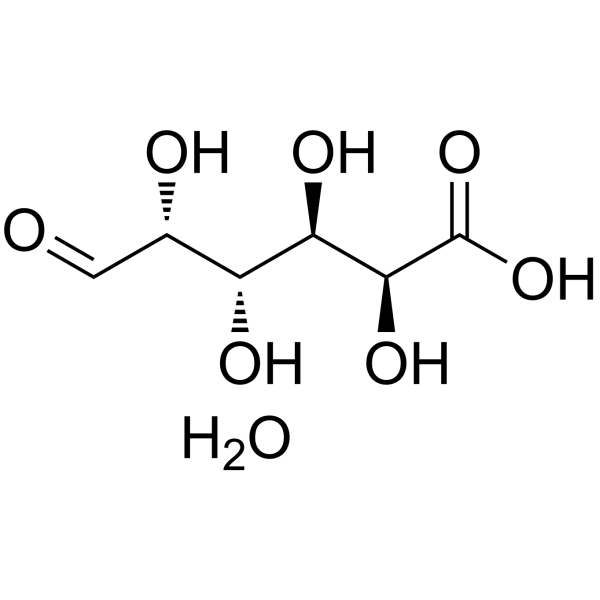
    Trigalacturonic acid is an important plant polysaccharide that has the activity of promoting plant cell growth and enhancing cell wall stability. Trigalacturonic acid can improve the ability of plants to adapt to adversity and is widely used as a nutrient in cell culture. Trigalacturonic acid is also used as a food additive with thickening and gelling functions, playing an important role in the food industry.
    Trigalacturonic acid
  • HY-N7851

    Others Infection Others Inflammation/Immunology
    Terpineol is a monoterpenoid alcohol compound that is widely found in plants, especially in the peels of citrus fruits. Terpineol has antioxidant, anti-inflammatory and antibacterial activities and is commonly used in the fragrance industry as an additive in food, beverages, cosmetics and perfumes .
    Terpineol
  • HY-W127384

    Biochemical Assay Reagents Others
    3-Decenoic acidIt is an organic compound belonging to the class of unsaturated fatty acids. It has a strong rancid smell and is commonly found in a variety of foods, such as dairy products and meat. 3-Decenoic acidIt has various applications in the pharmaceutical industry, especially as an intermediate in the synthesis of antibacterial agents such as antibiotics. In addition, it is used as a food preservative to prevent the growth of microorganisms.
    3-Decenoic acid
  • HY-141610

    Methyl enanthate

    Biochemical Assay Reagents Others
    Methyl heptanoate, commonly used as a flavoring and fragrance ingredient in the food and cosmetic industries, Methyl heptanoate is also used as a solvent for various substances, including resins, oils and waxes, in addition, it has been studied for its potential as a biofuel and polymer production application.
    Methyl heptanoate
  • HY-W089856

    Bacterial Fungal Antibiotic Infection Neurological Disease
    Chlorobutanol hemihydrate is an antimicrobial agent with oral activity, also possessing preservative effects. Chlorobutanol hemihydrate exhibits resistance to a variety of Gram-positive and Gram-negative bacteria, as well as several fungal spores and fungi, and is widely used in the food and cosmetics industries .
    Chlorobutanol hemihydrate
  • HY-D0531

    Fluorescent Dye
    C.I. Pigment red 123 is the most important colorant used to add color or change the color of something and is chemically essentially unaffected by the carrier or medium into which it is incorporated. It can be widely used in textile, medicine, food, cosmetics, plastics, paint, ink, photography and paper industries.
    C.I. Pigment red 123
  • HY-D0960

    Fluorescent Dye
    C.I. Solvent Blue 43 is the most important colorant used to add color or change the color of something and is chemically essentially unaffected by the carrier or medium into which it is incorporated. It can be widely used in textile, medicine, food, cosmetics, plastics, paint, ink, photography and paper industries.
    C.I. Solvent Blue 43
  • HY-P2728A

    Biochemical Assay Reagents Cardiovascular Disease
    Murine Antithrombin III is a blood coagulation inhibitory enzyme with high catalytic efficiency, high specificity, mild action conditions, etc., and can be used in the pharmaceutical industry, industrial production, food manufacturing, aquaculture and other industries .
    Murine Antithrombin III
  • HY-W344938

    Quinoline yellow

    Fluorescent Dye Others
    C.I. Acid yellow 3 is an anionic quinolinone dye that is commonly used as a food additive, but also in the cosmetic and pharmaceutical industries .
    C.I. Acid yellow 3
  • HY-P2738B

    MMP Inflammation/Immunology
    Collagen petide Type II is an extracellular matrix proteins and show many applications in food, cosmetic, pharmaceutical and biomedical industries. This product is enzymatically hydrolyzed collagen peptide .
    Collagen petide Type II
  • HY-N0420S3

    Wormwood acid-13C2

    Endogenous Metabolite Neurological Disease
    Butanedioic acid- 13C2 is the 13C labeled Succinic acid[1]. Succinic acid is a potent and orally active anxiolytic agent. Succinic acid is an intermediate product of the tricarboxylic acid cycle. Succinic acid can be used as a precursor of many industrially important chemicals in food, chemical and pharmaceutical industries[2][3].
    Succinic acid-13C2-1
  • HY-E70428

    Biochemical Assay Reagents Others
    D-Xylose dehydrogenase is a peptidase. Enzymes have high catalytic efficiency, high specificity, and mild operating conditions. It can be applied in industries such as pharmaceuticals, industrial production, food manufacturing, and aquaculture .
    D-Xylose dehydrogenase
  • HY-D0421

    Fluorescent Dye Others
    C.I. Solvent yellow 18 is a lipid-soluble fluorescent azo dye, which is widely used in industries such as textiles, medicine, food, cosmetics, plastics, paints, inks, photography and papermaking .
    C.I. Solvent yellow 18
  • HY-E70438

    Biochemical Assay Reagents Others
    Endoproteinase Pro-C is a hydrolase. Enzymes have high catalytic efficiency, high specificity, and mild operating conditions. It can be applied in industries such as pharmaceuticals, industrial production, food manufacturing, and aquaculture .
    Endoproteinase Pro-C
  • HY-E70426

    Biochemical Assay Reagents Others
    Polyphosphate kinase (RsPPK) is a kinase. Enzymes have high catalytic efficiency, high specificity, and mild operating conditions. It can be applied in industries such as pharmaceuticals, industrial production, food manufacturing, and aquaculture .
    Polyphosphate kinase (RsPPK)
  • HY-E70454

    Neuronal Transglutaminase; TGy; TG6

    Biochemical Assay Reagents Others
    Human epidermal transglutaminase (Neuronal Transglutaminase) is a transglutaminase. Enzymes have high catalytic efficiency, high specificity, and mild operating conditions. It can be applied in industries such as pharmaceuticals, industrial production, food manufacturing, and aquaculture .
    Human neuronal transglutaminase
  • HY-E70436

    TG1; TGase 1

    Biochemical Assay Reagents Others
    Human keratinocyte transglutaminase (TG1) is a transglutaminase. Enzymes have high catalytic efficiency, high specificity, and mild operating conditions. It can be applied in industries such as pharmaceuticals, industrial production, food manufacturing, and aquaculture .
    Human keratinocyte transglutaminase
  • HY-E70439

    TG3; TGase 3

    Biochemical Assay Reagents Others
    Human epidermal transglutaminase (TG3) is a transferase. Enzymes have high catalytic efficiency, high specificity, and mild operating conditions. It can be applied in industries such as pharmaceuticals, industrial production, food manufacturing, and aquaculture .
    Human epidermal transglutaminase
  • HY-E70437

    Tissue-type transglutaminase; TG2; TGase 2

    Biochemical Assay Reagents Others
    Guinea pig liver transglutaminase (Tissue-type transglutaminase) is an exoenzyme. Enzymes have high catalytic efficiency, high specificity, and mild operating conditions. It can be applied in industries such as pharmaceuticals, industrial production, food manufacturing, and aquaculture .
    Guinea pig liver transglutaminase
  • HY-B2221S1

    Isotope-Labeled Compounds Endogenous Metabolite Others
    U- 13C Cellulose from chicory is the 13C labeled Cellulose (HY-B2221). Cellulose (Pectin glycosidase) is a natural high molecular weight polysaccharide found in many plants and organisms. It is widely used in manufacturing industries, such as in paper making, textiles, food and medicine, etc. As a renewable resource, Cellulose is biodegradable and sustainable, and can also be used to manufacture chemicals such as Cellulose Esters, Cellulose Acetate and Cellulose Nitrate. In addition, Cellulose is often used as a food additive to increase the stability and quality of food .
    U-13C Cellulose from chicory
  • HY-D0405

    Fluorescent Dye
    C.I. Pigment yellow 74 is the most important colorant used to add color or change the color of something and is chemically essentially unaffected by the carrier or medium into which it is incorporated. It can be widely used in textile, medicine, food, cosmetics, plastics, paint, ink, photography and paper industries.
    C.I. Pigment yellow 74
  • HY-135055

    Biochemical Assay Reagents Others
    Magnesium lactate is a magnesium additive, which is used in food, beverages and pharmaceutical industries .
    Magnesium lactate
  • HY-W099586

    Myristic acid ethyl ester

    Environmental Pollutants Others
    Ethyl tetradecanoate, which is an ester formed by the condensation of ethanol and myristic acid, is commonly used as a flavoring agent and fragrance in the food and cosmetic industries.
    Ethyl tetradecanoate
  • HY-W127524

    Biochemical Assay Reagents Others
    8-Methylnonanoic acidIt is an organic compound belonging to fatty acids. It has a faint waxy smell and is commonly found in a variety of foods, such as cheese and butter. 8-Methylnonanoic acidIt has various applications in the chemical and pharmaceutical industries, especially as an intermediate in the synthesis of various chemicals and pharmaceuticals. In addition, it can also be used as a flavoring agent in food.
    8-Methylnonanoic acid
  • HY-W142663

    Endogenous Metabolite
    Bisphenol M is a synthetic organic compound with antioxidant activity. Bisphenol M is commonly used in industry to make plastics and resins, and is used as a stabilizer and preservative in cosmetics. Bisphenol M can also be used in certain food packaging materials to improve product durability and safety.
    Bisphenol M
  • HY-B2221S

    Isotope-Labeled Compounds Endogenous Metabolite Others
    U- 13C Cellulose high DP from potato is the 13C labeled Cellulose (HY-B2221). Cellulose (Pectin glycosidase) is a natural high molecular weight polysaccharide found in many plants and organisms. It is widely used in manufacturing industries, such as in paper making, textiles, food and medicine, etc. As a renewable resource, Cellulose is biodegradable and sustainable, and can also be used to manufacture chemicals such as Cellulose Esters, Cellulose Acetate and Cellulose Nitrate. In addition, Cellulose is often used as a food additive to increase the stability and quality of food .
    U-13C Cellulose high DP from potato
  • HY-D0488

    Fluorescent Dye
    C.I. Pigment orange 36 is the most important colorant used to add color or change the color of something and is chemically essentially unaffected by the carrier or medium into which it is incorporated. It can be widely used in textile, medicine, food, cosmetics, plastics, paint, ink, photography and paper industries.
    C.I. Pigment orange 36
  • HY-D0686

    Fluorescent Dye
    C.I. Pigment red 221 is the most important colorant used to add color or change the color of something and is chemically essentially unaffected by the carrier or medium into which it is incorporated. It can be widely used in textile, medicine, food, cosmetics, plastics, paint, ink, photography and paper industries.
    C.I. Pigment red 221
  • HY-D0450

    Fluorescent Dye
    C.I. Pigment red 112 is the most important colorant used to add color or change the color of something and is chemically essentially unaffected by the carrier or medium into which it is incorporated. It can be widely used in textile, medicine, food, cosmetics, plastics, paint, ink, photography and paper industries.
    C.I. Pigment red 112
  • HY-D0486

    Fluorescent Dye
    C.I. Pigment violet 32 is the most important colorant used to add color or change the color of something and is chemically essentially unaffected by the carrier or medium into which it is incorporated. It can be widely used in textile, medicine, food, cosmetics, plastics, paint, ink, photography and paper industries.
    C.I. Pigment violet 32

Inquiry Online

Your information is safe with us. * Required Fields.

Salutation


Country or Region *

Applicant Name *


Organization Name *

Department *


Email Address *


Product Name *

Cat. No.


Requested quantity *

Phone Number *


Remarks

Inquiry Online

Inquiry Information

Product Name:
Cat. No.:
Quantity:
MCE Japan Authorized Agent:

