
15 Results for "

Fusarium species

" in MedChemExpress (MCE) Product Catalog:
Products (15)

15 Results for "Fusarium species" in MCE Product Catalog:

1
1 Cited Publications
Cat. No.: HY-122200
CAS No.: 39491-78-6
Synonyms: JS399-19
Target:  

Myosin Fungal

Research Areas:  

Infection

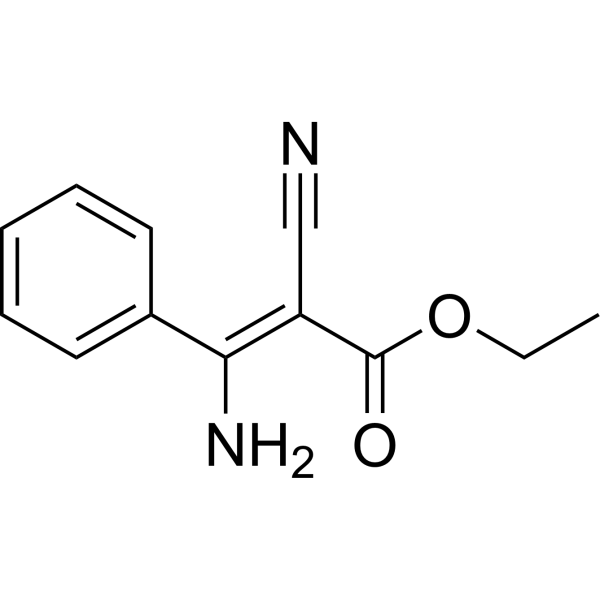
Phenamacril (JS399-19) inhibits activity of myosin I non-competitively with an IC50 of 360 nM through suppression of the ATPase activity, exhibits therefore an antifungal efficacy towards Fusarium species .
loading...
    loading...
Cat. No.: HY-N6723
CAS No.: 116355-84-1
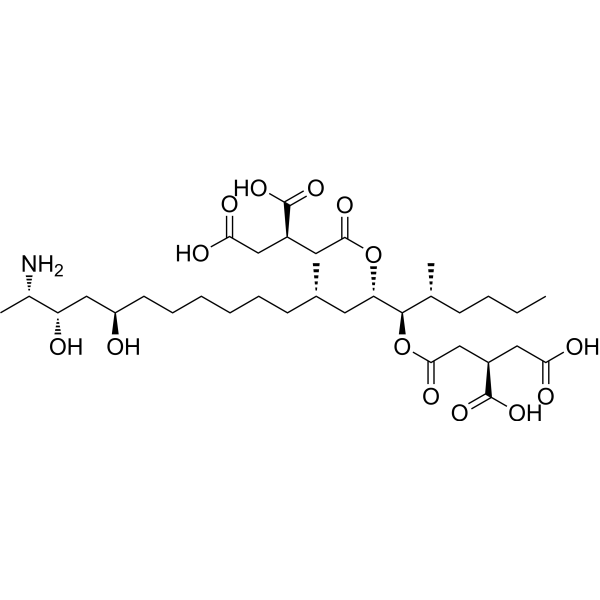
Fumonisin B2 is a selective ceramide synthase inhibitor and carcinogenic mycotoxin with toxicity comparable to that of Fumonisin B1 (HY-N6719). Fumonisin B2 inhibits de novo sphingolipid biosynthesis by blocking the amide bond formation between fatty acids and dihydrosphingosine, which leads to a massive intracellular accumulation of free dihydrosphingosine, altered sphingosine levels, subsequent inhibition of cell proliferation, and induction of cell death. Fumonisin B2 is used to investigate the pathogenesis of diseases associated with Fusarium verticillioides contamination, including equine leukoencephalomalacia, porcine pulmonary edema syndrome, human esophageal cancer, and rat hepatocellular carcinoma .
loading...
    loading...
Cat. No.: HY-N6741
CAS No.: 71030-11-0
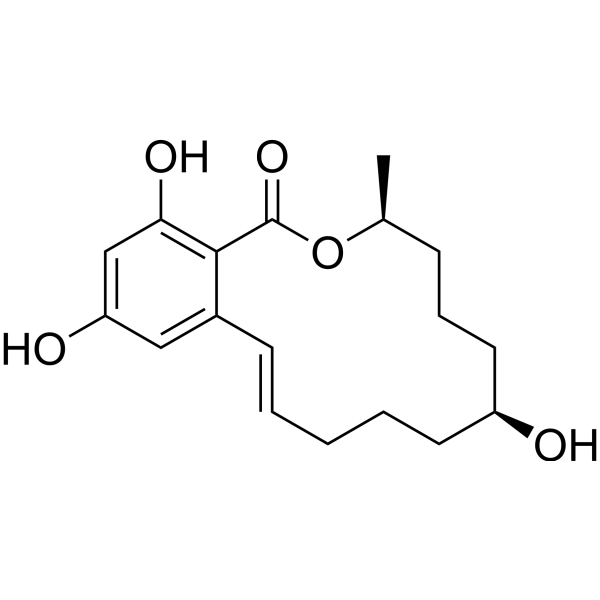
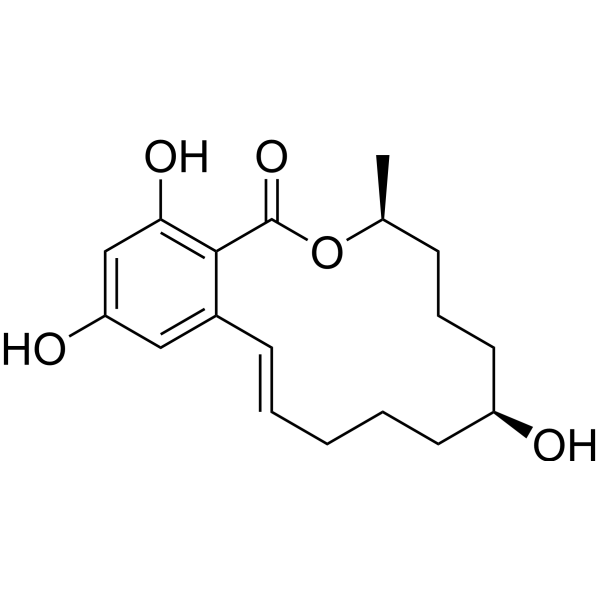
β-Zearalenol is a non-steroidal estrogenic mycotoxin synthesized by Fusarium species. β-Zearalenol potentially influences transcription and effects gene expression on translational level .
loading...
    loading...
Cat. No.: HY-130307
CAS No.: 3567-00-8
Purity:  98.19%
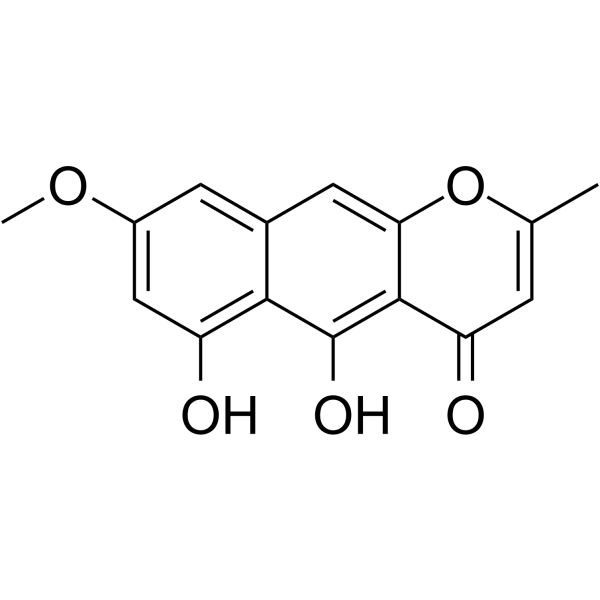
Rubrofusarin is an orange polyketide pigment from Fusarium graminearum . Rubrofusarin is also an active ingredient of the Cassia species and ameliorates chronic restraint stress (CRS) -induced depressive symptoms through PI3K/Akt signaling. Rubrofusarin has anticancer, antibacterial, and antioxidant effects .
loading...
    loading...
Cat. No.: HY-N6706
CAS No.: 11113-62-5
Enniatin complex is a mixture of cyclohexadepsipeptides isolated largely from Fusarium species of fungi, and has ionophoric, antibiotic, and in vitro hypolipidaemic properties. Enniatin complex inhibits enzymes like acyl-CoA: cholesterol acyl transferase and induces apoptosis in several cancer lines .
loading...
    loading...
Cat. No.: HY-122200R
CAS No.: 39491-78-6
Synonyms: JS399-19 (Standard)
Research Areas:  

Infection

Phenamacril (Standard) is the analytical standard of Phenamacril. This product is intended for research and analytical applications. Phenamacril (JS399-19) inhibits activity of myosin I non-competitively with an IC50 of 360 nM through suppression of the ATPase activity, exhibits therefore an antifungal efficacy towards Fusarium species .
loading...
    loading...
Cat. No.: HY-N12982
CAS No.: 21391-99-1
α-Calacorene is a sesquiterpene that can be isolated from Réunion vetiver oil .
loading...
    loading...
Cat. No.: HY-122785
CAS No.: 156856-31-4
Target:  

Fungal

Research Areas:  

Infection

Fusapyrone is a broad-spectrum antifungal metabolite first isolated from Fusarium species. It has been investigated for use in the control of postharvest crop diseases such as inhibiting the growth of ochratoxin-producing strains of Aspergillus section Nigri in wine grapes.
loading...
    loading...
Cat. No.: HY-N6678R
CAS No.: 5975-78-0
Zearalanone (Standard) is the analytical standard of Zearalanone. This product is intended for research and analytical applications. Zearalenone is a nonsteroidal estrogenic mycotoxin produced by Fusarium species, which colonizes several grains. Zearalenone has low acute toxicity and carcinogenicity. Due to its agonistic effect on the estrogen receptor, Zearalenone exhibits distinct estrogenic and anabolic properties in several animal species, resulting in severe effects on the reproductive system .
loading...
    loading...
Cat. No.: HY-N6741R
CAS No.: 71030-11-0
β-Zearalenol (Standard) is the analytical standard of β-Zearalenol. This product is intended for research and analytical applications. β-Zearalenol is a non-steroidal estrogenic mycotoxin synthesized by Fusarium species. β-Zearalenol potentially influences transcription and effects gene expression on translational level .
loading...
    loading...
Cat. No.: HY-W402074
CAS No.: 16275-44-8
Synonyms: Butenolide
5-Acetamide-Butenolide (Butenolide) is a mycotoxin with pro-oxidant activity, which is found in Fusarium. 5-Acetamide-Butenolide disrupts the mitochondrial membrane potential in primary neonatal rat cardiomyocytes. 5-Acetamide-Butenolide also induces the production of thiobarbituric acid reactive substances (TBARS) in isolated rat myocardial mitochondria. 5-Acetamide-Butenolide increases the production of reactive oxygen species (ROS), decreases the levels of GSH and reduces the viability of HepG2 cells .
loading...
    loading...
Cat. No.: HY-N6678S1
Zearalanone- 13C18 is the 13C-labeled Zearalanone (HY-N6678). Zearalenone is a nonsteroidal estrogenic mycotoxin produced by Fusarium species, which colonizes several grains. Zearalenone has low acute toxicity and carcinogenicity. Due to its agonistic effect on the estrogen receptor, Zearalenone exhibits distinct estrogenic and anabolic properties in several animal species, resulting in severe effects on the reproductive system .
loading...
    loading...
Cat. No.: HY-N6741S
β-Zearalenol- 13C18 is the 13C-labeled β-Zearalenol. β-Zearalenol is a non-steroidal estrogenic mycotoxin synthesized by Fusarium species. β-Zearalenol potentially influences transcription and effects gene expression on translational level .
loading...
    loading...
Cat. No.: HY-184388
Research Areas:  

Infection

Antifungal agent-168 is an antifungal agent with broad-spectrum inhibitory activity against a variety of pathogenic fungi. Antifungal agent-168 interacts with β-glucan in the cell wall of Botrytis cinerea, disrupting the physiological functions of the cell wall. Antifungal agent-168 damages the hyphal cell membrane, causes electrolyte leakage, and promotes ROS release to accelerate fungal death. Antifungal agent-168 can be used in studies related to Botrytis cinerea infection .
loading...
    loading...
Cat. No.: HY-N19145
CAS No.: 19870-30-5
Tuliposide A is a glycoside precursor compound derived from Tulipa gesneriana L. Tuliposide A exists in two spontaneously interconvertible isomers, and can release glucose via hydrolysis or enzymatic decomposition to generate the active intermediate Tulipaline A. Tuliposide A produces hydrolysates that suppress infection and expansion of Fusarium oxysporum, trigger cutaneous contact irritation, and lower the viability of in vitro plant calli. Tuliposide A can be used in studies related to fungal infections and dermatitis .
loading...
    loading...
  • 1

