15 Results for "

GST enzymes

" in MedChemExpress (MCE) Product Catalog:
Products (15)

15 Results for "GST enzymes" in MCE Product Catalog:

4
4 Cited Publications
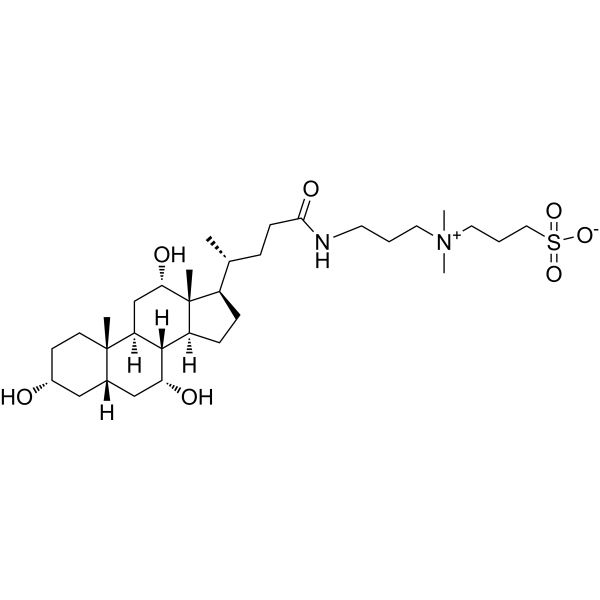
Cat. No.: HY-15435
CAS No.: 75621-03-3
Purity:  99.91%
Research Areas:  

Others

CHAPS is a cholic acid-derived, sulfobetaine-type zwitterionic detergent and micelle-forming agent. CHAPS exhibits properties of weak cationic or nonionic surfactants in different solution systems, undergoes micellization, and forms small, loose hydrophilic aggregates that are temperature-dependent. CHAPS stabilizes mononucleosomes under different ionic strengths, reduces nucleosome sequence specificity, promotes sliding of histone cores along DNA, solubilizes Tamm-Horsfall protein to reduce its interference with urinary exosome isolation, and maintains vesicle structure and the activity of related proteins at the same time. CHAPS is used to recover native folded fusion proteins, enhance the binding capacity of GST fusion proteins, and restore GST enzyme activity. However, CHAPS cannot refold proteins denatured by urea, guanidine hydrochloride or heat, nor can it construct the structure of intrinsically disordered proteins. CHAPS is commonly used in research on the separation and purification of membrane proteins .
loading...
    loading...
4
4 Cited Publications
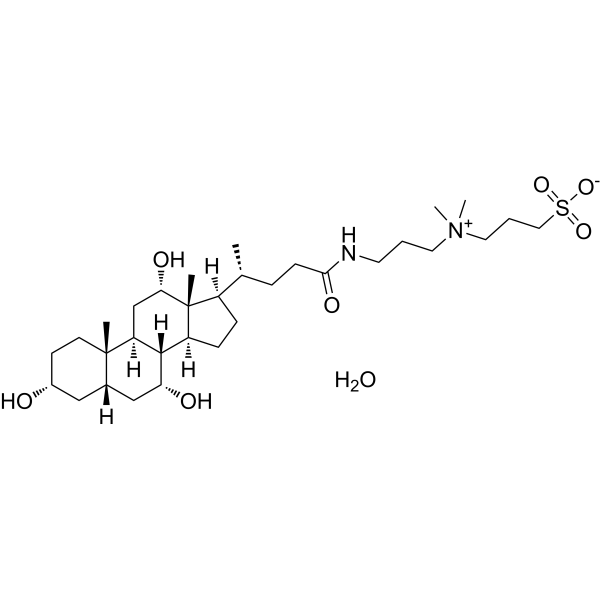
Cat. No.: HY-15435A
CAS No.: 331717-45-4
Purity:  ≥98.0%
CHAPS hydrate is a cholic acid-derived, sulfobetaine-type zwitterionic detergent and micelle-forming agent. CHAPS hydrate exhibits properties of weak cationic or nonionic surfactants in different solution systems, undergoes micellization, and forms small, loose hydrophilic aggregates that are temperature-dependent. CHAPS hydrate stabilizes mononucleosomes under different ionic strengths, reduces nucleosome sequence specificity, promotes sliding of histone cores along DNA, solubilizes Tamm‑Horsfall protein to reduce its interference with urinary exosome isolation, and maintains vesicle structure and the activity of related proteins at the same time. CHAPS hydrate is used to recover native folded fusion proteins, enhance the binding capacity of GST fusion proteins, and restore GST enzyme activity. However, CHAPS hydrate cannot refold proteins denatured by urea, guanidine hydrochloride or heat, nor can it construct the structure of intrinsically disordered proteins. CHAPS hydrate is commonly used in research on the separation and purification of membrane proteins .
loading...
    loading...
2
2 Cited Publications
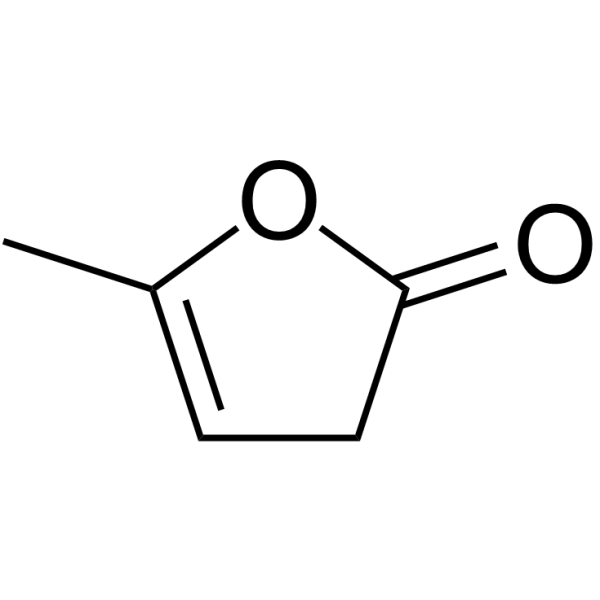
Cat. No.: HY-N0548
CAS No.: 591-12-8
α-Angelica lactone is a naturally occurring anticarcinogen and an vinylogous nucleophile. α-Angelica lactone can give the chiral δ-amino γ,γ-disubstituted butenolide carbonyl derivatives and exhibitselectrophilic trapping at the γ-carbon. α-Angelica lactone exerts strong chemoprotective effects by selective enhancement of glutathione-S-thansferase (GST) and UDP-glucononosyltransferase (UGT) detoxification enzymes .
loading...
    loading...
2
2 Cited Publications
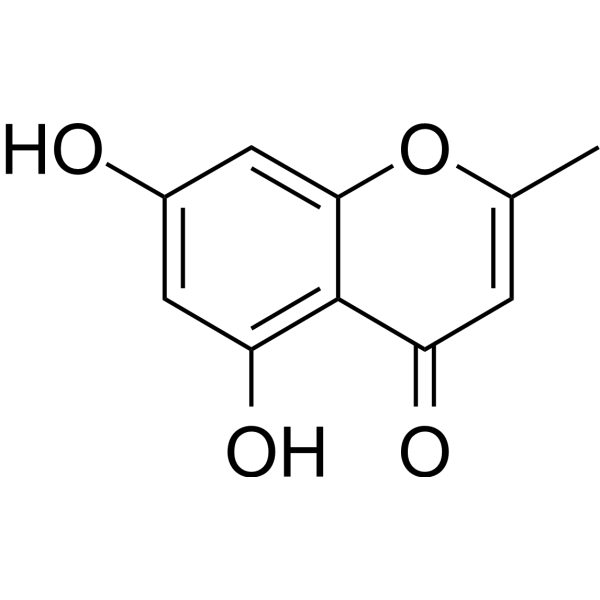
Cat. No.: HY-N3029
CAS No.: 1013-69-0
Noreugenin is a phenolic compound found in Calea uniflora Less. Noreugenin inhibits myeloperoxidase activity and reduces levels of proinflammatory cytokines IL-1β and IL-17A levels in LPS (HY-D1056)-induced murine pleurisy model. Noreugenin reduces apoptosis and necrosis. Noreugenin reduces lipid peroxidation, and antioxidant enzyme (CAT, SOD, GST) activity. Noreugenin exhibits anti-inflammatory and antioxidant effects. Noreugenin can be used for the research of inflammatory conditions, such as pleurisy .
loading...
    loading...
Cat. No.: HY-W075903
CAS No.: 10534-89-1
Synonyms: Cobalt hexammine trichloride; Hexaamminecobalt trichloride
Hexaamminecobalt (III) chloride is an orally active cobalt coordination compound. Hexaamminecobalt (III) chloride restores the activities of liver antioxidant enzymes (SOD, Catalase) and detoxification enzyme GST. Hexaamminecobalt (III) chloride restores GSH content and reduces DAG. Hexaamminecobalt (III) chloride impairs renal function. Hexaamminecobalt (III) chloride exerts anti-carcinogenic effects in Diethylnitrosamine (HY-N7434)-induced hepatocarcinoma .
loading...
    loading...
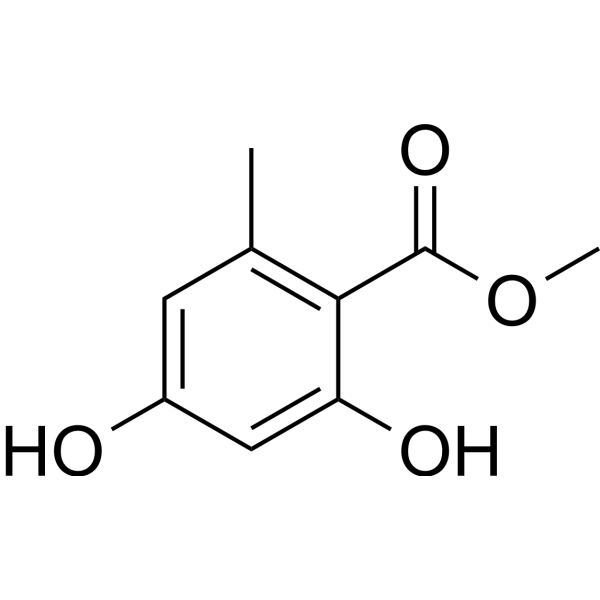
Cat. No.: HY-N3270
CAS No.: 3187-58-4
Methyl orsellinate acts as an antiviral agent and insecticide. Methyl orsellinate exhibits enzyme inhibitory activity, with an IC50 of 59.6 µM against porcine leukocyte 5-lipoxygenase (5-LOX); it inhibits soybean 15-lipoxygenase (15-LOX), and shows weak inhibitory activity against acetylcholinesterase (AChE) and glutathione S-transferase (GST). Methyl orsellinate displays contact toxicity against adult Drosophila suzukii. Methyl orsellinate shows anti-HSV-1 activity. Methyl orsellinate can be used in studies related to *Drosophila suzukii* infestation and HSV-1 infection .
loading...
    loading...
Cat. No.: HY-141439
CAS No.: 936475-62-6
TBE 31 is an orally active Keap1/Nrf2 pathway activator and NQO1 inducer with a Dm value of 1.1 nM for NQO1. TBE 31 binds to cysteine residues of Keap1, inhibits ubiquitination and degradation of Nrf2, thereby activating the expression of ARE-dependent genes. TBE 31 induces cytoprotective enzymes including NQO1 and GST isoforms, promotes Nrf2 accumulation, and upregulates Nrf2-regulated genes related to antioxidation and lipid metabolism. TBE 31 inhibits pro-inflammatory responses, formation of AFB1-DNA adducts, endoplasmic reticulum stress, cell apoptosis (apoptosis), hepatic fibrosis, oxidative stress, and the expression of ChREBP. TBE 31 reduces the number of tumors in a mouse model of ultraviolet-induced skin carcinogenesis. TBE 31 enhances nerve growth factor-induced neurite outgrowth. TBE 31 attenuates LPS-induced serum TNF-α levels and immobility time in mice. TBE 31 can be used in research related to liver cancer, skin cancer, inflammation-related depression, and non-alcoholic steatohepatitis .
loading...
    loading...
Cat. No.: HY-N0548R
CAS No.: 591-12-8
α-Angelica lactone (Standard) is the analytical standard of α-Angelica lactone. This product is intended for research and analytical applications. α-Angelica lactone is a naturally occurring anticarcinogen and an vinylogous nucleophile. α-Angelica lactone can give the chiral δ-amino γ,γ-disubstituted butenolide carbonyl derivatives and exhibitselectrophilic trapping at the γ-carbon. α-Angelica lactone exerts strong chemoprotective effects by selective enhancement of glutathione-S-thansferase (GST) and UDP-glucononosyltransferase (UGT) detoxification enzymes .
loading...
    loading...
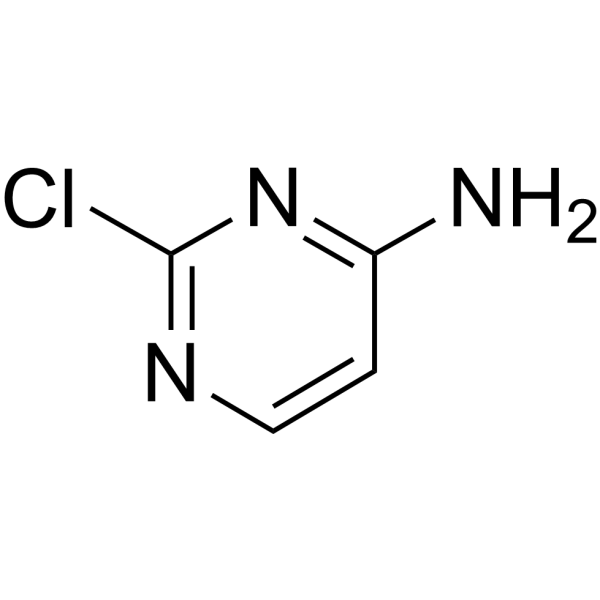
Cat. No.: HY-30139
CAS No.: 7461-50-9
4-Amino-2-chloropyrimidine is a pyrimidine derivative. 4-Amino-2-chloropyrimidine is a competitive inhibitor for AChE (Ki = 0.18 μM) and BChE (Ki = 1.324 μM). 4-Amino-2-chloropyrimidine fits in the binding pocket of 4BDS. 4-Amino-2-chloropyrimidine has high inhibitory activity on GST enzyme activity (IC50 = 0.037 μM, Ki = 0.047 μM) in vitro .
loading...
    loading...
Cat. No.: HY-162927
CAS No.: 1054506-59-0
Target:  

MDM-2/p53 Apoptosis

Research Areas:  

Cancer

p53-MDM2-IN-6 (Compound 10a), a LSM-83177 hydrazone analog, is a potent p53-MDM2 inhibitor with an IC50 value of 11.08 µg/mL. p53-MDM2-IN-6 arrests the cell cycle in the S phase and induces early and late Apoptosis with antiproliferative activity against HT29 cell lines with an IC50 value of 10.44 µg/mL. p53-MDM2-IN-6 inhibits p53-MDM2 interaction with increment in p-53 level and decrease the expression of GST enzymes. p53-MDM2-IN-6 is promising for research of colorectal cancer .
loading...
    loading...
Cat. No.: HY-W100026S
Galaxolide-d6 (mixture of diastereomers) (>80%) is the deuterium labeled Galaxolide (HY-W100026). Galaxolide can induce estrogenic activity (Estrogen Receptor/ERR), trigger oxidative stress and genotoxicity, and induce EROD and GST (Glutathione S-transferase) enzyme activity .
loading...
    loading...
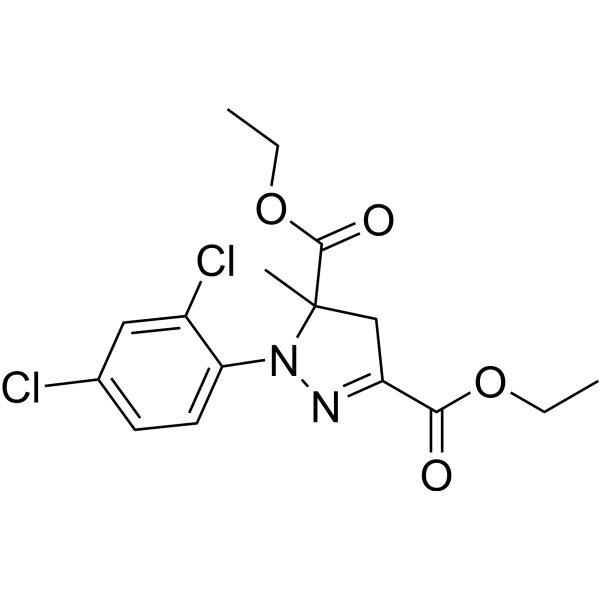
Cat. No.: HY-136376R
CAS No.: 135590-91-9
Research Areas:  

Others

Mefenpyr-diethyl (Standard) is the analytical standard of Mefenpyr-diethyl. This product is intended for research and analytical applications. Mefenpyr-diethyl is an herbicide safener. Mefenpyr-diethyl enhances plant tolerance to herbicides by inducing the expression of antioxidant enzymes such as GST. Mefenpyr-diethyl protects crops against herbicide injury .
loading...
    loading...
Cat. No.: HY-N3029R
CAS No.: 1013-69-0
Noreugenin (Standard) is the analytical standard of Noreugenin. This product is intended for research and analytical applications. Noreugenin is a phenolic compound found in Calea uniflora Less. Noreugenin inhibits myeloperoxidase activity and reduces levels of proinflammatory cytokines IL-1β and IL-17A levels in LPS (HY-D1056)-induced murine pleurisy model. Noreugenin reduces apoptosis and necrosis. Noreugenin reduces lipid peroxidation, and antioxidant enzyme (CAT, SOD, GST) activity. Noreugenin exhibits anti-inflammatory and antioxidant effects. Noreugenin can be used for the research of inflammatory conditions, such as pleurisy .
loading...
    loading...
Cat. No.: HY-181407
Herbicide safener-5 is a herbicide (Herbicide) safener. Herbicide safener-5 promotes plant growth recovery, enhances the activities of detoxifying enzymes (ALS, GST, CYP450, POD), and reduces SOD activity. Herbicide safener-5 is applicable to herbicide-related research .
loading...
    loading...
Cat. No.: HY-N18024
CAS No.: 210751-64-7
Kaempferol-3-O-glu-rha-glu is an insecticide. Kaempferol-3-O-glu-rha-glu inhibits activities of the enzymes CarE, GSTs, MFO, and AChE. Kaempferol-3-O-glu-rha-glu exhibits cytotoxicity and disrupts mitochondrial membrane potential and increases ROS production. Kaempferol-3-O-glu-rha-glu can be used for the infection .
loading...
    loading...
  • 1

