


29 Results for "

Glycerol metabolism

" in MedChemExpress (MCE) Product Catalog:
Products (29)

29 Results for "Glycerol metabolism" in MCE Product Catalog:

5
5 Cited Publications
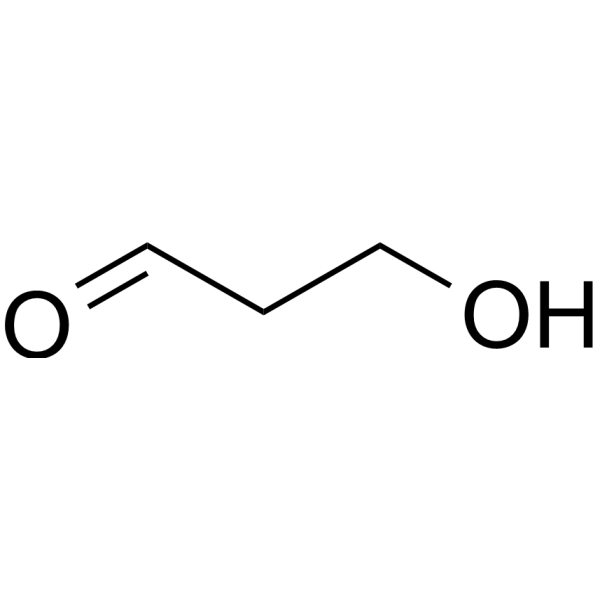
Cat. No.: HY-N8461
CAS No.: 2134-29-4
Synonyms: 3-Hydroxypropionaldehyde; 3-Hydroxypropanal
Reuterin is a broad-spectrum antimicrobial agent active against Gram positive and Gram negative bacteria, as well as yeasts, moulds and protozoa. Reuterin is produced by specific strains of Lactobacillus reuteri during anaerobic metabolism of glycerol. Reuterin also demonstrates potent antimicrobial activity against a broad panel of human and poultry meat campylobacter spp. Isolates .
loading...
    loading...
2
2 Cited Publications
Cat. No.: HY-P2733
CAS No.: 9046-28-0
Synonyms: GPO
Glycerol-3-phosphate oxidase, E. coli (GPO) is a key intermediate in glycerol metabolism. Glycerol-3-phosphate oxidase, E. coli is the skeleton of phospholipids in membrane lipids, and also a substrate in the respiratory chain. Glycerol-3-phosphate oxidase, E. coli produces electrons through oxidation. Glycerol-3-phosphate oxidase, E. coli is an enzyme with important functions in the field of biochemistry, and is widely used in medical testing and scientific research .
loading...
    loading...
2
2 Cited Publications
Cat. No.: HY-P2733B
CAS No.: 9046-28-0
Synonyms: GPO, Aerococcus viridans
Target:  

Endogenous Metabolite

Research Areas:  

Metabolic Disease

Glycerol-3-phosphate oxidase, Aerococcus viridans (GPO, Aerococcus viridans) is a key intermediate in glycerol metabolism. Glycerol-3-phosphate oxidase is the skeleton of phospholipids in membrane lipids, and also a substrate of respiratory chain. Glycerol-3-phosphate oxidase produces electrons through oxidation .
loading...
    loading...
2
2 Cited Publications
Cat. No.: HY-P2733C
CAS No.: 9046-28-0
Synonyms: GPO, microorganism
Target:  

Endogenous Metabolite

Research Areas:  

Metabolic Disease

Glycerol-3-phosphate oxidase, microorganism is an enzyme that catalyzes the oxidation of glycerol-3-phosphate to dihydroxyacetone phosphate, producing hydrogen peroxide in the process. Glycerol-3-phosphate oxidase is located in the mitochondria of microorganisms and is involved in the glycerol-3-phosphate cycle, regulating cellular energy metabolism. Glycerol-3-phosphate oxidase, microorganism can be used in conjunction with Lipoprotein Lipase and Glycerol Kinase to determine triglyceride levels .
loading...
    loading...
2
2 Cited Publications
Cat. No.: HY-P2733D
Target:  

Endogenous Metabolite

Research Areas:  

Metabolic Disease

Glycerol 3-phosphate Oxidase, Streptococcus thermophilus (EC 1.1.3.21), is an oxidoreductase that acts on the CH-OH group in donor molecules and uses oxygen as an acceptor. Glycerol 3-phosphate Oxidase participates in glycerophospholipid metabolism and utilizes a cofactor, FAD. The two substrates of Glycerol 3-phosphate Oxidase are sn-glycerol-3-phosphate and O2, while its two products are glycerophosphate and H2O2.
loading...
    loading...
1
1 Cited Publications
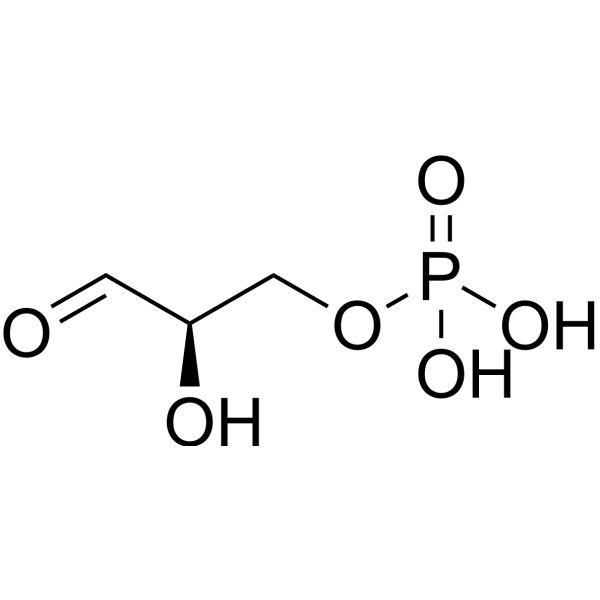
Cat. No.: HY-151223
CAS No.: 591-57-1
Purity:  99.84%
Synonyms: Triose phosphate
D-Glyceraldehyde 3-phosphate (Triose phosphate) is a key intermediate in glycolysis and gluconeogenesis, as well as a carbohydrate product of the Calvin cycle. D-Glyceraldehyde 3-phosphate participates in the biosynthesis of tryptophan and thiamine. D-Glyceraldehyde 3-phosphate is released as an aldehyde under the action of aldolase or triosephosphate isomerase. D-Glyceraldehyde 3-phosphate forms adducts with thiols .
loading...
    loading...
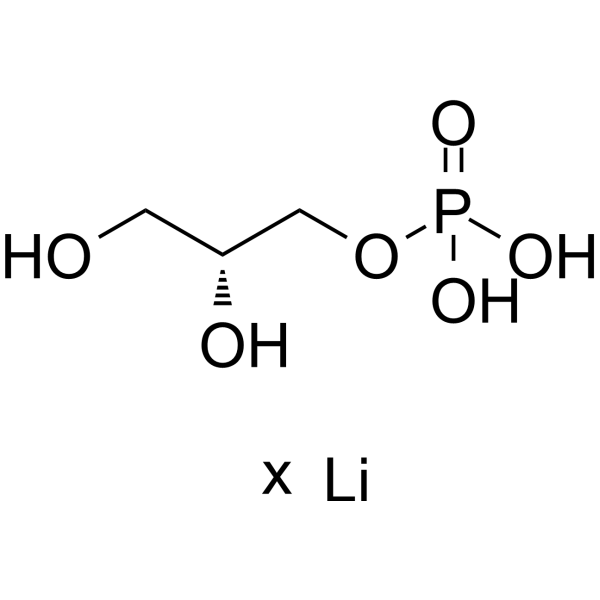
Cat. No.: HY-113128A
Purity:  99.90%
sn-Glycerol 3-phosphate lithium is an important intermediate in glycolysis and lipid metabolism. The cytosolic sn-Glycerol 3-phosphate dehydrogenase (GPDH) consumes NADH to generate sn-Glycerol 3-phosphate lithium from dihydroxyacetone phosphate (DHAP). Glyceroneogenesis is an important supplier of sn-Glycerol 3-phosphate lithium for lipid metabolism .
loading...
    loading...
Cat. No.: HY-113128
CAS No.: 17989-41-2
Purity:  ≥98.0%
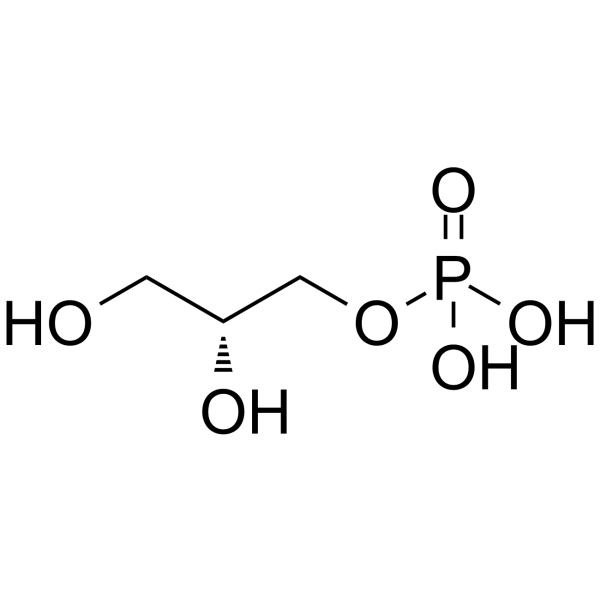
sn-Glycerol 3-phosphate is an important intermediate in glycolysis and lipid metabolism. The cytosolic sn-Glycerol 3-phosphate dehydrogenase (GPDH) consumes NADH to generate sn-Glycerol 3-phosphate from dihydroxyacetone phosphate (DHAP). Glyceroneogenesis is an important supplier of sn-Glycerol 3-phosphate for lipid metabolism .
loading...
    loading...
Cat. No.: HY-P2917
CAS No.: 9030-66-4
Synonyms: GyK
Glycerol kinase, microorganism (GyK) acts as a NR4A1 inhibitor with enzymatic activity. It directly binds to and inhibits the transcription factor NR4A1, thereby negatively regulating hepatic gluconeogenesis and reducing blood glucose levels. Glycerol kinase, microorganism positively regulates UCP1 expression via partial dependence on the β-adrenergic receptor-cAMP-CREB pathway, promotes browning of white adipose tissue and thermogenesis, and further modulates intracellular fatty acid composition and energy metabolism. In diabetic mouse models, overexpression of Glycerol kinase effectively antagonizes NR4A1-induced hyperglycemia, demonstrating potential for improving glucose homeostasis. Glycerol kinase, microorganism can be used for studies on diabetes and obesity .
loading...
    loading...
Cat. No.: HY-P2765
CAS No.: 9075-65-4
Synonyms: GPDH, rabbit muscle; α-Glycerophosphate dehydrogenase, rabbit muscle; Glycerol phosphate dehydrogenase, rabbit muscle
Research Areas:  

Metabolic Disease

Glycerol‑3‑phosphate dehydrogenase, rabbit muscle (GPDH; α-Glycerophosphate dehydrogenase; Glycerol phosphate dehydrogenase) is an NADH-dependent oxidoreductase derived from rabbit muscle that participates in glycolysis, gluconeogenesis, and the glycerol‑3‑phosphate shuttle metabolic pathway. Glycerol‑3‑phosphate dehydrogenase, rabbit muscle uses NADH as a reducing equivalent donor, and its substrate binding relies on the phosphate-binding site in the active center; it catalyzes the reversible reduction of dihydroxyacetone phosphate to L‑α‑glycerol‑3‑phosphate. The catalytic activity of the enzymatic reaction of Glycerol‑3‑phosphate dehydrogenase, rabbit muscle is regulated by pH and divalent metal ions. Glycerol‑3‑phosphate dehydrogenase, rabbit muscle can be used in metabolism-related studies .
loading...
    loading...
Cat. No.: HY-W127409
CAS No.: 20255-94-1
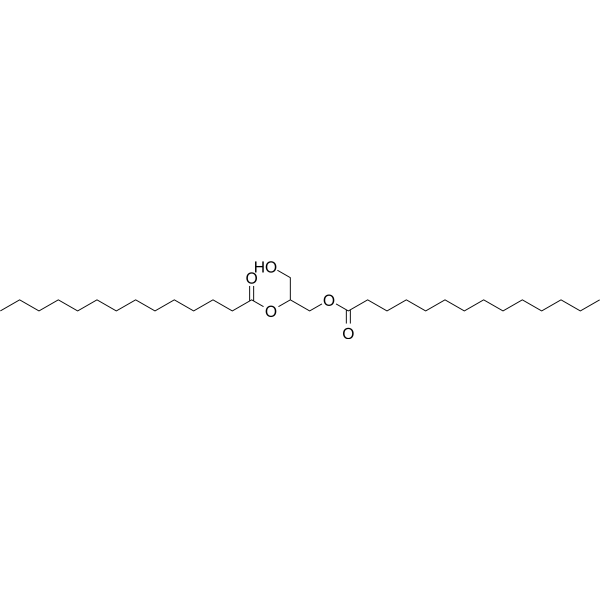
1,2-Dimyristoyl-rac-glycerol (C14:0) is a carboxylic acid ester, glycerolipid and diglyceride with an additional myristoyl group that facilitates interactions between proteins and lipids. Can be used as detergent or reagent. It plays a role in cell biology experiments involving the metabolism and metabolic pathways of glycerolipids. As a diglyceride, this substance consists of two fatty acid chains covalently bonded in the 1,2-form to a glycerol molecule. The diglyceride (DAG) study investigated the process by which DAG is depleted to inhibit fat accumulation. Reagent grade, for research use only.
loading...
    loading...
Cat. No.: HY-P2725
CAS No.: 9028-14-2
Research Areas:  

Metabolic Disease

Glycerol dehydrogenase is a polyol dehydrogenase that catalyzes the NAD-dependent oxidation of glycerol to dihydroxyacetone. Glycerol dehydrogenase can be used for glycerol metabolism in diverse microorganisms .
loading...
    loading...
Cat. No.: HY-P2765A
CAS No.: 9075-65-4
Synonyms: GPDH, microorganism; α-Glycerophosphate dehydrogenase, microorganism; Glycerol phosphate dehydrogenase, microorganism
Research Areas:  

Metabolic Disease

Glycerol-3-phosphate dehydrogenase, microorganism (GPDH; α-Glycerophosphate dehydrogenase; Glycerol phosphate dehydrogenase) is an NADH-dependent oxidoreductase derived from microorganism that participates in glycolysis, gluconeogenesis, and the glycerol‑3‑phosphate shuttle metabolic pathway. Glycerol-3-phosphate dehydrogenase, microorganism uses NADH as a reducing equivalent donor, and its substrate binding relies on the phosphate-binding site in the active center; it catalyzes the reversible reduction of dihydroxyacetone phosphate to L‑α‑glycerol‑3‑phosphate. The catalytic activity of the enzymatic reaction of Glycerol-3-phosphate dehydrogenase, microorganism is regulated by pH and divalent metal ions. Glycerol-3-phosphate dehydrogenase, microorganism can be used in metabolism-related studies .
loading...
    loading...
Cat. No.: HY-P2917B
CAS No.: 9030-66-4
Synonyms: GyK, Flavobacterium meningosepticum
Target:  

Endogenous Metabolite

Research Areas:  

Metabolic Disease

Glycerol kinase, Flavobacterium meningosepticum (GyK, Flavobacterium meningosepticum) is a thermostable glycerol kinase isolated from Flavobacterium meningosepticum. Glycerol kinase, Flavobacterium meningosepticum catalyzes the first step in glycerol metabolism by converting triol to glycerol-3-p (G3P). Glycerol kinase, Flavobacterium meningosepticum is essential for regulating glycerol uptake in cells that is independent of channels or facilitators and is useful for biochemical studies .
loading...
    loading...
Cat. No.: HY-P2733A
CAS No.: 9046-28-0
Synonyms: GPO, Pedio coccus sp.
Target:  

Endogenous Metabolite

Research Areas:  

Metabolic Disease

Glycerol-3-phosphate oxidase, Pedio coccus sp. (GPO, Pedio coccus sp.) is a key intermediate in glycerol metabolism. Glycerol-3-phosphate oxidase is the skeleton of phospholipids in membrane lipids, and also a substrate in the respiratory chain. Glycerol-3-phosphate oxidase produces electrons through oxidation .
loading...
    loading...
Cat. No.: HY-P2917A
CAS No.: 9030-66-4
Synonyms: GyK, Cellulomonas sp.
Target:  

Endogenous Metabolite

Research Areas:  

Others

Glycerol kinase, Cellulomonas sp. (EC 2.7.1.30) is a bacterial sugar kinase, is often used in biochemical studies. Glycerol kinase, Cellulomonas sp. catalyzes the first step of glycerol metabolism by transforming the triol into glycerol-3-P (G3P). Glycerol kinase, Cellulomonas sp. is crucial for regulating channel/facilitator-independent uptake of glycerol into the cell .
loading...
    loading...
Cat. No.: HY-158614
CAS No.: 2456348-64-2
Synonyms: 16:0-12-PAHSA-18:1-TG; TG(16:0/12-PAHSA/18:1)
Target:  

Endogenous Metabolite

Research Areas:  

Others

1-Palmitoyl-2-12-PAHSA-3-oleoyl-sn-glycerol (16:0-12-PAHSA-18:1-TG) is a FAHFAs-containing triglyceride that can be synthesized from isotope-labeled FAHFAs, whose decomposition can regulate intracellular FAHFAs levels, and is the major reservoir of FAHFAs in cells and tissues, revealing the activity of a new branch of TG and FAHFAs metabolism.
loading...
    loading...
Cat. No.: HY-113128B
CAS No.: 29849-82-9
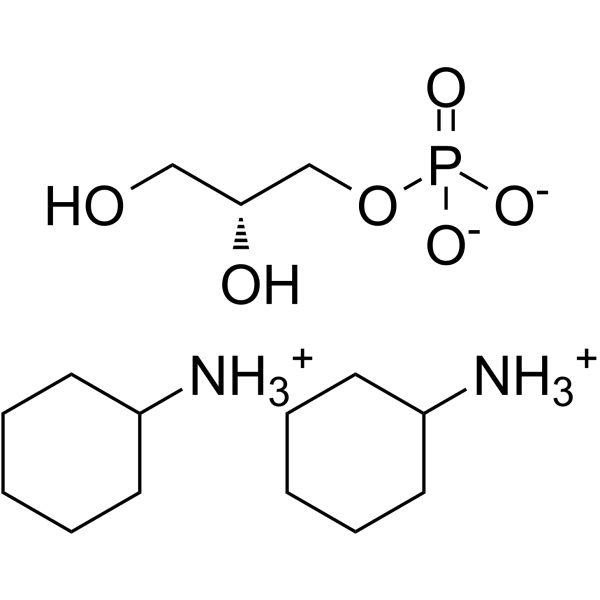
sn-Glycerol 3-phosphate biscyclohexylammonium salt is an important intermediate in glycolysis and lipid metabolism. The cytosolic sn-Glycerol 3-phosphate dehydrogenase (GPDH) consumes NADH to generate sn-Glycerol 3-phosphate biscyclohexylammonium salt from dihydroxyacetone phosphate (DHAP). Glyceroneogenesis is an important supplier of sn-Glycerol 3-phosphate biscyclohexylammonium salt for lipid metabolism .
loading...
    loading...
Cat. No.: HY-145537
CAS No.: 148691-18-3
Target:  

Endogenous Metabolite

Research Areas:  

Metabolic Disease

1,3-Dipalmitoyl-2-eicosapentaenoyl glycerol is a positional isomer of triglyceride that can affect lipid metabolism .
loading...
    loading...
Cat. No.: HY-P2745
CAS No.: 9025-85-8
Synonyms: GPC-PDE
Research Areas:  

Cancer

Glycerophosphocholine phosphodiesterase (GPC-PDE) catalyzes the degradation of low-glycerophosphocholine into free choline and glycerol-3-phosphate. Glycerophosphocholine phosphodiesterase participates in the regulation of choline phospholipid metabolism in breast cancer. Glycerophosphocholine phosphodiesterase can be used for research on diseases such as breast cancer .
loading...
    loading...

