
From 11:00 pm to 12:00 pm EST ( 8:00 pm to 9:00 pm PST ) on January 6th, the website will be under maintenance. We are sorry for the inconvenience. Please arrange your schedule properly.
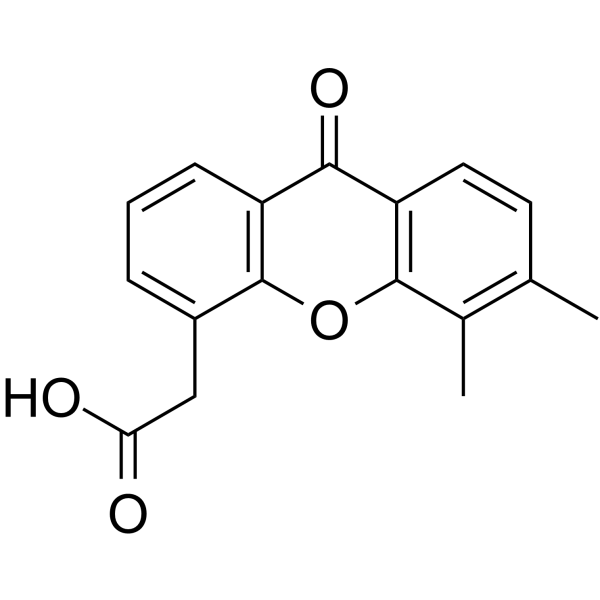
Vadimezan (DMXAA), the tumor vascular disrupting agent (tumor-VDA), is a murine agonist of the stimulator of interferon genes (STING) and also a potent inducer of type I IFNs and other cytokines. Vadimezan is unable to activate human STING. Vadimezan has anti-influenza virus H1N1-PR8 activities.
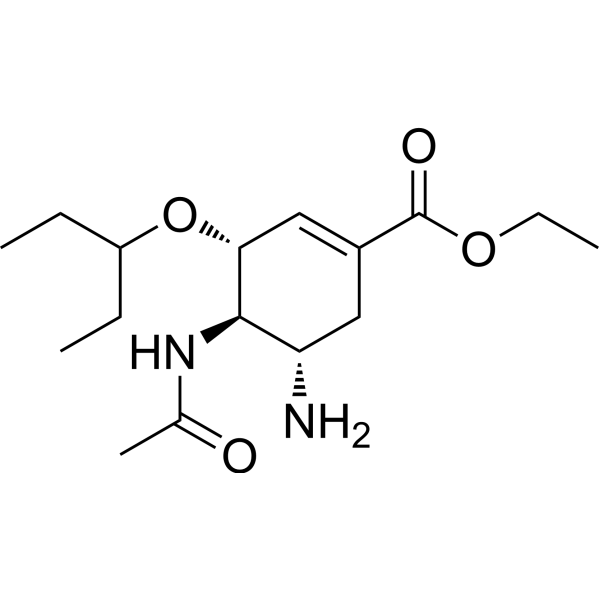
Oseltamivir (GS 4104) is an orally active influenza virus neuraminidase inhibitor (NAI). Oseltamivir inhibits influenza A/H3N2, A/H1N2, A/H1N1, and B viruses with mean IC50s of 0.67, 0.9, 1.34 and 13 nM, respectively .
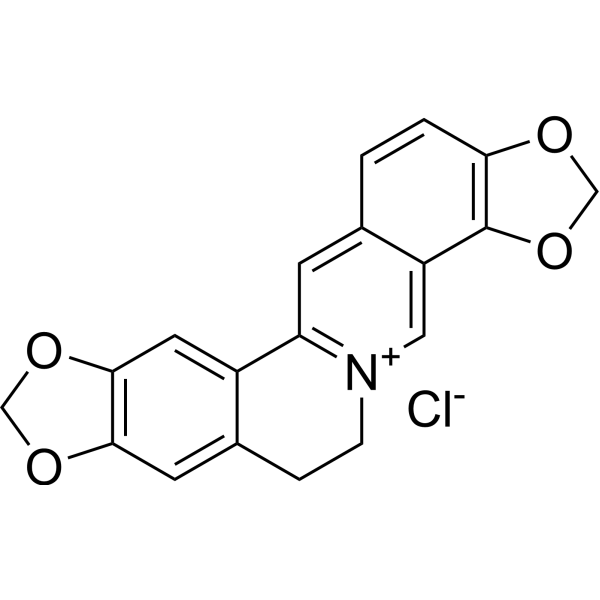
Coptisine chloride is an alkaloid from Chinese goldthread, and acts as an efficient uncompetitive IDO inhibitor with a Ki value of 5.8 μM and an IC50 value of 6.3 μM. Coptisine chloride is a potent H1N1 neuraminidase (NA-1) inhibitor with an IC50 of 104.6?μg/mL and can be used for influenza A (H1N1) infection.
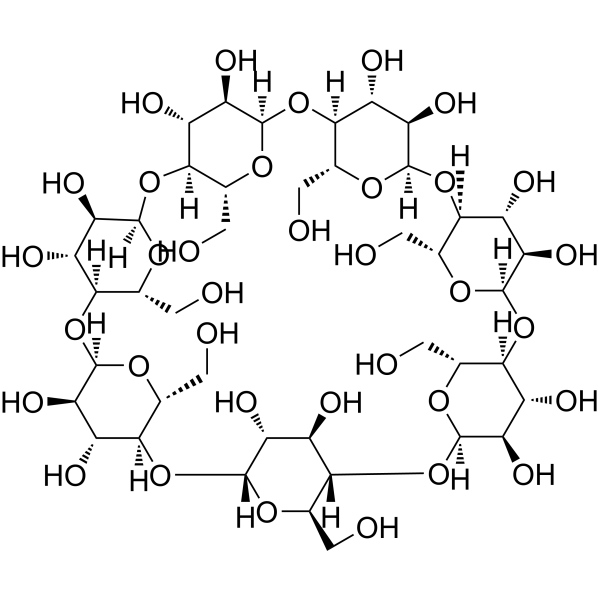
β-Cyclodextrin is a cyclic polysaccharide composed of seven units of glucose (α-D-glucopyranose) linked by α-(1,4) type bonds. β-Cyclodextrin has often been used to enhance the solubility of agents. β-Cyclodextrin has anti-influenza virus H1N1 activities.
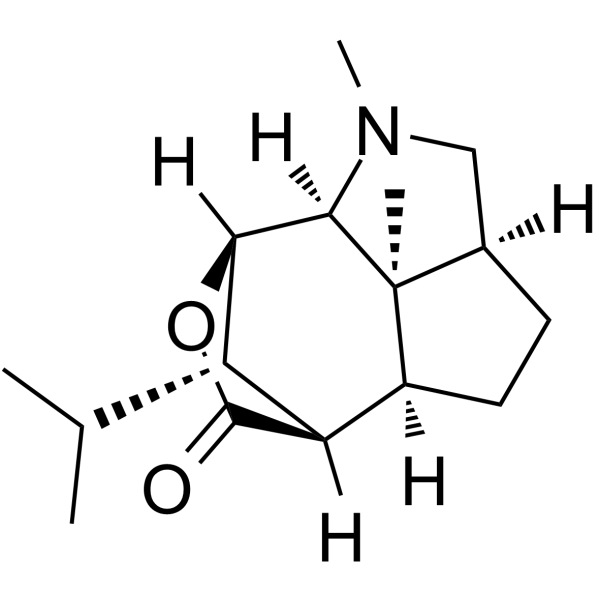
Dendrobine is an alkaloid isolated from Dendrobium nobile. Dendrobine possesses antiviral activity against influenza A viruses, with IC50s of 3.39 μM, 2.16 μM and 5.32 μM for A/FM-1/1/47 (H1N1), A/Puerto Rico/8/34 H274Y (H1N1) and A/Aichi/2/68 (H3N2), respectively. Dendrobine activates the JNK/p38/Nrf2 signaling pathway. Dendrobine exhibits antiviral, antitumor, anti-inflammatory, and neuroprotective properties .
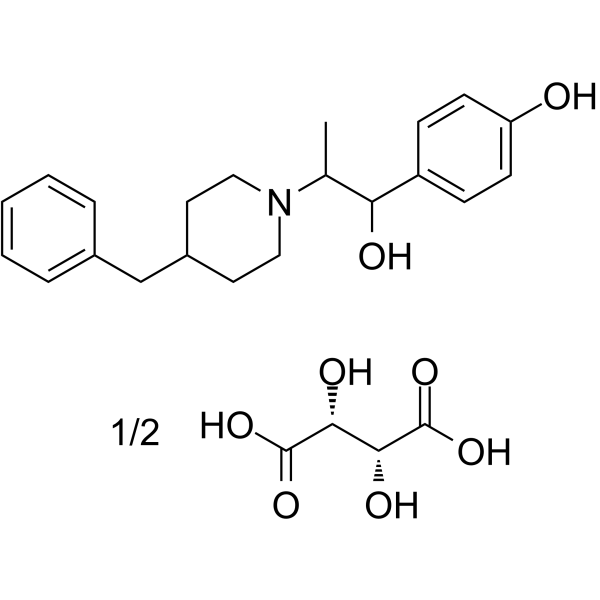
Ifenprodil (NP-120) tartrate, a cerebral vasodilator, is a noncompetitive NMDA receptor antagonist. Ifenprodil tartrate exerts high affinity at NR1A/NR2B receptors (IC50=0.34 μM) over 400-fold than at NR1A/NR2A receptors (IC50=146 μM) . Ifenprodil tartrate is an α1 adrenergic receptor antagonist. Ifenprodil tartrate inhibits GIRK (Kir3), reduces inward currents through the basal GIRK activity. Ifenprodil tartrate has reliable inhibitory effects against A/H1N1 strains (EC50 of 6.6 µM). Ifenprodil tartrate has neuroprotective, anticonvulsant and antinociceptive effects. Ifenprodil tartrate can be used for the study of cerebrovascular diseases and peripheral arterial obliterative disease .
Polygalasaponin F is an orally active triterpenoid saponin monomer. Polygalasaponin F downregulates the expression of Bax, p53, caspase-3, NF-κBp65 and MEK1; restores and upregulates the expression of Bcl-2; activates the PI3K/Akt signaling pathway; inhibits the phosphorylation of p38 MAPK, nuclear translocation of NF-κB, TLR4-mediated signaling pathway, mitophagy (Mitophagy) and ROS production; enhances cell viability and suppresses apoptosis (Apoptosis). Polygalasaponin F maintains mitochondrial function, alleviates Ca 2+ overload, upregulates pCREB and BDNF, preserves cell viability and inhibits the release of inflammatory cytokines. Polygalasaponin F alleviates lung injury induced by influenza A H1N1 and cerebral ischemia-reperfusion injury. Polygalasaponin F is applicable to researches related to Parkinson's disease, cerebral ischemia, pneumonia induced by influenza A H1N1, stroke and Alzheimer's disease .
VNT-101 is an orally active influenza A (IAV) inhibitor. VNT-101 disrupts NP-NP PPI to block NP oligomerization and destabilize the viral ribonucleoprotein (RNP) complex, with potent antiviral activity across multiple influenza A subtypes. VNT-101 exhibits EC50 values of 4-5 nM in cellular cytopathic effect (CPE) assay, 4-8 nM in neuraminidase (NA) assay, and 21-45 nM in RNP assay. VNT-101 demonstrates robust in vivo antiviral efficacy in mice infected with lethal H1N1 virus. VNT-101 can be used for the study of influenza A infection .
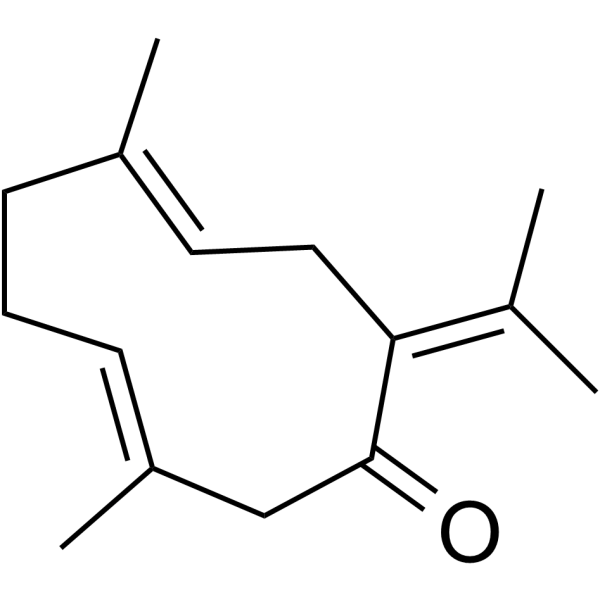
Germacrone is a sesquiterpene compound with multiple biological activities. Germacrone inhibits the H1N1 and H3N2influenza A virus and the influenza B virus. Germacrone blocks the progressionof arthritis by regulating Th1/Th2 balance and inhibiting NF-κB signaling. Germacrone can arrest the cell cycle at G0/G1 and G2/M phases and induce apoptosis in breast cancer cells. Germacrone inhibits 5α-reductase and has anti-androgenic effect. Germacrone has neuroprotective functions and can be used for the study of traumatic brain injury (TBI). Germacrone also has antioxidant activity .
Ifenprodil (NP-120), a cerebral vasodilator, is a noncompetitive NMDA receptor antagonist. Ifenprodil exerts high affinity at NR1A/NR2B receptors (IC50=0.34 μM) over 400-fold than at NR1A/NR2A receptors (IC50=146 μM) . Ifenprodil is an α1 adrenergic receptor antagonist. Ifenprodil inhibits GIRK (Kir3), reduces inward currents through the basal GIRK activity. Ifenprodil has reliable inhibitory effects against A/H1N1 strains (EC50 of 6.6 µM). Ifenprodil has neuroprotective, anticonvulsant and antinociceptive effects. Ifenprodil can be used for the study of cerebrovascular diseases and peripheral arterial obliterative disease .
Tubeimoside II is an orally active triterpenoid saponin and antiviral agent that binds to PACT/PRKRA with Kd values of 5.37 μM and 133.1 μM, respectively. Tubeimoside II inhibits oxidase-dependent EGFR activation and reduces TGF-β1-induced oxidative stress. Tubeimoside II activates the RIG-I signaling pathway and increases IFN-β secretion. Tubeimoside II suppresses TPA-induced ear edema, mouse sarcoma 180 growth, and TPA-induced skin tumor formation. Tubeimoside II exerts broad-spectrum antiviral activity against SARS-CoV-2, HCoV-OC43, and IAV-H1N1/FM1. Tubeimoside II can be used in research related to retinoblastoma, respiratory viral infections, skin tumors, and sarcoma 180 .
Firivumab (CT-P22; CT120) is a human IgG1 monoclonal influenza A virus hemagglutinin (Anti-IAV HA) antibody. Firivumab is capable of neutralizing H1N1, H5N1, H6N1, H6N2, H8N4, H8N8, H9N2 and H12N7. Firivumab shows protection against H1N1 virus in mice .
ML303 is a pyrazolopyridine influenza virus nonstructural protein 1 (NS1) antagonist (IC90 = 155 nM), with an EC50 of 0.7 μM for Influenza A virus H1N1 .
Oseltamivir-d3 is a deuterium labeled Oseltamivir. Oseltamivir is an influenza virus neuraminidase inhibitor (NAI). Oseltamivir inhibits influenza A/H3N2, A/H1N2, A/H1N1, and B viruses with mean IC50s of 0.67, 0.9, 1.34 and 13 nM, respectively. Anti-influenza A and B agent .
Nylidrin hydrochloride (Buphenine hydrochloride) is an orally active β-adrenergic agonist. Nylidrin hydrochloride antagonizes NR1A/2B NMDA receptors (IC50 = 0.18 μM in Xenopus oocytes). Nylidrin hydrochloride reduces the levels of NP, HA, and M1. Nylidrin hydrochloride has antiviral activity against multiple H1N1 subtype influenza A viruses. Nylidrin hydrochloride improves hemorrhagic shock and anti-allergic effects .
VIS-410 is an antibody inhibitor targeting the stem region of hemagglutinin (HA). VIS-410 inhibits influenza virus replication by blocking HA-mediated membrane fusion. VIS-410 exhibits broad-spectrum neutralization against influenza A viruses with group 1 and group 2 hemagglutinins, including subtypes such as H1N1, H3N2, H5N1, and H7N9 (H5N1 IC50 = 1.5 μg/mL). VIS-410 is applicable to research related to influenza A virus infection .
7,3',4'-Trihydroxy-3-benzyl-2H-chromene is an reversible noncompetitive neuraminidase (NA) inhibitor. 7,3',4'-Trihydroxy-3-benzyl-2H-chromene can be isolated from the dried heartwood of Caesalpinia sappan L. 7,3',4'-Trihydroxy-3-benzyl-2H-chromene has potent NAs inhibitory activities with IC50 values of 34.6 µM [H1N1], 39.5 µM [H3N2], and 50.5µM [H9N2], respectively. 7,3',4'-Trihydroxy-3-benzyl-2H-chromene can be used for the research of influenza virus .
Influenza HA (518-526) is an H-2d-restricted CTL epitope derived from influenza virus hemagglutinin. Influenza HA (518-526) is highly conserved across various H5N1, some H9N2, and H1N1 strains. Influenza HA (518-526) binds to the mouse MHC class I allele K d to form a complex, which is then recognized by specific CD8 + T cells. Influenza HA (518-526) is an immunodominant epitope in influenza-infected BALB/c mice, and it stimulates CD8 + T cells to secrete IFN-γ to induce a robust immune response. Currently, Influenza HA (518-526) is widely used in research related to respiratory syncytial virus (RSV), influenza virus, and H5N1 influenza .
Germacrone (Standard) is an analytical standard of Gemmacrone (HY-N0440). This product is intended for research and analytical applications. Germacrone (Standard) is a sesquiterpene compound with multiple biological activities. Germacrone (Standard) inhibits the H1N1 and H3N2 influenza A viruses and the influenza B virus. Germacrone (Standard) blocks the progressionof arthritis by regulating Th1/Th2 balance and inhibiting NF-κB signaling. Germacrone (Standard) can arrest the cell cycle at G0/G1 and G2/M phases and induce apoptosis in breast cancer cells. Germacrone (Standard) inhibits 5α-reductase and has anti-androgenic effect. Germacrone (Standard) has neuroprotective functions and can be used for the study of traumatic brain injury (TBI). Germacrone (Standard) also has antioxidant activity .
Ingavirin (Ingamine) exhibits broad spectrum antiviral activities against human respiratory viruses, such as influenza virus A (IVA), human parainfluenza virus (hPIV) and human adenovirus (AdV). Ingavirin exhibits no toxixcity to mice at the dose of 3000 mg/kg .
Vadimezan (Standard) (DMXAA (Standard)) is the analytical standard of Vadimezan (HY-10964). This product is intended for research and analytical applications. Vadimezan (DMXAA; ASA-404), the tumor vascular disrupting agent (tumor-VDA), is a murine agonist of the stimulator of interferon genes (STING) and also a potent inducer of type I IFNs and other cytokines. Vadimezan is unable to activate human STING. Vadimezan has anti-influenza virus H1N1-PR8 activities.
RSV/IAV-IN-3 (compound 14'i) is a dual inhibitor of respiratory syncytial virus (RSV) and influenza A virus (IAV) with EC50 values of 2.92 µM and 1.90 µM,respectively. RSV/IAV-IN-3 has antiviral effect against H1N1 and H3N2 with EC50 values of 3.25 µM and 1.50 µM in MDCK cells, respectively. RSV/IAV-IN-3 significantly inhibits the activity of luciferase in a dose-dependent manner, with an EC50 of 3.89 µM. RSV/IAV-IN-3 inhibits IAV infectivity and RdRp activity. RSV/IAV-IN-3 inhibits IAV and RSV replication at the post-entry stage .
Oseltamivir (Standard) is the analytical standard of Oseltamivir. This product is intended for research and analytical applications. Oseltamivir (GS 4104) is an orally active influenza virus neuraminidase inhibitor (NAI). Oseltamivir inhibits influenza A/H3N2, A/H1N2, A/H1N1, and B viruses with mean IC50s of 0.67, 0.9, 1.34 and 13 nM, respectively .
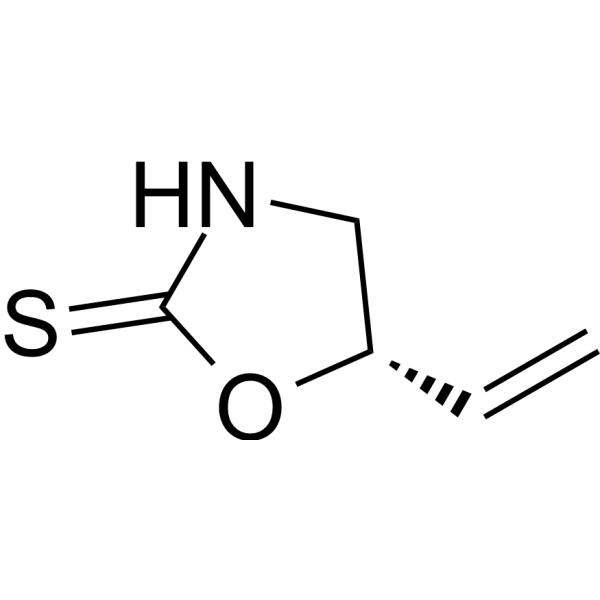
Goitrin ((S)-Goitrin), a product of glucosinolate-myrosinase reactions, is a potent inhibitor of thyroid peroxidase. Goitrin can inhibit iodine utilization by the thyroid. Goitrin also exhibits anti-influenza virus (H1N1) activity .
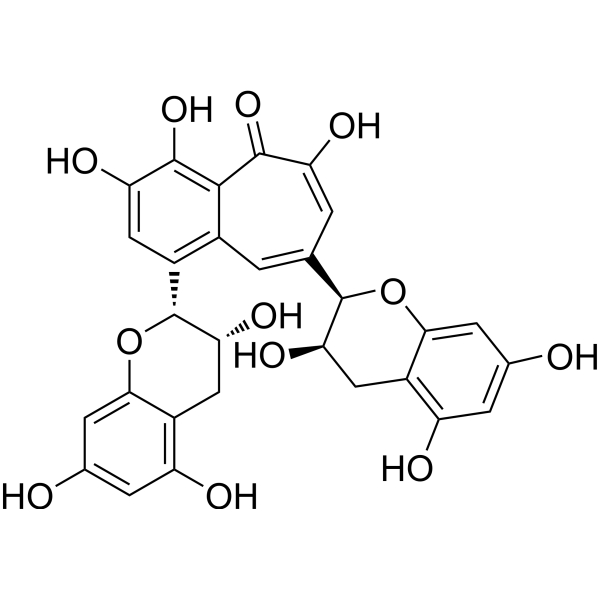
Theaflavin (Standard) is the analytical standard of Theaflavin. This product is intended for research and analytical applications. Theaflavin is a suitable natural inhibitor against influenza A (H1N1) neuraminidase.
4-O-Methylepisappanol (compound 9) is nature product that could be isolated from heartwood of Caesalpinia sappan. 4-O-Methylepisappanol is a potent neuraminidase inhibitor on the surface of influenza viruses with IC50 values of 42.8, 63.2, and 63.2 µM for A/Chicken/Korea/MS96/96 [H9N2], A/PR/8/34 [H1N1], and A/Hong Kong/8/68 [H3N2], respectively .
MBX2329, a potent influenza virus inhibitor, specifically inhibits hemagglutinin (HA)-mediated viral entry with HIV/HA(H5) displaying IC90 of 8.6 μM. MBX2329 inhibits a wide spectrum of influenza A viruses, which includes the 2009 pandemic influenza virus A/H1N1/2009, highly pathogenic avian influenza (HPAI) virus A/H5N1, and oseltamivir-resistant A/H1N1 strains .
TLD-1433 is the fourth-generation ruthenium (II) based photodynamic compound (PDC). TLD-1433 is activated by green light (525 ± 25 nm) and efficiently generates ROS to achieve pathogen inactivation. After photoinactivation, TLD-1433 significantly induces lipid peroxidation of the cell membrane, which can directly damage the integrity of the viral envelope. TLD-1433 has ID50 for enveloped viruses (such as H1N1 influenza virus, coronavirus OC43, HSV-1, Zika virus) is as low as nanomolar level; for non-enveloped viruses (such as adenovirus Ad5, mammalian rotavirus MRV), a concentration of micro-molar level is required for inactivation. TLD-1433 has antigen retention property and can be used for the preparation of inactivated vaccines .
MI-1904 is the inhibitor for matriptase/TMPRSS2, that exhibits antiviral activity against influenza virusH1N1 and H9N2. MI-1904 blocks the cleavage of glycoproteins on the viral surface, prevents the virus from binding to host cell receptors, and thus inhibits the entry and replication of the virus .
CBS1117 is a virus entry inhibitor with an IC50 of 70 nM for influenza A virus, A/Puerto Rico/8/34(H1N1). CBS1117 interferes with the hemagglutinin (HA)-mediated fusion process .
ATV2301 is an orally active anti-influenza agent (EC50, H1N1 = 1.88 nM, H3N2 = 4.77 nM). ATV2301’s anti-influenza activity is due to its effects on polymerase acid protein (PA), nuclear protein (NP), and RNA-dependent RNA polymerase (RdRp) .
Pulvic acid (Compound 3), a butenolide, is a microbial secondary metabolite. Pulvic acid can be isolated from the marine-derived fungus Aspergillus terreus Gwq-48. Pulvic acid has significant antiviral activity with an IC50 of 29.1 μg/mL for influenza A H1N1 virus. Pulvic acid can be used for influenza virus infections research .
Ganoderic acid TR is a broad-spectrum inhibitor of influenza neuraminidase enzymes (NAs). Ganoderic acid TR has IC50 values of 10.9 and 4.6 μM for H5N1 and H1N1 NAs, respectively. Ganoderic acid TR is limited by cytotoxicity and shows only weak activity against Oseltamivir (HY-13317)-resistant H1N1 viruses and influenza B viruses .
Coptisine (chloride) (Standard) is the analytical standard of Coptisine (chloride). This product is intended for research and analytical applications. Coptisine chloride is an alkaloid from Chinese goldthread, and acts as an efficient uncompetitive IDO inhibitor with a Ki value of 5.8 μM and an IC50 value of 6.3 μM. Coptisine chloride is a potent H1N1 neuraminidase (NA-1) inhibitor with an IC50 of 104.6 μg/mL and can be used for influenza A (H1N1) infection.
vRNPs degrader-1 is a potent PROTAC viral ribonucleoproteins (vRNPs) degrader. vRNPs degrader-1 shows broad-spectrum anti-influenza A viruses (IAV) activity by targeting the conserved 5′ end of viral RNA, thereby inducing proteasomal degradation of viral proteins. vRNPs degrader-1 inhibits H1N1, H9N2, and H3N2 infection in mice. vRNPs degrader-1 can be used for influenza research .
Nepasaikosaponin K is an anti-influenza agent. Nepasaikosaponin K shows an EC50 of 17.91 μM against influenza virus A/WSN/33 (H1N1) in 239T-Gluc cells .
P9R is an antiviral peptide. P9R has broad-spectrum antiviral activities against the coronaviruses (SARS-CoV-2, MERS-CoV and SARS-CoV), A(H1N1)pdm09, A(H7N9) virus, and rhinovirus. P9R directly binds to viruses and inhibits virus-host endosomal acidification. P9R significantly protects mice from A(H1N1)pdm09 infection without generating drug-resistant virus. P9R can be used for pH-dependent respiratory viruses research .
Anti-Mouse ICOSL/CD275 Antibody (HK5.3) is an anti-mouse ICOSL/CD275 IgG2a monoclonal antibody. Anti-Mouse ICOSL/CD275 Antibody (HK5.3) can inhibit the adhesion between T cells and endothelial cells. Anti-Mouse ICOSL/CD275 Antibody (HK5.3) can reduce the expansion of tissue resident (TR) Treg cells. Anti-Mouse ICOSL/CD275 Antibody (HK5.3) can be used for researches on inflammation and infection conditions such as influenza virus infection and arthritis .
Foryshiyanine A is a triterpenoid alkaloid. Foryshiyanine A possesses anti-inflammatory activity, inhibiting the release of β-glucuronidase from rat polymorphonuclear leukocytes. Foryshiyanine A exhibits antiviral activity, with an EC50 of 4.5 μM against respiratory syncytial virus (RSV) and an IC50 of 7.3 μM against influenza A virus(H1N1). Foryshiyanine A reduces viral load by disrupting viral replication and entry. Foryshiyanine A may be used for the researches of inflammation and infection .
HSP90-IN-14 (compound 4) is a potent Hsp90 (heat shock protein 90) inhibitor, with a Kd of 0.26 μM. HSP90-IN-14 shows anti-influenza virus activity in MDCK cells, with EC50 values of 2.6, 3.9, and 17 μM for influenza A/H3N2, A/H1N1, and B, respectively .
Wulignan A1 is isolated from the stems of Schisandra henryi. Wulignan A1 exhibits anti-influenza virus H1N1 and H1N1-TR (a Tamiflu agent resistant virus strain) activities .
Antiviral agent 64 (Compound 12) is a diarylheptanoid that can be isolated from Alpinia officinarum. Antiviral agent 64 exhibits cytotoxicity in human neuroblastoma cell IMR-32 with an IC50 of 0.23 μM. Antiviral agent 64 exhibits antiviral efficacy, that inhibits RSV, poliovirus, measles virus, HSV-1, and influenza virus H1N1, with EC50 of 13.3, 3.7, 6.3, 5.7, and <10 μg/mL, respectively .
PP7 is a potent PB1-PB2 interaction inhibitor with an IC50 of 8.6 μM, and their inhibition against viral polymerase activity (IC50=9.5 μM). PP7 shows antiviral activities against influenza A virus (IAV), including A(H1N1)pdm09 (EC50=1.4 μM), A(H7N9) and A(H9N2) subtypes .
Anti-IAV agent 1 (Compound (R)-1a) is an orally active anti-influenza A virus (IAV) agent with IC50s of 0.03 and 0.06 μM against IAV H1N1 and Oseltamivir-resistant IAV H1N1 strains, respectively .
RO5487624, an analogue of RO5464466 (HY-120690), is an orally active hemagglutinin (HA) inhibitor of influenza H1N1 viruses that abolishes influenza virus fusion by blocking HA conformational changes in low pH environments. RO5487624 displays a protective effect on mice that are lethally challenged with influenza H1N1 virus .
RO5464466 is an hemagglutinin (HA) inhibitor of influenza H1N1 viruses. RO5464466 inhibits HA-mediated hemolysis of chicken erythrocytes with the IC50 of 0.29 μM .
Cap-dependent endonuclease-IN-12 (EXP-35) is a potent Cap-dependent endonuclease inhibitor with low cytotoxicity. Cap-dependent endonuclease-IN-12 shows inhibitory activity against H1N1 .
Mitorubrin ((-)-Mitorubrin) is a compound that can be isolated from Penicillium purpurogenum JS03-21. Mitorubrin shows no significant inhibitory activity against the H1N1 influenza virus (IC50 > 200 μM) .
Maniwamycin E is a maniwamycin derivative isolated from the culture extract of thermotolerant Streptomyces sp. JA74. Maniwamycin E shows antiviral activity against SARS-CoV-2 and influenza (H1N1) virus .
Neuraminidase-IN-16 (Compound 43b) is a potent neuraminidase inhibitor with IC50s of 0.031, 0.15, 0.25, 0.60, 0.63 and 10.08 μM against neuraminidase of H5N1, H5N8, H1N1, H3N2, H5N1-H274Y and H1N1-H274Y, respectively .
Neuraminidase-IN-11 (15e) is a potent and selective neuraminidase (NA) inhibitor with the IC50 values of 4.7 nM, 8.46 nM and 1.5 nM against H1N1, H5N1 and H5N8 NAs respectively .
Neuraminidase-IN-3 (compound 23d) is a potent influenza neuraminidase (NA) inhibitor with IC50 values of 0.73, 0.26, and 0.63 nM against H1N1, H5N1, and H5N8 NAs, respectively .
Ganoderic acid T-N, a triterpenoid, is a H5N1 and H1N1 influenza neuraminidase (NA) inhibitor with IC50s of 2.7 μM and 42 μM, respectively. Ganoderic acid T-Q shows cytotoxicity against MCF7 cells (CC50=24.4 μM) .
Neuraminidase-IN-10 is a potent neuraminidase (NA) inhibitor with anti-influenza activity. Neuraminidase-IN-10 is against H1N1, H5N1, and H5N8 with IC50 values of 2.6 nM, 5.1 nM, and 1.65 nM, respectively .
VF-57a (Compound 23) is an Influenza A virus (IAV) fusion inhibitor. VF-57 has potent antiviral activities against authentic A/H1N1 virus with EC50s of 0.92 and 0.31 μM for the A/H1N1 PR8 and A/H1N1 Virg09 strains, respectively. VF-57 significantly inhibits HA-mediated cell entry of A/H1N1- and A/H5N1-pseudoviruses, prevents the HA refolding at pH 5.2. VF-57a can be used for IAV infections research .
Neuraminidase-IN-21 (Compound 6d) is an influenza H1N1 virus Neuraminidase inhibitor, with IC50s of 0.30 µM for Neuraminidase, and 30.01 µM for H1N1 strain of influenza. Neuraminidase-IN-21 formsg three hydrogen bonds with Arg292, Arg371, and Tyr406 of Neuraminidase .
BCX-1898, a cyclopentane derivative, is an orally active and selective influenza virus neuraminidase inhibitor. BCX-1898 has antiviral activity with EC50s of <0.01-21 μM on influenza A (H1N1, H3N2, and H5N1) and influenza B viruses replication in MDCK cells. BCX-1898 shows protection against the mouse influenza model .
Influenza A virus-IN-14 (Compound 37) is an inhibitor for influenza virus type A (IAV), which inhibits H1N1 with an EC50 of 23 nM. Influenza A virus-IN-14 exhibits low cytotoxicity with CC50 of more than 100 μM. Influenza A virus-IN-14 inhibits cytopathic effect and improves the survival rates of cell Calu3. Influenza A virus-IN-14 exhibits synergistic activity with the neuraminidase inhibitor Oseltamivir (HY-13317). Influenza A virus-IN-14 exhibits poor pharmacokinetic properties in CD-1 mouse .
1,4-Epidioxybisabola-2,10-dien-9-one is a 1,4-epidioxy-bisabola-2,12-diene derivate, which can be isolated from Curcuma longa L. 1,4-Epidioxybisabola-2,10-dien-9-one exhibits antiviral activity against influenza virus A/PR/8/34 (H1N1) in the MDCK cell line with an IC50 of 16.79 ± 4.03 μg/mL .
Antiviral agent 43 (compound 16) is a potent and orally active influenza A viruses entry inhibitor. Antiviral agent 43 inhibits replications of influenza A strains VH04-H5N1 and PR8-H1N1 with EC50s of 240 nM and 72 nM, respectively .
Neuraminidase-IN-2 is an anti-influenza compounds with IC50 values of 0.28, 0.27, 11.50, 0.089 and 23.44 µM for H1N1, 09H1N1, H3N2, H5N1 and H5N2, respectively. Neuraminidase-IN-2 has antiviral activity and low cytotoxicity .
Dendrobine (Standard) is the analytical standard of Dendrobine. This product is intended for research and analytical applications. Dendrobine is an alkaloid isolated from Dendrobium nobile. Dendrobine possesses antiviral activity against influenza A viruses, with IC50s of 3.39 μM, 2.16 μM and 5.32 μM for A/FM-1/1/47 (H1N1), A/Puerto Rico/8/34 H274Y (H1N1) and A/Aichi/2/68 (H3N2), respectively. Dendrobine activates the JNK/p38/Nrf2 signaling pathway. Dendrobine exhibits antiviral, antitumor, anti-inflammatory, and neuroprotective properties .
2-PADQZ is an antiviral compound with activity against influenza viruses. 2-PADQZ specifically binds to the influenza A virus RNA promoter and forms a binding site at the internal loop. 2-PADQZ has a significant inhibitory effect on H1N1 and H3N2 influenza A viruses and influenza B viruses .
Antiviral agent 34 is a potent and orally active antiviral agent against influenza A and B subtypes with an EC50 value of 0.8 nM for H1N1 proliferation. Antiviral agent 34 derivatives inhibited influenza virus proliferation by targeting influenza virus RNA-dependent RNA polymerase. Antiviral agent 34 can be used for influenza virus research .
Influenza virus-IN-8 (compound A4) is an inhibitor of influenza virus (Influenza Virus) that induces viral nucleoprotein (NP) aggregation and prevents its nuclear accumulation. Influenza virus-IN-8 has broad-spectrum anti-influenza activity and can inhibit the replication and transcription of influenza A virus. Influenza virus-IN-8 also inhibits Oseltamivir (HY-13317)-resistant H1N1/pdm09 strains .
Antiviral agent 70 (Compound 12b) is an antiviral agent. Antiviral agent 70 has a superior binding capacity to to NeuraminidaseH1N1 virus with an IC50 of 2.9 μM. Antiviral agent 70 can be used for influenza virus infections research .
Cap-dependent endonuclease-IN-27 (Compound 8) is an orally active potent cap-dependent endonuclease (CEN) inhibitor. Cap-dependent endonuclease-IN-27, an antiviral agent, shows activity against influenza B virus. Cap-dependent endonuclease-IN-27 has inhibitory activity against IFV A/WSN/33 (H1N1) polymerase (EC50 = 12.26 nM) .
PAC/NP-IN-1 (Compound 30) is a dual-target anti-influenza agent that specifically binds to nucleoprotein (NP) and the C-terminal domain of PA protein (PAc). PAC/NP-IN-1 inhibits influenza A virus A/WSN/33 (H1N1) (EC50 = 3.63 μM, IC50 = 3.08 μM). PAC/NP-IN-1 can be used for the study of influenza infection .
β-Cyclodextrin (Standard) is the analytical standard of β-Cyclodextrin. This product is intended for research and analytical applications. β-Cyclodextrin is a cyclic polysaccharide composed of seven units of glucose (α-D-glucopyranose) linked by α-(1,4) type bonds. β-Cyclodextrin has often been used to enhance the solubility of agents. β-Cyclodextrin has anti-influenza virus H1N1 activities.
Oseltamivir-d5 is the deuterium labeled Oseltamivir . Oseltamivir is an influenza virus neuraminidase inhibitor (NAI). Oseltamivir inhibits influenza A/H3N2, A/H1N2, A/H1N1, and B viruses with mean IC50 of 0.67, 0.9, 1.34 and 13 nM, respectively. Anti-influenza A and B agent .
Polygalasaponin F (Standard) is the analytical standard of Polygalasaponin F. This product is intended for research and analytical applications. Polygalasaponin F is an orally active triterpenoid saponin monomer. Polygalasaponin F downregulates the expression of Bax, p53, caspase-3, NF-κBp65 and MEK1; restores and upregulates the expression of Bcl-2; activates the PI3K/Akt signaling pathway; inhibits the phosphorylation of p38 MAPK, nuclear translocation of NF-κB, TLR4-mediated signaling pathway, mitophagy (Mitophagy) and ROS production; enhances cell viability and suppresses apoptosis (Apoptosis). Polygalasaponin F maintains mitochondrial function, alleviates Ca 2+ overload, upregulates pCREB and BDNF, preserves cell viability and inhibits the release of inflammatory cytokines. Polygalasaponin F alleviates lung injury induced by influenza A H1N1 and cerebral ischemia-reperfusion injury. Polygalasaponin F is applicable to researches related to Parkinson's disease, cerebral ischemia, pneumonia induced by influenza A H1N1, stroke and Alzheimer's disease.
RdRP-IN-4 (compound 11q), an aryl benzoyl hydrazide analog, is an orally active influenza A virus RNA-dependent RNA polymerase (RdRp) inhibitor by interacting with the PB1 subunit. RdRP-IN-4 exhibits potent inhibitory activity against the avian H5N1 flu strain with an EC50 of 18 nM in MDCK cells. RdRP-IN-4 displays excellent potency against the the H1N1 (A/PR/8/34) Flu A strain and Flu B strain (B/Lee/1940) with EC50 values of 53 nM and 20 nM, respectively. RdRP-IN-4 significantly inhibits the expression level of viral nucleoprotein (NP) in a dose-dependent manner. RdRP-IN-4 exhibits significant antiviral activity in infected mice .
Oseltamivir-d3 hydrochloride is the deuterium-labeled Oseltamivir (HY-13317) . Oseltamivir is an influenza virus neuraminidase inhibitor (NAI). Oseltamivir inhibits influenza A/H3N2, A/H1N2, A/H1N1, and B viruses with mean IC50s of 0.67, 0.9, 1.34 and 13 nM, respectively. Anti-influenza A and B agent .
Oseltamivir-d3-1 is the deuterium labeled Oseltamivir . Oseltamivir is an influenza virus neuraminidase inhibitor (NAI). Oseltamivir inhibits influenza A/H3N2, A/H1N2, A/H1N1, and B viruses with mean IC50s of 0.67, 0.9, 1.34 and 13 nM, respectively. Anti-influenza A and B agent .
Deoxyenterocin is a bacterial metabolite originally isolated from Streptomyces that has diverse biological activities, including antibiotic, antiviral, and antioxidant properties. It inhibits the growth of S. lutea, S. aureus, K. pneumoniae, and V. percolans in vitro when used at a concentration of 500 μg/mL. Deoxyenterocin (50 μg/mL) inhibits the cytopathic effect of influenza A H1N1 virus by 60.6% in vitro. It also prevents hydrogen peroxide-induced decreases in glutathione (GSH) levels and in the mitochondrial membrane potential in mouse primary cortical neuronal cultures when used at a concentration of 1 μM.
Nylidrin (hydrochloride) (Standard) is the analytical standard of Nylidrin hydrochloride (HY-B1404). This product is intended for research and analytical applications. Nylidrin hydrochloride (Buphenine hydrochloride) is an orally active β-adrenergic agonist. Nylidrin hydrochloride antagonizes NR1A/2B NMDA receptors (IC50 = 0.18 μM in Xenopus oocytes). Nylidrin hydrochloride reduces the levels of NP, HA, and M1. Nylidrin hydrochloride has antiviral activity against multiple H1N1 subtype influenza A viruses. Nylidrin hydrochloride improves hemorrhagic shock and anti-allergic effects .
Antiviral agent 35 (compound 4d) is an orally active and potent influenza virus inhibitor, acting function in the early stage of virus replication. Antiviral agent 35 inhibits ROS accumulation, autophagy and apoptosis induced by influenza virus, and also inhibits inflammatory response mediated by RIG-1 pathway in mouse model with pulmonary infection. Antiviral agent 35 shows little cytotoxicity with CC50 >800 μM in MDCK cells, and anti-H1N1 (A/Weiss/43) activity with EC50 of 2.28 μM .
Influenza A virus-IN-18 (Compound C2e) is an orally active inhibitor of Influenza A virus (IC50: 2.5 μM against PR8/H1N1; 6.42 μM against H3N2). Influenza A virus-IN-18 binds directly to the H1N1/PR8 HA protein with high affinity, with a KD of 0.25 μM. Influenza A virus-IN-18 is applicable to research related to Influenza A virus infection .
5-Hydroxy-6,7-dimethoxyflavone is an orally active inhibitor of ferroptosis (Ferroptosis). 5-Hydroxy-6,7-dimethoxyflavone inhibits H1N1 virus-induced ferroptosis by upregulating the expression of SLC7A11 and GPX4. 5-Hydroxy-6,7-dimethoxyflavone alleviates inflammatory responses and inhibits apoptosis by suppressing the activation of the NF-κB and p38 MAPK signaling pathways. 5-Hydroxy-6,7-dimethoxyflavone can be used in studies related to H1N1 influenza virus infection .
PB2-IN-2 is an orally active PB2 inhibitor with RNA-dependent RNA Polymerase (RNP) IC50 = 0.2 nM, LRA (Ligand Receptor Assay) EC50 = 0.8 nM, Cytopathic Effect (CPE) EC50 = 0.1 nM. PB2-IN-2 exhibits broad-spectrum, nanomolar antiviral potency against a panel of influenza A strains (including H1N1pdm09, Lyon/1337/2007/H1N1, Tex12-Like/H3N2, PR/8/34/H1N1, WSN/1933/H1N1, rPR8(H1N1)/H7N9 with EC50 = 1.5, 3.6, 3.7, 13.8, 2.9 and 9.8 nM and all the CC50 values > 2 μM. PB2-IN-2 possesses an excellent pharmacokinetic profile and metabolic stability. PB2-IN-2 can be used for anti-influenza research .
PB2-IN-3 (Compound 11) is a PB2 inhibitor. PB2-IN-3 exhibits antiviral activity against Influenza AH1N1 and H3N2 strains. PB2-IN-3 can be used in studies related to influenza A virus infection .
PPQ-581 is an anti-influenza agent with an EC50 of 1 μM for preventing virus-induced cytopathic effects. PPQ-581 inhibits viral protein synthesis. PPQ-581 blocks the RNP nuclear export and cytoplasmic RNP aggregation .
Influenza virus-IN-7 (Example 16) is an orally active cap-dependent endonuclease inhibitor that can be used for the research of influenza viral infectious diseases .
Cbz-QFR-kbt is a ketone-based benzothiazole ketone inhibitor of TMPRSS2, with an IC50 value of 0.42 nM. Cbz-QFR-kbt also has inhibitory activity against Matriptase, Hepsin, HGFA, and Factor Xa, with IC50 values of 1, 1.3, 85, and 85 nM respectively. Cbz-QFR-kbt shows significant inhibitory effects against SARS-CoV-2 and H1N1 (IC50 = 60 nM). Cbz-QFR-kbt can be used in antiviral research .
Anti-Mouse Notch4 Antibody (HMN4-14) is an anti-mouse Notch4 IgG monoclonal antibody. Anti-Mouse Notch4 Antibody (HMN4-14) reduces inflammation by restoring the expression of bispecific proteins. Anti-Mouse Notch4 Antibody (HMN4-14) can inhibit Th2/Th17 cell differentiation and improve Treg cell function. Anti-Mouse Notch4 Antibody (HMN4-14) can be used for research on inflammation conditions such as viral pneumonia and airway inflammation .
Influenza A virus-IN-17 (Compound 6a) is a potent influenza A inhibitor with EC90s of 3.5 μM and 2.6 μM for H3N2 and H1N1, respectively. Influenza A virus-IN-17 inhibits U2-PB2 chimeric mRNA (EC90 = 2.1 μM from cap snatching polymerase) .
Influenza virus-IN-10 is a dual-target antiviral agents for influenza that targets both PAC (KD = 8.9 μM) and NP (KD = 52.5 μM) simultaneously. Influenza virus-IN-10 exhibits an EC50 values of 1.64 μM) against influenza A virus (H1N1, A/WSN/33) and broad-spectrum activity against other influenza strains, including influenza B virus and multiple subtypes of influenza A .
VIR-2482 is a monoclonal antibody targeting influenza A hemagglutinin (HA). VIR-2482 is generated by introducing LS mutations (M428L/N434S) into the Fc region of MEDI8852 (HY-P991446). VIR-2482 binds to the conserved HA stem epitope across all 18 influenza A HA subtypes, neutralizes a broad spectrum of H1N1 and H3N2 strains, binds to FcγRIIIa, FcγRIIa and C1q, and induces antibody-dependent cellular cytotoxicity and complement-dependent cytotoxicity. VIR-2482 reduces morbidity and mortality caused by seasonal influenza A strains and provides prophylactic protection in mice. VIR-2482 can be used in research related to influenza A disease .
Cappariloside A is a larvicide that exhibits larvicidal activity against Aedes aegypti larvae and reduces larval glutathione-S-transferase activity. Cappariloside A also possesses antiviral activity, decreases the level of phosphorylated STAT1 in cells, inhibits the replication of influenza virusesH1N1, H3N2, PIV3 and ADV, and downregulates the expression of IL-6, IP-10, MIG, RANTES/CCL-5, IFN-β and IL-29. Cappariloside A suppresses the inflammatory response induced by mouse lung-adapted influenza virus strains. Cappariloside A can be used in studies related to larvicidal applications and influenza virus infection .
Anti-Influenza agent 10 (Compound 41) is an influenza A virus RNA-dependent RNA polymerase (RdRp) inhibitor. Anti-Influenza agent 10 exhibits potent antiviral activity against A/PR/8/34(H1N1) with an IC50 of 0.29μM and a KD of 4.11 μM. Anti-Influenza agent 10 can inhibit the assembly of the viral RdRp complex by disrupting the protein interaction between PA and PB1 subunits, thereby blocking the transcription and replication of the viral genome. Anti-Influenza agent 10 shows significant broad-spectrum effects on multiple influenza virus strains, such as H3N2, H3N8 and H9N2 with IC50 values of 3.96, 1.91 and 1.45 μM. Anti-Influenza agent 10 can be used for the research of influenza A Virus Infection .
Anti-Flu A (H3N2) HA/Hemagglutinin Antibody (C05) is a broad-spectrum neutralizing antibody that targets multiple influenza A HA subtypes. Anti-Flu A (H3N2) HA/Hemagglutinin Antibody (C05) is applicable to research related to influenza A virus infection .
Influenza virus-IN-6 (Compound 35) is a potent influenza N-terminal domain of the polymerase acidic protein subunit (PAN) endonuclease inhibitor with an IC50 of 0.20 μM .
TLR7 agonist 21 (Compound 27B) is a selective agonist for Toll-like receptor 7(TLR7), with an EC50 of 17.53 nM (for human TLR7) and 41.7 nM (for mouse TLR7). TLR7 agonist 21 stimulates the secretion of pro-inflammatory cytokines, such as IL-6, TNF-α, IFN-α1, and IL-4. TLR7 agonist 21 acts as a vaccine adjuvant, increases levels of IgG and IgA, and protects the mouse from influenza virus infections .
Anti-Influenza A virus NP Antibody (H16-L10-4R5 (HB-65)) is mouse-derived IgG2a κ type antibody inhibitor, targeting to influenza virus nucleoprotein. Anti-Influenza A virus NP Antibody (H16-L10-4R5 (HB-65)) reacts with influenza virus nucleoprotein (NP). Anti-Influenza A virus NP Antibody (H16-L10-4R5 (HB-65)) can induce passive immunity to influenza A virus. Anti-Influenza A virus NP Antibody (H16-L10-4R5 (HB-65)) can be used for the detections of western blot, flow cytometry and immunohistochemistry in Influenza A virus infection .
Influenza A virus-IN-1 is a dihydropyrrolidones derivative and is a potent inhibitor against wide subtypes of influenza A virus (IAV) with IC50 values from 3.11 μM to 7.13 μM. Influenza A virus-IN-1 efficiently inhibits replication of IAV, up-regulates the expression of key antiviral cytokines IFN-β and antiviral protein MxA .
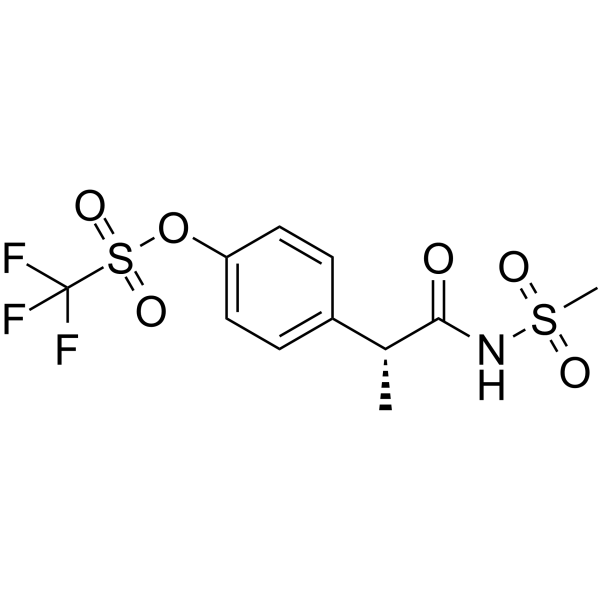
Ladarixin (DF 2156A free base) is an orally active, allosteric non-competitive and dual CXCR1 and CXCR2 antagonist. Ladarixin can be used for the research of COPD and asthma .
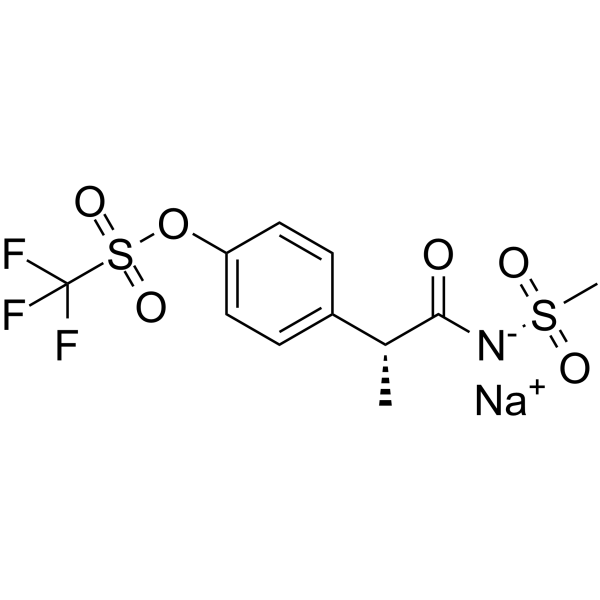
Ladarixin sodium (DF 2156A) is an orally active, allosteric non-competitive and dual CXCR1 and CXCR2 antagonist. Ladarixin sodium can be used for the research of COPD and asthma .
Viral polymerase-IN-1 hydrochloride, a Gemcitabine (HY-17026) derivative, potently inhibits influenza A and B viruses infection with IC90 values of 11.4-15.9 μM. Viral polymerase-IN-1 hydrochloride is active against SARS-CoV-2 infection. Viral polymerase-IN-1 hydrochloride suppresses influenza virus infection by affecting viral RNA replication/transcription in cells .
Eckol is a potent hMAO-A (Mixed) and hMAO-B (non-competitive) inhibitor with IC50s of 7.20 and 83.44 μM, respectively. Eckol shows stimulatory effects in maize and can be used as a plant biostimulant. Eckol also shows antiallergic and antiviral effects .
DABMA is a TMEM175 channel activator with a human EC50 of 17.9 μM. DABMA directly increases TMEM175 channel current via interaction with intracellular, transmembrane, or endosomal lumen-associated domains, and does not alter TMEM175 mRNA or protein levels. DABMA delays endolysosomal substrate degradation, modulates endolysosomal trafficking, increases acidic organelle accumulation, induces cholesterol accumulation and altered late endosome morphology. DABMA can be used for the research of coronavirus disease, Clostridium difficile infection, Pseudomonas aeruginosa infection, rabies, and influenza virus infection .
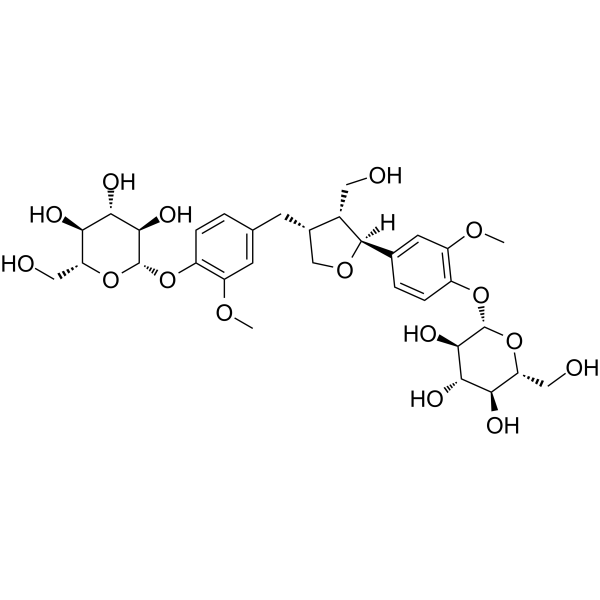
Clemastanin B, a lignin, has potent anti-influenza activities by inhibiting the virus multiplication, prophylaxsis and blocking the virus attachment. Clemastanin B targets viral endocytosis, uncoating or ribonucleoprotein (RNP) export from the nucleus. Clemastanin B has antioxidant and anti-inflammatory activities .
JAK2-IN-20 is an orally active dual inhibitor targeting JAK2 kinase (IC50=49.17 nM) and influenza A virus PB2 protein (IC50=3.337 μM, Kd=2.82 μM). JAK2-IN-20 effectively blocks the JAK/STAT signaling pathway by reducing the phosphorylation levels of STAT1 and STAT3, thereby inhibiting viral replication and downregulating the expression of viral NP and PB2 proteins. In addition, JAK2-IN-20 significantly inhibits the mRNA expression of key inflammatory cytokines such as IL-6, TNF-α and IFN-β in inflammation and influenza infection models. JAK2-IN-20 serves as an important tool molecule for the study of influenza A virus infection and related pathologies .
Influenza A virus-IN-19 (Compound (S)-63) is an orally active, selective Influenza A virus inhibitor with an EC50 of 0.44 μM. Influenza A virus-IN-19 exhibits moderate binding affinity to Hemagglutinin, with a Kd of 5.66 μM. Influenza A virus-IN-19 inhibits trypsin-mediated cleavage of HA0, blocks the early viral entry process, and suppresses the replication of Influenza A virus. Influenza A virus-IN-19 improves the survival rate of mice in lethal influenza models. Influenza A virus-IN-19 can be used in studies related to Influenza A virus infection .
Influenza HA (518-526) is an H-2d-restricted CTL epitope derived from influenza virus hemagglutinin. Influenza HA (518-526) is highly conserved across various H5N1, some H9N2, and H1N1 strains. Influenza HA (518-526) binds to the mouse MHC class I allele K d to form a complex, which is then recognized by specific CD8 + T cells. Influenza HA (518-526) is an immunodominant epitope in influenza-infected BALB/c mice, and it stimulates CD8 + T cells to secrete IFN-γ to induce a robust immune response. Currently, Influenza HA (518-526) is widely used in research related to respiratory syncytial virus (RSV), influenza virus, and H5N1 influenza .
P9R is an antiviral peptide. P9R has broad-spectrum antiviral activities against the coronaviruses (SARS-CoV-2, MERS-CoV and SARS-CoV), A(H1N1)pdm09, A(H7N9) virus, and rhinovirus. P9R directly binds to viruses and inhibits virus-host endosomal acidification. P9R significantly protects mice from A(H1N1)pdm09 infection without generating drug-resistant virus. P9R can be used for pH-dependent respiratory viruses research .
Firivumab (CT-P22; CT120) is a human IgG1 monoclonal influenza A virus hemagglutinin (Anti-IAV HA) antibody. Firivumab is capable of neutralizing H1N1, H5N1, H6N1, H6N2, H8N4, H8N8, H9N2 and H12N7. Firivumab shows protection against H1N1 virus in mice .
VIS-410 is an antibody inhibitor targeting the stem region of hemagglutinin (HA). VIS-410 inhibits influenza virus replication by blocking HA-mediated membrane fusion. VIS-410 exhibits broad-spectrum neutralization against influenza A viruses with group 1 and group 2 hemagglutinins, including subtypes such as H1N1, H3N2, H5N1, and H7N9 (H5N1 IC50 = 1.5 μg/mL). VIS-410 is applicable to research related to influenza A virus infection .
Anti-Influenza A virus NP Antibody (H16-L10-4R5 (HB-65)) is mouse-derived IgG2a κ type antibody inhibitor, targeting to influenza virus nucleoprotein. Anti-Influenza A virus NP Antibody (H16-L10-4R5 (HB-65)) reacts with influenza virus nucleoprotein (NP). Anti-Influenza A virus NP Antibody (H16-L10-4R5 (HB-65)) can induce passive immunity to influenza A virus. Anti-Influenza A virus NP Antibody (H16-L10-4R5 (HB-65)) can be used for the detections of western blot, flow cytometry and immunohistochemistry in Influenza A virus infection .
Anti-Mouse ICOSL/CD275 Antibody (HK5.3) is an anti-mouse ICOSL/CD275 IgG2a monoclonal antibody. Anti-Mouse ICOSL/CD275 Antibody (HK5.3) can inhibit the adhesion between T cells and endothelial cells. Anti-Mouse ICOSL/CD275 Antibody (HK5.3) can reduce the expansion of tissue resident (TR) Treg cells. Anti-Mouse ICOSL/CD275 Antibody (HK5.3) can be used for researches on inflammation and infection conditions such as influenza virus infection and arthritis .
Anti-Mouse Notch4 Antibody (HMN4-14) is an anti-mouse Notch4 IgG monoclonal antibody. Anti-Mouse Notch4 Antibody (HMN4-14) reduces inflammation by restoring the expression of bispecific proteins. Anti-Mouse Notch4 Antibody (HMN4-14) can inhibit Th2/Th17 cell differentiation and improve Treg cell function. Anti-Mouse Notch4 Antibody (HMN4-14) can be used for research on inflammation conditions such as viral pneumonia and airway inflammation .
VIR-2482 is a monoclonal antibody targeting influenza A hemagglutinin (HA). VIR-2482 is generated by introducing LS mutations (M428L/N434S) into the Fc region of MEDI8852 (HY-P991446). VIR-2482 binds to the conserved HA stem epitope across all 18 influenza A HA subtypes, neutralizes a broad spectrum of H1N1 and H3N2 strains, binds to FcγRIIIa, FcγRIIa and C1q, and induces antibody-dependent cellular cytotoxicity and complement-dependent cytotoxicity. VIR-2482 reduces morbidity and mortality caused by seasonal influenza A strains and provides prophylactic protection in mice. VIR-2482 can be used in research related to influenza A disease .
Anti-Flu A (H3N2) HA/Hemagglutinin Antibody (C05) is a broad-spectrum neutralizing antibody that targets multiple influenza A HA subtypes. Anti-Flu A (H3N2) HA/Hemagglutinin Antibody (C05) is applicable to research related to influenza A virus infection .
Coptisine chloride is an alkaloid from Chinese goldthread, and acts as an efficient uncompetitive IDO inhibitor with a Ki value of 5.8 μM and an IC50 value of 6.3 μM. Coptisine chloride is a potent H1N1 neuraminidase (NA-1) inhibitor with an IC50 of 104.6?μg/mL and can be used for influenza A (H1N1) infection.
Dendrobine is an alkaloid isolated from Dendrobium nobile. Dendrobine possesses antiviral activity against influenza A viruses, with IC50s of 3.39 μM, 2.16 μM and 5.32 μM for A/FM-1/1/47 (H1N1), A/Puerto Rico/8/34 H274Y (H1N1) and A/Aichi/2/68 (H3N2), respectively. Dendrobine activates the JNK/p38/Nrf2 signaling pathway. Dendrobine exhibits antiviral, antitumor, anti-inflammatory, and neuroprotective properties .
Ifenprodil (NP-120) tartrate, a cerebral vasodilator, is a noncompetitive NMDA receptor antagonist. Ifenprodil tartrate exerts high affinity at NR1A/NR2B receptors (IC50=0.34 μM) over 400-fold than at NR1A/NR2A receptors (IC50=146 μM) . Ifenprodil tartrate is an α1 adrenergic receptor antagonist. Ifenprodil tartrate inhibits GIRK (Kir3), reduces inward currents through the basal GIRK activity. Ifenprodil tartrate has reliable inhibitory effects against A/H1N1 strains (EC50 of 6.6 µM). Ifenprodil tartrate has neuroprotective, anticonvulsant and antinociceptive effects. Ifenprodil tartrate can be used for the study of cerebrovascular diseases and peripheral arterial obliterative disease .
Polygalasaponin F is an orally active triterpenoid saponin monomer. Polygalasaponin F downregulates the expression of Bax, p53, caspase-3, NF-κBp65 and MEK1; restores and upregulates the expression of Bcl-2; activates the PI3K/Akt signaling pathway; inhibits the phosphorylation of p38 MAPK, nuclear translocation of NF-κB, TLR4-mediated signaling pathway, mitophagy (Mitophagy) and ROS production; enhances cell viability and suppresses apoptosis (Apoptosis). Polygalasaponin F maintains mitochondrial function, alleviates Ca 2+ overload, upregulates pCREB and BDNF, preserves cell viability and inhibits the release of inflammatory cytokines. Polygalasaponin F alleviates lung injury induced by influenza A H1N1 and cerebral ischemia-reperfusion injury. Polygalasaponin F is applicable to researches related to Parkinson's disease, cerebral ischemia, pneumonia induced by influenza A H1N1, stroke and Alzheimer's disease .
Germacrone is a sesquiterpene compound with multiple biological activities. Germacrone inhibits the H1N1 and H3N2influenza A virus and the influenza B virus. Germacrone blocks the progressionof arthritis by regulating Th1/Th2 balance and inhibiting NF-κB signaling. Germacrone can arrest the cell cycle at G0/G1 and G2/M phases and induce apoptosis in breast cancer cells. Germacrone inhibits 5α-reductase and has anti-androgenic effect. Germacrone has neuroprotective functions and can be used for the study of traumatic brain injury (TBI). Germacrone also has antioxidant activity .
Tubeimoside II is an orally active triterpenoid saponin and antiviral agent that binds to PACT/PRKRA with Kd values of 5.37 μM and 133.1 μM, respectively. Tubeimoside II inhibits oxidase-dependent EGFR activation and reduces TGF-β1-induced oxidative stress. Tubeimoside II activates the RIG-I signaling pathway and increases IFN-β secretion. Tubeimoside II suppresses TPA-induced ear edema, mouse sarcoma 180 growth, and TPA-induced skin tumor formation. Tubeimoside II exerts broad-spectrum antiviral activity against SARS-CoV-2, HCoV-OC43, and IAV-H1N1/FM1. Tubeimoside II can be used in research related to retinoblastoma, respiratory viral infections, skin tumors, and sarcoma 180 .
Clemastanin B, a lignin, has potent anti-influenza activities by inhibiting the virus multiplication, prophylaxsis and blocking the virus attachment. Clemastanin B targets viral endocytosis, uncoating or ribonucleoprotein (RNP) export from the nucleus. Clemastanin B has antioxidant and anti-inflammatory activities .
7,3',4'-Trihydroxy-3-benzyl-2H-chromene is an reversible noncompetitive neuraminidase (NA) inhibitor. 7,3',4'-Trihydroxy-3-benzyl-2H-chromene can be isolated from the dried heartwood of Caesalpinia sappan L. 7,3',4'-Trihydroxy-3-benzyl-2H-chromene has potent NAs inhibitory activities with IC50 values of 34.6 µM [H1N1], 39.5 µM [H3N2], and 50.5µM [H9N2], respectively. 7,3',4'-Trihydroxy-3-benzyl-2H-chromene can be used for the research of influenza virus .
Eckol is a potent hMAO-A (Mixed) and hMAO-B (non-competitive) inhibitor with IC50s of 7.20 and 83.44 μM, respectively. Eckol shows stimulatory effects in maize and can be used as a plant biostimulant. Eckol also shows antiallergic and antiviral effects .
Germacrone (Standard) is an analytical standard of Gemmacrone (HY-N0440). This product is intended for research and analytical applications. Germacrone (Standard) is a sesquiterpene compound with multiple biological activities. Germacrone (Standard) inhibits the H1N1 and H3N2 influenza A viruses and the influenza B virus. Germacrone (Standard) blocks the progressionof arthritis by regulating Th1/Th2 balance and inhibiting NF-κB signaling. Germacrone (Standard) can arrest the cell cycle at G0/G1 and G2/M phases and induce apoptosis in breast cancer cells. Germacrone (Standard) inhibits 5α-reductase and has anti-androgenic effect. Germacrone (Standard) has neuroprotective functions and can be used for the study of traumatic brain injury (TBI). Germacrone (Standard) also has antioxidant activity .
Goitrin ((S)-Goitrin), a product of glucosinolate-myrosinase reactions, is a potent inhibitor of thyroid peroxidase. Goitrin can inhibit iodine utilization by the thyroid. Goitrin also exhibits anti-influenza virus (H1N1) activity .
Theaflavin (Standard) is the analytical standard of Theaflavin. This product is intended for research and analytical applications. Theaflavin is a suitable natural inhibitor against influenza A (H1N1) neuraminidase.
4-O-Methylepisappanol (compound 9) is nature product that could be isolated from heartwood of Caesalpinia sappan. 4-O-Methylepisappanol is a potent neuraminidase inhibitor on the surface of influenza viruses with IC50 values of 42.8, 63.2, and 63.2 µM for A/Chicken/Korea/MS96/96 [H9N2], A/PR/8/34 [H1N1], and A/Hong Kong/8/68 [H3N2], respectively .
Pulvic acid (Compound 3), a butenolide, is a microbial secondary metabolite. Pulvic acid can be isolated from the marine-derived fungus Aspergillus terreus Gwq-48. Pulvic acid has significant antiviral activity with an IC50 of 29.1 μg/mL for influenza A H1N1 virus. Pulvic acid can be used for influenza virus infections research .
Ganoderic acid TR is a broad-spectrum inhibitor of influenza neuraminidase enzymes (NAs). Ganoderic acid TR has IC50 values of 10.9 and 4.6 μM for H5N1 and H1N1 NAs, respectively. Ganoderic acid TR is limited by cytotoxicity and shows only weak activity against Oseltamivir (HY-13317)-resistant H1N1 viruses and influenza B viruses .
Coptisine (chloride) (Standard) is the analytical standard of Coptisine (chloride). This product is intended for research and analytical applications. Coptisine chloride is an alkaloid from Chinese goldthread, and acts as an efficient uncompetitive IDO inhibitor with a Ki value of 5.8 μM and an IC50 value of 6.3 μM. Coptisine chloride is a potent H1N1 neuraminidase (NA-1) inhibitor with an IC50 of 104.6 μg/mL and can be used for influenza A (H1N1) infection.
Nepasaikosaponin K is an anti-influenza agent. Nepasaikosaponin K shows an EC50 of 17.91 μM against influenza virus A/WSN/33 (H1N1) in 239T-Gluc cells .
Foryshiyanine A is a triterpenoid alkaloid. Foryshiyanine A possesses anti-inflammatory activity, inhibiting the release of β-glucuronidase from rat polymorphonuclear leukocytes. Foryshiyanine A exhibits antiviral activity, with an EC50 of 4.5 μM against respiratory syncytial virus (RSV) and an IC50 of 7.3 μM against influenza A virus(H1N1). Foryshiyanine A reduces viral load by disrupting viral replication and entry. Foryshiyanine A may be used for the researches of inflammation and infection .
Wulignan A1 is isolated from the stems of Schisandra henryi. Wulignan A1 exhibits anti-influenza virus H1N1 and H1N1-TR (a Tamiflu agent resistant virus strain) activities .
Antiviral agent 64 (Compound 12) is a diarylheptanoid that can be isolated from Alpinia officinarum. Antiviral agent 64 exhibits cytotoxicity in human neuroblastoma cell IMR-32 with an IC50 of 0.23 μM. Antiviral agent 64 exhibits antiviral efficacy, that inhibits RSV, poliovirus, measles virus, HSV-1, and influenza virus H1N1, with EC50 of 13.3, 3.7, 6.3, 5.7, and <10 μg/mL, respectively .
Mitorubrin ((-)-Mitorubrin) is a compound that can be isolated from Penicillium purpurogenum JS03-21. Mitorubrin shows no significant inhibitory activity against the H1N1 influenza virus (IC50 > 200 μM) .
Maniwamycin E is a maniwamycin derivative isolated from the culture extract of thermotolerant Streptomyces sp. JA74. Maniwamycin E shows antiviral activity against SARS-CoV-2 and influenza (H1N1) virus .
1,4-Epidioxybisabola-2,10-dien-9-one is a 1,4-epidioxy-bisabola-2,12-diene derivate, which can be isolated from Curcuma longa L. 1,4-Epidioxybisabola-2,10-dien-9-one exhibits antiviral activity against influenza virus A/PR/8/34 (H1N1) in the MDCK cell line with an IC50 of 16.79 ± 4.03 μg/mL .
Dendrobine (Standard) is the analytical standard of Dendrobine. This product is intended for research and analytical applications. Dendrobine is an alkaloid isolated from Dendrobium nobile. Dendrobine possesses antiviral activity against influenza A viruses, with IC50s of 3.39 μM, 2.16 μM and 5.32 μM for A/FM-1/1/47 (H1N1), A/Puerto Rico/8/34 H274Y (H1N1) and A/Aichi/2/68 (H3N2), respectively. Dendrobine activates the JNK/p38/Nrf2 signaling pathway. Dendrobine exhibits antiviral, antitumor, anti-inflammatory, and neuroprotective properties .
Polygalasaponin F (Standard) is the analytical standard of Polygalasaponin F. This product is intended for research and analytical applications. Polygalasaponin F is an orally active triterpenoid saponin monomer. Polygalasaponin F downregulates the expression of Bax, p53, caspase-3, NF-κBp65 and MEK1; restores and upregulates the expression of Bcl-2; activates the PI3K/Akt signaling pathway; inhibits the phosphorylation of p38 MAPK, nuclear translocation of NF-κB, TLR4-mediated signaling pathway, mitophagy (Mitophagy) and ROS production; enhances cell viability and suppresses apoptosis (Apoptosis). Polygalasaponin F maintains mitochondrial function, alleviates Ca 2+ overload, upregulates pCREB and BDNF, preserves cell viability and inhibits the release of inflammatory cytokines. Polygalasaponin F alleviates lung injury induced by influenza A H1N1 and cerebral ischemia-reperfusion injury. Polygalasaponin F is applicable to researches related to Parkinson's disease, cerebral ischemia, pneumonia induced by influenza A H1N1, stroke and Alzheimer's disease.
5-Hydroxy-6,7-dimethoxyflavone is an orally active inhibitor of ferroptosis (Ferroptosis). 5-Hydroxy-6,7-dimethoxyflavone inhibits H1N1 virus-induced ferroptosis by upregulating the expression of SLC7A11 and GPX4. 5-Hydroxy-6,7-dimethoxyflavone alleviates inflammatory responses and inhibits apoptosis by suppressing the activation of the NF-κB and p38 MAPK signaling pathways. 5-Hydroxy-6,7-dimethoxyflavone can be used in studies related to H1N1 influenza virus infection .
Cappariloside A is a larvicide that exhibits larvicidal activity against Aedes aegypti larvae and reduces larval glutathione-S-transferase activity. Cappariloside A also possesses antiviral activity, decreases the level of phosphorylated STAT1 in cells, inhibits the replication of influenza virusesH1N1, H3N2, PIV3 and ADV, and downregulates the expression of IL-6, IP-10, MIG, RANTES/CCL-5, IFN-β and IL-29. Cappariloside A suppresses the inflammatory response induced by mouse lung-adapted influenza virus strains. Cappariloside A can be used in studies related to larvicidal applications and influenza virus infection .
HA/Hemagglutinin Protein, H1N1 (EPI2397519, sf9, His) is the recombinant virus-derived HA/Hemagglutinin protein, expressed by Sf9 insect cells, with C-10*His tag.
The hemagglutinin (HA) protein attaches viral particles to host cells by binding to sialic acid-containing receptors and induces viral particle internalization through clathrin-dependent endocytosis. HA also promotes an alternative clathrin- and caveolin-independent pathway for some virions. HA/Hemagglutinin Protein, H1N1 (ACP41105, sf9) is the recombinant Virus-derived HA/Hemagglutinin protein, expressed by Sf9 insect cells , with tag free.
NA/Neuraminidase Protein, an enzyme found on the surface of influenza viruses, is responsible for the cleavage of sialic acid residues. Inhibition of NA/Neuraminidase Protein is a key target for antiviral drugs. Targeting NA/Neuraminidase Protein may provide potential therapeutic interventions by preventing viral release, reducing viral spread. NA/Neuraminidase Protein, H1N1 (P03469, HEK293) is the recombinant Virus-derived NA/Neuraminidase protein, expressed by HEK293 , with tag free.
The NA/Neuraminidase Protein is an influenza virus surface enzyme that cleaves sialic acid residues. Inhibiting NA/Neuraminidase Protein is crucial for antiviral drugs. Targeting NA/Neuraminidase Protein can help prevent viral release, reduce viral spread. NA/Neuraminidase Protein, H1N1 (P03468, HEK293) is the recombinant Virus-derived NA/Neuraminidase protein, expressed by HEK293 , with tag free. This product is an active extract, not a recombinant NA protein. It originates from cell lysates collected after expressing a DNA sequence encoding the Influenza A virus neuraminidase.
NA/Neuraminidase Protein is a receptor-destroying enzyme that cleaves terminal sialic acids from cellular receptors, potentially facilitating viral invasion of the upper airways by targeting sialic acid moieties on airway epithelial cell mucin. NA plays a pivotal role in viral propagation by catalyzing the removal of terminal sialic acid residues from both viral and cellular glycoconjugates. Moreover, the sialidase activity in late endosome/lysosome traffic appears to enhance virus replication. NA/Neuraminidase Protein, H1N1 (ABO38354, HEK293, His) is the recombinant Virus-derived NA/Neuraminidase protein, expressed by HEK293 , with N-His labeled tag.
The hemagglutinin (HA) protein attaches viral particles to host cells by binding to sialic acid-containing receptors and induces viral particle internalization through clathrin-dependent endocytosis.HA also promotes an alternative clathrin- and caveolin-independent pathway for some virions.HA/Hemagglutinin Protein, H1N1 (ABD62843, sf9, His) is the recombinant Virus-derived HA/Hemagglutinin protein, expressed by Sf9 insect cells , with C-His labeled tag.
The hemagglutinin (HA) protein attaches viral particles to host cells by binding to sialic acid-containing receptors and induces viral particle internalization through clathrin-dependent endocytosis.HA also promotes an alternative clathrin- and caveolin-independent pathway for some virions.HA/Hemagglutinin Protein, H1N1 (ABD15258, HEK293, His) is the recombinant Virus-derived HA/Hemagglutinin protein, expressed by HEK293 , with C-His labeled tag.
The hemagglutinin (HA) protein attaches viral particles to host cells by binding to sialic acid-containing receptors and induces viral particle internalization through clathrin-dependent endocytosis.HA also promotes an alternative clathrin- and caveolin-independent pathway for some virions.HA/Hemagglutinin Protein, H1N1 (ACF54598, HEK293, His) is the recombinant Virus-derived HA/Hemagglutinin protein, expressed by HEK293 , with C-His labeled tag.
The hemagglutinin (HA) protein attaches viral particles to host cells by binding to sialic acid-containing receptors and induces viral particle internalization through clathrin-dependent endocytosis.HA also promotes an alternative clathrin- and caveolin-independent pathway for some virions.HA/Hemagglutinin Protein, H1N1 (ACF41933, sf9, His) is the recombinant Virus-derived HA/Hemagglutinin protein, expressed by Sf9 insect cells , with C-His labeled tag.
NA/Neuraminidase Protein, an enzyme found on the surface of influenza viruses, is responsible for the cleavage of sialic acid residues. Inhibition of NA/Neuraminidase Protein is a key target for antiviral drugs. Targeting NA/Neuraminidase Protein may provide potential therapeutic interventions by preventing viral release, reducing viral spread. NA/Neuraminidase Protein, H1N1 (P03469, HEK293, His) is the recombinant Virus-derived NA/Neuraminidase protein, expressed by HEK293 , with N-His labeled tag.
NA/Neuraminidase Protein is a receptor-destroying enzyme that cleaves terminal sialic acids from cellular receptors, potentially facilitating viral invasion of the upper airways by targeting sialic acid moieties on airway epithelial cell mucin. NA plays a pivotal role in viral propagation by catalyzing the removal of terminal sialic acid residues from both viral and cellular glycoconjugates. Moreover, the sialidase activity in late endosome/lysosome traffic appears to enhance virus replication. NA/Neuraminidase Protein, H1N1 (H275Y, ACP41107, HEK293) is the recombinant Virus-derived NA/Neuraminidase protein, expressed by HEK293 , with tag free. It originates from cell lysates collected after expressing a DNA sequence encoding the Influenza A virus neuraminidase.
NA (neuraminidase) proteins play a key role in viral transmission by catalyzing the removal of terminal sialic acid residues from viral and cellular glycoconjugates. NA plays a role in determining host range, limiting replication, and virulence. NA is associated with the development and progression of type 2 diabetes mellitus (T2D). NA/Neuraminidase Protein, H1N1 (EPI859652, sf9, His) is the recombinant Virus-derived NA/Neuraminidase protein, expressed by Sf9 insect cells , with C-His labeled tag.
NA (neuraminidase) proteins play a key role in viral transmission by catalyzing the removal of terminal sialic acid residues from viral and cellular glycoconjugates. NA plays a role in determining host range, limiting replication, and virulence. NA is associated with the development and progression of type 2 diabetes mellitus (T2D). NA/Neuraminidase Protein, H1N1 (EPI859651, HEK293, His) is the recombinant Virus-derived NA/Neuraminidase protein, expressed by HEK293 , with N-His labeled tag.
NA (neuraminidase) proteins play a key role in viral transmission by catalyzing the removal of terminal sialic acid residues from viral and cellular glycoconjugates. NA plays a role in determining host range, limiting replication, and virulence. NA is associated with the development and progression of type 2 diabetes mellitus (T2D). NA/Neuraminidase Protein, H1N1 (EPI1799927, sf9, His) is the recombinant Virus-derived NA/Neuraminidase protein, expressed by Sf9 insect cells , with C-His labeled tag.
NA (neuraminidase) proteins play a key role in viral transmission by catalyzing the removal of terminal sialic acid residues from viral and cellular glycoconjugates. NA plays a role in determining host range, limiting replication, and virulence. NA is associated with the development and progression of type 2 diabetes mellitus (T2D). NA/Neuraminidase Protein, H1N1 (AQS19400, HEK293, His) is the recombinant Virus-derived NA/Neuraminidase protein, expressed by HEK293 , with N-His labeled tag.
NA/Neuraminidase Protein is a receptor-destroying enzyme that cleaves terminal sialic acids from cellular receptors, potentially facilitating viral invasion of the upper airways by targeting sialic acid moieties on airway epithelial cell mucin. NA plays a pivotal role in viral propagation by catalyzing the removal of terminal sialic acid residues from both viral and cellular glycoconjugates. Moreover, the sialidase activity in late endosome/lysosome traffic appears to enhance virus replication. NA/Neuraminidase Protein, H1N1 (ACP41107, sf9, His) is the recombinant Virus-derived NA/Neuraminidase protein, expressed by Sf9 insect cells , with C-His labeled tag.
NA/Neuraminidase Protein is a receptor-destroying enzyme that cleaves terminal sialic acids from cellular receptors, potentially facilitating viral invasion of the upper airways by targeting sialic acid moieties on airway epithelial cell mucin. NA plays a pivotal role in viral propagation by catalyzing the removal of terminal sialic acid residues from both viral and cellular glycoconjugates. Moreover, the sialidase activity in late endosome/lysosome traffic appears to enhance virus replication. NA/Neuraminidase Protein, H1N1 (ACP41107, HEK293, Fc) is the recombinant Virus-derived NA/Neuraminidase protein, expressed by HEK293 , with N-hFc labeled tag.
NA (neuraminidase) proteins play a key role in viral transmission by catalyzing the removal of terminal sialic acid residues from viral and cellular glycoconjugates. NA plays a role in determining host range, limiting replication, and virulence. NA is associated with the development and progression of type 2 diabetes mellitus (T2D). NA/Neuraminidase Protein, H1N1 (ACM51249, HEK293, His) is the recombinant Virus-derived NA/Neuraminidase protein, expressed by HEK293 , with N-His labeled tag.
NA/Neuraminidase Protein is a receptor-destroying enzyme that cleaves terminal sialic acids from cellular receptors, potentially facilitating viral invasion of the upper airways by targeting sialic acid moieties on airway epithelial cell mucin. NA plays a pivotal role in viral propagation by catalyzing the removal of terminal sialic acid residues from both viral and cellular glycoconjugates. Moreover, the sialidase activity in late endosome/lysosome traffic appears to enhance virus replication. NA/Neuraminidase Protein, H1N1 (ACF41870, HEK293, His) is the recombinant Virus-derived NA/Neuraminidase protein, expressed by HEK293 , with N-His labeled tag.
NA/Neuraminidase Protein is a receptor-destroying enzyme that cleaves terminal sialic acids from cellular receptors, potentially facilitating viral invasion of the upper airways by targeting sialic acid moieties on airway epithelial cell mucin. NA plays a pivotal role in viral propagation by catalyzing the removal of terminal sialic acid residues from both viral and cellular glycoconjugates. Moreover, the sialidase activity in late endosome/lysosome traffic appears to enhance virus replication. NA/Neuraminidase Protein, H1N1 (ABR28848, HEK293, His) is the recombinant Virus-derived NA/Neuraminidase protein, expressed by HEK293 , with N-His labeled tag.
NA/Neuraminidase Protein is a receptor-destroying enzyme that cleaves terminal sialic acids from cellular receptors, potentially facilitating viral invasion of the upper airways by targeting sialic acid moieties on airway epithelial cell mucin. NA plays a pivotal role in viral propagation by catalyzing the removal of terminal sialic acid residues from both viral and cellular glycoconjugates. Moreover, the sialidase activity in late endosome/lysosome traffic appears to enhance virus replication. NA/Neuraminidase Protein, H1N1 (ABQ53689, HEK293, His) is the recombinant Virus-derived NA/Neuraminidase protein, expressed by HEK293 , with N-His labeled tag.
NA/Neuraminidase Protein is a receptor-destroying enzyme that cleaves terminal sialic acids from cellular receptors, potentially facilitating viral invasion of the upper airways by targeting sialic acid moieties on airway epithelial cell mucin. NA plays a pivotal role in viral propagation by catalyzing the removal of terminal sialic acid residues from both viral and cellular glycoconjugates. Moreover, the sialidase activity in late endosome/lysosome traffic appears to enhance virus replication. NA/Neuraminidase Protein, H1N1 (ABO38057, HEK293, His) is the recombinant Virus-derived NA/Neuraminidase protein, expressed by HEK293 , with N-His labeled tag.
NA/Neuraminidase Protein is a receptor-destroying enzyme that cleaves terminal sialic acids from cellular receptors, potentially facilitating viral invasion of the upper airways by targeting sialic acid moieties on airway epithelial cell mucin. NA plays a pivotal role in viral propagation by catalyzing the removal of terminal sialic acid residues from both viral and cellular glycoconjugates. Moreover, the sialidase activity in late endosome/lysosome traffic appears to enhance virus replication. NA/Neuraminidase Protein, H1N1 (ABD95342, HEK293, His) is the recombinant Virus-derived NA/Neuraminidase protein, expressed by HEK293 , with N-His labeled tag.
The hemagglutinin (HA) protein attaches viral particles to host cells by binding to sialic acid-containing receptors and induces viral particle internalization through clathrin-dependent endocytosis. HA also promotes an alternative clathrin- and caveolin-independent pathway for some virions. HA/Hemagglutinin Protein, H1N1 (EPI944618, HEK293, His) is the recombinant Virus-derived HA/Hemagglutinin protein, expressed by HEK293 , with C-His labeled tag.
The hemagglutinin (HA) protein attaches viral particles to host cells by binding to sialic acid-containing receptors and induces viral particle internalization through clathrin-dependent endocytosis. HA also promotes an alternative clathrin- and caveolin-independent pathway for some virions. HA/Hemagglutinin Protein, H1N1 (EPI1312566, HEK293, His) is the recombinant Virus-derived HA/Hemagglutinin protein, expressed by HEK293 , with C-His labeled tag.
The hemagglutinin (HA) protein attaches viral particles to host cells by binding to sialic acid-containing receptors and induces viral particle internalization through clathrin-dependent endocytosis. HA also promotes an alternative clathrin- and caveolin-independent pathway for some virions. HA/Hemagglutinin Protein, H1N1 (EPI1017503, HEK293, His) is the recombinant Virus-derived HA/Hemagglutinin protein, expressed by HEK293 , with C-His labeled tag.
The hemagglutinin (HA) protein attaches viral particles to host cells by binding to sialic acid-containing receptors and induces viral particle internalization through clathrin-dependent endocytosis.HA also promotes an alternative clathrin- and caveolin-independent pathway for some virions.HA/Hemagglutinin Protein, H1N1 (APT36456, HEK293, His) is the recombinant Virus-derived HA/Hemagglutinin protein, expressed by HEK293 , with C-His labeled tag.
The hemagglutinin (HA) protein attaches viral particles to host cells by binding to sialic acid-containing receptors and induces viral particle internalization through clathrin-dependent endocytosis.HA also promotes an alternative clathrin- and caveolin-independent pathway for some virions.HA/Hemagglutinin Protein, H1N1 (APC57869, sf9, His) is the recombinant Virus-derived HA/Hemagglutinin protein, expressed by Sf9 insect cells , with C-His labeled tag.
The hemagglutinin (HA) protein attaches viral particles to host cells by binding to sialic acid-containing receptors and induces viral particle internalization through clathrin-dependent endocytosis.HA also promotes an alternative clathrin- and caveolin-independent pathway for some virions.HA/Hemagglutinin Protein, H1N1 (APC57869, HEK293, His) is the recombinant Virus-derived HA/Hemagglutinin protein, expressed by HEK293 , with C-His labeled tag.
The hemagglutinin (HA) protein attaches viral particles to host cells by binding to sialic acid-containing receptors and induces viral particle internalization through clathrin-dependent endocytosis.HA also promotes an alternative clathrin- and caveolin-independent pathway for some virions.HA/Hemagglutinin Protein, H1N1 (AEX38474, HEK293, His) is the recombinant Virus-derived HA/Hemagglutinin protein, expressed by HEK293 , with C-His labeled tag.
The hemagglutinin (HA) protein attaches viral particles to host cells by binding to sialic acid-containing receptors and induces viral particle internalization through clathrin-dependent endocytosis.HA also promotes an alternative clathrin- and caveolin-independent pathway for some virions.HA/Hemagglutinin Protein, H1N1 (ACV49556, HEK293, His) is the recombinant Virus-derived HA/Hemagglutinin protein, expressed by HEK293 , with C-His labeled tag.
The hemagglutinin (HA) protein attaches viral particles to host cells by binding to sialic acid-containing receptors and induces viral particle internalization through clathrin-dependent endocytosis.HA also promotes an alternative clathrin- and caveolin-independent pathway for some virions.HA/Hemagglutinin Protein, H1N1 (ACU80014, sf9, His) is the recombinant Virus-derived HA/Hemagglutinin protein, expressed by Sf9 insect cells , with C-His labeled tag.
The hemagglutinin (HA) protein attaches viral particles to host cells by binding to sialic acid-containing receptors and induces viral particle internalization through clathrin-dependent endocytosis.HA also promotes an alternative clathrin- and caveolin-independent pathway for some virions.HA/Hemagglutinin Protein, H1N1 (ACU80014, HEK293, His) is the recombinant Virus-derived HA/Hemagglutinin protein, expressed by HEK293 , with C-His labeled tag.
The hemagglutinin (HA) protein attaches viral particles to host cells by binding to sialic acid-containing receptors and induces viral particle internalization through clathrin-dependent endocytosis.HA also promotes an alternative clathrin- and caveolin-independent pathway for some virions.HA/Hemagglutinin Protein, H1N1 (ACR15621, sf9, His) is the recombinant Virus-derived HA/Hemagglutinin protein, expressed by Sf9 insect cells , with C-His labeled tag.
The hemagglutinin (HA) protein attaches viral particles to host cells by binding to sialic acid-containing receptors and induces viral particle internalization through clathrin-dependent endocytosis.HA also promotes an alternative clathrin- and caveolin-independent pathway for some virions.HA/Hemagglutinin Protein, H1N1 (ACQ63286, HEK293, His) is the recombinant Virus-derived HA/Hemagglutinin protein, expressed by HEK293 , with C-His labeled tag.
The hemagglutinin (HA) protein attaches viral particles to host cells by binding to sialic acid-containing receptors and induces viral particle internalization through clathrin-dependent endocytosis.HA also promotes an alternative clathrin- and caveolin-independent pathway for some virions.HA/Hemagglutinin Protein, H1N1 (ACP41953, sf9, His) is the recombinant Virus-derived HA/Hemagglutinin protein, expressed by Sf9 insect cells , with C-His labeled tag.
The hemagglutinin (HA) protein attaches viral particles to host cells by binding to sialic acid-containing receptors and induces viral particle internalization through clathrin-dependent endocytosis.HA also promotes an alternative clathrin- and caveolin-independent pathway for some virions.HA/Hemagglutinin Protein, H1N1 (ACP41953, HEK293, His) is the recombinant Virus-derived HA/Hemagglutinin protein, expressed by HEK293 , with C-His labeled tag.
The hemagglutinin (HA) protein attaches viral particles to host cells by binding to sialic acid-containing receptors and induces viral particle internalization through clathrin-dependent endocytosis.HA also promotes an alternative clathrin- and caveolin-independent pathway for some virions.HA/Hemagglutinin Protein, H1N1 (ACP41935, sf9, His) is the recombinant Virus-derived HA/Hemagglutinin protein, expressed by Sf9 insect cells , with C-His labeled tag.
The hemagglutinin (HA) protein attaches viral particles to host cells by binding to sialic acid-containing receptors and induces viral particle internalization through clathrin-dependent endocytosis.HA also promotes an alternative clathrin- and caveolin-independent pathway for some virions.HA/Hemagglutinin Protein, H1N1 (ACF41867, sf9, His) is the recombinant Virus-derived HA/Hemagglutinin protein, expressed by Sf9 insect cells , with C-His labeled tag.
The hemagglutinin (HA) protein attaches viral particles to host cells by binding to sialic acid-containing receptors and induces viral particle internalization through clathrin-dependent endocytosis.HA also promotes an alternative clathrin- and caveolin-independent pathway for some virions.HA/Hemagglutinin Protein, H1N1 (ACF41867, HEK293, His) is the recombinant Virus-derived HA/Hemagglutinin protein, expressed by HEK293 , with C-His labeled tag.
The hemagglutinin (HA) protein attaches viral particles to host cells by binding to sialic acid-containing receptors and induces viral particle internalization through clathrin-dependent endocytosis.HA also promotes an alternative clathrin- and caveolin-independent pathway for some virions.HA/Hemagglutinin Protein, H1N1 (ABQ44416, sf9, His) is the recombinant Virus-derived HA/Hemagglutinin protein, expressed by Sf9 insect cells , with C-His labeled tag.
The hemagglutinin (HA) protein attaches viral particles to host cells by binding to sialic acid-containing receptors and induces viral particle internalization through clathrin-dependent endocytosis.HA also promotes an alternative clathrin- and caveolin-independent pathway for some virions.HA/Hemagglutinin Protein, H1N1 (ABP49481, sf9, His) is the recombinant Virus-derived HA/Hemagglutinin protein, expressed by Sf9 insect cells , with C-His labeled tag.
The hemagglutinin (HA) protein attaches viral particles to host cells by binding to sialic acid-containing receptors and induces viral particle internalization through clathrin-dependent endocytosis.HA also promotes an alternative clathrin- and caveolin-independent pathway for some virions.HA/Hemagglutinin Protein, H1N1 (ABP49327, HEK293, His) is the recombinant Virus-derived HA/Hemagglutinin protein, expressed by HEK293 , with C-His labeled tag.
The hemagglutinin (HA) protein attaches viral particles to host cells by binding to sialic acid-containing receptors and induces viral particle internalization through clathrin-dependent endocytosis.HA also promotes an alternative clathrin- and caveolin-independent pathway for some virions.HA/Hemagglutinin Protein, H1N1 (ABK57093, HEK293, His) is the recombinant Virus-derived HA/Hemagglutinin protein, expressed by HEK293 , with C-His labeled tag.
The hemagglutinin (HA) protein attaches viral particles to host cells by binding to sialic acid-containing receptors and induces viral particle internalization through clathrin-dependent endocytosis.HA also promotes an alternative clathrin- and caveolin-independent pathway for some virions.HA/Hemagglutinin Protein, H1N1 (ABF21274, sf9, His) is the recombinant Virus-derived HA/Hemagglutinin protein, expressed by Sf9 insect cells , with C-His labeled tag.
The hemagglutinin (HA) protein attaches viral particles to host cells by binding to sialic acid-containing receptors and induces viral particle internalization through clathrin-dependent endocytosis.HA also promotes an alternative clathrin- and caveolin-independent pathway for some virions.HA/Hemagglutinin Protein, H1N1 (ABF21274, HEK293, His) is the recombinant Virus-derived HA/Hemagglutinin protein, expressed by HEK293 , with C-His labeled tag.
The hemagglutinin (HA) protein attaches viral particles to host cells by binding to sialic acid-containing receptors and induces viral particle internalization through clathrin-dependent endocytosis.HA also promotes an alternative clathrin- and caveolin-independent pathway for some virions.HA/Hemagglutinin Protein, H1N1 (ABD59849, HEK293, His) is the recombinant Virus-derived HA/Hemagglutinin protein, expressed by HEK293 , with C-His labeled tag.
The hemagglutinin (HA) protein attaches viral particles to host cells by binding to sialic acid-containing receptors and induces viral particle internalization through clathrin-dependent endocytosis.HA also promotes an alternative clathrin- and caveolin-independent pathway for some virions.HA/Hemagglutinin Protein, H1N1 (AAA67183, HEK293, His) is the recombinant Virus-derived HA/Hemagglutinin protein, expressed by HEK293 , with C-His labeled tag.
The hemagglutinin (HA) protein attaches viral particles to host cells by binding to sialic acid-containing receptors and induces viral particle internalization through clathrin-dependent endocytosis.HA also promotes an alternative clathrin- and caveolin-independent pathway for some virions.HA/Hemagglutinin Protein, H1N1 (ADD64203, HEK293, His) is the recombinant Virus-derived HA/Hemagglutinin protein, expressed by HEK293 , with C-His labeled tag.
The hemagglutinin (HA) protein attaches viral particles to host cells by binding to sialic acid-containing receptors and induces viral particle internalization through clathrin-dependent endocytosis.HA also promotes an alternative clathrin- and caveolin-independent pathway for some virions.HA/Hemagglutinin Protein, H1N1 (ACR15621, HEK293, His) is the recombinant Virus-derived HA/Hemagglutinin protein, expressed by HEK293 , with C-His labeled tag.
The hemagglutinin (HA) protein attaches viral particles to host cells by binding to sialic acid-containing receptors and induces viral particle internalization through clathrin-dependent endocytosis.HA also promotes an alternative clathrin- and caveolin-independent pathway for some virions.HA/Hemagglutinin Protein, H1N1 (ACP41934, HEK293, His) is the recombinant Virus-derived HA/Hemagglutinin protein, expressed by HEK293 , with C-His labeled tag.
The hemagglutinin (HA) protein attaches viral particles to host cells by binding to sialic acid-containing receptors and induces viral particle internalization through clathrin-dependent endocytosis.HA also promotes an alternative clathrin- and caveolin-independent pathway for some virions.HA/Hemagglutinin Protein, H1N1 (ACP41105, HEK293, His) is the recombinant Virus-derived HA/Hemagglutinin protein, expressed by HEK293 , with C-His labeled tag.
The hemagglutinin (HA) protein attaches viral particles to host cells by binding to sialic acid-containing receptors and induces viral particle internalization through clathrin-dependent endocytosis.HA also promotes an alternative clathrin- and caveolin-independent pathway for some virions.HA/Hemagglutinin Protein, H1N1 (ACA28844, HEK293, His) is the recombinant Virus-derived HA/Hemagglutinin protein, expressed by HEK293 , with C-His labeled tag.
The hemagglutinin (HA) protein attaches viral particles to host cells by binding to sialic acid-containing receptors and induces viral particle internalization through clathrin-dependent endocytosis.HA also promotes an alternative clathrin- and caveolin-independent pathway for some virions.HA/Hemagglutinin Protein, H1N1 (ACF41933, HEK293, His) is the recombinant Virus-derived HA/Hemagglutinin protein, expressed by HEK293 , with C-His labeled tag.
The hemagglutinin (HA) protein attaches viral particles to host cells by binding to sialic acid-containing receptors and induces viral particle internalization through clathrin-dependent endocytosis.HA also promotes an alternative clathrin- and caveolin-independent pathway for some virions.HA/Hemagglutinin Protein, H1N1 (ACF54598, HEK293, His) is the recombinant Virus-derived HA/Hemagglutinin protein, expressed by HEK293 , with C-His labeled tag.
The hemagglutinin (HA) protein attaches viral particles to host cells by binding to sialic acid-containing receptors and induces viral particle internalization through clathrin-dependent endocytosis.HA also promotes an alternative clathrin- and caveolin-independent pathway for some virions.HA1/Hemagglutinin Protein, H1N1 (ABD62843, HEK293, His) is the recombinant Virus-derived HA1/Hemagglutinin protein, expressed by HEK293 , with C-His labeled tag.
The hemagglutinin (HA) protein attaches viral particles to host cells by binding to sialic acid-containing receptors and induces viral particle internalization through clathrin-dependent endocytosis.HA also promotes an alternative clathrin- and caveolin-independent pathway for some virions.HA/Hemagglutinin Protein, H1N1 (QEM24663, sf9, His) is the recombinant Virus-derived HA/Hemagglutinin protein, expressed by Sf9 insect cells , with C-His labeled tag.
Hemagglutinin protein (HA) is a class I viral fusion protein that binds to sialic acid-containing receptors and initiates viral attachment to cells. This binding promotes internalization of virions through various endocytic pathways. HA/Hemagglutinin Protein, H1N1 (P03452, sf9, His) is the recombinant Virus-derived HA/Hemagglutinin protein, expressed by Sf9 insect cells , with C-His labeled tag.
The hemagglutinin (HA) protein attaches viral particles to host cells by binding to sialic acid-containing receptors and induces viral particle internalization through clathrin-dependent endocytosis.HA also promotes an alternative clathrin- and caveolin-independent pathway for some virions.HA/Hemagglutinin Protein, H1N1 (Biotinylated, ACP41105, sf9, His) is the recombinant Virus-derived HA/Hemagglutinin protein, expressed by Sf9 insect cells , with C-His labeled tag.
The hemagglutinin (HA) protein attaches viral particles to host cells by binding to sialic acid-containing receptors and induces viral particle internalization through clathrin-dependent endocytosis.HA also promotes an alternative clathrin- and caveolin-independent pathway for some virions.HA/Hemagglutinin Protein, H1N1 (ACR08536,sf9, His) is the recombinant Virus-derived HA/Hemagglutinin protein, expressed by Sf9 insect cells , with C-His labeled tag.
The hemagglutinin (HA) protein attaches viral particles to host cells by binding to sialic acid-containing receptors and induces viral particle internalization through clathrin-dependent endocytosis.HA also promotes an alternative clathrin- and caveolin-independent pathway for some virions.HA/Hemagglutinin Protein, H1N1 (AAD17229, HEK293, His) is the recombinant Virus-derived HA/Hemagglutinin protein, expressed by HEK293 , with C-His labeled tag.
NA (neuraminidase) proteins play a key role in viral transmission by catalyzing the removal of terminal sialic acid residues from viral and cellular glycoconjugates. NA plays a role in determining host range, limiting replication, and virulence. NA is associated with the development and progression of type 2 diabetes mellitus (T2D). NA/Neuraminidase Protein, H1N1 (QEM24782, sf9, His) is the recombinant Virus-derived NA/Neuraminidase protein, expressed by Sf9 insect cells , with C-His labeled tag.
NA/Neuraminidase Protein is a receptor-destroying enzyme that cleaves terminal sialic acids from cellular receptors, potentially facilitating viral invasion of the upper airways by targeting sialic acid moieties on airway epithelial cell mucin. NA plays a pivotal role in viral propagation by catalyzing the removal of terminal sialic acid residues from both viral and cellular glycoconjugates. Moreover, the sialidase activity in late endosome/lysosome traffic appears to enhance virus replication. NA/Neuraminidase Protein, H1N1 (N295S, ACP41107, HEK293) is the recombinant Virus-derived NA/Neuraminidase protein, expressed by HEK293 , with tag free. It originates from cell lysates collected after expressing a DNA sequence encoding the Influenza A virus neuraminidase.
NA (neuraminidase) proteins play a key role in viral transmission by catalyzing the removal of terminal sialic acid residues from viral and cellular glycoconjugates. NA plays a role in determining host range, limiting replication, and virulence. NA is associated with the development and progression of type 2 diabetes mellitus (T2D). NA/Neuraminidase Protein, H1N1 (AKM14549, HEK293, His) is the recombinant Virus-derived NA/Neuraminidase protein, expressed by HEK293 , with N-His labeled tag.
NA/Neuraminidase Protein is a receptor-destroying enzyme that cleaves terminal sialic acids from cellular receptors, potentially facilitating viral invasion of the upper airways by targeting sialic acid moieties on airway epithelial cell mucin. NA plays a pivotal role in viral propagation by catalyzing the removal of terminal sialic acid residues from both viral and cellular glycoconjugates. Moreover, the sialidase activity in late endosome/lysosome traffic appears to enhance virus replication. NA/Neuraminidase Protein, H1N1 (AAF77044, HEK293, His) is the recombinant Virus-derived NA/Neuraminidase protein, expressed by HEK293 , with N-His labeled tag.
HA/Hemagglutinin Protein is a viral membrane protein responsible for the initial steps of the entry of influenza virus into the host cell.It mediates binding of the virus particle to the host-cell membrane and catalyzes fusion of the viral membrane with that of the host.HA is pivotal in determining virus host range and virulence.HA/Hemagglutinin Protein, H1N1 (QEM24709, sf9, His) is the recombinant Virus-derived HA/Hemagglutinin protein, expressed by Sf9 insect cells , with C-His labeled tag.
The HA/Hemagglutinin protein binds receptors on the cell surface, facilitating virus attachment.It leads to internalization via endocytosis.HA determines host range and virulence, mediating fusion of virus and endosomal membrane.HA2 undergoes conformational change in endosomes, releasing fusion peptide and forming fusion pore.Multiple HA trimers are required for pore formation.HA/Hemagglutinin Protein, H1N1 (P03453, HEK293, His) is the recombinant Virus-derived HA/Hemagglutinin protein, expressed by HEK293 , with C-His labeled tag.
The hemagglutinin (HA) protein attaches viral particles to host cells by binding to sialic acid-containing receptors and induces viral particle internalization through clathrin-dependent endocytosis.HA also promotes an alternative clathrin- and caveolin-independent pathway for some virions.HA/Hemagglutinin Protein, H1N1 (BAK23277, HEK293, His) is the recombinant Virus-derived HA/Hemagglutinin protein, expressed by HEK293 , with C-His labeled tag.
The hemagglutinin (HA) protein attaches viral particles to host cells by binding to sialic acid-containing receptors and induces viral particle internalization through clathrin-dependent endocytosis.HA also promotes an alternative clathrin- and caveolin-independent pathway for some virions.HA/Hemagglutinin Protein, H1N1 (AKM14547, HEK293, His) is the recombinant Virus-derived HA/Hemagglutinin protein, expressed by HEK293 , with C-His labeled tag.
The hemagglutinin (HA) protein attaches viral particles to host cells by binding to sialic acid-containing receptors and induces viral particle internalization through clathrin-dependent endocytosis.HA also promotes an alternative clathrin- and caveolin-independent pathway for some virions.HA/Hemagglutinin Protein, H1N1 (AKJ81829, HEK293, His) is the recombinant Virus-derived HA/Hemagglutinin protein, expressed by HEK293 , with C-His labeled tag.
The hemagglutinin (HA) protein attaches viral particles to host cells by binding to sialic acid-containing receptors and induces viral particle internalization through clathrin-dependent endocytosis.HA also promotes an alternative clathrin- and caveolin-independent pathway for some virions.HA/Hemagglutinin Protein, H1N1 (AFR76582, HEK293, His) is the recombinant Virus-derived HA/Hemagglutinin protein, expressed by HEK293 , with C-His labeled tag.
The hemagglutinin (HA) protein attaches viral particles to host cells by binding to sialic acid-containing receptors and induces viral particle internalization through clathrin-dependent endocytosis.HA also promotes an alternative clathrin- and caveolin-independent pathway for some virions.HA/Hemagglutinin Protein, H1N1 (AFR76227, HEK293, His) is the recombinant Virus-derived HA/Hemagglutinin protein, expressed by HEK293 , with C-His labeled tag.
The hemagglutinin (HA) protein attaches viral particles to host cells by binding to sialic acid-containing receptors and induces viral particle internalization through clathrin-dependent endocytosis.HA also promotes an alternative clathrin- and caveolin-independent pathway for some virions.HA/Hemagglutinin Protein, H1N1 (AFR75881, HEK293, His) is the recombinant Virus-derived HA/Hemagglutinin protein, expressed by HEK293 , with C-His labeled tag.
The hemagglutinin (HA) protein attaches viral particles to host cells by binding to sialic acid-containing receptors and induces viral particle internalization through clathrin-dependent endocytosis.HA also promotes an alternative clathrin- and caveolin-independent pathway for some virions.HA/Hemagglutinin Protein, H1N1 (ACR38870, HEK293, His) is the recombinant Virus-derived HA/Hemagglutinin protein, expressed by HEK293 , with C-His labeled tag.
The hemagglutinin (HA) protein attaches viral particles to host cells by binding to sialic acid-containing receptors and induces viral particle internalization through clathrin-dependent endocytosis.HA also promotes an alternative clathrin- and caveolin-independent pathway for some virions.HA/Hemagglutinin Protein, H1N1 (ACQ89903,sf9, His) is the recombinant Virus-derived HA/Hemagglutinin protein, expressed by Sf9 insect cells , with C-His labeled tag.
The hemagglutinin (HA) protein attaches viral particles to host cells by binding to sialic acid-containing receptors and induces viral particle internalization through clathrin-dependent endocytosis.HA also promotes an alternative clathrin- and caveolin-independent pathway for some virions.HA/Hemagglutinin Protein, H1N1 (ACP41105.1, sf9,His) is the recombinant Virus-derived HA/Hemagglutinin protein, expressed by Sf9 insect cells , with C-His labeled tag.
The hemagglutinin (HA) protein attaches viral particles to host cells by binding to sialic acid-containing receptors and induces viral particle internalization through clathrin-dependent endocytosis.HA also promotes an alternative clathrin- and caveolin-independent pathway for some virions.HA/Hemagglutinin Protein, H1N1 (ACN67524, sf9, His) is the recombinant Virus-derived HA/Hemagglutinin protein, expressed by Sf9 insect cells , with C-His labeled tag.
The hemagglutinin (HA) protein attaches viral particles to host cells by binding to sialic acid-containing receptors and induces viral particle internalization through clathrin-dependent endocytosis.HA also promotes an alternative clathrin- and caveolin-independent pathway for some virions.HA/Hemagglutinin Protein, H1N1 (ABW71481, HEK293, His) is the recombinant Virus-derived HA/Hemagglutinin protein, expressed by HEK293 , with C-His labeled tag.
The hemagglutinin (HA) protein attaches viral particles to host cells by binding to sialic acid-containing receptors and induces viral particle internalization through clathrin-dependent endocytosis.HA also promotes an alternative clathrin- and caveolin-independent pathway for some virions.HA/Hemagglutinin Protein, H1N1 (ABV25642, HEK293, His) is the recombinant Virus-derived HA/Hemagglutinin protein, expressed by HEK293 , with C-His labeled tag.
The hemagglutinin (HA) protein attaches viral particles to host cells by binding to sialic acid-containing receptors and induces viral particle internalization through clathrin-dependent endocytosis.HA also promotes an alternative clathrin- and caveolin-independent pathway for some virions.HA/Hemagglutinin Protein, H1N1 (ABU99109, sf9, His) is the recombinant Virus-derived HA/Hemagglutinin protein, expressed by Sf9 insect cells , with C-His labeled tag.
The hemagglutinin (HA) protein attaches viral particles to host cells by binding to sialic acid-containing receptors and induces viral particle internalization through clathrin-dependent endocytosis.HA also promotes an alternative clathrin- and caveolin-independent pathway for some virions.HA/Hemagglutinin Protein, H1N1 (ABI19015, HEK293, His) is the recombinant Virus-derived HA/Hemagglutinin protein, expressed by HEK293 , with C-His labeled tag.
The hemagglutinin (HA) protein attaches viral particles to host cells by binding to sialic acid-containing receptors and induces viral particle internalization through clathrin-dependent endocytosis.HA also promotes an alternative clathrin- and caveolin-independent pathway for some virions.HA/Hemagglutinin Protein, H1N1 (ABD77807, sf9, His) is the recombinant Virus-derived HA/Hemagglutinin protein, expressed by Sf9 insect cells , with C-His labeled tag.
The hemagglutinin (HA) protein attaches viral particles to host cells by binding to sialic acid-containing receptors and induces viral particle internalization through clathrin-dependent endocytosis.HA also promotes an alternative clathrin- and caveolin-independent pathway for some virions.HA/Hemagglutinin Protein, H1N1 (AAL87868, HEK293, His) is the recombinant Virus-derived HA/Hemagglutinin protein, expressed by HEK293 , with C-His labeled tag.
The hemagglutinin (HA) protein attaches viral particles to host cells by binding to sialic acid-containing receptors and induces viral particle internalization through clathrin-dependent endocytosis.HA also promotes an alternative clathrin- and caveolin-independent pathway for some virions.HA/Hemagglutinin Protein, H1N1 (ACU13097, HEK293, His) is the recombinant Virus-derived HA/Hemagglutinin protein, expressed by HEK293 , with C-His labeled tag.
The hemagglutinin (HA) protein attaches viral particles to host cells by binding to sialic acid-containing receptors and induces viral particle internalization through clathrin-dependent endocytosis.HA also promotes an alternative clathrin- and caveolin-independent pathway for some virions.HA/Hemagglutinin Protein, H1N1 (ABD77675, HEK293, His) is the recombinant Virus-derived HA/Hemagglutinin protein, expressed by HEK293 , with C-His labeled tag.
The hemagglutinin (HA) protein attaches viral particles to host cells by binding to sialic acid-containing receptors and induces viral particle internalization through clathrin-dependent endocytosis.HA also promotes an alternative clathrin- and caveolin-independent pathway for some virions.HA/Hemagglutinin Protein, H1N1 (AAP34324, HEK293, His) is the recombinant Virus-derived HA/Hemagglutinin protein, expressed by HEK293 , with C-His labeled tag.
The hemagglutinin (HA) protein attaches viral particles to host cells by binding to sialic acid-containing receptors and induces viral particle internalization through clathrin-dependent endocytosis.HA also promotes an alternative clathrin- and caveolin-independent pathway for some virions.HA/Hemagglutinin Protein, H1N1 (ADD64203, HEK293, His) is the recombinant Virus-derived HA/Hemagglutinin protein, expressed by HEK293 , with C-His labeled tag.
The hemagglutinin (HA) protein attaches viral particles to host cells by binding to sialic acid-containing receptors and induces viral particle internalization through clathrin-dependent endocytosis.HA also promotes an alternative clathrin- and caveolin-independent pathway for some virions.HA/Hemagglutinin Protein, H1N1 (ACR15621, HEK293, His) is the recombinant Virus-derived HA/Hemagglutinin protein, expressed by HEK293 , with C-His labeled tag.
The hemagglutinin (HA) protein attaches viral particles to host cells by binding to sialic acid-containing receptors and induces viral particle internalization through clathrin-dependent endocytosis.HA also promotes an alternative clathrin- and caveolin-independent pathway for some virions.HA/Hemagglutinin Protein, H1N1 (ACP41934, HEK293, His) is the recombinant Virus-derived HA/Hemagglutinin protein, expressed by HEK293 , with C-His labeled tag.
The hemagglutinin (HA) protein attaches viral particles to host cells by binding to sialic acid-containing receptors and induces viral particle internalization through clathrin-dependent endocytosis.HA also promotes an alternative clathrin- and caveolin-independent pathway for some virions.HA/Hemagglutinin Protein, H1N1 (ACP41105, HEK293, His) is the recombinant Virus-derived HA/Hemagglutinin protein, expressed by HEK293 , with C-His labeled tag.
The hemagglutinin (HA) protein attaches viral particles to host cells by binding to sialic acid-containing receptors and induces viral particle internalization through clathrin-dependent endocytosis.HA also promotes an alternative clathrin- and caveolin-independent pathway for some virions.HA/Hemagglutinin Protein, H1N1 (ACF41933, HEK293, His) is the recombinant Virus-derived HA/Hemagglutinin protein, expressed by HEK293 , with C-His labeled tag.
The hemagglutinin (HA) protein attaches viral particles to host cells by binding to sialic acid-containing receptors and induces viral particle internalization through clathrin-dependent endocytosis.HA also promotes an alternative clathrin- and caveolin-independent pathway for some virions.HA/Hemagglutinin Protein, H1N1 (ACA28844, HEK293, His) is the recombinant Virus-derived HA/Hemagglutinin protein, expressed by HEK293 , with C-His labeled tag.
The hemagglutinin (HA) protein attaches viral particles to host cells by binding to sialic acid-containing receptors and induces viral particle internalization through clathrin-dependent endocytosis.HA also promotes an alternative clathrin- and caveolin-independent pathway for some virions.HA/Hemagglutinin Protein, H1N1 (343a.a, ABU99109, HEK293, His) is the recombinant Virus-derived HA/Hemagglutinin protein, expressed by HEK293 , with C-His labeled tag.
Influenza virus nucleoprotein (NP) is a structural protein that coats viral negative-strand RNA. NP proteins protect viral RNA from degradation by cellular enzymes during the viral life cycle, fit the helical structure of RNP, regulate transcription and replication of viral RNA templates in a histone-like manner, and induce immunosuppression during infection. Nucleoprotein/NP Protein, H1N1 (EPI1617976, sf9, His) is the recombinant Virus-derived Nucleoprotein/NP protein, expressed by Sf9 insect cells , with C-His labeled tag.
Influenza virus nucleoprotein (NP) is a structural protein that coats viral negative-strand RNA.NP proteins protect viral RNA from degradation by cellular enzymes during the viral life cycle, fit the helical structure of RNP, regulate transcription and replication of viral RNA templates in a histone-like manner, and induce immunosuppression during infection.Nucleoprotein/NP Protein, H1N1 (ACS94534, sf9, His) is the recombinant Virus-derived Nucleoprotein/NP protein, expressed by Sf9 insect cells , with C-His labeled tag.
NA (neuraminidase) proteins play a key role in viral transmission by catalyzing the removal of terminal sialic acid residues from viral and cellular glycoconjugates. NA plays a role in determining host range, limiting replication, and virulence. NA is associated with the development and progression of type 2 diabetes mellitus (T2D). HA1/Hemagglutinin Protein, H1N1 (EPI859651, HEK293, His) is the recombinant Virus-derived HA1/Hemagglutinin protein, expressed by HEK293 , with C-His labeled tag.
The hemagglutinin (HA) protein attaches viral particles to host cells by binding to sialic acid-containing receptors and induces viral particle internalization through clathrin-dependent endocytosis.HA also promotes an alternative clathrin- and caveolin-independent pathway for some virions.HA1/Hemagglutinin Protein, H1N1 (ACU80014, HEK293, His) is the recombinant Virus-derived HA1/Hemagglutinin protein, expressed by HEK293 , with C-His labeled tag.
The hemagglutinin (HA) protein attaches viral particles to host cells by binding to sialic acid-containing receptors and induces viral particle internalization through clathrin-dependent endocytosis.HA also promotes an alternative clathrin- and caveolin-independent pathway for some virions.HA1/Hemagglutinin Protein, H1N1 (ACP41935, HEK293, His) is the recombinant Virus-derived HA1/Hemagglutinin protein, expressed by HEK293 , with C-His labeled tag.
The hemagglutinin (HA) protein attaches viral particles to host cells by binding to sialic acid-containing receptors and induces viral particle internalization through clathrin-dependent endocytosis.HA also promotes an alternative clathrin- and caveolin-independent pathway for some virions.HA1/Hemagglutinin Protein, H1N1 (ACF41867, HEK293, His) is the recombinant Virus-derived HA1/Hemagglutinin protein, expressed by HEK293 , with C-His labeled tag.
The hemagglutinin HA1 protein is essential for attachment of virions to host cells by binding to sialic acid-containing receptors, inducing virion internalization via clathrin-dependent or clathrin- and caveolin-independent pathways.As a class I viral fusion protein, HA1 determines host range restriction and virulence, mediating fusion between the virion membrane and the endosomal membrane.HA1/Hemagglutinin Protein, H1N1 (ACA33723, HEK293, His) is the recombinant Virus-derived HA1/Hemagglutinin protein, expressed by HEK293 , with C-His labeled tag.
The hemagglutinin (HA) protein attaches viral particles to host cells by binding to sialic acid-containing receptors and induces viral particle internalization through clathrin-dependent endocytosis.HA also promotes an alternative clathrin- and caveolin-independent pathway for some virions.HA1/Hemagglutinin Protein, H1N1 (ABQ44416, HEK293, His) is the recombinant Virus-derived HA1/Hemagglutinin protein, expressed by HEK293 , with C-His labeled tag.
The hemagglutinin (HA) protein is essential for viral attachment to host cells, binding to sialic acid receptors, and initiating virion internalization through clathrin-dependent or -independent pathways. As a class I viral fusion protein, HA determines host range and virulence, mediating viral penetration into the cytoplasm. Hemagglutinin/HA Protein, H1N1 (Biotinylated, ACP41105.1, sf9) is the recombinant Virus-derived Hemagglutinin/HA protein, expressed by Sf9 insect cells , with tag free.
NA (neuraminidase) proteins play a key role in viral transmission by catalyzing the removal of terminal sialic acid residues from viral and cellular glycoconjugates. NA plays a role in determining host range, limiting replication, and virulence. NA is associated with the development and progression of type 2 diabetes mellitus (T2D). NA/Neuraminidase Protein, H1N1 (QEM24761, sf9, His) is the recombinant Virus-derived NA/Neuraminidase protein, expressed by Sf9 insect cells , with C-His labeled tag.
NA (neuraminidase) proteins play a key role in viral transmission by catalyzing the removal of terminal sialic acid residues from viral and cellular glycoconjugates. NA plays a role in determining host range, limiting replication, and virulence. NA is associated with the development and progression of type 2 diabetes mellitus (T2D). NA/Neuraminidase Protein, H1N1 (ATB53863, HEK293, His) is the recombinant Virus-derived NA/Neuraminidase protein, expressed by HEK293 , with N-His labeled tag.
NA (neuraminidase) proteins play a key role in viral transmission by catalyzing the removal of terminal sialic acid residues from viral and cellular glycoconjugates. NA plays a role in determining host range, limiting replication, and virulence. NA is associated with the development and progression of type 2 diabetes mellitus (T2D). NA/Neuraminidase Protein, H1N1 (AKJ83184, HEK293, His) is the recombinant Virus-derived NA/Neuraminidase protein, expressed by HEK293 , with N-His labeled tag.
NA (neuraminidase) proteins play a key role in viral transmission by catalyzing the removal of terminal sialic acid residues from viral and cellular glycoconjugates. NA plays a role in determining host range, limiting replication, and virulence. NA is associated with the development and progression of type 2 diabetes mellitus (T2D). NA/Neuraminidase Protein, H1N1 (AIE51967, HEK293, His) is the recombinant Virus-derived NA/Neuraminidase protein, expressed by HEK293 , with N-His labeled tag.
The hemagglutinin (HA) protein attaches viral particles to host cells by binding to sialic acid-containing receptors and induces viral particle internalization through clathrin-dependent endocytosis.HA also promotes an alternative clathrin- and caveolin-independent pathway for some virions.HA/Hemagglutinin Protein, H1N1 (QEM24690, sf9, His) is the recombinant Virus-derived HA/Hemagglutinin protein, expressed by Sf9 insect cells , with C-His labeled tag.
The hemagglutinin (HA) protein attaches viral particles to host cells by binding to sialic acid-containing receptors and induces viral particle internalization through clathrin-dependent endocytosis. HA also promotes an alternative clathrin- and caveolin-independent pathway for some virions. HA/Hemagglutinin Protein, H1N1 (QEM24690, HEK293, His) is the recombinant Virus-derived HA/Hemagglutinin protein, expressed by HEK293 , with C-His labeled tag.
The hemagglutinin (HA) protein attaches viral particles to host cells by binding to sialic acid-containing receptors and induces viral particle internalization through clathrin-dependent endocytosis.HA also promotes an alternative clathrin- and caveolin-independent pathway for some virions.HA/Hemagglutinin Protein, H1N1 (QEM24688, HEK293, His) is the recombinant Virus-derived HA/Hemagglutinin protein, expressed by HEK293 , with C-His labeled tag.
HA/Hemagglutinin Protein is a viral surface glycoprotein that mediates virus adsorption to host cells and promotes membrane fusion required for infection. HA/Hemagglutinin Protein plays a key role in the process of viral infection of host cells. HA/Hemagglutinin Protein, H1N1 (Biotinylated, ACP41953.1, HEK293, His) is a recombinant HA/Hemagglutinin protein expressed by HEK293 and carrying a C-His tag.
The hemagglutinin (HA) protein attaches viral particles to host cells by binding to sialic acid-containing receptors and induces viral particle internalization through clathrin-dependent endocytosis.HA also promotes an alternative clathrin- and caveolin-independent pathway for some virions.HA/Hemagglutinin Protein, H1N1 (AMY16048, HEK293, His) is the recombinant Virus-derived HA/Hemagglutinin protein, expressed by HEK293 , with C-His labeled tag.
The hemagglutinin (HA) protein attaches viral particles to host cells by binding to sialic acid-containing receptors and induces viral particle internalization through clathrin-dependent endocytosis.HA also promotes an alternative clathrin- and caveolin-independent pathway for some virions.HA/Hemagglutinin Protein, H1N1 (ALZ46477, HEK293, His) is the recombinant Virus-derived HA/Hemagglutinin protein, expressed by HEK293 , with C-His labeled tag.
The hemagglutinin (HA) protein attaches viral particles to host cells by binding to sialic acid-containing receptors and induces viral particle internalization through clathrin-dependent endocytosis.HA also promotes an alternative clathrin- and caveolin-independent pathway for some virions.HA/Hemagglutinin Protein, H1N1 (AGL04329, HEK293, His) is the recombinant Virus-derived HA/Hemagglutinin protein, expressed by HEK293 , with C-His labeled tag.
The hemagglutinin (HA) protein attaches viral particles to host cells by binding to sialic acid-containing receptors and induces viral particle internalization through clathrin-dependent endocytosis.HA also promotes an alternative clathrin- and caveolin-independent pathway for some virions.HA/Hemagglutinin Protein, H1N1 (AEI30056, HEK293, His) is the recombinant Virus-derived HA/Hemagglutinin protein, expressed by HEK293 , with C-His labeled tag.
The hemagglutinin (HA) protein attaches viral particles to host cells by binding to sialic acid-containing receptors and induces viral particle internalization through clathrin-dependent endocytosis.HA also promotes an alternative clathrin- and caveolin-independent pathway for some virions.HA/Hemagglutinin Protein, H1N1 (AAD17219, HEK293, His) is the recombinant Virus-derived HA/Hemagglutinin protein, expressed by HEK293 , with C-His labeled tag.
The hemagglutinin (HA) protein attaches viral particles to host cells by binding to sialic acid-containing receptors and induces viral particle internalization through clathrin-dependent endocytosis.HA also promotes an alternative clathrin- and caveolin-independent pathway for some virions.HA/Hemagglutinin Protein, H1N1 (ACF54598, HEK293, His) is the recombinant Virus-derived HA/Hemagglutinin protein, expressed by HEK293 , with C-His labeled tag.
The hemagglutinin (HA) protein attaches viral particles to host cells by binding to sialic acid-containing receptors and induces viral particle internalization through clathrin-dependent endocytosis.HA also promotes an alternative clathrin- and caveolin-independent pathway for some virions.HA/Hemagglutinin Protein, H1N1 (ABW40422, HEK293, His) is the recombinant Virus-derived HA/Hemagglutinin protein, expressed by HEK293 , with C-His labeled tag.
The hemagglutinin (HA) protein attaches viral particles to host cells by binding to sialic acid-containing receptors and induces viral particle internalization through clathrin-dependent endocytosis.HA also promotes an alternative clathrin- and caveolin-independent pathway for some virions.HA/Hemagglutinin Protein, H1N1 (ACU13097, HEK293, His) is the recombinant Virus-derived HA/Hemagglutinin protein, expressed by HEK293 , with C-His labeled tag.
The hemagglutinin (HA) protein attaches viral particles to host cells by binding to sialic acid-containing receptors and induces viral particle internalization through clathrin-dependent endocytosis.HA also promotes an alternative clathrin- and caveolin-independent pathway for some virions.HA/Hemagglutinin Protein, H1N1 (AAD17229, HEK293, His) is the recombinant Virus-derived HA/Hemagglutinin protein, expressed by HEK293 , with C-His labeled tag.
The hemagglutinin (HA) protein attaches viral particles to host cells by binding to sialic acid-containing receptors and induces viral particle internalization through clathrin-dependent endocytosis.HA also promotes an alternative clathrin- and caveolin-independent pathway for some virions.HA/Hemagglutinin Protein, H1N1 (ABD77675, HEK293, His) is the recombinant Virus-derived HA/Hemagglutinin protein, expressed by HEK293 , with C-His labeled tag.
The hemagglutinin (HA) protein attaches viral particles to host cells by binding to sialic acid-containing receptors and induces viral particle internalization through clathrin-dependent endocytosis.HA also promotes an alternative clathrin- and caveolin-independent pathway for some virions.HA/Hemagglutinin Protein, H1N1 (AAP34324, HEK293, His) is the recombinant Virus-derived HA/Hemagglutinin protein, expressed by HEK293 , with C-His labeled tag.
The hemagglutinin (HA) protein attaches viral particles to host cells by binding to sialic acid-containing receptors and induces viral particle internalization through clathrin-dependent endocytosis.HA also promotes an alternative clathrin- and caveolin-independent pathway for some virions.HA1/Hemagglutinin Protein, H1N1 (ACQ89903, HEK293, His) is the recombinant Virus-derived HA1/Hemagglutinin protein, expressed by HEK293 , with C-His labeled tag.
The hemagglutinin (HA) protein attaches viral particles to host cells by binding to sialic acid-containing receptors and induces viral particle internalization through clathrin-dependent endocytosis.HA also promotes an alternative clathrin- and caveolin-independent pathway for some virions.HA1/Hemagglutinin Protein, H1N1 (ACN67524, HEK293, His) is the recombinant Virus-derived HA1/Hemagglutinin protein, expressed by HEK293 , with C-His labeled tag.
The hemagglutinin (HA) protein attaches viral particles to host cells by binding to sialic acid-containing receptors and induces viral particle internalization through clathrin-dependent endocytosis.HA also promotes an alternative clathrin- and caveolin-independent pathway for some virions.HA1/Hemagglutinin Protein, H1N1 (ABD77807, HEK293, His) is the recombinant Virus-derived HA1/Hemagglutinin protein, expressed by HEK293 , with C-His labeled tag.
The hemagglutinin HA1 protein is essential for attachment of virions to host cells by binding to sialic acid-containing receptors, inducing virion internalization via clathrin-dependent or clathrin- and caveolin-independent pathways.As a class I viral fusion protein, HA1 determines host range restriction and virulence, mediating fusion between the virion membrane and the endosomal membrane.HA1/Hemagglutinin Protein, H1N1 (AAF87275, HEK293, His) is the recombinant Virus-derived HA1/Hemagglutinin protein, expressed by HEK293 , with C-His labeled tag.
HA/hemagglutinin proteins bind to sialic acid receptors and initiate viral attachment and internalization through clathrin-dependent or -independent pathways. This class I viral fusion protein determines viral host range and virulence. HA/Hemagglutinin Protein, H1N1 (sf9, His) is the recombinant Virus-derived HA/Hemagglutinin protein, expressed by Sf9 insect cells , with C-His labeled tag.
The hemagglutinin (HA) protein attaches viral particles to host cells by binding to sialic acid-containing receptors and induces viral particle internalization through clathrin-dependent endocytosis.HA also promotes an alternative clathrin- and caveolin-independent pathway for some virions.HA/Hemagglutinin Protein, H1N1 (ABW40422, HEK293, His) is the recombinant Virus-derived HA/Hemagglutinin protein, expressed by HEK293 , with C-His labeled tag.
Influenza virus nucleoprotein (NP) is a structural protein that coats viral negative-strand RNA. NP proteins protect viral RNA from degradation by cellular enzymes during the viral life cycle, fit the helical structure of RNP, regulate transcription and replication of viral RNA templates in a histone-like manner, and induce immunosuppression during infection. Nucleoprotein/NP Protein, H1N1 (EPI1716625, sf9, His) is the recombinant Virus-derived Nucleoprotein/NP protein, expressed by Sf9 insect cells , with C-His labeled tag.
NA/Neuraminidase Protein is a receptor-destroying enzyme that cleaves terminal sialic acids from cellular receptors, potentially facilitating viral invasion of the upper airways by targeting sialic acid moieties on airway epithelial cell mucin. NA plays a pivotal role in viral propagation by catalyzing the removal of terminal sialic acid residues from both viral and cellular glycoconjugates. Moreover, the sialidase activity in late endosome/lysosome traffic appears to enhance virus replication. This product is an active extract, not a recombinant NA protein. It originates from cell lysates collected after expressing a DNA sequence encoding the Influenza A virus neuraminidase.
The hemagglutinin (HA) protein attaches viral particles to host cells by binding to sialic acid-containing receptors and induces viral particle internalization through clathrin-dependent endocytosis.HA also promotes an alternative clathrin- and caveolin-independent pathway for some virions.HA/Hemagglutinin Protein, H1N1 (ABU99109, HEK293, His) is the recombinant Virus-derived HA/Hemagglutinin protein, expressed by HEK293 , with C-His labeled tag.
Nucleoprotein/NP coordinates critical steps in the influenza virus life cycle.It encapsulates negative-strand viral RNA, forming a protective ribonucleoprotein (RNP) template for transcription and replication.Nucleoprotein/NP Protein, H1N1 (Q5UEW0, sf9, His) is the recombinant Virus-derived Nucleoprotein/NP protein, expressed by Sf9 insect cells , with C-His labeled tag.
Nonstructural protein 1/NS1 plays multiple roles in viral infection.It inhibits cellular pre-mRNA processing by binding to CPSF4 and PABPN1, disrupting normal 3' end processing and halting host protein synthesis.Non-structural protein 1/NS1 Protein, H1N1 (His) is the recombinant Virus-derived Non-structural protein 1/NS1 protein, expressed by E.coli , with N-His labeled tag.
NA (neuraminidase) proteins play a key role in viral transmission by catalyzing the removal of terminal sialic acid residues from viral and cellular glycoconjugates. NA plays a role in determining host range, limiting replication, and virulence. NA is associated with the development and progression of type 2 diabetes mellitus (T2D). NA/Neuraminidase Protein, H1N1 (AYV62750, HEK293, His) is the recombinant Virus-derived NA/Neuraminidase protein, expressed by HEK293 , with N-His labeled tag.
The hemagglutinin protein (HA1/hemagglutinin protein) binds to receptors on the cell surface and promotes virus attachment.It triggers internalization via endocytosis.HA1/Hemagglutinin Protein, H1N1 (A4U7A6, HEK293, His) is the recombinant Virus-derived HA1/Hemagglutinin protein, expressed by HEK293 , with C-His labeled tag.
HA/Hemagglutinin Protein is a viral membrane protein responsible for the initial steps of the entry of influenza virus into the host cell. It mediates binding of the virus particle to the host-cell membrane and catalyzes fusion of the viral membrane with that of the host. HA is pivotal in determining virus host range and virulence. HA/Hemagglutinin Protein, Influenza A H1N1 (HEK293, His) is the recombinant Virus-derived HA/Hemagglutinin protein, expressed by HEK293 , with C-His labeled tag.
The hemagglutinin (HA) protein attaches viral particles to host cells by binding to sialic acid-containing receptors and induces viral particle internalization through clathrin-dependent endocytosis. HA also promotes an alternative clathrin- and caveolin-independent pathway for some virions. HA/Hemagglutinin Protein, H1N1 (QHN72768, HEK293, His) is the recombinant Virus-derived HA/Hemagglutinin protein, expressed by HEK293 , with C-His labeled tag.
Nonstructural protein 2/NS2 protein plays a crucial role in the influenza virus life cycle by mediating the nuclear export of capsid genomic RNA and is the link between the viral ribonucleoprotein complex (RNP) and the host cell nuclear export machinery. Important ties. Non-structural protein 2/NS2 Protein, H1N1 (His) is the recombinant Virus-derived Non-structural protein 2/NS2 protein, expressed by E. coli , with N-His labeled tag.
The hemagglutinin (HA) protein attaches viral particles to host cells by binding to sialic acid-containing receptors and induces viral particle internalization through clathrin-dependent endocytosis.HA also promotes an alternative clathrin- and caveolin-independent pathway for some virions.HA/Hemagglutinin Protein, H1N1 (Y108F, ACP41105, sf9, His) is the recombinant Virus-derived HA/Hemagglutinin protein, expressed by Sf9 insect cells , with C-His labeled tag.
Matrix protein 1 (M1) plays a key role in viral replication, entry, uncoating, assembly, and budding.Binding to ribonucleocapsids inhibits viral transcription, and interaction with NEP facilitates nuclear export.Matrix protein 1/M1 Protein, H1N1 (Q8BAC3, His) is the recombinant Virus-derived Matrix protein 1/M1 protein, expressed by E.coli , with N-His labeled tag.
Matrix protein 1/M1 Protein is pivotal in virus replication, spanning entry, uncoating, assembly, and budding. Binding to ribonucleocapsids inhibits viral transcription, and interaction with NEP aids nuclear export. M1 forms a shell on the inner virion membrane, binding the RNP. During entry, M1 dissociates from the RNP, allowing nuclear transport for transcription. M1 influences virion shape, determining infectivity, with filamentous virions crucial for cell-to-cell spread and spherical virions for aerosol-based transmission. Matrix protein 1/M1 Protein, H1N1 (NP_040978, His) is the recombinant Virus-derived Matrix protein 1/M1 protein, expressed by E. coli , with N-His labeled tag.
Influenza virus nucleoprotein (NP) is a structural protein that coats viral negative-strand RNA.NP proteins protect viral RNA from degradation by cellular enzymes during the viral life cycle, fit the helical structure of RNP, regulate transcription and replication of viral RNA templates in a histone-like manner, and induce immunosuppression during infection.Nucleoprotein/NP Protein, H1N1 (I116M, AAM75159, sf9, His) is the recombinant Virus-derived Nucleoprotein/NP protein, expressed by Sf9 insect cells , with C-His labeled tag.
The hemagglutinin (HA) protein attaches viral particles to host cells by binding to sialic acid-containing receptors and induces viral particle internalization through clathrin-dependent endocytosis. HA also promotes an alternative clathrin- and caveolin-independent pathway for some virions. HA/Hemagglutinin Protein, H1N1 (Y108F, S340Q, I341R, Q342E, S343T, ACP41105, sf9, His) is the recombinant virus-derived HA/Hemagglutinin, expressed by Sf9 insect cells, with C-His labeled tag.
Nucleoprotein/NP Protein, a key component of the influenza virus, plays a vital role in viral replication and transcription. It binds to viral RNA, forming a ribonucleoprotein complex essential for viral genome replication. NP Protein also interacts with host proteins, contributing to viral pathogenesis and immune evasion. Understanding the functions of NP Protein can aid in the development of antiviral strategies against influenza infections. Nucleoprotein/NP Protein, Influenza A virus H1N1 (His-SUMO) is the recombinant Virus-derived Nucleoprotein/NP protein, expressed by E. coli , with N-SUMO, N-6*His labeled tag.
Matrix protein 2 (M2) forms a proton-selective ion channel that is critical for the release of the viral genome during viral entry. Matrix protein 2 Protein, Influenza A virus 1935 H1N1 (Cell-Free, His) is the recombinant Virus-derived Matrix protein 2 protein, expressed by E. coli Cell-free , with N-6*His labeled tag.
Oseltamivir-d3 is a deuterium labeled Oseltamivir. Oseltamivir is an influenza virus neuraminidase inhibitor (NAI). Oseltamivir inhibits influenza A/H3N2, A/H1N2, A/H1N1, and B viruses with mean IC50s of 0.67, 0.9, 1.34 and 13 nM, respectively. Anti-influenza A and B agent .
Oseltamivir-d5 is the deuterium labeled Oseltamivir . Oseltamivir is an influenza virus neuraminidase inhibitor (NAI). Oseltamivir inhibits influenza A/H3N2, A/H1N2, A/H1N1, and B viruses with mean IC50 of 0.67, 0.9, 1.34 and 13 nM, respectively. Anti-influenza A and B agent .
Oseltamivir-d3 hydrochloride is the deuterium-labeled Oseltamivir (HY-13317) . Oseltamivir is an influenza virus neuraminidase inhibitor (NAI). Oseltamivir inhibits influenza A/H3N2, A/H1N2, A/H1N1, and B viruses with mean IC50s of 0.67, 0.9, 1.34 and 13 nM, respectively. Anti-influenza A and B agent .
Oseltamivir-d3-1 is the deuterium labeled Oseltamivir . Oseltamivir is an influenza virus neuraminidase inhibitor (NAI). Oseltamivir inhibits influenza A/H3N2, A/H1N2, A/H1N1, and B viruses with mean IC50s of 0.67, 0.9, 1.34 and 13 nM, respectively. Anti-influenza A and B agent .
β-Cyclodextrin is a cyclic polysaccharide composed of seven units of glucose (α-D-glucopyranose) linked by α-(1,4) type bonds. β-Cyclodextrin has often been used to enhance the solubility of agents. β-Cyclodextrin has anti-influenza virus H1N1 activities.
Inquiry Online
Your information is safe with us. * Required Fields.
Western blot analysis of extracts from THP-1(lane 2(20μg), Jurkat (lane 3(20μg) and NIH3T3(lane 4(20μg) using FOXO1A (HY-P80132) Rabbit mAb. Proteins were transferred
to a PVDF membrane and blocked with 5% non-fat milk in TBST for 2 hour at room temperature. The primary antibody (1/1000) and Loading control antibody (Beta Actin, HY-P80438, 1/10000) was
used in 5% non-fat milk in TBST at 4°C overnight. Goat Anti-Mouse/Rabbit IgG-HRP Secondary Antibody (1/10000) was used for 1 hour at room temperature.
Western blot analysis of extracts from THP-1(lane 2(20μg), Jurkat (lane 3(20μg) and NIH3T3(lane 4(20μg) using FOXO1A (HY-P80132) Rabbit mAb. Proteins were transferred
to a PVDF membrane and blocked with 5% non-fat milk in TBST for 2 hour at room temperature. The primary antibody (1/1000) and Loading control antibody (Beta Actin, HY-P80438, 1/10000) was
used in 5% non-fat milk in TBST at 4°C overnight. Goat Anti-Mouse/Rabbit IgG-HRP Secondary Antibody (1/10000) was used for 1 hour at room temperature.
Western blot analysis of extracts from THP-1(lane 2(20μg), Jurkat (lane 3(20μg) and NIH3T3(lane 4(20μg) using FOXO1A (HY-P80132) Rabbit mAb. Proteins were transferred
to a PVDF membrane and blocked with 5% non-fat milk in TBST for 2 hour at room temperature. The primary antibody (1/1000) and Loading control antibody (Beta Actin, HY-P80438, 1/10000) was
used in 5% non-fat milk in TBST at 4°C overnight. Goat Anti-Mouse/Rabbit IgG-HRP Secondary Antibody (1/10000) was used for 1 hour at room temperature.
Western blot analysis of extracts from THP-1(lane 2(20μg), Jurkat (lane 3(20μg) and NIH3T3(lane 4(20μg) using FOXO1A (HY-P80132) Rabbit mAb. Proteins were transferred
to a PVDF membrane and blocked with 5% non-fat milk in TBST for 2 hour at room temperature. The primary antibody (1/1000) and Loading control antibody (Beta Actin, HY-P80438, 1/10000) was
MedchemExpress Validation 03
Western blot analysis of extracts from THP-1(lane 2(20μg), Jurkat (lane 3(20μg) and NIH3T3(lane 4(20μg) using FOXO1A (HY-P80132) Rabbit mAb. Proteins were transferred
MedchemExpress Validation 04
Western blot analysis of extracts from THP-1(lane 2(20μg), Jurkat (lane 3(20μg) and NIH3T3(lane 4(20μg) using FOXO1A (HY-P80132) Rabbit mAb. Proteins were transferred
to a PVDF membrane and blocked with 5% non-fat milk in TBST for 2 hour at room temperature. The primary antibody (1/1000) and Loading control antibody (Beta Actin, HY-P80438, 1/10000) was
used in 5% non-fat milk in TBST at 4°C overnight. Goat Anti-Mouse/Rabbit IgG-HRP Secondary Antibody (1/10000) was used for 1 hour at room temperature.
MedchemExpress Validation
Western blot analysis of extracts from THP-1(lane 2(20μg), Jurkat (lane 3(20μg) and NIH3T3(lane 4(20μg) using FOXO1A (HY-P80132) Rabbit mAb. Proteins were transferred
to a PVDF membrane and blocked with 5% non-fat milk in TBST for 2 hour at room temperature. The primary antibody (1/1000) and Loading control antibody (Beta Actin, HY-P80438, 1/10000) was
used in 5% non-fat milk in TBST at 4°C overnight. Goat Anti-Mouse/Rabbit IgG-HRP Secondary Antibody (1/10000) was used for 1 hour at room temperature.
Western blot analysis of extracts from THP-1(lane 2(20μg), Jurkat (lane 3(20μg) and NIH3T3(lane 4(20μg) using FOXO1A (HY-P80132) Rabbit mAb. Proteins were transferred
to a PVDF membrane and blocked with 5% non-fat milk in TBST for 2 hour at room temperature. The primary antibody (1/1000) and Loading control antibody (Beta Actin, HY-P80438, 1/10000) was
used in 5% non-fat milk in TBST at 4°C overnight. Goat Anti-Mouse/Rabbit IgG-HRP Secondary Antibody (1/10000) was used for 1 hour at room temperature.
MedchemExpress Validation
Western blot analysis of extracts from THP-1(lane 2(20μg), Jurkat (lane 3(20μg) and NIH3T3(lane 4(20μg) using FOXO1A (HY-P80132) Rabbit mAb. Proteins were transferred
to a PVDF membrane and blocked with 5% non-fat milk in TBST for 2 hour at room temperature. The primary antibody (1/1000) and Loading control antibody (Beta Actin, HY-P80438, 1/10000) was
used in 5% non-fat milk in TBST at 4°C overnight. Goat Anti-Mouse/Rabbit IgG-HRP Secondary Antibody (1/10000) was used for 1 hour at room temperature.
MedchemExpress Validation
Western blot analysis of extracts from THP-1(lane 2(20μg), Jurkat (lane 3(20μg) and NIH3T3(lane 4(20μg) using FOXO1A (HY-P80132) Rabbit mAb. Proteins were transferred
to a PVDF membrane and blocked with 5% non-fat milk in TBST for 2 hour at room temperature. The primary antibody (1/1000) and Loading control antibody (Beta Actin, HY-P80438, 1/10000) was
used in 5% non-fat milk in TBST at 4°C overnight. Goat Anti-Mouse/Rabbit IgG-HRP Secondary Antibody (1/10000) was used for 1 hour at room temperature.
MedchemExpress Validation
Western blot analysis of extracts from THP-1(lane 2(20μg), Jurkat (lane 3(20μg) and NIH3T3(lane 4(20μg) using FOXO1A (HY-P80132) Rabbit mAb. Proteins were transferred
to a PVDF membrane and blocked with 5% non-fat milk in TBST for 2 hour at room temperature. The primary antibody (1/1000) and Loading control antibody (Beta Actin, HY-P80438, 1/10000) was
used in 5% non-fat milk in TBST at 4°C overnight. Goat Anti-Mouse/Rabbit IgG-HRP Secondary Antibody (1/10000) was used for 1 hour at room temperature.
MedchemExpress Validation
Western blot analysis of extracts from THP-1(lane 2(20μg), Jurkat (lane 3(20μg) and NIH3T3(lane 4(20μg) using FOXO1A (HY-P80132) Rabbit mAb. Proteins were transferred
to a PVDF membrane and blocked with 5% non-fat milk in TBST for 2 hour at room temperature. The primary antibody (1/1000) and Loading control antibody (Beta Actin, HY-P80438, 1/10000) was
used in 5% non-fat milk in TBST at 4°C overnight. Goat Anti-Mouse/Rabbit IgG-HRP Secondary Antibody (1/10000) was used for 1 hour at room temperature.
MedchemExpress Validation
Western blot analysis of extracts from THP-1(lane 2(20μg), Jurkat (lane 3(20μg) and NIH3T3(lane 4(20μg) using FOXO1A (HY-P80132) Rabbit mAb. Proteins were transferred
to a PVDF membrane and blocked with 5% non-fat milk in TBST for 2 hour at room temperature. The primary antibody (1/1000) and Loading control antibody (Beta Actin, HY-P80438, 1/10000) was
used in 5% non-fat milk in TBST at 4°C overnight. Goat Anti-Mouse/Rabbit IgG-HRP Secondary Antibody (1/10000) was used for 1 hour at room temperature.
MedchemExpress Validation
Western blot analysis of extracts from THP-1(lane 2(20μg), Jurkat (lane 3(20μg) and NIH3T3(lane 4(20μg) using FOXO1A (HY-P80132) Rabbit mAb. Proteins were transferred
to a PVDF membrane and blocked with 5% non-fat milk in TBST for 2 hour at room temperature. The primary antibody (1/1000) and Loading control antibody (Beta Actin, HY-P80438, 1/10000) was
used in 5% non-fat milk in TBST at 4°C overnight. Goat Anti-Mouse/Rabbit IgG-HRP Secondary Antibody (1/10000) was used for 1 hour at room temperature.
MedChemExpress values your privacy and your trust is important to us. We use cookies to enhance your website experience. Some cookies are necessary to run the website.
Privacy and Cookie Policy

