1. Search Result
Search Result
Results for "

Iron homeostasis

" in MedChemExpress (MCE) Product Catalog:

24

Inhibitors & Agonists

2

Screening Libraries

2

Peptides

6

Natural
Products

2

Oligonucleotides

Targets Recommended:
Cat. No. 상품명 Target 연구분야 Chemical Structure
  • HY-113402
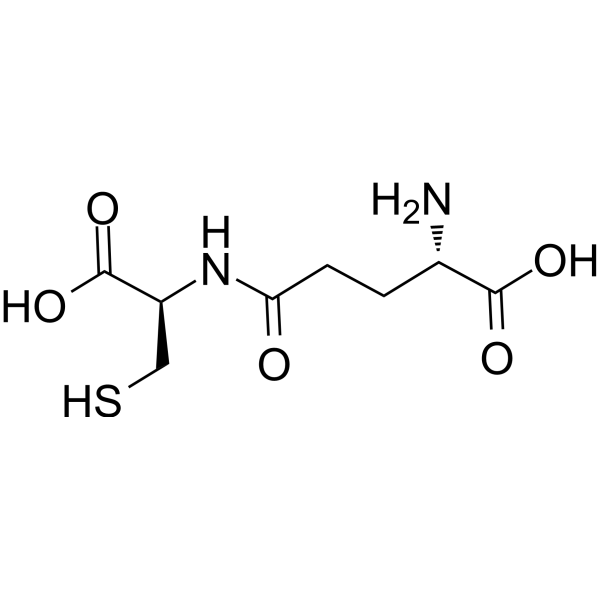
    Gamma-glutamylcysteine
    4 Publications Verification

    γ-Glu-Cys

    Endogenous Metabolite Interleukin Related TNF Receptor AMPK Sirtuin STAT PI3K NF-κB JAK p38 MAPK JNK Akt Apoptosis Ferroptosis Cardiovascular Disease Neurological Disease Inflammation/Immunology
    Gamma-glutamylcysteine (γ-Glu-Cys) is an orally active, blood-brain barrier permeable dipeptide . Gamma-glutamylcysteine activates AMPK, SIRT1, IL-4/STAT6, AC/cAMP/PI3K, IGF-1R/IRS1/PI3K, and Nrf2 signaling pathways; it inhibits NF-κB, JAK1/STAT1/3, MAPKs, cadmium-induced p38 MAPK, JNK, and PI3K/Akt signaling pathways. Gamma-glutamylcysteine regulates macrophage polarization, modulates the trafficking of CD36 and GLUT4, induces glutathione synthesis, improves metabolic dysfunction, reduces lipid deposition, ameliorates glucose homeostasis, inhibits apoptosis (Apoptosis), stabilizes mitochondria, suppresses lipid peroxidation, iron accumulation and ferroptosis (Ferroptosis), reduces ds-HMGB1 levels, reverses mechanical hyperalgesia, and alleviates hepatic lipid droplet formation. Gamma-glutamylcysteine is applicable to research related to inflammatory bowel disease, type 2 diabetes, cadmium-induced neurotoxicity, Alzheimer's disease, cerebral ischemia/reperfusion injury, neuropathy, and alcoholic liver disease .
    Gamma-glutamylcysteine
  • HY-113402A
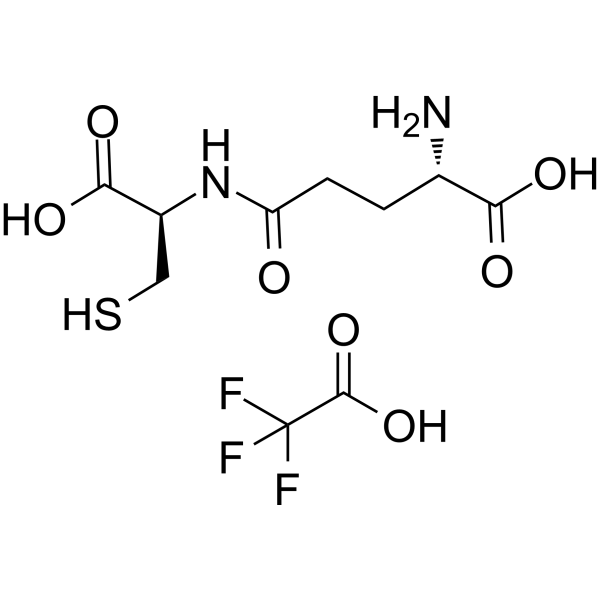
    Gamma-glutamylcysteine TFA
    4 Publications Verification

    γ-Glu-Cys TFA

    Interleukin Related TNF Receptor Endogenous Metabolite AMPK Sirtuin STAT PI3K NF-κB JAK p38 MAPK JNK Akt Apoptosis Ferroptosis Cardiovascular Disease Neurological Disease Inflammation/Immunology
    Gamma-glutamylcysteine TFA (γ-Glu-Cys TFA) is an orally active, blood-brain barrier permeable dipeptide . Gamma-glutamylcysteine TFA activates AMPK, SIRT1, IL-4/STAT6, AC/cAMP/PI3K, IGF-1R/IRS1/PI3K, and Nrf2 signaling pathways; it inhibits NF-κB, JAK1/STAT1/3, MAPKs, cadmium-induced p38 MAPK, JNK, and PI3K/Akt signaling pathways. Gamma-glutamylcysteine TFA regulates macrophage polarization, modulates the trafficking of CD36 and GLUT4, induces glutathione synthesis, improves metabolic dysfunction, reduces lipid deposition, ameliorates glucose homeostasis, inhibits apoptosis (Apoptosis), stabilizes mitochondria, suppresses lipid peroxidation, iron accumulation and ferroptosis (Ferroptosis), reduces ds-HMGB1 levels, reverses mechanical hyperalgesia, and alleviates hepatic lipid droplet formation. Gamma-glutamylcysteine TFA is applicable to research related to inflammatory bowel disease, type 2 diabetes, cadmium-induced neurotoxicity, Alzheimer's disease, cerebral ischemia/reperfusion injury, neuropathy, and alcoholic liver disease .
    Gamma-glutamylcysteine TFA
  • HY-P4373A
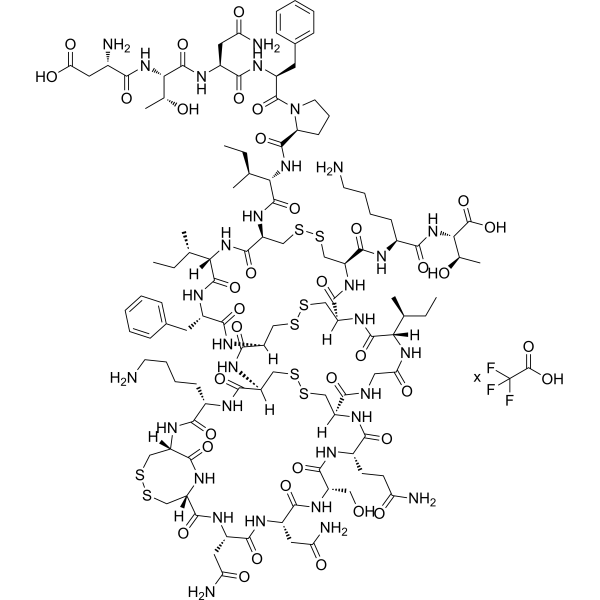
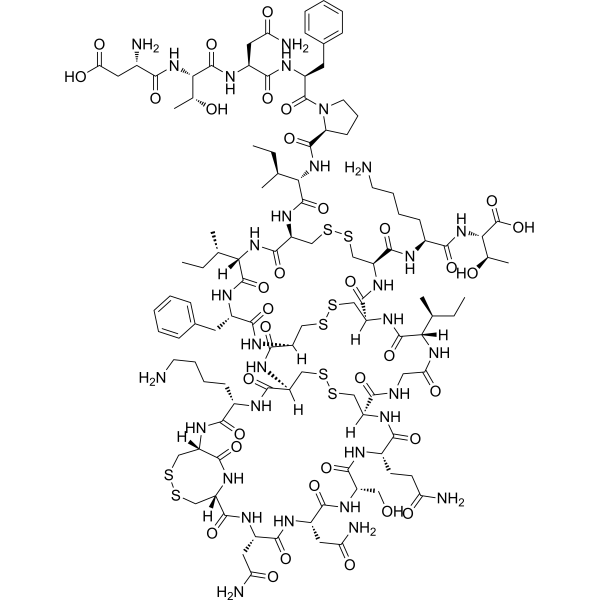
    Hepcidin-1 (mouse) TFA
    1 Publications Verification

    Cathepsin MMP Inflammation/Immunology
    Hepcidin-1 (mouse) TFA is an endogenous peptide hormone involved in the regulation of iron homeostasis. Hepcidin-1 (mouse) TFA upregulates mRNA levels of TRAP, cathepsin K, and MMP-9 and increases TRAP-5b protein secretion. Hepcidin-1 (mouse) TFA downregulates the level of FPN1 protein and increases intracellular iron. Hepcidin-1 (mouse) TFA facilitates osteoclast differentiation .
    Hepcidin-1 (mouse) TFA
  • HY-177662

    IONIS-TMPRSS6-Lrx; ISIS 702843

    TMPRSS6 Metabolic Disease
    Sapablursen, an antisense oligonucleotide, is designed to reduce the production of TMPRSS6 resulting in increased expression of hepcidin, which is the key regulator of iron homeostasis. Sapablursen can be used in the research of blood diseases such as pol
    Sapablursen
  • HY-175209

    Keap1-Nrf2 Ferroptosis Reactive Oxygen Species (ROS) Atg8/LC3 Cancer
    Nrf2-IN-4 is a Nrf2 inhibitor. Nrf2-IN-4 induces ferroptosis via NRF2 inhibition. Nrf2-IN-4 disrupts cellular iron homeostasis, facilitates ferritin degradation, and ultimately triggers ferroptosis. Nrf2-IN-4 induces lysosome activation by promoting iron-dependent ROS production and lysosomal acidification. Nrf2-IN-4 demonstrates significant antitumor efficacy. Nrf2-IN-4 can be used for the study of breast cancer .
    Nrf2-IN-4
  • HY-P4373

    Cathepsin MMP Metabolic Disease
    Hepcidin-1 (mouse) is an endogenous peptide hormone involved in the regulation of iron homeostasis. Hepcidin-1 (mouse) upregulates mRNA levels of TRAP, cathepsin K, and MMP-9 and increases TRAP-5b protein secretion. Hepcidin-1 (mouse) downregulates the level of FPN1 protein and increases intracellular iron. Hepcidin-1 (mouse) facilitates osteoclast differentiation .
    Hepcidin-1 (mouse)
  • HY-113402R

    γ-Glu-Cys (Standard)

    Reference Standards Endogenous Metabolite Interleukin Related TNF Receptor AMPK Sirtuin STAT PI3K NF-κB JAK p38 MAPK JNK Akt Apoptosis Ferroptosis Inflammation/Immunology
    Gamma-glutamylcysteine (Standard) is the analytical standard of Gamma-glutamylcysteine. This product is intended for research and analytical applications. Gamma-glutamylcysteine (γ-Glu-Cys) is an orally active, blood-brain barrier permeable dipeptide . Gamma-glutamylcysteine activates AMPK, SIRT1, IL-4/STAT6, AC/cAMP/PI3K, IGF-1R/IRS1/PI3K, and Nrf2 signaling pathways; it inhibits NF-κB, JAK1/STAT1/3, MAPKs, cadmium-induced p38 MAPK, JNK, and PI3K/Akt signaling pathways. Gamma-glutamylcysteine regulates macrophage polarization, modulates the trafficking of CD36 and GLUT4, induces glutathione synthesis, improves metabolic dysfunction, reduces lipid deposition, ameliorates glucose homeostasis, inhibits apoptosis (Apoptosis), stabilizes mitochondria, suppresses lipid peroxidation, iron accumulation and ferroptosis (Ferroptosis), reduces ds-HMGB1 levels, reverses mechanical hyperalgesia, and alleviates hepatic lipid droplet formation. Gamma-glutamylcysteine is applicable to research related to inflammatory bowel disease, type 2 diabetes, cadmium-induced neurotoxicity, Alzheimer's disease, cerebral ischemia/reperfusion injury, neuropathy, and alcoholic liver disease.
    Gamma-glutamylcysteine (Standard)
  • HY-177662A

    IONIS-TMPRSS6-Lrx sodium; ISIS 702843 sodium

    TMPRSS6 Metabolic Disease
    Sapablursen sodium, an antisense oligonucleotide, is designed to reduce the production of TMPRSS6 resulting in increased expression of hepcidin, which is the key regulator of iron homeostasis. Sapablursen sodium can be used in the research of blood diseas
    Sapablursen sodium
  • HY-175209A

    Keap1-Nrf2 Ferroptosis Reactive Oxygen Species (ROS) Atg8/LC3 Cancer
    Nrf2-IN-4 (Compound PhcY) hydrobromide is a Nrf2 inhibitor. Nrf2-IN-4 hydrobromide induces ferroptosis via NRF2 inhibition. Nrf2-IN-4 hydrobromide disrupts cellular iron homeostasis, facilitates ferritin degradation, and ultimately triggers ferroptosis. Nrf2-IN-4 hydrobromide induces lysosome activation by promoting iron-dependent ROS production and lysosomal acidification. Nrf2-IN-4 hydrobromide demonstrates significant antitumor efficacy. Nrf2-IN-4 hydrobromide can be used for the study of breast cancer .
    Nrf2-IN-4 hydrobromide
  • HY-174867

    PROTACs Ferroptosis Cancer
    AY-4 (Compound AY-4) is an efficient PROTAC degrader targeting FTH1 (Kd = 3.17 nM). AY-4 effectively upregulates the levels of ferrous (Fe 2+) and ferric (Fe 3+) ions in cells. AY-4 is a potential anticancer candidate compound that regulates iron homeostasis through ferritin degradation and enhances the efficacy of existing drugs. AY-4 can effectively reduce the level of FTH1 in breast cancer cells (Pink: FTH1 ligand AY-2 (HY-174871); Blue: E3 ligand Pomalidomide (HY-10984); Black: Linker, Pomalidomide-PEG3-acid (HY-174872)) .
    AY-4
  • HY-175869

    Ferroptosis Metabolic Disease Inflammation/Immunology
    Ferroptosis-IN-22 is a selective ferroptosis inhibitor by targeting NCOA4 and disrupting its interaction with ferritin with an EC50 of 520 nM and a Kd of 0.78 μM. Ferroptosis-IN-22 has a strong inhibitory activity against ferroptosis induced by multiple ferroptosis inducers (RSL3 (HY-100218A), Erastin (HY-15763), ML210 (HY-100003), FIN56 (HY-103087)), but does not inhibit necrosis induced by H2O2 or apoptosis induced by STS (HY-15141). Ferroptosis-IN-22 effectively ameliorates Concanavalin A (HY-P2149)-induced acute liver injury. Ferroptosis-IN-22 can be used for the study of ferroptosis-related diseases .
    Ferroptosis-IN-22
  • HY-121858

    Angiotensin-converting Enzyme (ACE) Metabolic Disease
    Nicotianamine can be isolated from the leaves of Nicotiana Tabacum L.. Nicotianamine is a key biosynthetic precursor of phytosiderophores. Nicotianamine is an iron chelating agent and can promote the transport of iron. Nicotianamine is an angiotensin-converting enzyme (ACE) inhibitor with IC50 values of 76 nM and 59 nM for rhACE2 and rhACE, respectively. Nicotianamine is vital in metal nutrition and metal homeostasis of flowering plants .
    Nicotianamine
  • HY-125288

    Ferroportin Metabolic Disease
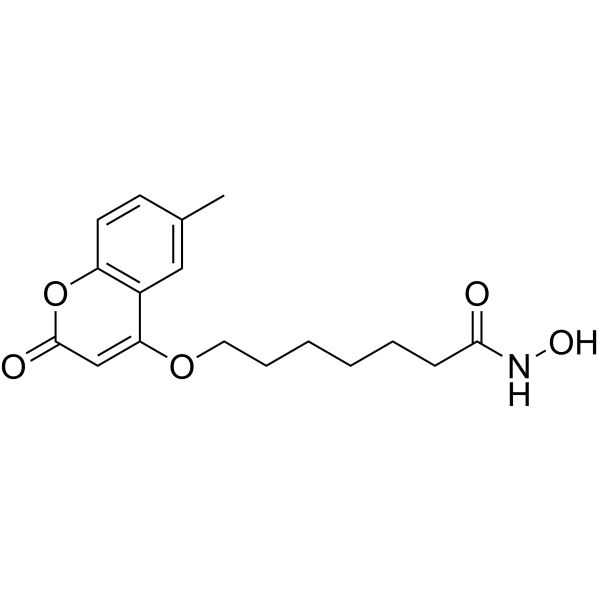
    DS42450411 is an orally active hepcidin production inhibitor with an IC50 of 32 nM. DS42450411 in an acute inflammatory mouse model induced by IL-6, DS42450411 significantly reduces serum hepcidin levels. DS42450411 can be used for studying iron homeostasis .
    DS42450411
  • HY-106159

    Reactive Oxygen Species (ROS) p38 MAPK JNK PERK Ferroptosis Cancer
    SB-T-101141 is a novel taxane. SB-T-101141 effectively induces a noncanonical ferroptosis to overcome Paclitaxel (HY-B0015) resistance of breast cancer. SB-T-101141 facilitates the production of iron and ferrous ions and ROS. SB-T-101141 stably binds to KHSRP to inhibit the iron-dependent expression of CISD1 related to iron homeostasis. SB-T-101141 synergistically enhances the iron-dependent activation of JNK and PERK pathways via KHSRP. SB-T-101141 suppresses breast tumor growth in MCF-7(PR)/MDA-MB-231(PR) or KHSRP knock-down MCF-7 xenograft mice model .
    SB-T-101141
  • HY-136861

    Bacterial Infection
    Antibacterial agent 192 is an antibacterial agent that can disrupt iron homeostasis in E. coli .
    Antibacterial agent 192
  • HY-174345

    ACSL Family Ferroptosis Glutathione Peroxidase Reactive Oxygen Species (ROS) Cancer
    Ferroptosis inducer-8 is a ferroptosis inducer with high selectivity for other cell death mechanism. Ferroptosis inducer-8 induces ferroptosis by affecting ACSL4, GPX4, and FTH1, thereby disrupting intracellular iron homeostasis and the GSH/GPX4 antioxidant defense system, ultimately leading to the accumulation of lipid peroxidation. Ferroptosis inducer-8 also induces ROS production. Ferroptosis inducer-8 inhibits tumor growth and can be used for research of triple-negative breast cancer (TNBC) .
    Ferroptosis inducer-8
  • HY-156439

    Bacterial Infection
    Antibiofilm agent-2 (compound 4T) is a potent biofilm inhibitor with an IC50 of 3.6 μM. Antibiofilm agent-2 inhibits the quorum sensing system and iron homeostasis as antibacterial synergists against Pseudomonas aeruginosa .
    Antibiofilm agent-2
  • HY-113402AR

    γ-Glu-Cys TFA (Standard)

    Interleukin Related TNF Receptor Endogenous Metabolite Reference Standards AMPK Sirtuin STAT PI3K NF-κB JAK p38 MAPK JNK Akt Apoptosis Ferroptosis Cardiovascular Disease Neurological Disease Inflammation/Immunology
    Gamma-glutamylcysteine (TFA) (Standard) is the analytical standard of Gamma-glutamylcysteine (TFA). This product is intended for research and analytical applications. Gamma-glutamylcysteine TFA (γ-Glu-Cys TFA) is an orally active, blood-brain barrier permeable dipeptide . Gamma-glutamylcysteine TFA activates AMPK, SIRT1, IL-4/STAT6, AC/cAMP/PI3K, IGF-1R/IRS1/PI3K, and Nrf2 signaling pathways; it inhibits NF-κB, JAK1/STAT1/3, MAPKs, cadmium-induced p38 MAPK, JNK, and PI3K/Akt signaling pathways. Gamma-glutamylcysteine TFA regulates macrophage polarization, modulates the trafficking of CD36 and GLUT4, induces glutathione synthesis, improves metabolic dysfunction, reduces lipid deposition, ameliorates glucose homeostasis, inhibits apoptosis (Apoptosis), stabilizes mitochondria, suppresses lipid peroxidation, iron accumulation and ferroptosis (Ferroptosis), reduces ds-HMGB1 levels, reverses mechanical hyperalgesia, and alleviates hepatic lipid droplet formation. Gamma-glutamylcysteine TFA is applicable to research related to inflammatory bowel disease, type 2 diabetes, cadmium-induced neurotoxicity, Alzheimer's disease, cerebral ischemia/reperfusion injury, neuropathy, and alcoholic liver disease.
    Gamma-glutamylcysteine TFA (Standard)
  • HY-173428

    Fungal Infection
    Antifungal agent 130 (Compound A7) is an orally active antifungal agent. Antifungal agent 130 has good antifungal activity against Candida albicans (MIC = 0.12 ng/mL) and Cryptococcus neoformans (MIC = 0.12 ng/mL) and has excellent antivirulence effect. Antifungal agent 130 exerts its antifungal effect by disrupting the iron homeostasis of fungal cells and inducing oxidative stress damage. Antifungal agent 130 can inhibit the formation of fungal virulence factors (such as biofilm, capsule, urease and melanin). Antifungal agent 130 has good antifungal effect and can be used in the study of drug-resistant fungal infections .
    Antifungal agent 130
  • HY-113402B

    γ-Glu-Cys ammonium

    Interleukin Related TNF Receptor Endogenous Metabolite AMPK Sirtuin STAT PI3K NF-κB JAK p38 MAPK JNK Akt Apoptosis Ferroptosis Cardiovascular Disease Neurological Disease Inflammation/Immunology
    Gamma-glutamylcysteine ammonium (γ-Glu-Cys ammonium) is an orally active, blood-brain barrier permeable dipeptide . Gamma-glutamylcysteine ammonium activates AMPK, SIRT1, IL-4/STAT6, AC/cAMP/PI3K, IGF-1R/IRS1/PI3K, and Nrf2 signaling pathways; it inhibits NF-κB, JAK1/STAT1/3, MAPKs, cadmium-induced p38 MAPK, JNK, and PI3K/Akt signaling pathways. Gamma-glutamylcysteine ammonium regulates macrophage polarization, modulates the trafficking of CD36 and GLUT4, induces glutathione synthesis, improves metabolic dysfunction, reduces lipid deposition, ameliorates glucose homeostasis, inhibits apoptosis (Apoptosis), stabilizes mitochondria, suppresses lipid peroxidation, iron accumulation and ferroptosis (Ferroptosis), reduces ds-HMGB1 levels, reverses mechanical hyperalgesia, and alleviates hepatic lipid droplet formation. Gamma-glutamylcysteine ammonium is applicable to research related to inflammatory bowel disease, type 2 diabetes, cadmium-induced neurotoxicity, Alzheimer's disease, cerebral ischemia/reperfusion injury, neuropathy, and alcoholic liver disease .
    Gamma-glutamylcysteine ammonium
  • HY-183711

    Bacterial Heme Oxygenase (HO) Infection
    Antibacterial agent 344 is an antibacterial agent with potent biofilm inhibition (IC50 = 0.27 μM). Antibacterial agent 344 inhibits heme oxygenase (HemO), impairs iron homeostasis, virulence factor production, and motility. Antibacterial agent 344 synergizes with Ciprofloxacin (HY-B0356) and Tobramycin (HY-B0441), enhancing their efficacy and delaying the development of resistance. Antibacterial agent 344 improves bacterial-infected Galleria mellonella survival, and reduces bacterial load in mice wounds. Antibacterial agent 344 can be used for the research of Pseudomonas aeruginosa infections .
    Antibacterial agent 344
  • HY-181665

    Ferroptosis Glutathione Peroxidase Reactive Oxygen Species (ROS) Apoptosis Neurological Disease
    Ferroptosis-IN-23 is an inhibitor of ferroptosis. Ferroptosis-IN-23 exerts a synergistic effect by simultaneously activating Steap4 and glutathione peroxidase 4 (GPX4), thereby maintaining iron metabolism homeostasis. Ferroptosis-IN-23 reverses neuronal ferroptosis and inhibits lipid ROS accumulation in cells. Ferroptosis-IN-23 inhibits ferroptosis in zebrafish, alleviates neuronal apoptosis, ROS accumulation, and dopaminergic neuron damage in a zebrafish model of Parkinson's disease. Ferroptosis-IN-23 can be used for research on Parkinson's disease .
    Ferroptosis-IN-23
  • HY-W722245

    Endogenous Metabolite Bacterial Infection
    Pyochelin is a salicylate-based nonribosomal peptide siderophore produced by Pseudomonas aeruginosa. Pyochelin chelates Fe 3+ and transports it back into bacterial cells, providing the iron essential for bacterial survival. Pyochelin can also chelate other metals such as Zn 2+, Co 2+, and Ni 2+, which helps bacteria maintain intracellular metal ion homeostasis by chelating and excreting excess metals in response to toxic metal stress. Pyochelin can be used in studies related to Pseudomonas aeruginosa infection .
    Pyochelin
  • HY-125984

    α-synuclein Neurological Disease
    Syn-516 is an inhibitor of α-synuclein (α-Syn). Syn-516 targets the 5' untranslated region (5'UTR) of α-Syn mRNA, with an IC50 value of 1.8 μM, thereby inhibiting the translation process of α-Syn. Syn-516 improves motor dysfunction and colonic motility abnormalities associated with α-Syn overexpression in mouse models. α-Syn can be used to study diseases such as Parkinson's disease and Lewy body dementia .
    Syn-516

온라인 문의

Your information is safe with us. * Required Fields.

호칭


Country or Region *

고객명 *


회사명 *

Department *


메일주소 *


상품명 *

Cat. No.


Requested quantity *

전화번호 *


비고

온라인 문의

Inquiry Information

상품명:
Cat. No.:
수량:
MCE Japan Authorized Agent:

