1. Search Result
Search Result
Results for "

LC3B

" in MedChemExpress (MCE) Product Catalog:

30

Inhibitors & Agonists

1

Natural
Products

2

Recombinant Proteins

4

Antibodies

5

Oligonucleotides

Targets Recommended:
Cat. No. Product Name Target Research Areas Chemical Structure
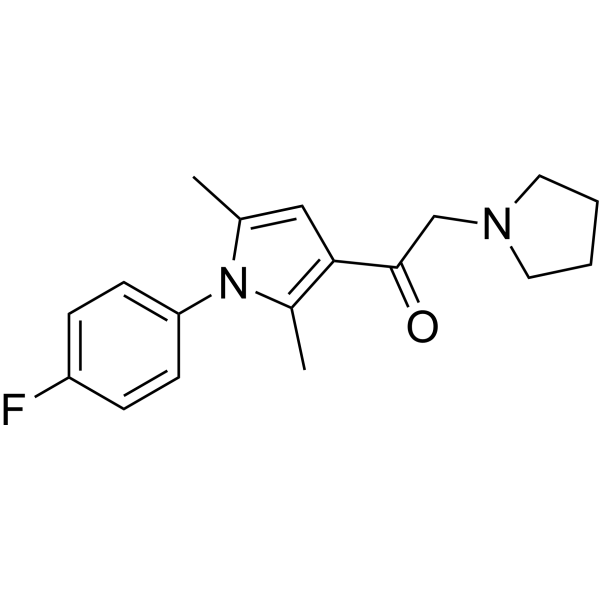
  • HY-13817
    IU1
    Maximum Cited Publications
    25 Publications Verification

    Deubiquitinase Autophagy Apoptosis Cardiovascular Disease Neurological Disease Endocrinology Cancer
    IU1 is a selective, reversible USP14 inhibitor with an IC50 of 4-5 μM. IU1 binds USP14’s catalytic cleft to block deubiquitinase activity. IU1 induces calpain-dependent Tau cleavage, causes ATP deficits, reduces E1~Ub thioester levels and 26S proteasome assembly. IU1 enhances 26S proteasome chymotrypsin-like activity, modulates LC3B-dependent autophagy flux, reduces cancer cell proliferation and migration, and blocks G0/G1 to S phase cell cycle transition in follicular thyroid cancer cells. IU1 activates autophagy-lysosomal and ubiquitin-proteasome pathways, triggers apoptosis, and reduces cervical cancer cell growth. IU1 enhances degradation of proteasome substrates linked to neurodegenerative disease, accelerates oxidized protein degradation, and increases oxidative stress resistance. IU1 can be used for the research of Alzheimer’s disease, follicular thyroid cancer, ischemic stroke, cervical cancer, and neurodegenerative disease [3] .
    IU1
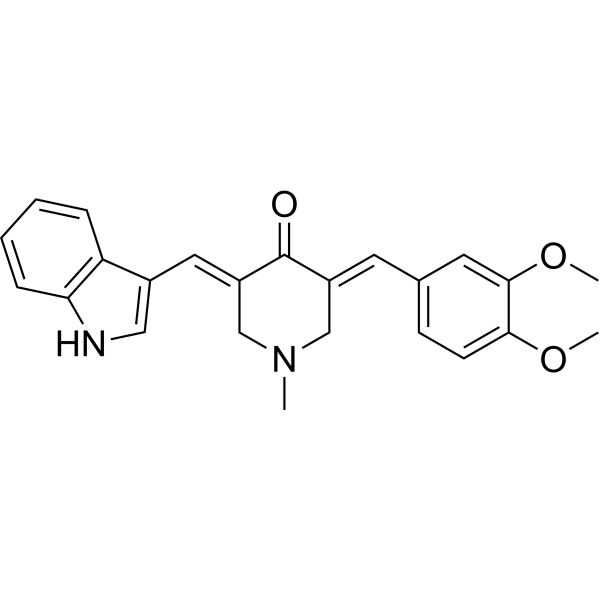
  • HY-130259

    Atg8/LC3 Autophagy Neurological Disease
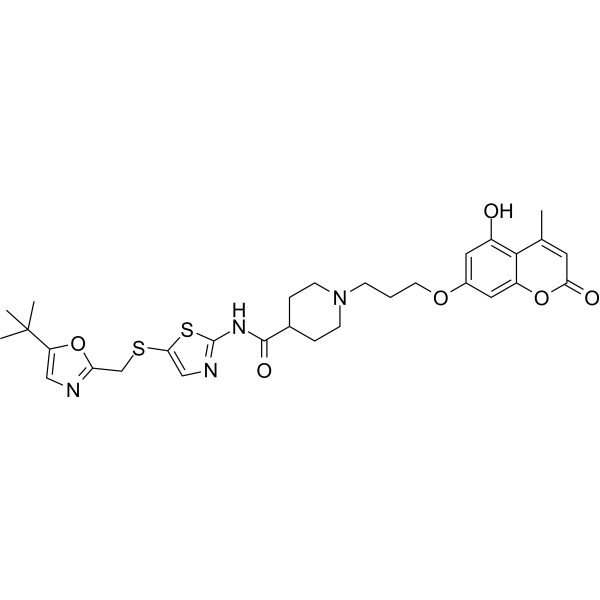
    LC3-mHTT-IN-AN2 (Compound AN2) is a mHTT-LC3 linker compound, which interacts with both mutant huntingtin protein (mHTT) and LC3B but not with wtHTT or irrelevant control proteins. LC3-mHTT-IN-AN2 reduces the levels of mHTT in an allele-selective manner in cultured Huntington disease (HD) mouse neurons .
    LC3-mHTT-IN-AN2
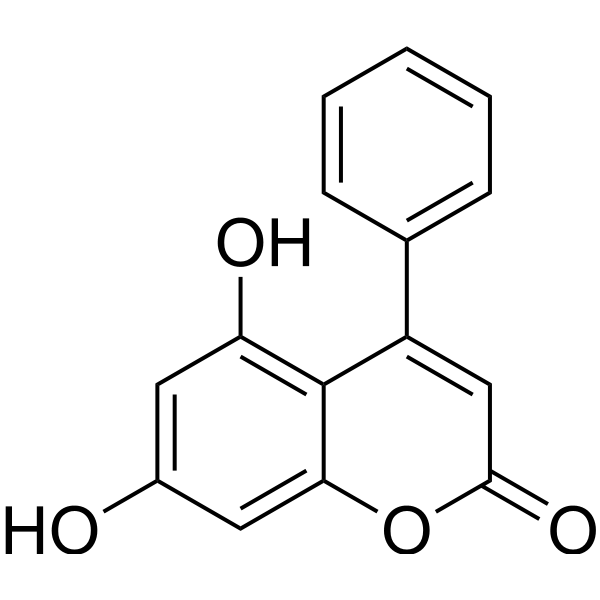
  • HY-130258

    Atg8/LC3 Autophagy Neurological Disease
    LC3-mHTT-IN-AN1 (Compound AN1) is a mHTT-LC3 linker compound, which interacts with both mutant huntingtin protein (mHTT) and LC3B but not with wtHTT or irrelevant control proteins. LC3-mHTT-IN-AN1 reduces the levels of mHTT in an allele-selective manner in cultured Huntington disease (HD) mouse neurons .
    LC3-mHTT-IN-AN1
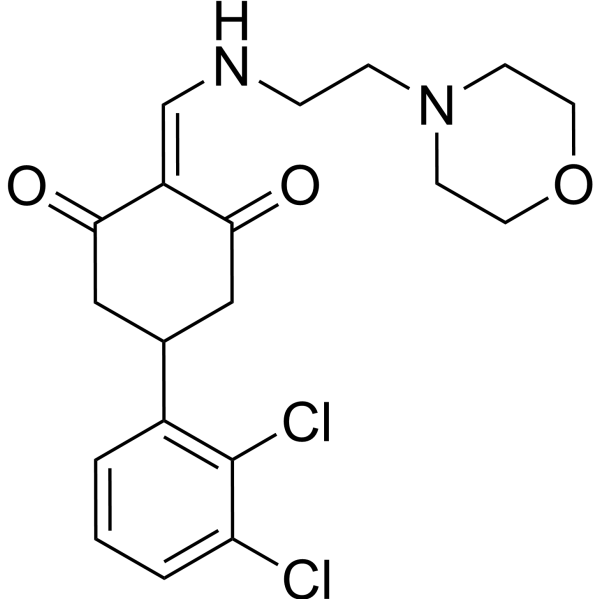
  • HY-146131

    Atg7 Atg8/LC3 Autophagy Cancer
    ATG7-IN-3 (Compound 18) is a potent ATG7 inhibitor with an IC50 of 0.048 μM. ATG7-IN-3 inhibits Autophagy. ATG7-IN-3 inhibits the formation of LC3B puncta. ATG7-IN-3 can be used in the researches of glioma and colon cancer .
    ATG7-IN-3
  • HY-112698
    CA-5f
    4 Publications Verification

    p62 Atg8/LC3 Autophagy Apoptosis Cancer
    CA-5f is a potent late-stage macroautophagy/autophagy inhibitor via inhibiting autophagosome-lysosome fusion. CA-5f increases LC3B-II (a marker to monitor autophagy) and SQSTM1 protein, and also increases ROS production. Anti-tumor activity .
    CA-5f
  • HY-141882
    DC-LC3in-D5
    1 Publications Verification

    Atg8/LC3 Autophagy Infection Inflammation/Immunology Cancer
    DC-LC3in-D5 acts as an autophagy inhibitor by attenuating LC3B lipidation. DC-LC3in-D5 binds with LC3B. DC-LC3in-D5 disrupts the LC3B-LBP2 interaction with an IC50 of 200 nM. DC-LC3in-D5 may contribute to anti-HCV or combination researchs in cancer through inhibiting autophagy .
    DC-LC3in-D5
  • HY-146130
    ATG7-IN-2
    1 Publications Verification

    Atg7 Autophagy Cancer
    ATG7-IN-2 (compound 1) is a potent ATG7 inhibitor, with an IC50 of 0.089 μM. ATG7-IN-2 inhibits autophagy marker LC3B .
    ATG7-IN-2
  • HY-160229

    R-1075 sodium

    Toll-like Receptor (TLR) MyD88 Caspase Reactive Oxygen Species (ROS) Autophagy Pyroptosis HIV Infection Neurological Disease
    ssRNA40 sodium (R-1075 sodium) is a single-stranded RNA40 derived from HIV-1. ssRNA40 sodium activates the TLR7, TLR8, TLR2, RIG-I, MDA5, MyD88, Caspase-3, IRE1α, NLRP3 inflammasome and IRF7 signaling pathways. ssRNA40 sodium alters mRNA expression in neutrophils, induces pro-inflammatory cytokines, ROS, autophagy (autophagy), pyroptosis (pyroptosis), neuronal death, neurodegeneration, aggregate formation and NK cell activation. ssRNA40 sodium activates the expression of CD62L, CD11b, CD69, MX1, OAS1, ATG7, LC3B and XBP1 in immune cell and neuronal populations. ssRNA40 sodium causes cortical neuron loss and axonal damage in mice in a TLR7-dependent manner. ssRNA40 sodium can be used in research on HIV-1 infection, neurodegeneration, COVID-19 and HIV-associated neurological disorders [3] .
    ssRNA40 sodium
  • HY-168892

    Atg8/LC3 Autophagy Cancer
    LC3B recruiter 2 (34R) is an LC3B recruiter and a component of the autophagy-lysosome pathway degradation system (ATTEC, Autophagy-Tethering Compounds), which directly binds to LC3B. LC3B recruiter 2 binds to CDK9 inhibitor SNS-032 (HY-10008) through a linker, forming an ATTEC that targets the degradation of the CDK9 and Cyclin T1 complex (with inhibitory effects on both). Therefore, LC3B recruiter 2 exerts activity through the LC3B-dependent autophagy-lysosome pathway, interfering with the cell cycle of cancer cells, thus exhibiting antitumor activity .
    LC3B recruiter 2
  • HY-168891

    Atg8/LC3 Others
    LC3B recruiter 1 (compound 33R) is an LC3B recruiter fragment. LC3B recruiter 1 directly interacts with LC3B with a KD value of 2.87 µM .
    LC3B recruiter 1
  • HY-RS08029

    Small Interfering RNA (siRNA) Others

    MAP1LC3B Human Pre-designed siRNA Set A contains three designed siRNAs for MAP1LC3B gene (Human), as well as a negative control, a positive control, and a FAM-labeled negative control.

    MAP1LC3B Human Pre-designed siRNA Set A
    MAP1LC3B Human Pre-designed siRNA Set A
  • HY-176045

    Ligands for E3 Ligase Cardiovascular Disease Cancer
    LC3B ligand 2 is a ligand for E3 ubiquitin ligase. LC3B ligand 2 can be connected to the ligand for protein by a linker to form PROTAC PCSK9 autophagic degrader 2 (HY-176043). PROTACs are inducers of ubiquitination-mediated degradation of cancer-promoting proteins .
    LC3B ligand 2
  • HY-162588

    NOD-like Receptor (NLR) ATTECs Autophagy Inflammation/Immunology
    MC-ND-18 is an ATTEC degrader that degrades NLRP3 via the Autophagy pathway, with a DC50 of 125.5 nM in THP-1 cells. MC-ND-18 exhibits anti-inflammatory activity in a DSS-induced mouse model of colitis. MC-ND-18 can be used for research on inflammatory bowel disease. MC-ND-18 consists of an NLRP3 inhibitor (HY-156121), a linker (HY-W018745), and an LC3 ligand .
    MC-ND-18
  • HY-168897

    Ligands for Target Protein for PROTAC Others
    LC3B ligand 1 is a ligand for the target protein of PROTAC and can be used for the synthesis of PROTAC CDK9 autophagic degrader 1 (HY-168896) .
    LC3B ligand 1
  • HY-134183

    AUTACs Autophagy Metabolic Disease Cancer
    AUTAC1 is a MetAP2-targeting autophagy-mediated degrader (AUTAC). AUTACs contain a degradation tag and a warhead to provide target specificity. AUTAC1 contains an FBnG (p-Fluorobenzyl Guanine) and a Fumagillol moiety. Fumagillol binds covalently to MetAP2 .
    AUTAC1
  • HY-176043

    ATTECs PCSK9 Cancer
    PCSK9 autophagic degrader 2 (W6) is a PCSK9 targeted autophagosome, with an DC50 of 20.6 nM. PCSK9 autophagic degrader 2 (W6) demonstrates comparable antiatherosclerosis effect and exhibits a KD of 2.5 μM for LC3B (Pink: PCSK9 ligand HY-176044; Blue: LC3B ligand HY-176045; Black: linker HY-141373) .
    PCSK9 autophagic degrader 2
  • HY-173119

    ERK Autophagy Apoptosis p62 mTOR Reactive Oxygen Species (ROS) Ferroptosis Cancer
    SKLB-D18 is an orally active ERK1/2/ERK5 inhibitor, with an IC50 of 38.69 nM and a Kd of 126.9 nM against human ERK1, an IC50 of 40.12 nM and a Kd of 209.8 nM against ERK2, and an IC50 of 59.72 nM and a Kd of 468.2 nM against ERK5. SKLB-D18 inhibits cancer cell proliferation, induces G0/G1 cell cycle arrest and apoptosis. SKLB-D18 reduces the levels of p-ERK5, p-RSKp90, p-c-Myc and c-Myc, and upregulates the level of p-ERK1/2, thereby inhibiting the ERK1/2/5 pathway in cells. SKLB-D18 increases LC3B-II accumulation, and decreases the levels of p62, p-mTOR and p-p70S6K. SKLB-D18 elevates the levels of ROS, lipid peroxidation and free ferrous ions, reduces the levels of NCOA4 and GPX4, and induces ferritin autophagy-dependent ferroptosis in cancer cells. SKLB-D18 exhibits antitumor activity in a triple-negative breast cancer xenograft mouse model. SKLB-D18 can be used in research related to triple-negative breast cancer .
    SKLB-D18
  • HY-134184

    AUTACs Autophagy Inflammation/Immunology Cancer
    AUTAC2 is a FKBP12-targeting autophagy-mediated degrader (AUTAC). AUTAC2 contains an FBnG (p-Fluorobenzyl Guanine) and an SLF (c ligand of FKBP) moiety. SLF binds non-covalently to FKBP12 .
    AUTAC2
  • HY-168896

    CDK ATTECs Cancer
    CDK9 autophagic degrader 1 (Compound 28) is a ATTEC degrader that can be used to degrade CDK9 and also affects the levels of the associated Cyclin T1. CDK9 autophagic degrader 1 shows over 80% CDK9 inhibition rate at 100 nM . ( Pink: LC3B ligand (HY-168897); Black: linker (HY-W017758); Blue: target protein ligand (HY-10008); linker + target protein ligand (HY-168898))
    CDK9 autophagic degrader 1
  • HY-RS18108

    Small Interfering RNA (siRNA) Others

    Map1lc3b Mouse Pre-designed siRNA Set A contains three designed siRNAs for Map1lc3b gene (Mouse), as well as a negative control, a positive control, and a FAM-labeled negative control.

    Map1lc3b Mouse Pre-designed siRNA Set A
    Map1lc3b Mouse Pre-designed siRNA Set A
  • HY-RS08030

    Small Interfering RNA (siRNA) Others

    MAP1LC3B2 Human Pre-designed siRNA Set A contains three designed siRNAs for MAP1LC3B2 gene (Human), as well as a negative control, a positive control, and a FAM-labeled negative control.

    MAP1LC3B2 Human Pre-designed siRNA Set A
    MAP1LC3B2 Human Pre-designed siRNA Set A
  • HY-B0824A

    Autophagy Others
    (1R)-cis-Bifenthrin is a widely used pyrethroid pesticide with activity that reduces motor coordination. (1R)-cis-Bifenthrin has a significant impact on the motor function of ParKin-/- mice, as shown by increased pole climbing time and wheel running Time decreases. Exposure of (1R)-cis-Bifenthrin resulted in a significant reduction in tyrosine hydroxylase-positive cell counts and protein expression. (1R)-cis-Bifenthrin caused increased expression of mitophagy-related proteins LC3B and p62. (1R)-cis-Bifenthrin has a lower binding energy with transferrin and transferrin receptor 2, showing stronger interactions. The biological effects of (1R)-cis-Bifenthrin show relationships with mitophagy and ferroptosis-related pathways .
    (1R)-cis-Bifenthrin
  • HY-179049

    EGFR Microtubule/Tubulin Akt ERK Autophagy Atg8/LC3 p62 Ferroptosis Reactive Oxygen Species (ROS) Cancer
    EGFR/tubulin-IN-1 (Compound 26) is a dual-target inhibitor of EGFR and tubulin. EGFR/tubulin-IN-1 significantly reduces the levels of p-EGFR, p-AKT, and p-ERK in cells, disrupting the microtubule structure of the cells. EGFR/tubulin-IN-1 significantly inhibits the proliferation of H1975 cells and significantly blocks the cells in the G2/M phase. EGFR/tubulin-IN-1 induces the expression of autophagy markers LC3B-II and Beclin-1, while down-regulating the expression of p62. EGFR/tubulin-IN-1 induces ferroptosis, with increased ROS content and depletion of glutathione (GSH). EGFR/tubulin-IN-1 inhibits epithelial-mesenchymal transition (EMT) and tumor metastasis. EGFR/tubulin-IN-1 has a significant tumor-suppressing effect in the H1975 transplanted tumor nude mouse model. EGFR/tubulin-IN-1 can be used for the study of non-small cell lung cancer .
    EGFR/tubulin-IN-1
  • HY-180218

    ATTECs Bcr-Abl Autophagy Cancer
    DS-PPE-GW is a BCR-ABL ATTEC degrader. DS-PPE-GW connects BCR-ABL and LC3B, thereby tethering BCR-ABL to the autophagosome membrane. DS-PPE-GW shows potent BCR-ABL degradation. DS-PPE-GW has anticancer activity against chronic myeloid leukemia (Pink: LC3B ligand (HY-10542); Blue: BCR-ABL ligand (HY-107447); Black: Linker (HY-W001860)) .
    DS-PPE-GW
  • HY-180188

    Autophagy Cardiovascular Disease Cancer
    F1-ispinesib is a heterobifunctional F1-autophagy degrader, composed of an RNA-binding fragment (F1) and the LC3B ligand Ispinesib (HY-50759). F1-ispinesib induces degradation of COL15A1 mRNA via an LC3B-dependent macroautophagy mechanism. F1-ispinesib inhibits cell proliferation and enhances migration of human aortic smooth muscle cells .
    F1-ispinesib
  • HY-RS24582

    Small Interfering RNA (siRNA) Others

    Map1lc3b Rat Pre-designed siRNA Set A contains three designed siRNAs for Map1lc3b gene (Rat), as well as a negative control, a positive control, and a FAM-labeled negative control.

    Map1lc3b Rat Pre-designed siRNA Set A
    Map1lc3b Rat Pre-designed siRNA Set A
  • HY-183714

    Apoptosis Autophagy Caspase Cancer
    Anticancer agent 325 is an apoptosis/autophagy inducer and anticancer agent. Anticancer agent 325 exhibits cytotoxic activity against gastric cancer cells, with no significant effect on healthy gastric epithelial cells. Anticancer agent 325 enhances the expression of activated/cleaved Caspase-3 to promote apoptosis. Anticancer agent 325 also enhances the cleavage of PARP, a downstream marker of apoptosis, promotes LC3B lipidation, and activates autophagy. Anticancer agent 325 can be used in the research of gastric cancer .
    Anticancer agent 325
  • HY-176046

    E3 Ligase Ligand-Linker Conjugates Cancer
    E3 Ligase Ligand-linker Conjugate 183 is an E3 ligase ligand-linker conjugate of PCSK9 autophagic degrader 2 (HY-176043). E3 Ligase Ligand-linker Conjugate 183 consists of LC3B ligand 2 (HY-176045) and the corresponding linker (HY-141373) .
    E3 Ligase Ligand-linker Conjugate 183
  • HY-180196

    EGFR Bcl-2 Family CDK Atg8/LC3 Apoptosis Autophagy Cancer
    EGFR-IN-187 (Compound 4d) is a selective EGFR inhibitor with an IC50 of 25.41 μM. EGFR-IN-187 can cause cancer cells S amd G2/M phase arrest and induce apoptosis and autophagy. EGFR-IN-187 upregulates CCNE1, Bax, LC3B-II and P27 expression and downregulates CCNA1 and Bcl-2 levels. EGFR-IN-187 can be used for the research of cancer, such as lung cancer .
    EGFR-IN-187
  • HY-183273

    Epigenetic Reader Domain Akt CDK Autophagy Apoptosis Cancer
    BRD4/AKT-IN-1 is a BRD4/AKT inhibitor with BRD4 IC50 66.12 nM and AKT1 IC50 143.81 nM. BRD4/AKT-IN-1 blocks BRD4-mediated c-Myc transcriptional regulation, modulates AKT1 signaling, decouples AKT phosphorylation from pro-survival effectors. BRD4/AKT-IN-1 induces G0/G1 cell cycle arrest via downregulated phosphorylated RB, cyclin E1, CDK2. BRD4/AKT-IN-1 elevates LC3B levels to promote autophagy. BRD4/AKT-IN-1 promotes apoptosis in cancer cells. BRD4/AKT-IN-1 can be used for the research of metastatic castration-resistant prostate cancer .
    BRD4/AKT-IN-1

Inquiry Online

Your information is safe with us. * Required Fields.

Salutation


Country or Region *

Applicant Name *


Organization Name *

Department *


Email Address *


Product Name *

Cat. No.


Requested quantity *

Phone Number *


Remarks

Inquiry Online

Inquiry Information

Product Name:
Cat. No.:
Quantity:
MCE Japan Authorized Agent:

