9 Results for "

LPS-Induced Liver Injury

" in MedChemExpress (MCE) Product Catalog:
Products (9)

9 Results for "LPS-Induced Liver Injury" in MCE Product Catalog:

Cat. No.: HY-N13250
Hawthorn Extract is an orally active hawthorn extract. Hawthorn Extract decreases Bax expression and increases Bcl-2 expression in the aorta. Hawthorn Extract regulates the AMPK signaling pathway, induces apoptosis, enhances the hepatic antioxidant system, and ameliorates symptoms of liver injury, inflammation and cancer. Hawthorn Extract reduces plasma levels of pro-inflammatory factors, increases plasma levels of anti-inflammatory adiponectin, and alleviates atherosclerotic plaque lesions in the aorta. Hawthorn Extract improves symptoms associated with chronic heart failure . Hawthorn Extract inhibits FMLP-induced superoxide anion production, Elastase release, ILB4 generation and calcium signaling in neutrophils, and also reduces LPS-induced cytokine production in neutrophils. Hawthorn Extract induces autophagy and inhibits the proliferation of intestinal stem cells. Hawthorn Extract can be used in research related to atherosclerosis, hepatitis, alcoholic liver disease, non-alcoholic fatty liver disease, hepatocellular carcinoma, chronic heart failure and hypotension .
loading...
    loading...
Cat. No.: HY-135174
CAS No.: 13081-14-6
Synonyms: L-CySSG; CYSH-GSH
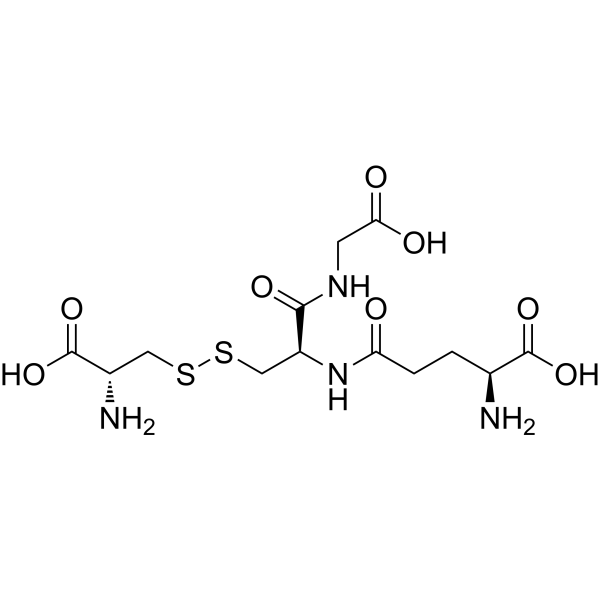
L-Cysteine-glutathione disulfide (L-CySSG; CYSH-GSH) is a thiol-modified glutathione prodrug with antioxidant, anti-inflammatory, and oral activities. L-Cysteine-glutathione disulfide reduces the production of mitochondrial ROS, and alleviates oxidative stress, inflammatory responses, and elevated levels of hepatic enzymes. L-Cysteine-glutathione disulfide prevents liver injury in mice induced by high-fat diet or LPS. The expression level of L-Cysteine-glutathione disulfide changes during tuberculosis infection, so it can serve as a biomarker for pulmonary tuberculosis. L-Cysteine-glutathione disulfide is applicable to research on pulmonary tuberculosis, metabolic dysfunction-associated steatotic liver disease, and liver injury .
loading...
    loading...
Cat. No.: HY-152213
CAS No.: 2506823-08-9
Research Areas:  

Inflammation/Immunology

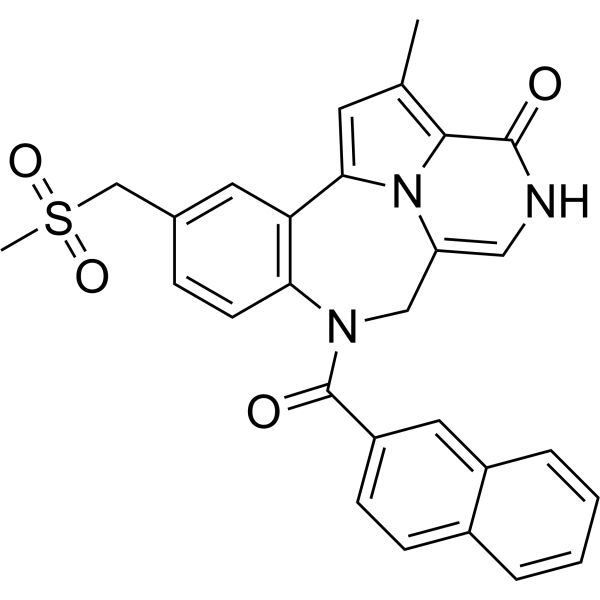
BET-IN-13 is a potent BET inhibitor with an IC50 value of 1.6 nM. BET-IN-13 reduces LPS-induced TNF-α, IL-1β, IL-6, and NOS2 mRNA expression levels. BET-IN-13 shows anti-inflammatory activity. BET-IN-13 has the potential for the research of acute liver injury .
loading...
    loading...
Cat. No.: HY-N4243
CAS No.: 108944-67-8
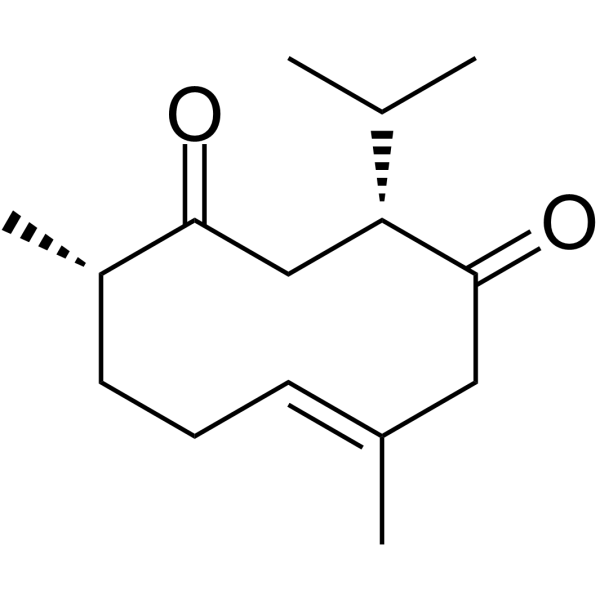
Neocurdione is a hepatoprotective sesquiterpene isolated from Curcuma zedoaria rhizome. Neocurdione exerts potent effect on D-galactosamine- (D-Gain) and lipopolysaccharide- (LPS) induced acute liver injury in mice .
loading...
    loading...
Cat. No.: HY-178471
CAS No.: 2975215-64-4
FABP4/5-IN-6 is an orally active, potent FABP4/5 inhibitor (Ki = 0.41/2.53 μM), showing low selectivity over FABP3 (Ki = 59.72 μM). FABP4/5-IN-6 inhibits the secretion of MCP-1 and IL-6 in Lipopolysaccharides (HY-D1056) (LPS)-induced THP-1 macrophage. FABP4/5-IN-6 exhibits significant anti-inflammatory effects and attenuates LPS-induced liver injury. FABP4/5-IN-6 has low hERG inhibition (LD50 > 2000 mg/kg). FABP4/5-IN-6 can be used for the study of Inflammation-related diseases .
loading...
    loading...
Cat. No.: HY-N12069
CAS No.: 117233-34-8
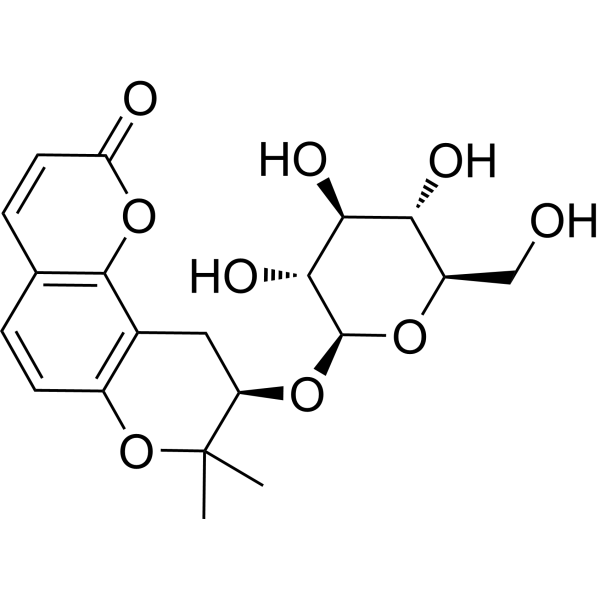
Praeroside IV can be isolated from the roots of Angelica furcijuga. Praeroside IV can be used for research of D-GalN/LPS-induced liver injury .
loading...
    loading...
Cat. No.: HY-N17882A
CAS No.: 173559-75-6
Hydroxysaikosaponin D is a hepatocytoprotective saponin found in the roots of Bupleurum scorzonerifolium WILLD. Hydroxysaikosaponin D inhibits D-galactosamine-induced cytotoxicity in primary cultured rat hepatocytes. Hydroxysaikosaponin D mitigates D-galactosamine/LPS-induced liver injury in mice. Hydroxysaikosaponin D can be used for the research of liver injury .
loading...
    loading...
Cat. No.: HY-180291
Anti-inflammatory agent 109 (Compound 2m) is an anti-inflammatory agent. Anti-inflammatory agent 109 directly interacts with p65, attenuates aberrant activation of the NF-κB pathway. Anti-inflammatory agent 109 significantly suppresses the release of key pro-inflammatory mediators, including IL-1β, COX-2, and iNOS. Anti-inflammatory agent 109 conferres robust protection against LPS-induced acute liver injury in septic mice .
loading...
    loading...
Cat. No.: HY-184324
CAS No.: 2975573-18-1
Anti-inflammatory agent 116 is an anti-inflammatory agent. Anti-inflammatory agent 116 inhibits the abnormal activation of the NF-κB/MAPK signaling pathway. Anti-inflammatory agent 116 binds to the p50 subunit and impairs the DNA-binding ability of the p65-p50 heterodimer. Anti-inflammatory agent 116 inhibits LPS-induced production of NO and MtROS, secretion of IL-1β and TNF-α, expression of iNOS and COX-2, phosphorylation of IKK, IκB, p65, p38, ERK and JNK, as well as nuclear translocation of p65. Anti-inflammatory agent 116 alleviates sepsis-associated acute liver injury in mice. Anti-inflammatory agent 116 can be used for the research of sepsis-associated acute liver injury .
loading...
    loading...

