1. Search Result
Search Result
Results for "

Morinda citrifolia

" in MedChemExpress (MCE) Product Catalog:

12

Inhibitors & Agonists

12

Natural
Products

Cat. No. Product Name Target Research Areas Chemical Structure
  • HY-108485

    Src Apoptosis Fungal Infection Inflammation/Immunology Cancer
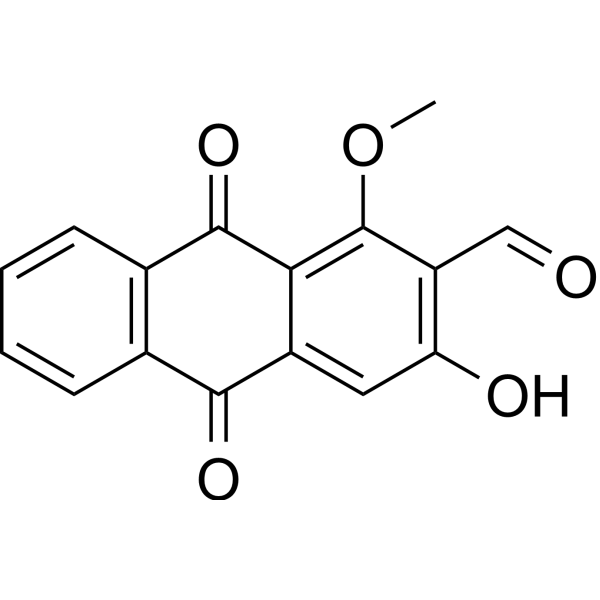
    Damnacanthal is an anthraquinone isolated from the root of Morinda citrifolia. Damnacanthal is a highly potent, selective inhibitor of p56 lck tyrosine kinase activity. Natural Damnacanthal inhibits p56 lck autophosphorylation and phosphorylation of exogenous substrates with IC50s of 46 nM and 220 nM, respectively. Damnacanthal is a potent inducer of apoptosis with anticancer activity. Damnacanthal also has antinociceptive, anti-inflammatory effects in mice and anti-fungal activity against Candida albicans .
    Damnacanthal
  • HY-W745164

    MMP Inflammation/Immunology
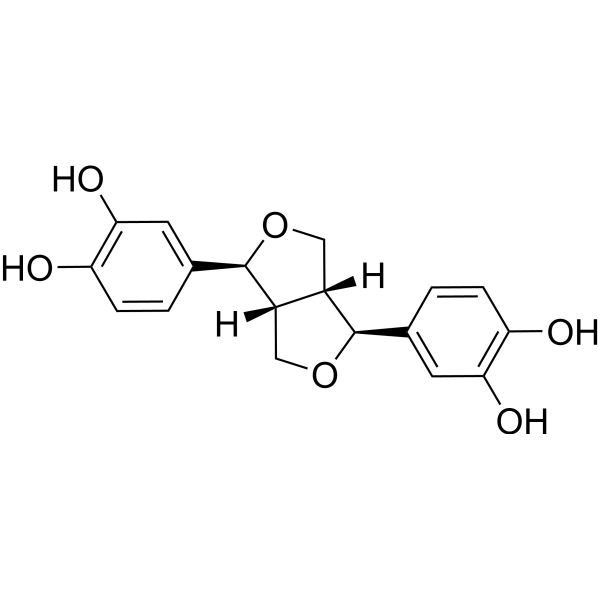
    3,3′-Bisdemethylpinoresinol, lignin, is a nature product and has MMP-1 inhibitory activity in UVA-irradiated human dermal fibroblasts. 3,3′-Bisdemethylpinoresinol can be isolated from the seeds of Morinda citrifolia .
    3,3′-Bisdemethylpinoresinol
  • HY-N2492

    Methyl trans-p-coumarate

    Apoptosis Interleukin Related GSK-3 Parasite Infection Cancer
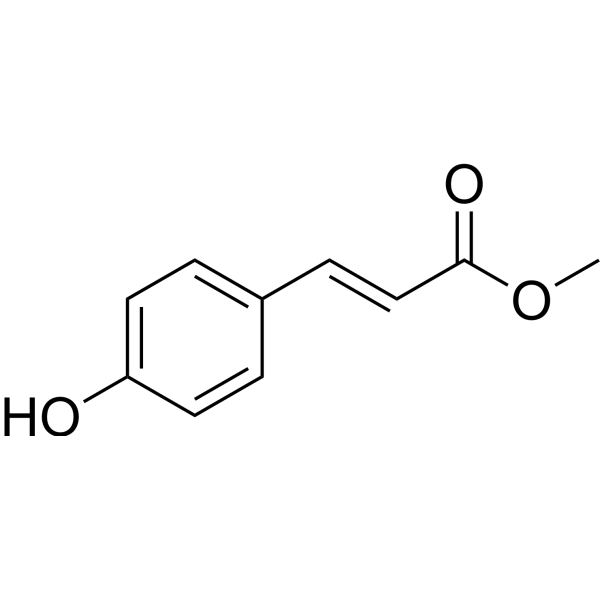
    (E)-Methyl 4-coumarate (Methyl 4-hydroxycinnamate) is a phenolic compound and derivative of Cinnamic acid (HY-N0610A). (E)-Methyl 4-coumarate can be found in several plants, such as the leaves of Allium cepa and Morinda citrifolia L. (E)-Methyl 4-coumarate, when combined with Carnosic acid (HY-N0644), induces Apoptosis. (E)-Methyl 4-coumarate inhibits GSK3β activity and modulates inflammatory cytokine levels (increasing IL-10 and decreasing IL-4). (E)-Methyl 4-coumarate combined with Carnosic acid exhibits anticancer effects against acute myeloid leukemia. (E)-Methyl 4-coumarate ameliorates Plasmodium berghei NK65 infection .
    (E)-Methyl 4-coumarate
  • HY-178224

    Apoptosis DNA/RNA Synthesis Cancer
    Morindone is an anthraquinone found in Morinda citrifolia L. Morindone can inhibit cancer cells proliferation, induce apoptosis and cause G1 phase arrest. Morindone can inhibit activities of DNA polymerase and downregulate mutated TP53 and KRAS gene expression. Morindone can be used for the research of cancer, such as colon cancer .
    Morindone
  • HY-N15495

    Others Cardiovascular Disease
    Morindine is an active ingredient that can be extracted from Morinda citrifolia L.. Morindine can stimulate an increase in heart frequency. Morindine can be used for research on cardiovascular conditions .
    Morindine
  • HY-N18712

    Others Inflammation/Immunology
    The active ingredients in Morinda citrifolia extract include scopolamine, danacanaldehyde, vitamins C and E, minerals (potassium, calcium), polysaccharides, fatty acids, catechins, and flavonoids. Morinda citrifolia extract possesses antioxidant, anti-inflammatory, and immune-boosting properties, helping to reduce inflammation and combat oxidative stress.
    Morinda citrifolia extract
  • HY-N1692

    Others Inflammation/Immunology
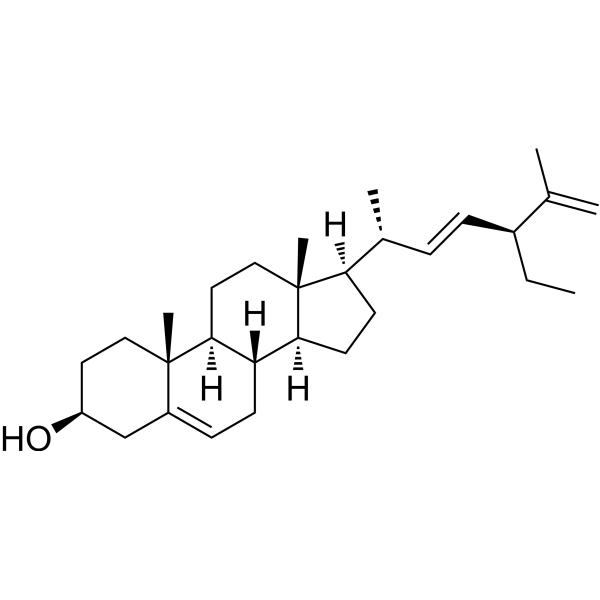
    22-Dehydroclerosterol is a compound that can be found in Morinda citrifolia L. .
    22-Dehydroclerosterol
  • HY-W663232

    Others Others
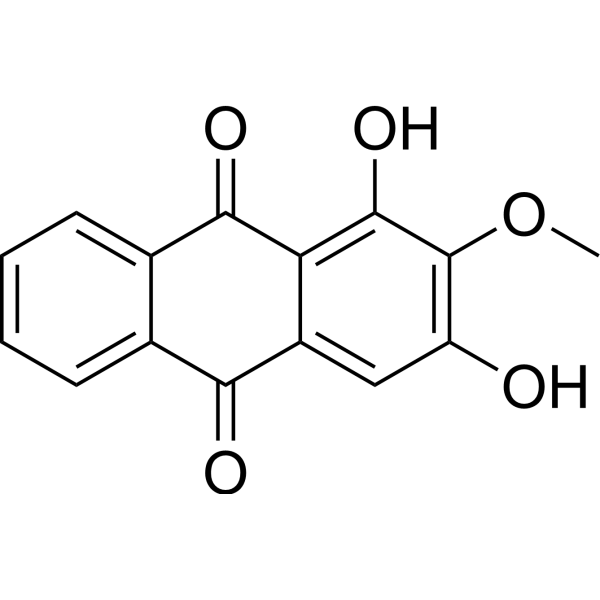
    Anthragallol-2-methyl ether (compound 4) can be isolated from the fruits of Morinda citrifolia .
    Anthragallol-2-methyl ether
  • HY-N17915

    Others Others
    2-Methyl-3,5,6-trihydroxyanthraquinone (compound 6) is an anthraquinone found in cell suspension cultures of Morinda citrifolia .
    2-Methyl-3,5,6-trihydroxyanthraquinone
  • HY-B1899AR

    Taurodeoxycholate sodium hydrate (Standard)

    Reference Standards G protein-coupled Bile Acid Receptor 1 Endogenous Metabolite Metabolic Disease
    (E)-Methyl 4-coumarate (Standard) is the analytical standard of (E)-Methyl 4-coumarate. This product is intended for research and analytical applications. (E)-Methyl 4-coumarate (Methyl 4-hydroxycinnamate), found in several plants, such as Allium cepa or Morinda citrifolia L. leaves. (E)-Methyl 4-coumarate cooperates with Carnosic Acid in inducing apoptosis and killing acute myeloid leukemia cells, but not normal peripheral blood mononuclear cells. Antioxidant and antimicrobial activity.
    Taurodeoxycholic acid sodium hydrate (Standard)
  • HY-N2492R

    Methyl trans-p-coumarate (Standard)

    Reference Standards Apoptosis Parasite Interleukin Related GSK-3 Infection Cancer
    (E)-Methyl 4-coumarate (Standard) is the analytical standard of (E)-Methyl 4-coumarate (HY-N2492). This product is intended for research and analytical applications. (E)-Methyl 4-coumarate (Methyl 4-hydroxycinnamate) is a phenolic compound and derivative of Cinnamic acid (HY-N0610A). (E)-Methyl 4-coumarate can be found in several plants, such as the leaves of Allium cepa and Morinda citrifolia L. (E)-Methyl 4-coumarate, when combined with Carnosic acid (HY-N0644), induces Apoptosis. (E)-Methyl 4-coumarate inhibits GSK3β activity and modulates inflammatory cytokine levels (increasing IL-10 and decreasing IL-4). (E)-Methyl 4-coumarate combined with Carnosic acid exhibits anticancer effects against acute myeloid leukemia. (E)-Methyl 4-coumarate ameliorates Plasmodium berghei NK65 infection .
    (E)-Methyl 4-coumarate (Standard)
  • HY-N0990

    Others Cancer
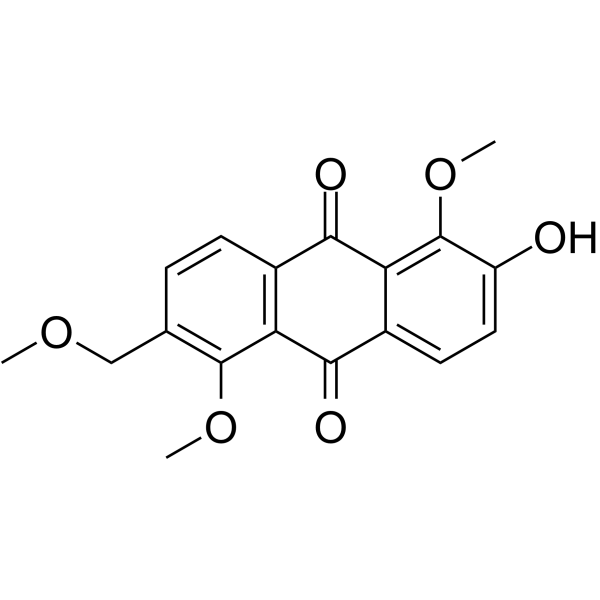
    1,5,15-Trimethylmorindol is an anthraquinone isolated from the leaves of Morinda citrifolia. 1,5,15- trimethylmorindol (25 μg/mL) does not show significant cytotoxic activity on the human T-cell leukemia cell line, Jurkat, by itself but it shows cytotoxicity (IC50 14.5-15.0 μg/mL) when combined with 0.5-1.5 μg/mL of TRAIL in the cell proliferation assay .
    1,5,15-Trimethylmorindol

Inquiry Online

Your information is safe with us. * Required Fields.

Salutation


Country or Region *

Applicant Name *


Organization Name *

Department *


Email Address *


Product Name *

Cat. No.


Requested quantity *

Phone Number *


Remarks

Inquiry Online

Inquiry Information

Product Name:
Cat. No.:
Quantity:
MCE Japan Authorized Agent:

