



Morinda citrifolia Linn.
-
Morinda citrifolia Linn. (13)

- 1
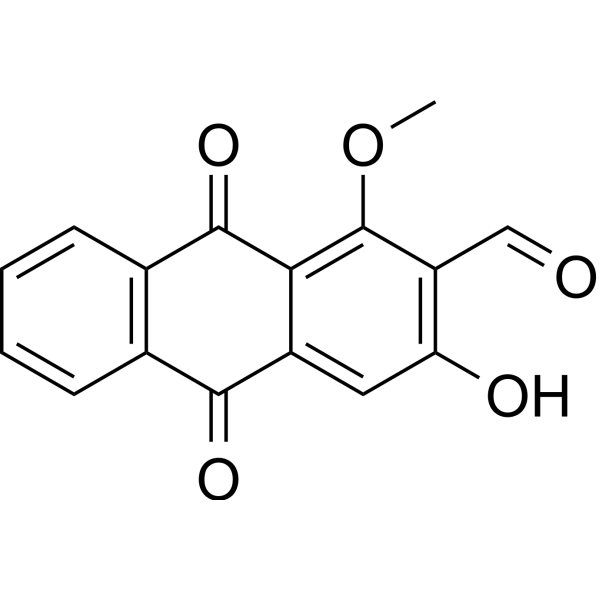
- Formula: C16H10O5
- Molecular Weight: 282.25
Damnacanthal is an anthraquinone isolated from the root of Morinda citrifolia. Damnacanthal is a highly potent, selective inhibitor of p56lck tyrosine kinase activity. Natural Damnacanthal inhibits p56 lck autophosphorylation and phosphorylation of exogenous substrates with IC50s of 46 nM and 220 nM, respectively. Damnacanthal is a potent inducer of apoptosis with anticancer activity. Damnacanthal also has antinociceptive, anti-inflammatory effects in mice and anti-fungal activity against Candida albicans.
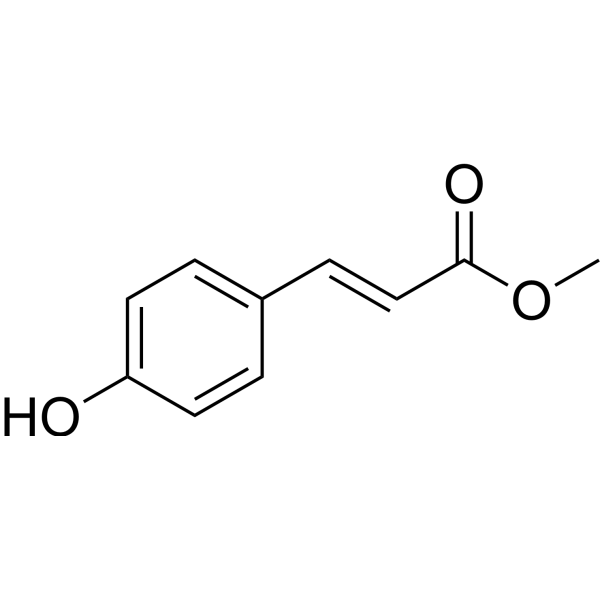
- Formula: C10H10O3
- Molecular Weight: 178.19
(E)-Methyl 4-coumarate (Methyl 4-hydroxycinnamate) is a phenolic compound and derivative of Cinnamic acid (HY-N0610A). (E)-Methyl 4-coumarate can be found in several plants, such as the leaves of Allium cepa and Morinda citrifolia L. (E)-Methyl 4-coumarate, when combined with Carnosic acid (HY-N0644), induces Apoptosis. (E)-Methyl 4-coumarate inhibits GSK3β activity and modulates inflammatory cytokine levels (increasing IL-10 and decreasing IL-4). (E)-Methyl 4-coumarate combined with Carnosic acid exhibits anticancer effects against acute myeloid leukemia. (E)-Methyl 4-coumarate ameliorates Plasmodium berghei NK65 infection.
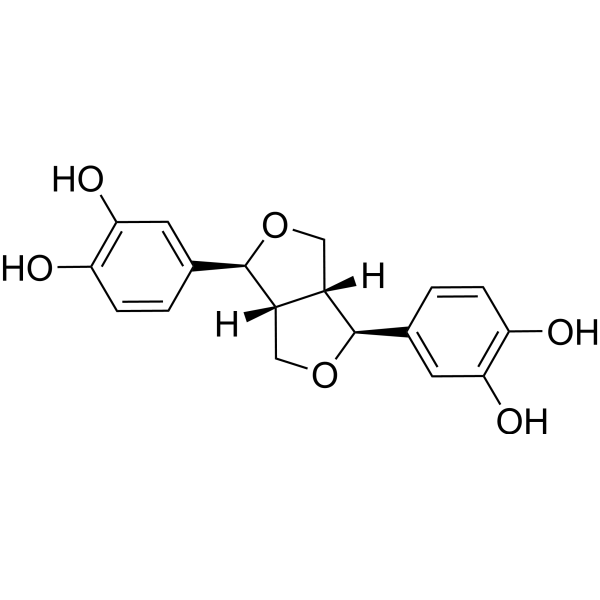
- Formula: C18H18O6
- Molecular Weight: 330.33
3,3′-Bisdemethylpinoresinol, lignin, is a nature product and has MMP-1 inhibitory activity in UVA-irradiated human dermal fibroblasts. 3,3′-Bisdemethylpinoresinol can be isolated from the seeds of Morinda citrifolia.

- Formula: C3H6OS
- Molecular Weight: 90.14
S-Methyl thioacetate is a toxicant with fumigant activity, can be found in emissions from Bacillus oshimensis, Burkholderia gladioli, Burkholderia cepacia, and Pseudomonas oryzihabitans. S-Methyl thioacetate exerts fumigant toxicity against Caenorhabditis elegans and root-knot nematode Meloidogyne incognita. S-Methyl thioacetate functions as a bacterial volatile organic compound. S-Methyl thioacetate can be used for the research of plant-parasitic nematode infection.


- Formula: C15H10O5
- Molecular Weight: 270.24
Morindone is an anthraquinone found in Morinda citrifolia L. Morindone can inhibit cancer cells proliferation, induce apoptosis and cause G1 phase arrest. Morindone can inhibit activities of DNA polymerase and downregulate mutated TP53 and KRAS gene expression. Morindone can be used for the research of cancer, such as colon cancer.
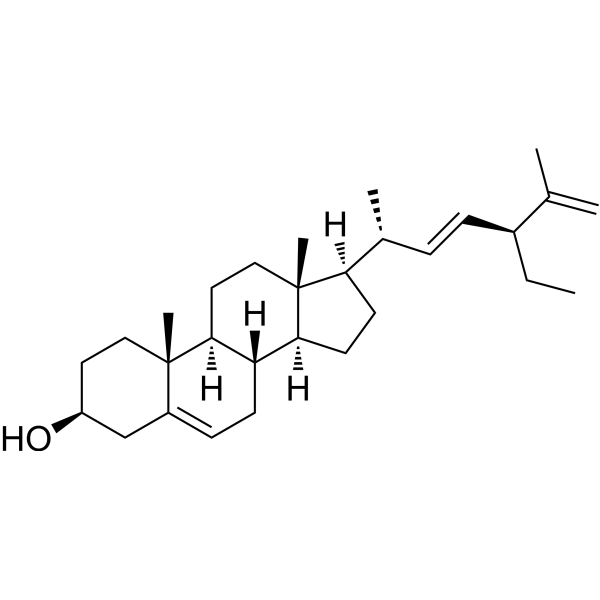
- Formula: C29H46O
- Molecular Weight: 410.67
22-Dehydroclerosterol is a compound that can be found in Morinda citrifolia L..
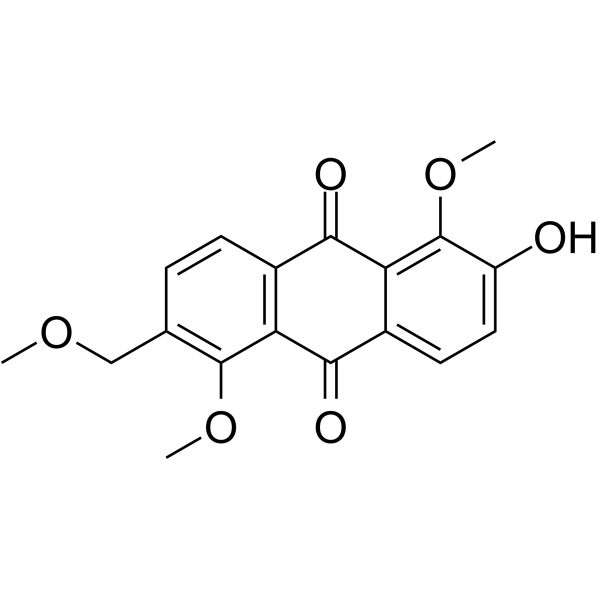
- Formula: C18H16O6
- Molecular Weight: 328.32
1,5,15-Trimethylmorindol is an anthraquinone isolated from the leaves of Morinda citrifolia. 1,5,15- trimethylmorindol (25 μg/mL) does not show significant cytotoxic activity on the human T-cell leukemia cell line, Jurkat, by itself but it shows cytotoxicity (IC50 14.5-15.0 μg/mL) when combined with 0.5-1.5 μg/mL of TRAIL in the cell proliferation assay.
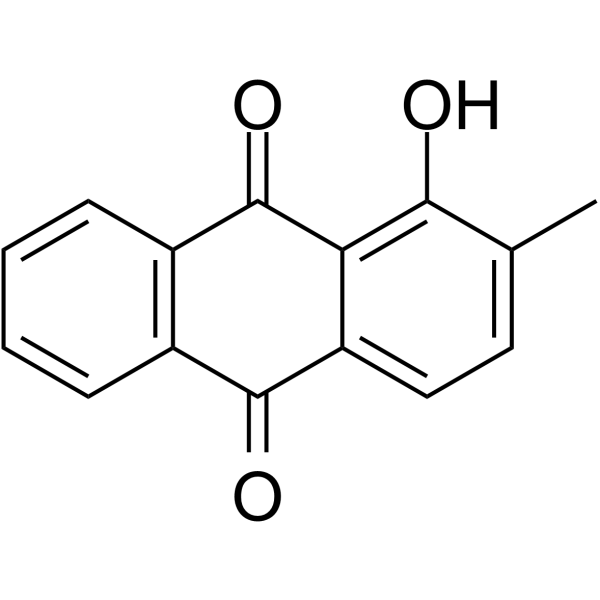

- Formula: C26H28O14
- Molecular Weight: 564.49
Morindine is an active ingredient that can be extracted from Morinda citrifolia L.. Morindine can stimulate an increase in heart frequency. Morindine can be used for research on cardiovascular conditions.

- Formula: C10H10O3
- Molecular Weight: 178.19
(E)-Methyl 4-coumarate (Standard) is the analytical standard of (E)-Methyl 4-coumarate (HY-N2492). This product is intended for research and analytical applications. (E)-Methyl 4-coumarate (Methyl 4-hydroxycinnamate) is a phenolic compound and derivative of Cinnamic acid (HY-N0610A). (E)-Methyl 4-coumarate can be found in several plants, such as the leaves of Allium cepa and Morinda citrifolia L. (E)-Methyl 4-coumarate, when combined with Carnosic acid (HY-N0644), induces Apoptosis. (E)-Methyl 4-coumarate inhibits GSK3β activity and modulates inflammatory cytokine levels (increasing IL-10 and decreasing IL-4). (E)-Methyl 4-coumarate combined with Carnosic acid exhibits anticancer effects against acute myeloid leukemia. (E)-Methyl 4-coumarate ameliorates Plasmodium berghei NK65 infection.
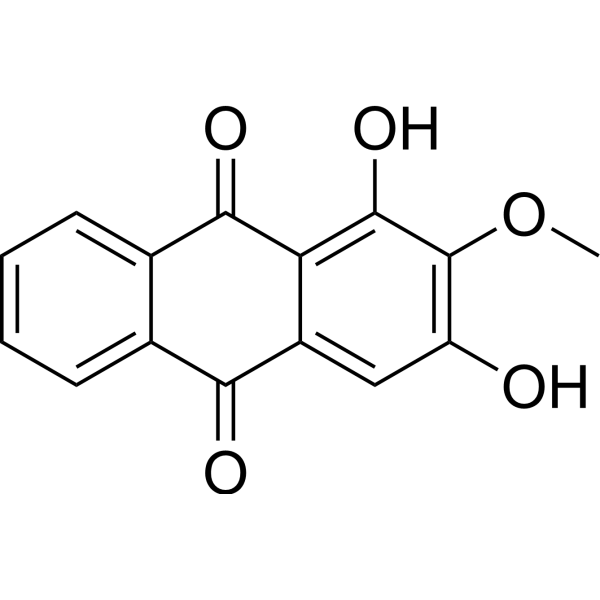
- Formula: C15H10O5
- Molecular Weight: 270.24
Anthragallol-2-methyl ether (compound 4) can be isolated from the fruits of Morinda citrifolia.
- 1



