1. Search Result
Search Result
Results for "

N-Cadherin

" in MedChemExpress (MCE) Product Catalog:

22

Inhibitors & Agonists

8

Peptides

2

Natural
Products

5

Recombinant Proteins

10

Antibodies

1

Oligonucleotides

Cat. No. Product Name Target Research Areas Chemical Structure
  • HY-13541
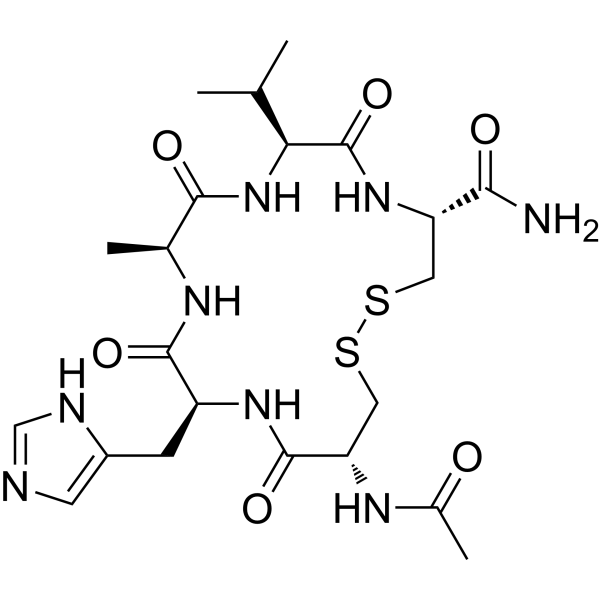
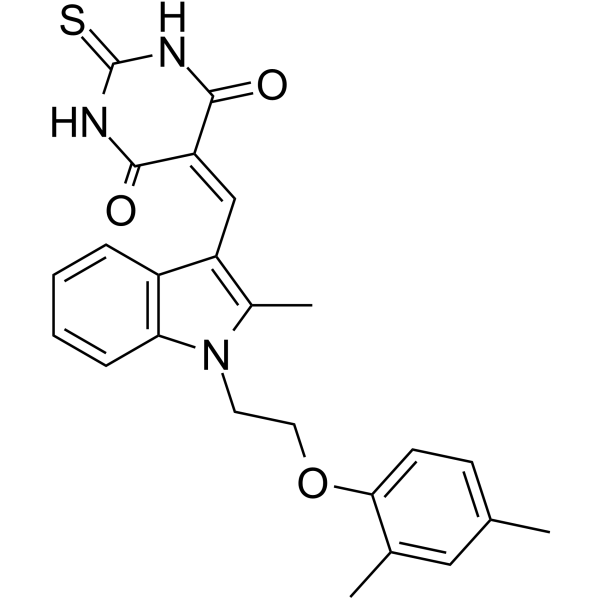
    ADH-1
    5+ Cited Publications

    Cadherin Cancer
    ADH-1, an N-cadherin antagonist, inhibits N-cadherin mediated cell adhesion.
    ADH-1
  • HY-19987
    BML-284
    Maximum Cited Publications
    41 Publications Verification

    Wnt Cancer
    BML-284 is a potent and cell-permeable Wnt signaling activator. BML-284 induces TCF-dependent transcriptional activity with an EC50 of 700 nM .
    BML-284
  • HY-P11017

    p38 MAPK Cadherin Inflammation/Immunology
    LNSMGQD is a cyclic peptide fragment derived from desmoglein 1 (amino acids 81-86), which mimics trans-interactions and acts as part of the tandem peptide binding interface of desmoglein 2. LNSMGQD not only binds to desmoglein 1 and 3, but also effectively inhibits their homophilic trans-interactions, while reducing the probability of homophilic or heterophilic binding between desmoglein 2 and Dsc2, N-cadherin and E-cadherin. LNSMGQD is applicable to the research on disease mechanisms such as Crohn's disease and pemphigus vulgaris .
    LNSMGQD
  • HY-13541A
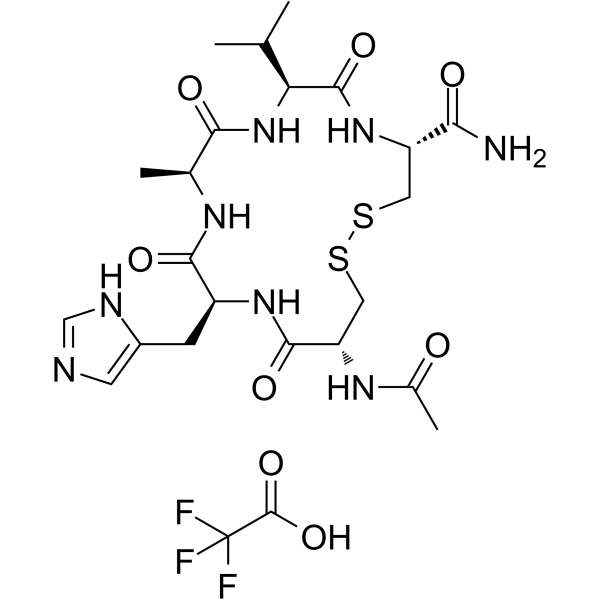
    ADH-1 trifluoroacetate
    5+ Cited Publications

    Cadherin Cancer
    ADH-1 trifluoroacetate is an N-cadherin antagonist, which inhibits N-cadherin mediated cell adhesion.
    ADH-1 trifluoroacetate
  • HY-123931
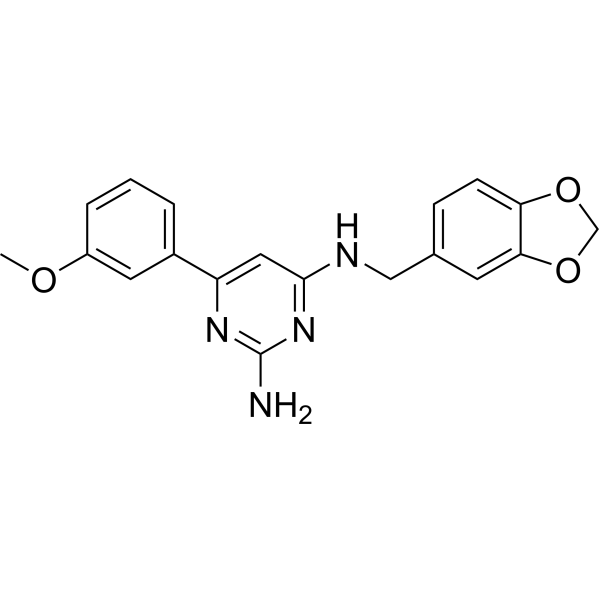
    ZLDI-8
    1 Publications Verification

    Notch Phosphatase Apoptosis Cancer
    ZLDI-8 is a Notch activating/cleaving enzyme ADAM-17 inhibitor and inhibits the cleavage of Notch protein. ZLDI-8 decreases the expression of pro-survival/anti-apoptosis and epithelial-mesenchymal transition (EMT) related proteins. ZLDI-8 is also a competitive and irreversible tyrosine phosphatase (Lyp) inhibitor with an IC50 of 31.6 μM and a Ki of 26.22 μM. ZLDI-8 inhibits the growth of MHCC97-H cells with an IC50 of 5.32 μM .
    ZLDI-8
  • HY-115669
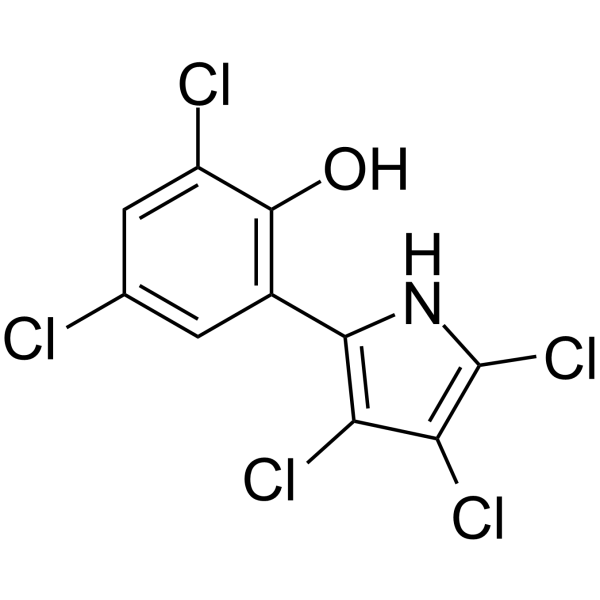
    Pentachloropseudilin
    2 Publications Verification

    Antibiotic A 15104 Y; PClP

    Myosin TGF-β Receptor Cancer
    Pentachloropseudilin (Antibiotic A 15104 Y; PClP) is a reversible and allosteric potent inhibitor of Myo1s (class 1 myosins) with IC50s range from 1 to 5 μM for mammalian class-1 myosins and greater than 90 μM for class-2 and class-5 myosins. Pentachloropseudilin is a potent inhibitor of transforming growth factor-β (TGF-β)-stimulated signaling, with an IC50 of 0.1 to 0.2 μM for TGF-β .
    Pentachloropseudilin
  • HY-P11288

    PACAP Receptor Apoptosis Cancer
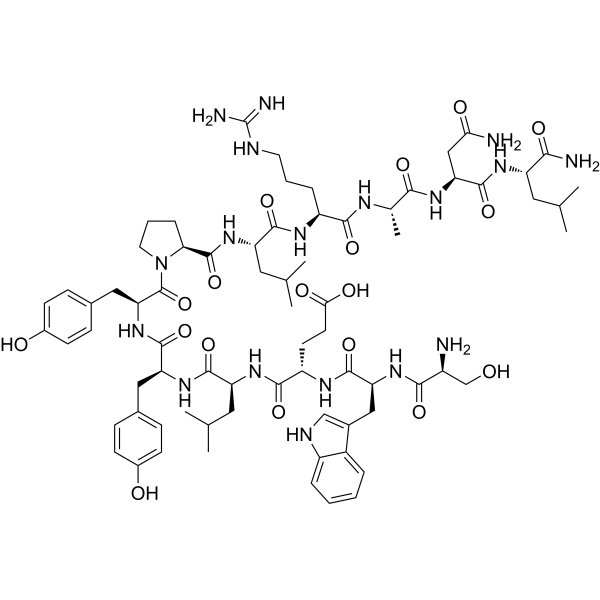
    ANT308 is a vasoactive intestinal polypeptide (VIP receptor) antagonist. ANT308 significantly enhances the activation and proliferation of T cells. ANT308 inhibits the migration and metastasis, induces apoptosis of melanoma tumor cells by inhibiting VIP-VPAC2 signaling and reducing the expression of MCAM and N-cadherin. ANT308 can be used for the studies of acute myeloid leukemia (AML) and uveal melanoma (UVM) .
    ANT308
  • HY-P11288A

    PACAP Receptor Apoptosis Cancer
    ANT308 TFA is a vasoactive intestinal polypeptide (VIP receptor) antagonist. ANT308 TFA significantly enhances the activation and proliferation of T cells. ANT308 TFA inhibits the migration and metastasis, induces apoptosis of melanoma tumor cells by inhibiting VIP-VPAC2 signaling and reducing the expression of MCAM and N-cadherin. ANT308 TFA can be used for the study of acute myeloid leukemia (AML) and uveal melanoma (UVM) .
    ANT308 TFA
  • HY-173557

    Histone Methyltransferase Apoptosis Cancer
    PRMT7-IN-2 (A33) is a selective PRMT7 inhibitor with an IC50 of 0.50 μM. PRMT7-IN-2 arrests cell cycle at G0/G1 phase, induces cell apoptosis, and inhibits cell growth in vivo and in vitro. PRMT7-IN-2 decreases the monomethylarginine level of PRMT7, increases expression of epithelial marker (E-cadherin, and reduces expression of mesenchymal markers such as N-cadherin, Vimentin, and ZEB2 .
    PRMT7-IN-2
  • HY-P11346

    Cadherin Inflammation/Immunology
    N-Cadherin mimic peptide is a N-cadherin agonist. N-Cadherin mimic peptide promotes N-cadherin homodimerization via enhancing β-catenin signaling, inducing early chondrogenesis and cartilage matrix production in mesenchymal stem cells (MSCs). N-Cadherin mimic peptide is promising for research of MSC-based cartilage regeneration .
    N-Cadherin mimic peptide
  • HY-19987A

    Wnt Cancer
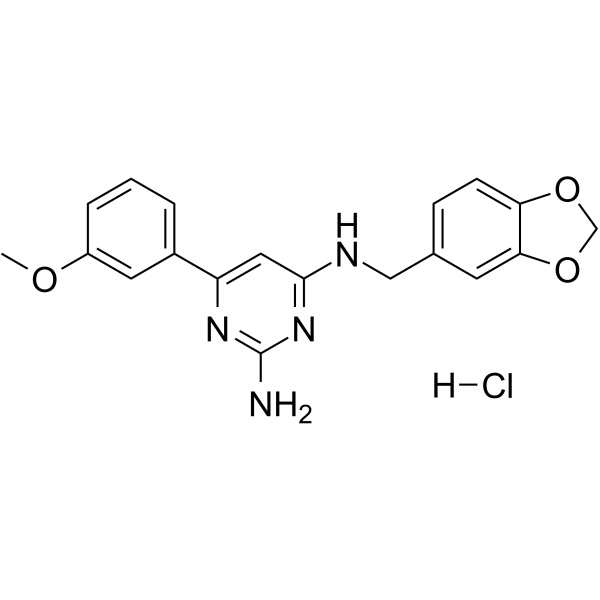
    BML-284 hydrochloride is a potent and cell-permeable Wnt signaling activator. BML-284 induces TCF-dependent transcriptional activity with an EC50 of 700 nM .
    BML-284 hydrochloride
  • HY-163709

    PROTACs FAK Akt ERK Cancer
    PROTAC FAK degrader 2 is an orally active PROTAC FAK degrader with a DC50 of 60.10 nM. PROTAC FAK degrader 2 forms a ternary complex with FAK and CRBN E3 ubiquitin ligase, driving proteasome-mediated degradation of total and phosphorylated FAK. PROTAC FAK degrader 2 inhibits phosphorylation of AKT and ERK, suppressing their downstream signaling pathways. PROTAC FAK degrader 2 reduces cancer cell viability, adhesion, migration, and invasion. PROTAC FAK degrader 2 exerts anti-tumor activity in HCT8/T tumor xenografts in mice. PROTAC FAK degrader 2 can be used for the research of breast cancer, colorectal cancer, lung cancer .
    PROTAC FAK degrader 2
  • HY-N15267

    FAK Akt mTOR Cancer
    Ovalitenone is a flavonoid compound that can be isolated from the plant Millettia peguensis. It shows no cytotoxic effects on lung cancer H460 and A549 cells, but it significantly inhibits anchorage-independent growth, CSC-like phenotypes, colony formation, and the migration and invasion capabilities of cancer cells. Ovalitenone can significantly reduce the levels of N-cadherin, snail, and slug, while increasing E-cadherin, thus inhibiting the EMT pathway. Additionally, Ovalitenone suppresses the signaling pathways regulated by focal adhesion kinase (FAK), ATP-dependent tyrosine kinase (AKT), mammalian target of rapamycin (mTOR), and cell division cycle 42 (Cdc42) .
    Ovalitenone
  • HY-173560

    ATTECs SHP2 Apoptosis Cancer
    SHP2 ATTEC degrader-1 is a SHP2 ATTEC degrader. SHP2 ATTEC degrader-1 has degradation rate of 83.31 at 1.0 μM for 24 h in the PANC-1 cell line. SHP2 ATTEC degrader-1 inhibits cell growth in vivo and in vitro. SHP2 ATTEC degrader-1 induces apoptosis and increases the expression of the epithelial marker ( E-cadherin), and reduces the expression of interstitial markers (such as N-cadherin, Vimentin) (Pink: LC3 ligand (HY-174085); Black :linker HY-140468; Blue: SHP2 ligand (HY-174084) .
    SHP2 ATTEC degrader-1
  • HY-172551

    Apoptosis Cadherin MMP Bcl-2 Family Cancer
    anti-TNBC agent-9 (Compound 3as) is an anti-cancer agent for triple-negative breast cancer (TNBC). anti-TNBC agent-9 exhibits significant inhibitory activity against MDA-MB-453 cells with an IC50 value of 8.5 μM. anti-TNBC agent-9 inhibits tumor cell migration by upregulating E-cadherin and downregulating N-cadherin, matrix metalloproteinase 2 (MMP2), and MMP9. anti-TNBC agent-9 induces apoptosis by increasing the expression of the pro-apoptotic protein BAX and decreasing the expression of the anti-apoptotic protein BCL-2, thereby inhibiting tumor cell proliferation .
    anti-TNBC agent-9
  • HY-RS24094

    Small Interfering RNA (siRNA) Others

    Cdh2 Rat Pre-designed siRNA Set A contains three designed siRNAs for Cdh2 gene (Rat), as well as a negative control, a positive control, and a FAM-labeled negative control.

    Cdh2 Rat Pre-designed siRNA Set A
    Cdh2 Rat Pre-designed siRNA Set A
  • HY-181717

    NF-κB Apoptosis Cadherin Caspase Bcl-2 Family Neurological Disease Cancer
    TKL002 is a blood-brain barrier-permeable inhibitor of the CTH/H2S/NF-κB/EMT signaling axis. TKL002 induces G2/M phase cell cycle arrest and apoptosis in glioblastoma cells. TKL002 inhibits the migration and invasion of glioblastoma cells by upregulating E-cadherin and downregulating N-cadherin and vimentin. TKL002 is applicable to relevant research on glioblastoma .
    TKL002
  • HY-122352

    Apoptosis Cadherin β-catenin Wnt c-Myc mTOR Cancer
    OSU-03013 is a Celecoxib (HY-14398) analog. OSU-03013 can promote apoptosis, up-regulate E-cadherin, and down-regulate β-catenin, c-myc, Wnt1, and N-cadherin. OSU-03013 reduces cell migration and invasion. OSU-03013 regulates both Wnt and mTOR expression to inhibit colon cancer (CC) cell proliferation. OSU-03013 can be used for CC cancer research .
    OSU-03013
  • HY-182361

    AMPK JAK Cadherin Cancer
    NUAK1-IN-3 is a potent and selective NUAK1 inhibitor with an IC50 of 0.49 nM. NUAK1-IN-3 also inhibits NUAK2 and JAK3 with IC50 values of 265 and 225 nM. NUAK1-IN-3 engages Glu139 of NUAK1, forms a salt bridge between its bicyclic ring nitrogen and Asp142, and uses a fluorine atom to enhance hydrophobic binding interactions. NUAK1-IN-3 attenuates MYPT1 phosphorylation, suppresses the NUAK1-MYPT1 signaling axis, and inhibits proliferation, migration, and invasion of triple-negative breast cancer cells. NUAK1-IN-3 reverses TGF-β1-induced epithelial-mesenchymal transition (EMT) marker alterations, downregulates Snail and N-cadherin, and upregulates E-cadherin in tumor tissues. NUAK1-IN-3 suppresses tumor growth in triple-negative breast cancer xenograft models. NUAK1-IN-3 can be used for the research of triple-negative breast cancer .
    NUAK1-IN-3
  • HY-19987R

    Wnt Cancer
    BML-284 (Standard) is the analytical standard of BML-284. This product is intended for research and analytical applications. BML-284 is a potent and cell-permeable Wnt signaling activator. BML-284 induces TCF-dependent transcriptional activity with an EC50 of 700 nM .
    BML-284 (Standard)
  • HY-N17639

    TGF-beta/Smad TGF-β Receptor Others
    Regiafuran C is a compound with both TGF-βRI inhibitory and anti-fibrotic activities. Regiafuran C effectively inhibits renal fibrosis by binding to TGF-βRI and interfering with the TGF-β/Smad and Wnt/β-catenin signaling pathways. Regiafuran C also exhibits free radical scavenging activity, but shows no anti-inflammatory activity in PGE2 competitive enzyme immunoassays. The ability of Regiafuran C to specifically block the Smad3-TGF-βRII interaction and inhibit fibrotic processes allows its use in renal fibrosis research .
    Regiafuran C
  • HY-181506

    Fluorescent Dye Molecular Glues CaMK c-Myc Bcl-2 Family Cadherin Cancer
    TYMJ-01 is a fluorescent probe and eEF2K degrader. TYMJ-01 induces dose-dependent and specific degradation of eEF2K via the ubiquitin-proteasome pathway, with a DC50 of 82 nM. TYMJ-01 inhibits the proliferation, migration and invasion of triple-negative breast cancer cells. TYMJ-01 enables dynamic fluorescent imaging of eEF2K degradation in triple-negative breast cancer cells; it enhances the anti-tumor activity of Paclitaxel (HY-B0015). TYMJ-01 can be used for the research of triple-negative breast cancer .
    TYMJ-01

Inquiry Online

Your information is safe with us. * Required Fields.

Salutation


Country or Region *

Applicant Name *


Organization Name *

Department *


Email Address *


Product Name *

Cat. No.


Requested quantity *

Phone Number *


Remarks

Inquiry Online

Inquiry Information

Product Name:
Cat. No.:
Quantity:
MCE Japan Authorized Agent:

