24 Results for "

Nocardia asteroides 1260

" in MedChemExpress (MCE) Product Catalog:
Products (24)

24 Results for "Nocardia asteroides 1260" in MCE Product Catalog:

30
30 Publications Verification
Cat. No.: HY-B0509B
CAS No.: 39831-55-5
Synonyms: BAY 41-6551 disulfate
Target:  

Bacterial Antibiotic

Research Areas:  

Infection Cancer

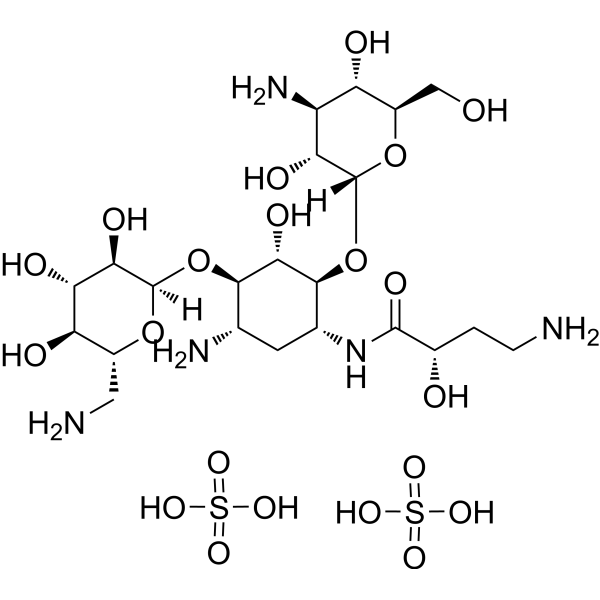
Amikacin disulfate (BAY 41-6551 dissulfate) is an aminoglycoside antibiotic and a semisynthetic analog of kanamycin. Amikacin disulfate is bactericidal, acting directly on the 30S and 50S bacerial ribosomal subunits to inhibit protein synthesis. Amikacin disulfate is very active against most Gram-negative bacteria including gentamicin- and tobramycin-resistant strains. Amikacin disulfate also inhibits the infections caused by susceptible Nocardia and nontuberculous mycobacteria .
loading...
    loading...
30
30 Publications Verification
Cat. No.: HY-107813
CAS No.: 149022-22-0
Purity:  99.11%
Synonyms: BAY 41-6551 sulfate
Target:  

Bacterial Antibiotic

Research Areas:  

Infection Cancer

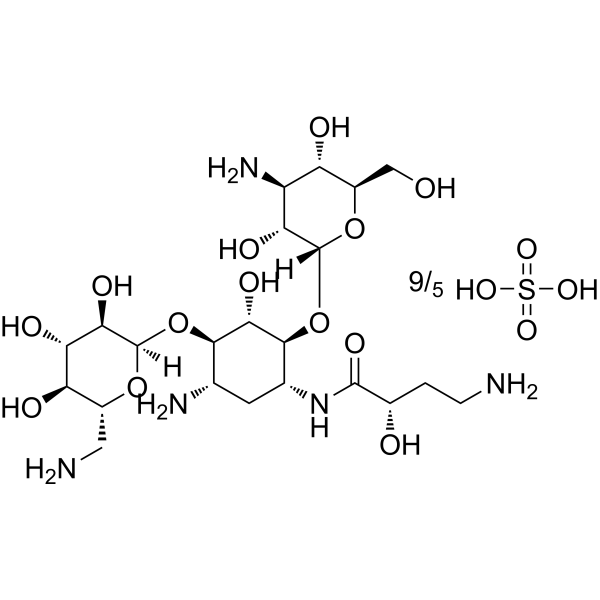
Amikacin sulfate (BAY 41-6551 sulfate) is an aminoglycoside antibiotic and a semisynthetic analog of kanamycin. Amikacin sulfate is bactericidal, acting directly on the 30S and 50S bacerial ribosomal subunits to inhibit protein synthesis. Amikacin sulfate is very active against most Gram-negative bacteria including gentamicin- and tobramycin-resistant strains. Amikacin sulfate also inhibits the infections caused by susceptible Nocardia and nontuberculous mycobacteria .
loading...
    loading...
30
30 Publications Verification
Cat. No.: HY-B0509
CAS No.: 1257517-67-1
Synonyms: BAY 41-6551 hydrate
Target:  

Bacterial Antibiotic

Research Areas:  

Infection Cancer

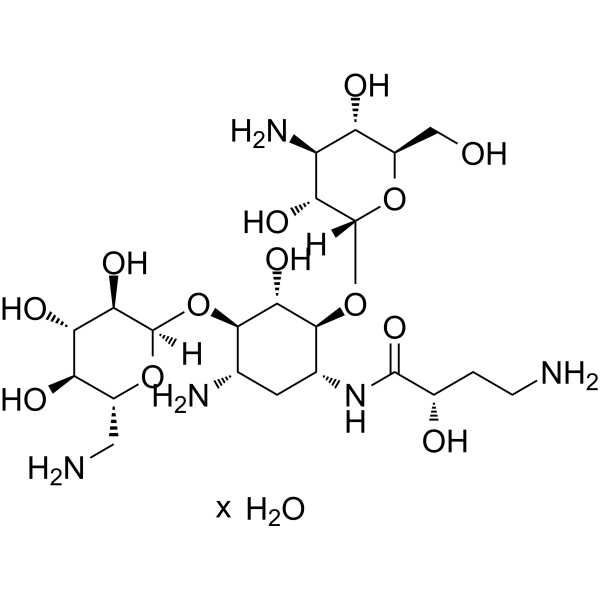
Amikacin hydrate (BAY 41-6551 hydrate) is an aminoglycoside antibiotic and a semisynthetic analog of kanamycin. Amikacin hydrate is bactericidal, acting directly on the 30S and 50S bacerial ribosomal subunits to inhibit protein synthesis. Amikacin hydrate is very active against most Gram-negative bacteria including gentamicin- and tobramycin-resistant strains. Amikacin hydrate also inhibits the infections caused by susceptible Nocardia and nontuberculous mycobacteria .
loading...
    loading...
2
2 Cited Publications
Cat. No.: HY-141619A
CAS No.: 8064-90-2
Purity:  99.87%
Target:  

Bacterial

Research Areas:  

Infection

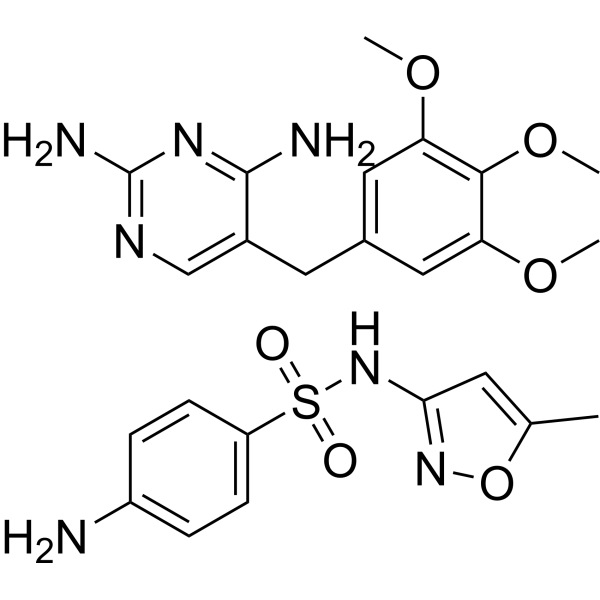
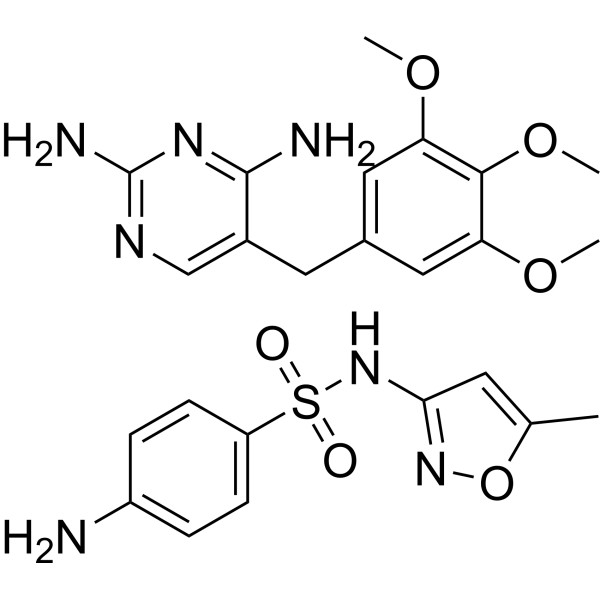
Cotrimoxazole (Trimethoprim/sulfamethoxazole 1:19), an antibacterial agent, is a Trimethoprim (HY-B0510) and Sulfamethoxazole (HY-B0322) mixture. The ratio of Trimethoprim to Sulfamethoxazole in the combination mixture is 1 : 19 .
loading...
    loading...
1
1 Cited Publications
Cat. No.: HY-141619
CAS No.: 8064-90-2
Purity:  99.79%
Target:  

Bacterial

Research Areas:  

Infection

Cotrimoxazole (Trimethoprim/sulfamethoxazole 1:5), an antibacterial agent, is a Trimethoprim (HY-B0510) and Sulfamethoxazole (HY-B0322) mixture. The ratio of Trimethoprim to Sulfamethoxazole in the combination mixture is 1 : 5 .
loading...
    loading...
Cat. No.: HY-W001963
CAS No.: 634-97-9
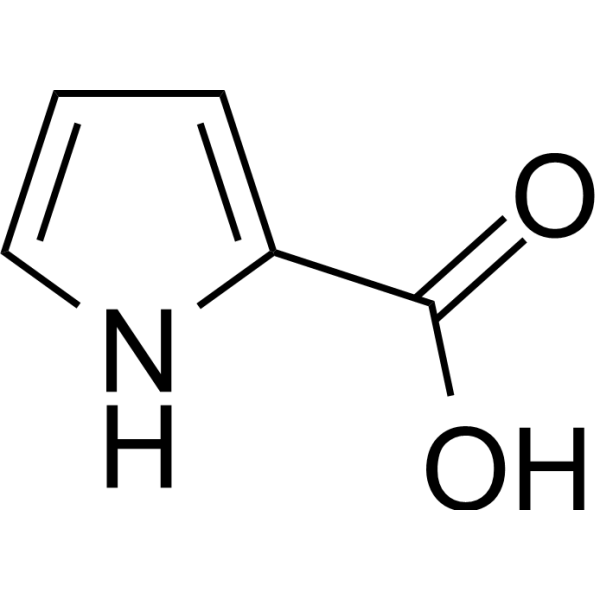
Pyrrole-2-carboxylic acid is a natural alkaloid foumd in the marine bacterium Pelomonas puraquae sp. Nov. Pyrrole-2-carboxylic acid shows antibacterial activity and inhibits biofilm formation. Pyrrole-2-carboxylic acid serves as a precursor for various pyrrole derivatives like Clorobiocin (HY-123515), Coumermycin A1 (HY-N7452) in biosynthetic processes .
loading...
    loading...
Cat. No.: HY-79635
CAS No.: 942-24-5
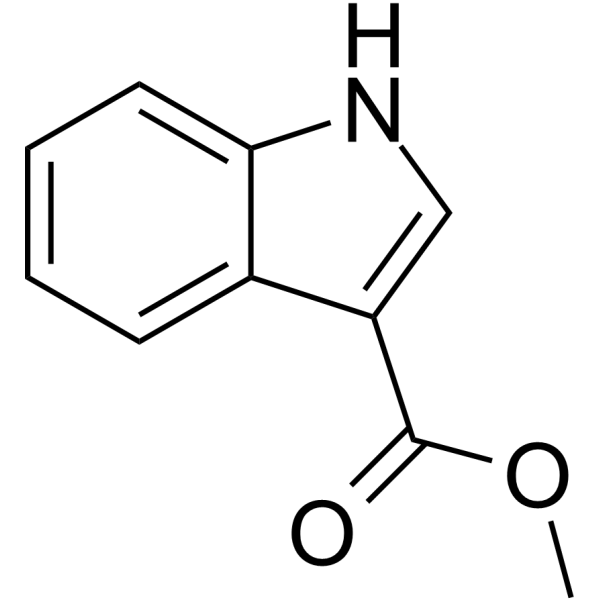
Methyl indole-3-carboxylate is a Sorangium metabolite. Methyl indole-3-carboxylate shows weak activity against Gram-positive Nocardia sp with a MIC of 33.3 μg/mL .
loading...
    loading...
Cat. No.: HY-N13150A
CAS No.: 198774-23-1
Synonyms: N-Demethylvancomycin hydrochloride; NVCM hydrochloride
Target:  

Antibiotic Bacterial

Research Areas:  

Infection

Norvancomycin hydrochloride is a glycopeptide antibiotic which can be found in Nocardia orientalis and active against several strains of S. aureus and S. epidermidis. Norvancomycin hydrochloride can be used for infection research .
loading...
    loading...
Cat. No.: HY-E70406
CAS No.: 67775-34-2
Synonyms: CHDH-5
Research Areas:  

Others

Cholesterol Dehydrogenase, Nocardia sp. is an enzyme that uses nicotinamide adenine dinucleotide/nicotinamide adenine dinucleotide phosphate (NAD(P)) as its cofactor in oxidizing cholesterol to form cholest-4-en-3-one. This enzyme oxidizes the hydroxyl group at the 3 position of the sterol ring to form a ketone.
loading...
    loading...
Cat. No.: HY-162836
CAS No.: 13929-35-6
Synonyms: 4-O-(Carboxymethyl)-Rifamycin
Target:  

Antibiotic Bacterial

Research Areas:  

Infection

Rifamycin B (4-O-(Carboxymethyl)-Rifamycin) is a member of ansamycin antibiotics family with an anti-mycobacterial activity against tuberculosis, leprosy and AIDS-related mycobacterial infections. Rifamycin B is a metabolic product of Nocardia inediterranei, which can yield Rifamycin O and Rifamycin S (HY-125365) by microbial transformation .
loading...
    loading...
Cat. No.: HY-N13150
CAS No.: 91700-98-0
Synonyms: N-Demethylvancomycin; NVCM
N-Demethylvancomycin is a glycopeptide antibiotic which can be extracted from Nocardia orientalis and active against several strains of S. aureus and S. epidermidis. N-Demethylvancomycin can be used for infection research .
loading...
    loading...
Cat. No.: HY-N14497
CAS No.: 199173-81-4
Nocardicyclin A is resistant to Gram-positive bacteria, mycobacterium and Nocardia .
loading...
    loading...
Cat. No.: HY-N14313
CAS No.: 199173-82-5
Nocardicyclin B is resistant to Gram-positive bacteria, mycobacterium and Nocardia .
loading...
    loading...
Cat. No.: HY-P2848D
Synonyms: ChOx, Nocardia sp.
Target:  

Xanthine Oxidase

Research Areas:  

Metabolic Disease

Cholesterol oxidase, Nocardia sp. (ChOx, Nocardia sp.) (EC 1.1.3.6) is a cholesterol oxidase identified from bacterial sources. Cholesterol oxidase, Nocardia sp. catalyzes the oxidation of cholesterol to 4-cholesten-3-one, while simultaneously reducing oxygen to hydrogen peroxide. Cholesterol oxidase, Nocardia sp. retains its enzymatic activity and exhibits improved catalytic efficiency upon immobilization. Cholesterol oxidase, Nocardia sp. is applicable for cholesterol detection, steroid biotransformation, and research on tuberculosis-related diseases .
loading...
    loading...
Cat. No.: HY-N14475
CAS No.: 86470-27-1
Sakyomicin B is a Benzoquinone antibiotic found in the strain of Nocardia sp. M-53. Sakyomicin B has activity against Gram-positive bacteria and mycobacteria .
loading...
    loading...
Cat. No.: HY-W777997
CAS No.: 60134-71-6
Nocardicin B is originally isolated from Nocardia uniformis subsp. tsugamanensis ATCC 21806. Nocardicin B only has a weak antibacterial effect on Proteus and axillary bacillus .
loading...
    loading...
Cat. No.: HY-136828
CAS No.: 52932-62-4
Target:  

Antibiotic Bacterial

Research Areas:  

Infection

LL-BM123α is a basic antibiotic isolated from Nocardia sp. LL-BM123α exhibits moderate activity against Gram-negative bacteria.
loading...
    loading...
Cat. No.: HY-N11485
CAS No.: 50888-50-1
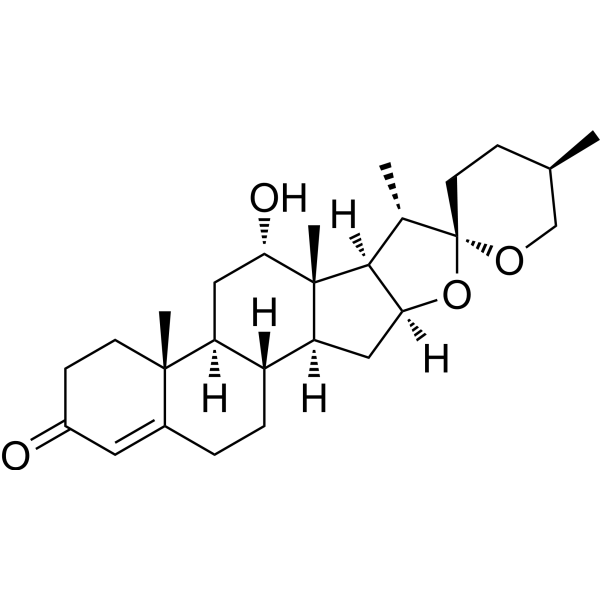
(25R)-12α-Hydroxyspirost-4-en-3-one is a minor metabolite produced by the action of Nocardia globerula on Hecogenin (HY-N1422) .
loading...
    loading...
Cat. No.: HY-W550259
CAS No.: 321-54-0
Synonyms: Coumaphos oxon
Target:  

Cholinesterase (ChE)

Research Areas:  

Others

Coroxon (Coumaphos oxon) is an oxidative metabolite of the organophosphate insecticide Coumaphos (HY-W653717) and an active AChE inhibitor with insecticidal and acaricidal properties. Coroxon can be hydrolyzed by phosphotriesterases of microorganisms such as Nocardia asteroides to produce the fluorescent product Chlorferon .
loading...
    loading...
Cat. No.: HY-125042
CAS No.: 130756-15-9
Target:  

Bacterial

Research Areas:  

Infection

Sarothralin G is an antibacterial compound isolated from Hypericum japonicum Thunb. (Japanese spurfle). The structure of Sarothralin G contains phenolic and aromatic acid moieties and shows excellent antibacterial activity against Gram-positive bacteria such as Staphylococcus aureus, Bacillus subtilis and Nocardia spp., which is stronger than Sarothralen A, B and Saroaspidin A, B, C. Sarothralin G exhibits significant antibacterial potential.
loading...
    loading...

