
170 Results for "

Oligomer

" in MedChemExpress (MCE) Product Catalog:
Products (170)

170 Results for "Oligomer" in MCE Product Catalog:

34
34 Publications Verification
Cat. No.: HY-N0148A
CAS No.: 207671-50-9
Synonyms: Rutoside hydrate; Quercetin 3-O-rutinoside hydrate
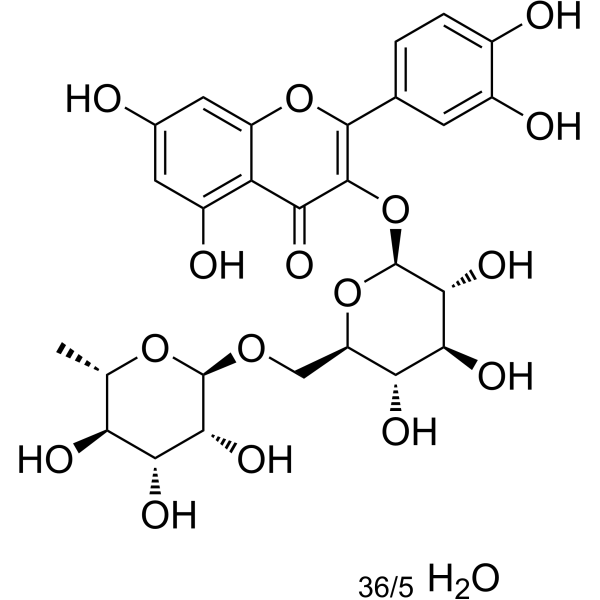
Rutin (Rutoside) hydrate is a flavonoid found in many plants and shows a wide range of biological activities including anti-inflammatory, antidiabetic, antioxidant, neuroprotective, nephroprotective, hepatoprotective and reducing Aβ oligomer activities. Rutin hydrate can cross the blood brain barrier. Rutin hydrate attenuates vancomycin-induced renal tubular cell apoptosis via suppression of apoptosis, mitochondrial dysfunction, and oxidative stress .
loading...
    loading...
34
34 Publications Verification
Cat. No.: HY-N0148
CAS No.: 153-18-4
Synonyms: Rutoside; Quercetin 3-O-rutinoside
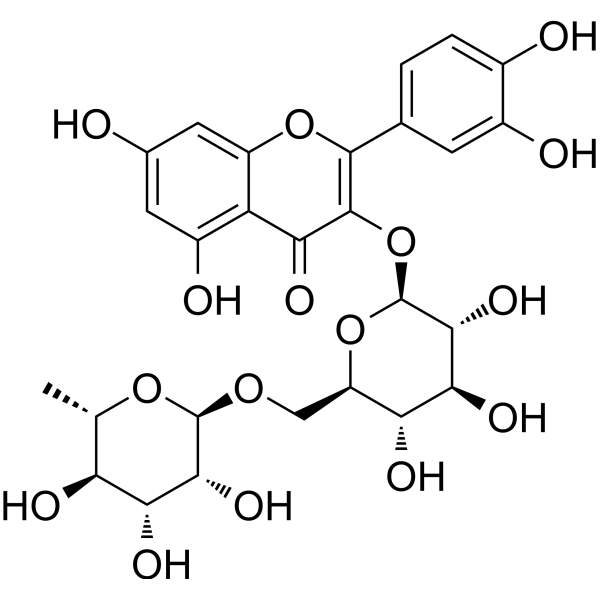
Rutin (Rutoside) is a flavonoid found in many plants and shows a wide range of biological activities including anti-inflammatory, antidiabetic, antioxidant, neuroprotective, nephroprotective, hepatoprotective and reducing Aβ oligomer activities. Rutin is also a CBR1 inhibitor, which can cross the blood brain barrier. Rutin attenuates vancomycin-induced renal tubular cell apoptosis via suppression of apoptosis, mitochondrial dysfunction, and oxidative stress .
loading...
    loading...
27
27 Cited Publications
Cat. No.: HY-P1363
Synonyms: Amyloid β-peptide (1-42) (human) TFA
Target:  

Amyloid-β

Research Areas:  

Neurological Disease

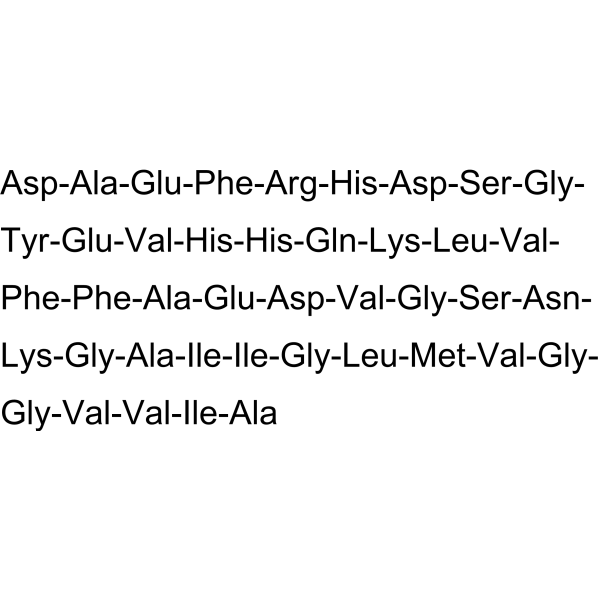
β-Amyloid (1-42) (Amyloid β-peptide (1-42), human TFA, a 42-amino acid peptide that has not been treated with HFIP, is a brain-penetrant amyloid protein fragment, which can be used in research on Alzheimer's disease and Down’s syndrome. β-Amyloid (1-42), human TFA remaining as a monomer exhibits antioxidant and neuroprotective effects. β-Amyloid (1-42), human TFA, after being monomericized by HFIP and dissolved in DMSO to form the stock solution, on the one hand, can form soluble oligomers (AβOs) when incubated at 4 °C, which have synaptic toxicity and neurotoxicity; on the other hand, it can be incubated at 37 °C to form insoluble fibrils, with lower neurotoxicity, and participating in the oxidative damage process. Aβ42 oligomers bind to various neuronal surface receptors (such as PrPc, mGluR5, NMDA receptors, etc.), triggering oxidative stress, calcium homeostasis imbalance, and synaptic toxicity via activating downstream signaling pathways, leading to neuronal dysfunction and death .
loading...
    loading...
27
27 Cited Publications
Cat. No.: HY-P1363A
CAS No.: 107761-42-2
Synonyms: Amyloid β-peptide (1-42) (human)
Target:  

Amyloid-β

Research Areas:  

Neurological Disease

β-Amyloid (1-42) (Amyloid β-peptide (1-42)), human, a 42-amino acid peptide that has not been treated with HFIP, is a brain-penetrant amyloid protein fragment, which can be used in research on Alzheimer's disease and Down’s syndrome. β-Amyloid (1-42), human remaining as a monomer exhibits antioxidant and neuroprotective effects. β-Amyloid (1-42), human, after being monomericized by HFIP and dissolved in DMSO to form the stock solution, on the one hand, can form soluble oligomers (AβOs) when incubated at 4 °C, which have synaptic toxicity and neurotoxicity; on the other hand, it can be incubated at 37 °C to form insoluble fibrils, with lower neurotoxicity, and participating in the oxidative damage process. Aβ42 oligomers bind to various neuronal surface receptors (such as PrPc, mGluR5, NMDA receptors, etc.), triggering oxidative stress, calcium homeostasis imbalance, and synaptic toxicity via activating downstream signaling pathways, leading to neuronal dysfunction and death .
loading...
    loading...
27
27 Cited Publications
Cat. No.: HY-P1363B
CAS No.: 107761-42-2
Target:  

Amyloid-β

Research Areas:  

Neurological Disease

β-Amyloid (1-42), human, HFIP-treated, a 42-amino acid peptide that has been treated with HFIP from β-Amyloid (1-42), human (HY-P1363A), is a brain-penetrant amyloid protein fragment, which can be used in research on Alzheimer's disease and Down’s syndrome. β-Amyloid (1-42), human, HFIP-treated remaining as a monomer exhibits antioxidant and neuroprotective effects. β-Amyloid (1-42), human, HFIP-treated, after being dissolved in DMSO to form the stock solution, on the one hand, can form soluble oligomers (AβOs) when incubated at 4°C, which have synaptic toxicity and neurotoxicity; on the other hand, it can be incubated at 37°C to form insoluble fibrils, with lower neurotoxicity, and participating in the oxidative damage process. Aβ42 oligomers bind to various neuronal surface receptors (such as PrPc, mGluR5, NMDA receptors, etc.), triggering oxidative stress, calcium homeostasis imbalance, and synaptic toxicity via activating downstream signaling pathways, leading to neuronal dysfunction and death .
loading...
    loading...
10
10 Cited Publications
Cat. No.: HY-B1588
CAS No.: 5697-56-3
Carbenoxolone is a blood-brain barrier-permeable Pannexin1 inhibitor, gap junction (Gap junction) blocker, and β-amyloid 42 inhibitor. Carbenoxolone modulates voltage-gated currents of wild-type and mutant Panx1, and inhibits stimulus-activated Panx1 channel function. Carbenoxolone interacts with stable residues of β-amyloid 42 peptides, fibrils and oligomers, thereby inhibiting their aggregation. Carbenoxolone alleviates liver fibrosis. Carbenoxolone exerts neuroprotective and nootropic effects. Carbenoxolone can be used in studies related to Alzheimer's disease and liver fibrosis .
loading...
    loading...
5
5 Cited Publications
Cat. No.: HY-112108
CAS No.: 148411-57-8
Purity:  ≥91.0%
Synonyms: COS
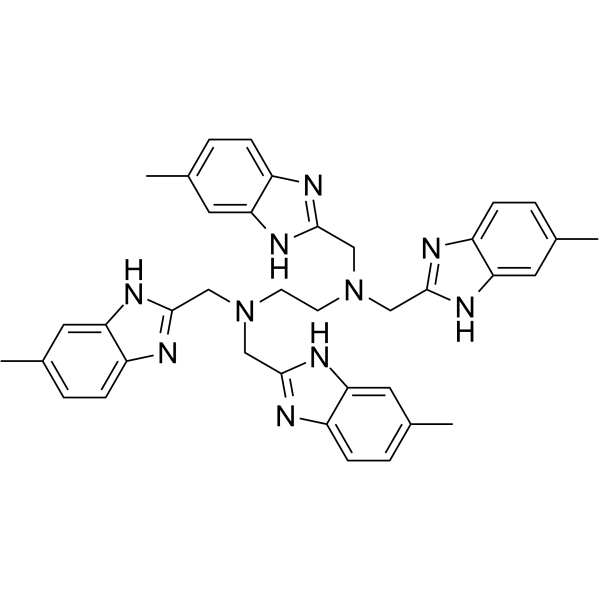
Chitosan oligosaccharide (COS) is an oligomer of β-(1→4)-linked D-glucosamine. Chitosan oligosaccharide (COS) activates AMPK and inhibits inflammatory signaling pathways including NF-κB and MAPK pathways.
loading...
    loading...
4
4 Cited Publications
Cat. No.: HY-13915
CAS No.: 81624-55-7
Purity:  99.40%
Target:  

Apoptosis

Research Areas:  

Cancer

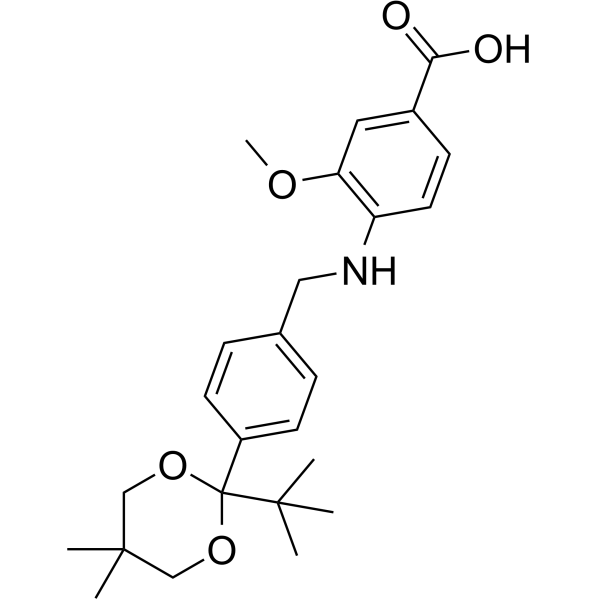
NSC348884 is a nucleophosmin (NPM) inhibitor, it disrupts oligomer formation and induces apoptosis, inhibits cell proliferation with IC50s of 1.7-4.0 μM in distinct cancer cell lines. NSC348884 can be used for the research of cancer .
loading...
    loading...
3
3 Cited Publications
Cat. No.: HY-P2288A
Target:  

Peptides

Research Areas:  

Cancer

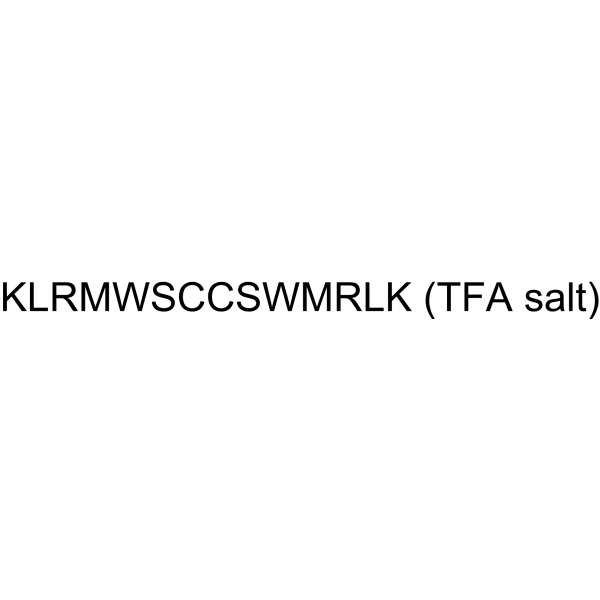
WL47 TFA, a high-affinity cavolin-1 (CAV1) ligand (Kd=23 nM), is a potent disrupter of CAV1 oligomers. WL47 TFA shows selectivity for CAV1 over BSA, casein and HEWL. WL47 TFA is 80% smaller in length than the original T20 (HY-P0052) parent sequence and can be used for the study of caveolin-1 function .
loading...
    loading...
1
1 Cited Publications
Cat. No.: HY-117259
CAS No.: 1034190-08-3
Purity:  98.83%
Synonyms: ALZ-801
Target:  

Amyloid-β

Research Areas:  

Neurological Disease

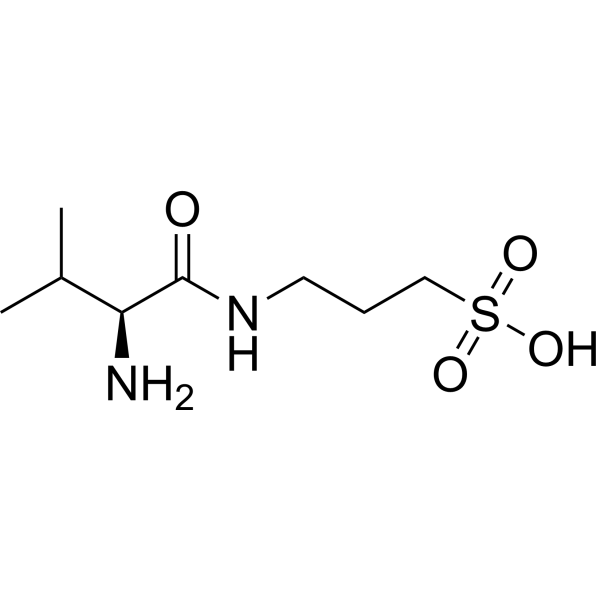
ALZ-801 is a potent and orally available small-molecule β-amyloid (Aβ) anti-oligomer and aggregation inhibitor, valine-conjugated proagent of Tramiprosate with substantially improved PK properties and gastrointestinal tolerability compared with the parent compound . ALZ-801 is an advanced and markedly improved candidate for the treatment of alzheimer’s disease .
loading...
    loading...
1
1 Cited Publications
Cat. No.: HY-121035
CAS No.: 916440-85-2
Purity:  99.20%
Synonyms: 7-Bromoindirubin-3-Oxime
Target:  

CDK GSK-3

Research Areas:  

Neurological Disease

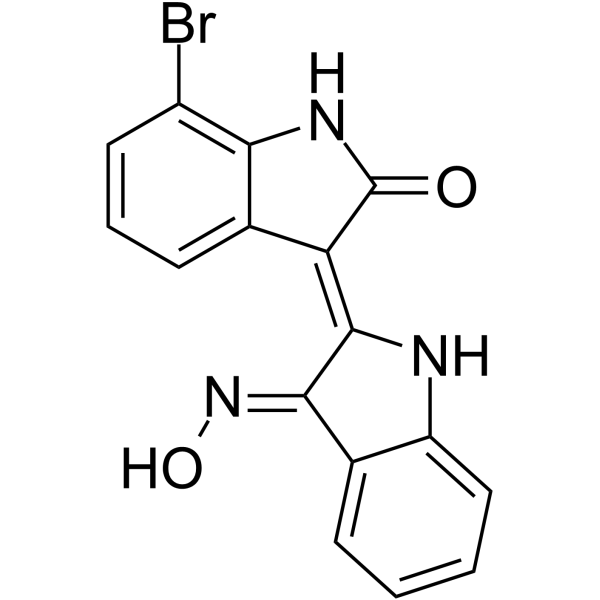
7BIO (7-Bromoindirubin-3-Oxime) is the derivate of indirubin. 7BIO (7-Bromoindirubin-3-Oxime) has inhibitory effects against cyclin-dependent kinase-5 (CDK5) and glycogen synthase kinase-3β (GSK3β). 7BIO (7-Bromoindirubin-3-Oxime) inhibits Aβ oligomer-induced neuroinflammation, synaptic impairments, tau hyper-phosphorylation, activation of astrocytes and microglia, and attenuates Aβ oligomer-induced cognitive impairments in mice [1].
loading...
    loading...
1
1 Cited Publications
Cat. No.: HY-139324
CAS No.: 68341-14-0
Purity:  ≥95.0%
Target:  

GSK-3 Amyloid-β

Research Areas:  

Neurological Disease Cancer

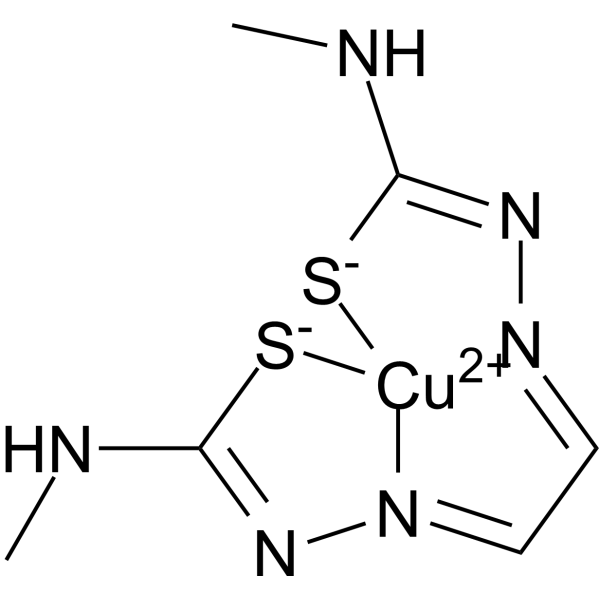
Cu(II)GTSM, a cell-permeable Cu-complex, significantly inhibits GSK3β. Cu(II)GTSM inhibits Amyloid-β oligomers (AβOs) and decreases tau phosphorylation. Cu(II)GTSM also decreases the abundance of Amyloid-β trimers. Cu(II)GTSM is a potential anticancer and antimicrobial agent .
loading...
    loading...
1
1 Cited Publications
Cat. No.: HY-W018059
CAS No.: 129832-03-7
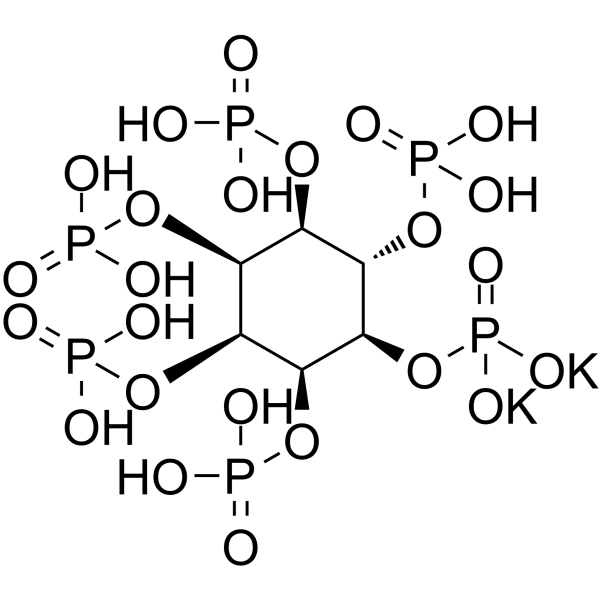
Phytic acid (myo-Inositol) potassium is an orally active compound. Phytic acid potassium can be derived from the seeds of legumes. Phytic acid potassium is a [PO4] 3- storage depot and precursor for other inositol phosphates and pyrophosphates. Phytic acid potassium attenuates oligomers and upregulates autophagy protein. Phytic acid potassium can be used in cardiovascular disease, metabolic disease, nervous system disease and cancer research .
loading...
    loading...
1
1 Cited Publications
Cat. No.: HY-N0814
CAS No.: 83-86-3
Synonyms: Inositol hexaphosphate; SNF472 free acid
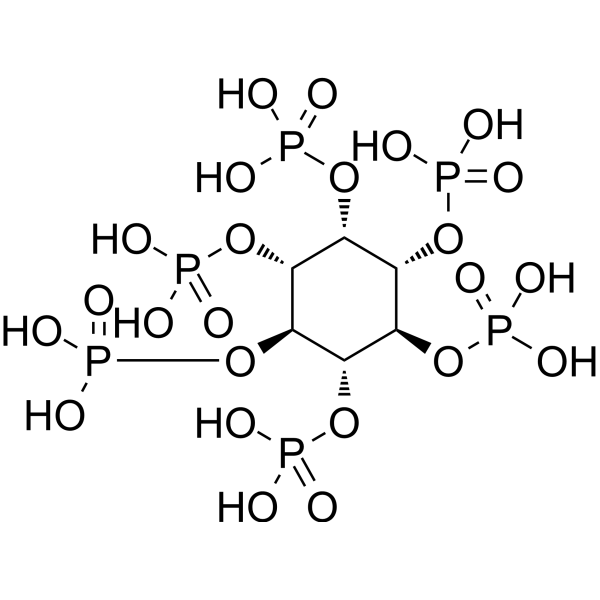
Phytic acid (myo-Inositol; hexakis dihydrogen phosphate; Inositol hexaphosphate) is an orally active compound. Phytic acid can be derived from the seeds of legumes. Phytic acid is a [PO4] 3- storage depot and precursor for other inositol phosphates and pyrophosphates. Phytic acid attenuates oligomers and upregulates autophagy protein. Phytic acid can be used in cardiovascular disease, metabolic disease, nervous system disease and cancer research .
loading...
    loading...
1
1 Cited Publications
Cat. No.: HY-N2581
CAS No.: 14306-25-3
Synonyms: myo-Inositol, hexakisdihydrogen phosphate sodium salt; Inositol hexaphosphate sodium salt
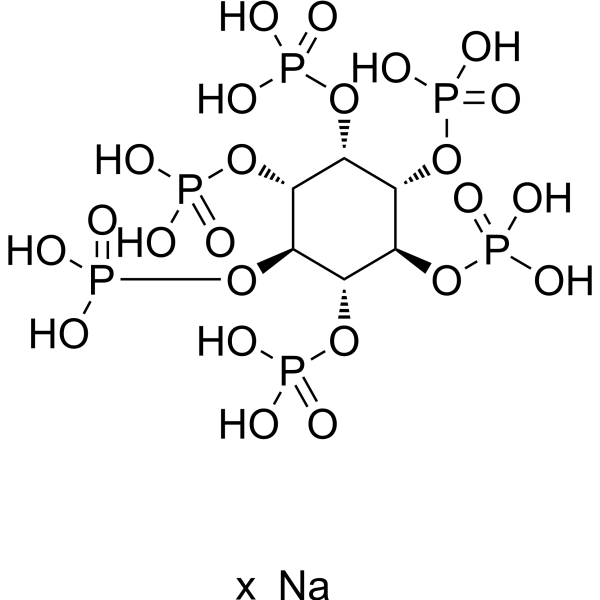
Phytic acid (myo-Inositol; hexakis dihydrogen phosphate; Inositol hexaphosphate) sodium salt is an orally active compound. Phytic acid sodium salt can be derived from the seeds of legumes. Phytic acid sodium salt is a [PO4] 3- storage depot and precursor for other inositol phosphates and pyrophosphates. Phytic acid sodium salt attenuates oligomers and upregulates autophagy protein. Phytic acid sodium salt can be used in cardiovascular disease, metabolic disease, nervous system disease and cancer research .
loading...
    loading...
1
1 Cited Publications
Cat. No.: HY-157214
CAS No.: 3030588-01-0
Purity:  99.76%
Target:  

STING Molecular Glues

Research Areas:  

Cancer

NVS-STG2 is a molecular glue that targets STINGoligomers. NVS-STG2 produces antitumor activity in animal models .
loading...
    loading...
1
1 Cited Publications
Cat. No.: HY-N2580
CAS No.: 63903-51-5
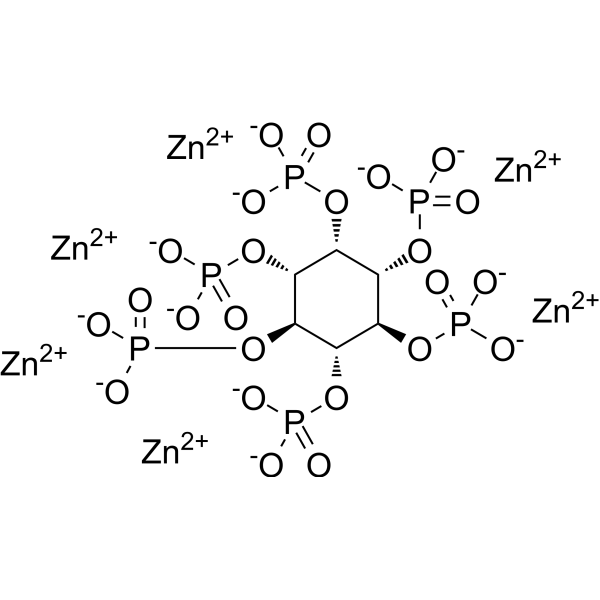
Zinc Phytate (myo-Inositol; hexakis dihydrogen phosphate; Inositol hexaphosphate) is an orally active compound. Zinc Phytate can be derived from the seeds of legumes. Zinc Phytate is a [PO4] 3- storage depot and precursor for other inositol phosphates and pyrophosphates. Zinc Phytate attenuates oligomers and upregulates autophagy protein. Zinc Phytate can be used in cardiovascular disease, metabolic disease, nervous system disease and cancer research .
loading...
    loading...
1
1 Cited Publications
Cat. No.: HY-N0148R
CAS No.: 153-18-4
Synonyms: Rutoside (Standard); Quercetin 3-O-rutinoside (Standard)
Rutin (Standard) is the analytical standard of Rutin. This product is intended for research and analytical applications. Rutin (Rutoside) is a flavonoid found in many plants and shows a wide range of biological activities including anti-inflammatory, antidiabetic, antioxidant, neuroprotective, nephroprotective, hepatoprotective and reducing Aβ oligomer activities. Rutin is also a CBR1 inhibitor, which can cross the blood brain barrier. Rutin attenuates vancomycin-induced renal tubular cell apoptosis via suppression of apoptosis, mitochondrial dysfunction, and oxidative stress .
loading...
    loading...
Cat. No.: HY-101855
CAS No.: 882697-00-9
Purity:  99.93%
Synonyms: Anle138b
Target:  

Amyloid-β

Research Areas:  

Neurological Disease

Emrusolmin (Anle138b), an oligomeric aggregation inhibitor, blocks the formation of pathological aggregates of prion protein (PrPSc) and of α-synuclein (α-syn). Emrusolmin strongly inhibits oligomer accumulation, neuronal degeneration, and disease progression in vivo. Emrusolmin has low toxicity and an excellent oral bioavailability and blood-brain-barrier penetration. Emrusolmin blocks Aβ channels and rescues disease phenotypes in a mouse model for amyloid pathology .
loading...
    loading...
Cat. No.: HY-132611
CAS No.: 1422959-91-8
Purity:  91.89%
Synonyms: SRP-4053
Research Areas:  

Neurological Disease

Golodirsen (SRP-4053) is an antisense oligonucleotide of the phophorodiamidate morpholino oligomer (PMO). Golodirsen restores the reading frame of the Duchenne muscular dystrophy (DMD) gene by modifying the splicing process of the pre-mRNA, skipping exon 53. Golodirsen can restore the expression of the anti-myostatin protein. Golodirsen can be used for the research of duchenne muscular dystrophy (DMD) .
loading...
    loading...

