1. Search Result
Search Result
Pathways Recommended: Stem Cell/Wnt Cell Cycle/DNA Damage
Results for "

SiHa cells

" in MedChemExpress (MCE) Product Catalog:

21

Inhibitors & Agonists

1

Inhibitory Antibodies

10

Natural
Products

Cat. No. Product Name Target Research Areas Chemical Structure
  • HY-Y1750
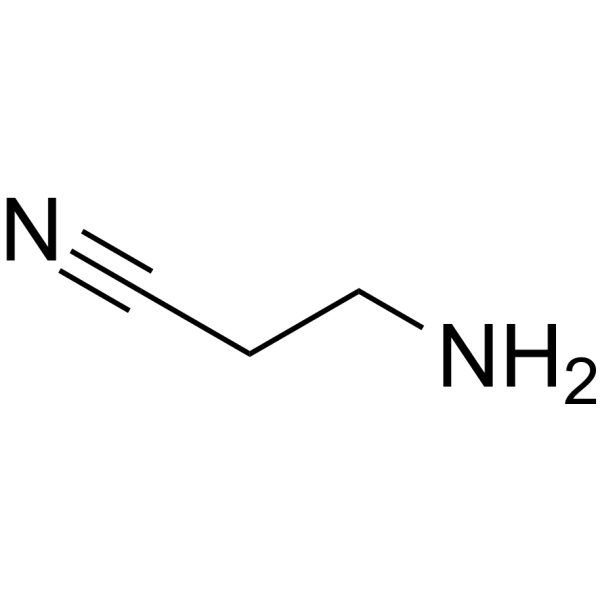
    β-Aminopropionitrile
    Maximum Cited Publications
    13 Publications Verification

    BAPN

    Monoamine Oxidase Endogenous Metabolite Metabolic Disease Cancer
    β-Aminopropionitrile (BAPN) is a specific, irreversible and orally active lysyl oxidase (LOX) inhibitor. β-Aminopropionitrile targets the active site of LOX or LOXL isoenzymes .
    β-Aminopropionitrile
  • HY-N0124
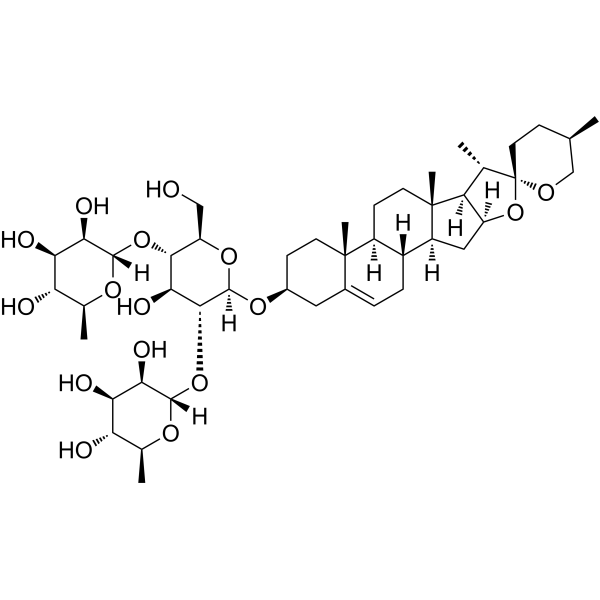
    Dioscin
    10+ Cited Publications

    Collettiside III; CCRIS 4123

    Autophagy Apoptosis Cardiovascular Disease Cancer
    Dioscin (CCRIS 4123; Collettiside III) is a natural plant-derived steroidal saponin that has good anti-cancer activity against a variety of cancer cells. Dioscin causes DNA damage and induces apoptosis in HeLa and SiHa cells. Dioscin regulates ROS-mediated DNA damage and mitochondrial signaling pathways, exerting anticancer activity .
    Dioscin
  • HY-16160
    Cysmethynil
    1 Publications Verification

    Autophagy ICMT Neurological Disease Cancer
    Cysmethynil is an Icmt inhibitor(IC50 = 2.4 μM). Cysmethynil inhibites RAS membrane binding and EGF signal transduction. Cysmethynil prevents the cells in the G1 phase and induces autophagy. Cysmethynil inhibits PC3 cells proliferation, has synergistic effect with Paclitaxel (HY-B0015) and Doxorubicin (HY-15142A). Cysmethynil has anti-tumor effects and can be used for solid tumor (such as prostate cancer et al.) research .
    Cysmethynil
  • HY-N3651
    Curzerenone
    1 Publications Verification

    Bacterial Reactive Oxygen Species (ROS) Apoptosis PI3K Akt mTOR Infection Cancer
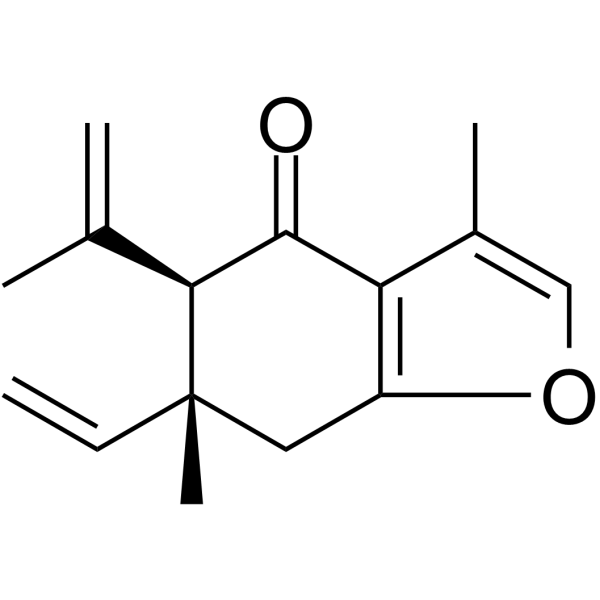
    Curzerenone is an orally active sesquiterpene compound and Antibacterial agent. Curzerenone can be isolated from Curcuma zedoaria and Curcuma aeruginosa plants. Curzerenone increases ROS levels, activates Apoptotic signaling pathways, and attenuates the PI3K/AKT/mTOR signaling pathway. Curzerenone exhibits anticancer activity against liver cancer and cervical cancer. Curzerenone has antioxidant effects. Curzerenone shows weak antibacterial activity against Escherichia coli. Curzerenone can be used in research related to hepatocellular carcinoma, cervical cancer, and Escherichia coli infection .
    Curzerenone
  • HY-108638
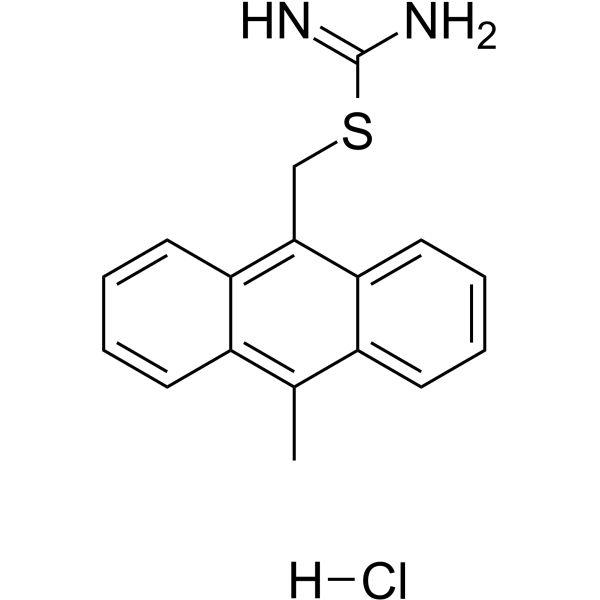
    NSC 146109 hydrochloride
    2 Publications Verification

    XI-011 hydrochloride

    MDM-2/p53 Apoptosis PARP Cancer
    NSC 146109 hydrochloride (XI-011 hydrochloride) is a p53 activator and MDMX inhibitor. NSC 146109 hydrochloride inhibits MDMX gene transcription, downregulates MDMX mRNA and protein levels, stabilizes p53 and activates the transcriptional activity of p53. NSC 146109 hydrochloride induces cancer cell apoptosis (apoptosis) and inhibits the growth of transformed cells. NSC 146109 hydrochloride inhibits the growth of xenograft tumors. NSC 146109 hydrochloride can be used in research related to breast cancer and cervical cancer .
    NSC 146109 hydrochloride
  • HY-N0124R

    Collettiside III (Standard); CCRIS 4123 (Standard)

    Reference Standards Autophagy Apoptosis Cardiovascular Disease Cancer
    Dioscin (Standard) is the analytical standard of Dioscin. This product is intended for research and analytical applications. Dioscin (CCRIS 4123; Collettiside III) is a natural plant-derived steroidal saponin that has good anti-cancer activity against a variety of cancer cells. Dioscin causes DNA damage and induces apoptosis in HeLa and SiHa cells. Dioscin regulates ROS-mediated DNA damage and mitochondrial signaling pathways, exerting anticancer activity .
    Dioscin (Standard)
  • HY-Y1750A
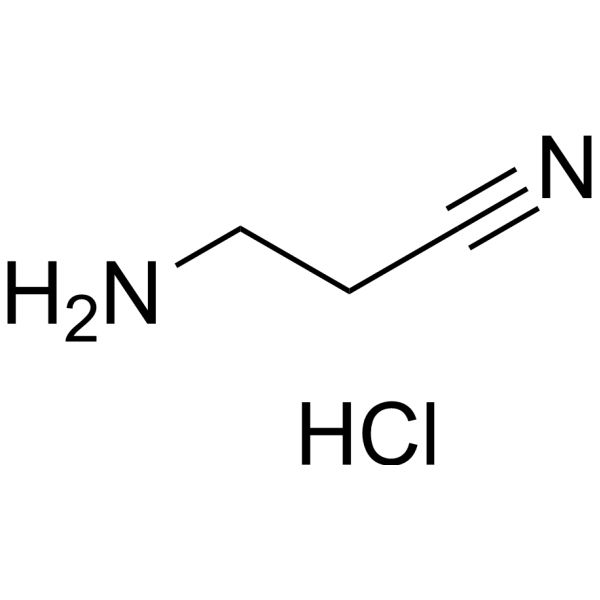
    β-Aminopropionitrile hydrochloride
    Maximum Cited Publications
    13 Publications Verification

    BAPN hydrochloride

    Monoamine Oxidase Endogenous Metabolite Metabolic Disease Cancer
    β-Aminopropionitrile (BAPN) hydrochloride is a specific, irreversible and orally active lysyl oxidase (LOX) inhibitor. β-Aminopropionitrile hydrochloride targets the active site of LOX or LOXL isoenzymes .
    β-Aminopropionitrile hydrochloride
  • HY-162589

    PROTACs HSP Apoptosis Cancer
    Lw13 is a Hsp90-targeting PROTAC and achieves maximum degradation at a concentration of 0.05 μM in Siha cells. Lw13 induces cell apoptosis and exhibits potent anti-tumor activity both in vitro and in vivo(Sturcture Note:(Blue: Cereblon ligand (HY-A0003), Black: linker;Pink: Hsp90 inhibitor SNX-5422 (HY-10213)) .
    Lw13
  • HY-169915

    Aminopeptidase Inflammation/Immunology Cancer
    ERAP1 modulator-2 (compound 10) is a potent ERAP1 inhibitor with an IC50 value of <100 nM .
    ERAP1 modulator-2
  • HY-169100

    VEGFR PI3K Akt mTOR p38 MAPK HIF/HIF Prolyl-Hydroxylase Cancer
    Antiproliferative agent-57 (compound M2) is a tumor angiogenesis inhibitor. Antiproliferative agent-57 inhibits the secretion of VEGF in SiHa cells under hypoxic conditions (IC50=0.68 μM) without inducing cytotoxicity. Antiproliferative agent-57 can modulate the PI3K/AKT/mTOR and MAPK signaling pathways in tumor cells to inhibit the expression of HIF-1α and VEGF in tumor tissues .
    Antiproliferative agent-57
  • HY-Y1750R

    Reference Standards Monoamine Oxidase Endogenous Metabolite Metabolic Disease Cancer
    β-Aminopropionitrile (BAPN) is a specific, irreversible and orally active lysyl oxidase (LOX) inhibitor. β-Aminopropionitrile targets the active site of LOX or LOXL isoenzymes .
    β-Aminopropionitrile (Standard)
  • HY-N4308

    Hexa-O-methylquercetagetin; Quercetagetin hexamethyl ether; 3,5,6,7,3',4'-Hexamethoxyflavone

    NF-κB IKK Bcl-2 Family Cancer
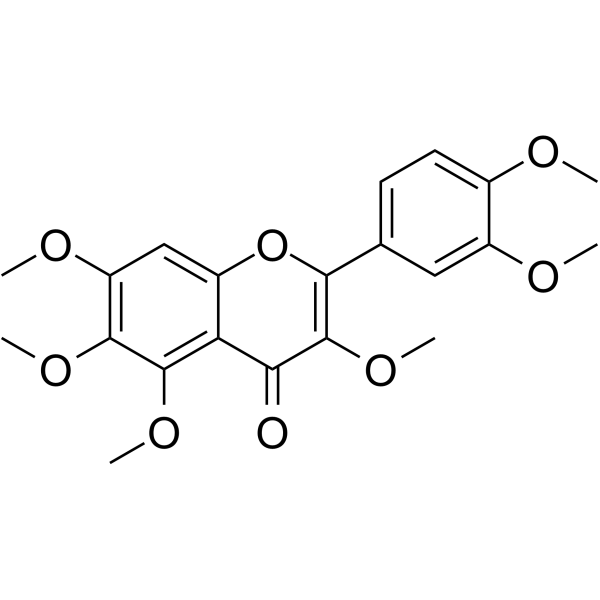
    Hexamethylquercetagetin (Hexa-O-methylquercetagetin; Quercetagetin hexamethyl ether; 3,5,6,7,3',4'-Hexamethoxyflavone) is an orally active NF-κB inhibitor. Hexamethylquercetagetin inhibits NF-κB-derived luciferase activity, reduces phosphorylated p65 and IκBα, Cyclin D1, Bcl-2 and blocks TNFα-induced NF-κB activation. Hexamethylquercetagetin inhibits survival and proliferation of cervical carcinoma cells. Hexamethylquercetagetin suppresses tumor volume and weight in BALB/c nude mouse xenograft models of cervical carcinoma. Hexamethylquercetagetin can be used for the research of cancer, such as cervical carcinoma .
    Hexamethylquercetagetin
  • HY-N14752

    Antibiotic Bacterial Infection Cancer
    Hydroxymycotrienin A is an Ansa antibiotic. Hydroxymycotrienin A has the activity of inhibiting human neck tumor cell line, and its inhibitory effect on human papillomavirus (HPV) gene positive neck tumor cells (such as HeLa, CaSKi, SiHa, etc.) is stronger than HPV gene negative cells .
    Hydroxymycotrienin A
  • HY-N15103

    Antibiotic Bacterial Infection Cancer
    Hydroxymycotrienin B is an Ansa antibiotic. Hydroxymycotrienin B has the activity of inhibiting human neck tumor cell line, and its inhibitory effect on human papillomavirus (HPV) gene positive neck tumor cells (such as HeLa, CaSKi, SiHa, etc.) is stronger than HPV gene negative cells .
    Hydroxymycotrienin B
  • HY-16445BR

    Reference Standards Nucleoside Antimetabolite/Analog Drug Metabolite Apoptosis DNA/RNA Synthesis Cancer
    Dioscin (Standard) is the analytical standard of Dioscin. This product is intended for research and analytical applications. Dioscin (CCRIS 4123; Collettiside III) is a natural plant-derived steroidal saponin that has good anti-cancer activity against a variety of cancer cells. Dioscin causes DNA damage and induces apoptosis in HeLa and SiHa cells. Dioscin regulates ROS-mediated DNA damage and mitochondrial signaling pathways, exerting anticancer activity .
    CNDAC hydrochloride (Standard)
  • HY-101677

    Drug Metabolite Infection
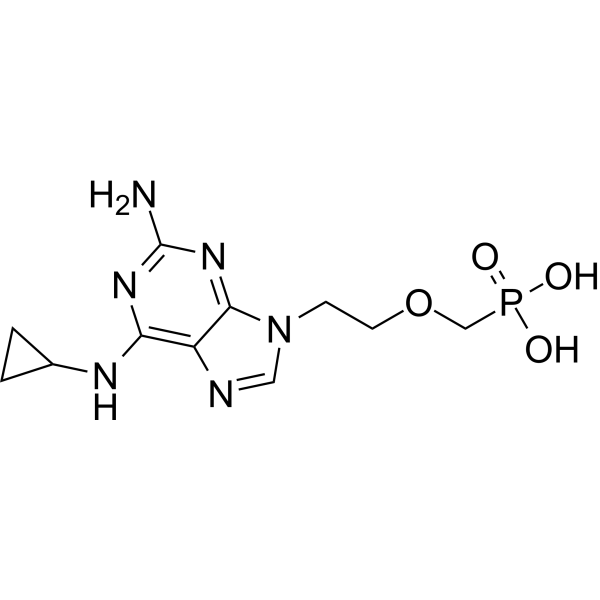
    cPrPMEDAP is an intermediate metabolite of GS-9219. cpr-PMEDAP functions as a proagent of the guanine nucleotide analog PMEG and has antiproliferative activity. cPrPMEDAP is negatively charged at physiologic pH and has poor permeability into the skin .
    cPrPMEDAP
  • HY-154865

    Lactate Dehydrogenase Cancer
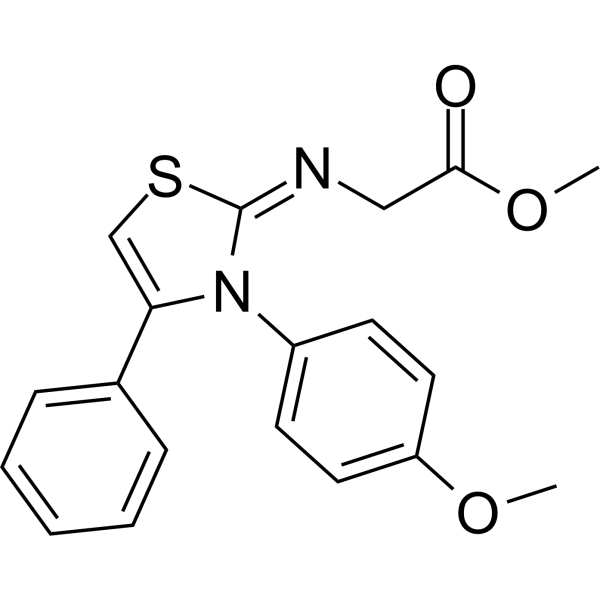
    Anticancer agent 121, an inhibitor of human lactate dehydrogenase A enzyme (hLDHA), has good anticancer activities and can be used for anticancer research .
    Anticancer agent 121
  • HY-154866

    Lactate Dehydrogenase Cancer
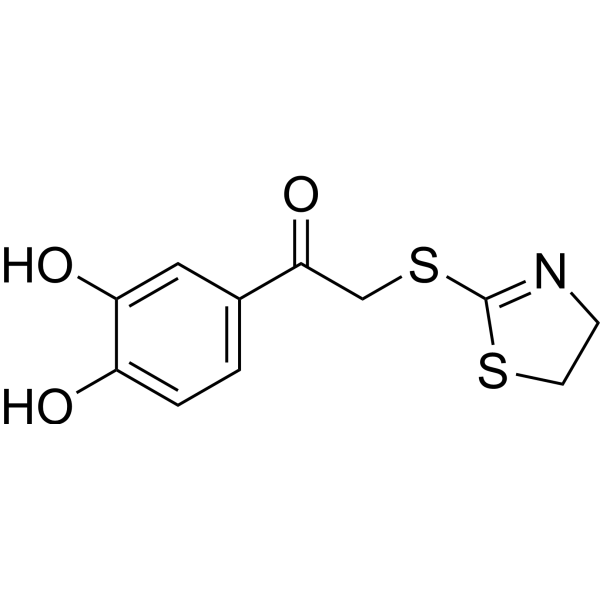
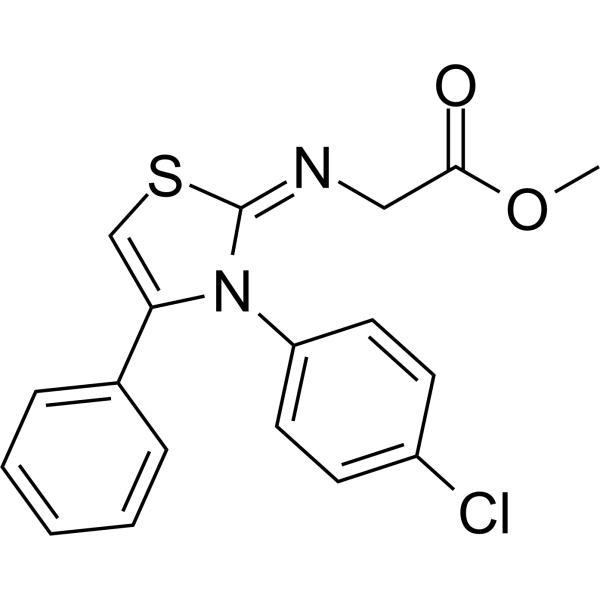
    Anticancer agent 122, an inhibitor of human lactate dehydrogenase A enzyme (hLDHA), has good anticancer activities and can be used for anticancer research .
    Anticancer agent 122
  • HY-183698

    CDK Cancer
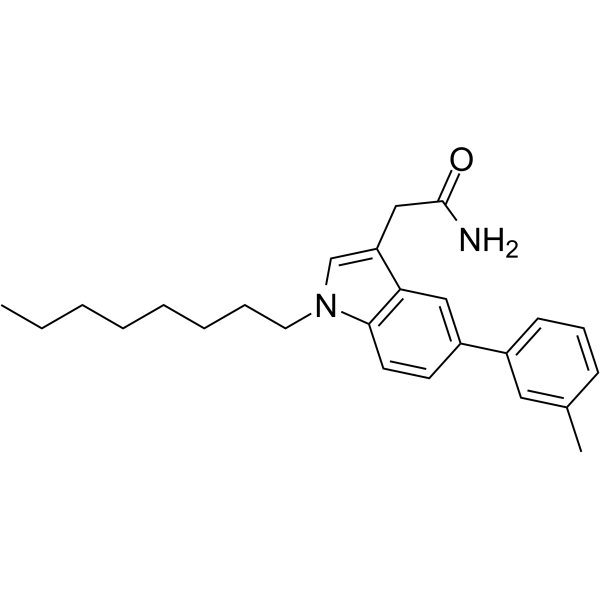
    CDK9-IN-51 is a CDK9 inhibitor. CDK9-IN-51 binds stably to purified CDK9 protein via interactions with key active-site residues Cys106, Asp109, and Phe103. CDK9-IN-51 exhibits antiproliferative activity against multiple cancer cells. CDK9-IN-51 can be used for the research of cancer, such as lung carcinoma, cervical carcinoma and breast carcinoma .
    CDK9-IN-51
  • HY-P992200

    Transmembrane Glycoprotein PI3K Akt p38 MAPK NF-κB MMP Apoptosis Caspase Bcl-2 Family Cardiovascular Disease Cancer
    Anti-CD146 Antibody (AA98) is an antibody targeting CD146 and an angiogenesis inhibitor. Anti-CD146 Antibody (AA98) blocks the dimerization of CD146 as well as its downstream PI3K/AKT, p38 MAPK and NF-κB signaling pathways; it inhibits the expression of MMP9 and ICAM1, epithelial-mesenchymal transition (EMT), and the proliferation, migration and tube formation of endothelial cells. Anti-CD146 Antibody (AA98) enhances radiation-induced cancer cell apoptosis and survival inhibition, reduces tumor microvessel density, and suppresses tumor growth, invasion and vasculogenic mimicry. Anti-CD146 Antibody (AA98) can be used in research related to cervical cancer, liver cancer, malignant phyllodes tumor of the breast, uveal melanoma, leiomyosarcoma, pancreatic cancer, other tumors and angiogenesis .
    Anti-CD146 Antibody (AA98)
  • HY-N17533

    Others Infection Cancer
    Sargentodoside D is a phenolic glycoside. Sargentodoside D occurs in the stems of Sargentodoxa cuneata. Sargentodoside D is applicable to research on infections caused by Acinetobacter baumannii, Candida albicans and Staphylococcus aureus, as well as research on cervical cancer .
    Sargentodoside D

Inquiry Online

Your information is safe with us. * Required Fields.

Salutation


Country or Region *

Applicant Name *


Organization Name *

Department *


Email Address *


Product Name *

Cat. No.


Requested quantity *

Phone Number *


Remarks

Inquiry Online

Inquiry Information

Product Name:
Cat. No.:
Quantity:
MCE Japan Authorized Agent:

