1. Search Result
Search Result
Results for "

acyl-coenzyme

" in MedChemExpress (MCE) Product Catalog:

40

Inhibitors & Agonists

3

Biochemical Assay Reagents

5

Natural
Products

3

Recombinant Proteins

4

Antibodies

Cat. No. Product Name Target Research Areas Chemical Structure
  • HY-13215
    Avasimibe
    Maximum Cited Publications
    17 Publications Verification

    CI-1011; PD-148515

    Acyltransferase Cancer
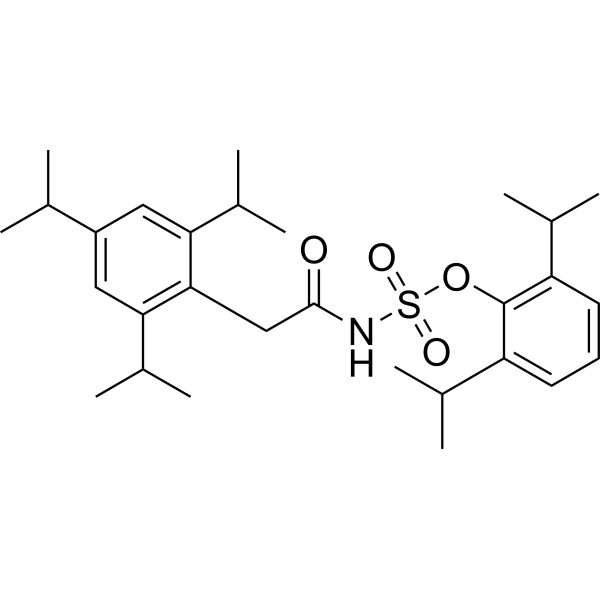
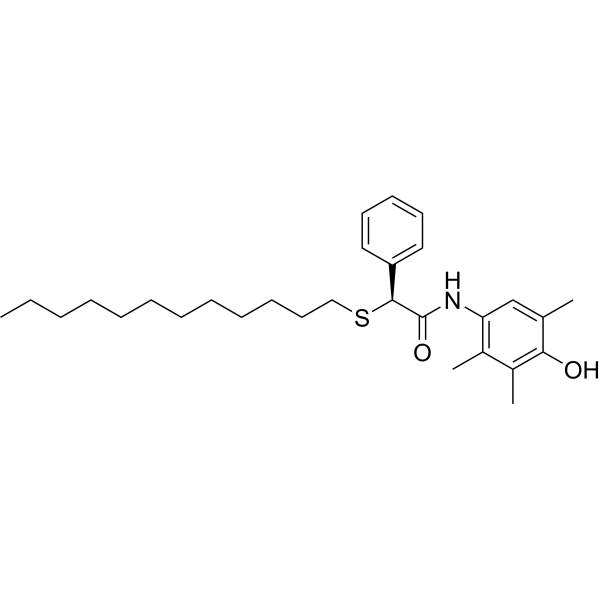
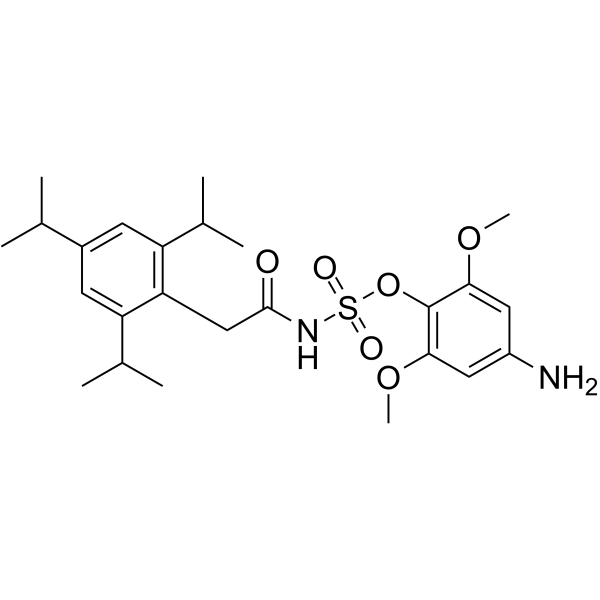
    Avasimibe (CI-1011; PD-148515) is an orally active acyl coenzyme A-cholesterol acyltransferase (ACAT; also called SOAT)) inhibitor with IC50s of 24 and 9.2 µM for ACAT1 and ACAT2, respectively . Avasimibe can be used for the research of prostate cancer .
    Avasimibe
  • HY-P2832

    ACS

    Endogenous Metabolite Metabolic Disease Cancer
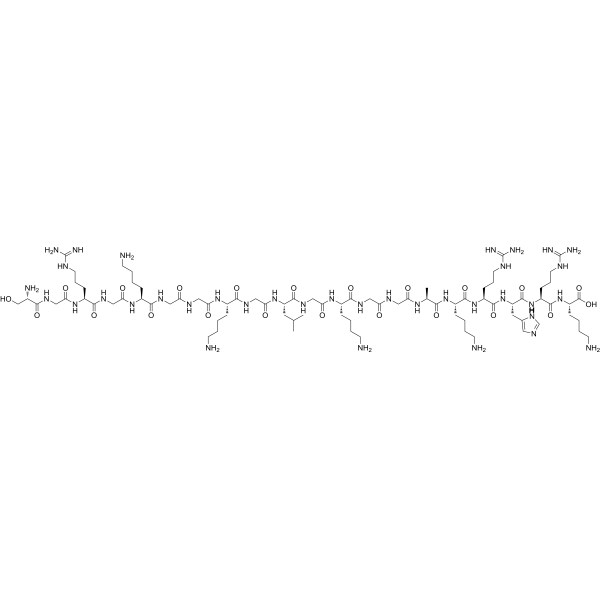
    Acyl coenzyme A synthetase (ACS), namely acetyl coenzyme A synthetase, is often used in biochemical research. Acyl coenzyme A synthetase can catalyze the activation of fatty acids by coenzyme A through a two-step thioesterification reaction to produce acyl coenzyme A, and then participate in a variety of anabolic and catabolic lipid metabolism pathways, and participate in the TCA cycle in aerobic respiration .
    Acyl coenzyme A synthetase
  • HY-N4193
    Glabrol
    3 Publications Verification

    Acyltransferase Cardiovascular Disease
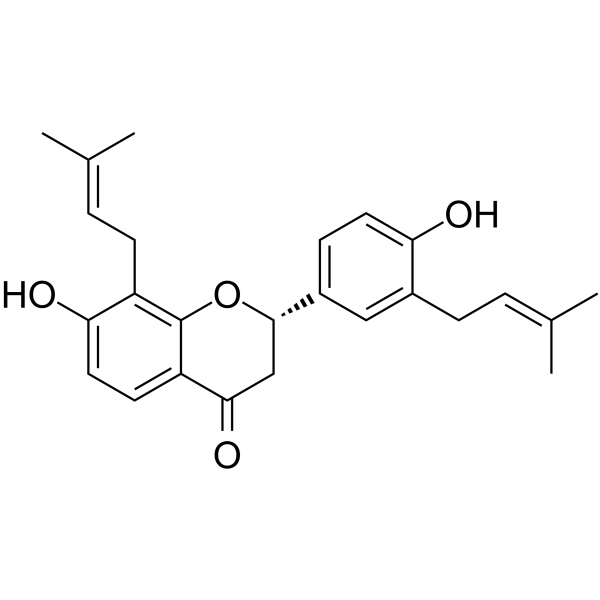
    Glabrol (Compound 1), One isoprenyl flavonoid was isolated from ethanol extract of licorice roots, is a potent and non-competitive Acyl-coenzyme A: cholesterol acyltransferase (ACAT) inhibitor with an IC50 value of 24.6 μM for rat liver microsomal ACAT activity .
    Glabrol
  • HY-100399
    Nevanimibe
    3 Publications Verification

    PD-132301; ATR-101

    Acyltransferase Apoptosis Cancer
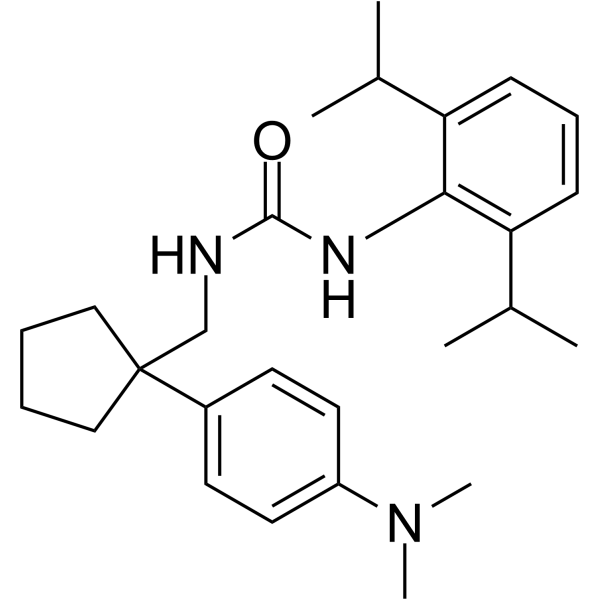
    Nevanimibe (PD-132301) is an orally active and selective acyl-coenzyme A:cholesterol O-acyltransferase 1 (ACAT1) inhibitor with an EC50 of 9 nM. Nevanimibe inhibits ACAT2 with an EC50 of 368 nM. Nevanimibe induces cell apoptosis and has the potential for adrenocortical cancer .
    Nevanimibe
  • HY-100399A
    Nevanimibe hydrochloride
    3 Publications Verification

    PD-132301 hydrochloride; ATR101 hydrochloride

    Acyltransferase Apoptosis Cancer
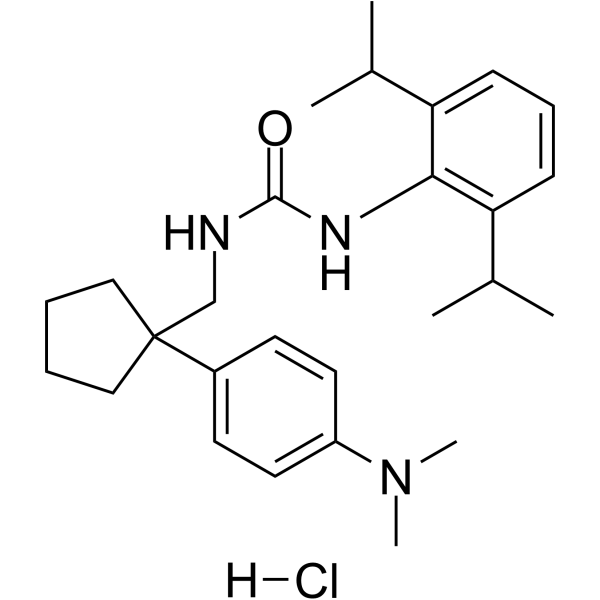
    Nevanimibe hydrochloride (PD-132301 hydrochloride) is an orally active and selective acyl-coenzyme A:cholesterol O-acyltransferase 1 (ACAT1) inhibitor with an EC50 of 9 nM. Nevanimibe hydrochloride inhibits ACAT2 with an EC50 of 368 nM. Nevanimibe hydrochloride induces cell apoptosis and has the potential for adrenocortical cancer .
    Nevanimibe hydrochloride
  • HY-117832
    Pyripyropene A
    1 Publications Verification

    Acyltransferase Infection Cardiovascular Disease Inflammation/Immunology
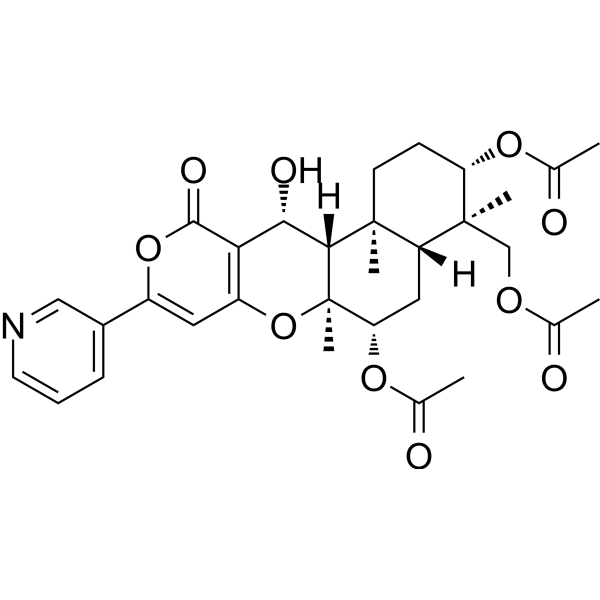
    Pyripyropene A is an orally active, potent and selective sterol O-acyltransferase 2 (SOAT2)/acyl-coenzyme A:cholesterol acyltransferase 2 (ACAT2) inhibitor, with an IC50 of 0.07 µM. Pyripyropene A attenuates hypercholesterolemia and atherosclerosis in vivo .
    Pyripyropene A
  • HY-107572

    CI 976

    Acyltransferase Metabolic Disease
    PD 128042 (CI 976) is a potent, orally active, and selective inhibitor of ACAT (acyl coenzyme A:cholesterol acyltransferase) with an IC50s of 73 nM. PD 128042 is also a potent LPAT (lysophospholipid acyltransferase) inhibitor. PD 128042 inhibits Golgi-associated LPAT activity (IC50=15 μM). PD 128042 inhibits multiple membrane trafficking steps, including ones found in the endocytic and secretory pathway .
    PD 128042
  • HY-N1966
    (E)-Osmundacetone
    2 Publications Verification

    p38 MAPK PPAR Cancer
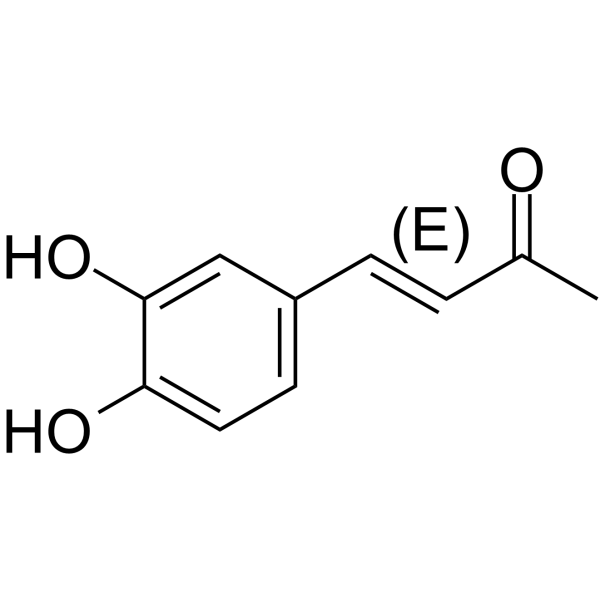
    (E)-Osmundacetone is an inhibitor of the MAPK pathway. (E)-Osmundacetone inhibits the activation of the MAPK signaling pathway and restores the expression of PPARα/ACOX1. (E)-Osmundacetone abrogates abnormal cell proliferation, migration and liver metastasis induced by PTPRO silencing in colorectal cancer cells. (E)-Osmundacetone blocks OA-RD17-mediated activation of the MAPK signaling pathway, thereby reducing macrophage proliferation and migration. (E)-Osmundacetone is applicable to relevant research on colorectal cancer .
    (E)-Osmundacetone
  • HY-16437

    Acyltransferase Cardiovascular Disease
    RP-64477 is a potent inhibitor of the cholesterol esterifying enzyme Acyl-coenzyme A:cholesterol O-acyltransferase (ACAT).
    RP-64477
  • HY-N10788

    Acyltransferase Inflammation/Immunology
    Pomonic acid is an acyl-coenzyme A: cholesterol acyltransferase (ACAT) inhibitor. Pomonic acid reduces the esterification of free cholesterol to cholesteryl esters and the accumulation of intracellular cholesteryl esters. Pomonic acid can be used in the research of atherosclerosis .
    Pomonic acid
  • HY-107396

    Acyltransferase Cardiovascular Disease
    YM-750 is a potent acyl-CoA:cholesterol acyltransferase (ACAT) inhibitor (IC50=0.18 μM). ACAT catalyzes the formation of cholesteryl esters from cholesterol and long-chain fatty-acyl-coenzyme A .
    YM-750
  • HY-131492

    Endogenous Metabolite VD/VDR Metabolic Disease
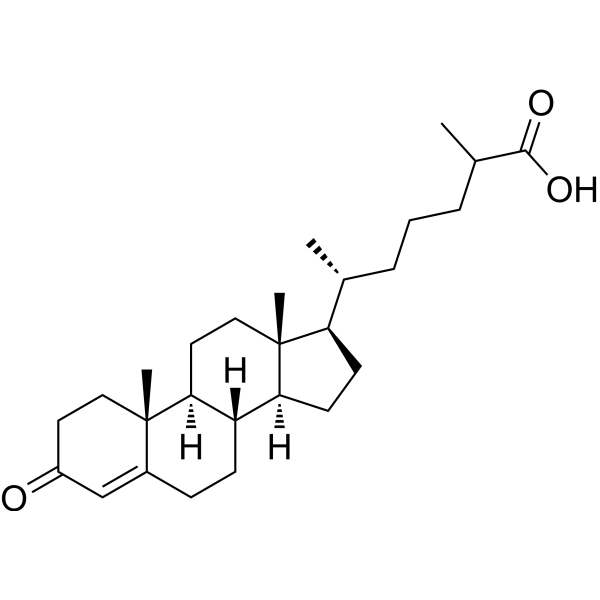
    Δ4‑Dafachronic acid is an endogenous steroid hormone, an agonist of the DAF‑12 nuclear receptor, and a key ligand for the vitamin D receptor (VDR). Δ4‑Dafachronic acid promotes the active escape developmental trajectory in Austrofundulus limnaeus embryos even under diapause‑inducing conditions. Δ4‑Dafachronic acid is suitable for research on the developmental biology .
    Δ4-Dafachronic acid
  • HY-19286

    F 12511

    Acyltransferase Cancer
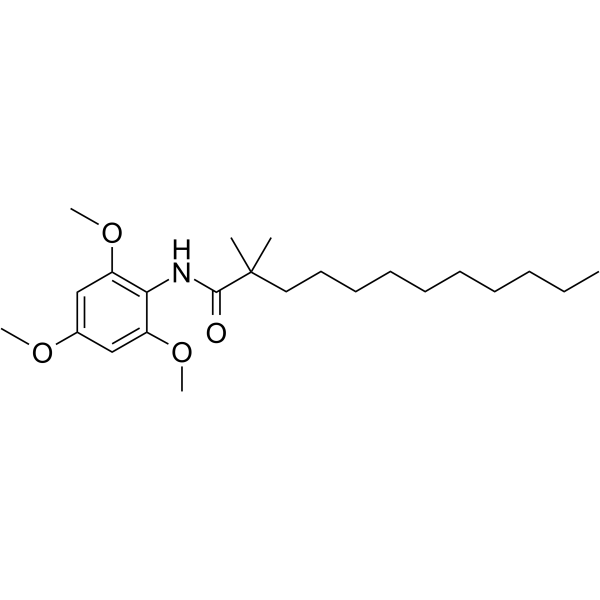
    Eflucimibe (F 12511) is a new acyl-coenzyme A cholesterol O-acyltransferase (ACAT) inhibitor. Eflucimibe can be used in the research of atherosclerosis .
    Eflucimibe
  • HY-131303

    Heptadecanoyl-CoA

    Biochemical Assay Reagents Metabolic Disease
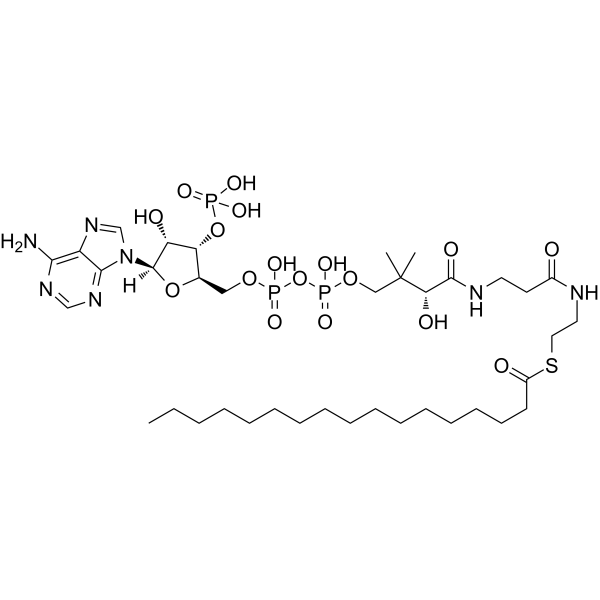
    Heptadecanoyl Coenzyme A (Heptadecanoyl-CoA), long-chain acyl-coenzymes A (acyl-CoAs) (LCACoA), is an intermediate in lipid metabolism. Heptadecanoyl Coenzyme A can be used for the research of glucose metabolism .
    Heptadecanoyl Coenzyme A
  • HY-E70245

    Cholyl-coenzyme A

    Biochemical Assay Reagents Metabolic Disease
    Cholyl-CoA (Cholyl-coenzyme A) is a biologically active steroidal acyl-coenzyme A intermediate. Cholyl-CoA reacts with taurine in the presence of liver supernatant enzymes to promote the synthesis of taurocholic acid. Cholyl-CoA is formed by the activation of cholic acid with coenzyme A. Cholyl-CoA plays a key role in the biosynthesis, metabolism and conjugation reactions of bile acids .
    Cholyl-CoA
  • HY-134438

    Endogenous Metabolite Metabolic Disease
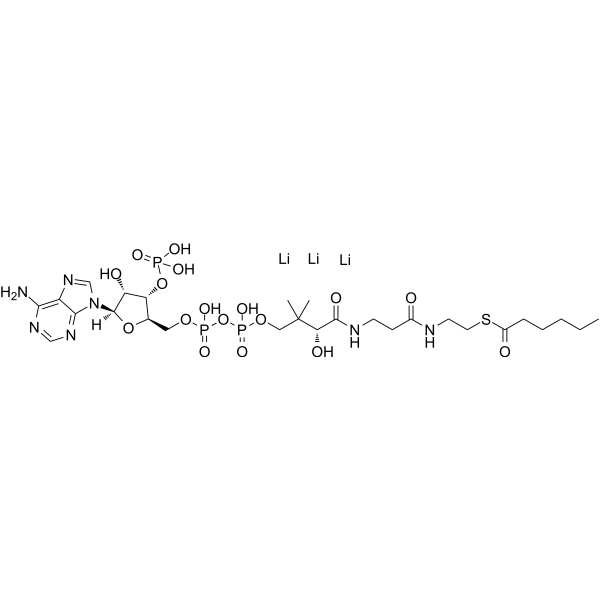
    Hexanoyl coenzyme A trilithium is a hexanoyl-based medium-chain fatty acyl coenzyme A that is present in all organisms. Hexanoyl coenzyme A trilithium can be used as a precursor for cannabinoid biosynthesis and acts as a competitive inhibitor of medium-chain acyl coenzyme A dehydrogenase (MCAD) .
    Hexanoyl coenzyme A trilithium
  • HY-134428

    Endogenous Metabolite Metabolic Disease
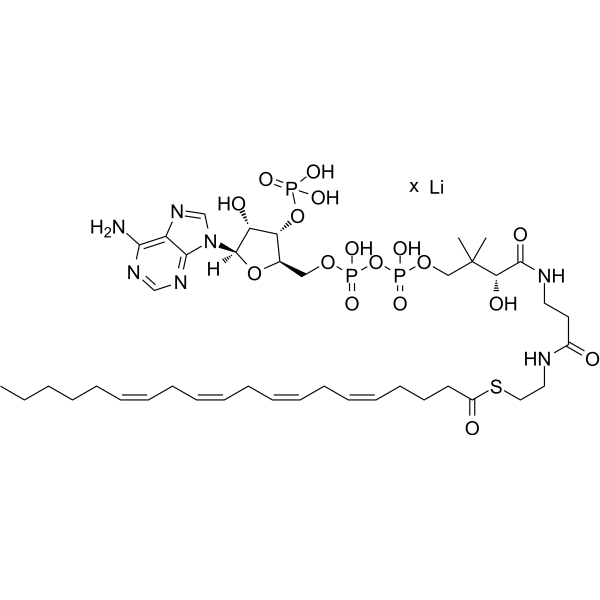
    Arachidonoyl coenzyme A lithium is an unsaturated fatty acyl coenzyme A, formed by the condensation of the thiol group of coenzyme A with the carboxyl group of arachidonic acid .
    Arachidonoyl coenzyme A lithium
  • HY-P2832B

    Endogenous Metabolite Metabolic Disease
    Acyl-coenzyme A Synthetase, Pseudomonas sp. (EC 6.2.1.3) belongs to the ligase family and can activate the breakdown of complex fatty acids. Acyl-coenzyme A Synthetase, Pseudomonas sp. (EC 6.2.1.3) catalyzes the production of fatty acyl-CoA in a two-step process via an adenylate intermediate. Acyl-coenzyme A Synthetase, Pseudomonas sp. (EC 6.2.1.3) catalyzes the pre-reaction of fatty acid β-oxidation and can also be incorporated into phospholipids. Acyl-coenzyme A Synthetase, Pseudomonas sp. (EC 6.2.1.3) protein is involved in regulating and promoting the transport of long-chain fatty acids in mammalian cells.
    Acyl-coenzyme A Synthetase, Pseudomonas sp.
  • HY-100399AR

    PD-132301 hydrochloride (Standard); ATR101 hydrochloride (Standard)

    Reference Standards Acyltransferase Apoptosis Cancer
    Nevanimibe hydrochloride (Standard) is the analytical standard of Nevanimibe hydrochloride. This product is intended for research and analytical applications. Nevanimibe hydrochloride (PD-132301 hydrochloride) is an orally active and selective acyl-coenzyme A:cholesterol O-acyltransferase 1 (ACAT1) inhibitor with an EC50 of 9 nM. Nevanimibe hydrochloride inhibits ACAT2 with an EC50 of 368 nM. Nevanimibe hydrochloride induces cell apoptosis and has the potential for adrenocortical cancer .
    Nevanimibe hydrochloride (Standard)
  • HY-139020

    Acyltransferase Inflammation/Immunology
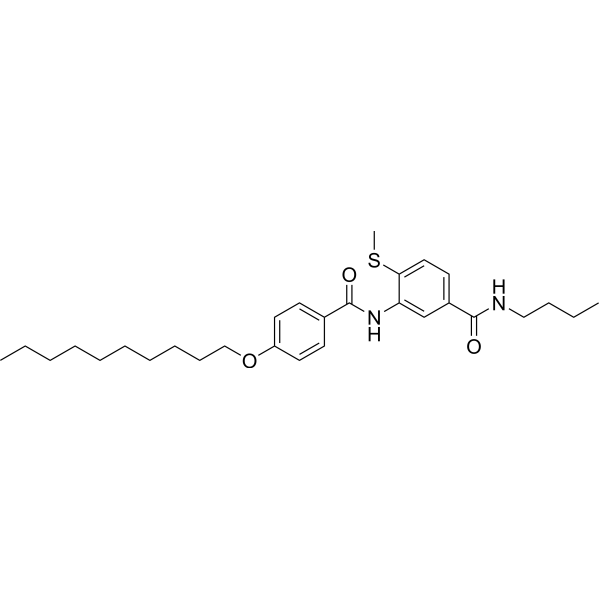
    ACAT-IN-3 is an acyl-Coenzyme A:cholesterol acyltransferase (ACAT) inhibitor. ACAT-IN-3 inhibits NF-κB mediated transcription .
    ACAT-IN-3
  • HY-139024

    Acyltransferase Inflammation/Immunology
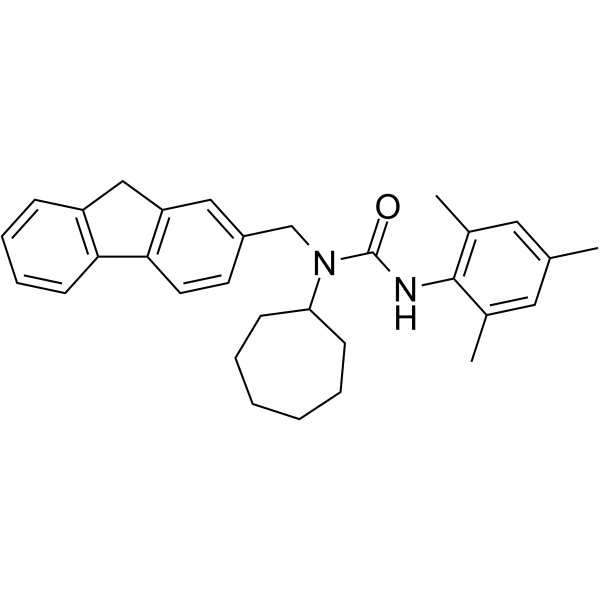
    ACAT-IN-7 is an acyl-Coenzyme A:cholesterol acyltransferase (ACAT) inhibitor. ACAT-IN-7 inhibits NF-κB mediated transcription .
    ACAT-IN-7
  • HY-139025

    Acyltransferase Inflammation/Immunology
    ACAT-IN-8 (example 206) is an acyl-Coenzyme A:cholesterol acyltransferase (ACAT) inhibitor. ACAT-IN-8 inhibits NF-κB mediated transcription .
    ACAT-IN-8
  • HY-139021A

    Acyltransferase Inflammation/Immunology
    ACAT-IN-4 hydrochloride (Example 208) is an acyl-Coenzyme A:cholesterol acyltransferase (ACAT) inhibitor. ACAT-IN-4 hydrochloride inhibits NF-κB mediated transcription .
    ACAT-IN-4 hydrochloride
  • HY-139021

    Acyltransferase Inflammation/Immunology
    ACAT-IN-4 (Example 208) is an acyl-Coenzyme A:cholesterol acyltransferase (ACAT) inhibitor. ACAT-IN-4 inhibits NF-κB mediated transcription .
    ACAT-IN-4
  • HY-139022

    Acyltransferase Inflammation/Immunology
    ACAT-IN-5 (example 19) is an acyl-Coenzyme A:cholesterol acyltransferase (ACAT) inhibitor. ACAT-IN-5 inhibits NF-κB mediated transcription .
    ACAT-IN-5
  • HY-117466

    Acyltransferase Metabolic Disease
    FR186054 is an oral active acyl-Coenzyme A:cholesterol acyltransferase (ACAT) inhibitor with the IC50 of 99 nM. FR186054 shows hypocholesterolemic effect and can be used for study of hypercholesterolemia and atherosclerosis .
    FR186054
  • HY-139026

    Acyltransferase Inflammation/Immunology
    ACAT-IN-9 is an acyl-Coenzyme A:cholesterol acyltransferase (ACAT) inhibitor extracted from patent EP1236468A1, example 207. ACAT-IN-9 inhibits NF-κB mediated transcription .
    ACAT-IN-9
  • HY-139019

    Acyltransferase Inflammation/Immunology
    ACAT-IN-2 is an acyl-Coenzyme A:cholesterol acyltransferase (ACAT) inhibitor extracted from patent EP1236468A1, example 187. ACAT-IN-2 inhibits NF-κB mediated transcription .
    ACAT-IN-2
  • HY-139027

    Acyltransferase Inflammation/Immunology
    ACAT-IN-10 is an acyl-Coenzyme A:cholesterol acyltransferase (ACAT) inhibitor extracted from patent EP1236468A1, example 197. ACAT-IN-10 weakly inhibits NF-κB mediated transcription .
    ACAT-IN-10
  • HY-139027A

    Acyltransferase Inflammation/Immunology
    ACAT-IN-10 dihydrochloride is an acyl-Coenzyme A:cholesterol acyltransferase (ACAT) inhibitor extracted from patent EP1236468A1, example 197. ACAT-IN-10 dihydrochloride weakly inhibits NF-κB mediated transcription .
    ACAT-IN-10 dihydrochloride
  • HY-139023

    Acyltransferase Inflammation/Immunology
    ACAT-IN-6 is an acyl-Coenzyme A:cholesterol acyltransferase (ACAT) inhibitor extracted from patent EP1236468A1, example 200. ACAT-IN-6 potently inhibits NF-κB mediated transcription .
    ACAT-IN-6
  • HY-114619

    Oleic acid anilide; OAA

    Acyltransferase Others
    Oleyl anilide (Oleic acid anilide) is a toxic agent found in some stocks of toxic oil, which is associated with toxic oil syndrome (TOS). Oleyl anilide is an inhibitor of acyl-coenzyme A:cholesterol acyltransferase (ACAT) (IC50: 26 µM) .
    Oleyl anilide
  • HY-113671

    Calcium Channel Acyltransferase Others
    Belfosdil is an orally active and highly specific calcium channel blocker that also inhibits the activity of acyl coenzyme A cholesterol acyltransferase .
    Belfosdil
  • HY-13215R

    CI-1011 (Standard); PD-148515 (Standard)

    Acyltransferase Reference Standards Cancer
    Avasimibe (Standard) is the analytical standard of Avasimibe. This product is intended for research and analytical applications. Avasimibe (CI-1011; PD-148515) is an orally active acyl coenzyme A-cholesterol acyltransferase (ACAT; also called SOAT)) inhibitor with IC50s of 24 and 9.2 µM for ACAT1 and ACAT2, respectively . Avasimibe can be used for the research of prostate cancer .
    Avasimibe (Standard)
  • HY-N14715

    Acyltransferase Metabolic Disease
    Gypsetin can inhibit acylcoenzyme A, cholesterol acyltransferase (ACAT) activity, inhibit rat liver microbody ACAT with an IC50 of 18 μM, and its action is competitive with oleoyl-COA substrate, Ki value is 5.5 μM. Gypsetin also inhibits Oleic acid from forming cholesterol esters with an IC50 of 0.65 μM .
    Gypsetin
  • HY-CE00108

    (2-Sulfanyl-3-phenylpropanoyl)-phe-tyr-coenzyme A; acyl-coenzyme A

    Biochemical Assay Reagents Others
    (2-Sulfanyl-3-phenylpropanoyl)-phe-tyr-CoA ((2-Sulfanyl-3-phenylpropanoyl)-phe-tyr-coenzyme A) is a derivative of Coenzyme A (HY-128851).
    (2-Sulfanyl-3-phenylpropanoyl)-phe-tyr-CoA
  • HY-107572R

    CI 976 (Standard)

    Acyltransferase Reference Standards Metabolic Disease
    PD 128042 (Standard) is the analytical standard of PD 128042. This product is intended for research and analytical applications. PD 128042 (CI 976) is a potent, orally active, and selective inhibitor of ACAT (acyl coenzyme A:cholesterol acyltransferase) with an IC50s of 73 nM. PD 128042 is also a potent LPAT (lysophospholipid acyltransferase) inhibitor. PD 128042 inhibits Golgi-associated LPAT activity (IC50=15 μM). PD 128042 inhibits multiple membrane trafficking steps, including ones found in the endocytic and secretory pathway .
    PD 128042 (Standard)
  • HY-19112

    Acyltransferase Metabolic Disease Endocrinology
    447C88 is an acyl-coenzyme A cholesterol acyltransferase (ACAT) inhibitor with an IC50 of 23 nM. 447C88 can reduce plasma cholesterol levels and can be used in the research of endocrine and metabolic diseases such as hyperlipidemia .
    447C88
  • HY-107396R

    Reference Standards Acyltransferase Cardiovascular Disease
    YM-750 (Standard) is the analytical standard of YM-750 (HY-107396). This product is intended for research and analytical applications. YM-750 is a potent acyl-CoA:cholesterol acyltransferase (ACAT) inhibitor (IC50=0.18 μM). ACAT catalyzes the formation of cholesteryl esters from cholesterol and long-chain fatty-acyl-coenzyme A .
    YM-750 (Standard)
  • HY-186095

    ACSL Family Metabolic Disease
    LP-911888 is an orally active ACSL5/ACSL1 inhibitor, with IC50 values of 1 nM and 3 nM against mouse and human ACSL5, and IC50 values of 2 nM and 9 nM against mouse and human ACSL1, respectively. LP-911888 inhibits intestinal triglyceride uptake; it also reduces body weight and food consumption in diet-induced obese mice, and delays gastric emptying by activating the ileal brake pathway. LP-911888 can be used in studies of diet-induced obesity .
    LP-911888

Inquiry Online

Your information is safe with us. * Required Fields.

Salutation


Country or Region *

Applicant Name *


Organization Name *

Department *


Email Address *


Product Name *

Cat. No.


Requested quantity *

Phone Number *


Remarks

Inquiry Online

Inquiry Information

Product Name:
Cat. No.:
Quantity:
MCE Japan Authorized Agent:

