
15 Results for "

cardiometabolic diseases

" in MedChemExpress (MCE) Product Catalog:
Products (15)

15 Results for "cardiometabolic diseases" in MCE Product Catalog:

1
1 Cited Publications
Cat. No.: HY-155774
CAS No.: 923417-09-8
Purity:  99.71%
Target:  

Phospholipase

Research Areas:  

Metabolic Disease

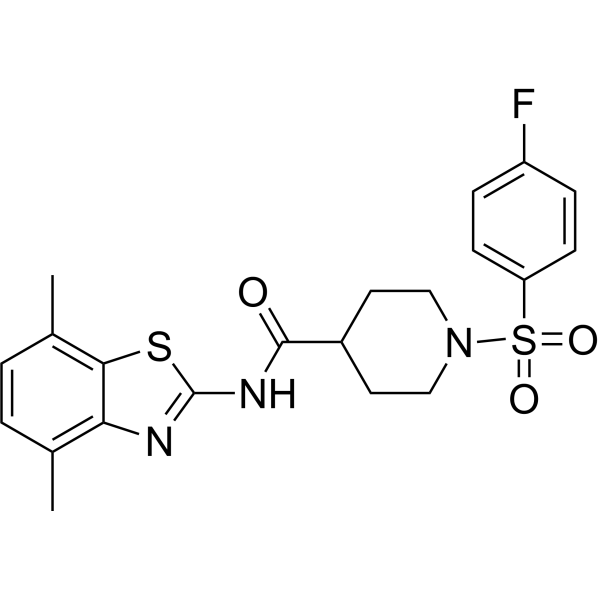
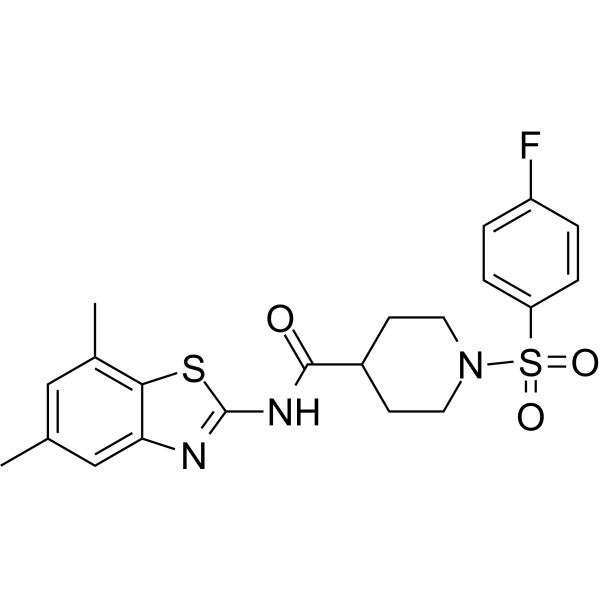
APE-PLD (VU533) activator is a potent NAPE-PLD activator with an EC50 value of 0.30 µM. NAPE-PLD activator (VU533) can enhance NAPE-PLD activity and increase efferocytosis by macrophages. NAPE-PLD activator (VU533) can be used for cardiometabolic diseases research .
loading...
    loading...
Cat. No.: HY-P4153
CAS No.: 2407527-16-4
Synonyms: MK-0616 chloride
Target:  

PCSK9

Research Areas:  

Cardiovascular Disease

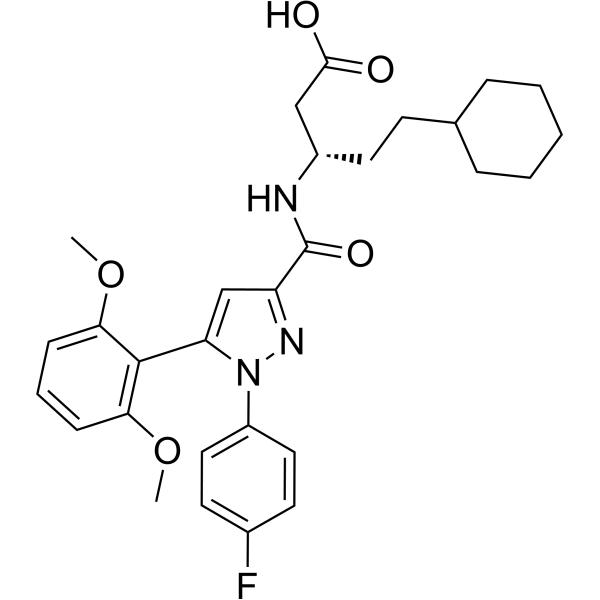
Enlicitide chloride is an orally active inhibitor for PCSK9 that blocks the interaction between LPL receptor and PSCK9, with an IC50 of 2.5 nM. Enlicitide chloride can be used in the study of cardiovascular diseases such as atherosclerosis, hypercholesterolemia, coronary heart disease, metabolic syndrome, acute coronary syndrome or related cardiovascular and cardiometabolic disorders .
loading...
    loading...
Cat. No.: HY-154831
CAS No.: 27888-44-4
Purity:  ≥98.0%
Synonyms: N-Behenoyl-D-erythro-sphingosine; C22-Ceramide; Cer d18:1/22:0
Target:  

Liposome

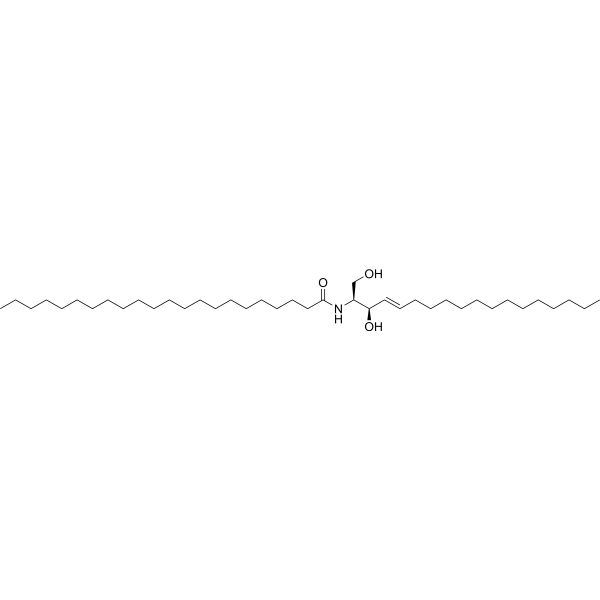
C22-Ceramide (d18:1/22:0) (N-Behenoyl-D-erythro-sphingosine) is an ultra-long-chain ceramide containing a C22:0 behenoyl acyl chain. C22-Ceramide can be glycosylated via CGT-3 to form C22 glucosylceramide (C22 GlcCer), which in turn maintains clathrin membrane localization and lysosomal homeostasis, inhibits TOR signaling and promotes SKN-1 activation, thereby enhancing oxidative stress resistance and extending the lifespan of C. elegans. C22-Ceramide can be used in research on cardiometabolic diseases such as type 2 diabetes, obesity, dyslipidemia, coronary artery disease and thin-cap fibroatheroma (TCFA), as well as oxidative stress and aging-related studies .
loading...
    loading...
Cat. No.: HY-155157
Purity:  98.66%
Target:  

Endogenous Metabolite

Research Areas:  

Cardiovascular Disease

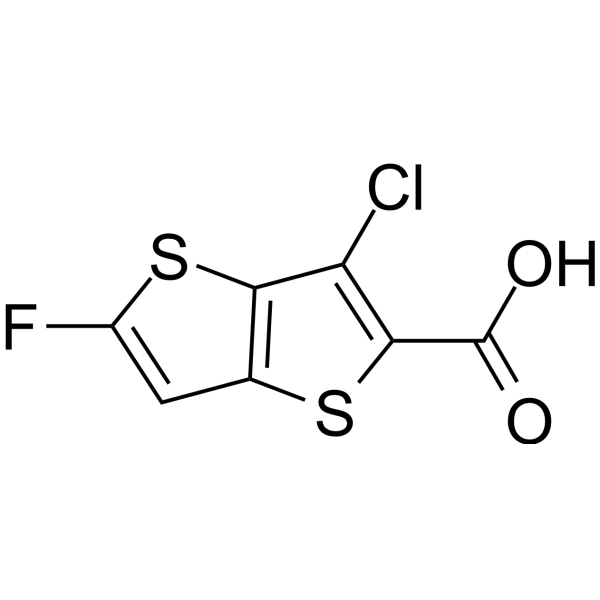
PF-07247685 is a BCKDC kinase (BDK) inhibitor (EC50=2.2 nM). PF-07247685 stabilizes the interaction between BDK and BCKDH core subunit E2 and prevents phosphorylation of E1. While BDK mediates branched-chain ketoacid dehydrogenase (BCKDH) phosphorylation, and inhibition of BCKDH is involved in controlling the rate-limiting step of branched-chain amino acid (BCAA) degradation. Impaired BCAA catabolism has been associated with several diseases, particularly cardiometabolic diseases, including heart failure (HF), type 2 diabetes mellitus (T2DM), non-alcoholic fatty liver disease (NAFLD), and obesity. PF-07247685 improved cardiometabolic endpoints and improves glucose tolerance in mice .
loading...
    loading...
Cat. No.: HY-126359
CAS No.: 27098-24-4
Purity:  ≥98.0%
Synonyms: SLPC; 18:0-18:2 PC
1-Stearoyl-2-linoleoyl-sn-glycero-3-phosphocholine (SLPC; 18:0-18:2 PC) is an endogenous phospholipid marker molecule in the glycerophospholipid metabolic pathway. 1-Stearoyl-2-linoleoyl-sn-glycero-3-phosphocholine is a core component of the phospholipid bilayer of biological membranes and a key responsive lipid for radiation injury and cardiometabolic diseases. 1-Stearoyl-2-linoleoyl-sn-glycero-3-phosphocholine constitutes the phospholipid bilayers of cell membranes and high-density lipoprotein (HDL), and regulates the core activity of lipoprotein functional homeostasis. The content of 1-Stearoyl-2-linoleoyl-sn-glycero-3-phosphocholine in mouse serum shows a significant dose-dependent decrease with increasing ionizing radiation dose, and its level in human HDL also decreases significantly in metabolic syndrome. 1-Stearoyl-2-linoleoyl-sn-glycero-3-phosphocholine can serve as a biological dosimeter marker for ionizing radiation injury, and is used for rapid and accurate assessment of radiation absorbed dose in exposed individuals. 1-Stearoyl-2-linoleoyl-sn-glycero-3-phosphocholine can also act as a lipidomics research target for cardiometabolic diseases such as lipid metabolic syndrome and early-onset coronary heart disease .
loading...
    loading...
Cat. No.: HY-156193
CAS No.: 2573122-40-2
Purity:  99.69%
PF-07208254 is a selective, orally active allosteric inhibitor of branched-chain ketoacid dehydrogenase kinase (BDK) (IC50=110 nM, Ki=54 nM, KD=84 nM). PF-07208254 inhibits BDK-mediated BCKDH phosphorylation and enhances the catabolism of branched-chain amino acids (BCAAs) and branched-chain keto acids (BCKAs) by binding to the allosteric pocket of BDK, reducing BDK binding to BCKDH-E2 and promoting BDK degradation. PF-07208254 inhibits BDK activity in human skeletal muscle cells (IC50=540 nM) and has activity to improve cardiac function and metabolism. PF-07208254 can be used in the study of cardiometabolic diseases (e.g., heart failure, type 2 diabetes) .
loading...
    loading...
Cat. No.: HY-155773
CAS No.: 923509-20-0
Purity:  98.53%
Target:  

FAAH Epoxide Hydrolase

Research Areas:  

Cardiovascular Disease

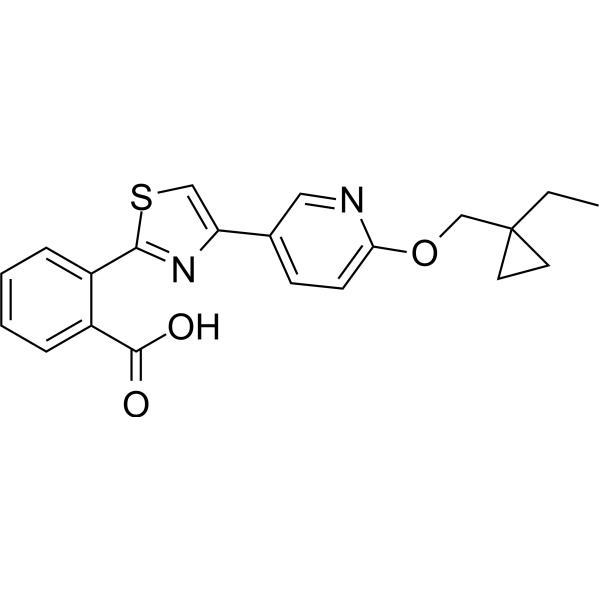
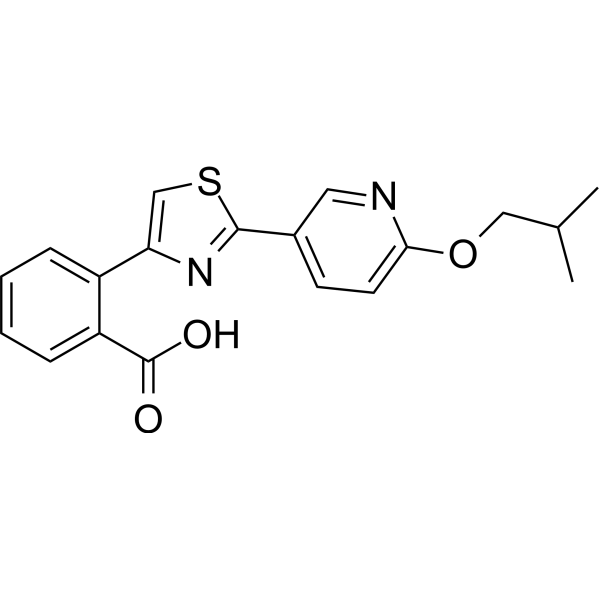
VU534 is a NAPE-PLD activator, with an EC50 of 0.30 μM. VU534 is dual inhibitors of FAAH and sEH (IC50 of 1.2 μM). VU534 increases efferocytosis in a NAPE-PLD dependent manner. VU534 has the potential for cardiometabolic diseases study [1] .
loading...
    loading...
Cat. No.: HY-147751
CAS No.: 1965244-85-2
Research Areas:  

Cardiovascular Disease

APJ receptor agonist 6 (compound 9) is a potent APJ (apelin receptor) agonist, with Ki of 1.3 μM. APJ receptor agonist 6 has EC50 values of 0.070 , 0.097, and 0.063 μM for calcium, cAMP, and β-arrestin, respectively .
loading...
    loading...
Cat. No.: HY-P11321A
Synonyms: acyl-GIP hydrochloride
Target:  

GLP Receptor

Research Areas:  

Metabolic Disease

IUB0271 hydrochloride (acyl-GIP hydrochloride) is a glucose-dependent insulinotropic polypeptide receptor (GIPR) agonist with blood-brain barrier permeability. IUB0271 hydrochloride activates the GIPR signaling pathway, inhibits food intake and weight gain, and induces cFos neuron activation in the area postrema. IUB0271 hydrochloride enhances lipid clearance and induces systemic fatty acid oxidation. IUB0271 hydrochloride improves dyslipidemia, reduces atherosclerotic plaque formation and decreases adipocyte volume. IUB0271 hydrochloride can be used in studies related to obesity, dyslipidemia and atherosclerosis .
loading...
    loading...
Cat. No.: HY-P11321
Synonyms: acyl-GIP
Target:  

GLP Receptor

Research Areas:  

Metabolic Disease

IUB0271 (acyl-GIP) is a glucose-dependent insulinotropic polypeptide receptor (GIPR) agonist with blood-brain barrier permeability. IUB0271 activates the GIPR signaling pathway, inhibits food intake and weight gain, and induces cFos neuron activation in the area postrema. IUB0271 enhances lipid clearance and induces systemic fatty acid oxidation. IUB0271 improves dyslipidemia, reduces atherosclerotic plaque formation and decreases adipocyte volume. IUB0271 can be used in studies related to obesity, dyslipidemia and atherosclerosis .
loading...
    loading...
Cat. No.: HY-155156
Purity:  99.46%
PF-07238025 is a BCKDC kinase (BDK) inhibitor (EC50=19 nM). PF-07238025 stabilizes the interaction between BDK and BCKDH core subunit E2 and prevents phosphorylation of E1. While BDK mediates branched-chain ketoacid dehydrogenase (BCKDH) phosphorylation, and inhibition of BCKDH is involved in controlling the rate-limiting step of branched-chain amino acid (BCAA) degradation. Impaired BCAA catabolism has been associated with several diseases, particularly cardiometabolic diseases, including heart failure (HF), type 2 diabetes mellitus (T2DM), non-alcoholic fatty liver disease (NAFLD), and obesity. PF-07238025 improved cardiometabolic endpoints and improves glucose tolerance in mice .
loading...
    loading...
Cat. No.: HY-174805
CAS No.: 2411677-11-5
Research Areas:  

Metabolic Disease

THRβ receptor agonist-2 (Example 7-4) is a THRβ receptor agonist. THRβ receptor agonist-2 can be used for research of liver disorder or a cardiometabolic disease .
loading...
    loading...
Cat. No.: HY-130245A
CAS No.: 2216703-12-5
Target:  

HyT PCSK9

(R,R)-PCSK9 degrader 1 is an isomer of PCSK9 degrader 1 (HY-130245). (R,R)-PCSK9 degrader 1 is a HyT-like PCSK9 degrader (IC50 of 655.4 nM) , and its PCSK9-binding site does not interfere with the binding of PCSK9 to LDL receptor. (R,R)-PCSK9 degrader 1 can be used in the research of atherosclerosis, hypercholesterolemia, coronary heart disease, metabolic syndrome, acute coronary syndrome, and related cardiovascular and cardiometabolic diseases .
loading...
    loading...
Cat. No.: HY-169334
Target:  

Endogenous Metabolite

Research Areas:  

Metabolic Disease

BDK-IN-1 (compound (-)-43) is a BDK inhibitor with the IC50 of 0.23 μM and the max inhibition of 90%. BDK-IN-1 decreases the level of phospho-E1 and can be used for study of cardiometabolic diseases .
loading...
    loading...
Cat. No.: HY-L263
89 compounds

Energy metabolism is the most fundamental biochemical process in living organisms, encompassing glycolysis, the TCA cycle, oxidative phosphorylation, the pentose phosphate pathway, and fatty acid oxidation. These core pathways directly regulate cell survival, proliferation, differentiation, and apoptosis. Dysregulation of energy metabolism is closely linked to major diseases including cancer, diabetes, obesity, cardiovascular diseases, neurodegenerative disorders, and ischemia‑reperfusion injury. Targeting these metabolic pathways has become a frontier in drug discovery and mechanistic research.

The MCE Energy Metabolite Compound Library features 89 structurally defined small‑molecule compounds. It covers energy substrates, pathway intermediates, coenzymes and redox carriers, nucleotide derivatives, and microenvironmental modulators. This library is applicable to research areas including tumor metabolism, insulin resistance, mitochondrial dysfunction, oxidative stress, neuroprotection, and cardiometabolic diseases, providing a high‑quality tool for mechanistic studies, biomarker discovery, and high‑throughput drug screening.

  • 1

