



59 Results for "

cell membrane glycoprotein

" in MedChemExpress (MCE) Product Catalog:
Products (59)

59 Results for "cell membrane glycoprotein" in MCE Product Catalog:

26
26 Publications Verification
Cat. No.: HY-129047
CAS No.: 9002-07-7
Purity:  91.00%
Trypsin is a serine protease enzyme, and hydrolyzes proteins at the carboxyl side of the Lysine or Arginine. Trypsin activates PAR2 and PAR4. Trypsin induces cell-to-cell membrane fusion in PDCoV infection by the interaction of S glycoprotein of PDCoV and pAPN. Trypsin also promotes cell proliferation and differentiation. Trypsin can be used in the research of wound healing and neurogenic inflammation .
loading...
    loading...
9
9 Cited Publications
Cat. No.: HY-P3160
CAS No.: 86088-83-7
Fibronectin, a glycoprotein present in blood as well as in cells, is a biomarker of tissue injury. Fibronectin binds to membrane-spanning receptor proteins called integrins. Fibronectin also binds to other extracellular matrix proteins such as collagen, fibrin, and heparan sulfate proteoglycans .
This product is a human Fibronectin obtained by recombinant expression in a rice expression system.
loading...
    loading...
3
3 Cited Publications
Cat. No.: HY-P99006
CAS No.: 931402-35-6
Synonyms: MORab-009

Target:  

Mesothelin

Research Areas:  

Cancer

Amatuximab (MORab-009) is a chimeric, humanized IgG1/k MAb that targets the cell surface mesothelin (MSLN). Mesothelin is a glycosylphosphatidyl inositol (GPI)-anchored membrane glycoprotein, which is present in a restricted set of normal adult tissues such as the mesothelium .
loading...
    loading...
1
1 Cited Publications
Cat. No.: HY-P2975
CAS No.: 114956-81-9
Synonyms: Mouse laminin (Engelbreth-Holm-Swarm murine sarcoma basement membrane)
Laminin (Engelbreth-Holm-Swarm murine sarcoma basement membrane) is a crucial structural element in animal tissues, forming part of the scaffolding that supports tissue architecture. It interacts with type IV collagen through entactin and perlecan, connects to cell membranes via integrin receptors, dystroglycan complexes, and Lutheran blood group glycoproteins, and contains functional domains that facilitate collagen binding, cell adhesion, heparin interaction, and promote neurite outgrowth.
loading...
    loading...
1
1 Cited Publications
Cat. No.: HY-P0328
CAS No.: 103425-05-4
Target:  

VSV

Research Areas:  

Infection

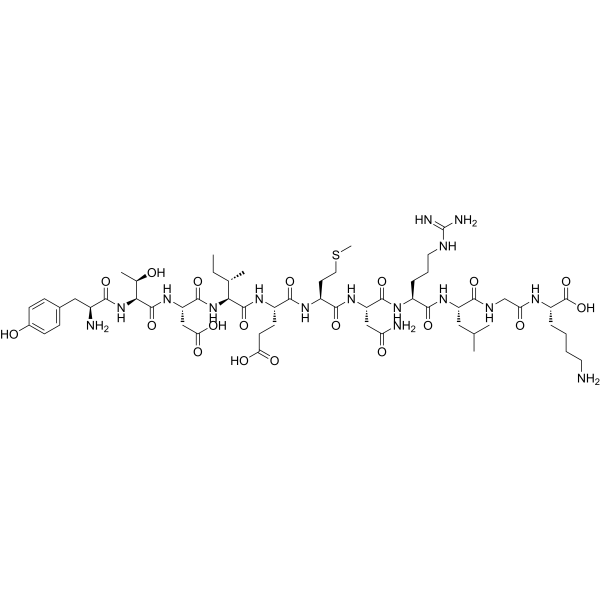
VSV-G tag Peptide is a 11 amino acid peptide derived from the Vesicular Stomatitis viral glycoprotein. VSV-G tag Peptide can integrate into the cell membranes of animal cells, induce cell fusion, and significantly enhance the efficiency of DNA transfection into animal cells. VSV-G tag Peptide can be used for research on drug delivery .
loading...
    loading...
1
1 Cited Publications
Cat. No.: HY-P700709
Purity:  ≥ 95%, as determined by Bis-Tris PAGE.
Synonyms: ENPP1; Nucleotide Diphosphatase; Prev. PDNP1; NPPase; Prev. M6S1; membrane Component, Chromosome 6, Surface Marker 1; Prev. NPPS; membrane Component Chromosome 6 Surface Marker 1; PC-1; Plasma-cell membrane glycoprotein 1; PCA1; Alkaline Phosphodiesterase
Species:  
Mouse
Source:  
HEK293
loading...
    loading...
Cat. No.: HY-129047A
CAS No.: 9002-07-7
Trypsin MS grade is a serine protease enzyme, and hydrolyzes proteins at the carboxyl side of the Lysine or Arginine. Trypsin MS grade activates PAR2 and PAR4. Trypsin MS grade induces cell-to-cell membrane fusion in PDCoV infection by the interaction of S glycoprotein of PDCoV and pAPN. Trypsin MS grade also promotes cell proliferation and differentiation. Trypsin MS grade can be used in the research of wound healing and neurogenic inflammation .
loading...
    loading...
Cat. No.: HY-E70562
Target:  

Bacterial

Research Areas:  

Infection Cancer

Mucinase StcE is a zinc metalloproteinase belonging to the M66 family, which is secreted by enterohemorrhagic Escherichia coli via the type II general secretion pathway. Mucinase StcE specifically recognizes and cleaves the 'T*XT' motif in mucin-type glycoproteins with α-O-glycans (such as MUC2, Mucin 7, Glycoprotein 340, CD45, CD43, C1 Esterase Inhibitor (HY-P991629), etc.). By degrading the mucus layer to reduce its viscosity, inhibiting complement cascade activation, and localizing complement regulatory factors to the cell membrane, Mucinase StcE helps bacteria penetrate the mucosal barrier, adhere to host cells, and evade immune clearance. Mucinase StcE can serve as a mucin-specific proteolytic tool for research on mucinous carcinomas derived from the colon, esophagus, and salivary glands .
loading...
    loading...
Cat. No.: HY-NP163A
Synonyms: WGA-AF488
Wheat germ agglutinin-AF488 (WGA-AF488) is a cell membrane-specific staining agent prepared by conjugating wheat germ agglutinin with the Alexa Fluor 488 (HY-D1304) fluorescent dye, and it binds to cell surface glycoproteins with high affinity. Wheat germ agglutinin-AF488 is applied in fluorescence microscopy and confocal imaging techniques, and it can clearly label the membrane structures of various cells including breast cancer cells, enabling high-resolution visual observation. Wheat germ agglutinin-AF488 is used in studies of breast cancer and triple-negative breast cancer to observe cell morphology and membrane dynamic changes .
loading...
    loading...
Cat. No.: HY-107867
CAS No.: 135046-48-9
Purity:  99.39%
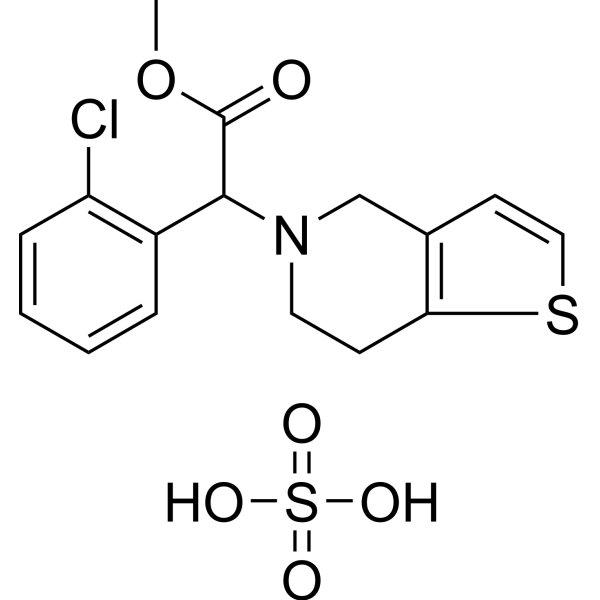
(±)-Clopidogrel bisulfate is a platelet P2Y12 receptor inhibitor and an adenosine diphosphate (ADP) receptor antagonist. (±)-Clopidogrel bisulfate inhibits the binding of ADP to its receptors on the membranes of platelet cells, and blocks ADP-mediated activation of the glycoprotein GPIIb/IIIa complex. (±)-Clopidogrel bisulfate reduces vascular inflammation and angiotensin II induced-abdominal aortic aneurysm progression. (±)-Clopidogrel bisulfate has anti-inflammatory effects .
loading...
    loading...
Cat. No.: HY-D1991
CAS No.: 906664-68-4
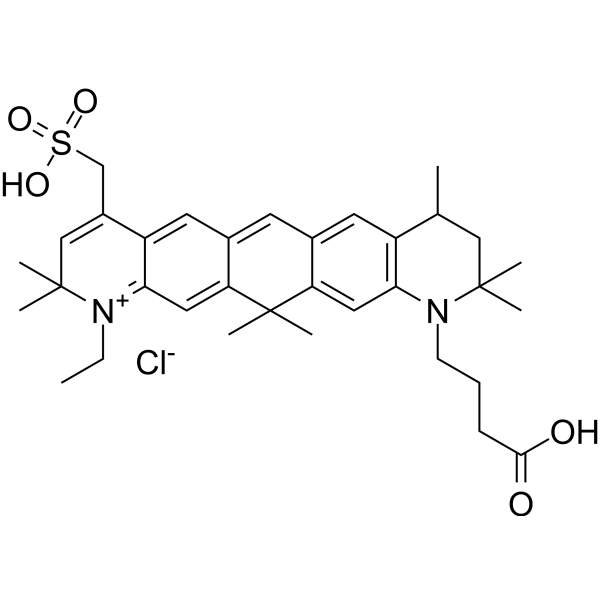
ATTO 647 is a carborhodamine fluorophore and imaging tracer with photostable properties. ATTO 647 serves as a fluorescent probe to investigate cell membrane structure and diffusion characteristics. When conjugated with wheat germ agglutinin, ATTO 647 specifically binds to N-acetyl-β-D-glucosamine and sialic acid residues on membrane glycoproteins, enabling single-molecule tracing of glycoprotein diffusion. ATTO 647 exhibits highly stable fluorescence properties with significantly reduced blinking in mounting media such as ROXS (AA/MV) and ROXS (TX/TQ), whereas its brightness properties vary in Ibidi-MM and Vectashield. ATTO 647 can also be used to label histone H2B-GFP in fixed cells for confocal microscopy photobleaching experiments .
loading...
    loading...
Cat. No.: HY-P10153
CAS No.: 1360823-60-4
Target:  

Peptides

Research Areas:  

Others

gH625 is a cell-penetrating viral peptide which is a part of glycoprotein H of Herpes simplex virus type I. gH625 is able to cross the cell membrane and to transport many conjugated cargoes into the cytosol. gH625 is permeable to the blood-brain barrier (BBB) and can enter the rat brain in vivo without toxic effects. gH625 can be used for siRNA delivery research .
loading...
    loading...
Cat. No.: HY-NP153
Synonyms: LTL (Biotinylated)
Lotus Tetragonolobus Lectin (LTL) (Biotinylated) is a biotinylated derivative of Lotus Tetragonolobus Lectin (HY-NP070), with both sugar-binding specificity and biotin labeling. Lotus Tetragonolobus Lectin (Biotinylated) is used to detect proteins, glycoproteins and lectins on nitrocellulose membranes .
loading...
    loading...
Cat. No.: HY-178151
CAS No.: 3098857-57-6
Target:  

RSV

Research Areas:  

Infection

CGR-50 is a potent RSV fusion glycoprotein (F protein) inhibitor (EC50 = 32.6 nM against RSV A2 in HEp-2 cells). CGR-50 blocks RSV entry by binding to the F protein and inhibiting membrane fusion. CGR-50 can be used for RSV infection research .
loading...
    loading...
Cat. No.: HY-N4299
CAS No.: 1913319-59-1
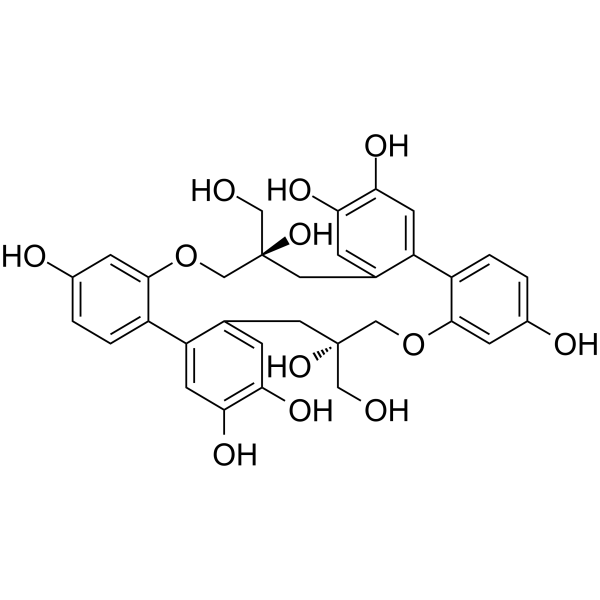
Caesappanin C, a biphenyl dimer from the ethanolic extract of the heartwood of Indonesian Caesalpinia sappan L., shows strong proliferation stimulating activity against the primary osteoblastic cells in vitro. Caesappanin C has the potential to stimulate bone formation and regeneration . Caesappanin C can effectively deactivate HSV particles and bind HSV surface glycoprotein B (gB) to inhibit membrane fusion .
loading...
    loading...
Cat. No.: HY-P11353
CAS No.: 117138-19-9
Research Areas:  

Infection Cancer

HA2 peptide is a potent pH-responsive fusion peptide derived from hemagglutinin (HA), corresponding to the N-terminal fusion peptide domain consisting of 23 amino acid residues of HIV-1 gp41 envelope glycoprotein. HA2 peptide adopts a random coil structure under physiological pH conditions; in acidic endosomes, protonation of carboxyl groups reduces negative charge, inducing a transition to an α-helical conformation that can fuse with and destabilize the endosomal membrane. After binding to membranes, the N-terminal and middle regions of HA2 peptide mainly adopt a β-strand conformation, while the C-terminal region remains unstructured. HA2 peptide induces lipid mixing and promotes aqueous content leakage from large unilamellar vesicles whose lipid composition matches that of HIV-1 viruses and target T cells. HA2 peptide is anionic and can bind to cationic peptides to achieve siRNA condensation. HA2 peptide can be used in studies related to cancer and human immunodeficiency virus (HIV) infection .
loading...
    loading...
Cat. No.: HY-106753
CAS No.: 70312-00-4
Target:  

P-glycoprotein

Research Areas:  

Others

Tolnapersine exhibits multidrug resistance (MDR) reversal activity, which reverses the resistance of tumor cells to multiple chemotherapy drugs by affecting P-glycoprotein (Pgp) on the cell membrane .
loading...
    loading...
Cat. No.: HY-174567
Target:  

mRNA

Research Areas:  

Neurological Disease

Human NRG1 mRNA encodes the human neuregulin 1 (NRG1) protein, a membrane glycoprotein that mediates cell-cell signaling. NRG1 plays a critical role in the growth and development of multiple organ systems.
loading...
    loading...
Cat. No.: HY-P10976
Target:  

SARS-CoV

Research Areas:  

Infection

Spike Glycoprotein (1147-1162) is a linear and broadly neutralizing peptide in the S2 protein of SARS-CoV-2. Spike Glycoprotein (1147-1162) is conserved across SARS-CoV, BatCoV RaTG13, SARS-CoV-2, and SARS-CoV-2 variants. Spike Glycoprotein (1147-1162)-targeting mAbs can neutralize both SARS-CoV-2 and SARS-CoV by preventing fusion between the virus and cell membrane. Spike Glycoprotein (1147-1162) can be used for universal vaccines against SARS-CoV-2 mutants research .
loading...
    loading...
Cat. No.: HY-168953
CAS No.: 3043797-88-9
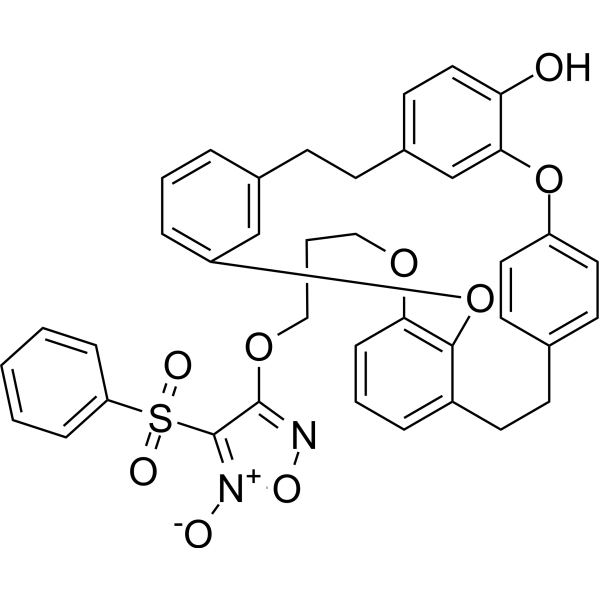
Lysosomal P-gp targeted agent 1 (Compound 14) is an anti-tumor agent targeting lysosomal P-glycoprotein (Pgp). Lysosomal P-gp targeted agent 1 is selectively transported into lysosomes by overexpressed Pgp, release nitric oxide (NO) to generate reactive oxygen species (ROS), resulting in lysosomal membrane permeabilization (LMP) and inducing apoptosis. Lysosomal P-gp targeted agent 1 can overcome P-glycoprotein-mediated drug resistance and lead to cell cycle arrest, but relatively low toxicity to normal cells. Lysosomal P-gp targeted agent 1 has antitumor activity, significantly inhibits tumor volume .
loading...
    loading...

