1. Search Result
Search Result
Pathways Recommended: Membrane Transporter/Ion Channel
Results for "

cellular plant membranes

" in MedChemExpress (MCE) Product Catalog:

7

Inhibitors & Agonists

1

Natural
Products

Cat. No. Product Name Target Research Areas Chemical Structure
  • HY-W749411

    Biochemical Assay Reagents Endogenous Metabolite Others
    Malondialdehyde tetrabutylammonium is a quaternary ammonium salt formed by the decomposition of polyunsaturated fatty acids in plant cell membranes. Malondialdehyde tetrabutylammonium can be used for the quantification of malondialdehyde, a biomarker of lipid peroxidation .
    Malondialdehyde tetrabutylammonium
  • HY-112747

    LPI; PE (soy)

    Phospholipase Infection
    Soy PE (LPI) is the most abundant phospholipid in prokaryotes and the second most abundant found in the membrane of mammalian, plant, and yeast cells, comprising approximately 25% of total mammalian phospholipids. In the brain, phosphatidylethanolamine comprises almost half of the total phospholipids. It is synthesized mainly through the cytidine diphosphate-ethanolamine and phosphatidylserine decarboxylation pathways, which occur in the endoplasmic reticulum (ER) and mitochondrial membranes, respectively. It is a precursor in the synthesis of phosphatidylcholine and arachidonoyl ethanolamide and is a source of ethanolamine used in various cellular functions. In E.coli, phosphatidylethanolamine deficiency prevents proper assembly of lactose permease, suggesting a role as a lipid chaperone. It is a cofactor in the propagation of prions in vitro and can convert recombinant mammalian proteins into infectious molecules even in the absence of RNA. This product contains phosphatidylethanolamine molecular species with variable fatty acyl chain lengths at the sn-1 and sn-2 positions .
    Soy PE
  • HY-N12158

    Apoptosis Cancer
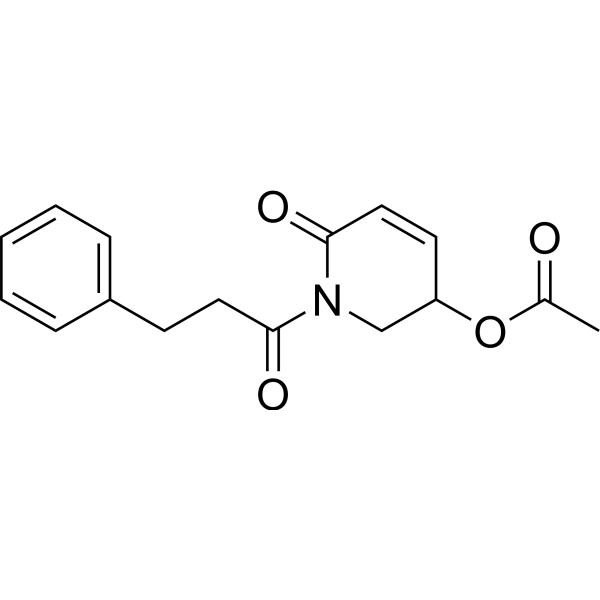
    Pipermethystine is an alkaloid that can be isolated from the Kava plant. Pipermethystine decreases HepG2 cell cellular ATP levels, mitochondrial membrane potential, and induces apoptosis .
    Pipermethystine
  • HY-168066

    Fungal Infection
    Antifungal agent 117 is a bis-pyrazole carboxamide derivative with antifungal activity, exhibiting an EC50 value of 11.58 mg/L against Sclerotinia sclerotiorum. Antifungal agent 117 increases cell membrane permeability, causing an imbalance in osmotic pressure inside and outside the cell, and induces the accumulation of reactive oxygen species (ROS), leading to oxidative damage to the cell membrane, resulting in leakage of cellular contents and eventually cell death. RNA sequencing analysis reveals that Antifungal agent 117 downregulates catalase genes and upregulates neutral ceramidase genes, disrupting cell membrane structure, accelerating sphingolipid metabolism, and promoting cell death. Antifungal agent 117 shows great potential in the fields of plant protection and antifungal infection .
    Antifungal agent 117
  • HY-W414697

    D-Ribo-phytosphingosine (C17 base)

    Bacterial Others
    4-Hydroxysphinganine C17 base (D-Ribo-phytosphingosine C17 base), also known as D-ribo-phytosphingosine or PHS, is a crucial compound present in the membranes of fungi, plants, bacteria, marine organisms, and mammalian tissues. It plays a vital role in preserving the structural integrity of membranes, regulating cellular growth, and mediating the heat stress response in yeast. Additionally, PHS serves as a precursor for the synthesis of important lipid mediators such as PHS 1-phosphate, inositol phosphorylceramide, and KRN7000 (the α-anomer of galactosylceramide). Furthermore, this phospholipid promotes keratinocyte differentiation, making it a valuable active ingredient in cosmetic formulations.
    4-Hydroxysphinganine (C17 base)
  • HY-159481

    Succinate Dehydrogenase Fungal Infection Inflammation/Immunology
    SDH-IN-17 (compound C32), a hydrazide-containing flavonol derivative, is a potent succinate dehydrogenase (SDH) inhibitor with an IC50 of 8.42 μM. SDH-IN-17 can occupy the active site and form strong interactions with the key residues of SDH. SDH-IN-17 exhibits antifungal activity against Rhizoctonia solani (EC50=0.170 μg/mL). SDH-IN-17 disrupts the normal growth of hyphae by affecting the structural integrity of the cell membrane and cellular respiration. SDH-IN-17 has the potential for plant disease control research .
    SDH-IN-17
  • HY-183966

    Bacterial Fungal Infection
    Antibacterial agent 348 is an antimicrobial agent containing piperazine-isopropanolamine bifunctional groups. Antibacterial agent 348 suppresses virulence factor expression in plant pathogens. Antibacterial agent 348 compromises bacterial membrane integrity, leading to cytoplasmic leakage. Antibacterial agent 348 inhibits cellular proliferation of plant pathogens, diminishes colonization and infectivity of plant pathogens in host plants. Antibacterial agent 348 can be used for the research of rice bacterial leaf blight, pepper phytophthora blight .
    Antibacterial agent 348

Inquiry Online

Your information is safe with us. * Required Fields.

Salutation


Country or Region *

Applicant Name *


Organization Name *

Department *


Email Address *


Product Name *

Cat. No.


Requested quantity *

Phone Number *


Remarks

Inquiry Online

Inquiry Information

Product Name:
Cat. No.:
Quantity:
MCE Japan Authorized Agent:

