1. Search Result
Search Result
Results for "

central hypertension

" in MedChemExpress (MCE) Product Catalog:

11

Inhibitors & Agonists

1

Peptides

Cat. No. Product Name Target Research Areas Chemical Structure
  • HY-P1248

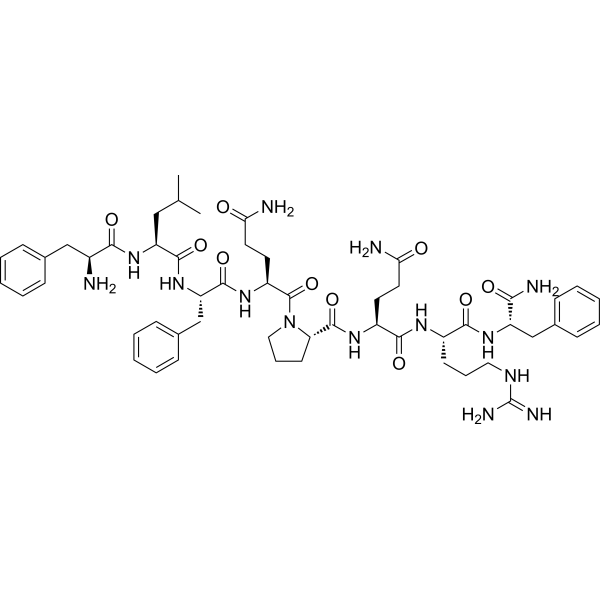
    NPFF

    Neuropeptide FF Receptor Cardiovascular Disease Neurological Disease
    Neuropeptide FF (NPFF), an octapeptide belonging to the RF-amide family of peptides, is a NPFF1 and NPFF2 receptors agonist with Ki values of 2.82 nM and 0.21 nM, respectively. Neuropeptide FF induces abstinence syndrome, exerts antiopioid and analgesic effects, releases via calcium-dependent mechanisms from rat spinal cord, regulates memory, autonomic function, and neuroendocrine function, modulates pain and opioid antinociception, reduces food intake, stimulates water intake, alters cardiovascular parameters, and shows differential activity in hypothalamic paraventricular nucleus neurons. Neuropeptide FF is present in mammalian central nervous system and periphery, with NPFF-immunoreactivity increases in rat cerebrospinal fluid during opiate tolerance, and its NPFF gene and NPFF-R2 gene are up-regulated in rat spinal cord and dorsal root ganglia during peripheral inflammation. Neuropeptide FF can be used for the research of opioid tolerance, morphine-induced analgesia, abstinence syndrome, pain, hypertension, nociception, inflammatory pain, and neuropathic pain .
    Neuropeptide FF
  • HY-13720
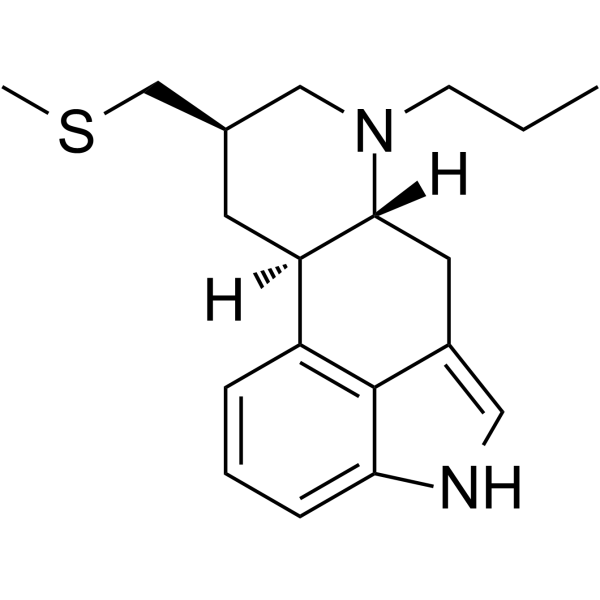
    Pergolide
    1 Publications Verification

    LY127809 free base

    Dopamine Receptor Drug Derivative Cardiovascular Disease Neurological Disease Metabolic Disease
    Pergolide (LY127809 free base), an Ergoline derivative, is a potent and orally active dopamine D1 and D2 receptor agonist. Pergolide can be used for Parkinson's disease and hyperprolactinaemia research .
    Pergolide
  • HY-107915

    (-)-Cobefrin; (-)-α-Methylnoradrenaline; (-)-Nordefrin

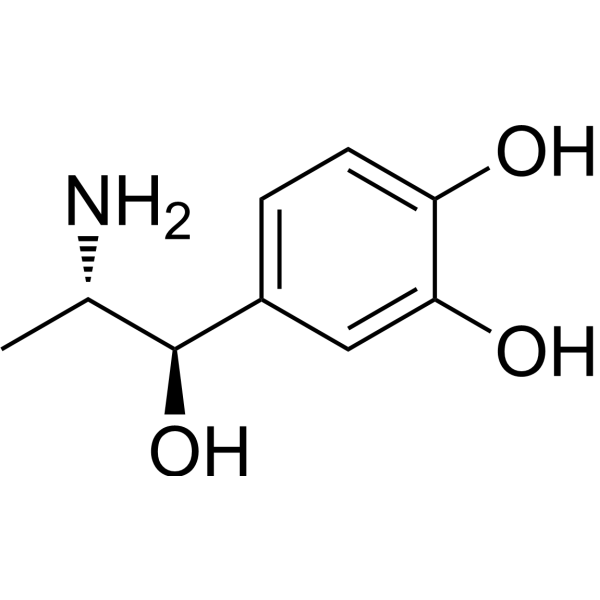
    Adrenergic Receptor Cardiovascular Disease
    Levonordefrin ((-)-Cobefrin; (-)-α-Methylnoradrenaline; (-)-Nordefrin) is an α-adrenergic receptor agonist with blood pressure regulatory properties. Levonordefrin is a key metabolite responsible for the hypotensive effect of α-methyldopa. By stimulating central α-adrenergic receptors in the nucleus tractus solitarius region of the medulla oblongata, Levonordefrin induces centrally mediated hypotension and bradycardia. When administered intravenously, Levonordefrin increases mean arterial blood pressure in a dose-dependent manner. Levonordefrin is applicable for research on the pathophysiology of hypertension and drug metabolism .
    Levonordefrin
  • HY-155297

    FLA-136

    Histamine Receptor Cardiovascular Disease
    Nebidrazine is a centrally-acting hypotensive agent compared to clonidine, demonstrating weaker cardiovascular effects in rats. It induces dose-dependent hypotension and bradycardia when administered intracerebroventricularly (i.c.v.), with significantly lower sedative potential than clonidine in conscious rats. Yohimbine attenuates the cardiovascular effects of both Nebidrazine and clonidine, suggesting involvement of central alpha-autoreceptors sensitive to yohimbine. Unlike clonidine, Nebidrazine does not affect peripheral alpha-adrenoceptors in pithed rats, indicating a selective central mechanism. Chemical sympathectomy reduces Nebidrazine's cardiovascular effects more than clonidine's, and metiamide diminishes responses to both drugs, implicating central histamine receptors. These findings highlight Nebidrazine's distinct pharmacological profile and potential therapeutic application in managing hypertension through central alpha-autoreceptor stimulation .
    Nebidrazine
  • HY-112074A

    HOE 440 hydrochloride

    Adrenergic Receptor Cardiovascular Disease
    Tiamenidine hydrochloride (HOE 440 hydrochloride) is a centrally acting α1-adrenergic receptor antagonist with hypotensive activity. Tiamenidine hydrochloride regulates blood pressure levels by binding to α1 receptors. Tiamenidine hydrochloride can be used in the study of hypertension .
    Tiamenidine hydrochloride
  • HY-W263279

    (E)-Wy-8678

    Adrenergic Receptor Cardiovascular Disease Neurological Disease
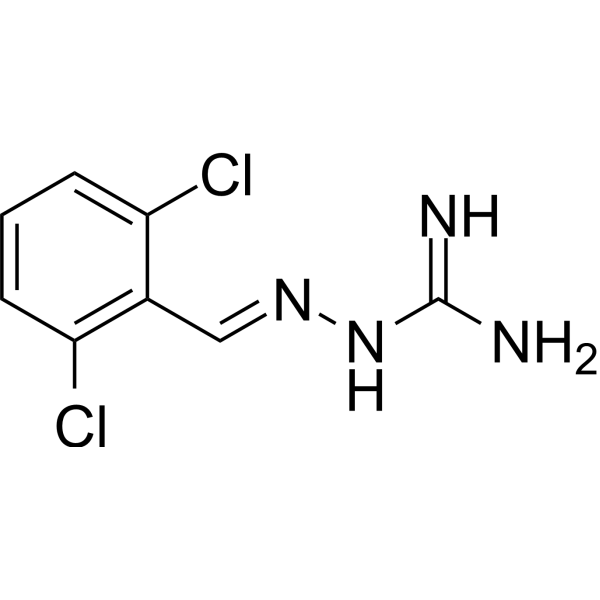
    (E)-Guanabenz ((E)-Wy-8678) is an orally active central α2-adrenoceptor agonist. (E)-Guanabenz has antihypertensive activity, acts via stimulating central α2-adrenoceptors, and reducing net sympathetic outflow into the periphery. (E)-Guanabenz also directly binds to and inhibits GADD34, and has neuroprotective activity. (E)-Guanabenz can be used for researching hypertension and Parkinson disease .
    (E)-Guanabenz
  • HY-121313

    BAY 10-6734

    Angiotensin Receptor Neurological Disease Endocrinology
    Embusartan (BAY 10-6734) is a brain-penetrant and effective AT1 receptor blocker. Embusartan inhibits Ang II binding to brain AT1 receptors in the nuclei of central nervous system (CNS) inside due to high lipophilic character. Embusartan is promising for research of sympathetic hyperactivity and hypertension .
    Embusartan
  • HY-116444A

    Na+/K+ ATPase Cardiovascular Disease Inflammation/Immunology
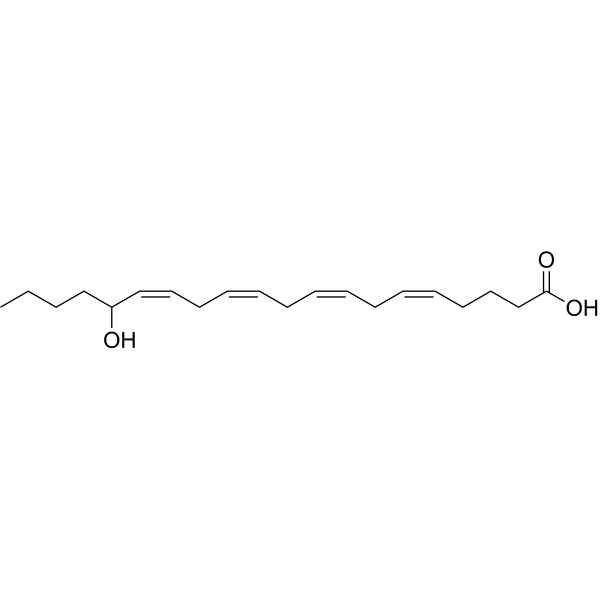
    16-HETE is arachidonic acid metabolite through subterminal hydroxylation by cytochrome P-450. 16-HETE exhibits vasodilatory and PMN inhibitory effects and serves as biomarker for early stages of non-alcoholic fatty liver disease .
    16-HETE
  • HY-107915R

    (-)-Cobefrin (Standard); (-)-α-Methylnoradrenaline (Standard); (-)-Nordefrin (Standard)

    Reference Standards Adrenergic Receptor Others
    Levonordefrin (Standard) is the analytical standard of Levonordefrin. This product is intended for research and analytical applications. Levonordefrin ((-)-Cobefrin; (-)-α-Methylnoradrenaline; (-)-Nordefrin) is an α-adrenergic receptor agonist with blood pressure regulatory properties. Levonordefrin is a key metabolite responsible for the hypotensive effect of α-methyldopa. By stimulating central α-adrenergic receptors in the nucleus tractus solitarius region of the medulla oblongata, Levonordefrin induces centrally mediated hypotension and bradycardia. When administered intravenously, Levonordefrin increases mean arterial blood pressure in a dose-dependent manner. Levonordefrin is applicable for research on the pathophysiology of hypertension and drug metabolism .
    Levonordefrin (Standard)
  • HY-121312

    ST-600

    Adrenergic Receptor Cardiovascular Disease
    Flutonidine (ST-600) is a Clonidine (HY-12721) analogue that shows antihypertensive and sympatholytic effects. The initial hypertension produced by Flutonidine is due to stimulation of the peripheral α1, α2 adrenoceptors and the subsequent fall in blood pressure is due to the stimulation of central α2 adrenoceptors. Flutonidine reduces the arrhythmogenic and lethal effects of ouabain. Flutonidine is promising for research of ventricular arrhythmias caused by cardiac glycosides .
    Flutonidine
  • HY-180382

    Cholinesterase (ChE) Cardiovascular Disease
    Trimethidinium methosulfate is an orally active ganglionic blocker with central antihypertensive activity. Trimethidinium methosulfate inhibits the conduction of sympathetic ganglia and reduces vascular contraction. Trimethidinium methosulfate acts on the cerebrovascular motor center and lowers peripheral vascular resistance. Trimethidinium methosulfate has cholinergic nerve inhibitory side effects, but they are relatively mild. Trimethidinium methosulfate can be used in hypertension research .
    Trimethidinium methosulfate

Inquiry Online

Your information is safe with us. * Required Fields.

Salutation


Country or Region *

Applicant Name *


Organization Name *

Department *


Email Address *


Product Name *

Cat. No.


Requested quantity *

Phone Number *


Remarks

Inquiry Online

Inquiry Information

Product Name:
Cat. No.:
Quantity:
MCE Japan Authorized Agent:

