18 Results for "

chronic inflammatory conditions

" in MedChemExpress (MCE) Product Catalog:
Products (18)

18 Results for "chronic inflammatory conditions" in MCE Product Catalog:

5
5 Cited Publications
Cat. No.: HY-17474
CAS No.: 198470-84-7
Synonyms: SC 69124
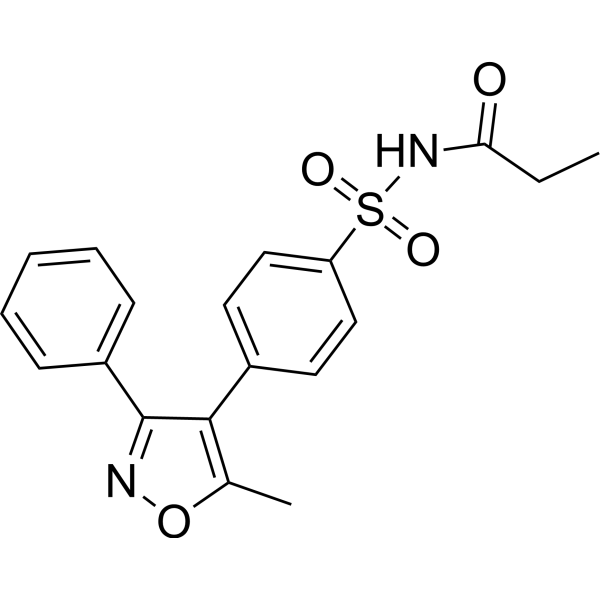
Parecoxib (SC 69124) is a highly selective and orally active COX-2 inhibitor that is permeable to the blood-brain barrier, the proagent of Valdecoxib (HY-15762). Parecoxib Sodium is a nonsteroidal anti-inflammatory agent (NSAID) and inhibits prostaglandin (PG) synthesis. Parecoxib can be used for the relief of acute postoperative pain and symptoms of chronic inflammatory conditions such as osteoarthritis and rheumatoid arthritis in vivo.
loading...
    loading...
5
5 Cited Publications
Cat. No.: HY-17474A
CAS No.: 198470-85-8
Synonyms: SC 69124A
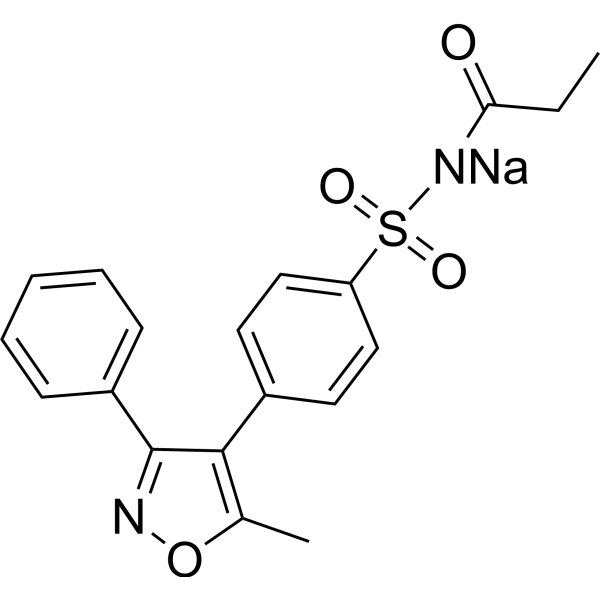
Parecoxib Sodium (SC 69124A) is a highly selective and orally active COX-2 inhibitor that is permeable to the blood-brain barrier, the proagent of Valdecoxib (HY-15762). Parecoxib Sodium is a nonsteroidal anti-inflammatory agent (NSAID) and inhibits prostaglandin (PG) synthesis. Parecoxib Sodium can be used for the relief of acute postoperative pain and symptoms of chronic inflammatory conditions such as osteoarthritis and rheumatoid arthritis in vivo.
loading...
    loading...
1
1 Cited Publications
Cat. No.: HY-76711
CAS No.: 16590-41-3
Naltrexone is an orally active, long-acting opioid receptor (opioid receptor) antagonist. Naltrexone blocks the euphoric effects of exogenous opioids and reduces alcohol craving by blocking opioid receptors (μ, κ, and δ) as well as opioid growth factor receptors. Low doses of Naltrexone are used to relieve chronic pain, treat inflammatory diseases and inhibit tumor growth, while high doses or continuous administration exert pro-inflammatory or pro-proliferative effects. Naltrexone relieves intractable pruritus caused by psoriasis, atopic dermatitis and other conditions, and its combination with Bupropion (HY-B0403) inhibits food craving, thereby reducing body weight .
loading...
    loading...
Cat. No.: HY-125740
CAS No.: 7228-78-6
Purity:  99.87%
Synonyms: Malvidin-3-O-glucoside chloride; Oenin chloride
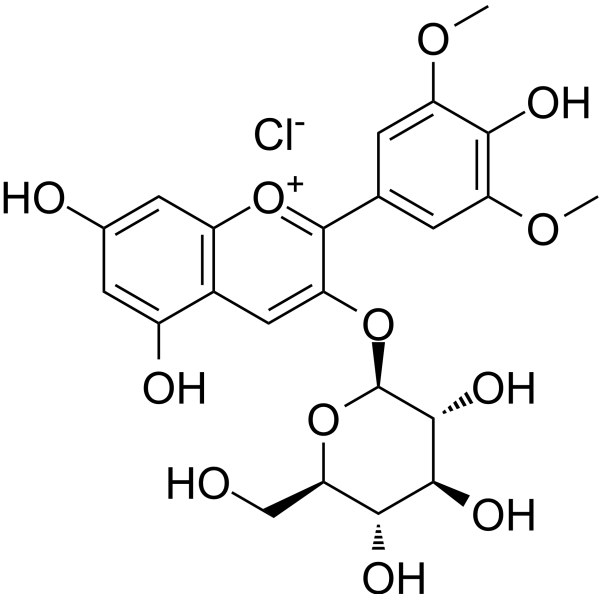
Malvidin-3-glucoside (Malvidin-3-O-glucoside; Oenin) chloride is an orally active inhibitor of the NF-κB pathway, which blocks inflammatory responses induced by TNF-α, reduces IκB-α degradation and p65 nuclear translocation, and upregulates endothelial nitric oxide synthase eNOS to increase NO production. Malvidin-3-glucoside chloride exerts anti-inflammatory and antioxidant effects by inhibiting pro-inflammatory molecules such as MCP-1, ICAM-1, and IL-6, and regulating intestinal microorganisms and metabolites, while protecting endothelial cells and improving intestinal microecological dysbiosis under inflammatory conditions. Malvidin-3-glucoside chloride can be used to study chronic inflammatory-related diseases such as atherosclerosis and inflammatory bowel disease, and has the potential to prevent vascular inflammation and improve intestinal health .
loading...
    loading...
Cat. No.: HY-151369
CAS No.: 233605-81-7
Purity:  99.60%
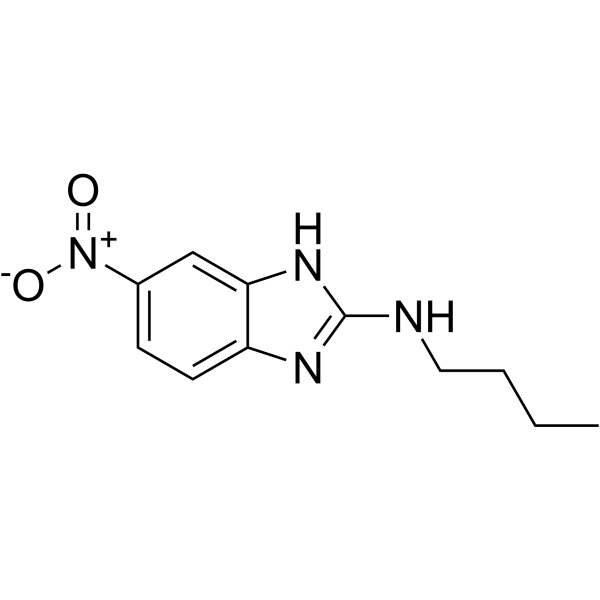
AV123 (compound 12) is a non-cytotoxic RIPK1 inhibitor (IC50=12.12 µM). AV123 blocks the TNF-α-induced necroptotic (EC50=1.7 μM) but not the apoptotic cell death. AV123 can be used in the study of necrotic chronic conditions such as ischemia-reperfusion injury of the brain, heart and kidney, inflammatory diseases, neurodegenerative diseases and infectious diseases .
loading...
    loading...
Cat. No.: HY-76711S
CAS No.: 2070009-29-7
Naltrexone-d4 is deuterium labeled Naltrexone (HY-76711). Naltrexone is an orally active, long-acting opioid receptor (opioid receptor) antagonist. Naltrexone blocks the euphoric effects of exogenous opioids and reduces alcohol craving by blocking opioid receptors (μ, κ, and δ) as well as opioid growth factor receptors. Low doses of Naltrexone are used to relieve chronic pain, treat inflammatory diseases and inhibit tumor growth, while high doses or continuous administration exert pro-inflammatory or pro-proliferative effects. Naltrexone relieves intractable pruritus caused by psoriasis, atopic dermatitis and other conditions, and its combination with Bupropion (HY-B0403) inhibits food craving, thereby reducing body weight.
loading...
    loading...
Cat. No.: HY-114423
CAS No.: 1034189-82-6
Purity:  98.91%
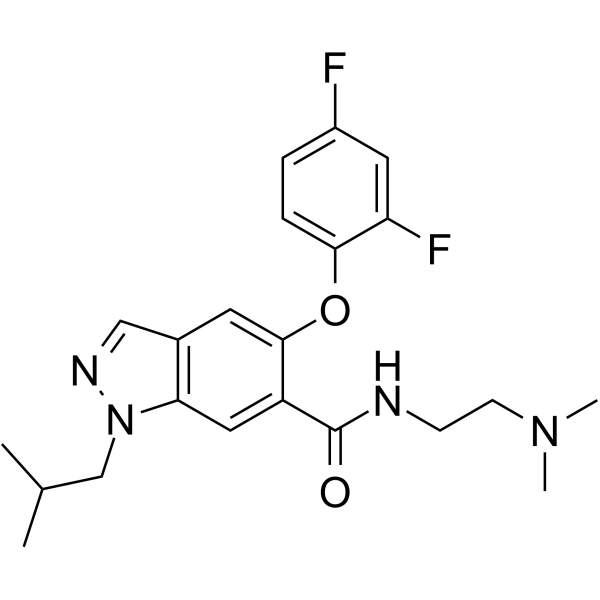
p38α inhibitor 1 (Arry-797) is a p38α inhibitor. p38α inhibitor 1 is applicable to research related to diseases including Alzheimer's disease and inflammatory dilated cardiomyopathy .
loading...
    loading...
Cat. No.: HY-76711R
CAS No.: 16590-41-3
Naltrexone (Standard) is the analytical standard of Naltrexone (HY-76711). This product is intended for research and analytical applications. Naltrexone is an orally active, long-acting opioid receptor (opioid receptor) antagonist. Naltrexone blocks the euphoric effects of exogenous opioids and reduces alcohol craving by blocking opioid receptors (μ, κ, and δ) as well as opioid growth factor receptors. Low doses of Naltrexone are used to relieve chronic pain, treat inflammatory diseases and inhibit tumor growth, while high doses or continuous administration exert pro-inflammatory or pro-proliferative effects. Naltrexone relieves intractable pruritus caused by psoriasis, atopic dermatitis and other conditions, and its combination with Bupropion (HY-B0403) inhibits food craving, thereby reducing body weight.
loading...
    loading...
Cat. No.: HY-125740R
CAS No.: 7228-78-6
Synonyms: Malvidin-3-O-glucoside chloride (Standard); Oenin chloride (Standard)
Malvidin-3-glucoside (Malvidin-3-O-glucoside; Oenin) chloride (Standard) is the analytical standard of Malvidin-3-glucoside chloride (HY-125740). This product is intended for research and analytical applications. Malvidin-3-glucoside chloride is an orally active inhibitor of the NF-κB pathway, which blocks inflammatory responses induced by TNF-α, reduces IκB-α degradation and p65 nuclear translocation, and upregulates endothelial nitric oxide synthase eNOS to increase NO production. Malvidin-3-glucoside chloride exerts anti-inflammatory and antioxidant effects by inhibiting pro-inflammatory molecules such as MCP-1, ICAM-1, and IL-6, and regulating intestinal microorganisms and metabolites, while protecting endothelial cells and improving intestinal microecological dysbiosis under inflammatory conditions. Malvidin-3-glucoside chloride can be used to study chronic inflammatory-related diseases such as atherosclerosis and inflammatory bowel disease, and has the potential to prevent vascular inflammation and improve intestinal health .
loading...
    loading...
Cat. No.: HY-90003AR
CAS No.: 30123-17-2
Tianeptine sodium salt (Standard) is the analytical standard of Tianeptine sodium salt (HY-90003A). This product is intended for research and analytical applications. Tianeptine sodium salt is an atypical antidepressant. Tianeptine sodium salt is a moderate-intensity agonist of the μ-opioid receptor (MOR), and to a lesser extent, is an agonist of the δ-opioid receptor (DOR). Tianeptine sodium salt is a glutamate modulator that can enhance AMPA receptor and antagonize NMDA receptor. Tianeptine sodium salt increases sensitivity of the α1 adrenergic receptor, which only manifests in chronic treatment. Tianeptine sodium salt exerts neuroprotective effects under stress/inflammation-induced conditions, exhibiting anti-inflammatory and antioxidant properties. Tianeptine sodium salt inhibits MMP-9 by suppressing the PI3K/Akt-mediated NF-κB pathway. Tianeptine sodium salt can be used to alleviate symptoms of depression and anxiety, but does not cause sedative effects.
loading...
    loading...
Cat. No.: HY-17474S
Synonyms: SC 69124-d3
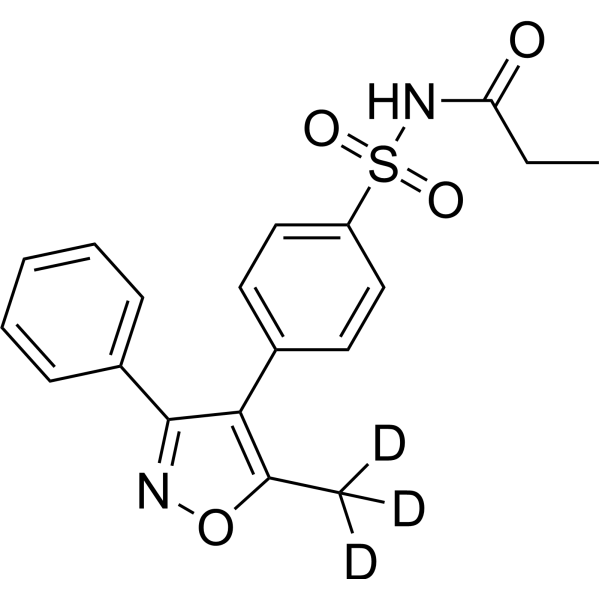
Parecoxib-d3 is the deuterium labeled Parecoxib. Parecoxib (SC 69124) is a highly selective and orally active COX-2 inhibitor, the proagent of Valdecoxib (HY-15762). Parecoxib Sodium is a nonsteroidal anti-inflammatory agent (NSAID) and inhibits prostaglandin (PG) synthesis. Parecoxib can be used for the relief of acute postoperative pain and symptoms of chronic inflammatory conditions such as osteoarthritis and rheumatoid arthritis in vivo.
loading...
    loading...
Cat. No.: HY-17474AR
CAS No.: 198470-85-8
Synonyms: SC 69124A (Standard)
Target:  

Reference Standards COX

Research Areas:  

Inflammation/Immunology Cancer

Parecoxib (Sodium) (Standard) is the analytical standard of Parecoxib (Sodium). This product is intended for research and analytical applications. Parecoxib Sodium (SC 69124A) is a highly selective and orally active COX-2 inhibitor, the proagent of Valdecoxib (HY-15762). Parecoxib Sodium is a nonsteroidal anti-inflammatory agent (NSAID) and inhibits prostaglandin (PG) synthesis. Parecoxib Sodium can be used for the relief of acute postoperative pain and symptoms of chronic inflammatory conditions such as osteoarthritis and rheumatoid arthritis in vivo.
loading...
    loading...
Cat. No.: HY-17474AS
Synonyms: SC 69124A-d5
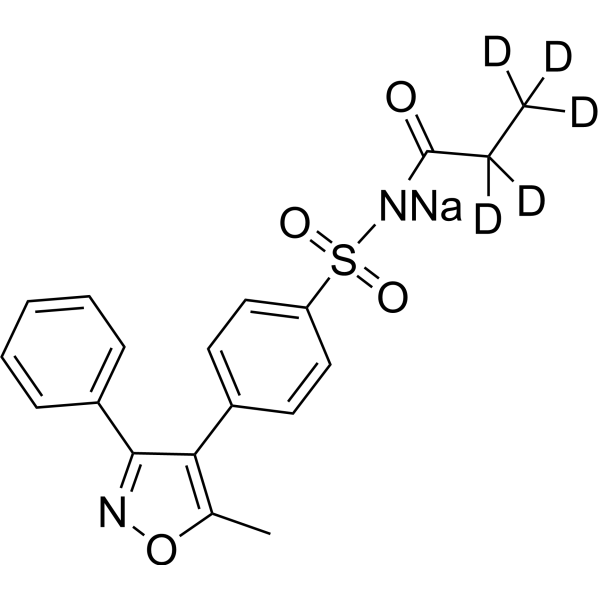
Parecoxib-d5 sodium is the deuterium labeled Parecoxib sodium. Parecoxib Sodium (SC 69124A) is a highly selective and orally active COX-2 inhibitor, the proagent of Valdecoxib (HY-15762). Parecoxib Sodium is a nonsteroidal anti-inflammatory agent (NSAID) and inhibits prostaglandin (PG) synthesis. Parecoxib Sodium can be used for the relief of acute postoperative pain and symptoms of chronic inflammatory conditions such as osteoarthritis and rheumatoid arthritis in vivo .
loading...
    loading...
Cat. No.: HY-17474R
CAS No.: 198470-84-7
Synonyms: SC 69124 (Standard)
Target:  

Reference Standards COX

Research Areas:  

Inflammation/Immunology Cancer

Parecoxib (Standard) is the analytical standard of Parecoxib. This product is intended for research and analytical applications. Parecoxib (SC 69124) is a highly selective and orally active COX-2 inhibitor, the proagent of Valdecoxib (HY-15762). Parecoxib Sodium is a nonsteroidal anti-inflammatory agent (NSAID) and inhibits prostaglandin (PG) synthesis. Parecoxib can be used for the relief of acute postoperative pain and symptoms of chronic inflammatory conditions such as osteoarthritis and rheumatoid arthritis in vivo.
loading...
    loading...
Cat. No.: HY-17474S1
Synonyms: SC 69124-d5
Parecoxib-d5 (SC 69124-d5) is deuterium labeled Parecoxib. Parecoxib (SC 69124) is a highly selective and orally active COX-2 inhibitor, the proagent of Valdecoxib (HY-15762). Parecoxib Sodium is a nonsteroidal anti-inflammatory agent (NSAID) and inhibits prostaglandin (PG) synthesis. Parecoxib can be used for the relief of acute postoperative pain and symptoms of chronic inflammatory conditions such as osteoarthritis and rheumatoid arthritis in vivo.
loading...
    loading...
Cat. No.: HY-155184
CAS No.: 3126841-22-0
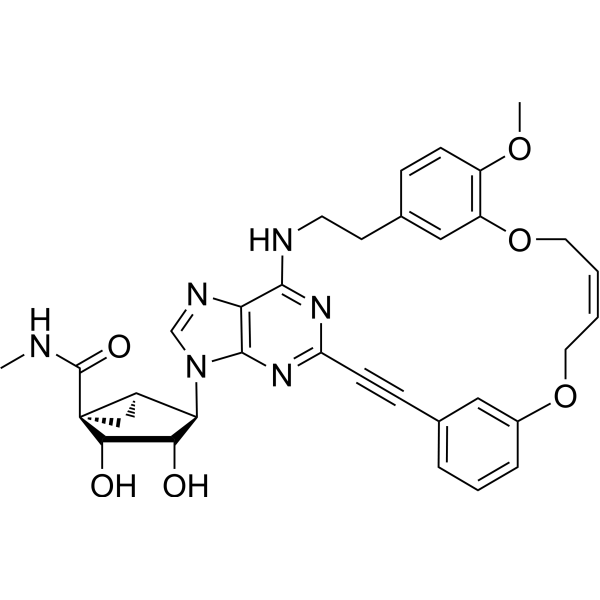
A3AR agonist 2 (Compound 19) a selective A3AR agonist (Ki: 22.1 nM). A3AR agonist 2 stimulates β-arrestin2 recruitment, with EC50 value of 4.36 nM. A3AR agonist 2 can be used for research of inflammatory diseases, ischemia, cancer, neuropathic pain, liver diseases, and other chronic conditions . A3AR agonist 2 is a click chemistry reagent, it contains an Alkyne group and can undergo copper-catalyzed azide-alkyne cycloaddition (CuAAc) with molecules containing Azide groups.
loading...
    loading...
Cat. No.: HY-184936
Research Areas:  

Inflammation/Immunology

p38α-IN-14 is a selective p38α inhibitor with an IC50 of 65 nM. p38α-IN-14 exhibits only weak inhibitory activity against hERG channels, with an IC50 > 30 μM. p38α-IN-14 can be used in the research of chronic inflammatory and autoimmune diseases, including rheumatoid arthritis, psoriasis and inflammatory bowel disease .
loading...
    loading...
Cat. No.: HY-L237
338 compounds

Pattern Recognition Receptors (PRRs) are a crucial class of protein molecules expressed in cells of the innate immune system. The core function of Pattern Recognition Receptors is to recognize Pathogen-Associated Molecular Patterns (PAMPs) and Damage-Associated Molecular Patterns (DAMPs). Upon recognizing and binding to PAMPs or DAMPs, PRRs rapidly initiate intracellular signaling pathways (such as the NF-κB, IRF, and inflammasome pathways). This triggers the production of inflammatory factors, chemokines, and type I interferons, thereby initiating inflammatory responses to eliminate pathogens or repair damage. PRRs represent the body's first line of defense against infection, and the rapidity and broad specificity of their response are crucial for host survival. However, aberrant activation of PRR signaling is also a cause of many chronic inflammatory diseases, autoimmune disorders, and neurodegenerative diseases. Therefore, precisely regulating PRR activity has become a key therapeutic strategy for these conditions.

MCE has cataloged 338 inhibitors targeting key PRRs, such as NLRs, TLRs, C-type Lectin Receptors (CLRs), and cGAS, to support drug discovery efforts for chronic inflammatory diseases.

  • 1

