18 Results for "

client protein degradation

" in MedChemExpress (MCE) Product Catalog:
Products (18)

18 Results for "client protein degradation" in MCE Product Catalog:

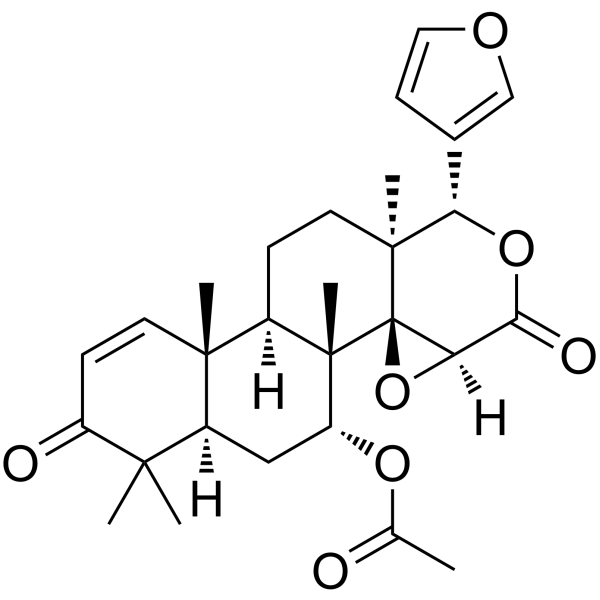
Cat. No.: HY-107577
CAS No.: 2753-30-2
Purity:  ≥98.0%
Gedunin is a limonoid with anti-cancer, anti-viral, anti-inflammatory and insecticidal activities. Gedunin acts as a potent Hsp90 inhibitor and induces the degradation of Hsp90-dependent client proteins. Geduni may obstructs the entry of SARS-CoV-2 virus into human host cells and can be used for COVID-19 research .
loading...
    loading...
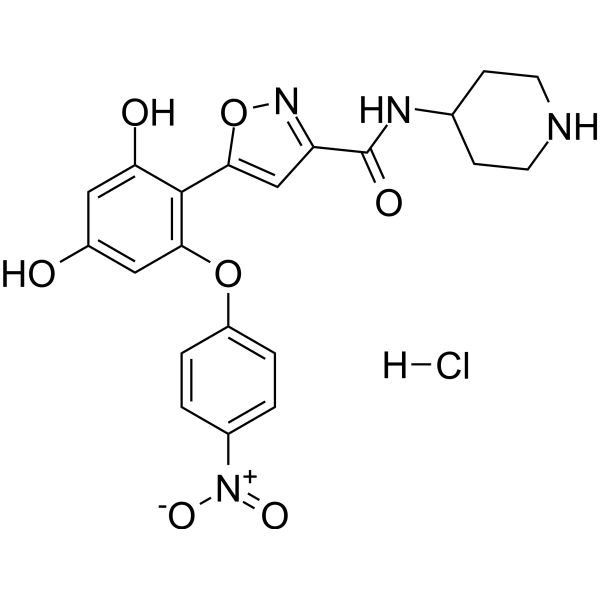
Cat. No.: HY-148215A
CAS No.: 1253584-63-2
Purity:  99.27%
Research Areas:  

Cancer

Hsp90-IN-17 hydrochloride is a Hsp90 inhibitor. Hsp90-IN-17 hydrochloride binds to the N-terminal ATP-binding pocket of Hsp90, inhibits its chaperone function, and induces the degradation of Hsp90 client proteins. Hsp90-IN-17 hydrochloride inhibits cancer cell proliferation. Hsp90-IN-17 hydrochloride can be used in the research of ovarian cancer .
loading...
    loading...
Cat. No.: HY-155063
CAS No.: 3031102-94-7
Purity:  96.03%
Research Areas:  

Cancer

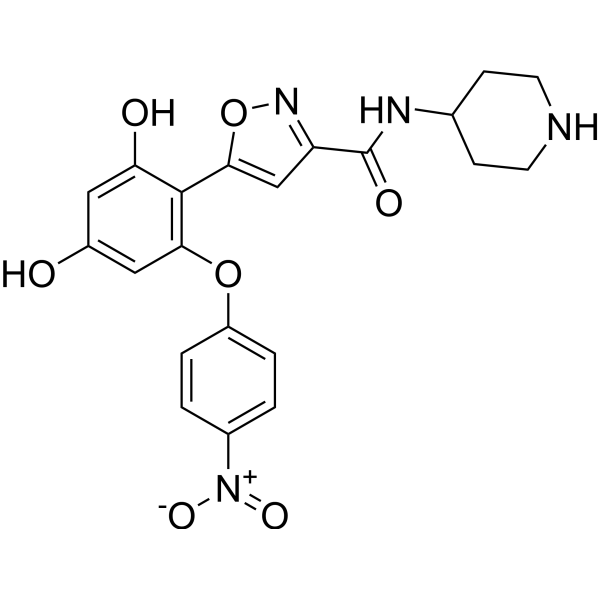
TRAP1-IN-1 (compound 35) is a potent and selective inhibitor of TRAP1,a mitochondrial isoform of Hsp90. TRAP1-IN-1 has >250-fold TRAP1 selectivity over Grp94,and disrupts TRAP1 tetramer stability,induces TRAP1 client protein degradation. TRAP1-IN-1 also inhibits mitochondrial complex I of oxidative phosphorylation OXPHOS,disrupts the mitochondrial membrane potential,and enhances glycolysis metabolism .
loading...
    loading...
Cat. No.: HY-162589
Research Areas:  

Cancer

Lw13 is a Hsp90 PROTAC degrader. Lw13 induces Hsp90 degradation via the ubiquitin-proteasome system, destabilizes client proteins HER2 and AKT, and blocks the activation of the HER2/AKT/mTOR signaling pathway. Lw13 inhibits the metastasis of cervical cancer cells, induces cell cycle arrest and apoptosis (apoptosis). Lw13 exerts synergistic anti-tumor activity with Cisplatin (HY-17394). Lw13 is applicable to cervical cancer-related research .
loading...
    loading...
Cat. No.: HY-164399
CAS No.: 1799802-29-1
Target:  

HSP EGFR CDK Akt

Research Areas:  

Cancer

SST0116CL1 is a HSP90 inhibitor (IC50: 0.21 μM). SST0116CL1 binds to the ATP binding pocket of Hsp90, and interferes with Hsp90 chaperone function thus resulting in client protein (EGFR, CDK4 and AKT) degradation. SST0116CL1 induces degradation of Her2 in BT-474 cell (IC50: 0.2 μM). SST0116CL1 has antiproliferative activity and inhibits tumor growth. SST0116CL1 can be used for the study of leukemia, gastric and ovarian carcinoma .
loading...
    loading...
Cat. No.: HY-147125
CAS No.: 2640292-37-9
Target:  

HSP Akt CDK Raf Apoptosis

Research Areas:  

Cancer

DDO-6600 is a covalent Hsp90 inhibitor. DDO-6600 disrupts the interaction between Hsp90 and its co-chaperone protein Cdc37, thereby inducing the degradation of kinase client proteins (such as AKT, CDK4, c-Raf). DDO-6600 has inhibitory activity against various cancer cells. DDO-6600 inhibits the migration and invasion of HCT-116 cells, and induces cell cycle arrest and apoptosis. DDO-6600 significantly inhibits tumor growth in the HCT-116 xenograft tumor model. DDO-6600 can be used for research on colorectal cancer .
loading...
    loading...
Cat. No.: HY-149431
Target:  

HSP Potassium Channel

Research Areas:  

Cancer

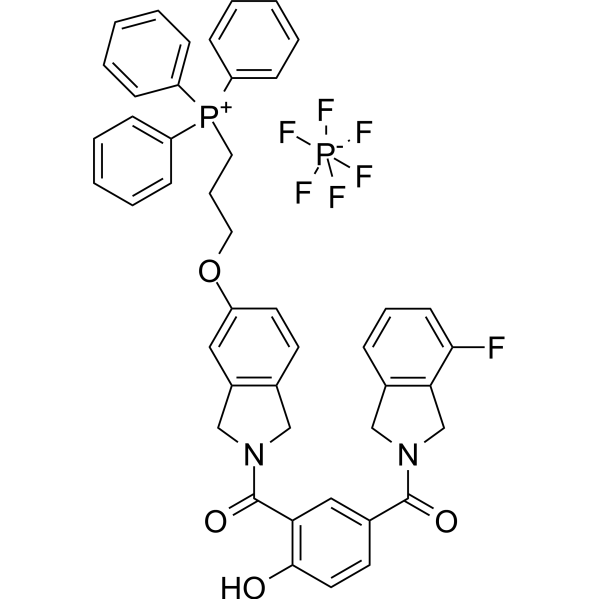
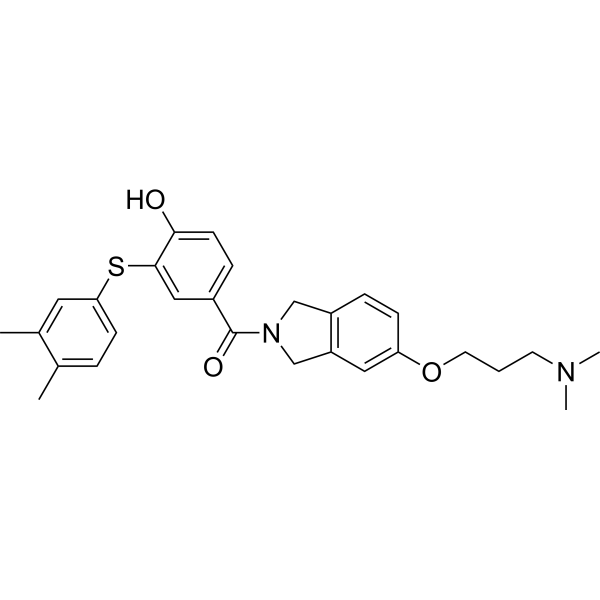
NDNA4 (compound 17) is a selective inhibitor of Hsp90α (IC50: 0.34 μM). NDNA4 is a permanently charged analog with low membrane permeability and low cytotoxicity against Ovcar-8 and MCF-10A ((IC50 >100 μM)). NDNA4 prevents disruption of hERG channel maturation without generating a heat shock response or causing degradation of Hsp90α-dependent client proteins .
loading...
    loading...
Cat. No.: HY-148215
CAS No.: 1253584-78-9
Target:  

HSP

Research Areas:  

Cancer

Hsp90-IN-17 is a Hsp90 inhibitor. Hsp90-IN-17 binds to the N-terminal ATP-binding pocket of Hsp90, inhibits its chaperone function, and induces the degradation of Hsp90 client proteins. Hsp90-IN-17 inhibits cancer cell proliferation. Hsp90-IN-17 can be used in the research of ovarian cancer .
loading...
    loading...
Cat. No.: HY-13752
CAS No.: 1118915-78-8
Research Areas:  

Cancer

STA-1474 is an orally active and highly selective HSP90 inhibitor, as well as a phosphate prodrug of the HSP90 inhibitor STA-9090 (HY-15205). STA-1474 disrupts the chaperone function of HSP90 and promotes the degradation of client proteins. STA-1474 inhibits the phosphorylation of Met, Akt and STAT3, thereby blocking related signaling pathways. STA-1474 induces apoptosis and inhibits proliferation of osteosarcoma cells, and triggers the up-regulation of HSP70 and HSP90. STA-1474 induces tumor regression and caspase-3 activation in mouse osteosarcoma xenograft models. STA-1474 can be used in the research of osteosarcoma .
loading...
    loading...
Cat. No.: HY-12933
CAS No.: 911398-13-5
Target:  

HSP

Research Areas:  

Cancer

BIIB-028 is an orally active inhibitor for heat shock protein 90 (Hsp90). BIIB-028 targets the ATP-binding site of Hsp90, disrupts the function of Hsp90, leads to the degradation of client proteins, that are crucial for cancer cell survival and proliferation .
loading...
    loading...
Cat. No.: HY-155064
CAS No.: 3031102-92-5
Target:  

HSP

Research Areas:  

Metabolic Disease Cancer

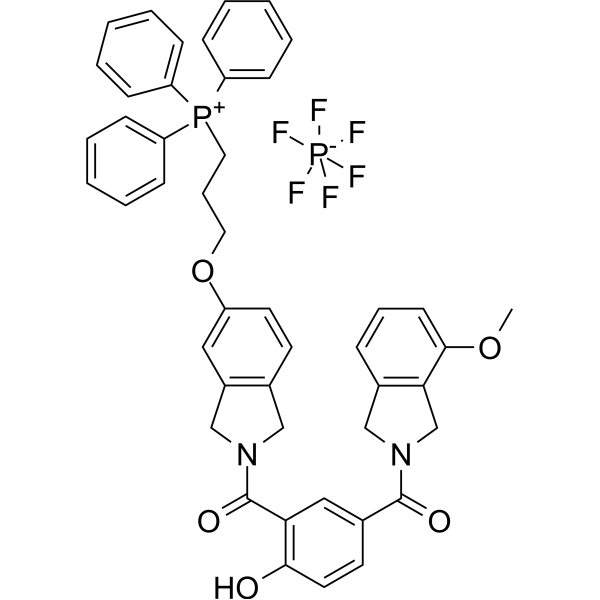
TRAP1-IN-2 is a TRAP1-selective inhibitor, with a Kd value of 0.04 μM against human TRAP1. TRAP1-IN-2 exhibits more than 250-fold selectivity for Grp94 and shows no detectable affinity for cytosolic Hsp90α/β. TRAP1-IN-2 selectively induces the degradation of TRAP1 client proteins by inhibiting its ATPase activity, without triggering the heat shock response or affecting cytosolic Hsp90 client proteins. TRAP1-IN-2 suppresses oxidative phosphorylation, shifts cellular metabolism toward glycolysis, disrupts the stability of the TRAP1 tetramer and the mitochondrial membrane potential. TRAP1-IN-2 can be used in studies related to prostate cancer, cervical cancer, and ovarian cancer .
loading...
    loading...
Cat. No.: HY-149432
Target:  

HSP Potassium Channel

Research Areas:  

Cancer

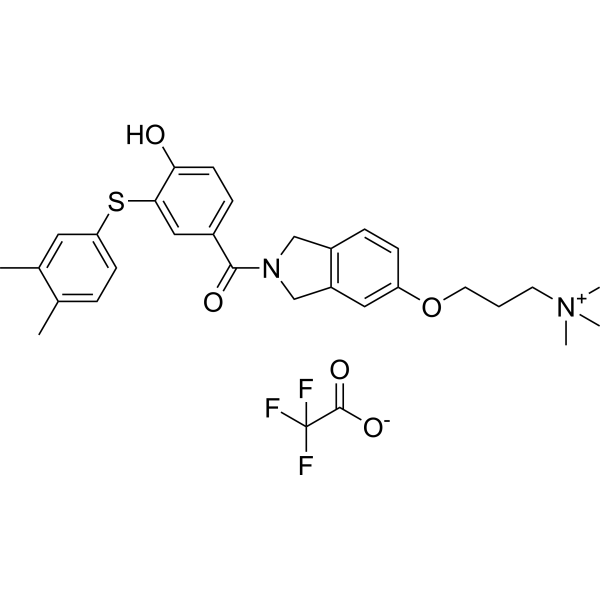
NDNA3 (compound 14) is a selective inhibitor of Hsp90α (IC50: 0.51 μM). NDNA3 is a permanently charged analog with low membrane permeability and low toxicity to Ovcar-8 (IC50: 12.66 μM) and MCF-10A (IC50: 11.72 μM) cells. NDNA3 prevents disruption of hERG channel maturation without generating a heat shock response or causing degradation of Hsp90α-dependent client proteins .
loading...
    loading...
Cat. No.: HY-N6678S
CAS No.: 1795020-90-4
(Rac)-Zearalanone-d6 is the d6-labeled (Rac)-Zearalanone (HY-N6678A). (Rac)-Zearalanone is an ATP-competitive HSP90 inhibitor with an EC50 of 2.3 μM. (Rac)-Zearalanone interferes with the binding of ATP to HSP90, impairs the chaperone function of HSP90, and promotes the degradation of client proteins. (Rac)-Zearalanone reduces intracellular accumulation of Raf-1, induces cleavage of caspase-3, and promotes Her2 degradation in a dose-dependent manner by disrupting the Her2-HSP90 interaction. (Rac)-Zearalanone can be used in the research of small cell lung cancer and breast cancer .
loading...
    loading...
Cat. No.: HY-164399A
CAS No.: 1202920-93-1
Target:  

HSP ERK CDK Akt

Research Areas:  

Cancer

SST0116CL1 free base is a HSP90 inhibitor (IC50: 0.21 μM). SST0116CL1 free base binds to the ATP binding pocket of Hsp90, and interferes with Hsp90 chaperone function thus resulting in client protein (EGFR, CDK4 and AKT) degradation. SST0116CL1 free base induces degradation of Her2 in BT-474 cell (IC50: 0.2 μM). SST0116CL1 free base has antiproliferative activity and inhibits tumor growth. SST0116CL1 free base has antiproliferative activity and inhibits tumor growth. SST0116CL1 free base can be used for the study of leukemia, gastric and ovarian carcinoma .
loading...
    loading...
Cat. No.: HY-117252
CAS No.: 1118861-60-1
Research Areas:  

Infection Cancer

HS-72 is a selective allosteric inducible heat shock protein 70 Hsp70i inhibitor. HS-72 reduces ATP affinity of Hsp70i, elevates caspase 3/7 apoptotic activity, and promotes degradation of Hsp70 client proteins, including HER2 and Akt, and blocks DENV entry by disrupting Hsp70i association with the DENV receptor complex. HS-72 can be used for breast cancer and dengue virus infection research .
loading...
    loading...
Cat. No.: HY-N6678A
CAS No.: 42011-78-9
Research Areas:  

Cancer

(Rac)-Zearalanone is an ATP-competitive HSP90 inhibitor with an EC50 of 2.3 μM. (Rac)-Zearalanone interferes with the binding of ATP to HSP90, impairs the chaperone function of HSP90, and promotes the degradation of client proteins. (Rac)-Zearalanone reduces intracellular accumulation of Raf-1, induces cleavage of caspase-3, and promotes Her2 degradation in a dose-dependent manner by disrupting the Her2-HSP90 interaction. (Rac)-Zearalanone can be used in the research of small cell lung cancer and breast cancer .
loading...
    loading...
Cat. No.: HY-111300
CAS No.: 848952-37-4
Target:  

HSP EGFR

Research Areas:  

Cancer

G3130 is a reversible HSP90 inhibitor with a Kd value of 280 nM for the N-terminal ATP-binding domain of purified human Hsp90α. G3130 binds to the adenine site via a multi-hydrogen bond network . G3130 induces the degradation of Hsp90 client protein Her-2 in breast cancer cells. G3130 activates Hsp70 promoter-driven luciferase expression in 293T cells. G3130 can be used in breast cancer-related research .
loading...
    loading...
Cat. No.: HY-13752B
CAS No.: 1402907-09-8
Research Areas:  

Cancer

STA-1474 sodium is an orally active and highly selective HSP90 inhibitor, as well as a phosphate prodrug of the HSP90 inhibitor STA-9090 (HY-15205). STA-1474 sodium disrupts the chaperone function of HSP90 and promotes the degradation of client proteins. STA-1474 sodium inhibits the phosphorylation of Met, Akt and STAT3, thereby blocking related signaling pathways. STA-1474 sodium induces apoptosis and inhibits proliferation of osteosarcoma cells, and triggers the up-regulation of HSP70 and HSP90. STA-1474 sodium induces tumor regression and caspase-3 activation in mouse osteosarcoma xenograft models. STA-1474 sodium can be used in the research of osteosarcoma .
loading...
    loading...
  • 1

