
Search Result
Results for "
colitis
" in MedChemExpress (MCE) Product Catalog:
10
Biochemical Assay Reagents
28
Isotope-Labeled Compounds
| Cat. No. |
Product Name |
Target |
Research Areas |
Chemical Structure |
-
- HY-116282C
-
|
DSS (MW 35000-45000); DXS (MW 35000-45000)
|
Apoptosis
|
Infection
Inflammation/Immunology
Cancer
|
|
Dextran sulfate sodium salt (DSS) (MW 35000-45000) is a polymer of dehydrated glucose with a molecular weight of approximately 35000-45000. DSS with different molecular weights exhibits different biological activities. Dextran sulfate sodium salt (DSS) (MW 35000-45000) is a potent inducer of colitis. Dextran sulfate sodium salt (DSS) (MW 35000-45000) can be used to induce model acute colitis, chronic colitis, and colitis-related colon cancer. Dextran sulfate sodium salt (DSS) (MW 35000-45000) may be related to macrophage dysfunction, intestinal flora dysbiosis, and is particularly toxic to the colonic epithelium .
|
-
-
- HY-B1119
-
|
|
Environmental Pollutants
Antibiotic
Apoptosis
Bacterial
Fungal
|
Infection
Cancer
|
|
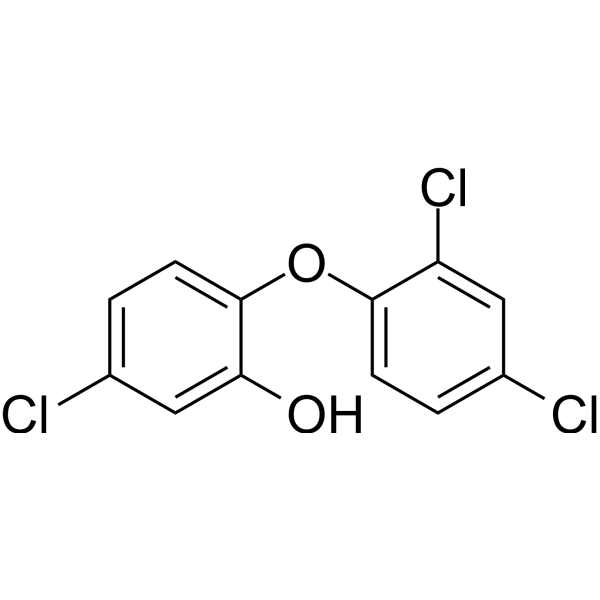
Triclosan is a broad-spectrum antibacterial agent that inhibits bacterial fatty acid synthesis at the enoyl-acyl carrier protein reductase (FabI) step. Triclosan inhibits E. coli enoyl-acyl carrier protein reductase (FabI) and FabI containing a glycine-to-valine substitution at position 93 (FabIG93V) with IC50s of 2 µM and 10 µM, respectively. Triclosan causes apoptotic effect in cultured rat neural stem cells (NSC). Triclosan exacerbates colitis and colitis-associated colorectal tumorigenesis in animal models .
|
-
-
- HY-125850
-
-
-
- HY-P9997
-
|
ANB030
|
PD-1/PD-L1
|
Inflammation/Immunology
|
|
Rosnilimab (ANB030) is a PD-1 agonist IgG1 monoclonal antibody. Rosnilimab can inhibit T cell proliferation, the secretion of inflammatory cytokines, and reduce CD4 and CD8 T cells with high PD-1 expression. Rosnilimab can be used in the research of inflammatory diseases such as colitis and rheumatoid arthritis .
|
-
-
- HY-116374
-
|
Lithocholylglycine
|
Endogenous Metabolite
|
Inflammation/Immunology
|
|
Glycolithocholic acid (Lithocholylglycine), an endogenous metabolite, is a glycine-conjugated secondary bile acid. Glycolithocholic acid can be used to diagnose ulcerative colitis (UC), non-alcoholic steatohepatitis (NASH) and primary sclerosing cholangitis (PSC) .
|
-
-
- HY-P99737
-
|
LY3074828
|
Interleukin Related
|
Inflammation/Immunology
|
|
Mirikizumab (LY3074828) is a humanized IgG4 monoclonal antibody that targets the p19 subunit of interleukin 23 (IL-23). Mirikizumab binds to human and monkey IL-23 with high affinity, with Kd values of 21 pM and 55 pM, respectively. By inhibiting the binding of IL-23 to IL-23R, Mirikizumab modulates the immune response and holds potential for research in ulcerative colitis and Crohn's disease .
|
-
-
- HY-114360A
-
|
|
Interleukin Related
TNF Receptor
|
Inflammation/Immunology
|
|
Taurohyodeoxycholic acid (THDCA) sodium is the taurine-conjugated form of the secondary bile acid hyodeoxycholic acid. Taurohyodeoxycholic acid can also reduce the activity and expression of myeloperoxidase TNF-α and IL-6, as well as colonic damage in TNBS-induced ulcerative colitis mouse model.
|
-
-
- HY-N0433
-
|
Astrasieversianin VIII
|
Autophagy
Interleukin Related
HIF/HIF Prolyl-Hydroxylase
SOD
NF-κB
|
Inflammation/Immunology
Endocrinology
Cancer
|
|
Astragaloside II is an orally active Cycloartane-type triterpene glycoside. Astragaloside II can be extracted from Astragalus membranaceus. Astragaloside II inhibits Autophagy, decreases pro-inflammatory cytokines (IL-6, IL-1β), HIF-α, p-p65, p-IκB and increases SOD. Astragaloside II regulates immunity and reduces inflammatory responses. Astragaloside II can be used in the research of diseases such as liver cancer, osteoporosis, immunosuppressive diseases, and ulcerative colitis .
|
-
-
- HY-113227
-
|
|
Endogenous Metabolite
|
Inflammation/Immunology
|
|
Oxoadipic acid is a key intermediate metabolite in the lysine degradation pathway. The level of Oxoadipic acid is significantly negatively correlated with the abundance of Staphylococcus. That is, the higher the abundance of Staphylococcus-a potential pathogenic bacterium that usually increases in ulcerative colitis-the lower the level of Oxoadipic acid. Oxoadipic acid can be used in the research of ulcerative colitis .
|
-
-
- HY-130321
-
-
-
- HY-P990217
-
|
|
Interleukin Related
|
Inflammation/Immunology
|
|
Anti-Mouse IL-23 p19 Antibody (G23-8) is a rat-derived anti-mouse IL-23 p19 IgG1 monoclonal antibody. Anti-Mouse IL-23 p19 Antibody (G23-8) alleviates inflammation by restoring CLDN8 expression. Anti-Mouse IL-23 p19 Antibody (G23-8) can be used for research on inflammation conditions such as colitis and asthma .
|
-
-
- HY-P990151
-
|
|
TNF Receptor
|
Inflammation/Immunology
|
|
Anti-Mouse TL1A/TNFSF15 Antibody (5G4.6) is an anti-mouse TL1A/TNFSF15 IgG monoclonal antibody. Anti-Mouse TL1A/TNFSF15 Antibody (5G4.6) can reduce TL1A levels and block TL1A-DR3 interactions. Anti-Mouse TL1A/TNFSF15 Antibody (5G4.6) can be used for research on inflammation conditions such as colitis and collagen-induced arthritis (CIA) .
|
-
-
- HY-124290
-
|
AJM300
|
Integrin
|
Inflammation/Immunology
|
Carotegrast methyl (AJM300) is an orally active and selective α4 integrin antagonist. HCA2969, an active metabolite of Carotegrast methyl, is a specific and dual α4β1/α4β7 integrin antagonist. Carotegrast methyl prevents the development of colitis in mice .
|
-
-
- HY-P99332
-
|
Anti-Human CD3E Recombinant Antibody; HuM291
|
Apoptosis
|
Inflammation/Immunology
Cancer
|
|
Visilizumab (Anti-Human CD3E Recombinant Antibody) is a humanized low-Fc receptor binding anti-CD3 monoclonal IgG2 antibody. Visilizumab can be used for ulcerative colitis and Crohn's disease research .
|
-
-
- HY-W324435
-
|
Sodium 2,4-dinitrobenzenesulfonate; DNBS sodium salt; DNBSO sodium salt
|
NF-κB
p38 MAPK
COX
|
Inflammation/Immunology
|
|
2,4-Dinitrobenzenesulfonic acid (DNBS; DNBSO) sodium salt (Sodium 2,4-dinitrobenzenesulfonate) is a classic colitis inducer that relies on activation of the NF-κB p65/COX-2/p38 pathway. As a hapten, 2,4-Dinitrobenzenesulfonic acid sodium salt stimulates the production of immune responses in colonic tissues, triggers oxidative stress and inflammatory reactions, and thereby leads to colonic injury. 2,4-Dinitrobenzenesulfonic acid sodium salt successfully induces models of colitis and ulcerative colitis in rats, causing pathological changes such as ulcers, edema, stenosis, shortening and organ adhesion in the distal colon, along with significant increases in the levels of inflammatory indicators and endoplasmic reticulum stress marker proteins. 2,4-Dinitrobenzenesulfonic acid sodium salt is widely used in studies on the mechanisms related to colitis and ulcerative colitis .
|
-
-
- HY-66008
-
|
N-Acetyl-5-aminosalicylic acid; N-Acetyl-ASA
|
Drug Metabolite
|
Inflammation/Immunology
Cancer
|
|
N-Acetyl mesalazine (N-Acetyl-5-aminosalicylic acid) is the primary intestinal metabolite of 5-Aminosalicylic Acid (HY-15027) and serves as a biomarker for evaluating the efficacy of 5-Aminosalicylic Acid (HY-15027). N-Acetyl mesalazine can scavenge free radicals, reduce DNA base hydroxylation, and ameliorate mucosal inflammation. N-Acetyl mesalazine can be used in the study of diseases such as colitis and colon cancer .
|
-
-
- HY-138207
-
|
|
Mitochondrial Metabolism
Drug Metabolite
|
Inflammation/Immunology
|
|
N-Oleoyl-L-phenylalanine is a long-chain N-acyl-L-phenylalanine and also a mitochondrial uncoupler. N-Oleoyl-L-phenylalanine uncouples UCP1-independent respiration in mitochondria, thereby helping to regulate glucose homeostasis. As an endogenous metabolite, the level of N-Oleoyl-L-phenylalanine increases in patients with ulcerative colitis after a high-fat diet. N-Oleoyl-L-phenylalanine can be used in studies related to ulcerative colitis .
|
-
-
- HY-P5005
-
|
|
CMV
PD-1/PD-L1
|
Infection
Inflammation/Immunology
Cancer
|
|
VIPhyb is a vasoactive intestinal polypeptide (VIP) receptor antagonist. VIPhyb can inhibit VIP signaling, increase T-cell immunity and downregulate PD1. VIPhyb can inhibit cancer cell proliferation. VIPhyb can reduce inflammatory cytokine expression. VIPhyb can enhance viral clearance. VIPhyb can be used for the researches of cancer, infection and inflammation and immunology, such as non-small cell lung cancer (NSCLC), cytomegalovirus infection and colitis .
|
-
-
- HY-119347
-
|
|
IFNAR
STAT
|
Inflammation/Immunology
Cancer
|
|
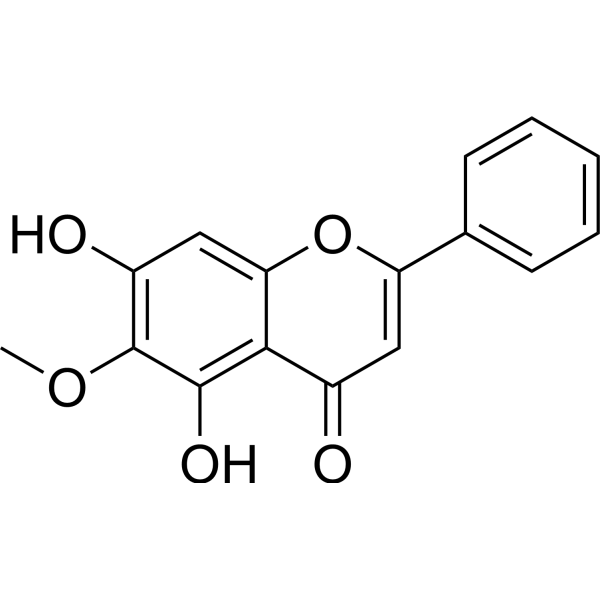
Cirsilineol, a natural flavone compound, selectively inhibits IFN-γ/STAT1/T-bet signaling in intestinal CD4 + T cells. Cirsilineol has potent immunosuppressive and anti-tumor properties. Cirsilineol significantly ameliorates trinitro-benzene sulfonic acid (TNBS)-induced T-cell-mediated experimental colitis in mice .
|
-
-
- HY-121983
-
-
-
- HY-W668775
-
-
-
- HY-109148
-
|
TD-1473; JNJ-8398
|
JAK
|
Inflammation/Immunology
|
|
Izencitinib (TD-1473) is an orally active, non-selective and gut-restricted JAK inhibitor. Izencitinib (TD-1473) can be used in the study for ulcerative colitis .
|
-
-
- HY-B1402B
-
|
Hydrocortisone 21-hemisuccinate sodium
|
Glucocorticoid Receptor
|
Cardiovascular Disease
Metabolic Disease
|
|
Hydrocortisone hemisuccinate sodium is an orally active physiological glucocorticoid. Hydrocortisone hemisuccinate sodium inhibits proinflammatory cytokine activity, with IC50s of 6.7 and 21.4 μM for IL-6 and IL-3, respectively. Hydrocortisone hemisuccinate sodium can be used for the research of ulcerative colitis (UC) .
|
-
-
- HY-148103
-
|
|
REV-ERB
|
Inflammation/Immunology
|
|
SR12418 is a REV-ERB-specific synthetic ligand with IC50s of 68 nM and 119 nM for REV-ERBα and REV-ERBβ, respectively. SR12418 can be used in experimental autoimmune encephalomyelitis (EAE) and colitis research .
|
-
-
- HY-108013
-
-
-
- HY-174976
-
|
|
PI3K
Akt
Interleukin Related
Bacterial
|
Inflammation/Immunology
|
|
FHND5032 is an orally active miR-124 inducer. FHND5032 significantly upregulates miR-124 expression in macrophages. FHND5032 disrupts inflammatory signaling, promotes macrophage reprogramming, and restores the epithelial barrier function by inhibiting the PIK3R2/PI3K/Akt axis. FHND5032 alleviates colitis and reduces inflammatory burden in ulcerative colitis mice. FHND5032 can be used for the study of ulcerative colitis .
|
-
-
- HY-131969
-
|
|
ASK1
MAP3K
Apoptosis
|
Inflammation/Immunology
|
|
ASK1-IN-2 is a potent and orally active inhibitor of apoptosis signal-regulating kinase 1 (ASK1), with an IC50 of 32.8 nM. ASK1-IN-2 can be used for the research of ulcerative colitis .
|
-
-
- HY-116374A
-
|
Lithocholylglycine sodium
|
Endogenous Metabolite
|
Metabolic Disease
|
|
Glycolithocholic acid (Lithocholylglycine) sodium is the sodium salt of Glycolithocholic acid. Glycolithocholic acid is a glycine-conjugated secondary bile acid. Glycolithocholic acid can be used to diagnose ulcerative colitis (UC), non-alcoholic steatohepatitis (NASH) and primary sclerosing cholangitis (PSC) .
|
-
-
- HY-N1388
-
|
|
Others
|
Inflammation/Immunology
|
|
Tussilagone, a major active component in Tussilago farfara, has anti-inflammatory effect. Tussilagone ameliorates inflammatory responses in dextran sulphate sodium-induced murine colitis. Tussilagone inhibits the inflammatory response and improves survival in cecal ligation and puncture (CLP)-induced septic mice .
|
-
-
- HY-108622
-
|
Daxalipram
|
Phosphodiesterase (PDE)
Interleukin Related
IFNAR
|
Inflammation/Immunology
|
|
Mesopram (Daxalipram) is an orally active phosphodiesterase (PDE) 4 inhibitor. Mesopram inhibits the synthesis of proinflammatory cytokines TNF-α and IFN-γ. Mesopram demonstrates efficacy in ameliorating Dextran sulfate sodium (DSS) (HY-116282C)-induced murine colitis. Mesopram can be used for the study of chronic inflammatory diseases .
|
-
-
- HY-151252
-
|
|
Proteasome
NOD-like Receptor (NLR)
|
Inflammation/Immunology
|
|
NIC-0102 is an orally active proteasome inhibitor (pIC50=7.55) that specifically inhibits NLRP3 inflammatory vesicle activation. NIC-0102 shows potent anti-inflammatory effects in a model of dextran sulfate sodium (DSS)-induced ulcerative colitis. NIC-0102 also inhibits production of pro-IL-1β .
|
-
-
- HY-107831
-
|
|
Drug Derivative
|
Inflammation/Immunology
Cancer
|
|
5-Acetylsalicylic acid is the derivate of Aspirin (HY-14654), with anti-inflammatory property. 5-Acetylsalicylic acid is the active metabolite of Sulfasalazine (HY-14655) and its production is regulated by beneficial bacteria in the gut but is confined to the intestinal tract. 5-Acetylsalicylic acid exhibits a mild cytotoxicity effect on B16F10 cells. 5-Acetylsalicylic acid can be used for the study of inflammatory bowel disease (IBD) such as ulcerative colitis (UC) .
|
-
-
- HY-145697
-
|
|
GPR84
|
Inflammation/Immunology
|
|
GPR84 antagonist 2 (compound 33) is a potent, selective, and orally active GPR84 antagonist (IC50=8.95 nM). GPR84 antagonist 2 shows improved potency in the calcium mobilization assay and the ability to inhibit the chemotaxis of neutrophils and macrophages upon GPR84 activation. GPR84 antagonist 2 has the potential for the research of ulcerative colitis .
|
-
-
- HY-P990284
-
|
|
C-type Lectin-like Receptors (CTLRs)
|
Metabolic Disease
Inflammation/Immunology
Cancer
|
|
Anti-Mouse CD205 Antibody (NLDC-145) is a rat-derived IgG2aκ type antibody inhibitor, targeting to mouse CD205. Anti-Mouse CD205 Antibody (NLDC-145) reacts with CD205 also known as DEC-205. Anti-Mouse CD205 Antibody (NLDC-145) can be used for the researches of cancer, inflammation, immunology and metabolic disease, such as colitis, D2F2/E2 tumor and diabetes .
|
-
-
- HY-N7635
-
|
β-D-Glucopyranosyl oleanolate
|
NO Synthase
COX
Interleukin Related
Claudin
p38 MAPK
Akt
PI3K
|
Inflammation/Immunology
|
|
Oleanolic acid 28-O-β-D-glucopyranoside (β-D-Glucopyranosyl oleanolate) is an orally active pentacyclic triterpenoid compound. Oleanolic acid 28-O-β-D-glucopyranoside has anti-inflammatory effects. In ulcerative colitis models, Oleanolic acid 28-O-β-D-glucopyranoside can inhibit the inflammatory response, enhance the intestinal epithelial barrier function, and modulate the gut microbiota. Its mechanism of action is related to the PI3K-AKT and MAPK signaling pathways. Oleanolic acid 28-O-β-D-glucopyranoside can be used in the research of diseases such as colitis .
|
-
-
- HY-178113
-
|
|
15-PGDH
|
Inflammation/Immunology
|
|
15-PGDH-IN-4 (Compound 40) is a 15-PGDH inhibitor with an IC50 of 1.2 nM against h15-PGDH. 15-PGDH-IN-4 functionally inhibits the activity of 15-PGDH. 15-PGDH-IN-4 can be used in the research of colitis .
|
-
-
- HY-168328
-
|
|
NF-κB
Interleukin Related
|
Inflammation/Immunology
|
|
FKK6 is a selective agonist for pregnane X receptor (PXR) with an EC50 of 1.2 µM. FKK6 exhibits good affinity with plasma proteins, and good metabolic metabolism in human microsomes. FKK6 inhibits PXR-related NF-κB signaling pathway, inhibits the expression of inflammatory factors, and exhibits anti-inflammatory activity against DSS (HY-116282)-induced colitis in mouse model .
|
-
-
- HY-157939
-
|
|
EBI2/GPR183
|
Inflammation/Immunology
|
|
GPR183 antagonist-3 (compound 33) is an oral active GPR183 antagonist with the IC50 of 8.7 μM. GPR183 antagonist-3 displays strong in vitro antimigration and anti-inflammatory activity in monocytes, and improves the pathological symptoms of DSS-induced experimental colitis .
|
-
-
- HY-119973
-
|
|
15-PGDH
|
Inflammation/Immunology
|
|
CAY10397 is a selective and orally active 15-hydroxyprostaglandin dehydrogenase (15-PGDH) inhibitor. CAY10397 can inhibit 15-PGDH-dependent endogenous metabolite production. CAY10397 blocks the selenium-dependent protective in inflammation. CAY10397 can be used for the research of colitis .
|
-
-
- HY-158404
-
|
|
METTL3
|
Inflammation/Immunology
|
|
METTL3-IN-8 (F039-0002) is a potent METTL3 inhibitor. METTL3-IN-8 strongly ameliorates Dextran sulfate sodium salt (DSS) (HY-116282C)-induced colitis. METTL3-IN-8 can be used Inflammatory bowel disease (IBD) research .
|
-
-
- HY-162661
-
|
|
P2Y Receptor
|
Inflammation/Immunology
|
|
P2Y14R antagonist 2 (compound 39) is a potent, selective and orally active P2Y14R antagonist with an IC50 value of 0.40 nM. P2Y14R antagonist 2 shows anti-inflammatory activity. P2Y14R antagonist 2 has the potential for the research of colitis .
|
-
-
- HY-158417
-
|
|
LPL Receptor
|
Inflammation/Immunology
|
|
KSI-6666 is an orally active, competitive antagonist for sphingosine 1-phosphate receptor 1 (S1PR1), with an IC50 of 6.4 nM. KSI-6666 exhibits anti-inflammatory efficacy in autoimmune encephalomyelitis model and T cell transfer colitis model .
|
-
-
- HY-P990216
-
|
|
Interleukin Related
|
Inflammation/Immunology
|
|
Anti-Mouse IL-25 Antibody (2C3) is a mouse-derived IgG1 κ type antibody inhibitor, targeting to mouse IL-25. Anti-Mouse IL-25 Antibody (2C3) can neutralize IL-25. Anti-Mouse IL-25 Antibody (2C3) can be used for inflammation researches, such as colitis and asthma .
|
-
-
- HY-P1217
-
|
|
Melanocortin Receptor
|
Inflammation/Immunology
|
|
[D-Trp8]-γ-MSH is a potent and selective agonist of melanocortin 3 (MC3) receptor, with IC50s of 6.7 nM, 600 nM and 340 nM for hMC3, hMC4 and hMC5, respectively in CHO cells. [D-Trp8]-γ-MSH could provide protection against multiple inflammatory disorders such as rheumatoid arthritis and colitis .
|
-
-
- HY-156025
-
|
|
Hydroxycarboxylic Acid Receptor (HCAR)
|
Inflammation/Immunology
|
|
HCAR2 agonist 1 (Compound 9n) is a Gi protein-biased allosteric modulator of HCAR2. HCAR2 agonist 1 activates the Gi protein signaling pathway. HCAR2 agonist 1 shows anti-inflammatory effect, and reduces mRNA level of pro-inflammatory cytokine (TNF-α, IL-1β, IL-6, and MCP-1). HCAR2 agonist 1 enhances anti-inflammatory effects of orthosteric agonists in the mouse model of colitis .
|
-
-
- HY-N0278
-
|
Pulsatilla camphor; Anemonine; trans-Anemonin
|
PKC
NO Synthase
|
Inflammation/Immunology
|
|
Anemonin (Pulsatilla camphor), a selective iNOS inhibitor, is also a PKC-θ inhibitor. Anemonin can significantly inhibit the translation or protein stability of PKC-θ protein. Anemonin also ameliorates dextran sodium sulfate-induced acute ulcerative colitis (UC) in mice. Anemonin can be used in the research of inflammation-related diseases .
|
-
-
- HY-B1829
-
|
Dexamethasone 21-phosphate
|
Glucocorticoid Receptor
|
Others
|
|
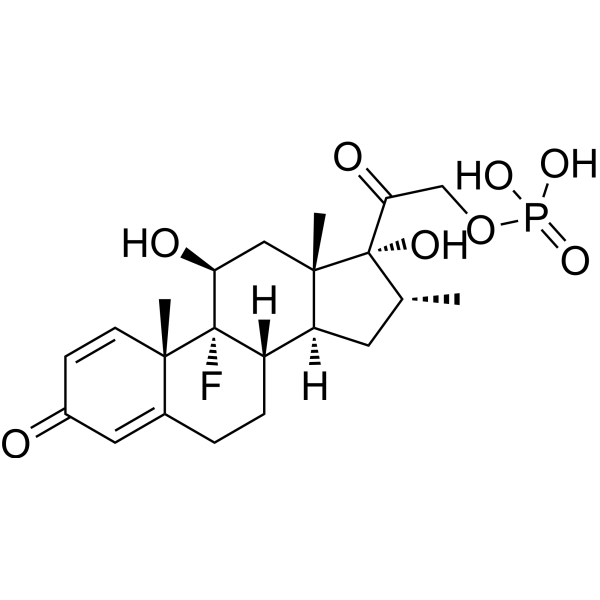
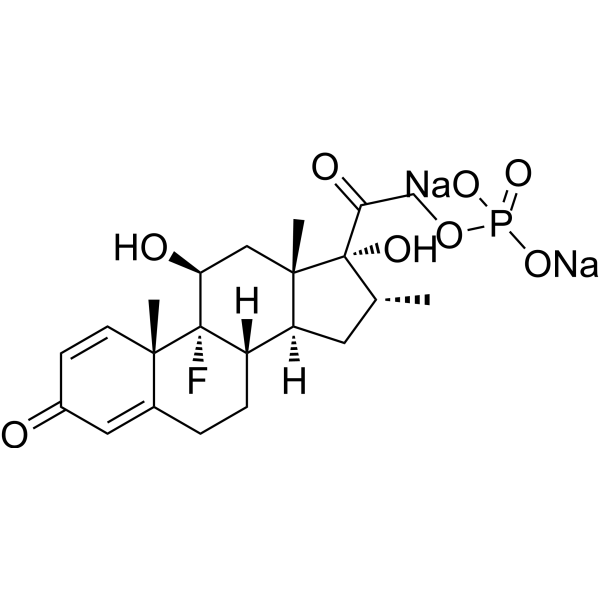
Dexamethasone phosphate (Dexamethasone 21-phosphate) disodium is a biologically inactive compound which undergoes dephosphorylation by intra-erythrocyte enzymes. The active metabolite, Dexamethasone, is then released into the circulation by simple passive diffusion through cell membranes. Dexamethasone phosphate disodium-encapsulated erythrocyte has the potential for steroid-dependent ulcerative colitis research .
|
-
-
- HY-P5641
-
|
|
Bacterial
p38 MAPK
NF-κB
NADH Dehydrogenase
Antibiotic
|
Infection
Inflammation/Immunology
|
|
Pleurocidin is an Antimicrobial peptide. Pleurocidin is derived from the skin mucosa or intestinal secretions of Pseudopleuronectes americanus. Pleurocidin inhibits the expression of key proteins in the MAPK and NF-κB inflammatory signaling pathways. Pleurocidin alters serum inflammatory and immune cytokine levels, regulates the down-regulation of tight junction proteins, and modulates the intestinal flora. Pleurocidin exerts antibacterial activity by inducing bacterial membrane damage, hydroxyl radical formation, and NADH depletion, and also produces a synergistic effect with Antibiotics. Pleurocidin alleviates DSS-induced ulcerative colitis. Pleurocidin can be used for research on ulcerative colitis, bacterial infections, and bacterial biofilm-related infections .
|
-
-
- HY-155765
-
|
|
NF-κB
|
Inflammation/Immunology
|
|
Anti-inflammatory agent 51 (compound 11d) is an amide/sulfonamide derivative with anti-inflammatory activities. Anti-inflammatory agent 51 inhibits NF-κB activation, has the potential for acute lung injury and ulcerative colitis research .
|
-
-
- HY-155181
-
|
|
Carboxylesterase (CES)
|
Cancer
|
|
CES2-IN-1 (Compound 24) is a reversible and selective CES2 inhibitor (IC50: 6.72 μM for human CES2). CES2-IN-1 reduces the level of CES2 in living cells. CES2-IN-1 is effective against Irinotecan (HY-16562)-induced delayed diarrhea and DSS-induced ulcerative colitis .
|
-
- HY-161343
-
|
|
P2Y Receptor
Necroptosis
|
Inflammation/Immunology
|
|
HDL-16 is a potent P2Y14R antagonist with an IC50 of 0.3095 nM. HDL-16 ameliorates DSS (HY-116282C)-induced colitis through suppressing necroptosis of intestinal epithelium cells (IECs) and protecting mucosal barrier function .
|
-
- HY-P990157
-
|
|
Transmembrane Glycoprotein
|
Others
|
|
Anti-Mouse Thy1/CD90 Antibody (M5/49.4.1) is an anti-mouse Thy1/CD90 IgG2a monoclonal antibody. Anti-Mouse Thy1/CD90 Antibody (M5/49.4.1) can clear T cells from the spleen and bone marrow. Anti-Mouse Thy1/CD90 Antibody (M5/49.4.1) can be used for researches on immunology and inflammation conditions such as colitis .
|
-
- HY-145455
-
|
|
Bacterial
|
Infection
|
|
Salazopyridazine is an antibacterial agent. Salazopyridazine shows activities against ulcerative colitis. Salazopyridazine can be used for the research of rheumatic diseases .
|
-
- HY-N10196
-
-
- HY-P991717
-
|
AZD-8630
|
Interleukin Related
|
Inflammation/Immunology
Cancer
|
|
Sunakiment is a humanized IgG1λ monoclonal antibody inhibitor targeting Thymic stromal lymphopoietin (TSLP). Sunakiment can be used for inflammatory and immune system disorders like ulcerative colitis, rheumatoid arthritis and allergy and cancers research .
|
-
- HY-P990295
-
|
|
Integrin
|
Metabolic Disease
Inflammation/Immunology
Cancer
|
|
Anti-Mouse CD103 Antibody (M290) is a rat-derived IgG2a κ type antibody inhibitor, targeting to mouse CD103. Anti-Mouse CD103 Antibody (M290) can neutralize CD103. Anti-Mouse CD103 Antibody (M290) can be used for the researches of cancer, inflammation, immunology and metabolic disease, such as B16.gp33 tumor, colitis and diabetes .
|
-
- HY-147128
-
|
|
Aryl Hydrocarbon Receptor
Cytochrome P450
Interleukin Related
|
Inflammation/Immunology
|
|
PY109 is an orally active and highly selective aryl hydrocarbon receptor (AHR) agonist. PY109's EC50 values in human-derived HepG2 and mouse Hepa-1c1c7 cells are 1.2 nM and 1.4 nM respectively. PY109 significantly upregulates the expression of CYP1A1 and IL-22, and inhibits the expression of IL-17A. PY109 significantly improves colitis in mice. PY109 can be used for research on colitis .
|
-
- HY-112167B
-
|
ARRY-575 hydrochloride; RG7741 hydrochloride
|
Checkpoint Kinase (Chk)
|
Inflammation/Immunology
Cancer
|
|
GDC0575 (ARRY-575) hydrochloride is a highly-selective and orally active Chk1 (IC50=1.2 nM) inhibitor. GDC0575 (ARRY-575) hydrochloride can be used for colitis-associated cancer (CAC) and colitis research .
|
-
- HY-107015A
-
-
- HY-168024
-
|
|
RIP kinase
NOD-like Receptor (NLR)
|
Inflammation/Immunology
|
|
NOD1/2-IN-1 (Compound 18) is a potent RIPK2 inhibitor with an IC50 value of 1.4 nM, as determined by the ADP-Glo assay. NOD1/2-IN-1 blocks the production of pro-inflammatory cytokines by inhibiting the NOD1/NOD2 pathways, with IC50 values of 18 nM and 170 nM for NOD1 and NOD2, respectively, thereby reducing inflammatory responses. NOD1/2-IN-1 can be used in studies related to colitis .
|
-
- HY-158403
-
|
|
METTL3
|
Inflammation/Immunology
|
|
METTL3-IN-7 (7460-0250) is a potent METTL3 inhibitor. METTL3-IN-7 strongly ameliorates Dextran sulfate sodium salt (DSS) (HY-116282C)-induced colitis. METTL3-IN-7 can be used Inflammatory bowel disease (IBD) research .
|
-
- HY-P9S0062
-
|
|
PD-1/PD-L1
|
Inflammation/Immunology
|
|
Rosnilimab (Mouse IgG2a) is a mouse-derived IgG2a, Rosnilimab. Rosnilimab is a PD-1 agonistic monoclonal antibody. Rosnilimab (Mouse IgG2a) can be used in research related to ulcerative colitis .
|
-
- HY-168734
-
|
|
Cannabinoid Receptor
|
Inflammation/Immunology
|
|
CB2 receptor agonist 9 (Compound 33) is an orally active agonist for cannabinoid receptor 2 (CB2 receptor) with an EC50 of 16.2 nM. CB2 receptor agonist 9 inhibits the expression of TNF-α, IL-1β and IL-6, exhibits anti-inflammatory efficacy in DDS (HY-116282)-induced mouse acute colitis model .
|
-
- HY-161620
-
|
|
IRAK
|
Inflammation/Immunology
|
|
DW18134 is an inhibitor for interleukin receptor-associated kinase 4 (IRAK 4) with an IC50 of 11.2 nM. DW18134 inhibits phosphorylation of IRAK4 and IKK, downregulates the secretion of TNF-α and IL-6. DW18134 attenuates the Lipopolysaccharides (HY-D1056)-induced peritonitis and DSS-induced colitis in mouse models, and protects the intestinal barrier function .
|
-
- HY-168974
-
-
- HY-161519
-
|
|
Pyruvate Kinase
|
Inflammation/Immunology
|
|
PKM2 activator 7 (Compd B4) is a PKM2 activator with the AC50 of 0.144 μM. PKM2 activator 7 suppresses DSS (HY-116282C)-induced colitis by inhibiting T cell growth in mouse colitis model .
|
-
- HY-109718
-
-
- HY-108013R
-
|
|
Interleukin Related
Reference Standards
|
Inflammation/Immunology
|
|
Armillarisin A (Standard) is the analytical standard of Armillarisin A. This product is intended for research and analytical applications. Armillarisin A has the potential for the ulcerative colitis (UC) study. Armillarisin A increases IL-4 and lower IL-1β .
|
-
- HY-120804
-
|
|
Amyloid-β
|
Inflammation/Immunology
|
|
PH-46A is an indane dimer with anti-inflammatory activity. PH-46A can reduced histological damage and serum amyloid A (SAA) levels in colitis mice .
|
-
- HY-118704
-
|
|
mTOR
|
Inflammation/Immunology
Cancer
|
|
P-2281 is a mTOR inhibitor with anticancer and anti-inflammatory efficacies. P2281 inhibits mTOR activity in colon cancer cells. P-2281 suppresses Dextran sulfate sodium salt (HY-116282C) (DSS)-induced colitis by inhibiting T cell function and is efficacious in a murine model of human colitis .
|
-
- HY-168567
-
|
|
RIP kinase
NF-κB
p38 MAPK
|
Inflammation/Immunology
|
|
RIPK2-IN-6 (Compound 15a) is an inhibitor for RIPK, that inhibits the phosphorylation of RIPK2, and thus inhibits the NF-κB and MAPK signaling pathways. RIPK2-IN-6 exhibits anti-inflammatory and anti-fibrotic activities in Dextran sodium sulfate (HY-116282C)-induced mice colitis models .
|
-
- HY-162030
-
-
- HY-168023
-
|
|
NOD-like Receptor (NLR)
|
Inflammation/Immunology
|
|
NOD1/-IN-1 (Compound 2) is a potent RIPK2 inhibitor with an IC50 value of 0.65 nM determined by ADP-Glo assays. NOD1/-IN-1 selectively inhibits the NOD1 pathway (with an IC50 of 33 nM for NOD1), blocking the production of pro-inflammatory cytokines and thereby reducing inflammation. NOD1/-IN-1 is applicable for research in the field of colitis .
|
-
- HY-172099
-
-
- HY-159157
-
|
|
STAT
|
Inflammation/Immunology
|
|
Anti-inflammatory agent 92 (compound LD4) is a porphyrin derivative. Anti-inflammatory agent 92 has anti-inflammatory properties. Anti-inflammatory agent 92 can alleviate ulcerative colitis by inhibiting the STAT3-EPHX2 axis .
|
-
- HY-145829
-
|
|
JAK
Apoptosis
|
Inflammation/Immunology
|
|
Tofacitinib precursor-1 is an effective and oral active precursor to mitigate the systemic adverse effects of Tofacitinib. Tofacitinib precursor-1 can effectively attenuate the oxazolone-induced colitis in mice model with low toxicity. Tofacitinib precursor-1 is a potential drug candidate for the research of ulcerative colitis .
|
-
- HY-114766
-
|
|
Phosphodiesterase (PDE)
|
Inflammation/Immunology
|
|
Pumafentrine is an orally active, potent dual PDE3/PDE4 inhibitor. Pumafentrine dose-dependently ameliorates the clinical score and colonic TNFα production in murine Dextran sulphate sodium (DSS; HY-116282C)-induced colitis in a preventive setting .
|
-
- HY-176465
-
|
|
Carboxylesterase (CES)
|
Inflammation/Immunology
|
|
CES2A-IN-3 (Compound 9d) is a potent serine-targeting covalent human carboxylesterase 2A (hCES2A) inhibitor with an IC50 value of 0.12 nM. CES2A-IN-3 is promising for research of diarrhea and ulcerative colitis .
|
-
- HY-162013
-
-
- HY-162901
-
|
|
NOD-like Receptor (NLR)
|
Inflammation/Immunology
|
NLRP3-IN-48 is an NLRP3 inhibitor. NLRP3-IN-48 targets the NLRP3 protein, affecting the assembly of the NLRP3 inflammasome and thereby inhibiting its activation. NLRP3-IN-48 has anti-inflammatory activity in a mouse model of acute colitis induced by DSS .
|
-
- HY-W109107
-
-
- HY-174159
-
|
|
COX
|
Inflammation/Immunology
|
|
COX-2-IN-54 (Compound 7y) is an orally active COX-2 inhibitor with an IC50 of 4.15 μM. COX-2-IN-54 has a strong protective effect against DSS-induced ulcerative colitis and can significantly reduce tissue damage. COX-2-IN-54 has anti-inflammatory activity .
|
-
- HY-124290A
-
|
AJM300 hydrochloride
|
Integrin
|
Inflammation/Immunology
|
Carotegrast methyl (AJM300) hydrochloride is an orally active and selective α4 integrin antagonist. HCA2969, an active metabolite of Carotegrast methyl hydrochloride, is a specific and dual α4β1/α4β7 integrin antagonist. Carotegrast methyl hydrochloride prevents the development of colitis in mice .
|
-
- HY-162317
-
|
|
JAK
p38 MAPK
|
Infection
|
|
AMPK-IN-5 (compound 7m) is a Osthole (HY-N0054) derivative, and blocks MAPK signal transduction by inhibiting the phosphorylation of JNK and p38, thereby inhibiting the release of inflammatory cytokines. AMPK-IN-5 reduce DSS-induced ulcerative colitis and LPS (HY-D1056)-induced acute lung injury .
|
-
- HY-B1829R
-
|
Dexamethasone 21-phosphate (Standard)
|
Glucocorticoid Receptor
Reference Standards
|
Others
|
|
Dexamethasone phosphate (Standard) is the analytical standard of Dexamethasone phosphate. This product is intended for research and analytical applications. Dexamethasone phosphate (Dexamethasone 21-phosphate) disodium is a biologically inactive compound which undergoes dephosphorylation by intra-erythrocyte enzymes. The active metabolite, Dexamethasone, is then released into the circulation by simple passive diffusion through cell membranes. Dexamethasone phosphate disodium-encapsulated erythrocyte has the potential for steroid-dependent ulcerative colitis research .
|
-
- HY-161936
-
|
|
Phosphodiesterase (PDE)
|
Inflammation/Immunology
|
|
Z21115 is an orally active inhibitor for phosphodiesterase 4 (PDE4), that inhibits PDE4D7 with IC50 of 10.5 nM. Z21115 inhibits Lipopolysaccharide (HY-D1056)-induced expression of IL-6, TNF-α and iNOS. Z21115 exhibits anti-inflammatory activity in DSS (HY-116282)-induced mouse colitis models without significant toxicity (1 g/kg) .
|
-
- HY-66008R
-
|
N-Acetyl-5-aminosalicylic acid (Standard); N-Acetyl-ASA (Standard)
|
Drug Metabolite
Reference Standards
|
Inflammation/Immunology
Cancer
|
|
N-Acetyl mesalazine (Standard) (N-Acetyl-5-aminosalicylic acid (Standard)) is the analytical standard of N-Acetyl mesalazine (HY-66008). This product is intended for research and analytical applications. N-Acetyl mesalazine (N-Acetyl-5-aminosalicylic acid) is the primary intestinal metabolite of 5-Aminosalicylic Acid (HY-15027) and serves as a biomarker for evaluating the efficacy of 5-Aminosalicylic Acid (HY-15027). N-Acetyl mesalazine can scavenge free radicals, reduce DNA base hydroxylation, and ameliorate mucosal inflammation. N-Acetyl mesalazine can be used in the study of diseases such as colitis and colon cancer .
|
-
- HY-N1388R
-
|
|
Reference Standards
Others
|
Inflammation/Immunology
|
|
Tussilagone (Standard) is the analytical standard of Tussilagone. This product is intended for research and analytical applications. Tussilagone, a major active component in Tussilago farfara, has anti-inflammatory effect. Tussilagone ameliorates inflammatory responses in dextran sulphate sodium-induced murine colitis. Tussilagone inhibits the inflammatory response and improves survival in cecal ligation and puncture (CLP)-induced septic mice .
|
-
- HY-168784
-
|
|
Leukotriene Receptor
|
Metabolic Disease
Inflammation/Immunology
|
|
LTD4 antagonist 2 (compound 6) is a leukotriene D4 (LTD4) antagonist with an IC50 of 2.8 μM against cysteinyl leukotriene 1 receptor (CysLT1R). LTD4 antagonist 2 is also a G protein-coupled bile acid receptor 1 (GPBAR1) agonist and can be utilized in research related to colitis, metabolic syndromes, and other GPBAR1/CysLT1R-related diseases .
|
-
- HY-168922
-
-
- HY-P1217A
-
|
|
Melanocortin Receptor
|
Inflammation/Immunology
|
|
[D-Trp8]-γ-MSH TFA is a potent and selective agonist of melanocortin 3 (MC3) receptor, with IC50s of 6.7 nM, 600 nM and 340 nM for hMC3, hMC4 and hMC5, respectively in CHO cells. [D-Trp8]-γ-MSH TFA could provide protection against multiple inflammatory disorders such as rheumatoid arthritis and colitis .
|
-
- HY-161255
-
|
|
NO Synthase
|
Inflammation/Immunology
|
|
3,4-DAA is an orally active Anthranilic acid derivative with potent immunosuppressive activities. 3, 4-DAA can alleviate the severity of colitis through inhibiting Th1 cells response, promoting Th2 cytokines expression and inducing CD4 +CD25 + T cells expression . 3,4-DAA suppressed expression of inducible nitric oxide synthase (iNOS) and nitric oxide (NO) release from EOC20 cells induced by IFN-γ and Lipopolysaccharide .
|
-
- HY-N13174
-
|
|
Reactive Oxygen Species (ROS)
Apoptosis
|
Inflammation/Immunology
|
Peanut procyanidin A is a type of A-type procyanidin that can be extracted from peanut skins. Peanut procyanidin A can protect prostate DU145 cells from H2O2-induced oxidative stress damage through the MAPKs signaling pathway, alleviate cell cycle arrest, and reduce cell apoptosis. Peanut procyanidin A can also regulate gut microbiota and metabolism in mice with DSS (HY-116282)-induced ulcerative colitis .
|
-
- HY-181081
-
|
|
COX
Interleukin Related
NO Synthase
|
Inflammation/Immunology
|
|
CHNQD-03005 is an orally active anti-inflammatory agent. CHNQD-03005 inhibits the expression of iNOS and COX-2, reduces inflammatory signal transduction, suppresses NO production, and downregulates the pro-inflammatory cytokines TNF-α, IL-6 and IL-1β. CHNQD-03005 can be used in the research of inflammatory diseases such as colitis .
|
-
- HY-137973
-
|
|
LPL Receptor
|
Inflammation/Immunology
|
|
RP-1859 is a sphingosine 1-phosphate receptor (S1P) modulator. RP-1859 exerts anti-inflammatory and immunomodulatory activities. RP-1859 can be used for the research of iatrogenic autoimmune colitis .
|
-
- HY-N17685
-
|
|
Interleukin Related
|
Inflammation/Immunology
|
|
Pseudoginsenoside RT4 is an orally active tetracyclic triterpenoid. Pseudoginsenoside RT4 can be isolated from Panax pseudoginseng subsp. Himalaicus. Pseudoginsenoside RT4 reduces the levels of pro-inflammatory cytokines (TNF-α, IL-6, and IL-1β), boosts the levels of IL-10. Pseudoginsenoside RT4 modulates the composition of gut microbiota. Pseudoginsenoside RT4 shows anti-inflammatory effects. Pseudoginsenoside RT4 can be used in the study of ulcerative colitis .
|
-
- HY-182282
-
|
|
PI3K
Akt
NO Synthase
COX
Interleukin Related
|
Inflammation/Immunology
|
|
PI3K/AKT-IN-6 is an orally effective PI3K/AKT signaling pathway inhibitor and anti-inflammatory agent. PI3K/AKT-IN-6 inhibits the production of pro-inflammatory cytokines TNF-α and IL-6, and downregulates the expression of inflammatory mediators COX-2 and iNOS. PI3K/AKT-IN-6 improves related symptoms in colitis mice. PI3K/AKT-IN-6 can be used for the research of inflammatory diseases such as colitis .
|
-
- HY-183578
-
|
|
LPL Receptor
|
Inflammation/Immunology
|
|
TYY-31 is an orally active, selective S1PR1 agonist with an EC50 of 1.13 pM. TYY-31 promotes the phosphorylation of ERK1/2. TYY-31 exerts anti-inflammatory and immunosuppressive effects, ameliorates DSS-induced colitis in mice, and reduces peripheral blood lymphocyte counts in mice in a dose-dependent manner. TYY-31 can be used for the research of ulcerative colitis .
|
-
- HY-186079A
-
|
|
Drug Isomer
Integrin
|
Inflammation/Immunology
|
|
(S)-Deethyl-emvistegrast is the S-enantiomer of Deethyl-emvistegrast (HY-186079). Deethyl-emvistegrast is a quinoline derivative and also a α4β7 integrin inhibitor. It acts as the hydrolysis product of Emvistegrast (HY-177080). Deethyl-emvistegrast modulates inflammatory pathways and can be used in research related to inflammatory bowel diseases (Crohn's disease and ulcerative colitis) .
|
-
- HY-186079
-
|
|
Integrin
|
Inflammation/Immunology
|
|
Deethyl-emvistegrast is a quinoline derivative and also a α4β7 integrin inhibitor. Deethyl-emvistegrast is the hydrolytic product of Emvistegrast (HY-177080). Deethyl-emvistegrast modulates inflammatory pathways. Deethyl-emvistegrast can be used in research related to inflammatory bowel disease (Crohn's disease and ulcerative colitis) .
|
-
- HY-B1350A
-
|
Sodium fusidate; SQ-16360
|
Bacterial
Antibiotic
Interleukin Related
|
Infection
Inflammation/Immunology
|
|
Fusidic acid sodium salt is an orally available antibacterial agent that inhibits bacterial protein synthesis by preventing the release of translation elongation factor G (EF-G) from ribosomes. Fusidic acid sodium salt inhibits the inhibitory and activating effects of interleukins IL-1 and IL-6 on glucose-induced insulin production and exhibits antidiabetic effects in a rat model. Fusidic acid sodium salt improves the symptoms of colitis in rats and inhibits the growth of Toxoplasma gondii and Listeria monocytogenes EGD in vitro, but not in mice .
|
-
- HY-175222
-
-
- HY-159179
-
|
|
Integrin
|
Inflammation/Immunology
|
|
α4 integrin receptor antagonist 3 (Compound 11) is an orally active α4integrin receptor antagonist. α4 integrin receptor antagonist 3 can inhibit the adhesion of K562 cells mediated by the interaction between α4β1/VCAM-1 and α4β7/MAdCAM-1, with IC50 values of 130 nM and 2 nM, respectively. α4 integrin receptor antagonist 3 has the potential to be used in the study of dextran sulfate sodium (DSS) colitis mouse model .
|
-
- HY-114360
-
|
|
Endogenous Metabolite
COX
Interleukin Related
Glutathione Peroxidase
TNF Receptor
|
Neurological Disease
Metabolic Disease
Inflammation/Immunology
Cancer
|
|
Taurohyodeoxycholic acid is an orally active 6 alpha-hydroxylated bile acid. Taurohyodeoxycholic acid decreases colonic MPO activity, TNF-α, lL-6 serum levels and the expression of COX-2. Taurohyodeoxycholic acid alleviates trinitrobenzene sulfonic acid induced ulcerative colitis via regulating Th1/Th2 and Th17/Treg cells balance. Taurohyodeoxycholic acid ameliorates high-fat diet-induced nonalcoholic fatty liver disease in mice. Taurohyodeoxycholic acid prevents Taurochenodeoxycholic acid (HY-N2027)-induced hepatotoxicity in bile fistula rats. Taurohyodeoxycholic acid can be used for the study of nonalcoholic fatty liver disease (NAFLD), colitis and biliary fistula .
|
-
- HY-B1119R
-
|
|
Reference Standards
Bacterial
Fungal
Antibiotic
Apoptosis
|
Infection
Cancer
|
|
Triclosan (Standard) is the analytical standard of Triclosan. This product is intended for research and analytical applications. Triclosan is a broad-spectrum antibacterial agent that inhibits bacterial fatty acid synthesis at the enoyl-acyl carrier protein reductase (FabI) step. Triclosan inhibits E. coli enoyl-acyl carrier protein reductase (FabI) and FabI containing a glycine-to-valine substitution at position 93 (FabIG93V) with IC50s of 2 µM and 10 µM, respectively. Triclosan causes apoptotic effect in cultured rat neural stem cells (NSC). Triclosan exacerbates colitis and colitis-associated colorectal tumorigenesis in animal models .
|
-
- HY-N0589
-
-
- HY-N2199
-
|
|
Apoptosis
Autophagy
|
Cancer
|
|
Sotetsuflavone is a flavonoid that can be isolated from Cycas revolute. Sotetsuflavone inhibits migration and invasion of A549 cells by reversing EMT, and induces cell apoptosis and autophagy. Sotetsuflavone inhibits HIF-1α, VEGF, angiostatin, MMP-9, and MMP-13 expression in A549 cells. Sotetsuflavone also protects mice against Crohn's disease (CD)-like colitis. Sotetsuflavone can be used for research of NSCLC .
|
-
- HY-175479
-
|
|
Salt-inducible Kinase (SIK)
TNF Receptor
Interleukin Related
|
Inflammation/Immunology
|
|
GLPG4970 is a potent, selective and orally active salt-inducible kinase 2/3 (SIK2/SIK3) dual inhibitor with IC50 values of 0.3 nM and 0.7 nM. GLPG4970 has weak inhibition of hERG channel with an IC50 of 29 μM. GLPG4970 can decrease TNFα release and increase IL-10 release GLPG4970 can be used for the researches of inflammation and immunology, such as colitis .
|
-
- HY-P0060
-
|
Tetracosactrin; ACTH(1–24)
|
CRFR
Melanocortin Receptor
|
Neurological Disease
Inflammation/Immunology
|
|
Tetracosactide (Tetracosactrin) is an analogue of adrenocorticotrophic hormone (ACTH). Tetracosactide is the agonist for melanocortin-4 receptor (MC4R) that activates human MC4R with an EC50 of 0.65 nM. Tetracosactide can stimulate the release of corticosteroids such as cortisol from the adrenal gland. Tetracosactide is currently used for the research of ulcerative colitis and Crohn's disease, juvenile/adult rheumatoid arthritis and osteoarthrosis .
|
-
- HY-P990868
-
|
|
CD2
|
Inflammation/Immunology
Cancer
|
|
Anti-CD2 Antibody (CB.219) is an anti-human CD2 IgG2b monoclonal antibody. Anti-CD2 Antibody (CB.219) can reduce the infiltration of T cells, macrophages, and the number of Tregs in the colon. Anti-CD2 Antibody (CB.219) can be used for research on infection and inflammation such as toxoplasma infection and colitis. The recommend isotype control of Anti-CD2 Antibody (CB.219): Mouse IgG2b kappa, Isotype Control (HY-P99982) .
|
-
- HY-107831R
-
|
|
Reference Standards
Others
|
Inflammation/Immunology
Cancer
|
|
5-Acetylsalicylic acid (Standard) is the analytical standard of 5-Acetylsalicylic acid (HY-107831). This product is intended for research and analytical applications. 5-Acetylsalicylic acid is the derivate of Aspirin (HY-14654), with anti-inflammatory property. 5-Acetylsalicylic acid is the active metabolite of Sulfasalazine (HY-14655) and its production is regulated by beneficial bacteria in the gut but is confined to the intestinal tract. 5-Acetylsalicylic acid exhibits a mild cytotoxicity effect on B16F10 cells. 5-Acetylsalicylic acid can be used for the study of inflammatory bowel disease (IBD) such as ulcerative colitis (UC) .
|
-
- HY-116374R
-
|
Lithocholylglycine (Standard)
|
Endogenous Metabolite
Reference Standards
|
Inflammation/Immunology
|
|
Glycolithocholic acid (Standard) is the analytical standard of Glycolithocholic acid. This product is intended for research and analytical applications. Glycolithocholic acid (Lithocholylglycine), an endogenous metabolite, is a glycine-conjugated secondary bile acid. Glycolithocholic acid can be used to diagnose ulcerative colitis (UC), non-alcoholic steatohepatitis (NASH) and primary sclerosing cholangitis (PSC) .
|
-
- HY-106359A
-
|
RDP-58 acetate
|
TNF Receptor
IFNAR
Reactive Oxygen Species (ROS)
|
Cancer
|
|
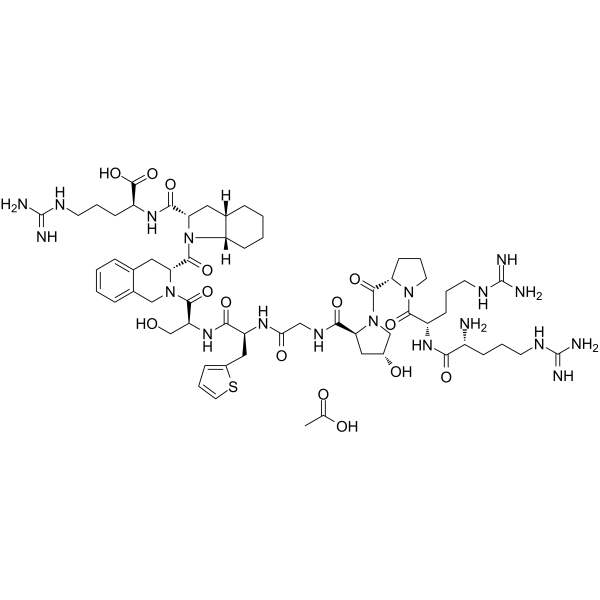
Delmitide (RDP58) acetate is an orally active d-isomer decapeptide with potent anti-inflammatory activity. Delmitide acetate inhibits production of TNF-α, IFN-γ, and interleukin (IL)-12, and up-regulates heme oxygenase 1 activity. Delmitide acetate can be used for the research of ulcerative colitis .
|
-
- HY-106359
-
-
- HY-P2313
-
|
HβD-2
|
Antibiotic
Bacterial
|
Infection
|
|
Human β-defensin-2 (HβD-2) is a small cysteine-rich cationic skin-antimicrobial peptide (SAP) produced by a number of epithelial cells.Human β-defensin-2 has antimicrobial activity against gram-negative bacteria and Candida, but not gram-positive Staphylococcus aureus . Human β-defensin-2 can be used for the study of colitis .
|
-
- HY-171590
-
|
|
Salt-inducible Kinase (SIK)
|
Inflammation/Immunology
|
|
SIK2-IN-3 is an orally active SIK1/2 selective inhibitor (IC50: 0.128/0.084 μM). SIK2-IN-3 inhibits CRTC3 phosphorylation and myeloid cell pro-inflammatory cytokine production. SIK2-IN-3 ameliorates systemic and tissue inflammatory responses in a mouse anti-CD40 colitis model .
|
-
- HY-N6189
-
-
- HY-P99378
-
|
ALTB-168; Anti-PSGL1/CD162 Reference Antibody (neihulizumab)
|
Apoptosis
|
Inflammation/Immunology
|
|
Neihulizumab (ALTB-168) is an immune checkpoint agonistic antibody that binds to human CD162 (PSGL-1), leading to downregulation of activated T-cells. Neihulizumab can be uesd for steroid-refractory acute graft-versus-host-disease (SR-aGVHD), psoriasis, psoriatic arthritis and ulcerative colitis research .
|
-
- HY-161627
-
|
|
Pyruvate Carboxylase (PC)
NOD-like Receptor (NLR)
NF-κB
Interleukin Related
|
Inflammation/Immunology
|
|
Anemoside A3-methyl 6-aminohexanoate is an orally effective pyruvate carboxylase (PC) inhibitor with a Kd value of 10.1 μM against human PC. Anemoside A3-methyl 6-aminohexanoate exerts its function through the PC/NF-κB/NLRP3 inflammasome axis. Anemoside A3-methyl 6-aminohexanoate significantly alleviates symptoms of DSS (HY-116282C)-induced colitis in mice. Anemoside A3-methyl 6-aminohexanoate can be used in colitis-related research .
|
-
- HY-114170
-
|
|
Proteasome
|
Inflammation/Immunology
|
|
ML604440 is a specific and cell-permeable Proteasome β1i (LMP2) subunit inhibitor. ML604440 can be used in experimental colitis, EAE and autoimmune disease research. ML604440 shows synergistic effects and advantageous when combined with LMP7 inhibitor .
|
-
- HY-119347R
-
|
|
Reference Standards
IFNAR
STAT
|
Inflammation/Immunology
Cancer
|
|
Cirsilineol (Standard) is the analytical standard of Cirsilineol. This product is intended for research and analytical applications. Cirsilineol, a natural flavone compound, selectively inhibits IFN-γ/STAT1/T-bet signaling in intestinal CD4+ T cells. Cirsilineol has potent immunosuppressive and anti-tumor properties. Cirsilineol significantly ameliorates trinitro-benzene sulfonic acid (TNBS)-induced T-cell-mediated experimental colitis in mice .
|
-
- HY-174270
-
|
|
NOD-like Receptor (NLR)
Interleukin Related
NEKs
|
Inflammation/Immunology
|
|
NLRP3-IN-79 is an orally active NLRP3 inhibitor. NLRP3-IN-79 inhibits NLRP3 inflammasome with an IC50 of 10.69 nM. NLRP3-IN-79 blocks NLRP3 inflammasome assembly by directly binding to NLRP3 and disrupting the NEK7-NLRP3 interaction. NLRP3-IN-79 can be used for the study of NLRP3-driven diseases model, including systemic inflammation, peritonitis, and colitis .
|
-
- HY-155199
-
|
|
Phosphodiesterase (PDE)
|
Inflammation/Immunology
|
|
PDE1-IN-5 (Compound 10c) is a selective PDE1C inhibitor (IC50: 15 nM). PDE1-IN-5 has anti- inflammatory activity, and inhibits expression of iNOS, TNF-α, IL-1α, IL-1β, and IL-6 induced by LPS. PDE1-IN-5 has anti-inflammatory bowel disease (IBD) effects in the dextran sodium sulfate (DSS)-Induced colitis mice model. PDE1-IN-5 can be used for research of IBD .
|
-
- HY-B1402
-
|
Hydrocortisone 21-hemisuccinate
|
Interleukin Related
|
Cardiovascular Disease
Metabolic Disease
Inflammation/Immunology
Endocrinology
|
|
Hydrocortisone hemisuccinate (Hydrocortisone 21-hemisuccinate), a glucocorticoid, is an orally active steroidal anti-inflammatory agent (SAID) with anti-inflammatory and immunomodulatory activities. Hydrocortisone hemisuccinate inhibits the bioactivity of IL-6 and IL-3 with IC50 values of 6.7 and 21.4 μM, respectively. Hydrocortisone hemisuccinate can be used in the study of ulcerative colitis (UC) and recurrent oral ulcers .
|
-
- HY-B1402A
-
|
Hydrocortisone 21-hemisuccinate hydrate
|
Interleukin Related
|
Inflammation/Immunology
Endocrinology
|
|
Hydrocortisone hemisuccinate hydrate (Hydrocortisone 21-hemisuccinate hydrate), a glucocorticoid, is an orally active steroidal anti-inflammatory agent (SAID) with anti-inflammatory and immunomodulatory activities. Hydrocortisone hemisuccinate hydrate inhibits the bioactivity of IL-6 and IL-3 with IC50 values of 6.7 and 21.4 μM, respectively. Hydrocortisone hemisuccinate hydrate can be used in the study of ulcerative colitis (UC) and recurrent oral ulcers .
|
-
- HY-P990197
-
|
|
L-Selectin
|
Metabolic Disease
Inflammation/Immunology
|
|
Anti-Mouse MAdCAM-1 Antibody (MECA-367) is an anti-mouse MAdCAM-1 IgG2a monoclonal antibody. Anti-Mouse MAdCAM-1 Antibody (MECA-367) significantly inhibits the migration of pig peripheral blood lymphocytes (PBL) by blocking the function of MAdCAM-1. Anti-Mouse MAdCAM-1 Antibody (MECA-367) selectively inhibits B cell migration to exacerbate inflammation. Anti-Mouse MAdCAM-1 Antibody (MECA-367) can be used for researches on inflammation, metabolic conditions and xenotransplantation such as colitis and diabetes .
|
-
- HY-P990163
-
|
|
Transmembrane Glycoprotein
|
Inflammation/Immunology
|
|
Anti-Mouse Siglec-H Antibody (440c) is a rat-derived IgG2b type antibody inhibitor, targeting to mouse Siglec-H. Anti-Mouse Siglec-H Antibody (440c) recognizes sialic acid-binding immunoglobulin (Ig)-like lectin family (Siglec-H) selectively expressing on plasmacytoid DCs and interferon–producing cells. Anti-Mouse Siglec-H Antibody (440c) can be used for the researches of inflammation and immunology, such as colitis .
|
-
- HY-163102
-
|
|
TNF Receptor
NF-κB
|
Inflammation/Immunology
|
|
IA-14069 is an orally active tumor necrosis factor-α (TNF-α) inhibitor. IA-14069 binds directly to TNF-α and TNF-α-triggered signaling (p-IκBα and NF-κB p65) activities. Additionally, IA-14069 exerts a suppressive effect on Dextran sodium sulfate (HY-116282C) (DSS)-induced colitis. IA-14069 can be used for the research of Rheumatoid arthritis (RA) and inflammatory bowel disease (IBD) .
|
-
- HY-180829
-
|
|
HDAC
NF-κB
IKK
COX
NO Synthase
|
Inflammation/Immunology
|
|
HDAC6-IN-71 (Compound 24) is a HDAC6 inhibitor with IC50 values for HDAC6 and HDAC1 of 13.68 and 443.12 nM respectively. HDAC6-IN-71 effectively inhibits the production of NO by mouse macrophages, with its IC50 being 2.31 μM. HDAC6-IN-71 inhibits the HDAC6-NF-κB signaling pathway, reduces the levels of phosphorylated IκB-α and IKK-α/β, and suppresses the expression of downstream inflammatory proteins COX-2 and iNOS. HDAC6-IN-71 significantly alleviates ulcerative colitis in mice .
|
-
- HY-P0060A
-
|
Tetracosactrin acetate; ACTH(1–24) acetate
|
CRFR
Melanocortin Receptor
|
Neurological Disease
Inflammation/Immunology
|
|
Tetracosactide acetate (Tetracosactrin acetate ) is the acetate salt form of Tetracosactide (HY-P0060). Tetracosactide acetate is an analogue of adrenocorticotrophic hormone (ACTH). Tetracosactide acetate is the agonist for melanocortin-4 receptor (MC4R) that activates human MC4R with an EC50 of 0.65 nM. Tetracosactide acetate can stimulate the release of corticosteroids such as cortisol from the adrenal gland. Tetracosactide acetate is currently used for the research of ulcerative colitis and Crohn's disease, juvenile/adult rheumatoid arthritis and osteoarthrosis .
|
-
- HY-P990133
-
|
|
TNF Receptor
|
Inflammation/Immunology
|
|
Anti-Monkey/Human CD40L/CD154 Antibody (5C8) is a mouse-derived IgG2a type antibody inhibitor, targeting to monkey/human CD40L/CD154. Anti-Monkey/Human CD40L/CD154 Antibody (5C8) blocks the interactionbetween CD154 and CD40. Anti-Monkey/Human CD40L/CD154 Antibody (5C8) can be used for the researches of inflammation and immunology, such as colitis and transplant .
|
-
- HY-P990287
-
|
|
CD1
|
Inflammation/Immunology
|
|
Anti-Mouse CD1d Antibody (19G11) is a rat-derived IgG1 type antibody inhibitor, targeting to mouse CD1d. Anti-Mouse CD1d Antibody (19G11) can neutralize CD1d and inhibit the activation of invariant natural killer T (iNKT) cells. Anti-Mouse CD1d Antibody (19G11) can be used for the researches of inflammation and immunology, such as colitis .
|
-
- HY-123927
-
|
|
VEGFR
Ephrin Receptor
|
Inflammation/Immunology
Cancer
|
|
UniPR1331 is an orally active 3β-hydroxy-Δ5-choline acid derivative that inhibits Eph-ephrin interactions. UniPR1331 blocks the interaction of VEGFR2 with its natural ligand vascular endothelial growth factor and inhibits subsequent autophosphorylation, signaling, and pro-angiogenic activation of endothelial cells. UniPR1331 exhibits anti-angiogenesis, anti-cancer and anti-inflammation effects. UniPR1331 can be used for the researches of cancer and inflammation, such as glioma and colitis .
|
-
- HY-P99190
-
|
BMS-936557; MDX-1100
|
CXCR
|
Inflammation/Immunology
|
|
Eldelumab (BMS-936557) is a human anti-CXCL10 (IP-10) monoclonal antibody (IgG1 type). Eldelumab selectively binds to CXCL10 and blocks CXCL10-induced calcium flux and cell migration. Eldelumab can be used in studies of autoimmune and auto-inflammatory diseases such as rheumatoid arthritis, ulcerative colitis and crohn's disease .
|
-
- HY-P991673
-
|
LuAG13909
|
Androgen Receptor
|
Inflammation/Immunology
|
|
Asedebart is a CHO-expressed human antibody that targets Adrenocorticotropic hormone (ACTH). Asedebart blocks the binding of ACTH to its receptor through antagonism. Asedebart has huIgG1 heavy chain and huκ light chain, with a predicted molecular weight (MW) of 145 kDa. The isotype control for Asedebart can refer to Human IgG1 kappa, Isotype Control (HY-P99001). Asedebart can be used for inflammatory diseases such as psoriasis and ulcerative colitis research .
|
-
- HY-131968
-
|
|
JAK
Cytochrome P450
|
Inflammation/Immunology
|
|
BMS-986202 is a potent, selective and orally active Tyk2 inhibitor that binds to Tyk2 JH2 with an IC50 value of 0.19 nM and a Ki of 0.02 nM. BMS-986202 is remarkably selective over other kinases including Jak family members. BMS-986202 is also a weak inhibitor of CYP2C19 with an IC50 value of 14 μM. BMS-986202 can be used for IL-23-driven acanthosis, anti-CD40-induced colitis, and spontaneous lupus research. BMS-986202 is a de novo deuterium .
|
-
- HY-111662
-
|
|
NOD-like Receptor (NLR)
|
Inflammation/Immunology
|
|
Fc 11a-2, a benzimidazole compound, is an orally active and potent NLRP3 inflammasome inhibitor. Fc 11a-2 restrains the formation of NLRP3 inflammasome by inhibiting activation of caspase-1 and thus the activation of IL-1b/IL-18. Fc 11a-2 prevents the development of Dextran sulfate sodium (DSS; HY-116282C)-induced murine experimental colitis .
|
-
- HY-162588
-
|
|
NOD-like Receptor (NLR)
ATTECs
Autophagy
|
Inflammation/Immunology
|
|
MC-ND-18 is an ATTEC degrader that degrades NLRP3 via the Autophagy pathway, with a DC50 of 125.5 nM in THP-1 cells. MC-ND-18 exhibits anti-inflammatory activity in a DSS-induced mouse model of colitis. MC-ND-18 can be used for research on inflammatory bowel disease. MC-ND-18 consists of an NLRP3 inhibitor (HY-156121), a linker (HY-W018745), and an LC3 ligand .
|
-
- HY-P10587
-
|
JNJ-77242113; JNJ-2113; PN-235
|
Interleukin Related
STAT
IFNAR
|
Inflammation/Immunology
|
|
Icotrokinra (JNJ-77242113) is an orally available, selective antagonist of the IL-23 receptor. Icotrokinra inhibits IL-23-induced STAT3 phosphorylation in peripheral blood mononuclear cells (IC50=5.6 pM) and inhibits IL-23-induced interferon IFN-γ production in NK cells with an IC50 of 18.4 pM. Icotrokinra exhibits anti-inflammatory activity in a rat TNBS-induced colitis model. Icotrokinra can be used in the study of psoriasis, psoriatic arthritis, and inflammatory bowel disease .
|
-
- HY-P10587A
-
|
JNJ-77242113 acetate; JNJ-2113 acetate; PN-235 acetate
|
Interleukin Related
STAT
IFNAR
|
Inflammation/Immunology
|
|
Icotrokinra (JNJ-77242113) acetate is an orally available, selective antagonist of the IL-23 receptor. Icotrokinra acetate inhibits IL-23-induced STAT3 phosphorylation in peripheral blood mononuclear cells (IC50=5.6 pM) and inhibits IL-23-induced interferon IFN-γ production in NK cells with an IC50 of 18.4 pM. Icotrokinra acetate exhibits anti-inflammatory activity in a rat TNBS-induced colitis model. Icotrokinra acetate can be used in the study of psoriasis, psoriatic arthritis, and inflammatory bowel disease .
|
-
- HY-155998
-
|
|
NF-κB
|
Inflammation/Immunology
|
|
NF-κB-IN-11 (Compound 3i) is a NF-κB inhibitor. NF-κB-IN-11 inhibits TNF-α induced activation of NF-κB pathway, and inhibits nuclear translocation of NF-κB. NF-κB-IN-11 down-regulates the expression levels of phosphor-IKK, IκBα, and NF-κB p65. NF-κB-IN-11 has anti-inflammatory activity, and alleviates dextran sulfate sodium-induced colitis in mice. NF-κB-IN-11 (p.o.) shows a MTD more than 1852 mg/kg in mice acute toxicity assay .
|
-
- HY-142936
-
|
|
ROR
|
Neurological Disease
Inflammation/Immunology
Cancer
|
|
RORγt modulator 3 (Compound 23) is a modulator of retinoid-related orphan receptor γt (RORγt). RORγt modulator 3 can be used for the research of RORyt mediated diseases such as, e.g., pain, inflammation, COPD, asthma, rheumatoid arthritis, colitis, multiple sclerosis, psoriasis, neurodegenerative diseases and cancer .
|
-
- HY-173180
-
|
|
Lipoxygenase
Interleukin Related
TNF Receptor
IFNAR
|
Inflammation/Immunology
|
|
5-LOX-IN-8 is a 5-LOX inhibitor with anti-inflammatory activity. 5-LOX-IN-8 suppresses IL-6, IL-1β, TNF-α and IFN-γ in macrophages and reduces IL-8 secretion in SW480 cells. 5-LOX-IN-8 reduces disease activity in a DSS colitis model. 5-LOX-IN-8 can be used for research of inflammatory bowel disease (IBD) .
|
-
- HY-142935
-
|
|
ROR
|
Neurological Disease
Inflammation/Immunology
Cancer
|
|
RORγt modulator 2 (Compound 21) is a modulator of retinoid-related orphan receptor γt (RORγt) with the IC50 of <50 nM. RORγt modulator 2 can be used for the research of RORyt mediated diseases such as, e.g., pain, inflammation, COPD, asthma, rheumatoid arthritis, colitis, multiple sclerosis, psoriasis, neurodegenerative diseases and cancer .
|
-
- HY-P10914
-
|
|
MDM-2/p53
Autophagy
|
Inflammation/Immunology
Cancer
|
|
D-CopA3 is the inhibitor for MDM2 and the activator for p53 signaling pathway. D-CopA3 exhibits cytotoxicity in colorectal cancer cells HCT-116, LoVo, and RKO (IC50=15-18 μM), induces JNK/Beclin-1 mediated autophagy. D-CopA3 downregulates the expression of cell cycle inhibitory protein p21Cip1/Waf1, enhances the mucosal barrier function and reduces penetration of inflammatory mediators. D-CopA3 exhibits anti-inflammtory activity in mouse C. difficile toxin A-induced acute enteritis models and DSS (HY-116282)-induced chronic colitis models. D-CopA3 exhibits antitumor efficacy in mouse HCT-116 xenograft models .
|
-
- HY-17623
-
|
CJ-12420; RQ-00000004
|
Proton Pump
Potassium Channel
Na+/K+ ATPase
|
Inflammation/Immunology
|
Tegoprazan (CJ-12420), a potassium-competitive acid blocker, is a reversible, orally active and highly selective inhibitor of gastric H +/K +-ATPase. Tegoprazan inhibits gastric acid secretion and motility against porcine, canine and human H +/K +-ATPase with IC50 values ranging from 0.29-0.52 μM in vitro. Tegoprazan significantly improves colitis and enhances the intestinal epithelial barrier function in mice. Tegoprazan is promising for research of Inflammatory bowel, gastric acid-related, motilityimpaired diseases .
|
-
- HY-P990178
-
-
- HY-115497
-
BRD5529
4 Publications Verification
|
E1/E2/E3 Enzyme
|
Infection
Inflammation/Immunology
|
|
BRD5529 is an effective dose-dependent CARD9-TRIM62 protein–protein interaction (PPI) inhibitor with an IC50 value of 8.6 μM. BRD5529 has potency and complete inhibition of CARD9 ubiquitinylation in vitro, also has favorable solubility. BRD5529 can be used for the research of inflammatory bowel disease (IBD) such as Crohn’s disease (CD) and ulcerative colitis (UC) .
|
-
- HY-150612
-
|
|
p38 MAPK
|
Cancer
|
|
(R)-STU104 is a potent and orally active TAK1-MKK3 interaction inhibitor with IC50s of 0.58 μM and 4.0 μM for TNF-α and MKK3 phosphorylation. (R)-STU104 suppresses the TAK1/MKK3/p38/MnK1/MK2/elF4E signal pathways through binding with MKK3 and disrupting the TAK1 phosphorylating MKK3. (R)-STU104 can be used for researching ulcerative colitis .
|
-
- HY-P11114
-
|
|
Bacterial
p38 MAPK
Reactive Oxygen Species (ROS)
Apoptosis
Caspase
|
Infection
Inflammation/Immunology
|
|
Periplanetasin-4 is an antimicrobial peptide that can be derived from the American cockroach (Periplaneta americana). Periplanetasin-4 reduces cell rounding and apoptosis. Periplanetasin-4 blocks Clostridium difficile toxin A-induced ROS production and the activation of downstream p38 MAPK and p21. Periplanetasin-4 significantly increases mitochondrial calcium level, reduces DPH fluorescence intensity and vacuolar dysfunction in Candida albicans ATCC 90028 cells. Periplanetasin-4 significantly ameliorates toxin A-induced mucosal damage in the mouse gut. Periplanetasin-4 can be used for the study of colitis .
|
-
- HY-B1402G
-
|
Hydrocortisone 21-hemisuccinate
|
Interleukin Related
|
Metabolic Disease
Inflammation/Immunology
Endocrinology
|
|
Hydrocortisone hemisuccinate GMP (Hydrocortisone 21-hemisuccinate GMP) is a GMP-grade version of Hydrocortisone hemisuccinate (HY-B1402). GMP-grade small molecules can be used as auxiliary reagents in cell therapy. Hydrocortisone hemisuccinate (Hydrocortisone 21-hemisuccinate), a glucocorticoid, is an orally active steroidal anti-inflammatory agent (SAID) with anti-inflammatory and immunomodulatory activities. Hydrocortisone hemisuccinate inhibits the bioactivity of IL-6 and IL-3 with IC50 values of 6.7 and 21.4 μM, respectively. Hydrocortisone hemisuccinate can be used in the study of ulcerative colitis (UC) and recurrent oral ulcers . .
|
-
- HY-170218
-
|
|
NOD-like Receptor (NLR)
Interleukin Related
NF-κB
NO Synthase
|
Inflammation/Immunology
|
|
NLRP3-IN-76 is an orally active NLRP3 inhibitor. NLRP3-IN-76 inhibits the production of NO, and the mRNA levels of proinflammatory cytokines (iNOS, IL-6, IL-1β and TNFα). NLRP3-IN-76 shows anti-inflammatory effects by inhibiting the activation of the NLRP3 inflammasome and NF-κB signaling pathway. NLRP3-IN-76 ameliorates DSS (HY-116282C)-induced colitis and can be used for research of inflammatory bowel diseases (IBD) .
|
-
- HY-132831
-
|
Somalix; RO-7486967; IZD334
|
NOD-like Receptor (NLR)
Interleukin Related
|
Neurological Disease
Inflammation/Immunology
|
|
Selnoflast (RO7486967), formerly somalix/RG6418/IZD334, is an orally active, potent, selective and reversible small molecule NLRP3 inflammasome inhibitor. Selnoflast is a potent inhibitor of IL-1β release stimulated by NLRP3 activation in human Alzheimer's disease (AD) monocyte-derived macrophages. Selnoflast is promising for research of AD and systemic inflammatory diseases, such as ulcerative colitis and chronic obstructive pulmonary disease .
|
-
- HY-185172
-
|
|
Phosphodiesterase (PDE)
Drug Intermediate
|
Inflammation/Immunology
|
|
PDE4-IN precursor (Compound 10) is an orally active prodrug of phosphodiesterase 4 (PDE4) inhibitor. PDE4-IN precursor undergoes enzymatic hydrolysis in the colon to release the active PDE4 inhibitor, which exerts local anti-inflammatory effects on the colonic mucosa. PDE4-IN precursor is applicable to research related to ulcerative colitis, Crohn's disease, and other relevant conditions .
|
-
- HY-P990804
-
|
|
Transmembrane Glycoprotein
|
Infection
Inflammation/Immunology
Cancer
|
|
Anti-Mouse NKG2D/CD314 Antibody (HMG2D) is an Armenian hamster-derived IgG antibody inhibitor, targeting to mouse NKG2D/CD314. Anti-Mouse NKG2D/CD314 Antibody (HMG2D) can block NKG2D. Anti-Mouse NKG2D/CD314 Antibody (HMG2D) can be used for the researches of cancer, infection, inflammation and immunology, such as B16F10 tumor, colitis and L. major parasites and lymphocytic choriomeningitis virus (LCMV) co-infection .
|
-
- HY-132831C
-
|
Somalix monopotassium; RO-7486967 monopotassium; IZD334 monopotassium
|
NOD-like Receptor (NLR)
Interleukin Related
|
Neurological Disease
Inflammation/Immunology
|
|
Selnoflast (RO7486967) monopotassium, formerly somalix/RG6418/IZD334 monopotassium, is an orally active, potent, selective and reversible small molecule NLRP3 inflammasome inhibitor. Selnoflast monopotassium is a potent inhibitor of IL-1β release stimulated by NLRP3 activation in human Alzheimer's disease (AD) monocyte-derived macrophages. Selnoflast monopotassium is promising for research of AD and systemic inflammatory diseases, such as ulcerative colitis and chronic obstructive pulmonary disease .
|
-
- HY-P3419
-
|
|
Mas-related G-protein-coupled Receptor (MRGPR)
PERK
Calcium Channel
|
Cardiovascular Disease
Inflammation/Immunology
|
|
PAMP-12 (unmodified) is an endogenous peptide and is a MrgX2 agonist. PAMP-12 (unmodified) can reduce cAMP accumulation, increase Ca 2+ levels, enhance beta-arrestin recruitment, decrease IP-1, and increases phosphoERK. PAMP-12 (unmodified) can elicit hypotension through inhibiting catecholamine secretion from sympathetic nerve endings and adrenal chromaffin cells. PAMP-12 (unmodified) can be used for the research of hypotension and ulcerative colitis .
|
-
- HY-183370
-
|
|
JAK
STAT
Interleukin Related
|
Inflammation/Immunology
|
|
JAK2/STAT3-IN-2 is an orally active JAK2/STAT3 inhibitor. JAK2/STAT3-IN-2 inhibits the phosphorylation of tyrosine residues in JAK2 and STAT3, blocks downstream signal transduction, disrupts the dimerization and nuclear translocation of STAT3, and suppresses pro-inflammatory transcriptional activity. JAK2/STAT3-IN-2 inhibits the expression of IL-17A and IL-17F, reduces immune cell infiltration, and inhibits the production of NO simultaneously. JAK2/STAT3-IN-2 exerts a protective effect in a mouse model of ulcerative colitis induced by DSS (HY-116282C). JAK2/STAT3-IN-2 can be used for the research of ulcerative colitis .
|
-
- HY-162641
-
|
|
IRAK
NF-κB
p38 MAPK
TNF Receptor
|
Inflammation/Immunology
|
|
AF-45 inhibits IRAK4 and IRAK1, with IC50s of 128 nM and 1765 nM. AF-45 inhibits the release of IL-6 and TNF-α in macrophages, with IC50s of 0.53-1.54 μM and 0.6-2.75 μM. AF-45 is also an inhibitor for NF-κB/MAPK signaling pathway. AF-45 exhibits anti-inflammatory activities against DSS-induced ulcerative colitis and Lipopolysaccharide (HY-D1056)-induced acute lung injury in mouse model. AF-45 exhibits good pharmacokinetic characteristics in rat models .
|
-
- HY-116282P
-
|
|
Bacterial
|
Infection
Inflammation/Immunology
|
|
Dextran sulfate, high sulfate (MW 5000) is a type of dextran sulfate with a high degree of sulfation. Dextran sulfate sodium can be used to induce ulcerative colitis models, and the greater the total number of sulfur atoms, the stronger the induced toxic effect. Dextran sulfate has certain antibacterial activity, and can form the ionic cross-linking core of nanoparticles together with chitosan, serving as a highly efficient dressing material to accelerate wound healing .
|
-
- HY-172208
-
|
|
PROTACs
Cyclic GMP-AMP Synthase
|
Inflammation/Immunology
|
|
PROTAC cGAS degrader-1 is a potent and selective cGAS PROTAC degrader, with DC50 values of 0.9 μM and 4.6 μM in THP-1 and RAW 264.7 cells, respectively. PROTAC cGAS degrader-1 induces proteasome-mediated degradation of cGAS, inhibits the cGAS signaling pathway, and attenuates double-stranded DNA-induced activation of cGAS in human and mouse cells. PROTAC cGAS degrader-1 is applicable to research related to ulcerative colitis .
|
-
- HY-103152R
-
|
|
Reference Standards
5-HT Receptor
|
Neurological Disease
Inflammation/Immunology
|
|
GR 113808 (Standard) is the analytical standard of GR 113808. This product is intended for research and analytical applications. GR 113808 is a potent and highly selective 5-HT4 receptor antagonist (pKb= 8.8). GR 113808 shows 300-fold selectivity over 5-HT1A, 5-HT1B, 5-HT2A, 5-HT2C and 5-HT3 receptors .
|
-
- HY-103152
-
-
- HY-P99728
-
|
RG7835; RO7049665
|
Interleukin Related
|
Metabolic Disease
Inflammation/Immunology
|
|
Melredableukin alfa (RG7835) is a bivalent conjugate composed of a human IL-2 mutant (T3A, N88D, C125A) and human IgG1. Melredableukin alfa exhibits enhanced Treg cell selectivity in cynomolgus monkey and humanized mouse models. Melredableukin alfa can be used in research related to ulcerative colitis and autoimmune hepatitis .
|
-
- HY-179379
-
|
|
Drug Derivative
|
Inflammation/Immunology
|
|
EP4 receptor agonist 3 prodrug (Compound 9) is a prodrug of EP4 receptor agonist (Compound 1a). EP4 receptor agonist 3 prodrug itself has no agonistic activity on the EP4 receptor and needs to be specifically hydrolyzed by intestinal alkaline phosphatase (IAP) in the intestine to release the active molecule, which then exerts the EP4 receptor agonistic effect locally in the intestine. EP4 receptor agonist 3 prodrug has colonic targeting properties and significantly alleviates colitis in mice .
|
-
- HY-16734
-
|
MT-1303
|
LPL Receptor
|
Cardiovascular Disease
Inflammation/Immunology
|
|
Amiselimod (MT-1303) is converted to its active metabolite Amiselimod phosphate by sphingosine kinases in vivo. Amiselimod is an orally active and high selectivity sphingosine 1-phosphate receptor-1 (S1P1) agonist, designed to reduce the bradycardia effects associated with fingolimod and other S1P receptor modulators. Amiselimod inhibits chronic colitis via inhibiting infiltration of colitogenic Th1 and Th17 cells into the colon. Amiselimod inhibits lupus nephritis by reducing the infiltration of autoreactive T cells into the kidneys. Amiselimodis promising for research of autoimmune diseases .
|
-
- HY-147086
-
|
|
Leukotriene Receptor
G protein-coupled Bile Acid Receptor 1
TNF Receptor
|
Metabolic Disease
Inflammation/Immunology
|
|
CAY10789 is a potent CysLT1R (cysteinyl leukotriene receptor 1) antagonist (IC50=2.80 μM) and GPBAR1 (G-protein-coupled bile acid receptor 1) agonist (EC50=3 μM). CAY10789 significantly reduces the adhesion of U937 cells to HAEC, reduces the expression of TNF-α. CAY10789 shows very promising metabolic stability and excellent pharmacokinetics. CAY10789 can be used for the research of colitis, metabolic syndromes, and other GPBAR1/CysLT1R-related diseases .
|
-
- HY-16734A
-
|
MT-1303 hydrochloride
|
LPL Receptor
|
Cardiovascular Disease
Inflammation/Immunology
|
|
Amiselimod (MT-1303) hydrochloride is converted to its active metabolite Amiselimod phosphate by sphingosine kinases in vivo. Amiselimod hydrochloride is an orally active and high selectivity sphingosine 1-phosphate receptor-1 (S1P1) agonist, designed to reduce the bradycardia effects associated with fingolimod and other S1P receptor modulators. Amiselimod hydrochloride inhibits chronic colitis via inhibiting infiltration of colitogenic Th1 and Th17 cells into the colon. Amiselimod hydrochloride inhibits lupus nephritis by reducing the infiltration of autoreactive T cells into the kidneys. Amiselimod hydrochloride is promising for research of autoimmune diseases .
|
-
- HY-125099A
-
|
|
Protein Arginine Deiminase
|
Inflammation/Immunology
Cancer
|
|
AFM-30a hydrochloride is a potent protein arginine deiminase 2 (PAD2) inhibitor and has excellent PAD2-selectivity. AFM-30a hydrochloride binds to PAD2 with an EC50 value of 9.5 μM. AFM-30a hydrochloride also inhibits H3 citrullination with an EC50 value of 0.4 μM. AFM-30a hydrochloride can be used for the research of certain cancers and a variety of autoimmune diseases including rheumatoid arthritis (RA), multiple sclerosis, lupus, and ulcerative colitis .
|
-
- HY-125099
-
|
|
Protein Arginine Deiminase
|
Inflammation/Immunology
Cancer
|
|
AFM-30a is a potent protein arginine deiminase 2 (PAD2) inhibitor and has excellent PAD2-selectivity. AFM-30a binds to PAD2 with an EC50 value of 9.5 μM. AFM-30a also inhibits H3 citrullination with an EC50 value of 0.4 μM. AFM-30a can be used for the research of certain cancers and a variety of autoimmune diseases including rheumatoid arthritis (RA), multiple sclerosis, lupus, and ulcerative colitis .
|
-
- HY-113227R
-
|
|
Reference Standards
Endogenous Metabolite
|
Inflammation/Immunology
|
|
Oxoadipic acid (Standard) is the analytical standard of Oxoadipic acid. This product is intended for research and analytical applications. Oxoadipic acid is a key intermediate metabolite in the lysine degradation pathway. The level of Oxoadipic acid is significantly negatively correlated with the abundance of Staphylococcus. That is, the higher the abundance of Staphylococcus-a potential pathogenic bacterium that usually increases in ulcerative colitis-the lower the level of Oxoadipic acid. Oxoadipic acid can be used in the research of ulcerative colitis .
|
-
- HY-N4056
-
|
|
Others
|
Others
|
|
Hemiphroside B is found in Lagotis integra . Hemiphroside B exerts excellent anti-ulcerative colitis effect .
|
-
- HY-132892
-
-
- HY-P990203
-
|
|
Integrin
|
Inflammation/Immunology
|
|
Anti-Mouse LPAM-1/Integrin α4β7 Antibody (DATK32) is a rat-derived anti-LPAM-1/Integrin α4β7 IgG2a, κ type antibody inhibitor. Anti-Mouse LPAM-1/Integrin α4β7 Antibody (DATK32) specifically reacts with both chains of the α4β7 heterodimer and blocks the adhesion to immobilized mucosal addressin cell adhesion molecule-1 (MAdCAM-1). Anti-Mouse LPAM-1/Integrin α4β7 Antibody (DATK32) suppresses the proliferation and cytokine secretion of CD8+ T cells. Anti-Mouse LPAM-1/Integrin α4β7 Antibody (DATK32) decreases Peyer’s patches and follicular B cells in mice. Anti-Mouse LPAM-1/Integrin α4β7 Antibody (DATK32) can be used for the researches of inflammation, such as ulcerative colitis .
|
-
- HY-N7114A
-
|
|
Bacterial
P2Y Receptor
Succinate Dehydrogenase
Drug Intermediate
|
Infection
Inflammation/Immunology
|
|
Chloramphenicol succinate sodium is a prodrug of Chloramphenicol (HY-B0239), acting as a P2Y14R inhibitor with an IC50 of 1.585 nM. Chloramphenicol succinate sodium serves as a competitive substrate and inhibitor of succinate dehydrogenase (SDH), which may account for its toxicity. Chloramphenicol succinate sodium exerts a significant inhibitory effect on colitis. Chloramphenicol succinate sodium can be used in research related to myelosuppression, gray baby syndrome, aplastic anemia, bacterial meningitis and inflammatory bowel disease .
|
-
- HY-N16021
-
|
|
Toll-like Receptor (TLR)
Cdc42-binding kinase
Galectin
|
Inflammation/Immunology
|
|
4A-MPLA ammonium is an orally active TLR4 agonist. 4A-MPLA ammonium induces TLR4 endocytosis dependent on Cdc42 and galectin-3, triggering TRIF-mediated signaling and sustained IFN-β production. 4A-MPLA ammonium promotes lipid droplet formation, upregulates interferon-stimulated genes and type I IFN signaling genes, downregulates lysosome/phagosome function genes, and modulates tolerogenic dendritic cell function. 4A-MPLA ammonium can be used for the research of colitis .
|
-
- HY-70005
-
|
Carboxypeptidase inhibitor
|
Carboxypeptidase
Wnt
β-catenin
|
Inflammation/Immunology
|
|
CPA inhibitor (Compound 5) (Carboxypeptidase inhibitor) is an orally active competitive carboxypeptidase A (CPA) inhibitor with a Ki value of 0.32 μM. CPA inhibitor blocks the activity of carboxypeptidase A3 (CPA3). CPA activator activates the Wnt/Lrp6/β-catenin signaling pathway. CPA inhibitor reduces epithelial damage. CPA inhibitor is applicable to research related to inflammatory bowel disease, including ulcerative colitis and Crohn's disease .
|
-
- HY-P10081
-
-
- HY-P992120
-
|
|
CCR
|
Inflammation/Immunology
|
|
Minokitug is a humanized monoclonal antibody targeting the CCR2 protein. Minokitug can be used for the research of refractory/relapsed ulcerative colitis .
|
-
- HY-P9911
-
|
Anti-Human lymphocyte α4β7 integrin, Humanized Antibody; LDP-02; MLN-002
|
Integrin
|
Inflammation/Immunology
Cancer
|
|
Vedolizumab is a humanized IgG1 monoclonal antibody that targets the α4β7 integrin for the treatment of ulcerative colitis and Crohn's disease.
|
-
- HY-182268
-
|
|
Bacterial
Interleukin Related
TNF Receptor
|
Infection
Inflammation/Immunology
|
|
Antibiofilm agent-21 is an orally active prodrug of Antibiofilm agent-20 (HY-182268) with glucuronidation. Antibiofilm agent-21 avoids absorption in the small intestine via reduced membrane permeability, improving colon delivery rate, and converts to its active form in the colon. Antibiofilm agent-21 increases colon length and reduces IL-17 and TNF-α levels in a murine DSS (HY-116282C)-induced colitis model. Antibiofilm agent-21 can be used for the research of inflammatory bowel disease .
|
-
- HY-108610A
-
|
ET-18-OCH3
|
Apoptosis
Parasite
Bcl-2 Family
Cytochrome P450
|
Infection
Inflammation/Immunology
Cancer
|
|
Edelfosine (ET-18-OCH3) is an orally active lipid raft modulator and apoptosis inducer that alters membrane fluidity and preferentially inserts into tumor cell membranes. Edelfosine recruits death receptor ligands (FasL/CD95L, TRAIL) and Bid to lipid rafts to form death-inducing signaling complexes, thereby initiating mitochondria-dependent apoptosis and inducing cytochrome c release. Edelfosine also exerts anti-inflammatory effects, promotes L-Selectin shedding, and causes no gastrointestinal or organ toxicity. In addition, Edelfosine inhibits nucleic acid and protein synthesis in Leishmania donovani and exhibits antiproliferative activity. Edelfosine can be used in research on multiple myeloma, inflammatory bowel diseases (such as ulcerative colitis and Crohn's disease), and visceral leishmaniasis .
|
-
- HY-167939
-
|
|
Adrenergic Receptor
|
Inflammation/Immunology
|
|
(R)-Bambuterol is a β2-receptor agonist with anti-asthmatic and colitis-improving activity. (R)-Bambuterol is indicated for the treatment of asthma and chronic obstructive pulmonary disease and has the advantage of a once-daily dosing and a favorable side effect profile. (R)-Bambuterol significantly reduced disease severity in a mouse model of colitis, more effectively than (RS)-Bambuterol or (S)-Bambuterol. (R)-Bambuterol can significantly reduce the levels of inflammatory cytokines and reduce the infiltration of macrophages in mice with colitis. (R)-Bambuterol also increases β2-adrenoceptor levels and reduces the expression of IL-6, IL-17 and other related proteins in colon tissue in a dose-dependent manner .
|
-
- HY-167719
-
-
- HY-109569
-
|
|
Autophagy
Apoptosis
Interleukin Related
|
Metabolic Disease
Inflammation/Immunology
Cancer
|
|
Vitamin K2 is an orally active proliferation inhibitor. Vitamin K2 induces Autophagy and Apoptosis. Vitamin K2 reduces the levels of proinflammatory cytokines (such as IL-1β, TNF-α, and IL-6). Vitamin K2 inhibits cell growth in leukemia cells. Vitamin K2 can be used for the research of involutional osteoporosis, non-alcoholic fatty liver disease, ulcerative colitis, acute myeloid leukemia, myelodysplastic syndromes, and hepatocellular carcinoma .
|
-
- HY-118984
-
|
|
Toll-like Receptor (TLR)
|
Inflammation/Immunology
|
|
CRX-526 is a TLR4 antagonist that can block the interaction of lipopolysaccharide (LPS, HY-D1056) with the immune system, including preventing the expression of pro-inflammatory genes stimulated by LPS, as well as blocking the release of TNF-α induced by LPS. CRX-526 exhibits anti-inflammatory effects in two mouse models of colitis (namely, the dextran sodium sulfate-induced colitis model and the multidrug resistance gene 1a-deficient mouse model) .
|
-
- HY-126360
-
|
|
TNF Receptor
Interleukin Related
|
Inflammation/Immunology
|
|
Oxazolone is a haptenizing agent that induces acute or chronic inflammation of the large intestine and is used to construct models of colitis. Oxazolone can cause Th1/Th2-dependent colitis with weight loss and diarrhea. Oxazolone-induced inflammation can be mitigated by neutralizing anti-IL-4 or anti-TNF-α antibodies or decoy IL-13R2-α-FC proteins .
|
-
- HY-123505
-
-
- HY-N7533
-
|
|
Others
|
Others
|
|
Carpalasionin is a natural product derived from Rabdosia serra. Rabdosia serra is an important component of Chinese herbal teas, traditionally used to research hepatitis, jaundice, cholecystitis and colitis .
|
-
- HY-D3210
-
|
|
Fluorescent Dye
|
Inflammation/Immunology
|
|
DCM-KPV is a fluorescent probe targeting the human intestinal oligopeptide transporter PEPT1/SLC15A1 receptor (λex=480 nm, λem=620-670 nm). DCM-KPV specifically binds to PepT1 via its KPV domain and mediates receptor-targeted internalization, thus effectively accumulating in the cytoplasm and nucleus of cells overexpressing this receptor. DCM-KPV has the advantages of long emission wavelength, high emission efficiency, low photobleaching, and negligible cytotoxicity. DCM-KPV maintains stable fluorescence intensity under continuous illumination, exhibiting extremely high live cell compatibility. DCM-KPV can specifically accumulate at colonic inflammatory sites through the intestinal mucosa, enabling direct non-invasive visual differentiation between chronic and acute ulcerative colitis groups and the normal group .
|
-
- HY-B1077
-
|
R-16341
|
Calcium Channel
Dopamine Receptor
Autophagy
Apoptosis
|
Neurological Disease
Inflammation/Immunology
Cancer
|
|
Penfluridol (R-16341) is a potent, long-acting, first-generation, oral diphenylbutylpiperidine antipsychotic agent by targeting D2-like dopamine receptor. Penfluridol effectively inhibits TNFα-induced NF-κB activation and alleviates the severity of arthritis and colitis in vivo. Penfluridol is a Ca2+-calmodulin inhibitor. Penfluridol induces apoptosis and autophagy. Penfluridol is used for chronic schizophrenia, acute psychosis, Tourette syndrome and autoimmune diseases. Penfluridol inhibites the growth of E. faecalis planktonic cells with the MIC of 7.81 μg/ml .
|
-
- HY-B0667S1
-
-
- HY-14857
-
|
HCA2969
|
Integrin
|
Inflammation/Immunology
|
|
Carotegrast (HCA2969) is an orally active α4 integrin inhibitor with anti-inflammatory activity. Carotegrast can be used in the research of inflammation-related diseases, such as ulcerative colitis .
|
-
- HY-W459577
-
|
|
SOD
|
Inflammation/Immunology
Cancer
|
|
Zinc picolinate is a zinc supplement. Zinc picolinate can mitigate colonic inflammation and enhances barrier function in a colitis rat. Zinc picolinate can inhibit uterine leiomyoma growth .
|
-
- HY-N0735
-
|
|
Autophagy
Apoptosis
AMPK
mTOR
STAT
Interleukin Related
PKC
p38 MAPK
NF-κB
COX
Reactive Oxygen Species (ROS)
PI3K
Akt
MMP
|
Neurological Disease
Inflammation/Immunology
Cancer
|
|
Phellodendrine chloride is an orally active plant alkaloid. Phellodendrine chloride inhibits the proliferation of KRAS-mutated pancreatic cancer cells by suppressing macropinocytosis and glutamine metabolism, inducing ROS accumulation and mitochondrial apoptosis. Phellodendrine chloride promotes autophagy by activating the AMPK/mTOR pathway, alleviating intestinal damage in ulcerative colitis. Phellodendrine chloride can alleviate gouty arthritis by inhibiting the IL-6/STAT3 signaling pathway. Phellodendrine chloride suppresses allergic reactions by altering the conformation of MRGPRB3/MRGPRX2 protein, thereby inhibiting the activation of PKC and subsequent downstream MAPK and NF-κB signaling. Phellodendrine chloride inhibits the AKT/NF-κB pathway and down-regulates the expression of COX-2, thereby protecting zebrafish embryos from oxidative stress. Phellodendrine chloride has an anti-major depressive disorder (MDD) effect by down-regulating CHRM1, HTR1A, and the PI3K/Akt signaling pathway .
|
-
- HY-N0427
-
|
|
Akt
NF-κB
AMPK
mTOR
PKC
STAT
Interleukin Related
p38 MAPK
COX
Reactive Oxygen Species (ROS)
Apoptosis
Autophagy
PI3K
MMP
|
Neurological Disease
Inflammation/Immunology
Cancer
|
|
Phellodendrine is an orally active plant alkaloid. Phellodendrine inhibits the proliferation of KRAS-mutated pancreatic cancer cells by suppressing macropinocytosis and glutamine metabolism, inducing ROS accumulation and mitochondrial apoptosis. Phellodendrine promotes autophagy by activating the AMPK/mTOR pathway, alleviating intestinal damage in ulcerative colitis. Phellodendrine can alleviate gouty arthritis by inhibiting the IL-6/STAT3 signaling pathway. Phellodendrine suppresses allergic reactions by altering the conformation of MRGPRB3/MRGPRX2 protein, thereby inhibiting the activation of PKC and subsequent downstream MAPK and NF-κB signaling. Phellodendrine inhibits the AKT/NF-κB pathway and down-regulates the expression of COX-2, thereby protecting zebrafish embryos from oxidative stress. Phellodendrine has an anti-major depressive disorder (MDD) effect by down-regulating CHRM1, HTR1A, and the PI3K/Akt signaling pathway .
|
-
- HY-N0735R
-
|
|
Reference Standards
Autophagy
mTOR
AMPK
Apoptosis
STAT
Interleukin Related
PKC
p38 MAPK
NF-κB
COX
Reactive Oxygen Species (ROS)
PI3K
Akt
MMP
|
Neurological Disease
Inflammation/Immunology
Cancer
|
|
Phellodendrine chloride (Standard) is the analytical standard of Phellodendrine chloride (HY-N0735). Phellodendrine chloride is an orally active plant alkaloid. Phellodendrine chloride inhibits the proliferation of KRAS-mutated pancreatic cancer cells by suppressing macropinocytosis and glutamine metabolism, inducing ROS accumulation and mitochondrial apoptosis. Phellodendrine chloride promotes autophagy by activating the AMPK/mTOR pathway, alleviating intestinal damage in ulcerative colitis. Phellodendrine chloride can alleviate gouty arthritis by inhibiting the IL-6/STAT3 signaling pathway. Phellodendrine chloride suppresses allergic reactions by altering the conformation of MRGPRB3/MRGPRX2 protein, thereby inhibiting the activation of PKC and subsequent downstream MAPK and NF-κB signaling. Phellodendrine chloride inhibits the AKT/NF-κB pathway and down-regulates the expression of COX-2, thereby protecting zebrafish embryos from oxidative stress. Phellodendrine chloride has an anti-major depressive disorder (MDD) effect by down-regulating CHRM1, HTR1A, and the PI3K/Akt signaling pathway.
|
-
- HY-W743944
-
|
|
Apoptosis
|
Inflammation/Immunology
|
|
Tilivalline is an enterotoxin that can be produced by Klebsiella oxytoca. Tilivalline shows cytotoxicity against carcinoma cells. Tilivalline induces epithelial apoptosis. Tilivalline causes antibiotic-associated hemorrhagic colitis (AAHC) .
|
-
- HY-N0586A
-
|
(+)-Laurelliptine hydrochloride
|
Adenosine Receptor
|
Inflammation/Immunology
|
|
Norisoboldine hydrochloride is an orally active natural aryl hydrocarbon receptor (AhR) agonist. Norisoboldine hydrochloride, as a major isoquinoline alkaloid present in Radix Linderae, can be used for the research of Rheumatoid arthritis and Ulcerative colitis .
|
-
- HY-N0586
-
|
(+)-Laurelliptine
|
Adenosine Receptor
|
Inflammation/Immunology
|
|
Norisoboldine is an orally active natural aryl hydrocarbon receptor (AhR) agonist. Norisoboldine, as a major isoquinoline alkaloid present in Radix Linderae, can be used for the research of Rheumatoid arthritis and Ulcerative colitis .
|
-
- HY-B1077R
-
|
R-16341 (Standard)
|
Reference Standards
Calcium Channel
Dopamine Receptor
Autophagy
Apoptosis
|
Neurological Disease
Inflammation/Immunology
Cancer
|
|
Penfluridol (Standard) is the analytical standard of Penfluridol. This product is intended for research and analytical applications. Penfluridol (R-16341) is a potent, long-acting, first-generation, oral diphenylbutylpiperidine antipsychotic agent by targeting D2-like dopamine receptor. Penfluridol effectively inhibits TNFα-induced NF-κB activation and alleviates the severity of arthritis and colitis in vivo. Penfluridol is a Ca2+-calmodulin inhibitor. Penfluridol induces apoptosis and autophagy. Penfluridol is used for chronic schizophrenia, acute psychosis, Tourette syndrome and autoimmune diseases. Penfluridol inhibites the growth of E. faecalis planktonic cells with the MIC of 7.81 μg/ml .
|
-
- HY-W766920
-
-
- HY-14655
-
-
- HY-101945
-
|
|
Lipoxygenase
|
Inflammation/Immunology
|
|
A-69412 is a reversible, specific inhibitor of the 5-lipoxygenase (5-LO). A-69412 has the potential to treat asthma and ulcerative colitis, and possibly other inflammatory and allergic conditions.
|
-
- HY-160930
-
|
|
p38 MAPK
Src
Syk
|
Inflammation/Immunology
|
|
TOP1288 is a narrow spectrum kinase inhibitor for P38α, Src and Syk kinase, with IC50 of 116nM, 24nM and 659nM, respectively. TOP1288 inhibits inflammatory cytokine release from inflamed biopsies and myofibroblasts .
|
-
- HY-17446R
-
|
HOE 140 (Standard)
|
Reference Standards
Bradykinin Receptor
|
Endocrinology
|
|
Icatibant (Standard) is the analytical standard of Icatibant. This product is intended for research and analytical applications. Icatibant (HOE-140) is a potent and specific peptide antagonist of bradykinin B2 receptor with IC50 and Ki of 1.07 nM and 0.798 nM respectively .
|
-
- HY-108896R
-
|
HOE 140 acetate (Standard)
|
Bradykinin Receptor
Reference Standards
|
Inflammation/Immunology
|
|
Icatibant (acetate) (Standard) is the analytical standard of Icatibant (acetate). This product is intended for research and analytical applications. Icatibant acetate (HOE-140 acetate) is a potent and specific peptide antagonist of bradykinin B2 receptor with an IC50 and Ki of 1.07 nM and 0.798 nM respectively .
|
-
- HY-17446
-
Icatibant
Maximum Cited Publications
12 Publications Verification
HOE 140
|
Bradykinin Receptor
|
Endocrinology
|
|
Icatibant (HOE-140) is a potent and specific peptide antagonist of bradykinin B2 receptor with IC50 and Ki of 1.07 nM and 0.798 nM respectively .
|
-
- HY-160040A
-
|
|
Toll-like Receptor (TLR)
|
Inflammation/Immunology
|
|
Cobitolimod sodium is a DNA oligonucleotide agonist of TLR-9 with anti-inflammatory activity. Cobitolimod sodium inhibits Th17 cells and induces anti-inflammatory FoxP3 and IL-10 expression, inhibiting the IL-17 signaling pathway .
|
-
- HY-108896
-
|
HOE 140 acetate
|
Bradykinin Receptor
|
Inflammation/Immunology
|
|
Icatibant acetate (HOE-140 acetate) is a potent and specific peptide antagonist of bradykinin B2 receptor with an IC50 and Ki of 1.07 nM and 0.798 nM respectively .
|
-
- HY-160040
-
|
|
Toll-like Receptor (TLR)
|
Inflammation/Immunology
|
|
Cobitolimod is a DNA oligonucleotide agonist of TLR-9 with anti-inflammatory activity. Cobitolimod suppresses Th17 cells and induces anti-inflammatory FoxP3 and IL-10 expression, inhibiting the IL-17 signaling pathway .
|
-
- HY-P991399
-
-
- HY-181907
-
|
|
HyT
Keap1-Nrf2
HSP
|
Inflammation/Immunology
|
NBE5 is an orally active hydrophobic tag-targeting (Hyt) degrader (HyTTD) that targets Keap1. NBE5 mimics protein misfolding and recruits the molecular chaperone Hsp90, while achieving targeted degradation of Keap1 through both the ubiquitin-proteasome system and the autophagy-lysosome system. Consequently, NBE5 relieves the inhibition of the transcription factor Nrf2 by Keap1, potently activates the Nrf2-mediated endogenous antioxidant pathway, and upregulates the expression of downstream antioxidant proteins such as HO-1 and GCLM. NBE5 effectively alleviates oxidative stress and inflammatory damage, and exhibits excellent in vivo activity in a mouse model of acute colitis induced by DSS (HY-116282C) .
NBE5 consists of a hydrophobic tag (HY-W022007), a Keap1-Nrf2 ligand (HY-14909), and a linker (HY-W014831).
|
-
- HY-135945
-
|
|
Biochemical Assay Reagents
|
Inflammation/Immunology
|
|
Dihydrocoptisine is a benzylisoquinoline alkaloid that can be isolated from the methanolic extract of the whole plant of Argemone mexicana L. Dihydrocoptisine can activate XBP1 transcription activity. Dihydrocoptisine can be studied in research on anti-ulcertative colitis .
|
-
- HY-123115
-
|
5-O-α-D-Glucopyranosyl-D-fructose
|
JAK
STAT
TNF Receptor
Interleukin Related
|
Metabolic Disease
Inflammation/Immunology
|
|
Leucrose (5-O-α-D-Glucopyranosyl-D-fructose) is an orally active Sucrose (HY-B1779) isomer naturally found in pollen and honey. Leucrose promotes phosphorylation of JAK1 and STAT6, reduces pro-inflammatory mediators and cytokinesas (TNFα, and IL-1β), increases M2 macrophage polarization and suppresses DSS (HY-116282C)-induced colitis. Leucrose suppresses hepatic triglyceride accumulation, improves fasting blood glucose levels, and regulates hepatic lipogenesis and fatty acid β-oxidation in high-fat diet-induced obese mice. Leucrose is slowly hydrolyzed into glucose and fructose by α-glucosidase and acts as as a sugar substitute in diet .
|
-
- HY-Y1325H
-
|
|
Environmental Pollutants
Fungal
Endogenous Metabolite
Caspase
PPAR
AMPK
Reactive Oxygen Species (ROS)
|
Neurological Disease
Metabolic Disease
Inflammation/Immunology
Cancer
|
|
Sodium acetate trihydrate is a carboxylic acid and short-chain fatty acid (SCFAs). Sodium acetate trihydrate activates AMPK, increases ROS, cleaved caspase 9, PPARα, downregulates SREBP-1c, ChREBP expression. Sodium acetate trihydrate exhibits antifungal activity against Saccharomyces cerevisiae W303-1A. Sodium acetate trihydrate regulates energy metabolism. Sodium acetate trihydrate has anticancer activity against gastric cancer. Sodium acetate trihydrate induces writhing reaction and ulcerative colitis. Sodium acetate trihydrate can be used in the researches for gastric cancer, ulcerative colitis, hepatic steatosis, and pain .
|
-
- HY-W653962
-
|
|
Isotope-Labeled Compounds
Apoptosis
Antibiotic
Fungal
Bacterial
|
Infection
Cancer
|
|
Triclosan- 13C6 is 13C labeled Triclosan. Triclosan is a broad-spectrum antibacterial agent that inhibits bacterial fatty acid synthesis at the enoyl-acyl carrier protein reductase (FabI) step. Triclosan inhibits E. coli enoyl-acyl carrier protein reductase (FabI) and FabI containing a glycine-to-valine substitution at position 93 (FabIG93V) with IC50s of 2 μM and 10 μM, respectively. Triclosan causes apoptotic effect in cultured rat neural stem cells (NSC). Triclosan exacerbates colitis and colitis-associated colorectal tumorigenesis in animal models .
|
-
- HY-B0327
-
|
Dicloguamine
|
Phosphodiesterase (PDE)
NF-κB
AP-1
TRP Channel
Interleukin Related
|
Inflammation/Immunology
Cancer
|
|
Irsogladine (Dicloguamine) is an orally active gastric mucosal protective agent. Irsogladine inhibits breast cancer recurrence and lung metastasis in nude mice . Irsogladine inhibits the transcriptional activities of NF-κB and AP-1, suppresses the activities of PDE and PDE4 to elevate intracellular cAMP levels, and activates TRPV1 and KATP channels. Irsogladine enhances iNOS expression, NO production, and the activation of cAMP-responsive elements. Irsogladine inhibits the development and progression of intestinal polyps in Apc-mutant mice. Irsogladine alleviates oxidative stress, increases gastric mucosal blood flow, and stimulates the production of endogenous prostaglandins. Irsogladine promotes insulin secretion in MIN6 cells. Irsogladine inhibits tumor angiogenesis, cancer cell proliferation, and the production of proinflammatory cytokines. Irsogladine exerts protective effects on astrocytes in ethanol/hydrochloric acid-induced gastric ulcers in mice. Irsogladine prevents colitis in IL-10 gene-deficient mice by reducing the production of IL-12 and IL-23. Irsogladine upregulates gap junction intercellular communication in pancreatic cancer cells via the PKA pathway. Irsogladine is applicable to research related to breast cancer, intestinal polyposis, gastric ulcer, spontaneous colitis, glioma, liver cancer, and pancreatic cancer [5][6] .
|
-
- HY-W006398S
-
|
Anhydrous sodium acetate-d3
|
Isotope-Labeled Compounds
|
Neurological Disease
Inflammation/Immunology
Cancer
|
|
Acetic acid-d3 sodium is the deuterium labeled Acetic acid (HY-Y0319) . Acetic acid is a carboxylic acid and short-chain fatty acid (SCFAs). Acetic acid activates AMPK, increases ROS, cleaved caspase 9, PPARα, downregulates SREBP-1c, ChREBP expression. Acetic acid exhibits antifungal activity against Saccharomyces cerevisiae W303-1A. Acetic acid regulates energy metabolism. Acetic acid has anticancer activity against gastric cancer. Acetic acid induces writhing reaction and ulcerative colitis. Acetic acid can be used in the researches for gastric cancer, ulcerative colitis, hepatic steatosis, and pain.
|
-
- HY-W747491
-
|
|
Isotope-Labeled Compounds
Antibiotic
Apoptosis
Bacterial
Fungal
|
Infection
Cancer
|
|
Triclosan- 13C12 is 13C labeled Triclosan (HY-B1119). Triclosan is a broad-spectrum antibacterial agent that inhibits bacterial fatty acid synthesis at the enoyl-acyl carrier protein reductase (FabI) step. Triclosan inhibits E. coli enoyl-acyl carrier protein reductase (FabI) and FabI containing a glycine-to-valine substitution at position 93 (FabIG93V) with IC50s of 2 μM and 10 μM, respectively. Triclosan causes apoptotic effect in cultured rat neural stem cells (NSC). Triclosan exacerbates colitis and colitis-associated colorectal tumorigenesis in animal models .
|
-
- HY-179701
-
|
|
NF-κB
TNF Receptor
Interleukin Related
CXCR
|
Inflammation/Immunology
|
|
NIK-IN-3 is a potent and orally active NF-κB-inducing kinase (NIK) inhibitor with an IC50 of 5.2 nM. NIK-IN-3 suppresses non-canonical NF-κB pathway activation and inhibits the secretion of pro-inflammatory cytokines, such as TNF-α, IL-6, IL-1β and chemokine CXCL12. NIK-IN-3 shows significant anti-inflammatory effects in LPS (HY-D1056)-induced sepsis mice model and DSS (HY-116282)-induced colitis model. NIK-IN-3 can be used for the research of inflammation, such as colitis .
|
-
- HY-181875
-
|
|
LPL Receptor
|
Inflammation/Immunology
|
|
S1PR1/S1PR5 agonist-1 (Compound 19) is an orally active S1PR1 and S1PR5 agonist with EC50 values of 40.0 and 22.9 nM, respectively. S1PR1/S1PR5 agonist-1 binds to key residues of S1PR1 to mediate agonistic activity. S1PR1/S1PR5 agonist-1 alleviates colitis pathological changes in DSS-induced mouse models and exerts minimal effects on mouse heart rate. S1PR1/S1PR5 agonist-1 can be used for the research of inflammatory bowel disease .
|
-
- HY-145721A
-
|
GED-0301 sodium
|
TGF-beta/Smad
|
Inflammation/Immunology
|
|
Mongersen sodium is a specific and orally active SMAD7 antisense oligonucleotide. Mongersen sodium restores TGF-β1 activity leading to inhibition of inflammatory signals. Mongersen sodium can attenuate Crohn's disease-like experimental colitis in mice .
|
-
- HY-P99439
-
|
IMA-638
|
Interleukin Related
|
Inflammation/Immunology
|
|
Anrukinzumab (IMA-638) is a humanized anti-IL-13 monoclonal antibody. Anrukinzumab effectively reduces lung inflammation in a cynomolgus monkey model. Anrukinzumab can be used in studies of ulcerative colitis (UC) as well as asthma .
|
-
- HY-P9911A
-
|
|
Integrin
|
Inflammation/Immunology
|
|
Vedolizumab (anti-α4β7-integrin) is a humanized IgG1 monoclonal antibody that targets the α4β7 integrin for the treatment of ulcerative colitis and Crohn's disease .
|
-
- HY-173624
-
-
- HY-B1230A
-
|
|
Endogenous Metabolite
|
Inflammation/Immunology
|
|
Camylofin dihydrochloride is an antispasmodic drug with activity in relieving smooth muscle spasms. Camylofin dihydrochloride is used to suppress spasms during labor and to provide pharmacotherapy for ulcerative colitis. The analysis of camylofin dihydrochloride can be quantitatively determined by gas chromatography to assess its content in pharmaceutical preparations .
|
-
- HY-W176629
-
-
- HY-125850R
-
|
|
Drug Metabolite
Reference Standards
HIV
Interleukin Related
|
Infection
Inflammation/Immunology
Cancer
|
|
Berberrubine (chloride) (Standard) is the analytical standard of Berberrubine (chloride). This product is intended for research and analytical applications. Berberrubine chloride is an orally active metabolite of berberine. Berberrubine chloride alleviates mucosal lesions and inflammation in mouse colitis models. Berberrubine chloride has anti-inflammatory, anti-tumor, and antiviral activities .
|
-
- HY-142843
-
|
|
ROR
Dihydroorotate Dehydrogenase
|
Inflammation/Immunology
|
|
RORγt/DHODH-IN-1 (compound (R)-14d) is a potent and orally active dual RORγt/DHODH inhibitor, with IC50s of 0.083 μM and 0.172 μM, respectively. RORγt/DHODH-IN-1 exhibits remarkable in vivo anti-inflammatory activity .
|
-
- HY-116282A
-
|
DSS (MW 4500-5500); DXS (MW 4500-5500)
|
HIV
Apoptosis
Complement System
|
Infection
Inflammation/Immunology
|
|
Dextran sulfate sodium salt (DSS) (MW 4500-5500) is a polymer of dehydrated glucose with a molecular weight of approximately 4500-5500. Dextran sulfate sodium salt with different molecular weights exhibits different biological activities. Dextran sulfate sodium salt (MW 4500-5500) is an inhibitor of complement and coagulation pathways, and belongs to the glycosaminoglycans (GAG) family. Dextran sulfate sodium salt (MW 4500-5500) acts as an anticoagulant, antiviral, and anti-lipemic agent. Dextran sulfate sodium salt (MW 4500-5500) stops HIV-1 virus adsorption to host cells. Dextran sulfate sodium salt (MW 4500-5500) prevents NK cell-mediated cytotoxicity. Dextran sulfate sodium salt (MW 4500-5500) inhibits instant blood-mediated inflammatory reaction (IBMIR) .
|
-
- HY-P10056
-
|
Human ezrin peptide (324-337)
|
HIV
HCV
HPV
Influenza Virus
Interleukin Related
|
Infection
Inflammation/Immunology
|
|
HEP-1 (Human ezrin peptide (324 - 337)) is an orally active peptide with antiviral, anti-inflammatory, and immunomodulatory activities. HEP-1 is effective against infections by various viruses such as HIV, HCV, herpes viruses, HPV, and influenza viruses. As an immunomodulator, HEP-1 can enhance the adaptive immunity mediated by B cells and T cells. HEP-1 can also increase the antibody titers after hepatitis B vaccination. HEP-1 can be used in the research of viral infections and inflammation-related diseases .
|
-
- HY-136577
-
-
- HY-Y0319G
-
|
|
Endogenous Metabolite
AMPK
Reactive Oxygen Species (ROS)
Caspase
Fungal
PPAR
|
Infection
Neurological Disease
Metabolic Disease
Inflammation/Immunology
Cancer
|
|
Magnesium acetate tetrahydrate is a carboxylic acid and short-chain fatty acid (SCFAs). Magnesium acetate tetrahydrate activates AMPK, increases ROS, cleaved caspase 9, PPARα, downregulates SREBP-1c, ChREBP expression. Magnesium acetate tetrahydrate exhibits antifungal activity against Saccharomyces cerevisiae W303-1A. Magnesium acetate tetrahydrate regulates energy metabolism. Magnesium acetate tetrahydrate has anticancer activity against gastric cancer. Magnesium acetate tetrahydrate induces writhing reaction and ulcerative colitis. Magnesium acetate tetrahydrate can be used in the researches for gastric cancer, ulcerative colitis, hepatic steatosis, and pain .
|
-
- HY-Y0319D
-
|
|
Endogenous Metabolite
AMPK
Reactive Oxygen Species (ROS)
Caspase
Fungal
PPAR
|
Infection
Neurological Disease
Metabolic Disease
Inflammation/Immunology
Cancer
|
|
Acetic acid lead is a carboxylic acid and short-chain fatty acid (SCFAs). Magnesium acetate tetrahydrate activates AMPK, increases ROS, cleaved caspase 9, PPARα, downregulates SREBP-1c, ChREBP expression. Acetic acid lead exhibits antifungal activity against Saccharomyces cerevisiae W303-1A. Acetic acid lead regulates energy metabolism. Acetic acid lead has anticancer activity against gastric cancer. Acetic acid lead induces writhing reaction and ulcerative colitis. Acetic acid lead can be used in the researches for gastric cancer, ulcerative colitis, hepatic steatosis, and pain .
|
-
- HY-116374S
-
-
- HY-14655S
-
-
- HY-145721
-
|
GED-0301
|
TGF-beta/Smad
|
Inflammation/Immunology
|
|
Mongersen (GED-0301) is a specific and orally active SMAD7 antisense oligonucleotide. Mongersen restores TGF-β1 activity leading to inhibition of inflammatory signals. Mongersen can attenuate Crohn's disease-like experimental colitis in mice .
|
-
- HY-B0667
-
|
|
Interleukin Related
STAT
|
Inflammation/Immunology
Cancer
|
|
Balsalazide is a prodrug of amino salicylic acid that releases mesalamine (HY-15027) in the colon, offering various anti-inflammatory effects in areas of colitis, and it also exerts related anticancer effects by regulating the IL-6/STAT3 pathway .
|
-
- HY-B0667A
-
|
Balsalazide disodium dihydrate
|
Interleukin Related
STAT
|
Inflammation/Immunology
Cancer
|
|
Balsalazide sodium hydrate is a prodrug of amino salicylic acid that releases mesalamine (HY-15027) in the colon, offering various anti-inflammatory effects in areas of colitis, and it also exerts related anticancer effects by regulating the IL-6/STAT3 pathway .
|
-
- HY-Y0817R
-
|
Anhydrous sodium acetate (Standard)
|
Reference Standards
|
Cancer
|
|
Acetic acid sodium (Standard) (Anhydrous sodium acetate (Standard) is the analytical standard of Anhydrous sodium acetate. This product is intended for research and analytical applications. Acetic acid is a carboxylic acid and short-chain fatty acid (SCFAs). Acetic acid activates AMPK, increases ROS, cleaved caspase 9, PPARα, downregulates SREBP-1c, ChREBP expression. Acetic acid exhibits antifungal activity against Saccharomyces cerevisiae W303-1A. Acetic acid regulates energy metabolism. Acetic acid has anticancer activity against gastric cancer. Acetic acid induces writhing reaction and ulcerative colitis. Acetic acid can be used in the researches for gastric cancer, ulcerative colitis, hepatic steatosis, and pain .
|
-
- HY-108244
-
|
|
Interleukin Related
STAT
|
Inflammation/Immunology
Cancer
|
|
Balsalazide disodium is a prodrug of amino salicylic acid that releases mesalamine (HY-15027) in the colon, offering various anti-inflammatory effects in areas of colitis, and it also exerts related anticancer effects by regulating the IL-6/STAT3 pathway .
|
-
- HY-N0586R
-
|
(+)-Laurelliptine (Standard)
|
Reference Standards
Adenosine Receptor
|
Inflammation/Immunology
|
|
Norisoboldine (Standard) is the analytical standard of Norisoboldine. This product is intended for research and analytical applications. Norisoboldine is an orally active natural aryl hydrocarbon receptor (AhR) agonist. Norisoboldine, as a major isoquinoline alkaloid present in Radix Linderae, can be used for the research of Rheumatoid arthritis and Ulcerative colitis .
|
-
- HY-157211
-
|
|
NF-κB
p38 MAPK
|
Inflammation/Immunology
|
|
Anti-inflammatory agent 66 (compound 8) is a pterostilbene derivative with anti-inflammatory activity. Anti-inflammatory agent 66 inhibits pro-inflammatory cytokines by blocking the LPS-induced NF-κB/MAPK signaling pathway and effectively alleviates DSS-induced acute colitis in mice .
|
-
- HY-14655R
-
-
- HY-P990007
-
|
PRA023
|
TNF Receptor
|
Inflammation/Immunology
|
|
Tulisokibart (PRA023) is a humanized IgG1-κ monoclonal antibody. Tulisokibart targets to TNFSF15/TL1A. Tulisokibart can be used to study a variety of inflammatory/fibrotic diseases, such as Crohn's Disease (CD) and ulcerative colitis .
|
-
- HY-N0560
-
Oroxylin A
Maximum Cited Publications
18 Publications Verification
Baicalein 6-methyl ether; 6-Methoxybaicalein
|
HIF/HIF Prolyl-Hydroxylase
Autophagy
Virus Protease
|
Cancer
|
|
Oroxylin A is an active flavonoid compound with strong anti-cancer effects. Oroxylin A inhibits the IL-6/STAT3 pathway and NF-κB signaling, inhibits cell proliferation and induces apoptosis. Oroxylin A inhibits colitis-related carcinogenesis .
|
-
- HY-Y0319G1
-
|
|
Biochemical Assay Reagents
|
Others
|
|
Magnesium acetate tetrahydrate, for molecular biology is a carboxylic acid and short-chain fatty acid (SCFAs). Magnesium acetate tetrahydrate, for molecular biology activates AMPK, increases ROS, cleaved caspase 9, PPARα, downregulates SREBP-1c, ChREBP expression. Magnesium acetate tetrahydrate, for molecular biology exhibits antifungal activity against Saccharomyces cerevisiae W303-1A. Magnesium acetate tetrahydrate, for molecular biology regulates energy metabolism. Magnesium acetate tetrahydrate, for molecular biology has anticancer activity against gastric cancer. Magnesium acetate tetrahydrate, for molecular biology induces writhing reaction and ulcerative colitis. Magnesium acetate tetrahydrate, for molecular biology can be used in the researches for gastric cancer, ulcerative colitis, hepatic steatosis, and pain .
|
-
- HY-P991300
-
|
|
LAG-3
|
Cancer
|
|
GSK2831781 is a human IgG1 monoclonal antibody (mAb) targeting CD223/LAG3. GSK2831781 can be used in the study of ulcerative colitis Recommend Isotype Controls: Human IgG1 kappa, Isotype Control (HY-P99001) .
|
-
- HY-178491
-
|
|
LPL Receptor
|
Inflammation/Immunology
|
|
S1PR1 agonist 3 (Compound Y18) is a highly selective S1PR1 receptor agonist (EC50=0.98 nM). S1PR1 agonist 3 is promising for research of autoimmune diseases such as multiple sclerosis and ulcerative colitis .
|
-
- HY-130321S1
-
-
- HY-130321S
-
-
- HY-108741
-
|
|
Guanylate Cyclase
|
Inflammation/Immunology
Cancer
|
|
Plecanatide, an analogue of Uroguanylin, is an orally active guanylate cyclase-C (GC-C) receptor agonist. Plecanatide activates GC-C receptors to stimulate cGMP synthesis with an EC50 of 190 nM in T84 cells assay. Plecanatide shows anti-inflammatory activity in models of murine colitis .
|
-
- HY-115676
-
|
|
Protein Arginine Deiminase
|
Inflammation/Immunology
|
|
GSK199 analog hydrochloride belongs to a class of compounds that inhibit PAD4 (guanidinoarginine deiminase 4). GSK199 analog hydrochloride has potential uses in diseases including rheumatoid arthritis, vasculitis, systemic lupus erythematosus, ulcerative colitis, cancer, cystic fibrosis, asthma, cutaneous lupus erythematosus, and psoriasis .
|
-
- HY-114360AS1
-
|
|
Isotope-Labeled Compounds
TNF Receptor
Interleukin Related
|
Inflammation/Immunology
|
|
Taurohyodeoxycholic acid-d4 (sodium) is a deuterated labeled Taurohyodeoxycholic acid (sodium) . Taurohyodeoxycholic acid (THDCA) sodium is the taurine-conjugated form of the secondary bile acid hyodeoxycholic acid. Taurohyodeoxycholic acid can also reduce the activity and expression of myeloperoxidase TNF-α and IL-6, as well as colonic damage in TNBS-induced ulcerative colitis mouse model.
|
-
- HY-135304
-
|
|
Protein Arginine Deiminase
|
Inflammation/Immunology
Cancer
|
|
PAD-IN-2 is a potent pad4 inhibitor (IC50: <1 μM). PAD-IN-2 can be used in the research of auto-immune diseases and cancers, such as rheumatoid arthritis, vasculitis, systemic lupus erythematosis, cutaneous lupus erythematosis, ulcerative colitis, cystic fibrosis, asthma, multiple sclerosis and psoriasis .
|
-
- HY-W094747A
-
|
|
Drug Intermediate
|
Inflammation/Immunology
|
|
Benzalazine is a 5-azo derivative of 5-Aminosalicylic Acid (HY-15027) that can be used for the research of ulcerative colitis and Crohn's disease of the large intestine. The benzalazine metabolite 5-ASA and the 5-ASA metabolite acetyl-5-aminosalicylic acid are excreted mainly with the faeces .
|
-
- HY-N6612B
-
|
|
Bacterial
|
Inflammation/Immunology
|
|
Glucuronic acid sodium is a polysaccharide that exhibits anti-inflammatory activity, supporting the healing of ulcerative colitis. Glucuronic acid sodium also enhances the intestinal barrier by upregulating tight junction proteins like ZO-1 and Occludin. Furthermore, Glucuronic acid sodium plays a role in modulating gut microbiota by increasing beneficial bacterial populations while suppressing harmful ones.
|
-
- HY-100574A
-
|
|
Protein Arginine Deiminase
Apoptosis
MicroRNA
|
Inflammation/Immunology
Cancer
|
|
Cl-amidine hydrochloride is an orally active peptidylarginine deminase (PAD) inhibitor, with IC50 values of 0.8 μM, 6.2 μM and 5.9 μM for PAD1, PAD3, and PAD4, respectively. Cl-amidine hydrochloride induces apoptosis in cancer cells. Cl-amidine hydrochloride induces microRNA (miR)-16 (miRNA-16, microRNA-16) expression and causes cell cycle arrest. Cl-Amidine hydrochloride prevents histone 3 citrullination and neutrophil extracellular trap formation, and improves survival in a murine sepsis model .
|
-
- HY-70050C
-
|
GR 68755C; GR 68755 Hydrochloride; GR 68755X Hydrochloride
|
5-HT Receptor
|
Neurological Disease
|
|
Alosetron Hydrochloride (GR 68755C) is a potent and highly selective serotonin 5-HT3 receptor antagonist. Alosetron Hydrochloride is used for the research of irritable bowel syndrome (IBS). Alosetron blocks the fast 5HT3-mediated depolarisation of guinea-pig myenteric and submucosal neurons, with IC50 at ~55 nM. Alosetron Hydrochloride attenuates the visceral nociceptive effect of rectal distension in conscious or anaesthetised dogs. Anti-inflammatory effects .
|
-
- HY-161440
-
|
|
AMPK
|
Inflammation/Immunology
|
|
SIK-IN-1 (Compound 53) is an inhibitor for salt-inducible kinase (SIK), which inhibits SIK1, SIK2 and SIK3 with IC50s of 0.1, 0.4 and 1.5 nM, respectively. SIK-IN-1 inhibits the release of TNFa with IC50 of 0.5 nM, stimulates the LPS (HY-D1056) -induced IL-10 release with EC50 of 4 nM in human macrophages .
|
-
- HY-70050A
-
|
GR 68755; GR 68755X
|
5-HT Receptor
|
Neurological Disease
Inflammation/Immunology
|
|
Alosetron (GR 68755) is a potent and highly selective serotonin 5-HT3 receptor antagonist. Alosetron is used for the research of irritable bowel syndrome (IBS). Alosetron blocks the fast 5HT3-mediated depolarisation of guinea-pig myenteric and submucosal neurons, with IC50 at ~55 nM. Alosetron attenuates the visceral nociceptive effect of rectal distension in conscious or anaesthetised dogs. Anti-inflammatory effects .
|
-
- HY-100574
-
|
|
Protein Arginine Deiminase
Apoptosis
MicroRNA
|
Inflammation/Immunology
Cancer
|
|
Cl-amidine is an orally active peptidylarginine deminase (PAD) inhibitor, with IC50 values of 0.8 μM, 6.2 μM and 5.9 μM for PAD1, PAD3, and PAD4, respectively. Cl-amidine induces apoptosis in cancer cells. Cl-amidine induces microRNA (miR)-16 (miRNA-16, microRNA-16) expression and causes cell cycle arrest. Cl-Amidine prevents histone 3 citrullination and neutrophil extracellular trap formation, and improves survival in a murine sepsis model .
|
-
- HY-B0174AS2
-
|
|
Isotope-Labeled Compounds
Apoptosis
|
Metabolic Disease
Inflammation/Immunology
Cancer
|
|
Olsalazine-d3, 15N is 15N and deuterated labeled Olsalazine (HY-B0174A). Olsalazine is an orally active prodrug of 5-ASA (HY-15027). Olsalazine can inhibit cells proliferation and induce apoptosis. Olsalazine can reduce DAI and MPO activity and inhibit inflammatory cytokines levels. Olsalazine can be used for the researches of cancer, inflammation and metabolic disease, such as colorectal cancer, inflammatory bowel disease (IBD) and hyperuricemic .
|
-
- HY-70050B
-
|
GR 68755 ((Z)-2-butenedioate); GR 68755X ((Z)-2-butenedioate)
|
5-HT Receptor
|
Neurological Disease
Inflammation/Immunology
|
|
Alosetron (GR 68755) (Z)-2-butenedioate is a potent and highly selective serotonin 5-HT3 receptor antagonist. Alosetron (Z)-2-butenedioate is used for the research of irritable bowel syndrome (IBS). Alosetron (Z)-2-butenedioate blocks the fast 5HT3-mediated depolarisation of guinea-pig myenteric and submucosal neurons, with IC50 at ~55 nM. Alosetron (Z)-2-butenedioate attenuates the visceral nociceptive effect of rectal distension in conscious or anaesthetised dogs. Anti-inflammatory effects .
|
-
- HY-161442
-
|
|
AMPK
|
Inflammation/Immunology
|
|
SIK-IN-3 (Compound 6B) is an inhibitor for salt-inducible kinase (SIK), which inhibits SKI1, SIK2 and SIK3 with IC50s of 0.1, 0.3 and 0.8 nM, respectively. SIK-IN-1 inhibits the release of TNFa with IC50 of 0.6 nM, stimulates the LPS (HY-D1056) -induced IL-10 release with EC50 of 3 nM in human macrophages .
|
-
- HY-146594
-
|
|
NOD-like Receptor (NLR)
|
Inflammation/Immunology
|
|
NLRP3-IN-8 (compound 27) is an orally active, directly binding NLRP3 inflammasome inhibitor with an IC50 value of 1.23 μM against IL-1 β. NLRP3-IN-8 has good metabolic stability to liver microsomes (t1/2 = 138.63 min), and has almost no toxicity (against L02: IC50 > 100 μM) .
|
-
- HY-70050
-
|
GR 68755 (Hydrochloride(1:X)); GR 68755X (Hydrochloride(1:X))
|
5-HT Receptor
|
Neurological Disease
Inflammation/Immunology
|
|
Alosetron (GR 68755) Hydrochloride(1:X) is a potent and highly selective serotonin 5-HT3 receptor antagonist. Alosetron Hydrochloride(1:X) is used for the research of irritable bowel syndrome (IBS). Alosetron Hydrochloride(1:X) blocks the fast 5HT3-mediated depolarisation of guinea-pig myenteric and submucosal neurons, with IC50 at ~55 nM. Alosetron Hydrochloride(1:X) attenuates the visceral nociceptive effect of rectal distension in conscious or anaesthetised dogs. Anti-inflammatory effects .
|
-
- HY-100574B
-
|
|
Protein Arginine Deiminase
Apoptosis
MicroRNA
|
Inflammation/Immunology
Cancer
|
|
Cl-amidine TFA is an orally active peptidylarginine deminase (PAD) inhibitor, with IC50 values of 0.8 μM, 6.2 μM and 5.9 μM for PAD1, PAD3, and PAD4, respectively. Cl-amidine TFA induces apoptosis in cancer cells. Cl-amidine TFA induces microRNA (miR)-16 (miRNA-16, microRNA-16) expression and causes cell cycle arrest. Cl-Amidine TFA prevents histone 3 citrullination and neutrophil extracellular trap formation, and improves survival in a murine sepsis model .
|
-
- HY-107043
-
-
- HY-161441
-
|
|
AMPK
|
Inflammation/Immunology
|
|
SIK-IN-2 (Compound 45) is an inhibitor for salt-inducible kinase (SIK), which inhibits SKI1, SIK2 and SIK3 with IC50s of 0.1, 0.2 and 0.4 nM, respectively. SIK-IN-2 inhibits the release of TNFa with IC50 of 0.5 nM, stimulates the LPS (HY-D1056) -induced IL-10 release with EC50 of 2 nM in human macrophages .
|
-
- HY-18738
-
|
Ammonium pyrrolidinedithiocarbamate; PDTC ammonium; APDC
|
NF-κB
|
Inflammation/Immunology
Cancer
|
|
Pyrrolidinedithiocarbamate ammonium (Ammonium pyrrolidinedithiocarbamate) is a selective and blood-brain barrier (BBB) permeable NF-κB inhibitor.
|
-
- HY-101985
-
-
- HY-14655S1
-
-
- HY-141521
-
|
NX-13
|
NOD-like Receptor (NLR)
|
Inflammation/Immunology
|
|
NX-13 is a first-in-class, orally active and gut-restricted agent that selectively targets and activates the NLRX1 pathway to induce immunometabolic changes. NX-13 results in lower inflammation and responses in inflammatory bowel disease. NX-13 can be used for the research of crohn's disease and ulcerative colitis .
|
-
- HY-P2764
-
|
|
NTPDase
|
Inflammation/Immunology
|
|
Apyrase is an Nucleoside triphosphate diphosphohydrolase (NTPDase). Apyrase can hydrolyze extracellular adenosine triphosphate (ATP) and adenosine diphosphate (ADP). Apyrase can inhibit Stx2 toxin release of enterohemorrhagic Escherichia coli (EHEC) infection and protect the intestinal barrier function. Apyrase can be used for the research of infection and inflammation, such as hemorrhagic colitis .
|
-
- HY-107648
-
|
|
mAChR
|
Neurological Disease
Inflammation/Immunology
|
|
McN-A-343 is a selective M1 muscarinic agonist that stimulates muscarinic transmission in sympathetic ganglia. McN-A-343 produces a significant inhibitory effect on Muscarine (HY-121404)-evoked catecholamine secretion from the isolated perfused rat adrenal gland. McN-A-343 is involved in the regulation of neuronal firing and activates enteroendocrine L cells to release glucagon-like peptide 1 (GLP-1) and modulates the secretion of α-melanocyte stimulating hormone (α-MSH) from the pituitary gland in the central nervous system. McN-A-343 reduces colonic inflammation and oxidative stress in Acetic acid (HY-Y0319)-induced ulcerative colitis (UC) mice. McN-A-343 can be used for the study of ulcerative colitis .
|
-
- HY-123606
-
|
|
Protein Arginine Deiminase
MHC
|
Cardiovascular Disease
Inflammation/Immunology
|
|
GSK484 is a PAD4 inhibitor that effectively inhibits protein citrullination and the formation of neutrophil extracellular traps (NETs) by blocking the catalytic activity of PAD4. GSK484 suppresses the production of histone H3, MHC-I expression, CD8 + T cell activation, proliferation and inflammatory cytokine release. GSK484 reduces inflammation and bone destruction in collagen-induced rheumatoid arthritis, alleviates pain and mast cell activation in sickle cell disease, and improves myocardial ischemia-reperfusion injury and experimental colitis. In addition, GSK484 restores intestinal microbial homeostasis by reversing ferroptosis-induced dysbiosis. GSK484 can be used to study the disease mechanisms of rheumatoid arthritis, sickle cell disease, thrombosis, myocardial injury, colitis and other conditions .
|
-
- HY-B1407
-
|
N4-Phthalylsulfathiazole
|
Antibiotic
Bacterial
|
Infection
|
|
Phthalylsulfathiazole (N4-Phthalylsulfathiazole) is an orally active sulfonamide intestinal antibacterial agent. Phthalylsulfathiazole has low toxicity and excellent bacteriostatic efficacy. Phthalylsulfathiazole inhibits E. coli, streptococci, staphylococci, and total fecal bacteria. Phthalylsulfathiazole can be used in research related to intestinal infections such as colon infection, bacillary dysentery, and ulcerative colitis .
|
-
- HY-W750488
-
|
Lithocholylglycine-d5
|
Isotope-Labeled Compounds
Endogenous Metabolite
|
Inflammation/Immunology
|
|
Glycolithocholic acid-d5 (Lithocholylglycine-d5) is the deuterium labeled Glycolithocholic acid (HY-116374). Glycolithocholic acid (Lithocholylglycine), an endogenous metabolite, is a glycine-conjugated secondary bile acid. Glycolithocholic acid can be used to diagnose ulcerative colitis (UC), non-alcoholic steatohepatitis (NASH) and primary sclerosing cholangitis (PSC) .
|
-
- HY-156121
-
|
|
NOD-like Receptor (NLR)
|
Inflammation/Immunology
Cancer
|
|
NLRP3-IN-20 (compound 11) is an orally available inhibitor of the NLRP3 inflammasome with an IC50 of 25 nM for IL-1β secretion. NLRP3-IN-20 has excellent pharmacokinetic properties and demonstrated significant efficacy in models of non-alcoholic steatohepatitis, fatal septic shock, and colitis .
|
-
- HY-135432
-
|
APD334 arginine
|
LPL Receptor
|
Inflammation/Immunology
|
|
Etrasimod arginine is an orally available S1P receptor modulator that is a potent full agonist of the S1P1 receptor and has partial agonist activity at S1P4. Etrasimod arginine reduces inflammation in a CD4 +CD45RB high T cell-transferred mouse colitis model .
|
-
- HY-117370
-
|
AZ1
|
Deubiquitinase
|
Cancer
|
|
USP25/28 inhibitor AZ1 (AZ1) is an orally active, selective, noncompetitive, dual ubiquitin specific protease (USP) 25/28 inhibitor with IC50s of 0.7 μM and 0.6 μM, respectively. USP25/28 inhibitor AZ1 attenuates colitis and tumorigenesis in the mice model .
|
-
- HY-108741A
-
|
|
Guanylate Cyclase
|
Inflammation/Immunology
Cancer
|
|
Plecanatide acetate, an analogue of Uroguanylin, is an orally active guanylate cyclase-C (GC-C) receptor agonist. Plecanatide acetate activates GC-C receptors to stimulate cGMP synthesis with an EC50 of 190 nM in T84 cells assay. Plecanatide acetate can be used for the research of chronic idiopathic constipation, and it also shows anti-inflammatory activity in models of murine colitis .
|
-
- HY-B0667S
-
|
|
Isotope-Labeled Compounds
Interleukin Related
STAT
|
Cancer
|
|
Balsalazide-d3 is the deuterium labeled Balsalazide (HY-B0667). Balsalazide is a prodrug of amino salicylic acid that releases mesalamine (HY-15027) in the colon, offering various anti-inflammatory effects in areas of colitis, and it also exerts related anticancer effects by regulating the IL-6/STAT3 pathway .
|
-
- HY-19303
-
-
- HY-125130
-
|
Hes-7-G
|
HMG-CoA Reductase (HMGCR)
Bacterial
Interleukin Related
|
Infection
Metabolic Disease
Inflammation/Immunology
|
|
Hesperetin 7-O-glucoside is a typical flavonoid monoglucoside, which is an anti-inflammatory agent and an antihypertensive with orally active. Hesperetin 7-O-glucoside is a commonly used food adjuvant. Hesperetin 7-O-glucoside inhibits human intestinal maltase and human HMG-CoA reductase with Ki of 1.8 mM and 9.8 μM, respectively. Hesperetin 7-O-glucoside has antibacterial activity and can regulate intestinal flora and metabolic homeostasis in mice .
|
-
- HY-19303B
-
-
- HY-143704S
-
|
Mesalamine-13C6 hydrochloride; 5-ASA-13C6 hydrochloride; Mesalazine-13C6 hydrochloride
|
PPAR
NF-κB
PAK
|
Metabolic Disease
|
|
5-Aminosalicylic acid-13C6 hydrochloride?(Mesalamine-13C6 hydrochloride; 5-ASA-13C6 hydrochloride; Mesalazine-13C6 hydrochloride) is the 13C labeled 5-Aminosalicylic Acidhydrochloride. 5-Aminosalicylic acid-13C6 hydrochloride?acts as a PPARγ agonist, and also inhibits p21-activated kinase 1 (PAK1) and NF-κB .
|
-
- HY-19303A
-
-
- HY-161266
-
-
- HY-N2526
-
-
- HY-N2526R
-
|
Selacholeic acid (Standard); cis-15-Tetracosenoic acid (Standard)
|
Reference Standards
Endogenous Metabolite
NF-κB
|
Neurological Disease
Inflammation/Immunology
|
|
Nervonic acid (Standard) is the analytical standard of Nervonic acid. This product is intended for research and analytical applications. Nervonic acid is a monounsaturated fatty acid with oral activity. Nervonic acid exerts anti-inflammatory activity by inhibiting NF-κB signaling. Nervonic acid can be used in the study of neurodegenerative diseases[1][2][3].
|
-
- HY-126047A
-
-
- HY-N0560R
-
|
Baicalein 6-methyl ether (Standard); 6-Methoxybaicalein (Standard)
|
Reference Standards
HIF/HIF Prolyl-Hydroxylase
Autophagy
Virus Protease
|
Cancer
|
|
Oroxylin A (Standard) is the analytical standard of Oroxylin A. This product is intended for research and analytical applications. Oroxylin A is an active flavonoid compound with strong anti-cancer effects. Oroxylin A inhibits the IL-6/STAT3 pathway and NF-κB signaling, inhibits cell proliferation and induces apoptosis. Oroxylin A inhibits colitis-related carcinogenesis .
|
-
- HY-108127
-
|
NM-004; APAZA
|
Glutathione Peroxidase
|
Inflammation/Immunology
|
|
NAA-004 (NM-004) is a novel azo compound formed by linking 5-aminosalicylic acid and 4-aminophenylacetic acid through an azo bond. NAA-004 has oral activity. NAA-004 can inhibit colon damage, intracavitary fluid accumulation, and MPO activity. NAA-004 can be used for research on colitis .
|
-
- HY-N9965
-
|
2'-FL
|
TNF Receptor
Interleukin Related
|
Infection
Inflammation/Immunology
|
|
2'-Fucosyllactose (2'-FL) is an oligosaccharide that could be derived from human milk. 2'-Fucosyllactose regulates the expression of CD14, alleviates colitis and regulates the gut microbiome. 2'-Fucosyllactose stimulates T cells to increase IFN-γ production and decreases IL-6, IL-17, and TNF-α production of cytokines .
|
-
- HY-N0680
-
-
- HY-W010435
-
-
- HY-W016562
-
-
- HY-N0278A
-
|
(Rac)-Pulsatilla camphor; (Rac)-Anemonine
|
PKC
NO Synthase
|
Inflammation/Immunology
|
|
(Rac)-Anemonin ((Rac)-Pulsatilla camphor) is the diastereoisomer of Anemonin (HY-N0278). Anemonin (Pulsatilla camphor), a selective iNOS inhibitor, is also a PKC-θ inhibitor. Anemonin can significantly inhibit the translation or protein stability of PKC-θ protein. Anemonin also ameliorates dextran sodium sulfate-induced acute ulcerative colitis (UC) in mice. Anemonin can be used in the research of inflammation-related diseases .
|
-
- HY-16151
-
|
|
Autophagy
NO Synthase
|
Inflammation/Immunology
Cancer
|
|
CR-3294 is an autophagy inducer in hypoxic cells. CR-3294 is an inducible enzyme nitric oxide synthase (iNOS) inhibitor. CR-3294 inhibits both the DNA binding of HIF-1alpha and VEGF mRNA synthesis. CR-3294 can be used for the study of breast cancer and inflammatory bowel disease (IBD), such as Crohn’s disease, ulcerative colitis .
|
-
- HY-P1121A
-
|
|
Formyl Peptide Receptor (FPR)
|
Inflammation/Immunology
|
|
WKYMVM-NH2 TFA is a potent N-formyl peptide receptor (FPR1) and FPRL1/2 agonist, also activates several leukocyte effector functions such as chemotaxis, mobilization of complement receptor-3, and activation of the NADPH oxidase .
|
-
- HY-136578
-
-
- HY-137279
-
|
|
Opioid Receptor
|
Inflammation/Immunology
|
|
Naloxone methiodide is a peripherally restricted, nonselective, and competitive opioid receptor antagonist. Naloxone methiodide does not penetrate the blood-brain barrier .
|
-
- HY-W265314
-
|
|
NF-κB
Interleukin Related
|
Inflammation/Immunology
|
|
Arvelexin is a biologically active compound. Arvelexin can be found in Brassica rapa L. (Brassicaceae). Arvelexin inhibits NF-κB activation and the expressions of IL-8. Arvelexin inhibits colonic inflammation .
|
-
- HY-D1377
-
|
|
Fluorescent Dye
|
Others
|
|
Citrulline-specific probe-rhodamine hydrate is a specific probe for citrulline (Citrulline) combined with a rhodamine fluorescent group. Citrulline is the hydrolysis product of arginine catalyzed by protein arginine deiminase (PAD). PAD is abnormally activated in many diseases, leading to increased citrulline levels. Citrulline-specific probe-rhodamine hydrate is a biological probe that can identify diseases showing abnormal increases in PAD activity and may be effectively used in animal models of ulcerative colitis .
|
-
- HY-128686
-
KAG-308
3 Publications Verification
|
Prostaglandin Receptor
|
Inflammation/Immunology
Endocrinology
|
|
KAG-308 is a potent selective and orally active agonist of EP4 receptor (a prostaglandin E2 receptor subtype), suppresses colitis and promotes histological mucosal healing, potently inhibits TNF-α production. KAG-308 shows a Ki and an EC50 of 2.57 nM and 17 nM for human EP4 receptor, respectively, more selective over EP1, EP2, EP3 and IP receptor .
|
-
- HY-B1172
-
|
4-O-β-D-Galactopyranosyl-D-fructose
|
Bacterial
Interleukin Related
DNA/RNA Synthesis
|
Infection
Inflammation/Immunology
Endocrinology
Cancer
|
|
Lactulose is an orally active galactose-fructose disaccharide. Lactulose suppresses upregulation of TNF-α and IL-6. Lactulose decreases the degree of DNA damage. Lactulose exhibits many of the properties of other oligosaccharides, including increasing the numbers of Bifidobacteria in feces. Lactulose restores the structure and composition of the intestinal microbiota, mitigates inflammation, and suppresses inflammatory tumorigenesis in mice with colitis-associated cancer. Lactulose can be used in the research of constipation .
|
-
- HY-100557
-
|
|
Environmental Pollutants
Biochemical Assay Reagents
Interleukin Related
|
Metabolic Disease
Inflammation/Immunology
|
|
Hydroxypropyl Cellulose is an orally active cellulose ether and surfactant. Hydroxypropyl cellulose is divided into high-substituted HPC (HHPC) and low-substituted HPC (LHPC). Hydroxypropyl Cellulose reduces inflammatory mediators (IL-6, IL-1β). Hydroxypropyl Cellulose improves colitis and obesity. Hydroxypropyl Cellulose can be used as a pharmaceutical excipient, such as coating agent, emulsifier, suspension, tablet, thickener, viscosifier .
|
-
- HY-P10982
-
|
|
Toll-like Receptor (TLR)
|
Inflammation/Immunology
|
|
SjDX5-53 is a selective TLR2 inducer derived from a 3 kDa peptide from Schistosoma japonicum eggs. SjDX5-53 inhibits inflammatory Th1 and Th17 responses by inducing tolerogenic dendritic cells (tolDCs) and promoting the generation of regulatory T cells (Tregs) and their suppressive capacity. SjDX5-53 is primarily used in the treatment of autoimmune and inflammatory diseases such as colitis and psoriasis .
|
-
- HY-159730
-
|
|
Aminotransferases (Transaminases)
|
Inflammation/Immunology
Cancer
|
|
ERG245 is a selective amino acid aminotransferase (BCAT1) inhibitor with a human IC50 of 0.5 nM. ERG245 enhances oxidative phosphorylation (OXPHOS) in CD8 + T cells by specifically inhibiting BCAT1 activity, thereby increasing the cytotoxicity of CD8 + T cells. ERG245 shows anti-inflammatory and anti-tumor activities. ERG245 can be used for the researches of cancer anf inflammation, such as colitis and colon cancer .
|
-
- HY-W014841
-
-
- HY-112740
-
|
|
Leukotriene Receptor
|
Inflammation/Immunology
|
|
SC-53228 is an orally active human leukotriene B4 receptor (LTB4 receptor) antagonist. SC-53228 exerts its anti-inflammatory effect by specifically blocking the LTB4 receptor and inhibiting neutrophil infiltration. SC-53228 has demonstrated significant efficacy and good safety in various inflammatory models. SC-53228 can be used for a variety of inflammatory diseases, such as psoriasis and ulcerative colitis .
|
-
- HY-N3415
-
|
|
Apoptosis
Autophagy
Caspase
Ferroptosis
SARS-CoV
|
Neurological Disease
Inflammation/Immunology
Cancer
|
|
Kumatakenin is an orally active apoptosis inducer and autophagy inhibitor, with a Kd value of 2.94 μM for mouse ATG5. Kumatakenin increases the activities of caspase-3, caspase-8 and caspase-9, thereby inducing caspase-dependent apoptosis in ovarian cancer cells. Kumatakenin reduces the expression of chemokines and pro-oncogenic factors in ovarian cancer cells, and inhibits M2 macrophage polarization. Kumatakenin inactivates TRIM65 function, reduces the expression and stability of FASN, and thus inhibits the proliferation, migration, invasion and tumor progression of esophageal cancer cells. Kumatakenin interacts with ATG5 to reduce its protein level, decrease LC3 level, and reduce the number of autophagosomes in the hippocampus. Kumatakenin binds to Eno3 to upregulate its expression, reduce the stability and expression level of IRP1 mRNA, inhibit ferroptosis, alleviate intestinal inflammation, and restore epithelial barrier function. Kumatakenin enhances the efficacy of antibiotics against pathogenic bacteria, inhibits SARS-CoV-2 replication, and reduces cytokine production. Kumatakenin is applicable to research related to ovarian cancer, esophageal cancer, depression and colitis .
|
-
- HY-15893
-
|
Dimethyloxallyl Glycine
|
HIF/HIF Prolyl-Hydroxylase
Autophagy
|
Cancer
|
|
DMOG (Dimethyloxallyl Glycine) is a cell permeable and competitive inhibitor of HIF-PH, which results in HIF-1α stabilisation and accmulation?in vitro and in vivo . DMOG is an α-ketoglutarate analogue and inhibits α-KG-dependent hydroxylases. DMOG?acts as a pro-angiogenic agent and plays a protective role in experimental model of colitis and diarrhoea via HIF-1 related signal . DMOG induces cell autophagy .
|
-
- HY-N7114
-
|
|
Bacterial
Drug Intermediate
P2Y Receptor
Succinate Dehydrogenase
|
Infection
Inflammation/Immunology
|
|
Chloramphenicol succinate is a prodrug of Chloramphenicol (HY-B0239), acting as a P2Y14R inhibitor with an IC50 of 1.585 nM. Chloramphenicol succinate serves as a competitive substrate and inhibitor of succinate dehydrogenase (SDH), which may account for its toxicity. Chloramphenicol succinate exerts a significant inhibitory effect on colitis. Chloramphenicol succinate can be used in research related to myelosuppression, gray baby syndrome, aplastic anemia, bacterial meningitis and inflammatory bowel disease .
|
-
- HY-Y0850U6
-
|
Polyvinyl alcohol (Mw 205000); Poly(Ethenol) (Mw 205000)
|
Biochemical Assay Reagents
|
Infection
Inflammation/Immunology
|
|
PVA (Polyvinyl alcohol) (Mw 205000) is a polyvinyl alcohol with a molecular weight of 205000, which is used as a biological additive. PVA (Mw 205000) can be cross-linked through physical or chemical methods to form hydrogels, and is widely applied in fields such as biomedicine, food packaging, textiles, papermaking, sensing, and electronic devices. After PVA enema, it has an improving effect on acute colitis induced by DSS (HY-116282C) in mice .
|
-
- HY-B1402R
-
|
Hydrocortisone 21-hemisuccinate (Standard)
|
Reference Standards
Glucocorticoid Receptor
Interleukin Related
|
Metabolic Disease
Inflammation/Immunology
Endocrinology
|
|
Hydrocortisone hemisuccinate (Standard) is the analytical standard of Hydrocortisone hemisuccinate. This product is intended for research and analytical applications. Hydrocortisone hemisuccinate (Hydrocortisone 21-hemisuccinate), a physiological glucocorticoid, is an orally active steroidal anti-in ammatory agent (SAID). Hydrocortisone hemisuccinate inhibits proinflammatory cytokine activity, with IC50s of 6.7 and 21.4 μM for IL-6 and IL-3, respectively. Hydrocortisone hemisuccinate can be used for the research of ulcerative colitis (UC).
|
-
- HY-P991440
-
|
|
TNF Receptor
|
Inflammation/Immunology
|
|
AMG-966 is a human bispecific antibody (bsAb) targeting TNFSF15/TL1A & TNFα. AMG 966 restores the ability of the aglycosylated Fc domain to bind FcγRIa and FcγRIIa, leading to the formation of anti-drug antibodies (ADA). AMG 966 can be used in research on Crohn's disease and ulcerative colitis. Recommended isotype control: Human IgG1 kappa, Isotype Control (HY-P99001) .
|
-
- HY-10863
-
-
- HY-132831B
-
|
Somalix potassium; RO-7486967 potassium; IZD334 potassium
|
NOD-like Receptor (NLR)
Interleukin Related
|
Neurological Disease
Inflammation/Immunology
|
|
Selnoflast potassium (RO7486967 potassium), formerly somalix/RG6418/IZD334, is an orally active, potent, selective and reversible small molecule NLRP3 inflammasome inhibitor. Selnoflast potassium is a potent inhibitor of IL-1β release stimulated by NLRP3 activation in human Alzheimer's disease (AD) monocyte-derived macrophages. Selnoflast potassium is promising for research of AD and systemic inflammatory diseases, such as ulcerative colitis and chronic obstructive pulmonary disease .
|
-
- HY-W016562R
-
|
Benzoylglycine (Standard)
|
Reference Standards
Endogenous Metabolite
|
Metabolic Disease
|
|
Hippuric acid (Standard) is the analytical standard of Hippuric acid. This product is intended for research and analytical applications. Hippuric Acid is an orally active metabolite. Hippuric Acid can be produced by intestinal microorganisms from the metabolism of polyphenols, benzoic acid. Hippuric Acid decreases NRF2, MMP9 and leads to ROS accumulation. Hippuric Acid activates TGFβ/SMAD signaling. Hippuric Acid improves hyperuricemia and colitis. Hippuric Acid can also be used in cardiovascular disease research .
.
|
-
- HY-101985R
-
-
- HY-182051
-
|
|
HDAC
NOD-like Receptor (NLR)
Caspase
Interleukin Related
|
Inflammation/Immunology
|
|
HDAC3 degrader-2 is a selective HDAC3 degrader. HDAC3 degrader-2 inhibits the activation of the NLRP3 inflammasome by degrading HDAC3, thereby reducing the maturation of IL-1β and caspase-1. HDAC3 degrader-2 exhibits anti-inflammatory activity. HDAC3 degrader-2 can be used in research related to endotoxin shock, colitis and gouty arthritis .
|
-
- HY-150270A
-
|
|
P2X Receptor
Prostaglandin Receptor
NOD-like Receptor (NLR)
Caspase
Interleukin Related
|
Inflammation/Immunology
|
|
NP-1815-PX sodium is an orally active dual inhibitor of P2X4 and prostaglandin TP receptors, with an IC50 of 0.26 μM against human P2X4 receptors. NP-1815-PX sodium specifically inhibits ATP-mediated prostaglandin production, TP receptor-induced calcium elevation, and the canonical/non-canonical NLRP3 inflammasome signaling pathway. NP-1815-PX sodium selectively blocks smooth muscle contractions induced by ATP, U46619 (HY-108566) and prostaglandin F2α. NP-1815-PX sodium not only produces anti-allodynic effects in vivo, but also significantly alleviates symptoms of DNBS (HY-W324435)-induced colitis (such as weight loss and tissue damage). NP-1815-PX sodium exerts anti-inflammatory effects by downregulating IL-1β levels and Caspase-1 activity. NP-1815-PX sodium is used in studies related to asthma and inflammatory bowel disease (colitis) .
|
-
- HY-150270
-
|
|
Prostaglandin Receptor
P2X Receptor
NOD-like Receptor (NLR)
Caspase
Interleukin Related
|
Neurological Disease
Inflammation/Immunology
|
|
NP-1815-PX is an orally active dual inhibitor of P2X4 and prostaglandin TP receptors, with an IC50 of 0.26 μM against human P2X4 receptors. NP-1815-PX specifically inhibits ATP-mediated prostaglandin production, TP receptor-induced calcium elevation, and the canonical/non-canonical NLRP3 inflammasome signaling pathway. NP-1815-PX selectively blocks smooth muscle contractions induced by ATP, U46619 (HY-108566) and prostaglandin F2α. NP-1815-PX not only produces anti-allodynic effects in vivo, but also significantly alleviates symptoms of DNBS (HY-W324435)-induced colitis (such as weight loss and tissue damage). NP-1815-PX exerts anti-inflammatory effects by downregulating IL-1β levels and Caspase-1 activity. NP-1815-PX is used in studies related to asthma and inflammatory bowel disease (colitis) .
|
-
- HY-B1899R
-
|
Taurodeoxycholate (Standard)
|
Reference Standards
Endogenous Metabolite
G protein-coupled Bile Acid Receptor 1
PARP
Apoptosis
NF-κB
PKA
|
Neurological Disease
Inflammation/Immunology
|
|
Taurodeoxycholic acid (Standard) is the analytical standard of Taurodeoxycholic acid. This product is intended for research and analytical applications. Taurodeoxycholate sodium salt is a bile salt-related anionic detergent. Taurodeoxycholic acid is formed in the liver by conjugation of deoxycholate with Taurine (HY-B0351). Taurodeoxycholic acid is used for isolation of membrane proteins including inner mitochondrial membrane proteins. Taurodeoxycholic acid (TDCA) exhibits anti-inflammatory and neuroprotective effects[1][2][3][9][10].
|
-
- HY-151174
-
|
|
Phosphodiesterase (PDE)
|
Inflammation/Immunology
|
|
PDE4-IN-12 is a potent pan-PDE4 inhibitor, with IC50s of 3.5 and 15 nM for PDE4 and PDE7, respectively (SI=2.71 and 4.27, respectively). PDE4-IN-12 shows well tolerated, can be used in study of inflammatory bowel diseases (IBDs) .
|
-
- HY-N2050
-
|
Desmethylbellidifolin
|
Others
|
Neurological Disease
Inflammation/Immunology
|
|
1,3,5,8-Tetrahydroxyxanthone (Desmethylbellidifolin) is a natural xanthone extracted from Swertia chirata. 1,3,5,8-Tetrahydroxyxanthone has antispasmodic effect and anti-inflammatory activity .
|
-
- HY-B1899
-
-
- HY-W089835
-
-
- HY-128853S
-
-
- HY-44809
-
|
|
HIF/HIF Prolyl-Hydroxylase
Bacterial
|
Cardiovascular Disease
Infection
Inflammation/Immunology
|
|
Izilendustat is a potent prolyl hydroxylase inhibitor. Izilendustat competitively inhibits HIFPH2 activity, blocks HIF-1α degradation, stabilizes HIF-1α and HIF-2α proteins, and upregulates downstream target gene expression. Izilendustat can reduce intestinal inflammation and damage, enhance the ability of phagocytes to clear pathogens, and improve ischemia-related pathological phenotypes. Izilendustat can be used for the research of inflammatory bowel disease, ischemic vascular disease and anemia .
|
-
- HY-128853R
-
-
- HY-119972
-
|
|
Parasite
|
Infection
|
|
Diloxanide is an anti-protozoal agent and can be used for the research of asymptomatic-intestinal amebiasis caused by Entamoeba histolytica or some other protozoal infections. Diloxanide is an active luminal amebicide and hydrolyzed in the gastrointestinal tract from its proagent Diloxanide furoate (HY-B1147) .
|
-
- HY-N6856
-
|
|
Bacterial
Endogenous Metabolite
|
Infection
Cancer
|
|
4-Hydroxycoumarin is an orally active coumarin derivative, one of the most versatile heterocyclic scaffolds, often used in the synthesis of various organic compounds. 4-Hydroxycoumarin possesses both electrophilic and nucleophilic properties. 4-Hydroxycoumarin is an HIV protease inhibitor and tyrosine kinase inhibitor. 4-Hydroxycoumarin has anti-inflammatory, antibacterial and anti-tumor effects .
|
-
- HY-128853
-
-
- HY-151435
-
|
|
CCR
|
Inflammation/Immunology
|
|
CCR6 antagonist 1 is a CCR6 antagonist that inhibits the CCL20/CCR6 axis. CCR6 antagonist 1 can be used in the research of autoimmune-mediated inflammatory diseases, such as inflammatory bowel diseases (IBDs) .
|
-
- HY-N6856R
-
|
|
Reference Standards
Bacterial
Endogenous Metabolite
|
Infection
Cancer
|
|
4-Hydroxycoumarin (Standard) is the analytical standard of 4-Hydroxycoumarin. This product is intended for research and analytical applications. 4-Hydroxycoumarin is an orally active coumarin derivative, one of the most versatile heterocyclic scaffolds, often used in the synthesis of various organic compounds. 4-Hydroxycoumarin possesses both electrophilic and nucleophilic properties. 4-Hydroxycoumarin is an HIV protease inhibitor and tyrosine kinase inhibitor. 4-Hydroxycoumarin has anti-inflammatory, antibacterial and anti-tumor effects .
|
-
- HY-W011641
-
|
|
Potassium Channel
Toll-like Receptor (TLR)
NF-κB
Apoptosis
Caspase
|
Cardiovascular Disease
Neurological Disease
Inflammation/Immunology
Cancer
|
|
(±)-Naringenin is an orally available anti-inflammatory agent that can regulate both acute and chronic inflammation responses, while also showing antioxidant, neuroprotective, liver-protective, and anti-cancer effects. (±)-Naringenin promotes vasodilation in endothelial cells by activating BKCa channels in muscle cells. It also exerts protective effects against experimental colitis by inhibiting Toll-like receptor 4/NF-κB signaling, making it useful in studies related to sepsis, fulminant hepatitis, fibrosis, and cancer research .
|
-
- HY-15048
-
|
|
PARP
|
Inflammation/Immunology
|
|
GPI 15427 is a potent inhibitor of the enzyme poly (ADP-ribose) polymerase-1 (PARP-1), which plays a harmful role during inflammation. In a rat model of gut injury and inflammation, including splanchnic artery occlusion (SAO) shock and dinitrobenzene sulfonic acid (DNBS)-induced colitis, GPI 15427 demonstrates strong anti-inflammatory effects that reduces inflammatory cell infiltration, histological injury. GPI 15427 also diminishes the accumulation of poly (ADP-ribose) in the ileum and colon of treated rats .
|
-
- HY-N0589S
-
-
- HY-181872
-
|
|
JAK
Interleukin Related
STAT
|
Inflammation/Immunology
|
|
JAK1-IN-20 (Compound 38) is a gut-restricted, orally active, selective JAK1 inhibitor with an IC50 of <0.5 nM. JAK1-IN-20 inhibits the enzymatic activity of JAK1, reduces the production of proinflammatory cytokines (TNF-α, IL-6), and suppresses the phosphorylation of STAT3. JAK1-IN-20 ameliorates ulcerative colitis. JAK1-IN-20 can be used for the research of inflammatory bowel disease .
|
-
- HY-N16129
-
|
Nymphaeol A; Propolin C
|
COX
Reactive Oxygen Species (ROS)
Calcium Channel
Ferroptosis
Mitochondrial Metabolism
MMP
|
Inflammation/Immunology
Cancer
|
|
Diplacone is an orally active geranyl flavanone. It is isolated from the fruits of Paulownia tomentosa. Diplacone reduces COX-2 levels and increases the pro-MMP2/MMP2 ratio. It induces ferroptosis-mediated cell death. Diplacone enhances mitochondrial Ca 2+ influx and ROS production. It possesses anti-inflammatory and free radical-scavenging activities. Diplacone can be used in research related to ulcerative colitis and non-small cell lung cancer .
|
-
- HY-121705
-
-
- HY-132831A
-
|
Somalix calcium; RO-7486967 calcium; IZD334 calcium
|
NOD-like Receptor (NLR)
Interleukin Related
|
Neurological Disease
Inflammation/Immunology
|
|
Selnoflast calcium (RO7486967 calcium), formerly somalix/RG6418/IZD334, is an orally active, potent, selective and reversible small molecule NLRP3 inflammasome inhibitor. Selnoflast calcium is a potent inhibitor of IL-1β release stimulated by NLRP3 activation in human Alzheimer's disease (AD) monocyte-derived macrophages. Selnoflast calcium is promising for research of AD and systemic inflammatory diseases, such as ulcerative colitis and chronic obstructive pulmonary disease .
|
-
- HY-W747703
-
-
- HY-15893R
-
|
Dimethyloxallyl Glycine (Standard)
|
HIF/HIF Prolyl-Hydroxylase
Autophagy
Reference Standards
|
Cancer
|
|
DMOG (Standard) is the analytical standard of DMOG. This product is intended for research and analytical applications. DMOG (Dimethyloxallyl Glycine) is a cell permeable and competitive inhibitor of HIF-PH, which results in HIF-1α stabilisation and accmulation in vitro and in vivo . DMOG is an α-ketoglutarate analogue and inhibits α-KG-dependent hydroxylases. DMOG acts as a pro-angiogenic agent and plays a protective role in experimental model of colitis and diarrhoea via HIF-1 related signal . DMOG induces cell autophagy .
|
-
- HY-123630
-
|
FD&C RED NO. 40; CI 16035
|
Environmental Pollutants
Fluorescent Dye
5-HT Receptor
Interleukin Related
Reactive Oxygen Species (ROS)
IFNAR
|
Inflammation/Immunology
|
|
Allura Red AC is a food colorant, appearing as a deep red water-soluble powder or granules, used in various applications such as beverages, syrups, candies, and cereals. Allura Red AC can statically quench the intrinsic fluorescence of HSA. Additionally, Allura Red AC is a 5-hydroxytryptamine (5-HT) pathway-associated pro-inflammatory agent, capable of exacerbating experimental colitis. Allura Red AC holds potential for research in inflammatory bowel disease (IBD), intestinal barrier function, and food additive safety .
|
-
- HY-N0589R
-
-
- HY-149365
-
|
|
Salt-inducible Kinase (SIK)
|
Inflammation/Immunology
|
|
SIKs-IN-1 (compound 8h), a pyrimidine-5-carboxamide derivative, is a Salt-inducible kinases (SIKs) inhibitor. SIKs regulates the transformation of M1/M2 macrophages, involving in inflammation process. SIKs-IN-1 inhibits SIK activity, up-regulates anti-inflammatory cytokine IL-10, but down-regulates pro-inflammatory cytokine IL-12. SIKs-IN-1 shows excellent anti-inflammatory effects in a DSS-induced colitis model .
|
-
- HY-P3419A
-
|
|
Mas-related G-protein-coupled Receptor (MRGPR)
PERK
Calcium Channel
|
Cardiovascular Disease
Inflammation/Immunology
|
|
PAMP-12 (unmodified) TFA is an endogenous peptide and is a MrgX2 agonist. PAMP-12 (unmodified) TFA can reduce cAMP accumulation, increase Ca 2+ levels, enhance beta-arrestin recruitment, decrease IP-1, and increases phosphoERK. PAMP-12 (unmodified) TFA can elicit hypotension through inhibiting catecholamine secretion from sympathetic nerve endings and adrenal chromaffin cells. PAMP-12 (unmodified) TFA can be used for the research of hypotension and ulcerative colitis .
|
-
- HY-17623S
-
|
CJ-12420-d6; RQ-00000004-d6
|
Proton Pump
Na+/K+ ATPase
|
Metabolic Disease
|
|
Tegoprazan (CJ-12420; RQ-00000004), a potassium-competitive acid blocker, is a reversible, oral active and highly selective inhibitor of gastric H+/K+-ATPase that could control gastric acid secretion and motility, with IC50 values ranging from 0.29-0.52 μM for porcine, canine, and human H +/K +-ATPases in vitro. Tegoprazan significantly improves colitis in mice and enhances the intestinal epithelial barrier function. Tegoprazan is promising for research of Inflammatory bowel, gastric acid-related, motilityimpaired diseases .
|
-
- HY-173129
-
|
|
NF-κB
Toll-like Receptor (TLR)
|
Inflammation/Immunology
|
|
Anti-inflammatory agent 97 (Compound 1l), an anti-inflammation agent, can also inhibit oxidative stress. Anti-inflammatory agent 97 can inhibit the colonic shortening and suppress inflammatory symptoms of the colonic tissue in the DSS (HY-116282C)-induced ulcerative colitis mice model. Anti-inflammatory agent 97 can regulate the inflammation-related TLR4/NF-κB signaling pathway and the oxidative stress-related Nrf2/HO-1 signaling pathway .
|
-
- HY-10863S
-
|
AEA-d8
|
Isotope-Labeled Compounds
Cannabinoid Receptor
PPAR
Endogenous Metabolite
Tau Protein
GPR55
Fungal
TRP Channel
|
Infection
|
|
Anandamide-d8 is a deuterated labeled Anandamide . Anandamide is an endocannabinoid. Anandamide modulates both neuronal and immune functions through two protein-coupled cannabinoid receptors (CB1 and CB2). Anandamide can activate numerous other receptors like PPARS, TRPV1, and GPR18/GPR55. Anandamide also has potential anti-fungal and anti-inflammatory activities. Anandamide can be used for the research of Alzheimer’s disease (AD) and ulcerative colitis .
|
-
- HY-N0671
-
|
Rhaponiticin
|
Apoptosis
|
Cardiovascular Disease
Metabolic Disease
Inflammation/Immunology
Cancer
|
|
Rhapontin (Rhaponiticin) is an orally aactive SIRT1 agonist and AMPK activator with anti-inflammatory and anti-fibrotic activities. Rhapontin inhibits NLRP3 inflammasome activation by activating SIRT1 and inhibits TGF-β/Smad signaling via the AMPK pathway. Rhapontin reduces intestinal and lung inflammation, inhibits fibroblast differentiation and extracellular matrix deposition, and enhances tight junction protein expression to repair epithelial barriers. Rhapontin can be used in the study of inflammatory bowel diseases (such as ulcerative colitis) and pulmonary fibrosis .
|
-
- HY-12820
-
|
Antibiotic-202
|
Bacterial
Antibiotic
|
Infection
|
|
Sibofimloc (Antibiotic-202) is a first-in-class, gut-restricted, orally active FimH adhesion inhibitor extracted from patent WO2014100158A1, Compound Example 202. Sibofimloc has anti-bacterial infective activity. Sibofimloc is developed for inflammatory bowel disease (IBD) .
|
-
- HY-P9929
-
|
BLA761046; MBL-CDB1; MDX-1388
|
Bacterial
|
Infection
|
|
Bezlotoxumab (BLA761046; MBL-CDB1; MDX-1388) is a fully humanized IgG1/kappa monoclonal antibody directed against Clostridium difficile toxin B. Bezlotoxumab mediates the early reconstitution of gut microbiota to reduce the risk of recurrent Clostridium difficile infection (CDI). Bezlotoxumab can be used for the study of recurrent Clostridium difficile infection prevention .
|
-
- HY-114041
-
|
RvE1
|
Endogenous Metabolite
|
Inflammation/Immunology
|
|
Resolvin E1 (RvE1), a potent endogenous pro-resolving mediator of inflammation, is derived from omega-3 fatty acid eicosapentaenoic acid (EPA). Resolvin E1 is endogenously biosynthesized from EPA in the presence of Aspirin during the spontaneous resolution phase of acute inflammation, where specific cell-cell interactions occur. Resolvin E1 possesses unique counterregulatory actions that inhibit polymorphonuclear leukocyte (PMN) transendothelial migration. Resolvin E1 also acts as a potent inhibitor of leukocyte infiltration, dendritic cell migration, and IL-12 production .
|
-
- HY-143885
-
|
|
JAK
|
Inflammation/Immunology
|
|
JAK1/TYK2-IN-3 is a potent, selective and orally active dual TYK2/JAK1 inhibitor with IC50 values of 6 and 37 nM, respectively. JAK1/TYK2-IN-3 also shows selectively relative to JAK2 (IC50=140 nM) and JAK3 (IC50=362 nM). JAK1/TYK2-IN-3 shows anti-inflammatory effect by regulating the expression of related TYK2/JAK1-regulated genes, as well as the formation of Th1, Th2, and Th17 cells .
|
-
- HY-12820R
-
|
Antibiotic-202 (Standard)
|
Reference Standards
Bacterial
Antibiotic
|
Infection
|
|
Sibofimloc (Standard) is the analytical standard of Sibofimloc. This product is intended for research and analytical applications. Sibofimloc (Antibiotic-202) is a first-in-class, gut-restricted, orally active FimH adhesion inhibitor extracted from patent WO2014100158A1, Compound Example 202. Sibofimloc has anti-bacterial infective activity. Sibofimloc is developed for inflammatory bowel disease (IBD)[1][2].
|
-
- HY-N2584A
-
|
|
HSV
Apoptosis
Reactive Oxygen Species (ROS)
Autophagy
CMV
Fungal
Integrin
S100 Protein
|
Infection
Metabolic Disease
Inflammation/Immunology
Cancer
|
|
Isoxanthohumol is an orally active flavonoid compound. Isoxanthohumol has biological activities such as anti-tumor, anti-inflammatory, antioxidant, antiviral, antifungal, and inhibition of adipogenesis. Isoxanthohumol can induce apoptosis, autophagy, and migration of tumor cells. Isoxanthohumol is active against viruses such as HSV, BVDV, CMV, and Rhino. Isoxanthohumol can be used for the research of tumors, metabolic, and inflammatory diseases .
|
-
- HY-N2110
-
|
|
Akt
Sirtuin
Integrin
STAT
PI3K
Apoptosis
ERK
PPAR
PKC
Toll-like Receptor (TLR)
HIV
|
Inflammation/Immunology
|
|
Phellopterin, an orally active furocoumarin with multiple biological activities. Phellopterin is a partial agonist of the central benzodiazepine receptors. Phellopterin exerts anti-inflammatory effects by upregulating SIRT1, downregulating ICAM-1 (reducing chronic inflammation, aiding diabetic ulcer healing), inhibiting STAT3 phosphorylation (easing atopic dermatitis inflammation), regulating Akt/PKC pathways (lowering TNF-α-induced VCAM-1 to block monocyte adhesion), and inhibiting TLR4/NF-κB pathway and macrophage M2 polarization (alleviating colitis-related cancers). Phellopterin suppresses ovarian cancer progression via inhibiting the PU.1/CLEC5A/PI3K-AKT loop (inducing cell cycle arrest, apoptosis, DNA damage). Phellopterin alleviates murine diabetes by promoting adipocyte differentiation and increasing PPARγ. Phellopterin also has anti-HSV-1 activity. Phellopterin can be used for studying anti-inflammation, anti-cancer (e.g., ovarian cancer, colitis cancer), blood glucose lowering, anti-diabetes, and anti-virus .
|
-
- HY-N2110R
-
|
|
Reference Standards
Akt
Sirtuin
Integrin
STAT
PI3K
Apoptosis
ERK
PPAR
PKC
Toll-like Receptor (TLR)
HIV
|
Infection
Cardiovascular Disease
Neurological Disease
Metabolic Disease
Inflammation/Immunology
Cancer
|
|
Phellopterin (Standard) is the analytical standard of Phellopterin. Phellopterin, an orally active furocoumarin with multiple biological activities. Phellopterin is a partial agonist of the central benzodiazepine receptors. Phellopterin exerts anti-inflammatory effects by upregulating SIRT1, downregulating ICAM-1 (reducing chronic inflammation, aiding diabetic ulcer healing), inhibiting STAT3 phosphorylation (easing atopic dermatitis inflammation), regulating Akt/PKC pathways (lowering TNF-α-induced VCAM-1 to block monocyte adhesion), and inhibiting TLR4/NF-κB pathway and macrophage M2 polarization (alleviating colitis-related cancers). Phellopterin suppresses ovarian cancer progression via inhibiting the PU.1/CLEC5A/PI3K-AKT loop (inducing cell cycle arrest, apoptosis, DNA damage). Phellopterin alleviates murine diabetes by promoting adipocyte differentiation and increasing PPARγ. Phellopterin also has anti-HSV-1 activity. Phellopterin can be used for studying anti-inflammation, anti-cancer (e.g., ovarian cancer, colitis cancer), blood glucose lowering, anti-diabetes, and anti-virus.
|
-
- HY-174287
-
|
|
Keap1-Nrf2
|
Inflammation/Immunology
|
|
Keap1-IN-2 (Compound 164) is a KEAP1 inhibitor (IC50: 2 nM). Keap1-IN-2 indirectly activates Nrf2 by inhibiting KEAP1, thereby enhancing the antioxidant capacity of cells. Keap1-IN-2 promotes the accumulation and nuclear translocation of Nrf2 by blocking KEAP1-mediated Nrf2 degradation. Keap1-IN-2 can be used to study diseases associated with oxidative stress, such as inflammatory bowel disease, Crohn's disease, and immune diseases such as ulcerative colitis .
|
-
- HY-N11768
-
|
|
NF-κB
Interleukin Related
Toll-like Receptor (TLR)
|
Inflammation/Immunology
|
|
4-Methoxylonchocarpin is an orally active anti-inflammatory agent. 4-methoxylonchocarpin inhibits the binding of LPS to Toll-like Receptor (TLR) TLR4 to inhibit NF-κB activation and TNF Receptor and IL-6 expression. 4-Methoxylonchocarpin also inhibits the phosphorylation of TGF-beta activated kinase 1 and TNBS-induced expression of IL-1β, IL-17A, and TNF. 4-methoxylonchocarpin can improve 2,4, 6-trinitrobenzene sulfonic acid (TNBS)-induced colitis mouse model .
|
-
- HY-P11014
-
|
|
Toll-like Receptor (TLR)
|
Inflammation/Immunology
|
|
SjDX5-53 control peptide is a control peptide of the TLR2 activator SjDX5-53 (HY-P10982) that does not target a specific receptor and does not modulate regulatory T cells (Tregs) or dendritic cells. SjDX5-53 control peptide can be used to exclude nonspecific effects and help verify the specific role of SjDX5-53 in inducing Tregs and alleviating autoimmune diseases. SjDX5-53 control peptide is used in the study of autoimmune diseases such as colitis and psoriasis .
|
-
- HY-120000
-
MS402
2 Publications Verification
|
Epigenetic Reader Domain
|
Inflammation/Immunology
Cancer
|
|
MS402 is a BD1-selective BET BrD inhibitor with Kis of 77 nM, 718 nM, 110 nM, 200 nM, 83 nM, and 240 nM for BRD4(BD1), BRD4(BD2), BRD3(BD1), BRD3(BD2), BRD2(BD1) and BRD2(BD2), respectively. MS402 blocks Th17 cell differentiation and ameliorates colitis in mice .
|
-
- HY-W010066
-
|
|
NO Synthase
COX
IKK
|
Inflammation/Immunology
Endocrinology
|
|
3,4-Dihydroxyphenylglycol is a phenolic compound and antioxidant. 3,4-Dihydroxyphenylglycol can be extracted from olive oil. 3,4-Dihydroxyphenylglycol downregulates the expression of proinflammatory enzymes (iNOS, COX-2) and prevents the degradation of IκBα. 3,4-Dihydroxyphenylglycol has antioxidant properties. 3,4-Dihydroxyphenylglycol has shown positive effects on frozen-thawed ram sperm. 3,4-Dihydroxyphenylglycol can be used in the study of inflammatory-related diseases (such as ulcerative colitis) and reproductive health (sperm cryopreservation) .
|
-
- HY-101064
-
|
N-FMOC-leucine; NPC 15199; NSC 334290
|
PPAR
Calcium Channel
Lipase
|
Metabolic Disease
Inflammation/Immunology
|
|
Fmoc-Leucine (N-FMOC-leucine) is an anti-inflammatory agent that not only promotes extracellular Ca 2+ influx but also facilitates intracellular Ca 2+ release. Fmoc-Leucine is a selective ligand for PPARγ (Ki = 15 μM), exhibiting insulin-sensitizing effects but with weak fatogenic activity. Fmoc-Leucine exhibits unique self-assembly properties and can form transient gels, stable gels, or crystals/2D sheets through different pathways. Fmoc-Leucine can be used in the research of diabetes, colitis, and bladder cancer .
|
-
- HY-158434
-
|
|
IRAK
|
Inflammation/Immunology
|
|
IRAK1-IN-1 (compound B8) is an orally active IRAK1 inhibitor. IRAK1-IN-1 inhibits the release of IL-6 with the IC50 values of 4.57 μM and 6.51 μM on mouse cells J774A. 1 and human cells THP-1, respectively. IRAK1-IN-1 alleviats LPS (HY-D1056)-induced acute lung injury (ALI) and DSS(HY-116282C)-induced colitis in mice .
|
-
- HY-W010435R
-
-
- HY-N7114AR
-
|
|
Reference Standards
Bacterial
Drug Intermediate
P2Y Receptor
Succinate Dehydrogenase
|
Infection
Inflammation/Immunology
|
|
Chloramphenicol succinate sodium (Standard) is the analytical standard of Chloramphenicol succinate sodium. This product is intended for research and analytical applications. Chloramphenicol succinate sodium is a prodrug of Chloramphenicol (HY-B0239), acting as a P2Y14R inhibitor with an IC50 of 1.585 nM. Chloramphenicol succinate sodium serves as a competitive substrate and inhibitor of succinate dehydrogenase (SDH), which may account for its toxicity. Chloramphenicol succinate sodium exerts a significant inhibitory effect on colitis. Chloramphenicol succinate sodium can be used in research related to myelosuppression, gray baby syndrome, aplastic anemia, bacterial meningitis and inflammatory bowel disease .
|
-
- HY-152846
-
|
GDC-8264
|
RIP kinase
Interleukin Related
|
Cardiovascular Disease
Inflammation/Immunology
Endocrinology
|
|
Flizasertib (GDC-8264) is an orally active, reversible and selective RIP1 inhibitor with Ki app values of 0.00071 μM and 0.0013 μM for human and cynomolgus monkey RIP1 kinase, respectively. Flizasertib blocks RIP1 autophosphorylation but does not affect RIP1 protein stability. Flizasertib inhibits pro-inflammatory cytokines (CCL3, CCL4, and IL-1β) production. Flizasertib results in inhibition of colitis and ileitis. Flizasertib can be used in the research of cardiac surgery-associated acute kidney injury .
|
-
- HY-B1147R
-
|
|
Reference Standards
Parasite
|
Infection
|
|
Diloxanide furoate (Standard) is the analytical standard of Diloxanide furoate. This product is intended for research and analytical applications. Diloxanide furoate is the proagent of Diloxanide. Diloxanide furoate is a potent and orally active anti-protozoal agent and can be used for the research of amebiasis, mild intestinal amebiasis or asymptomatic cyst carriers .
|
-
- HY-172406
-
|
|
p38 MAPK
Interleukin Related
IRAK
|
Inflammation/Immunology
|
|
MAPK-IN-4 (Compound c1) is an orally active anti-inflammatory agent. MAPK-IN-4 can inhibit the expression and release of pro-inflammatory cytokines IL-6 and TNF-α induced by LPS (HY-D1056). MAPK-IN-4 can bind to IRAK4 and exert its anti-inflammatory effect by inhibiting the MAPK pathway .
|
-
- HY-N0404
-
-
- HY-N2423
-
-
- HY-185350
-
|
|
Integrin
|
Inflammation/Immunology
|
|
α4β7 Integrin-IN-2 is an inhibitor of human α4β7 integrin with an IC50 <5 nM. α4β7 Integrin-IN-2 modulates α4β7 integrin-mediated biological pathways. α4β7 Integrin-IN-2 can be used for the research of inflammatory dieases .
|
-
- HY-B1147
-
|
|
Parasite
|
Infection
|
|
Diloxanide furoate is the proagent of Diloxanide. Diloxanide furoate is a potent and orally active anti-protozoal agent and can be used for the research of amebiasis, mild intestinal amebiasis or asymptomatic cyst carriers .
|
-
- HY-179682
-
|
|
HDAC
NOD-like Receptor (NLR)
Interleukin Related
Caspase
|
Inflammation/Immunology
|
|
HDAC3 degrader-1 (Compound Z8) is a selective HDAC3 degrader with a DC50 of 2.42 μM. HDAC3 degrader-1 has almost no effect on HDAC1, HDAC2, and HDAC6. HDAC3 degrader-1 inhibits the activation of the NLRP3 inflammasome and reduces the secretion of IL-1β and caspase-1. HDAC3 degrader-1 shows significant efficacy in septic shock and colitis models. HDAC3 degrader-1 can be used in anti-inflammatory research .
|
-
- HY-108039
-
|
HE 3286; NE-3107
|
NF-κB
|
Neurological Disease
Metabolic Disease
Inflammation/Immunology
|
|
Bezisterim (HE 3286; NE-3107) is a synthetic derivative of a natural anti-inflammatory steroid, β-AET. Bezisterim is an orally active partial NF-κB inhibitor. HE3286 reduces proinflammatory signals, including IL-6 and matrix metallopeptidase 3. Bezisterim freely penetrates the blood brain barrier in mice. Bezisterim can be used for the research of the ulcerative colitis, arthritis, experimental autoimmune encephalomyelitis . Bezisterim is a click chemistry reagent, it contains an Alkyne group and can undergo copper-catalyzed azide-alkyne cycloaddition (CuAAc) with molecules containing Azide groups.
|
-
- HY-176793
-
|
|
JAK
|
Infection
Inflammation/Immunology
Cancer
|
|
JAK1-IN-18 (Example 2) is a selective JAK1 inhibitor with an IC50 of 0.15 nM for JAK1 over JAK2 and JAK3. JAK1-IN-18 significantly reduces inflammation in DSS (HY-116282C)-induced ulcerative colitis (UC) mouse models and DNBS(HY-W324435)-induced Crohn's disease (CD) rat models. JAK1-IN-18 can be used for autoimmune diseases (such as inflammatory bowel disease), viral infections (such as HBV infection) and cancers (such as blood cancer) research .
|
-
- HY-W782193
-
-
- HY-172871
-
|
|
MAP3K
p38 MAPK
NF-κB
Reactive Oxygen Species (ROS)
NO Synthase
Interleukin Related
|
Inflammation/Immunology
|
|
Anti-inflammatory agent 102 (Compound 11a) is an orally active anti-inflammatory agent. Anti-inflammatory agent 102 exerts its anti-inflammatory effect by blocking the activation of the ASK1/p38 MAPKs/NF-κB signaling pathway. Anti-inflammatory agent 102 has significant anti-inflammatory activity and can inhibit the release of NO, ROS, and inflammatory factors (such as IL-6, TNF-α, IL-1β). Anti-inflammatory agent 102 can be used in the study of inflammatory diseases such as ulcerative colitis (UC) .
|
-
- HY-66008S2
-
|
N-Acetyl-5-aminosalicylic acid-13C6; N-Acetyl-ASA-13C6
|
Isotope-Labeled Compounds
Drug Metabolite
|
Inflammation/Immunology
Cancer
|
|
N-Acetyl mesalazine- 13C6 (N-Acetyl-5-aminosalicylic acid- 13C6) is a deuterated labeled N-Acetyl mesalazine (HY-66008). N-Acetyl mesalazine (N-Acetyl-5-aminosalicylic acid) is the primary intestinal metabolite of 5-Aminosalicylic Acid (HY-15027) and serves as a biomarker for evaluating the efficacy of 5-Aminosalicylic Acid (HY-15027). N-Acetyl mesalazine can scavenge free radicals, reduce DNA base hydroxylation, and ameliorate mucosal inflammation. N-Acetyl mesalazine can be used in the study of diseases such as colitis and colon cancer .
|
-
- HY-66008S1
-
|
N-Acetyl-5-aminosalicylic acid-d3-1; N-Acetyl-ASA-d3-1
|
Isotope-Labeled Compounds
Drug Metabolite
|
Inflammation/Immunology
Cancer
|
|
N-Acetyl mesalazine-d3-1 (N-Acetyl-5-aminosalicylic acid-d3-1) is deuterium labeled N-Acetyl mesalazine (HY-66008). N-Acetyl mesalazine (N-Acetyl-5-aminosalicylic acid) is the primary intestinal metabolite of 5-Aminosalicylic Acid (HY-15027) and serves as a biomarker for evaluating the efficacy of 5-Aminosalicylic Acid (HY-15027). N-Acetyl mesalazine can scavenge free radicals, reduce DNA base hydroxylation, and ameliorate mucosal inflammation. N-Acetyl mesalazine can be used in the study of diseases such as colitis and colon cancer .
|
-
- HY-66008S
-
|
N-Acetyl-5-aminosalicylic acid-d3; N-Acetyl-ASA-d3
|
Isotope-Labeled Compounds
Drug Metabolite
|
Inflammation/Immunology
Cancer
|
|
N-Acetyl mesalazine-d3 (N-Acetyl-5-aminosalicylic acid-d3) is the deuterium labeled N-Acetyl mesalazine (HY-66008). N-Acetyl mesalazine (N-Acetyl-5-aminosalicylic acid) is the primary intestinal metabolite of 5-Aminosalicylic Acid (HY-15027) and serves as a biomarker for evaluating the efficacy of 5-Aminosalicylic Acid (HY-15027). N-Acetyl mesalazine can scavenge free radicals, reduce DNA base hydroxylation, and ameliorate mucosal inflammation. N-Acetyl mesalazine can be used in the study of diseases such as colitis and colon cancer .
|
-
- HY-126066
-
-
- HY-125387
-
|
|
Src
|
Inflammation/Immunology
|
|
TOP1210 is a narrow-spectrum tyrosine kinase inhibitor with potent inhibitory activity against P38α, Src, and Syk kinases. TOP1210 effectively reduced proinflammatory cytokines released by peripheral blood monocytes, primary macrophages, HT29 cells, inflammatory cells in ulcerative colitis (UC) biopsies, and myofibroblasts isolated from inflamed colonic UC mucosa. TOP1210 showed significant anti-inflammatory effects in cell experiments and UC biopsies, superior to some selective kinase inhibitors. The multi-kinase inhibition of TOP1210 provides the possibility of obtaining a wider range of therapeutic effects, especially in the regulation of autoimmune responses .
|
-
- HY-N0671R
-
|
Rhaponiticin (Standard)
|
Reference Standards
Apoptosis
|
Cardiovascular Disease
Metabolic Disease
Inflammation/Immunology
Cancer
|
|
Rhapontin (Standard) is the analytical standard of Rhapontin (HY-N0671). This product is intended for research and analytical applications. Rhapontin (Rhaponiticin) is an orally aactive SIRT1 agonist and AMPK activator with anti-inflammatory and anti-fibrotic activities. Rhapontin inhibits NLRP3 inflammasome activation by activating SIRT1 and inhibits TGF-β/Smad signaling via the AMPK pathway. Rhapontin reduces intestinal and lung inflammation, inhibits fibroblast differentiation and extracellular matrix deposition, and enhances tight junction protein expression to repair epithelial barriers. Rhapontin can be used in the study of inflammatory bowel diseases (such as ulcerative colitis) and pulmonary fibrosis .
|
-
- HY-N0723
-
|
|
Autophagy
p38 MAPK
TNF Receptor
Interleukin Related
PPAR
|
Metabolic Disease
Inflammation/Immunology
|
|
Neomangiferin is an orally active natural flavonoid. Neomangiferin partially ameliorates non-alcoholic fatty liver disease (NAFLD) by regulating the expression of genes related to free fatty acid uptake and lipid oxidation. Neomangiferin exerts anti-colitis effects by inhibiting Th17/Treg cell differentiation. Neomangiferin exerts anti-aging and lifespan-extending effects by targeting upregulation of bas-1, which in turn activates the autophagy, IIS and MAPK pathways. Neomangiferin has the potential to prevent aseptic loosening of prostheses after total joint arthroplasty due to its significant anti-inflammatory and osteoclastogenesis-inhibiting effects .
|
-
- HY-N1934
-
|
|
Potassium Channel
HSP
|
Cardiovascular Disease
Inflammation/Immunology
Cancer
|
|
Dihydroberberine is a naturally occurring isoquinoline alkaloid with anti-inflammatory, anti-atherosclerotic, hypolipidemic and anti-tumor activities. Dihydroberberine inhibits the human ether-related gene (hERG) channel and significantly reduces the expression of heat shock protein 90 (Hsp90) and its interaction with hERG. Dihydroberberine also blocks the TLR4/MyD88/NF-κB signaling pathway to reduce pro-inflammatory cytokines and immunoglobulins, and has inhibitory effects on DSS (HY-116282C)-induced experimental colitis. Dihydroberberine also increases the sensitivity of lung cancer to sunitinib (HY-10255A), with synergistic efficacy .
|
-
- HY-N0010
-
|
|
FXR
Sirtuin
TNF Receptor
Interleukin Related
|
Metabolic Disease
|
|
Geniposidic acid is an orally active FXR modulator and SIRT6 activator. Geniposidic acid binds to the Ser332 and His447 sites on the FXR ligand-binding domain, thereby driving nuclear translocation, coactivator recruitment, and transcription of downstream bile acid and cholesterol metabolism-related genes. Geniposidic acid improves metabolic dysfunction-related fatty liver disease by activating the SIRT6 signaling pathway. Geniposidic acid inhibits inflammation and modulates gut microbiota to alleviate colitis. Geniposidic acid can be used in research on drug-induced liver injury, inflammatory bowel disease, metabolic dysfunction-related fatty liver disease, and metabolic dysfunction-related steatohepatitis .
|
-
- HY-N10520
-
-
- HY-123630R
-
|
FD&C RED NO. 40 (Standard); CI 16035 (Standard)
|
Fluorescent Dye
Interleukin Related
5-HT Receptor
IFNAR
Reactive Oxygen Species (ROS)
Reference Standards
|
Inflammation/Immunology
|
|
Allura Red AC (Standard) is an analytical standard of Allura Red AC. This product is intended for research and analytical applications. Allura Red AC is a food colorant, appearing as a deep red water-soluble powder or granules, used in various applications such as beverages, syrups, candies, and cereals. Allura Red AC can statically quench the intrinsic fluorescence of HSA. Additionally, Allura Red AC is a 5-hydroxytryptamine (5-HT) pathway-associated pro-inflammatory agent, capable of exacerbating experimental colitis. Allura Red AC holds potential for research in inflammatory bowel disease (IBD), intestinal barrier function, and food additive safety .
|
-
- HY-158990
-
|
|
Mas-related G-protein-coupled Receptor (MRGPR)
Interleukin Related
TNF Receptor
Akt
ERK
|
Inflammation/Immunology
|
|
GE1111 is a MRGPRX2 antagonist (IC50 = 9.4 μM). GE1111 inhibits MRGPRX2/MRGPRB2-mediated mast cell activation. GE1111 reduces the expressions of TSLP, IL-13, MCP-1, TNF-α, IL-1β and periostin, maintains the expression levels of claudin 1 and involucrin, restores the phagocytic activity of macrophages, and attenuates the activation of STIM1 and phosphorylated AKT. GE1111 exerts anti-inflammatory and anti-allergic effects in multiple animal models. GE1111 is applicable to the research related to rosacea, atopic dermatitis and ulcerative colitis .
|
-
- HY-126242S
-
|
|
JAK
IFNAR
Interleukin Related
|
Inflammation/Immunology
|
|
Tyk2-IN-7 is an orally active TYK2 JH2 inhibitor, binds to TYK2 JH2 domain with IC50 and Ki.app of 0.00053 μM and 0.00007 μM, respectively. Tyk2-IN-7 provides a highly selective alternative to conventional TYK2 orthosteric inhibitors, inhibits TYK2/JAK1/JAK2 kinase domain. Tyk2-IN-7 can inhibit the IL-23 and IFN-α signaling pathways. Tyk2-IN-7 is commonly used in the study of inflammatory conditions such as colitis .
|
-
- HY-N0433R
-
|
Astrasieversianin VIII (Standard)
|
Reference Standards
Autophagy
Interleukin Related
HIF/HIF Prolyl-Hydroxylase
SOD
NF-κB
|
Inflammation/Immunology
Endocrinology
Cancer
|
|
Astragaloside II (Standard) is the analytical standard of Astragaloside II (HY-N0433). This product is intended for research and analytical applications. Astragaloside II is an orally active Cycloartane-type triterpene glycoside. Astragaloside II can be extracted from Astragalus membranaceus. Astragaloside II inhibits Autophagy, decreases pro-inflammatory cytokines (IL-6, IL-1β), HIF-α, p-p65, p-IκB and increases SOD. Astragaloside II regulates immunity and reduces inflammatory responses. Astragaloside II can be used in the research of diseases such as liver cancer, osteoporosis, immunosuppressive diseases, and ulcerative colitis .
|
-
- HY-177944
-
|
|
Phosphoglycerate Kinase (PGK)
Keap1-Nrf2
Interleukin Related
|
Inflammation/Immunology
|
|
DC-PGKI is an orally active ATP-competitive PGK1 inhibitor(IC50 = 0.16 Μm, Kd = 99.08 nM). DC-PGKI stabilizes PGK1 in vitro and in vivo, and suppresses both glycolytic activity and the kinase function of PGK1. DC-PGKI-mediated inhibition of PGK1 leads to the accumulation of NRF2 (nuclear factor-erythroid factor 2-related factor 2, NFE2L2), which then translocates to the nucleus, binds to the proximal regions of IL-1β and IL-6 genes, and suppresses the LPS-induced expression of these genes. DC-PGKI can be used for the study of colitis .
|
-
- HY-124665
-
|
|
TNF Receptor
Interleukin Related
|
Infection
Metabolic Disease
Inflammation/Immunology
|
|
LMP-420 is a selective tumor necrosis factor-α (TNF-α) inhibitor. LMP-420 reduces the release of pro-inflammatory cytokines (e.g., IL-1β, IL-2), inducing the expression of anti-inflammatory cytokine IL-10 and anti-apoptotic molecules SOCS-1 and Mn-SOD. LMP-420 also downregulates chemokines (e.g., IP-10, MCP-1) to reduce immune cell infiltration. LMP-420 is promising for research of type 1 diabetes mellitus, inflammatory diseases (e.g., colitis), and HIV-Mycobacterium tuberculosis coinfection .
|
-
- HY-W585922
-
|
|
Drug Derivative
|
Others
|
|
3β-Cholic acid is a derivative of cholic acid (HY-N0324), and can be found in human feces .
|
-
- HY-N0213
-
|
Verticinone; Raddeanine
|
Autophagy
Caspase
Bcl-2 Family
PARP
p38 MAPK
ERK
NF-κB
Apoptosis
|
Inflammation/Immunology
Cancer
|
|
Peiminine is a compound that can be isolated from Bolbostemma paniculatum (Maxim) Franquet (Cucurbitaceae family). Peiminine can induce apoptosis in human hepatocellular carcinoma HepG2 cells through both extrinsic and intrinsic apoptotic pathways. Peiminine has anti-inflammatory, anticancer, anti-osteoporosis, cardioprotective and other activities in many animal models .
|
-
- HY-N0213R
-
|
Verticinone (Standard); Raddeanine (Standard)
|
Reference Standards
Autophagy
Caspase
Bcl-2 Family
PARP
p38 MAPK
ERK
NF-κB
Apoptosis
|
Inflammation/Immunology
Cancer
|
|
Peiminine (Standard) is the analytical standard of Peiminine. This product is intended for research and analytical applications. Peiminine is a compound that can be isolated from Bolbostemma paniculatum (Maxim) Franquet (Cucurbitaceae family). Peiminine can induce apoptosis in human hepatocellular carcinoma HepG2 cells through both extrinsic and intrinsic apoptotic pathways. Peiminine has anti-inflammatory, anticancer, anti-osteoporosis, cardioprotective and other activities in many animal models .
|
-
- HY-N7085
-
|
5,7-Dimethoxycoumarin; Limettin
|
Environmental Pollutants
ERK
p38 MAPK
JNK
|
Neurological Disease
Inflammation/Immunology
Cancer
|
|
Citropten (5, 7-dimethoxycoumarin) is one of the coumarin derivatives. Citropten is an effective oral anticancer agent. Citropten has anti-proliferative activity against A2058 and B16 melanoma cells. Citropten exerts anti-inflammatory effects through the NFκB and MAPK signaling pathways. Citropten acts as an antidepressant through heat shock protein-70, monoamine oxidase-A and inhibition of apoptosis .
|
-
- HY-175814
-
|
|
NOD-like Receptor (NLR)
Pyroptosis
Interleukin Related
|
Inflammation/Immunology
|
|
NLRP3-IN-83 is a selective and orally active NLRP3 inflammasome activation inhibitor. NLRP3-IN-83 exhibits good inhibitory IL-1β activity with an IC50 of 1.4 μM by blocking NLRP3, independent of NF-κB signaling. NLRP3-IN-83 only slightly inhibits AIM2 inflammasome pathway, but has no effect on NLRC4 inflammasome. NLRP3-IN-83 prevent cell pyroptosis and exhibits significant anti-inflammatory efficacy in ulcerative colitis model. NLRP3-IN-83 can be used for the study of inflammatory bowel disease (IBD) .
|
-
- HY-N0648
-
|
|
Interleukin Related
Keap1-Nrf2
Heme Oxygenase (HO)
NF-κB
Apoptosis
|
Inflammation/Immunology
|
|
Monotropein is an iridoid glycoside that can be isolated from the roots of Morinda officinalis. Monotropein inhibits the expression of inflammatory mediators in dextran sulfate sodium (DSS)-induced colitis mouse model. Monotropein exerts protective effects against IL-1β-induced apoptosis and catabolic responses on osteoarthritis chondrocytes. Monotropein has cartilage protective activity. Monotropein can alleviate Cisplatin (HY-17394)-induced acute kidney injury by inhibiting oxidative damage, inflammation and apoptosis through activation of Nrf2/HO-1 pathway and inhibition of NF-κB signaling. Monotropein can be studied in research for osteoarthritis, acute kidney injury and acute lung injury .
|
-
- HY-100685
-
MS-444
2 Publications Verification
BE-34776
|
HuR
Apoptosis
COX
|
Neurological Disease
Cancer
|
|
MS-444 (BE-34776) is a HuR (ELAVL1) inhibitor that blocks the cytoplasmic translocation of HuR and inhibits its dimerization. MS-444 reduces cytoplasmic HuR levels by preventing the binding of HuR to ARE-mRNA, without altering the total expression of HuR. MS-444 induces apoptosis, inhibits cell growth, angiogenesis and invasion, and also regulates immune function and microbiota. MS-444 effectively alters the number, size and invasiveness of tumors in various cancer models. MS-444 is tolerable to intraperitoneal injection in vivo and can be applied to research related to colorectal cancer, familial adenomatous polyposis, colitis-associated cancer and glioblastoma .
|
-
- HY-108039R
-
|
HE 3286 (Standard); NE-3107 (Standard)
|
Reference Standards
NF-κB
|
Neurological Disease
Metabolic Disease
Inflammation/Immunology
|
|
Bezisterim (Standard) is the analytical standard of Bezisterim (HY-108039). This product is intended for research and analytical applications. Bezisterim (HE 3286; NE-3107) is a synthetic derivative of a natural anti-inflammatory steroid, β-AET. Bezisterim is an orally active partial NF-κB inhibitor. HE3286 reduces proinflammatory signals, including IL-6 and matrix metallopeptidase 3. Bezisterim freely penetrates the blood brain barrier in mice. Bezisterim can be used for the research of the ulcerative colitis, arthritis, experimental autoimmune encephalomyelitis . Bezisterim is a click chemistry reagent, it contains an Alkyne group and can undergo copper-catalyzed azide-alkyne cycloaddition (CuAAc) with molecules containing Azide groups.
|
-
- HY-N0723R
-
|
|
Reference Standards
Autophagy
p38 MAPK
TNF Receptor
Interleukin Related
PPAR
|
Metabolic Disease
Inflammation/Immunology
|
|
Neomangiferin (Standard) is the analytical standard of Neomangiferin. This product is intended for research and analytical applications. Neomangiferin is an orally active natural flavonoid. Neomangiferin partially ameliorates non-alcoholic fatty liver disease (NAFLD) by regulating the expression of genes related to free fatty acid uptake and lipid oxidation. Neomangiferin exerts anti-colitis effects by inhibiting Th17/Treg cell differentiation. Neomangiferin exerts anti-aging and lifespan-extending effects by targeting upregulation of bas-1, which in turn activates the autophagy, IIS and MAPK pathways. Neomangiferin has the potential to prevent aseptic loosening of prostheses after total joint arthroplasty due to its significant anti-inflammatory and osteoclastogenesis-inhibiting effects.
|
-
- HY-111355B
-
|
|
Sirtuin
Endogenous Metabolite
PKC
AMPK
DOCK
|
Metabolic Disease
Inflammation/Immunology
Cancer
|
|
Cholesterol sulfate sodium is a naturally occurring, orally active cholesterol derivative that is widely distributed in various tissues and body fluids. Cholesterol sulfate sodium acts as a DOCK2 inhibitor, with IC50 values of 2 μM and 2.9 μM against mouse and human targets, respectively. Cholesterol sulfate sodium restricts excessive neutrophil infiltration and alleviates intestinal inflammation and damage. Cholesterol sulfate sodium serves as an activator of protein kinase C (PKC), which promotes squamous cell differentiation and inhibits skin carcinogenesis. Cholesterol sulfate sodium regulates cholesterol homeostasis and cellular metabolism by activating the AMPK-Sirt1 pathway. Cholesterol sulfate sodium can be used in research related to actinic keratitis, ulcerative colitis, skin cancer, and other conditions .
|
-
- HY-111355
-
|
|
Endogenous Metabolite
DOCK
PKC
AMPK
Sirtuin
|
Metabolic Disease
Inflammation/Immunology
Cancer
|
|
Cholesterol sulfate is a naturally occurring, orally active cholesterol derivative that is widely distributed in various tissues and body fluids. Cholesterol sulfate acts as a DOCK2 inhibitor, with IC50 values of 2 μM and 2.9 μM against mouse and human targets, respectively. Cholesterol sulfate restricts excessive neutrophil infiltration and alleviates intestinal inflammation and damage. Cholesterol sulfate serves as an activator of protein kinase C (PKC), which promotes squamous cell differentiation and inhibits skin carcinogenesis. Cholesterol sulfate regulates cholesterol homeostasis and cellular metabolism by activating the AMPK-Sirt1 pathway. Cholesterol sulfate can be used in research related to actinic keratitis, ulcerative colitis, skin cancer, and other conditions .
|
-
- HY-103325
-
|
|
Cannabinoid Receptor
TRP Channel
Interleukin Related
ANGPTL
VEGFR
|
Metabolic Disease
Inflammation/Immunology
|
|
JTE-907 is a selective and orally active cannabinoid CB2 receptor inverse agonist and exerts anti-inflammatory effects. JTE-907 upregulates IL-6, MCP-1, IL-1β, VEGF, ANGPTL4, and TRPV1 in mature adipocytes. JTE-907 downregulates CB1, MCP-1, and IL-1β in preadipocytes. JTE-907 inhibits ear swelling in mice. JTE-907 reverses the protective effects of CB2 agonists and Anandamide (HY-10863) against cytokine-evoked colonic mucosal damage. JTE-907 can be used for the research of allergic dermatitis, obesity, and colitis .
|
-
- HY-111355S
-
|
|
Isotope-Labeled Compounds
Sirtuin
Endogenous Metabolite
PKC
AMPK
DOCK
|
Metabolic Disease
Inflammation/Immunology
Cancer
|
|
Cholesterol sulfate sodium-d7 is the deuterium labeled Cholesterol sulfate sodium. Cholesterol sulfate sodium is a naturally occurring, orally active cholesterol derivative that is widely distributed in various tissues and body fluids. Cholesterol sulfate sodium acts as a DOCK2 inhibitor, with IC50 values of 2 μM and 2.9 μM against mouse and human targets, respectively. Cholesterol sulfate sodium restricts excessive neutrophil infiltration and alleviates intestinal inflammation and damage. Cholesterol sulfate sodium serves as an activator of protein kinase C (PKC), which promotes squamous cell differentiation and inhibits skin carcinogenesis. Cholesterol sulfate sodium regulates cholesterol homeostasis and cellular metabolism by activating the AMPK-Sirt1 pathway. Cholesterol sulfate sodium can be used in research related to actinic keratitis, ulcerative colitis, skin cancer, and other conditions.
|
-
- HY-178761
-
|
|
Phosphoglycerate Kinase (PGK)
Keap1-Nrf2
Heme Oxygenase (HO)
Interleukin Related
|
Inflammation/Immunology
|
|
PGK1-IN-1 (Compound 6e) is a potent and selective PGK1 inhibitor (IC50: 33 nM). PGK1-IN-1 inhibits PGK1-mediated glycolytic metabolism and reduces glucose consumption/lactate production. PGK1-IN-1 enhances Nrf2 accumulation and HO-1 expression, and suppresses the transcription and protein levels of the inflammatory cytokines IL-1β and IL-6. PGK1-IN-1 ameliorates Dextran sulfate sodium (DSS) (HY-116282C)-induced experimental colitis in mice. PGK1-IN-1 can be used for research of inflammatory bowel disease (IBD) .
|
-
- HY-181596
-
|
|
RIP kinase
Mixed Lineage Kinase
Apoptosis
|
Inflammation/Immunology
|
|
WJH-C19 is an orally active RIPK1 inhibitor with an IC50 of 5.7 nM. WJH-C19 inhibits the RIPK1/RIPK3/MLKL signaling axis, blocks RIPK1 phosphorylation, suppresses the phosphorylation of downstream RIPK3 and MLKL, disrupts necrosome formation, and exhibits protective effects against necroptosis (Apoptosis) in multiple cell lines. WJH-C19 ameliorates symptoms of inflammatory bowel disease in a mouse colitis model by regulating the necroptosis pathway. WJH-C19 alleviates inflammation and bone destruction in a mouse model of rheumatoid arthritis. WJH-C19 is applicable to research related to inflammatory bowel disease and rheumatoid arthritis .
|
-
- HY-N1934R
-
|
|
Reference Standards
Potassium Channel
HSP
|
Cardiovascular Disease
Inflammation/Immunology
Cancer
|
|
Dihydroberberine (Standard) is the analytical standard of Dihydroberberine. This product is intended for research and analytical applications. Dihydroberberine is a naturally occurring isoquinoline alkaloid with anti-inflammatory, anti-atherosclerotic, hypolipidemic and anti-tumor activities. Dihydroberberine inhibits the human ether-related gene (hERG) channel and significantly reduces the expression of heat shock protein 90 (Hsp90) and its interaction with hERG. Dihydroberberine also blocks the TLR4/MyD88/NF-κB signaling pathway to reduce pro-inflammatory cytokines and immunoglobulins, and has inhibitory effects on DSS (HY-116282C)-induced experimental colitis. Dihydroberberine also increases the sensitivity of lung cancer to sunitinib (HY-10255A), with synergistic efficacy .
|
-
- HY-W010066R
-
|
|
Reference Standards
NO Synthase
COX
IKK
|
Inflammation/Immunology
Endocrinology
|
|
3,4-Dihydroxyphenylglycol (Standard) is the analytical standard of 3,4-Dihydroxyphenylglycol (HY-W010066). This product is intended for research and analytical applications. 3,4-Dihydroxyphenylglycol is a phenolic compound and antioxidant. 3,4-Dihydroxyphenylglycol can be extracted from olive oil. 3,4-Dihydroxyphenylglycol downregulates the expression of proinflammatory enzymes (iNOS, COX-2) and prevents the degradation of IκBα. 3,4-Dihydroxyphenylglycol has antioxidant properties. 3,4-Dihydroxyphenylglycol has shown positive effects on frozen-thawed ram sperm. 3,4-Dihydroxyphenylglycol can be used in the study of inflammatory-related diseases (such as ulcerative colitis) and reproductive health (sperm cryopreservation) .
|
-
- HY-176535
-
|
BBC0115
|
Epigenetic Reader Domain
Interleukin Related
STAT
|
Inflammation/Immunology
|
|
KB-0118 (BBC0115) is an orally active BET bromodomain inhibitor. KB-0118 selective binds to BRD2 and BRD4 over BRD3, with Kd values of 36.7 μM for BRD2 BD1 and 47.4 μM for BRD4 BD1. KB-0118 inhibits pro-inflammatory cytokines, including TNF, IL-1β, and IL-23a and selectively suppresses Th17 cell differentiation. KB-0118 modulates Th17-driven inflammation occurs through epigenetic suppression of BRD4, confirmed by downregulation of STAT3 and BRD4 target genes. KB-0118 has immunomodulatory effects in inflammatory bowel disease (IBD) model.
|
-
- HY-152169
-
|
|
Interleukin Related
Apoptosis
TNF Receptor
IFNAR
NF-κB
Bcl-2 Family
|
Inflammation/Immunology
|
|
BIHC is a TNF blocker with anti-inflammatory activity. BIHC can significantly inhibit the proliferation of hepatocellular carcinoma (HCC) cells and exhibits potent cytotoxicity against the HepG2 cell line, capable of inducing cell apoptosis , while demonstrating relatively low toxicity towards normal hepatocytes. Additionally, BIHC can be used for research on inflammatory bowel disease (IBD) .
|
-
- HY-W008947
-
|
|
LPL Receptor
ERK
Akt
|
Neurological Disease
Metabolic Disease
Inflammation/Immunology
|
|
SEW2871 is an orally active, potent, highly selective S1P1 (sphingosine-1-phosphate type 1 receptor) agonist, with an EC50 of 13.8 nM. SEW2871 activates ERK, Akt, and Rac signaling pathways and induces S1P1 internalization and recycling. SEW2871 reduces lymphocyte numbers in blood. SEW2871 can be used for the research of diabetes, Alzheimer’s disease, liver fibrosis, and inflammatory responses .
|
-
- HY-W008947R
-
|
|
Reference Standards
LPL Receptor
ERK
Akt
|
Neurological Disease
Metabolic Disease
Inflammation/Immunology
|
|
SEW2871 is an orally active, potent, highly selective S1P1 (sphingosine-1-phosphate type 1 receptor) agonist, with an EC50 of 13.8 nM. SEW2871 activates ERK, Akt, and Rac signaling pathways and induces S1P1 internalization and recycling. SEW2871 reduces lymphocyte numbers in blood. SEW2871 can be used for the research of diabetes, Alzheimer’s disease, liver fibrosis, and inflammatory responses .
|
-
- HY-170522
-
|
|
HIF/HIF Prolyl-Hydroxylase
|
Inflammation/Immunology
|
|
ISM012-042 is an orally active PHD1 and PHD2 inhibitor with IC50 values of 1.9 and 2.5 nM, respectively. ISM012-042 (2.5 μM) can protect Caco-2 cells from DSS-induced barrier disruption. In lipopolysaccharide (LPS)-induced mouse bone marrow-derived dendritic cells (BMDC), ISM012-042 has anti-inflammatory effects and can dose-dependently reduce the expression of IL-12 subunit IL-12p35 and TNF. ISM012-042 restores intestinal barrier function and alleviates intestinal inflammation in various experimental colitis models. ISM012-042 can be used for intestinal mucosal repair and research into immune diseases .
|
-
- HY-182503
-
|
|
Adenosine Kinase
|
Others
Inflammation/Immunology
|
|
GP515 is a potent and selective adenosine kinase inhibitor with a human IC50 of 4 nM. GP515 exerts tissue protective effects, produces long-lasting hepatic microcirculation effects after hemorrhagic shock, and induces dose- and time-related VEGF mRNA and protein expression in normoxic rat myocardial myoblasts, with additive VEGF increases during mild hypoxia and no effect during severe hypoxia. GP515 suppresses IFNγ synthesis and CD69 expression in DSS-induced colitis. GP515 also shows a dose-dependent suppression of TNF-α production with an IC50 of 80 μM and can be reversed in the presence of the cAMP antagonist (Rp)-cAMPS. Combinations of GP515 with either adenosine or rolipram led to an additive inhibition of TNF-α synthesis. GP515 can be used for the research of hemorrhagic shock .
|
-
- HY-N0648R
-
|
|
Reference Standards
Interleukin Related
Heme Oxygenase (HO)
Keap1-Nrf2
NF-κB
Apoptosis
|
Inflammation/Immunology
|
|
Monotropein (Standard) is the analytical standard of Monotropein. This product is intended for research and analytical applications. Monotropein is an iridoid glycoside that can be isolated from the roots of Morinda officinalis. Monotropein inhibits the expression of inflammatory mediators in dextran sulfate sodium (DSS)-induced colitis mouse model. Monotropein exerts protective effects against IL-1β-induced apoptosis and catabolic responses on osteoarthritis chondrocytes. Monotropein has cartilage protective activity. Monotropein can alleviate Cisplatin (HY-17394)-induced acute kidney injury by inhibiting oxidative damage, inflammation and apoptosis through activation of Nrf2/HO-1 pathway and inhibition of NF-κB signaling. Monotropein can be studied in research for osteoarthritis, acute kidney injury and acute lung injury .
|
-
- HY-150612S
-
|
|
Isotope-Labeled Compounds
p38 MAPK
|
Cancer
|
|
(R)-STU104-d6 is a deuterium labeled (R)-STU104 (HY-150612). (R)-STU104 is a potent and orally active TAK1-MKK3 interaction inhibitor with IC50s of 0.58 μM and 4.0 μM for TNF-α and MKK3 phosphorylation. (R)-STU104 suppresses the TAK1/MKK3/p38/MnK1/MK2/elF4E signal pathways through binding with MKK3 and disrupting the TAK1 phosphorylating MKK3. (R)-STU104 can be used for researching ulcerative colitis .
|
-
- HY-171837A
-
|
|
TNF Receptor
Interleukin Related
SOD
|
Inflammation/Immunology
|
|
t9,t11,c15-CLNA is a conjugated linolenic acid (CLNA) isomer produced by Lactobacillus plantarum ZS2058. t9,t11,c15-CLNA has the main activities of anti-inflammatory, antioxidant and improving intestinal barrier function. The regulatory mechanism of t9,t11,c15-CLNA includes upregulation of tight junction proteins, inhibition of pro-inflammatory cytokines (such as TNF-α, IL-6) and activation of antioxidant enzymes (such as SOD, CAT). t9,t11,c15-CLNA can be used in the study of inflammatory bowel diseases (such as colitis) .
|
-
- HY-N0847
-
|
|
NF-κB
PI3K
Akt
TGF-beta/Smad
|
Inflammation/Immunology
Cancer
|
|
Micheliolide is a sesquiterpene lactone with anti-cancer and anti-inflammatory effects, which is derived from Michelia compressa and Michelia champaca. Micheliolide can attenuate high glucose-stimulated NF-κB activation, IκBα degradation, and the expression of MCP-1, TGF-β1, and FN in mouse mesangial cells. Micheliolide inhibits LPS (HY-D1056)-induced activation of NF-κB and PI3K/Akt/p70S6K pathways to play an anti-inflammatory role. Micheliolide inhibits dextran sodium sulphate (DSS) (HY-116282)-induced inflammatory intestinal disease, colitis-associated cancer and rheumatic arthritis .
|
-
- HY-N0847R
-
|
|
Reference Standards
NF-κB
PI3K
Akt
TGF-beta/Smad
|
Inflammation/Immunology
Cancer
|
|
Micheliolide is a sesquiterpene lactone with anti-cancer and anti-inflammatory effects, which is derived from Michelia compressa and Michelia champaca. Micheliolide can attenuate high glucose-stimulated NF-κB activation, IκBα degradation, and the expression of MCP-1, TGF-β1, and FN in mouse mesangial cells. Micheliolide inhibits LPS (HY-D1056)-induced activation of NF-κB and PI3K/Akt/p70S6K pathways to play an anti-inflammatory role. Micheliolide inhibits dextran sodium sulphate (DSS) (HY-116282)-induced inflammatory intestinal disease, colitis-associated cancer and rheumatic arthritis .
|
-
- HY-D3234
-
|
|
Fluorescent Dye
|
Others
|
|
Cy-AP is a hypoxia-sensitive near-infrared Fluorescent probe (emission wavelength: 725 nm). Cy-AP exhibits no fluorescence under normoxic microenvironments, while under hypoxic microenvironments, its azo group is reduced, releasing strong near-infrared fluorescence with an emission at 725 nm. Cy-AP enables visualization of intracellular hypoxic status through multiple imaging modalities .
|
-
- HY-44809A
-
|
|
HIF/HIF Prolyl-Hydroxylase
Bacterial
|
Cardiovascular Disease
Infection
Inflammation/Immunology
|
|
Izilendustat hydrochloride is a potent prolyl hydroxylase inhibitor. Izilendustat hydrochloride competitively inhibits HIFPH2 activity, blocks HIF-1α degradation, stabilizes HIF-1α and HIF-2α proteins, and upregulates downstream target gene expression. Izilendustat hydrochloride can reduce intestinal inflammation and damage, enhance the ability of phagocytes to clear pathogens, and improve ischemia-related pathological phenotypes. Izilendustat hydrochloride can be used for the research of inflammatory bowel disease, ischemic vascular disease and anemia .
|
-
- HY-182267
-
|
|
Bacterial
Interleukin Related
TNF Receptor
|
Infection
Inflammation/Immunology
|
|
Antibiofilm agent-20 is an orally active Escherichia coli biofilm inhibitor (IC50 = 5.5 μg/mL) and show low antibacterial activity (MIC >128 μg/mL). Antibiofilm agent-20 exhibits high lipophilicity and low solubility, resulting in low colon delivery rate. Antibiofilm agent-20 demonstrates anti-inflammatory and reduces IL-17 and TNF-α levels. Antibiofilm agent-20 can be used for the research of inflammatory bowel disease .
|
-
- HY-159520
-
|
Ofirnoflast; HT-6184
|
NEKs
NOD-like Receptor (NLR)
Caspase
Apoptosis
Pyroptosis
NF-κB
|
Cardiovascular Disease
Inflammation/Immunology
Cancer
|
|
Ofirnoflastum (Ofirnoflast) is an orally active first-in-class allosteric NEK7 inhibitor with an IC50 of 46 nM. Ofirnoflastum binds an allosteric site adjacent to NEK7’s ATP-binding pocket, induces conformational shifts, disrupts NEK7-NLRP3 binding, blocks NLRP3 inflammasome assembly, spares NEK7’s physiological functions, and suppresses caspase-1, caspase-8, NF-κB, and TNF activity. Ofirnoflastum reduces pro-inflammatory cytokine production, suppresses ASC specks, IL-1β release, pyroptotic cell death, and leukemic burden, induces apoptosis and erythroid differentiation, restores hematopoiesis, and improves outcomes in colitis models. Ofirnoflastum can be used for the research of myelodysplastic syndromes, chronic myelomonocytic leukemia, and acute myeloid leukemia .
|
-
- HY-119684
-
|
|
NOD-like Receptor (NLR)
Interleukin Related
|
Neurological Disease
Inflammation/Immunology
|
|
Maresin 2 is an anti-inflammatory and pro-resolving mediator. Maresin 2 drives intestinal epithelial cell migration by activating the focal cell-matrix adhesion signaling pathway in primary human intestinal epithelial cells, thereby promoting mucosal wound repair. Maresin 2 alleviates nociceptive and anxiety-like behaviors in rats with type 1 diabetes by inhibiting IL-1β in the spinal cord and prefrontal cortex. Maresin 2 attenuates allergic airway inflammation in mice by inhibiting the activation of the NLRP3 inflammasome, Th2-type immune responses, and oxidative stress. Maresin 2 inhibits inflammatory and neuropathic trigeminal neuralgia and reduces neuronal activation in the trigeminal ganglion. Maresin 2 promotes inflammation resolution and mucosal repair after DSS-induced colitis or biopsy-induced colonic mucosal injury .
|
-
- HY-P11642
-
|
|
ERK
Androgen Receptor
Opioid Receptor
Enteropeptidase
mTOR
Aminopeptidase
|
Neurological Disease
Inflammation/Immunology
Cancer
|
|
Sialorphin is a neutral endopeptidase (NEP) and aminopeptidase N (APN) inhibitor that responds to androgen signals. Sialorphin blocks the degradation of endogenous opioid peptides and interacts with μ-, δ-, κ-opioid receptors. Sialorphin regulates the ERK/mTOR signaling pathway by inducing cell cycle arrest, enhancing ERK1/2 activity, and reducing the phosphorylation levels of mTOR, 4E-BP1, p70S6K; accordingly, Sialorphin exhibits antiproliferative activity against colorectal cancer, glioma and prostate cancer cells without cytotoxicity. In addition, Sialorphin also produces antinociceptive responses, regulates sexual behavior, relaxes corpus cavernosum smooth muscle, and alleviates experimental colitis. Sialorphin is also a copper (II) ion-binding ligand. Sialorphin has been used in mechanistic studies related to cancer, pain management and inflammatory bowel disease .
|
-
- HY-174383
-
|
|
Phosphodiesterase (PDE)
|
Inflammation/Immunology
|
|
PDE3/4-IN-2 is a dual PDE3A and PDE4B1 inhibitor, with an IC50 of 0.13 nM against PDE3A and 50 nM against PDE4B1. PDE3/4-IN-2 exhibits higher systemic exposure and longer retention time in lung tissues in ICR mice. PDE3/4-IN-2 can be used in research on respiratory diseases such as asthma and chronic obstructive pulmonary disease, as well as autoimmune inflammation-related studies .
|
-
- HY-P11642A
-
|
|
Enteropeptidase
Aminopeptidase
Opioid Receptor
ERK
mTOR
Androgen Receptor
|
Inflammation/Immunology
|
|
Sialorphin TFA is a neutral endopeptidase (NEP) and aminopeptidase N (APN) inhibitor that responds to androgen signals. Sialorphin TFA blocks the degradation of endogenous opioid peptides and interacts with μ-, δ-, κ-opioid receptors. Sialorphin TFA regulates the ERK/mTOR signaling pathway by inducing cell cycle arrest, enhancing ERK1/2 activity, and reducing the phosphorylation levels of mTOR, 4E-BP1, p70S6K; accordingly, Sialorphin TFA exhibits antiproliferative activity against colorectal cancer, glioma and prostate cancer cells without cytotoxicity. In addition, Sialorphin TFA also produces antinociceptive responses, regulates sexual behavior, relaxes corpus cavernosum smooth muscle, and alleviates experimental colitis. Sialorphin TFA is also a copper (II) ion-binding ligand. Sialorphin TFA has been used in mechanistic studies related to cancer, pain management and inflammatory bowel disease .
|
-
- HY-179715
-
|
|
PROTACs
JAK
TNF Receptor
Interleukin Related
STAT
|
Inflammation/Immunology
|
|
PROTAC JAK1/2 degrader-1 (Compound A8) is a selective JAK1/2 PROTAC degrader, with DC50 values of 1.4 μM for JAK1 and 0.92 μM for JAK2. PROTAC JAK1/2 degrader-1 significantly inhibits the release of NO, IL-6 (IC50 = 12.89 μM) and TNF-α (IC50 = 17.17 μM). PROTAC JAK1/2 degrader-1 significantly alleviates inflammatory responses and colonic damage by inhibiting the JAK/STAT3 signaling pathway. PROTAC JAK1/2 degrader-1 can be used for research on colitis. (Pink: JAK1/2 ligand (HY-179716); Blue: CRBN ligand (HY-10984); Black: linker; CRBN ligand + linker (HY-131888A)) .
|
-
- HY-P5522A
-
|
L-Ala-γ-D-Glu-meso-diaminopimelic acid dihydrochloride
|
NOD-like Receptor (NLR)
NF-κB
MAP3K
MEK
ERK
p38 MAPK
Interleukin Related
SARS-CoV
|
Infection
Inflammation/Immunology
|
|
TriDAP dihydrochloride (L-Ala-γ-D-Glu-meso-diaminopimelic acid dihydrochloride) is a NOD1 agonist with a Kd value of 34.5 μM. TriDAP dihydrochloride enhances the binding of NOD1-RICK, promotes RICK phosphorylation, and activates the NF-κB, TAK1, MEK/ERK, p38 and interferon response pathways. TriDAP dihydrochloride downregulates Runx2 via increasing ubiquitination and reduces trabecular bone parameters. TriDAP dihydrochloride decreases IκBα levels and increases p65 levels. TriDAP dihydrochloride induces the secretion of proinflammatory mediators IL-8 and prostaglandins, triggers tissue inflammation and innate immune activation, and inhibits SARS-CoV-2 replication in lung epithelial cells. TriDAP dihydrochloride increases the RANKL/OPG ratio in mice, reduces bone mass and enhances osteoclast activity, and inhibits new bone formation by decreasing the mineralization deposition rate in mice. TriDAP dihydrochloride can be used in research related to pulpitis, chronic ulcerative colitis, Crohn's disease and SARS-CoV-2 infection .
|
-
- HY-N0448
-
|
|
AMPK
Reactive Oxygen Species (ROS)
Akt
PI3K
Interleukin Related
TNF Receptor
Apoptosis
|
Neurological Disease
Inflammation/Immunology
Cancer
|
|
10-Gingerol is an AMPK agonist, which is found in the ginger oleoresin from fresh rhizome with anti-inflammatory, antioxidant and anti-proliferative activities. 10-Gingerol suppresses neointimal hyperplasia and inhibits vascular smooth muscle cell proliferation. 10-Gingerol exhibits substantial scavenging activities with an IC50 value of 10.47 μM against DPPH radical, an IC50 value of 1.68 μM against superoxide radical and an IC50 value of 1.35 μM against hydroxyl radical. 10-Gingerol inhibits the proliferation of MDA-MB-231 tumor cell line with an IC50 of 12.1 μM. 10-Gingerol suppresses the proliferation, migration, invasion, and induced apoptosis through targeting the PI3K/Akt signaling pathway in MDA-MB-231/IR cells. 10-Gingerol can be used in research on various common cancers such as ovarian cancer and colon cancer, as well as colitis and neurodegenerative diseases .
|
-
- HY-P5522
-
|
L-Ala-γ-D-Glu-meso-diaminopimelic acid
|
NOD-like Receptor (NLR)
NF-κB
MAP3K
MEK
ERK
p38 MAPK
Interleukin Related
SARS-CoV
|
Infection
Inflammation/Immunology
|
|
TriDAP (L-Ala-γ-D-Glu-meso-diaminopimelic acid) is a NOD1 agonist with a Kd value of 34.5 μM. TriDAP enhances the binding of NOD1-RICK, promotes RICK phosphorylation, and activates the NF-κB, TAK1, MEK/ERK, p38 and interferon response pathways. TriDAP downregulates Runx2 via increasing ubiquitination and reduces trabecular bone parameters. TriDAP decreases IκBα levels and increases p65 levels. TriDAP induces the secretion of proinflammatory mediators IL-8 and prostaglandins, triggers tissue inflammation and innate immune activation, and inhibits SARS-CoV-2 replication in lung epithelial cells. TriDAP increases the RANKL/OPG ratio in mice, reduces bone mass and enhances osteoclast activity, and inhibits new bone formation by decreasing the mineralization deposition rate in mice. TriDAP can be used in research related to pulpitis, chronic ulcerative colitis, Crohn's disease and SARS-CoV-2 infection .
|
-
- HY-N0110
-
-
- HY-N0110B
-
-
- HY-N0110R
-
-
- HY-159657
-
|
|
Salt-inducible Kinase (SIK)
Interleukin Related
|
Inflammation/Immunology
|
|
PF-07899895 (Compound 34) is a SIK inhibitor, with IC50 values of 1.2 nM, 0.9 nM, and 1.8 nM against SIK1, SIK2, and SIK3, respectively. PF-07899895 modulates the anti-inflammatory cytokine IL-10 in immune cells. PF-07899895 is applicable to research related to inflammatory diseases .
|
-
- HY-N0110A
-
-
- HY-N0448R
-
|
|
Reference Standards
Others
|
Neurological Disease
Inflammation/Immunology
Cancer
|
|
10-Gingerol (Standard) is the analytical standard of 10-Gingerol (HY-N0448). This product is intended for research and analytical applications. 10-Gingerol is an AMPK agonist, which is found in the ginger oleoresin from fresh rhizome with anti-inflammatory, antioxidant and anti-proliferative activities. 10-Gingerol suppresses neointimal hyperplasia and inhibits vascular smooth muscle cell proliferation. 10-Gingerol exhibits substantial scavenging activities with an IC50 value of 10.47 μM against DPPH radical, an IC50 value of 1.68 μM against superoxide radical and an IC50 value of 1.35 μM against hydroxyl radical. 10-Gingerol inhibits the proliferation of MDA-MB-231 tumor cell line with an IC50 of 12.1 μM. 10-Gingerol suppresses the proliferation, migration, invasion, and induced apoptosis through targeting the PI3K/Akt signaling pathway in MDA-MB-231/IR cells. 10-Gingerol is promising for research of ulcerative colitis .
|
-
- HY-N11722
-
|
|
Apoptosis
NF-κB
Keap1-Nrf2
AMPK
Autophagy
SARS-CoV
DNA Methyltransferase
|
Infection
Inflammation/Immunology
Endocrinology
|
|
Panduratin A is an orally active natural compound with multiple pharmacological activities. By specifically inhibiting the NF-κB signaling pathway, Panduratin A exerts potent anti-inflammatory and antioxidant effects in intestinal and vascular inflammation models. Panduratin A exerts a definite protective effect against Colistin (HY-113678)-induced nephrotoxicity by alleviating oxidative stress, improving mitochondrial dysfunction and inhibiting cell apoptosis. Panduratin A activates autophagy via an AMPK-dependent pathway and exhibits anti-tuberculosis activity. Panduratin A exerts antiviral effects by inhibiting the methyltransferase (DNA Methyltransferase) of SARS-CoV-2 .
|
-
- HY-N2896
-
|
|
Reactive Oxygen Species (ROS)
Apoptosis
Fungal
Bacterial
NF-κB
SOD
AMPK
mTOR
Notch
Toll-like Receptor (TLR)
Wnt
MyD88
Sirtuin
|
Infection
Neurological Disease
Inflammation/Immunology
Cancer
|
|
Arjunolic acid is an orally active, multifunctional bioactive compound. Arjunolic acid exhibits free radical scavenging activity, as well as fungal and bacterial activities. Arjunolic acid induces apoptosis (Apoptosis) in various cancer cells. Arjunolic acid protects hepatocytes against induced oxidative stress and apoptosis by reducing reactive oxygen species and inhibiting NF-κB activation. Arjunolic acid regulates pancreatic dysfunction in type 2 diabetic rats by blocking the activation of the TLR-4/MyD88 and canonical Wnt pathways. Arjunolic acid inhibits neuroinflammation and ameliorates depressive behaviors via the SIRT1/AMPK/Notch1 signaling pathway in microglia. Arjunolic acid improves Crohn's disease-like colitis by restoring gut microbiota composition and inhibiting TLR4 signaling. Arjunolic acid suppresses osteosarcoma progression by inhibiting Wnt3a-mediated M2 polarization of macrophages. Arjunolic acid ameliorates diabetic retinopathy via the autophagy pathway regulated by AMPK/mTOR/HO-1. Arjunolic acid is applicable to research related to type 2 diabetes, organ toxicity, depression, Crohn's disease, osteosarcoma, diabetic retinopathy, and testicular dysfunction .
|
-
- HY-165557
-
|
|
P2X Receptor
|
Inflammation/Immunology
|
|
GSK1370319A (compound 1a) is a human P2X7 receptor inhibitor with an IC50 of 474 nM and a Ki of 176 nM. GSK1370319A inhibits the production of IL-1β, reduces the generation of reactive oxygen species (ROS), and increases the survival rate of macrophages. GSK1370319A can be used for the research of inflammatory bowel disease .
|
-
| Cat. No. |
Product Name |
Type |
-
- HY-123630
-
|
FD&C RED NO. 40; CI 16035
|
Fluorescent Dye
|
|
Allura Red AC is a food colorant, appearing as a deep red water-soluble powder or granules, used in various applications such as beverages, syrups, candies, and cereals. Allura Red AC can statically quench the intrinsic fluorescence of HSA. Additionally, Allura Red AC is a 5-hydroxytryptamine (5-HT) pathway-associated pro-inflammatory agent, capable of exacerbating experimental colitis. Allura Red AC holds potential for research in inflammatory bowel disease (IBD), intestinal barrier function, and food additive safety .
|
-
- HY-D1377
-
|
|
Fluorescent Dye
|
|
Citrulline-specific probe-rhodamine hydrate is a specific probe for citrulline (Citrulline) combined with a rhodamine fluorescent group. Citrulline is the hydrolysis product of arginine catalyzed by protein arginine deiminase (PAD). PAD is abnormally activated in many diseases, leading to increased citrulline levels. Citrulline-specific probe-rhodamine hydrate is a biological probe that can identify diseases showing abnormal increases in PAD activity and may be effectively used in animal models of ulcerative colitis .
|
-
- HY-B1402G
-
|
Hydrocortisone 21-hemisuccinate
|
Fluorescent Dye
|
|
Hydrocortisone hemisuccinate GMP (Hydrocortisone 21-hemisuccinate GMP) is a GMP-grade version of Hydrocortisone hemisuccinate (HY-B1402). GMP-grade small molecules can be used as auxiliary reagents in cell therapy. Hydrocortisone hemisuccinate (Hydrocortisone 21-hemisuccinate), a glucocorticoid, is an orally active steroidal anti-inflammatory agent (SAID) with anti-inflammatory and immunomodulatory activities. Hydrocortisone hemisuccinate inhibits the bioactivity of IL-6 and IL-3 with IC50 values of 6.7 and 21.4 μM, respectively. Hydrocortisone hemisuccinate can be used in the study of ulcerative colitis (UC) and recurrent oral ulcers . .
|
-
- HY-123630R
-
|
FD&C RED NO. 40 (Standard); CI 16035 (Standard)
|
Fluorescent Dye
|
|
Allura Red AC (Standard) is an analytical standard of Allura Red AC. This product is intended for research and analytical applications. Allura Red AC is a food colorant, appearing as a deep red water-soluble powder or granules, used in various applications such as beverages, syrups, candies, and cereals. Allura Red AC can statically quench the intrinsic fluorescence of HSA. Additionally, Allura Red AC is a 5-hydroxytryptamine (5-HT) pathway-associated pro-inflammatory agent, capable of exacerbating experimental colitis. Allura Red AC holds potential for research in inflammatory bowel disease (IBD), intestinal barrier function, and food additive safety .
|
-
- HY-D3210
-
|
|
Fluorescent Dye
|
|
DCM-KPV is a fluorescent probe targeting the human intestinal oligopeptide transporter PEPT1/SLC15A1 receptor (λex=480 nm, λem=620-670 nm). DCM-KPV specifically binds to PepT1 via its KPV domain and mediates receptor-targeted internalization, thus effectively accumulating in the cytoplasm and nucleus of cells overexpressing this receptor. DCM-KPV has the advantages of long emission wavelength, high emission efficiency, low photobleaching, and negligible cytotoxicity. DCM-KPV maintains stable fluorescence intensity under continuous illumination, exhibiting extremely high live cell compatibility. DCM-KPV can specifically accumulate at colonic inflammatory sites through the intestinal mucosa, enabling direct non-invasive visual differentiation between chronic and acute ulcerative colitis groups and the normal group .
|
-
- HY-D3234
-
|
|
Fluorescent Dye
|
|
Cy-AP is a hypoxia-sensitive near-infrared Fluorescent probe (emission wavelength: 725 nm). Cy-AP exhibits no fluorescence under normoxic microenvironments, while under hypoxic microenvironments, its azo group is reduced, releasing strong near-infrared fluorescence with an emission at 725 nm. Cy-AP enables visualization of intracellular hypoxic status through multiple imaging modalities .
|
| Cat. No. |
Product Name |
Type |
-
- HY-114360A
-
|
|
Biochemical Assay Reagents
|
|
Taurohyodeoxycholic acid (THDCA) sodium is the taurine-conjugated form of the secondary bile acid hyodeoxycholic acid. Taurohyodeoxycholic acid can also reduce the activity and expression of myeloperoxidase TNF-α and IL-6, as well as colonic damage in TNBS-induced ulcerative colitis mouse model.
|
-
- HY-Y1325H
-
|
|
Biochemical Assay Reagents
|
|
Sodium acetate trihydrate is a carboxylic acid and short-chain fatty acid (SCFAs). Sodium acetate trihydrate activates AMPK, increases ROS, cleaved caspase 9, PPARα, downregulates SREBP-1c, ChREBP expression. Sodium acetate trihydrate exhibits antifungal activity against Saccharomyces cerevisiae W303-1A. Sodium acetate trihydrate regulates energy metabolism. Sodium acetate trihydrate has anticancer activity against gastric cancer. Sodium acetate trihydrate induces writhing reaction and ulcerative colitis. Sodium acetate trihydrate can be used in the researches for gastric cancer, ulcerative colitis, hepatic steatosis, and pain .
|
-
- HY-Y0850U6
-
|
Polyvinyl alcohol (Mw 205000); Poly(Ethenol) (Mw 205000)
|
Biochemical Assay Reagents
|
|
PVA (Polyvinyl alcohol) (Mw 205000) is a polyvinyl alcohol with a molecular weight of 205000, which is used as a biological additive. PVA (Mw 205000) can be cross-linked through physical or chemical methods to form hydrogels, and is widely applied in fields such as biomedicine, food packaging, textiles, papermaking, sensing, and electronic devices. After PVA enema, it has an improving effect on acute colitis induced by DSS (HY-116282C) in mice .
|
-
- HY-Y0319G
-
|
|
Biochemical Assay Reagents
|
|
Magnesium acetate tetrahydrate is a carboxylic acid and short-chain fatty acid (SCFAs). Magnesium acetate tetrahydrate activates AMPK, increases ROS, cleaved caspase 9, PPARα, downregulates SREBP-1c, ChREBP expression. Magnesium acetate tetrahydrate exhibits antifungal activity against Saccharomyces cerevisiae W303-1A. Magnesium acetate tetrahydrate regulates energy metabolism. Magnesium acetate tetrahydrate has anticancer activity against gastric cancer. Magnesium acetate tetrahydrate induces writhing reaction and ulcerative colitis. Magnesium acetate tetrahydrate can be used in the researches for gastric cancer, ulcerative colitis, hepatic steatosis, and pain .
|
-
- HY-W014841
-
|
N-Benzoylglycine sodium, 98%
|
Biochemical Assay Reagents
|
|
Sodium hippurate, 98% is an orally active metabolite. Sodium hippurate, 98% can be produced by intestinal microorganisms from the metabolism of polyphenols, benzoic acid. Sodium hippurate, 98% decreases NRF2, MMP9 and leads to ROS accumulation. Sodium hippurate, 98% activates TGFβ/SMAD signaling. Sodium hippurate, 98% improves hyperuricemia and colitis. Sodium hippurate, 98% can also be used in cardiovascular disease research .
.
|
-
- HY-Y0319D
-
|
|
Biochemical Assay Reagents
|
|
Acetic acid lead is a carboxylic acid and short-chain fatty acid (SCFAs). Magnesium acetate tetrahydrate activates AMPK, increases ROS, cleaved caspase 9, PPARα, downregulates SREBP-1c, ChREBP expression. Acetic acid lead exhibits antifungal activity against Saccharomyces cerevisiae W303-1A. Acetic acid lead regulates energy metabolism. Acetic acid lead has anticancer activity against gastric cancer. Acetic acid lead induces writhing reaction and ulcerative colitis. Acetic acid lead can be used in the researches for gastric cancer, ulcerative colitis, hepatic steatosis, and pain .
|
-
- HY-116282P
-
|
|
Biochemical Assay Reagents
|
|
Dextran sulfate, high sulfate (MW 5000) is a type of dextran sulfate with a high degree of sulfation. Dextran sulfate sodium can be used to induce ulcerative colitis models, and the greater the total number of sulfur atoms, the stronger the induced toxic effect. Dextran sulfate has certain antibacterial activity, and can form the ionic cross-linking core of nanoparticles together with chitosan, serving as a highly efficient dressing material to accelerate wound healing .
|
-
- HY-123115
-
|
5-O-α-D-Glucopyranosyl-D-fructose
|
Biochemical Assay Reagents
|
|
Leucrose (5-O-α-D-Glucopyranosyl-D-fructose) is an orally active Sucrose (HY-B1779) isomer naturally found in pollen and honey. Leucrose promotes phosphorylation of JAK1 and STAT6, reduces pro-inflammatory mediators and cytokinesas (TNFα, and IL-1β), increases M2 macrophage polarization and suppresses DSS (HY-116282C)-induced colitis. Leucrose suppresses hepatic triglyceride accumulation, improves fasting blood glucose levels, and regulates hepatic lipogenesis and fatty acid β-oxidation in high-fat diet-induced obese mice. Leucrose is slowly hydrolyzed into glucose and fructose by α-glucosidase and acts as as a sugar substitute in diet .
|
-
- HY-Y0319G1
-
|
|
Biochemical Assay Reagents
|
|
Magnesium acetate tetrahydrate, for molecular biology is a carboxylic acid and short-chain fatty acid (SCFAs). Magnesium acetate tetrahydrate, for molecular biology activates AMPK, increases ROS, cleaved caspase 9, PPARα, downregulates SREBP-1c, ChREBP expression. Magnesium acetate tetrahydrate, for molecular biology exhibits antifungal activity against Saccharomyces cerevisiae W303-1A. Magnesium acetate tetrahydrate, for molecular biology regulates energy metabolism. Magnesium acetate tetrahydrate, for molecular biology has anticancer activity against gastric cancer. Magnesium acetate tetrahydrate, for molecular biology induces writhing reaction and ulcerative colitis. Magnesium acetate tetrahydrate, for molecular biology can be used in the researches for gastric cancer, ulcerative colitis, hepatic steatosis, and pain .
|
-
- HY-B1402G
-
|
Hydrocortisone 21-hemisuccinate
|
Biochemical Assay Reagents
|
|
Hydrocortisone hemisuccinate GMP (Hydrocortisone 21-hemisuccinate GMP) is a GMP-grade version of Hydrocortisone hemisuccinate (HY-B1402). GMP-grade small molecules can be used as auxiliary reagents in cell therapy. Hydrocortisone hemisuccinate (Hydrocortisone 21-hemisuccinate), a glucocorticoid, is an orally active steroidal anti-inflammatory agent (SAID) with anti-inflammatory and immunomodulatory activities. Hydrocortisone hemisuccinate inhibits the bioactivity of IL-6 and IL-3 with IC50 values of 6.7 and 21.4 μM, respectively. Hydrocortisone hemisuccinate can be used in the study of ulcerative colitis (UC) and recurrent oral ulcers . .
|
| Cat. No. |
Product Name |
Target |
Research Area |
-
- HY-P10587
-
|
JNJ-77242113; JNJ-2113; PN-235
|
Interleukin Related
STAT
IFNAR
|
Inflammation/Immunology
|
|
Icotrokinra (JNJ-77242113) is an orally available, selective antagonist of the IL-23 receptor. Icotrokinra inhibits IL-23-induced STAT3 phosphorylation in peripheral blood mononuclear cells (IC50=5.6 pM) and inhibits IL-23-induced interferon IFN-γ production in NK cells with an IC50 of 18.4 pM. Icotrokinra exhibits anti-inflammatory activity in a rat TNBS-induced colitis model. Icotrokinra can be used in the study of psoriasis, psoriatic arthritis, and inflammatory bowel disease .
|
-
- HY-17446
-
Icatibant
Maximum Cited Publications
12 Publications Verification
HOE 140
|
Bradykinin Receptor
|
Endocrinology
|
|
Icatibant (HOE-140) is a potent and specific peptide antagonist of bradykinin B2 receptor with IC50 and Ki of 1.07 nM and 0.798 nM respectively .
|
-
- HY-P3419
-
|
|
Mas-related G-protein-coupled Receptor (MRGPR)
PERK
Calcium Channel
|
Cardiovascular Disease
Inflammation/Immunology
|
|
PAMP-12 (unmodified) is an endogenous peptide and is a MrgX2 agonist. PAMP-12 (unmodified) can reduce cAMP accumulation, increase Ca 2+ levels, enhance beta-arrestin recruitment, decrease IP-1, and increases phosphoERK. PAMP-12 (unmodified) can elicit hypotension through inhibiting catecholamine secretion from sympathetic nerve endings and adrenal chromaffin cells. PAMP-12 (unmodified) can be used for the research of hypotension and ulcerative colitis .
|
-
- HY-108741
-
|
|
Guanylate Cyclase
|
Inflammation/Immunology
Cancer
|
|
Plecanatide, an analogue of Uroguanylin, is an orally active guanylate cyclase-C (GC-C) receptor agonist. Plecanatide activates GC-C receptors to stimulate cGMP synthesis with an EC50 of 190 nM in T84 cells assay. Plecanatide shows anti-inflammatory activity in models of murine colitis .
|
-
- HY-108896
-
|
HOE 140 acetate
|
Bradykinin Receptor
|
Inflammation/Immunology
|
|
Icatibant acetate (HOE-140 acetate) is a potent and specific peptide antagonist of bradykinin B2 receptor with an IC50 and Ki of 1.07 nM and 0.798 nM respectively .
|
-
- HY-121705
-
-
- HY-138207
-
|
|
Mitochondrial Metabolism
Drug Metabolite
|
Inflammation/Immunology
|
|
N-Oleoyl-L-phenylalanine is a long-chain N-acyl-L-phenylalanine and also a mitochondrial uncoupler. N-Oleoyl-L-phenylalanine uncouples UCP1-independent respiration in mitochondria, thereby helping to regulate glucose homeostasis. As an endogenous metabolite, the level of N-Oleoyl-L-phenylalanine increases in patients with ulcerative colitis after a high-fat diet. N-Oleoyl-L-phenylalanine can be used in studies related to ulcerative colitis .
|
-
- HY-P5005
-
|
|
CMV
PD-1/PD-L1
|
Infection
Inflammation/Immunology
Cancer
|
|
VIPhyb is a vasoactive intestinal polypeptide (VIP) receptor antagonist. VIPhyb can inhibit VIP signaling, increase T-cell immunity and downregulate PD1. VIPhyb can inhibit cancer cell proliferation. VIPhyb can reduce inflammatory cytokine expression. VIPhyb can enhance viral clearance. VIPhyb can be used for the researches of cancer, infection and inflammation and immunology, such as non-small cell lung cancer (NSCLC), cytomegalovirus infection and colitis .
|
-
- HY-P0060
-
|
Tetracosactrin; ACTH(1–24)
|
CRFR
Melanocortin Receptor
|
Neurological Disease
Inflammation/Immunology
|
|
Tetracosactide (Tetracosactrin) is an analogue of adrenocorticotrophic hormone (ACTH). Tetracosactide is the agonist for melanocortin-4 receptor (MC4R) that activates human MC4R with an EC50 of 0.65 nM. Tetracosactide can stimulate the release of corticosteroids such as cortisol from the adrenal gland. Tetracosactide is currently used for the research of ulcerative colitis and Crohn's disease, juvenile/adult rheumatoid arthritis and osteoarthrosis .
|
-
- HY-P0060A
-
|
Tetracosactrin acetate; ACTH(1–24) acetate
|
CRFR
Melanocortin Receptor
|
Neurological Disease
Inflammation/Immunology
|
|
Tetracosactide acetate (Tetracosactrin acetate ) is the acetate salt form of Tetracosactide (HY-P0060). Tetracosactide acetate is an analogue of adrenocorticotrophic hormone (ACTH). Tetracosactide acetate is the agonist for melanocortin-4 receptor (MC4R) that activates human MC4R with an EC50 of 0.65 nM. Tetracosactide acetate can stimulate the release of corticosteroids such as cortisol from the adrenal gland. Tetracosactide acetate is currently used for the research of ulcerative colitis and Crohn's disease, juvenile/adult rheumatoid arthritis and osteoarthrosis .
|
-
- HY-P10056
-
|
Human ezrin peptide (324-337)
|
HIV
HCV
HPV
Influenza Virus
Interleukin Related
|
Infection
Inflammation/Immunology
|
|
HEP-1 (Human ezrin peptide (324 - 337)) is an orally active peptide with antiviral, anti-inflammatory, and immunomodulatory activities. HEP-1 is effective against infections by various viruses such as HIV, HCV, herpes viruses, HPV, and influenza viruses. As an immunomodulator, HEP-1 can enhance the adaptive immunity mediated by B cells and T cells. HEP-1 can also increase the antibody titers after hepatitis B vaccination. HEP-1 can be used in the research of viral infections and inflammation-related diseases .
|
-
- HY-108741A
-
|
|
Guanylate Cyclase
|
Inflammation/Immunology
Cancer
|
|
Plecanatide acetate, an analogue of Uroguanylin, is an orally active guanylate cyclase-C (GC-C) receptor agonist. Plecanatide acetate activates GC-C receptors to stimulate cGMP synthesis with an EC50 of 190 nM in T84 cells assay. Plecanatide acetate can be used for the research of chronic idiopathic constipation, and it also shows anti-inflammatory activity in models of murine colitis .
|
-
- HY-P1217
-
|
|
Melanocortin Receptor
|
Inflammation/Immunology
|
|
[D-Trp8]-γ-MSH is a potent and selective agonist of melanocortin 3 (MC3) receptor, with IC50s of 6.7 nM, 600 nM and 340 nM for hMC3, hMC4 and hMC5, respectively in CHO cells. [D-Trp8]-γ-MSH could provide protection against multiple inflammatory disorders such as rheumatoid arthritis and colitis .
|
-
- HY-106359A
-
|
RDP-58 acetate
|
TNF Receptor
IFNAR
Reactive Oxygen Species (ROS)
|
Cancer
|
|
Delmitide (RDP58) acetate is an orally active d-isomer decapeptide with potent anti-inflammatory activity. Delmitide acetate inhibits production of TNF-α, IFN-γ, and interleukin (IL)-12, and up-regulates heme oxygenase 1 activity. Delmitide acetate can be used for the research of ulcerative colitis .
|
-
- HY-P1121A
-
|
|
Formyl Peptide Receptor (FPR)
|
Inflammation/Immunology
|
|
WKYMVM-NH2 TFA is a potent N-formyl peptide receptor (FPR1) and FPRL1/2 agonist, also activates several leukocyte effector functions such as chemotaxis, mobilization of complement receptor-3, and activation of the NADPH oxidase .
|
-
- HY-P5522A
-
|
L-Ala-γ-D-Glu-meso-diaminopimelic acid dihydrochloride
|
NOD-like Receptor (NLR)
NF-κB
MAP3K
MEK
ERK
p38 MAPK
Interleukin Related
SARS-CoV
|
Infection
Inflammation/Immunology
|
|
TriDAP dihydrochloride (L-Ala-γ-D-Glu-meso-diaminopimelic acid dihydrochloride) is a NOD1 agonist with a Kd value of 34.5 μM. TriDAP dihydrochloride enhances the binding of NOD1-RICK, promotes RICK phosphorylation, and activates the NF-κB, TAK1, MEK/ERK, p38 and interferon response pathways. TriDAP dihydrochloride downregulates Runx2 via increasing ubiquitination and reduces trabecular bone parameters. TriDAP dihydrochloride decreases IκBα levels and increases p65 levels. TriDAP dihydrochloride induces the secretion of proinflammatory mediators IL-8 and prostaglandins, triggers tissue inflammation and innate immune activation, and inhibits SARS-CoV-2 replication in lung epithelial cells. TriDAP dihydrochloride increases the RANKL/OPG ratio in mice, reduces bone mass and enhances osteoclast activity, and inhibits new bone formation by decreasing the mineralization deposition rate in mice. TriDAP dihydrochloride can be used in research related to pulpitis, chronic ulcerative colitis, Crohn's disease and SARS-CoV-2 infection .
|
-
- HY-P5641
-
|
|
Bacterial
p38 MAPK
NF-κB
NADH Dehydrogenase
Antibiotic
|
Infection
Inflammation/Immunology
|
|
Pleurocidin is an Antimicrobial peptide. Pleurocidin is derived from the skin mucosa or intestinal secretions of Pseudopleuronectes americanus. Pleurocidin inhibits the expression of key proteins in the MAPK and NF-κB inflammatory signaling pathways. Pleurocidin alters serum inflammatory and immune cytokine levels, regulates the down-regulation of tight junction proteins, and modulates the intestinal flora. Pleurocidin exerts antibacterial activity by inducing bacterial membrane damage, hydroxyl radical formation, and NADH depletion, and also produces a synergistic effect with Antibiotics. Pleurocidin alleviates DSS-induced ulcerative colitis. Pleurocidin can be used for research on ulcerative colitis, bacterial infections, and bacterial biofilm-related infections .
|
-
- HY-106359
-
-
- HY-P2313
-
|
HβD-2
|
Antibiotic
Bacterial
|
Infection
|
|
Human β-defensin-2 (HβD-2) is a small cysteine-rich cationic skin-antimicrobial peptide (SAP) produced by a number of epithelial cells.Human β-defensin-2 has antimicrobial activity against gram-negative bacteria and Candida, but not gram-positive Staphylococcus aureus . Human β-defensin-2 can be used for the study of colitis .
|
-
- HY-P11114
-
|
|
Bacterial
p38 MAPK
Reactive Oxygen Species (ROS)
Apoptosis
Caspase
|
Infection
Inflammation/Immunology
|
|
Periplanetasin-4 is an antimicrobial peptide that can be derived from the American cockroach (Periplaneta americana). Periplanetasin-4 reduces cell rounding and apoptosis. Periplanetasin-4 blocks Clostridium difficile toxin A-induced ROS production and the activation of downstream p38 MAPK and p21. Periplanetasin-4 significantly increases mitochondrial calcium level, reduces DPH fluorescence intensity and vacuolar dysfunction in Candida albicans ATCC 90028 cells. Periplanetasin-4 significantly ameliorates toxin A-induced mucosal damage in the mouse gut. Periplanetasin-4 can be used for the study of colitis .
|
-
- HY-P5522
-
|
L-Ala-γ-D-Glu-meso-diaminopimelic acid
|
NOD-like Receptor (NLR)
NF-κB
MAP3K
MEK
ERK
p38 MAPK
Interleukin Related
SARS-CoV
|
Infection
Inflammation/Immunology
|
|
TriDAP (L-Ala-γ-D-Glu-meso-diaminopimelic acid) is a NOD1 agonist with a Kd value of 34.5 μM. TriDAP enhances the binding of NOD1-RICK, promotes RICK phosphorylation, and activates the NF-κB, TAK1, MEK/ERK, p38 and interferon response pathways. TriDAP downregulates Runx2 via increasing ubiquitination and reduces trabecular bone parameters. TriDAP decreases IκBα levels and increases p65 levels. TriDAP induces the secretion of proinflammatory mediators IL-8 and prostaglandins, triggers tissue inflammation and innate immune activation, and inhibits SARS-CoV-2 replication in lung epithelial cells. TriDAP increases the RANKL/OPG ratio in mice, reduces bone mass and enhances osteoclast activity, and inhibits new bone formation by decreasing the mineralization deposition rate in mice. TriDAP can be used in research related to pulpitis, chronic ulcerative colitis, Crohn's disease and SARS-CoV-2 infection .
|
-
- HY-P10587A
-
|
JNJ-77242113 acetate; JNJ-2113 acetate; PN-235 acetate
|
Interleukin Related
STAT
IFNAR
|
Inflammation/Immunology
|
|
Icotrokinra (JNJ-77242113) acetate is an orally available, selective antagonist of the IL-23 receptor. Icotrokinra acetate inhibits IL-23-induced STAT3 phosphorylation in peripheral blood mononuclear cells (IC50=5.6 pM) and inhibits IL-23-induced interferon IFN-γ production in NK cells with an IC50 of 18.4 pM. Icotrokinra acetate exhibits anti-inflammatory activity in a rat TNBS-induced colitis model. Icotrokinra acetate can be used in the study of psoriasis, psoriatic arthritis, and inflammatory bowel disease .
|
-
- HY-17446R
-
|
HOE 140 (Standard)
|
Reference Standards
Bradykinin Receptor
|
Endocrinology
|
|
Icatibant (Standard) is the analytical standard of Icatibant. This product is intended for research and analytical applications. Icatibant (HOE-140) is a potent and specific peptide antagonist of bradykinin B2 receptor with IC50 and Ki of 1.07 nM and 0.798 nM respectively .
|
-
- HY-108896R
-
|
HOE 140 acetate (Standard)
|
Bradykinin Receptor
Reference Standards
|
Inflammation/Immunology
|
|
Icatibant (acetate) (Standard) is the analytical standard of Icatibant (acetate). This product is intended for research and analytical applications. Icatibant acetate (HOE-140 acetate) is a potent and specific peptide antagonist of bradykinin B2 receptor with an IC50 and Ki of 1.07 nM and 0.798 nM respectively .
|
-
- HY-P11642A
-
|
|
Enteropeptidase
Aminopeptidase
Opioid Receptor
ERK
mTOR
Androgen Receptor
|
Inflammation/Immunology
|
|
Sialorphin TFA is a neutral endopeptidase (NEP) and aminopeptidase N (APN) inhibitor that responds to androgen signals. Sialorphin TFA blocks the degradation of endogenous opioid peptides and interacts with μ-, δ-, κ-opioid receptors. Sialorphin TFA regulates the ERK/mTOR signaling pathway by inducing cell cycle arrest, enhancing ERK1/2 activity, and reducing the phosphorylation levels of mTOR, 4E-BP1, p70S6K; accordingly, Sialorphin TFA exhibits antiproliferative activity against colorectal cancer, glioma and prostate cancer cells without cytotoxicity. In addition, Sialorphin TFA also produces antinociceptive responses, regulates sexual behavior, relaxes corpus cavernosum smooth muscle, and alleviates experimental colitis. Sialorphin TFA is also a copper (II) ion-binding ligand. Sialorphin TFA has been used in mechanistic studies related to cancer, pain management and inflammatory bowel disease .
|
-
- HY-P1217A
-
|
|
Melanocortin Receptor
|
Inflammation/Immunology
|
|
[D-Trp8]-γ-MSH TFA is a potent and selective agonist of melanocortin 3 (MC3) receptor, with IC50s of 6.7 nM, 600 nM and 340 nM for hMC3, hMC4 and hMC5, respectively in CHO cells. [D-Trp8]-γ-MSH TFA could provide protection against multiple inflammatory disorders such as rheumatoid arthritis and colitis .
|
-
- HY-P10914
-
|
|
MDM-2/p53
Autophagy
|
Inflammation/Immunology
Cancer
|
|
D-CopA3 is the inhibitor for MDM2 and the activator for p53 signaling pathway. D-CopA3 exhibits cytotoxicity in colorectal cancer cells HCT-116, LoVo, and RKO (IC50=15-18 μM), induces JNK/Beclin-1 mediated autophagy. D-CopA3 downregulates the expression of cell cycle inhibitory protein p21Cip1/Waf1, enhances the mucosal barrier function and reduces penetration of inflammatory mediators. D-CopA3 exhibits anti-inflammtory activity in mouse C. difficile toxin A-induced acute enteritis models and DSS (HY-116282)-induced chronic colitis models. D-CopA3 exhibits antitumor efficacy in mouse HCT-116 xenograft models .
|
-
- HY-P10081
-
-
- HY-P10982
-
|
|
Toll-like Receptor (TLR)
|
Inflammation/Immunology
|
|
SjDX5-53 is a selective TLR2 inducer derived from a 3 kDa peptide from Schistosoma japonicum eggs. SjDX5-53 inhibits inflammatory Th1 and Th17 responses by inducing tolerogenic dendritic cells (tolDCs) and promoting the generation of regulatory T cells (Tregs) and their suppressive capacity. SjDX5-53 is primarily used in the treatment of autoimmune and inflammatory diseases such as colitis and psoriasis .
|
-
- HY-P3419A
-
|
|
Mas-related G-protein-coupled Receptor (MRGPR)
PERK
Calcium Channel
|
Cardiovascular Disease
Inflammation/Immunology
|
|
PAMP-12 (unmodified) TFA is an endogenous peptide and is a MrgX2 agonist. PAMP-12 (unmodified) TFA can reduce cAMP accumulation, increase Ca 2+ levels, enhance beta-arrestin recruitment, decrease IP-1, and increases phosphoERK. PAMP-12 (unmodified) TFA can elicit hypotension through inhibiting catecholamine secretion from sympathetic nerve endings and adrenal chromaffin cells. PAMP-12 (unmodified) TFA can be used for the research of hypotension and ulcerative colitis .
|
-
- HY-P11014
-
|
|
Toll-like Receptor (TLR)
|
Inflammation/Immunology
|
|
SjDX5-53 control peptide is a control peptide of the TLR2 activator SjDX5-53 (HY-P10982) that does not target a specific receptor and does not modulate regulatory T cells (Tregs) or dendritic cells. SjDX5-53 control peptide can be used to exclude nonspecific effects and help verify the specific role of SjDX5-53 in inducing Tregs and alleviating autoimmune diseases. SjDX5-53 control peptide is used in the study of autoimmune diseases such as colitis and psoriasis .
|
-
- HY-P11642
-
|
|
ERK
Androgen Receptor
Opioid Receptor
Enteropeptidase
mTOR
Aminopeptidase
|
Neurological Disease
Inflammation/Immunology
Cancer
|
|
Sialorphin is a neutral endopeptidase (NEP) and aminopeptidase N (APN) inhibitor that responds to androgen signals. Sialorphin blocks the degradation of endogenous opioid peptides and interacts with μ-, δ-, κ-opioid receptors. Sialorphin regulates the ERK/mTOR signaling pathway by inducing cell cycle arrest, enhancing ERK1/2 activity, and reducing the phosphorylation levels of mTOR, 4E-BP1, p70S6K; accordingly, Sialorphin exhibits antiproliferative activity against colorectal cancer, glioma and prostate cancer cells without cytotoxicity. In addition, Sialorphin also produces antinociceptive responses, regulates sexual behavior, relaxes corpus cavernosum smooth muscle, and alleviates experimental colitis. Sialorphin is also a copper (II) ion-binding ligand. Sialorphin has been used in mechanistic studies related to cancer, pain management and inflammatory bowel disease .
|
| Cat. No. |
Product Name |
Target |
Research Area |
Image |
-
- HY-P9911
-
|
Anti-Human lymphocyte α4β7 integrin, Humanized Antibody; LDP-02; MLN-002
|
Integrin
|
Inflammation/Immunology
Cancer
|
|
Vedolizumab is a humanized IgG1 monoclonal antibody that targets the α4β7 integrin for the treatment of ulcerative colitis and Crohn's disease.
|
-
(5)
-
- HY-P990007
-
|
PRA023
|
TNF Receptor
|
Inflammation/Immunology
|
|
Tulisokibart (PRA023) is a humanized IgG1-κ monoclonal antibody. Tulisokibart targets to TNFSF15/TL1A. Tulisokibart can be used to study a variety of inflammatory/fibrotic diseases, such as Crohn's Disease (CD) and ulcerative colitis .
|
-
(5)
-
- HY-P9997
-
|
ANB030
|
PD-1/PD-L1
|
Inflammation/Immunology
|
|
Rosnilimab (ANB030) is a PD-1 agonist IgG1 monoclonal antibody. Rosnilimab can inhibit T cell proliferation, the secretion of inflammatory cytokines, and reduce CD4 and CD8 T cells with high PD-1 expression. Rosnilimab can be used in the research of inflammatory diseases such as colitis and rheumatoid arthritis .
|
-
(5)
-
- HY-P99737
-
|
LY3074828
|
Interleukin Related
|
Inflammation/Immunology
|
|
Mirikizumab (LY3074828) is a humanized IgG4 monoclonal antibody that targets the p19 subunit of interleukin 23 (IL-23). Mirikizumab binds to human and monkey IL-23 with high affinity, with Kd values of 21 pM and 55 pM, respectively. By inhibiting the binding of IL-23 to IL-23R, Mirikizumab modulates the immune response and holds potential for research in ulcerative colitis and Crohn's disease .
|
-
(5)
-
- HY-P9911A
-
|
|
Integrin
|
Inflammation/Immunology
|
|
Vedolizumab (anti-α4β7-integrin) is a humanized IgG1 monoclonal antibody that targets the α4β7 integrin for the treatment of ulcerative colitis and Crohn's disease .
|
-
(5)
-
- HY-P990217
-
|
|
Interleukin Related
|
Inflammation/Immunology
|
|
Anti-Mouse IL-23 p19 Antibody (G23-8) is a rat-derived anti-mouse IL-23 p19 IgG1 monoclonal antibody. Anti-Mouse IL-23 p19 Antibody (G23-8) alleviates inflammation by restoring CLDN8 expression. Anti-Mouse IL-23 p19 Antibody (G23-8) can be used for research on inflammation conditions such as colitis and asthma .
|
-
(5)
-
- HY-P990151
-
|
|
TNF Receptor
|
Inflammation/Immunology
|
|
Anti-Mouse TL1A/TNFSF15 Antibody (5G4.6) is an anti-mouse TL1A/TNFSF15 IgG monoclonal antibody. Anti-Mouse TL1A/TNFSF15 Antibody (5G4.6) can reduce TL1A levels and block TL1A-DR3 interactions. Anti-Mouse TL1A/TNFSF15 Antibody (5G4.6) can be used for research on inflammation conditions such as colitis and collagen-induced arthritis (CIA) .
|
-
(5)
-
- HY-P99332
-
|
Anti-Human CD3E Recombinant Antibody; HuM291
|
Apoptosis
|
Inflammation/Immunology
Cancer
|
|
Visilizumab (Anti-Human CD3E Recombinant Antibody) is a humanized low-Fc receptor binding anti-CD3 monoclonal IgG2 antibody. Visilizumab can be used for ulcerative colitis and Crohn's disease research .
|
-
(5)
-
- HY-P99728
-
|
RG7835; RO7049665
|
Interleukin Related
|
Metabolic Disease
Inflammation/Immunology
|
|
Melredableukin alfa (RG7835) is a bivalent conjugate composed of a human IL-2 mutant (T3A, N88D, C125A) and human IgG1. Melredableukin alfa exhibits enhanced Treg cell selectivity in cynomolgus monkey and humanized mouse models. Melredableukin alfa can be used in research related to ulcerative colitis and autoimmune hepatitis .
|
-
(5)
-
- HY-P990203
-
|
|
Integrin
|
Inflammation/Immunology
|
|
Anti-Mouse LPAM-1/Integrin α4β7 Antibody (DATK32) is a rat-derived anti-LPAM-1/Integrin α4β7 IgG2a, κ type antibody inhibitor. Anti-Mouse LPAM-1/Integrin α4β7 Antibody (DATK32) specifically reacts with both chains of the α4β7 heterodimer and blocks the adhesion to immobilized mucosal addressin cell adhesion molecule-1 (MAdCAM-1). Anti-Mouse LPAM-1/Integrin α4β7 Antibody (DATK32) suppresses the proliferation and cytokine secretion of CD8+ T cells. Anti-Mouse LPAM-1/Integrin α4β7 Antibody (DATK32) decreases Peyer’s patches and follicular B cells in mice. Anti-Mouse LPAM-1/Integrin α4β7 Antibody (DATK32) can be used for the researches of inflammation, such as ulcerative colitis .
|
-
(5)
-
- HY-P991440
-
|
|
TNF Receptor
|
Inflammation/Immunology
|
|
AMG-966 is a human bispecific antibody (bsAb) targeting TNFSF15/TL1A & TNFα. AMG 966 restores the ability of the aglycosylated Fc domain to bind FcγRIa and FcγRIIa, leading to the formation of anti-drug antibodies (ADA). AMG 966 can be used in research on Crohn's disease and ulcerative colitis. Recommended isotype control: Human IgG1 kappa, Isotype Control (HY-P99001) .
|
-
(5)
-
- HY-P99378
-
|
ALTB-168; Anti-PSGL1/CD162 Reference Antibody (neihulizumab)
|
Apoptosis
|
Inflammation/Immunology
|
|
Neihulizumab (ALTB-168) is an immune checkpoint agonistic antibody that binds to human CD162 (PSGL-1), leading to downregulation of activated T-cells. Neihulizumab can be uesd for steroid-refractory acute graft-versus-host-disease (SR-aGVHD), psoriasis, psoriatic arthritis and ulcerative colitis research .
|
-
(5)
-
- HY-P9929
-
|
BLA761046; MBL-CDB1; MDX-1388
|
Bacterial
|
Infection
|
|
Bezlotoxumab (BLA761046; MBL-CDB1; MDX-1388) is a fully humanized IgG1/kappa monoclonal antibody directed against Clostridium difficile toxin B. Bezlotoxumab mediates the early reconstitution of gut microbiota to reduce the risk of recurrent Clostridium difficile infection (CDI). Bezlotoxumab can be used for the study of recurrent Clostridium difficile infection prevention .
|
-
(5)
-
- HY-P99190
-
|
BMS-936557; MDX-1100
|
CXCR
|
Inflammation/Immunology
|
|
Eldelumab (BMS-936557) is a human anti-CXCL10 (IP-10) monoclonal antibody (IgG1 type). Eldelumab selectively binds to CXCL10 and blocks CXCL10-induced calcium flux and cell migration. Eldelumab can be used in studies of autoimmune and auto-inflammatory diseases such as rheumatoid arthritis, ulcerative colitis and crohn's disease .
|
-
(5)
-
- HY-P99439
-
|
IMA-638
|
Interleukin Related
|
Inflammation/Immunology
|
|
Anrukinzumab (IMA-638) is a humanized anti-IL-13 monoclonal antibody. Anrukinzumab effectively reduces lung inflammation in a cynomolgus monkey model. Anrukinzumab can be used in studies of ulcerative colitis (UC) as well as asthma .
|
-
(5)
-
- HY-P990284
-
|
|
C-type Lectin-like Receptors (CTLRs)
|
Metabolic Disease
Inflammation/Immunology
Cancer
|
|
Anti-Mouse CD205 Antibody (NLDC-145) is a rat-derived IgG2aκ type antibody inhibitor, targeting to mouse CD205. Anti-Mouse CD205 Antibody (NLDC-145) reacts with CD205 also known as DEC-205. Anti-Mouse CD205 Antibody (NLDC-145) can be used for the researches of cancer, inflammation, immunology and metabolic disease, such as colitis, D2F2/E2 tumor and diabetes .
|
-
(5)
-
- HY-P990216
-
|
|
Interleukin Related
|
Inflammation/Immunology
|
|
Anti-Mouse IL-25 Antibody (2C3) is a mouse-derived IgG1 κ type antibody inhibitor, targeting to mouse IL-25. Anti-Mouse IL-25 Antibody (2C3) can neutralize IL-25. Anti-Mouse IL-25 Antibody (2C3) can be used for inflammation researches, such as colitis and asthma .
|
-
(5)
-
- HY-P990133
-
|
|
TNF Receptor
|
Inflammation/Immunology
|
|
Anti-Monkey/Human CD40L/CD154 Antibody (5C8) is a mouse-derived IgG2a type antibody inhibitor, targeting to monkey/human CD40L/CD154. Anti-Monkey/Human CD40L/CD154 Antibody (5C8) blocks the interactionbetween CD154 and CD40. Anti-Monkey/Human CD40L/CD154 Antibody (5C8) can be used for the researches of inflammation and immunology, such as colitis and transplant .
|
-
(5)
-
- HY-P990178
-
-
(5)
-
- HY-P990157
-
|
|
Transmembrane Glycoprotein
|
Others
|
|
Anti-Mouse Thy1/CD90 Antibody (M5/49.4.1) is an anti-mouse Thy1/CD90 IgG2a monoclonal antibody. Anti-Mouse Thy1/CD90 Antibody (M5/49.4.1) can clear T cells from the spleen and bone marrow. Anti-Mouse Thy1/CD90 Antibody (M5/49.4.1) can be used for researches on immunology and inflammation conditions such as colitis .
|
-
(5)
-
- HY-P990287
-
|
|
CD1
|
Inflammation/Immunology
|
|
Anti-Mouse CD1d Antibody (19G11) is a rat-derived IgG1 type antibody inhibitor, targeting to mouse CD1d. Anti-Mouse CD1d Antibody (19G11) can neutralize CD1d and inhibit the activation of invariant natural killer T (iNKT) cells. Anti-Mouse CD1d Antibody (19G11) can be used for the researches of inflammation and immunology, such as colitis .
|
-
(5)
-
- HY-P991717
-
|
AZD-8630
|
Interleukin Related
|
Inflammation/Immunology
Cancer
|
|
Sunakiment is a humanized IgG1λ monoclonal antibody inhibitor targeting Thymic stromal lymphopoietin (TSLP). Sunakiment can be used for inflammatory and immune system disorders like ulcerative colitis, rheumatoid arthritis and allergy and cancers research .
|
-
(5)
-
- HY-P990295
-
|
|
Integrin
|
Metabolic Disease
Inflammation/Immunology
Cancer
|
|
Anti-Mouse CD103 Antibody (M290) is a rat-derived IgG2a κ type antibody inhibitor, targeting to mouse CD103. Anti-Mouse CD103 Antibody (M290) can neutralize CD103. Anti-Mouse CD103 Antibody (M290) can be used for the researches of cancer, inflammation, immunology and metabolic disease, such as B16.gp33 tumor, colitis and diabetes .
|
-
(5)
-
- HY-P990163
-
|
|
Transmembrane Glycoprotein
|
Inflammation/Immunology
|
|
Anti-Mouse Siglec-H Antibody (440c) is a rat-derived IgG2b type antibody inhibitor, targeting to mouse Siglec-H. Anti-Mouse Siglec-H Antibody (440c) recognizes sialic acid-binding immunoglobulin (Ig)-like lectin family (Siglec-H) selectively expressing on plasmacytoid DCs and interferon–producing cells. Anti-Mouse Siglec-H Antibody (440c) can be used for the researches of inflammation and immunology, such as colitis .
|
-
(5)
-
- HY-P991673
-
|
LuAG13909
|
Androgen Receptor
|
Inflammation/Immunology
|
|
Asedebart is a CHO-expressed human antibody that targets Adrenocorticotropic hormone (ACTH). Asedebart blocks the binding of ACTH to its receptor through antagonism. Asedebart has huIgG1 heavy chain and huκ light chain, with a predicted molecular weight (MW) of 145 kDa. The isotype control for Asedebart can refer to Human IgG1 kappa, Isotype Control (HY-P99001). Asedebart can be used for inflammatory diseases such as psoriasis and ulcerative colitis research .
|
-
(5)
-
- HY-P9S0062
-
|
|
PD-1/PD-L1
|
Inflammation/Immunology
|
|
Rosnilimab (Mouse IgG2a) is a mouse-derived IgG2a, Rosnilimab. Rosnilimab is a PD-1 agonistic monoclonal antibody. Rosnilimab (Mouse IgG2a) can be used in research related to ulcerative colitis .
|
-
(5)
-
- HY-P990868
-
|
|
CD2
|
Inflammation/Immunology
Cancer
|
|
Anti-CD2 Antibody (CB.219) is an anti-human CD2 IgG2b monoclonal antibody. Anti-CD2 Antibody (CB.219) can reduce the infiltration of T cells, macrophages, and the number of Tregs in the colon. Anti-CD2 Antibody (CB.219) can be used for research on infection and inflammation such as toxoplasma infection and colitis. The recommend isotype control of Anti-CD2 Antibody (CB.219): Mouse IgG2b kappa, Isotype Control (HY-P99982) .
|
-
(5)
-
- HY-P990197
-
|
|
L-Selectin
|
Metabolic Disease
Inflammation/Immunology
|
|
Anti-Mouse MAdCAM-1 Antibody (MECA-367) is an anti-mouse MAdCAM-1 IgG2a monoclonal antibody. Anti-Mouse MAdCAM-1 Antibody (MECA-367) significantly inhibits the migration of pig peripheral blood lymphocytes (PBL) by blocking the function of MAdCAM-1. Anti-Mouse MAdCAM-1 Antibody (MECA-367) selectively inhibits B cell migration to exacerbate inflammation. Anti-Mouse MAdCAM-1 Antibody (MECA-367) can be used for researches on inflammation, metabolic conditions and xenotransplantation such as colitis and diabetes .
|
-
(5)
-
- HY-P991300
-
|
|
LAG-3
|
Cancer
|
|
GSK2831781 is a human IgG1 monoclonal antibody (mAb) targeting CD223/LAG3. GSK2831781 can be used in the study of ulcerative colitis Recommend Isotype Controls: Human IgG1 kappa, Isotype Control (HY-P99001) .
|
-
(5)
-
- HY-P990804
-
|
|
Transmembrane Glycoprotein
|
Infection
Inflammation/Immunology
Cancer
|
|
Anti-Mouse NKG2D/CD314 Antibody (HMG2D) is an Armenian hamster-derived IgG antibody inhibitor, targeting to mouse NKG2D/CD314. Anti-Mouse NKG2D/CD314 Antibody (HMG2D) can block NKG2D. Anti-Mouse NKG2D/CD314 Antibody (HMG2D) can be used for the researches of cancer, infection, inflammation and immunology, such as B16F10 tumor, colitis and L. major parasites and lymphocytic choriomeningitis virus (LCMV) co-infection .
|
-
(5)
-
- HY-P991399
-
-
(5)
-
- HY-P992120
-
|
|
CCR
|
Inflammation/Immunology
|
|
Minokitug is a humanized monoclonal antibody targeting the CCR2 protein. Minokitug can be used for the research of refractory/relapsed ulcerative colitis .
|
-
(5)
| Cat. No. |
Product Name |
Category |
Target |
Chemical Structure |
-
- HY-N0680
-
-
-
- HY-10863
-
-
-
- HY-N0560
-
-
-
- HY-N2526
-
-
-
- HY-W016562
-
-
-
- HY-128853
-
-
-
- HY-125850
-
-
-
- HY-116374
-
-
-
- HY-N0110
-
-
-
- HY-N9965
-
-
-
- HY-B1899
-
-
-
- HY-114041
-
-
-
- HY-N0404
-
-
-
- HY-111355B
-
|
|
Structural Classification
Classification of Application Fields
Metabolic Disease
Endogenous metabolite
Disease Research Fields
Steroids
Source Classification
|
Sirtuin
Endogenous Metabolite
PKC
AMPK
DOCK
|
|
Cholesterol sulfate sodium is a naturally occurring, orally active cholesterol derivative that is widely distributed in various tissues and body fluids. Cholesterol sulfate sodium acts as a DOCK2 inhibitor, with IC50 values of 2 μM and 2.9 μM against mouse and human targets, respectively. Cholesterol sulfate sodium restricts excessive neutrophil infiltration and alleviates intestinal inflammation and damage. Cholesterol sulfate sodium serves as an activator of protein kinase C (PKC), which promotes squamous cell differentiation and inhibits skin carcinogenesis. Cholesterol sulfate sodium regulates cholesterol homeostasis and cellular metabolism by activating the AMPK-Sirt1 pathway. Cholesterol sulfate sodium can be used in research related to actinic keratitis, ulcerative colitis, skin cancer, and other conditions .
|
-
-
- HY-B1172
-
-
-
- HY-N0010
-
-
-
- HY-N1934
-
-
-
- HY-N0433
-
-
-
- HY-W089835
-
-
-
- HY-N0847
-
-
-
- HY-N0448
-
-
-
- HY-113227
-
-
-
- HY-N0735
-
-
-
- HY-N0671
-
-
-
- HY-N2584A
-
|
|
Infection
Flavonoids
Classification of Application Fields
Anti-aging
Humulus lupulus L.
Flavonones
Plants
Moraceae
Disease Research Fields
Source Classification
Cancer
|
HSV
Apoptosis
Reactive Oxygen Species (ROS)
Autophagy
CMV
Fungal
Integrin
S100 Protein
|
|
Isoxanthohumol is an orally active flavonoid compound. Isoxanthohumol has biological activities such as anti-tumor, anti-inflammatory, antioxidant, antiviral, antifungal, and inhibition of adipogenesis. Isoxanthohumol can induce apoptosis, autophagy, and migration of tumor cells. Isoxanthohumol is active against viruses such as HSV, BVDV, CMV, and Rhino. Isoxanthohumol can be used for the research of tumors, metabolic, and inflammatory diseases .
|
-
-
- HY-B1350A
-
-
-
- HY-114360
-
-
-
- HY-N0589
-
-
-
- HY-N7114A
-
-
-
- HY-125130
-
-
-
- HY-N3415
-
|
|
Flavonols
Structural Classification
Flavonoids
Classification of Application Fields
Phenols
Polyphenols
Myrtaceae
Plants
Syzygium aromaticum
Disease Research Fields
Source Classification
Cancer
|
Apoptosis
Autophagy
Caspase
Ferroptosis
SARS-CoV
|
|
Kumatakenin is an orally active apoptosis inducer and autophagy inhibitor, with a Kd value of 2.94 μM for mouse ATG5. Kumatakenin increases the activities of caspase-3, caspase-8 and caspase-9, thereby inducing caspase-dependent apoptosis in ovarian cancer cells. Kumatakenin reduces the expression of chemokines and pro-oncogenic factors in ovarian cancer cells, and inhibits M2 macrophage polarization. Kumatakenin inactivates TRIM65 function, reduces the expression and stability of FASN, and thus inhibits the proliferation, migration, invasion and tumor progression of esophageal cancer cells. Kumatakenin interacts with ATG5 to reduce its protein level, decrease LC3 level, and reduce the number of autophagosomes in the hippocampus. Kumatakenin binds to Eno3 to upregulate its expression, reduce the stability and expression level of IRP1 mRNA, inhibit ferroptosis, alleviate intestinal inflammation, and restore epithelial barrier function. Kumatakenin enhances the efficacy of antibiotics against pathogenic bacteria, inhibits SARS-CoV-2 replication, and reduces cytokine production. Kumatakenin is applicable to research related to ovarian cancer, esophageal cancer, depression and colitis .
|
-
-
- HY-N6856
-
-
-
- HY-W011641
-
-
-
- HY-N0723
-
-
-
- HY-N0213
-
-
-
- HY-N7085
-
-
-
- HY-N0648
-
-
-
- HY-111355
-
|
|
Structural Classification
Animals
Steroids
Source Classification
|
Endogenous Metabolite
DOCK
PKC
AMPK
Sirtuin
|
|
Cholesterol sulfate is a naturally occurring, orally active cholesterol derivative that is widely distributed in various tissues and body fluids. Cholesterol sulfate acts as a DOCK2 inhibitor, with IC50 values of 2 μM and 2.9 μM against mouse and human targets, respectively. Cholesterol sulfate restricts excessive neutrophil infiltration and alleviates intestinal inflammation and damage. Cholesterol sulfate serves as an activator of protein kinase C (PKC), which promotes squamous cell differentiation and inhibits skin carcinogenesis. Cholesterol sulfate regulates cholesterol homeostasis and cellular metabolism by activating the AMPK-Sirt1 pathway. Cholesterol sulfate can be used in research related to actinic keratitis, ulcerative colitis, skin cancer, and other conditions .
|
-
-
- HY-N0110A
-
-
-
- HY-119347
-
-
-
- HY-N0586
-
-
-
- HY-W010435
-
-
-
- HY-N2110
-
|
|
Structural Classification
Classification of Application Fields
Coumarins
Phenylpropanoids
Umbelliferae
Helogyne apaloidea Nutt.
Plants
Inflammation/Immunology
Disease Research Fields
Source Classification
|
Akt
Sirtuin
Integrin
STAT
PI3K
Apoptosis
ERK
PPAR
PKC
Toll-like Receptor (TLR)
HIV
|
|
Phellopterin, an orally active furocoumarin with multiple biological activities. Phellopterin is a partial agonist of the central benzodiazepine receptors. Phellopterin exerts anti-inflammatory effects by upregulating SIRT1, downregulating ICAM-1 (reducing chronic inflammation, aiding diabetic ulcer healing), inhibiting STAT3 phosphorylation (easing atopic dermatitis inflammation), regulating Akt/PKC pathways (lowering TNF-α-induced VCAM-1 to block monocyte adhesion), and inhibiting TLR4/NF-κB pathway and macrophage M2 polarization (alleviating colitis-related cancers). Phellopterin suppresses ovarian cancer progression via inhibiting the PU.1/CLEC5A/PI3K-AKT loop (inducing cell cycle arrest, apoptosis, DNA damage). Phellopterin alleviates murine diabetes by promoting adipocyte differentiation and increasing PPARγ. Phellopterin also has anti-HSV-1 activity. Phellopterin can be used for studying anti-inflammation, anti-cancer (e.g., ovarian cancer, colitis cancer), blood glucose lowering, anti-diabetes, and anti-virus .
|
-
-
- HY-W010066
-
-
-
- HY-N2896
-
-
-
- HY-N0427
-
-
-
- HY-N2423
-
-
-
- HY-126066
-
-
-
- HY-108013
-
-
-
- HY-N1388
-
-
- HY-109569
-
-
- HY-N0586A
-
-
- HY-N16129
-
-
- HY-N0110B
-
-
- HY-N11722
-
|
|
Structural Classification
Phenols
Polyphenols
Boesenbergia rotunda
Plants
Source Classification
Zingiberaceae
|
Apoptosis
NF-κB
Keap1-Nrf2
AMPK
Autophagy
SARS-CoV
DNA Methyltransferase
|
|
Panduratin A is an orally active natural compound with multiple pharmacological activities. By specifically inhibiting the NF-κB signaling pathway, Panduratin A exerts potent anti-inflammatory and antioxidant effects in intestinal and vascular inflammation models. Panduratin A exerts a definite protective effect against Colistin (HY-113678)-induced nephrotoxicity by alleviating oxidative stress, improving mitochondrial dysfunction and inhibiting cell apoptosis. Panduratin A activates autophagy via an AMPK-dependent pathway and exhibits anti-tuberculosis activity. Panduratin A exerts antiviral effects by inhibiting the methyltransferase (DNA Methyltransferase) of SARS-CoV-2 .
|
-
- HY-N7635
-
-
- HY-N16021
-
|
|
Structural Classification
Lipid
|
Toll-like Receptor (TLR)
Cdc42-binding kinase
Galectin
|
|
4A-MPLA ammonium is an orally active TLR4 agonist. 4A-MPLA ammonium induces TLR4 endocytosis dependent on Cdc42 and galectin-3, triggering TRIF-mediated signaling and sustained IFN-β production. 4A-MPLA ammonium promotes lipid droplet formation, upregulates interferon-stimulated genes and type I IFN signaling genes, downregulates lysosome/phagosome function genes, and modulates tolerogenic dendritic cell function. 4A-MPLA ammonium can be used for the research of colitis .
|
-
- HY-Y0319D
-
|
|
Structural Classification
Classification of Application Fields
Ketones, Aldehydes, Acids
Other Diseases
Endogenous metabolite
Disease Research Fields
Source Classification
|
Endogenous Metabolite
AMPK
Reactive Oxygen Species (ROS)
Caspase
Fungal
PPAR
|
|
Acetic acid lead is a carboxylic acid and short-chain fatty acid (SCFAs). Magnesium acetate tetrahydrate activates AMPK, increases ROS, cleaved caspase 9, PPARα, downregulates SREBP-1c, ChREBP expression. Acetic acid lead exhibits antifungal activity against Saccharomyces cerevisiae W303-1A. Acetic acid lead regulates energy metabolism. Acetic acid lead has anticancer activity against gastric cancer. Acetic acid lead induces writhing reaction and ulcerative colitis. Acetic acid lead can be used in the researches for gastric cancer, ulcerative colitis, hepatic steatosis, and pain .
|
-
- HY-W016562R
-
-
- HY-N2050
-
-
- HY-N0671R
-
|
Rhaponiticin (Standard)
|
Stilbenes
Classification of Application Fields
Polygonaceae
Rheum officinale Baill.
Phenols
Plants
Disease Research Fields
Source Classification
Cancer
|
Reference Standards
Apoptosis
|
|
Rhapontin (Standard) is the analytical standard of Rhapontin (HY-N0671). This product is intended for research and analytical applications. Rhapontin (Rhaponiticin) is an orally aactive SIRT1 agonist and AMPK activator with anti-inflammatory and anti-fibrotic activities. Rhapontin inhibits NLRP3 inflammasome activation by activating SIRT1 and inhibits TGF-β/Smad signaling via the AMPK pathway. Rhapontin reduces intestinal and lung inflammation, inhibits fibroblast differentiation and extracellular matrix deposition, and enhances tight junction protein expression to repair epithelial barriers. Rhapontin can be used in the study of inflammatory bowel diseases (such as ulcerative colitis) and pulmonary fibrosis .
|
-
- HY-N0278
-
|
Pulsatilla camphor; Anemonine; trans-Anemonin
|
Natural Products
Ranunculaceae
Clematis crassifolia Benth.
Plants
Source Classification
|
PKC
NO Synthase
|
|
Anemonin (Pulsatilla camphor), a selective iNOS inhibitor, is also a PKC-θ inhibitor. Anemonin can significantly inhibit the translation or protein stability of PKC-θ protein. Anemonin also ameliorates dextran sodium sulfate-induced acute ulcerative colitis (UC) in mice. Anemonin can be used in the research of inflammation-related diseases .
|
-
- HY-113227R
-
-
- HY-N0278A
-
|
(Rac)-Pulsatilla camphor; (Rac)-Anemonine
|
Natural Products
Ranunculaceae
Clematis crassifolia Benth.
Plants
Source Classification
|
PKC
NO Synthase
|
|
(Rac)-Anemonin ((Rac)-Pulsatilla camphor) is the diastereoisomer of Anemonin (HY-N0278). Anemonin (Pulsatilla camphor), a selective iNOS inhibitor, is also a PKC-θ inhibitor. Anemonin can significantly inhibit the translation or protein stability of PKC-θ protein. Anemonin also ameliorates dextran sodium sulfate-induced acute ulcerative colitis (UC) in mice. Anemonin can be used in the research of inflammation-related diseases .
|
-
- HY-W265314
-
-
- HY-B1899R
-
-
- HY-N6856R
-
-
- HY-N10520
-
-
- HY-N10196
-
-
- HY-116374R
-
-
- HY-N0560R
-
-
- HY-W010435R
-
-
- HY-N1934R
-
|
|
Alkaloids
Structural Classification
other families
Plants
Isoquinoline Alkaloids
Source Classification
|
Reference Standards
Potassium Channel
HSP
|
|
Dihydroberberine (Standard) is the analytical standard of Dihydroberberine. This product is intended for research and analytical applications. Dihydroberberine is a naturally occurring isoquinoline alkaloid with anti-inflammatory, anti-atherosclerotic, hypolipidemic and anti-tumor activities. Dihydroberberine inhibits the human ether-related gene (hERG) channel and significantly reduces the expression of heat shock protein 90 (Hsp90) and its interaction with hERG. Dihydroberberine also blocks the TLR4/MyD88/NF-κB signaling pathway to reduce pro-inflammatory cytokines and immunoglobulins, and has inhibitory effects on DSS (HY-116282C)-induced experimental colitis. Dihydroberberine also increases the sensitivity of lung cancer to sunitinib (HY-10255A), with synergistic efficacy .
|
-
- HY-N2199
-
-
- HY-N7533
-
-
- HY-N0735R
-
|
|
Alkaloids
Structural Classification
Phellodendron amurense Rupr.
Rutaceae
Phenols
Polyphenols
Plants
Isoquinoline Alkaloids
Source Classification
|
Reference Standards
Autophagy
mTOR
AMPK
Apoptosis
STAT
Interleukin Related
PKC
p38 MAPK
NF-κB
COX
Reactive Oxygen Species (ROS)
PI3K
Akt
MMP
|
|
Phellodendrine chloride (Standard) is the analytical standard of Phellodendrine chloride (HY-N0735). Phellodendrine chloride is an orally active plant alkaloid. Phellodendrine chloride inhibits the proliferation of KRAS-mutated pancreatic cancer cells by suppressing macropinocytosis and glutamine metabolism, inducing ROS accumulation and mitochondrial apoptosis. Phellodendrine chloride promotes autophagy by activating the AMPK/mTOR pathway, alleviating intestinal damage in ulcerative colitis. Phellodendrine chloride can alleviate gouty arthritis by inhibiting the IL-6/STAT3 signaling pathway. Phellodendrine chloride suppresses allergic reactions by altering the conformation of MRGPRB3/MRGPRX2 protein, thereby inhibiting the activation of PKC and subsequent downstream MAPK and NF-κB signaling. Phellodendrine chloride inhibits the AKT/NF-κB pathway and down-regulates the expression of COX-2, thereby protecting zebrafish embryos from oxidative stress. Phellodendrine chloride has an anti-major depressive disorder (MDD) effect by down-regulating CHRM1, HTR1A, and the PI3K/Akt signaling pathway.
|
-
- HY-N0586R
-
-
- HY-N2526R
-
-
- HY-N7114
-
-
- HY-N2110R
-
|
|
Structural Classification
Coumarins
Phenylpropanoids
Umbelliferae
Helogyne apaloidea Nutt.
Plants
Source Classification
|
Reference Standards
Akt
Sirtuin
Integrin
STAT
PI3K
Apoptosis
ERK
PPAR
PKC
Toll-like Receptor (TLR)
HIV
|
|
Phellopterin (Standard) is the analytical standard of Phellopterin. Phellopterin, an orally active furocoumarin with multiple biological activities. Phellopterin is a partial agonist of the central benzodiazepine receptors. Phellopterin exerts anti-inflammatory effects by upregulating SIRT1, downregulating ICAM-1 (reducing chronic inflammation, aiding diabetic ulcer healing), inhibiting STAT3 phosphorylation (easing atopic dermatitis inflammation), regulating Akt/PKC pathways (lowering TNF-α-induced VCAM-1 to block monocyte adhesion), and inhibiting TLR4/NF-κB pathway and macrophage M2 polarization (alleviating colitis-related cancers). Phellopterin suppresses ovarian cancer progression via inhibiting the PU.1/CLEC5A/PI3K-AKT loop (inducing cell cycle arrest, apoptosis, DNA damage). Phellopterin alleviates murine diabetes by promoting adipocyte differentiation and increasing PPARγ. Phellopterin also has anti-HSV-1 activity. Phellopterin can be used for studying anti-inflammation, anti-cancer (e.g., ovarian cancer, colitis cancer), blood glucose lowering, anti-diabetes, and anti-virus.
|
-
- HY-N0110R
-
-
- HY-N0448R
-
|
|
Zingiber officinale Roscoe
Structural Classification
Natural Products
Monophenols
Phenols
Plants
Source Classification
Zingiberaceae
|
Reference Standards
Others
|
|
10-Gingerol (Standard) is the analytical standard of 10-Gingerol (HY-N0448). This product is intended for research and analytical applications. 10-Gingerol is an AMPK agonist, which is found in the ginger oleoresin from fresh rhizome with anti-inflammatory, antioxidant and anti-proliferative activities. 10-Gingerol suppresses neointimal hyperplasia and inhibits vascular smooth muscle cell proliferation. 10-Gingerol exhibits substantial scavenging activities with an IC50 value of 10.47 μM against DPPH radical, an IC50 value of 1.68 μM against superoxide radical and an IC50 value of 1.35 μM against hydroxyl radical. 10-Gingerol inhibits the proliferation of MDA-MB-231 tumor cell line with an IC50 of 12.1 μM. 10-Gingerol suppresses the proliferation, migration, invasion, and induced apoptosis through targeting the PI3K/Akt signaling pathway in MDA-MB-231/IR cells. 10-Gingerol is promising for research of ulcerative colitis .
|
-
- HY-108013R
-
-
- HY-N1388R
-
-
- HY-N13174
-
-
- HY-119347R
-
-
- HY-N4056
-
-
- HY-125850R
-
-
- HY-128853R
-
-
- HY-N0589R
-
-
- HY-N11768
-
-
- HY-N7114AR
-
-
- HY-N0433R
-
-
- HY-N0213R
-
-
- HY-N0723R
-
|
|
Structural Classification
Liliaceae
Xanthones
Phenols
Polyphenols
Anemarrhena asphodeloides Bunge
Plants
Source Classification
|
Reference Standards
Autophagy
p38 MAPK
TNF Receptor
Interleukin Related
PPAR
|
|
Neomangiferin (Standard) is the analytical standard of Neomangiferin. This product is intended for research and analytical applications. Neomangiferin is an orally active natural flavonoid. Neomangiferin partially ameliorates non-alcoholic fatty liver disease (NAFLD) by regulating the expression of genes related to free fatty acid uptake and lipid oxidation. Neomangiferin exerts anti-colitis effects by inhibiting Th17/Treg cell differentiation. Neomangiferin exerts anti-aging and lifespan-extending effects by targeting upregulation of bas-1, which in turn activates the autophagy, IIS and MAPK pathways. Neomangiferin has the potential to prevent aseptic loosening of prostheses after total joint arthroplasty due to its significant anti-inflammatory and osteoclastogenesis-inhibiting effects.
|
-
- HY-W010066R
-
-
- HY-N0648R
-
-
- HY-N0847R
-
|
|
Structural Classification
Other Monoterpenes
other families
Terpenoids
Plants
Source Classification
|
Reference Standards
NF-κB
PI3K
Akt
TGF-beta/Smad
|
|
Micheliolide is a sesquiterpene lactone with anti-cancer and anti-inflammatory effects, which is derived from Michelia compressa and Michelia champaca. Micheliolide can attenuate high glucose-stimulated NF-κB activation, IκBα degradation, and the expression of MCP-1, TGF-β1, and FN in mouse mesangial cells. Micheliolide inhibits LPS (HY-D1056)-induced activation of NF-κB and PI3K/Akt/p70S6K pathways to play an anti-inflammatory role. Micheliolide inhibits dextran sodium sulphate (DSS) (HY-116282)-induced inflammatory intestinal disease, colitis-associated cancer and rheumatic arthritis .
|
-
- HY-N17685
-
-
| Cat. No. |
Product Name |
Chemical Structure |
-
- HY-131968
-
1 Publications Verification
|
|
BMS-986202 is a potent, selective and orally active Tyk2 inhibitor that binds to Tyk2 JH2 with an IC50 value of 0.19 nM and a Ki of 0.02 nM. BMS-986202 is remarkably selective over other kinases including Jak family members. BMS-986202 is also a weak inhibitor of CYP2C19 with an IC50 value of 14 μM. BMS-986202 can be used for IL-23-driven acanthosis, anti-CD40-induced colitis, and spontaneous lupus research. BMS-986202 is a de novo deuterium .
|
-
-
- HY-14655S
-
|
|
|
Sulfasalazine-d4 is the deuterium labeled Sulfasalazine. Sulfasalazine (NSC 667219) is an anti-rheumatic agent for the research of rheumatoid arthritis and ulcerative colitis. Sulfasalazine can suppress NF-κB activity. Sulfasalazine is a type 1 ferroptosis inducer .
|
-
-
- HY-126242S
-
|
|
|
Tyk2-IN-7 is an orally active TYK2 JH2 inhibitor, binds to TYK2 JH2 domain with IC50 and Ki.app of 0.00053 μM and 0.00007 μM, respectively. Tyk2-IN-7 provides a highly selective alternative to conventional TYK2 orthosteric inhibitors, inhibits TYK2/JAK1/JAK2 kinase domain. Tyk2-IN-7 can inhibit the IL-23 and IFN-α signaling pathways. Tyk2-IN-7 is commonly used in the study of inflammatory conditions such as colitis .
|
-
-
- HY-W006398S
-
|
|
|
Acetic acid-d3 sodium is the deuterium labeled Acetic acid (HY-Y0319) . Acetic acid is a carboxylic acid and short-chain fatty acid (SCFAs). Acetic acid activates AMPK, increases ROS, cleaved caspase 9, PPARα, downregulates SREBP-1c, ChREBP expression. Acetic acid exhibits antifungal activity against Saccharomyces cerevisiae W303-1A. Acetic acid regulates energy metabolism. Acetic acid has anticancer activity against gastric cancer. Acetic acid induces writhing reaction and ulcerative colitis. Acetic acid can be used in the researches for gastric cancer, ulcerative colitis, hepatic steatosis, and pain.
|
-
-
- HY-10863S
-
|
|
|
Anandamide-d8 is a deuterated labeled Anandamide . Anandamide is an endocannabinoid. Anandamide modulates both neuronal and immune functions through two protein-coupled cannabinoid receptors (CB1 and CB2). Anandamide can activate numerous other receptors like PPARS, TRPV1, and GPR18/GPR55. Anandamide also has potential anti-fungal and anti-inflammatory activities. Anandamide can be used for the research of Alzheimer’s disease (AD) and ulcerative colitis .
|
-
-
- HY-W747491
-
|
|
|
Triclosan- 13C12 is 13C labeled Triclosan (HY-B1119). Triclosan is a broad-spectrum antibacterial agent that inhibits bacterial fatty acid synthesis at the enoyl-acyl carrier protein reductase (FabI) step. Triclosan inhibits E. coli enoyl-acyl carrier protein reductase (FabI) and FabI containing a glycine-to-valine substitution at position 93 (FabIG93V) with IC50s of 2 μM and 10 μM, respectively. Triclosan causes apoptotic effect in cultured rat neural stem cells (NSC). Triclosan exacerbates colitis and colitis-associated colorectal tumorigenesis in animal models .
|
-
-
- HY-116374S
-
|
|
|
Glycolithocholic acid-d4 is the deuterium labeled Glycolithocholic acid. Glycolithocholic acid, an endogenous metabolite, is a glycine-conjugated secondary bile acid and can be used to diagnose ulcerative colitis (UC), non-alcoholic steatohepatitis (NASH) and primary sclerosing cholangitis (PSC) .
|
-
-
- HY-130321S
-
|
|
|
Lauroyl-L-carnitine-d3 (chloride) is the deuterium labeled Lauroyl-L-carnitine chloride (HY-130321). Lauroyl-L-carnitine chloride is an orally active metabolite. Lauroyl-L-carnitine chloride significantly reverses the decrease in its target gene IL-10. Lauroyl-L-carnitine chloride alleviates Crohn' s-like colitis .
|
-
-
- HY-143704S
-
|
|
|
5-Aminosalicylic acid-13C6 hydrochloride?(Mesalamine-13C6 hydrochloride; 5-ASA-13C6 hydrochloride; Mesalazine-13C6 hydrochloride) is the 13C labeled 5-Aminosalicylic Acidhydrochloride. 5-Aminosalicylic acid-13C6 hydrochloride?acts as a PPARγ agonist, and also inhibits p21-activated kinase 1 (PAK1) and NF-κB .
|
-
-
- HY-111355S
-
|
|
|
Cholesterol sulfate sodium-d7 is the deuterium labeled Cholesterol sulfate sodium. Cholesterol sulfate sodium is a naturally occurring, orally active cholesterol derivative that is widely distributed in various tissues and body fluids. Cholesterol sulfate sodium acts as a DOCK2 inhibitor, with IC50 values of 2 μM and 2.9 μM against mouse and human targets, respectively. Cholesterol sulfate sodium restricts excessive neutrophil infiltration and alleviates intestinal inflammation and damage. Cholesterol sulfate sodium serves as an activator of protein kinase C (PKC), which promotes squamous cell differentiation and inhibits skin carcinogenesis. Cholesterol sulfate sodium regulates cholesterol homeostasis and cellular metabolism by activating the AMPK-Sirt1 pathway. Cholesterol sulfate sodium can be used in research related to actinic keratitis, ulcerative colitis, skin cancer, and other conditions.
|
-
-
- HY-W653962
-
|
|
|
Triclosan- 13C6 is 13C labeled Triclosan. Triclosan is a broad-spectrum antibacterial agent that inhibits bacterial fatty acid synthesis at the enoyl-acyl carrier protein reductase (FabI) step. Triclosan inhibits E. coli enoyl-acyl carrier protein reductase (FabI) and FabI containing a glycine-to-valine substitution at position 93 (FabIG93V) with IC50s of 2 μM and 10 μM, respectively. Triclosan causes apoptotic effect in cultured rat neural stem cells (NSC). Triclosan exacerbates colitis and colitis-associated colorectal tumorigenesis in animal models .
|
-
-
- HY-130321S1
-
|
|
|
Lauroyl-L-carnitine-d9 chloride is the deuterium labeled Lauroyl-L-carnitine chloride (HY-130321). Lauroyl-L-carnitine chloride is an orally active metabolite. Lauroyl-L-carnitine chloride significantly reverses the decrease in its target gene IL-10. Lauroyl-L-carnitine chloride alleviates Crohn' s-like colitis .
|
-
-
- HY-128853S
-
|
|
|
Taurodeoxycholate-d6 sodium salt is a bile salt-related anionic detergent. Taurodeoxycholate-d6 sodium salt is formed in the liver by conjugation of deoxycholate with Taurine (HY-B0351). Taurodeoxycholate-d6 sodium salt is used for isolation of membrane proteins including inner mitochondrial membrane proteins. Taurodeoxycholate-d6 (TDCA) exhibits anti-inflammatory and neuroprotective effects .
|
-
-
- HY-17623S
-
|
|
|
Tegoprazan (CJ-12420; RQ-00000004), a potassium-competitive acid blocker, is a reversible, oral active and highly selective inhibitor of gastric H+/K+-ATPase that could control gastric acid secretion and motility, with IC50 values ranging from 0.29-0.52 μM for porcine, canine, and human H +/K +-ATPases in vitro. Tegoprazan significantly improves colitis in mice and enhances the intestinal epithelial barrier function. Tegoprazan is promising for research of Inflammatory bowel, gastric acid-related, motilityimpaired diseases .
|
-
-
- HY-150612S
-
|
|
|
(R)-STU104-d6 is a deuterium labeled (R)-STU104 (HY-150612). (R)-STU104 is a potent and orally active TAK1-MKK3 interaction inhibitor with IC50s of 0.58 μM and 4.0 μM for TNF-α and MKK3 phosphorylation. (R)-STU104 suppresses the TAK1/MKK3/p38/MnK1/MK2/elF4E signal pathways through binding with MKK3 and disrupting the TAK1 phosphorylating MKK3. (R)-STU104 can be used for researching ulcerative colitis .
|
-
-
- HY-B0667S1
-
|
|
|
Balsalazide-d4 is deuterium labeled Balsalazide. Balsalazide could suppress colitis-associated carcinogenesis through modulation of IL-6/STAT3 pathway.
|
-
-
- HY-W766920
-
|
|
|
Olsalazine disodium- 13C12 is the 13C-labeled Olsalazine disodium (HY-B0174). Olsalazine Disodium is an anti-inflammatory compound that works in inflammatory bowel disease and ulcerative colitis.
|
-
-
- HY-114360AS1
-
|
|
|
Taurohyodeoxycholic acid-d4 (sodium) is a deuterated labeled Taurohyodeoxycholic acid (sodium) . Taurohyodeoxycholic acid (THDCA) sodium is the taurine-conjugated form of the secondary bile acid hyodeoxycholic acid. Taurohyodeoxycholic acid can also reduce the activity and expression of myeloperoxidase TNF-α and IL-6, as well as colonic damage in TNBS-induced ulcerative colitis mouse model.
|
-
-
- HY-B0174AS2
-
|
|
|
Olsalazine-d3, 15N is 15N and deuterated labeled Olsalazine (HY-B0174A). Olsalazine is an orally active prodrug of 5-ASA (HY-15027). Olsalazine can inhibit cells proliferation and induce apoptosis. Olsalazine can reduce DAI and MPO activity and inhibit inflammatory cytokines levels. Olsalazine can be used for the researches of cancer, inflammation and metabolic disease, such as colorectal cancer, inflammatory bowel disease (IBD) and hyperuricemic .
|
-
-
- HY-14655S1
-
|
|
|
Sulfasalazine-d3, 15N is 15N and deuterated labeled Sulfasalazine (HY-14655). Sulfasalazine (NSC 667219) is an anti-rheumatic agent for the research of rheumatoid arthritis and ulcerative colitis. Sulfasalazine can suppress NF-κB activity. Sulfasalazine is a type 1 ferroptosis inducer .
|
-
-
- HY-W750488
-
|
|
|
Glycolithocholic acid-d5 (Lithocholylglycine-d5) is the deuterium labeled Glycolithocholic acid (HY-116374). Glycolithocholic acid (Lithocholylglycine), an endogenous metabolite, is a glycine-conjugated secondary bile acid. Glycolithocholic acid can be used to diagnose ulcerative colitis (UC), non-alcoholic steatohepatitis (NASH) and primary sclerosing cholangitis (PSC) .
|
-
-
- HY-B0667S
-
|
|
|
Balsalazide-d3 is the deuterium labeled Balsalazide (HY-B0667). Balsalazide is a prodrug of amino salicylic acid that releases mesalamine (HY-15027) in the colon, offering various anti-inflammatory effects in areas of colitis, and it also exerts related anticancer effects by regulating the IL-6/STAT3 pathway .
|
-
-
- HY-W747703
-
|
|
|
Hippuric acid- 13C6 (Benzoylglycine- 13C6) is 13C labeled Hippuric acid. Hippuric Acid is an orally active metabolite. Hippuric Acid can be produced by intestinal microorganisms from the metabolism of polyphenols, benzoic acid. Hippuric Acid decreases NRF2, MMP9 and leads to ROS accumulation. Hippuric Acid activates TGFβ/SMAD signaling. Hippuric Acid improves hyperuricemia and colitis. Hippuric Acid can also be used in cardiovascular disease research .
.
|
-
-
- HY-N0589S
-
|
|
|
Dehydrodiisoeugenol-d4 is the deuterium labeled Dehydrodiisoeugenol (HY-N0589). Dehydrodiisoeugenol is an orally active anti-inflammatory and anti-tumor agent. Dehydrodiisoeugenol inhibits the proliferation of colorectal cancer cells, and induces apoptosis, autophagy, endoplasmic reticulum stress and cell cycle arrest. Dehydrodiisoeugenol also exerts anti-inflammatory effects by inhibiting the activation of NF-κB and the expression of COX-2. Dehydrodiisoeugenol can be used in the research related to colorectal cancer, inflammatory diseases and ulcerative colitis .
|
-
-
- HY-W782193
-
|
|
|
Sulcatone-d5 (6-Methyl-5-hepten-2-one-d5) is the deuterium labeled Sulcatone (HY-W010435). Sulcatone (6-Methyl-5-hepten-2-one) is a plant-derived volatile organic compound with activities such as insecticidal, antifungal, and blood pressure-lowering effects. Sulcatone also serves as an insect pheromone and an endogenous metabolite, which can be found in feces. Changes in Sulcatone levels can be used for the auxiliary diagnosis of ulcerative colitis .
|
-
-
- HY-66008S
-
|
|
|
N-Acetyl mesalazine-d3 (N-Acetyl-5-aminosalicylic acid-d3) is the deuterium labeled N-Acetyl mesalazine (HY-66008). N-Acetyl mesalazine (N-Acetyl-5-aminosalicylic acid) is the primary intestinal metabolite of 5-Aminosalicylic Acid (HY-15027) and serves as a biomarker for evaluating the efficacy of 5-Aminosalicylic Acid (HY-15027). N-Acetyl mesalazine can scavenge free radicals, reduce DNA base hydroxylation, and ameliorate mucosal inflammation. N-Acetyl mesalazine can be used in the study of diseases such as colitis and colon cancer .
|
-
-
- HY-66008S2
-
|
|
|
N-Acetyl mesalazine- 13C6 (N-Acetyl-5-aminosalicylic acid- 13C6) is a deuterated labeled N-Acetyl mesalazine (HY-66008). N-Acetyl mesalazine (N-Acetyl-5-aminosalicylic acid) is the primary intestinal metabolite of 5-Aminosalicylic Acid (HY-15027) and serves as a biomarker for evaluating the efficacy of 5-Aminosalicylic Acid (HY-15027). N-Acetyl mesalazine can scavenge free radicals, reduce DNA base hydroxylation, and ameliorate mucosal inflammation. N-Acetyl mesalazine can be used in the study of diseases such as colitis and colon cancer .
|
-
-
- HY-66008S1
-
|
|
|
N-Acetyl mesalazine-d3-1 (N-Acetyl-5-aminosalicylic acid-d3-1) is deuterium labeled N-Acetyl mesalazine (HY-66008). N-Acetyl mesalazine (N-Acetyl-5-aminosalicylic acid) is the primary intestinal metabolite of 5-Aminosalicylic Acid (HY-15027) and serves as a biomarker for evaluating the efficacy of 5-Aminosalicylic Acid (HY-15027). N-Acetyl mesalazine can scavenge free radicals, reduce DNA base hydroxylation, and ameliorate mucosal inflammation. N-Acetyl mesalazine can be used in the study of diseases such as colitis and colon cancer .
|
-
| Cat. No. |
Product Name |
|
Classification |
-
- HY-108039
-
|
HE 3286; NE-3107
|
|
Alkynes
|
|
Bezisterim (HE 3286; NE-3107) is a synthetic derivative of a natural anti-inflammatory steroid, β-AET. Bezisterim is an orally active partial NF-κB inhibitor. HE3286 reduces proinflammatory signals, including IL-6 and matrix metallopeptidase 3. Bezisterim freely penetrates the blood brain barrier in mice. Bezisterim can be used for the research of the ulcerative colitis, arthritis, experimental autoimmune encephalomyelitis . Bezisterim is a click chemistry reagent, it contains an Alkyne group and can undergo copper-catalyzed azide-alkyne cycloaddition (CuAAc) with molecules containing Azide groups.
|
-
- HY-168328
-
|
|
|
Alkynes
|
|
FKK6 is a selective agonist for pregnane X receptor (PXR) with an EC50 of 1.2 µM. FKK6 exhibits good affinity with plasma proteins, and good metabolic metabolism in human microsomes. FKK6 inhibits PXR-related NF-κB signaling pathway, inhibits the expression of inflammatory factors, and exhibits anti-inflammatory activity against DSS (HY-116282)-induced colitis in mouse model .
|
-
- HY-125387
-
|
|
|
Alkynes
|
|
TOP1210 is a narrow-spectrum tyrosine kinase inhibitor with potent inhibitory activity against P38α, Src, and Syk kinases. TOP1210 effectively reduced proinflammatory cytokines released by peripheral blood monocytes, primary macrophages, HT29 cells, inflammatory cells in ulcerative colitis (UC) biopsies, and myofibroblasts isolated from inflamed colonic UC mucosa. TOP1210 showed significant anti-inflammatory effects in cell experiments and UC biopsies, superior to some selective kinase inhibitors. The multi-kinase inhibition of TOP1210 provides the possibility of obtaining a wider range of therapeutic effects, especially in the regulation of autoimmune responses .
|
| Cat. No. |
Product Name |
|
Classification |
-
- HY-108610A
-
|
ET-18-OCH3
|
|
Phospholipids
|
|
Edelfosine (ET-18-OCH3) is an orally active lipid raft modulator and apoptosis inducer that alters membrane fluidity and preferentially inserts into tumor cell membranes. Edelfosine recruits death receptor ligands (FasL/CD95L, TRAIL) and Bid to lipid rafts to form death-inducing signaling complexes, thereby initiating mitochondria-dependent apoptosis and inducing cytochrome c release. Edelfosine also exerts anti-inflammatory effects, promotes L-Selectin shedding, and causes no gastrointestinal or organ toxicity. In addition, Edelfosine inhibits nucleic acid and protein synthesis in Leishmania donovani and exhibits antiproliferative activity. Edelfosine can be used in research on multiple myeloma, inflammatory bowel diseases (such as ulcerative colitis and Crohn's disease), and visceral leishmaniasis .
|
-
- HY-100557
-
|
|
|
Emulsifiers
Thickeners
|
|
Hydroxypropyl Cellulose is an orally active cellulose ether and surfactant. Hydroxypropyl cellulose is divided into high-substituted HPC (HHPC) and low-substituted HPC (LHPC). Hydroxypropyl Cellulose reduces inflammatory mediators (IL-6, IL-1β). Hydroxypropyl Cellulose improves colitis and obesity. Hydroxypropyl Cellulose can be used as a pharmaceutical excipient, such as coating agent, emulsifier, suspension, tablet, thickener, viscosifier .
|
-
- HY-145721A
-
|
GED-0301 sodium
|
|
Antisense Oligonucleotides
|
|
Mongersen sodium is a specific and orally active SMAD7 antisense oligonucleotide. Mongersen sodium restores TGF-β1 activity leading to inhibition of inflammatory signals. Mongersen sodium can attenuate Crohn's disease-like experimental colitis in mice .
|
-
- HY-145721
-
|
GED-0301
|
|
Antisense Oligonucleotides
|
|
Mongersen (GED-0301) is a specific and orally active SMAD7 antisense oligonucleotide. Mongersen restores TGF-β1 activity leading to inhibition of inflammatory signals. Mongersen can attenuate Crohn's disease-like experimental colitis in mice .
|
-
- HY-160040
-
|
|
|
Antisense Oligonucleotides
|
|
Cobitolimod is a DNA oligonucleotide agonist of TLR-9 with anti-inflammatory activity. Cobitolimod suppresses Th17 cells and induces anti-inflammatory FoxP3 and IL-10 expression, inhibiting the IL-17 signaling pathway .
|
-
- HY-160040A
-
|
|
|
Antisense Oligonucleotides
|
|
Cobitolimod sodium is a DNA oligonucleotide agonist of TLR-9 with anti-inflammatory activity. Cobitolimod sodium inhibits Th17 cells and induces anti-inflammatory FoxP3 and IL-10 expression, inhibiting the IL-17 signaling pathway .
|
| Cat. No. |
Product Name |
Target |
Research Areas |
Chemical Structure |
-
- HY-B1402G
-
|
Hydrocortisone 21-hemisuccinate
|
Interleukin Related
|
Metabolic Disease
Inflammation/Immunology
Endocrinology
|
|
Hydrocortisone hemisuccinate GMP (Hydrocortisone 21-hemisuccinate GMP) is a GMP-grade version of Hydrocortisone hemisuccinate (HY-B1402). GMP-grade small molecules can be used as auxiliary reagents in cell therapy. Hydrocortisone hemisuccinate (Hydrocortisone 21-hemisuccinate), a glucocorticoid, is an orally active steroidal anti-inflammatory agent (SAID) with anti-inflammatory and immunomodulatory activities. Hydrocortisone hemisuccinate inhibits the bioactivity of IL-6 and IL-3 with IC50 values of 6.7 and 21.4 μM, respectively. Hydrocortisone hemisuccinate can be used in the study of ulcerative colitis (UC) and recurrent oral ulcers . .
|
-
Your information is safe with us. * Required Fields.
Inquiry Information
- Product Name:
- Cat. No.:
- Quantity:
- MCE Japan Authorized Agent:

