1. Search Result
Search Result
Results for "

colony-forming

" in MedChemExpress (MCE) Product Catalog:
Cat. No. Product Name Target Research Areas Chemical Structure
  • HY-128866

    Bacterial Infection
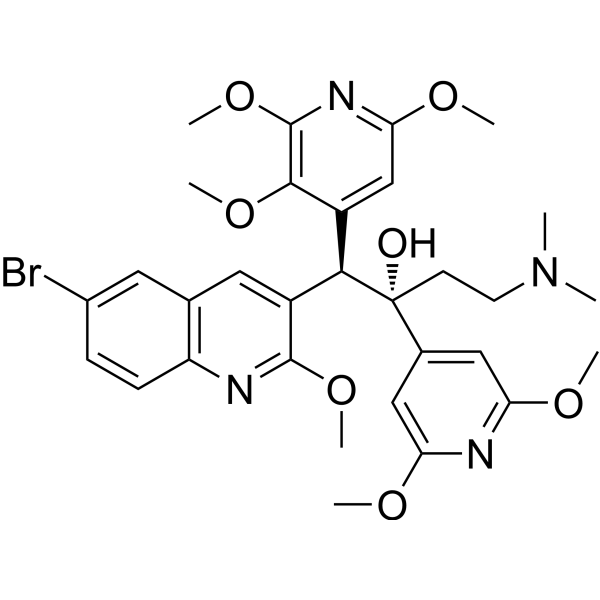
    TBAJ-876 is an orally active diarylquinoline anti-Mycobacterium agent. TBAJ-876 regulates energy metabolism by targeting the c and ε subunits of Mycobacterium tuberculosis F-ATP synthase, exerts bactericidal activity against replicating Mycobacterium tuberculosis, and retains activity against strains carrying the Rv0678 mutation. TBAJ-876 undergoes N-demethylation in vivo to form its major active metabolite TBAJ-876-M3, which has lower lipophilicity and hERG potassium channel binding affinity. TBAJ-876 is well tolerated in BALB/c mice and significantly reduces the colony-forming units of Mycobacterium tuberculosis in the lungs. In addition, TBAJ-876 exhibits inhibitory activity against Mycobacterium abscessus, reduces bacterial loads in the lungs and spleens of infected mice, and shows no antagonistic effect when used in combination with common antibiotics. TBAJ-876 can be used in studies related to tuberculosis and Mycobacterium abscessus pulmonary diseases .
    TBAJ-876
  • HY-135775
    BMVC
    1 Publications Verification

    G-quadruplex Telomerase DNA/RNA Synthesis Cancer
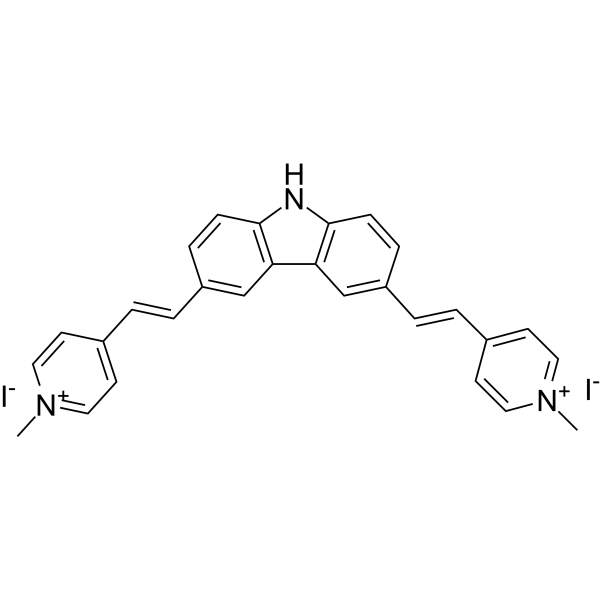
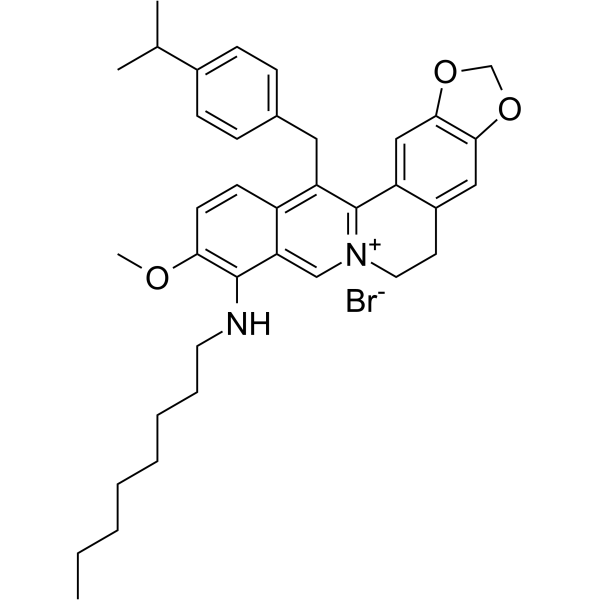
    BMVC is a potent G-quadruplex (G4) stabilizer and a selective telomerase inhibitor with an IC50 of ~0.2 μM. BMVC inhibits Taq DNA polymerase with an IC50 of ~2.5 μM. BMVC increases the melting temperature of G4 structure of telomere and accelerates telomere length shortening. Anticancer activities .
    BMVC
  • HY-149347

    Bacterial Infection
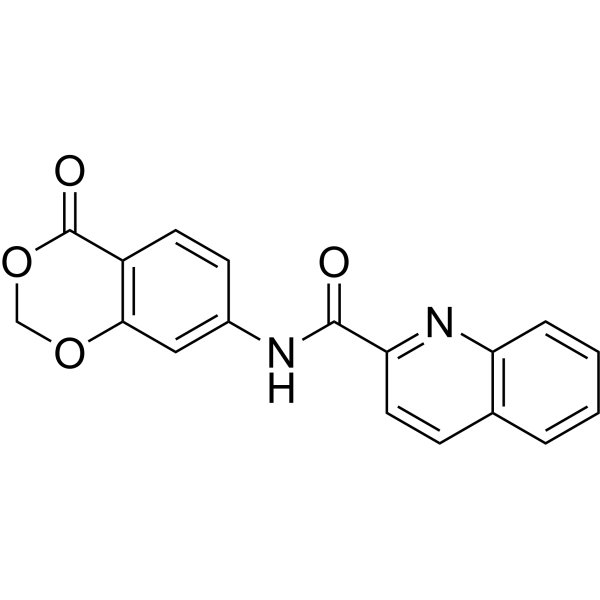
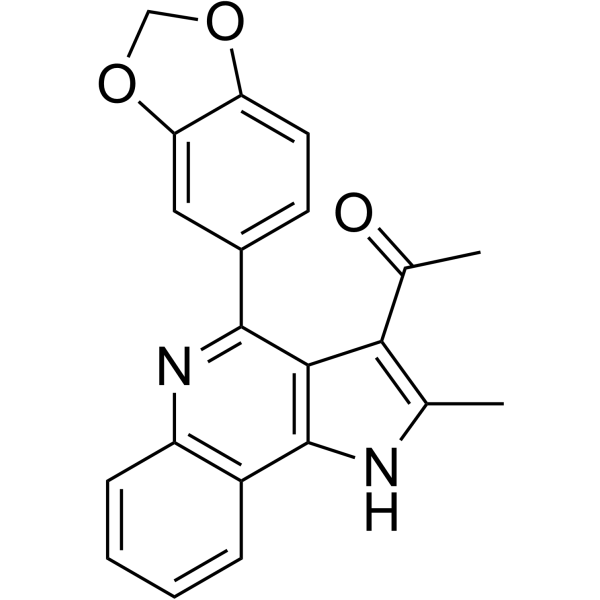
    Mtb-IN-3 (compound 10c) is an inhibitor of Mycobacterium tuberculosis (Mtb). Mtb-IN-3 shows selective, potent in vitro antimycobacterial activity without cytotoxicity. Mtb-IN-3 inhibits colony-forming in spleen in the murine tuberculosis model .
    Mtb-IN-3
  • HY-149346

    Bacterial Infection
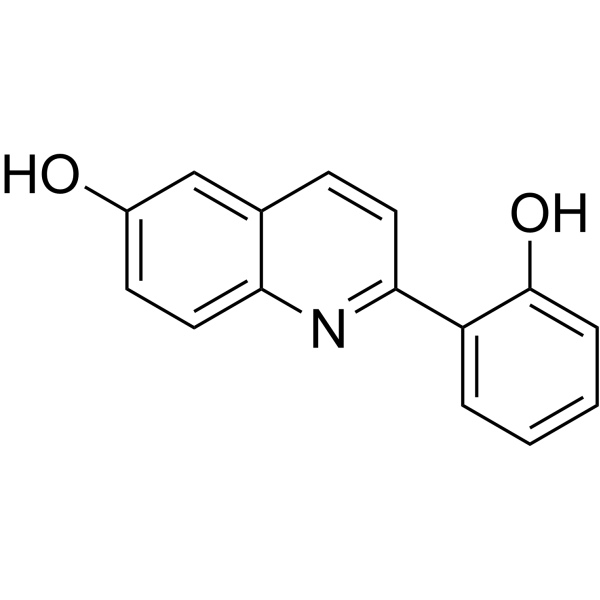
    Mtb-IN-2 (compound 10c) is an antimicrobial agent against Mycobacterium tuberculosis (Mtb), without cytotoxicity. Mtb-IN-2 significantly decreases colony-forming units (CFU) in spleen of murine tuberculosis models, and distinguishes both drug-sensitive and drug-resistant Mtb H37Rv strains. Mtb-IN-2 affects methionine metabolism but not folate pathway directly.
    Mtb-IN-2
  • HY-149371

    HDAC Apoptosis Cancer
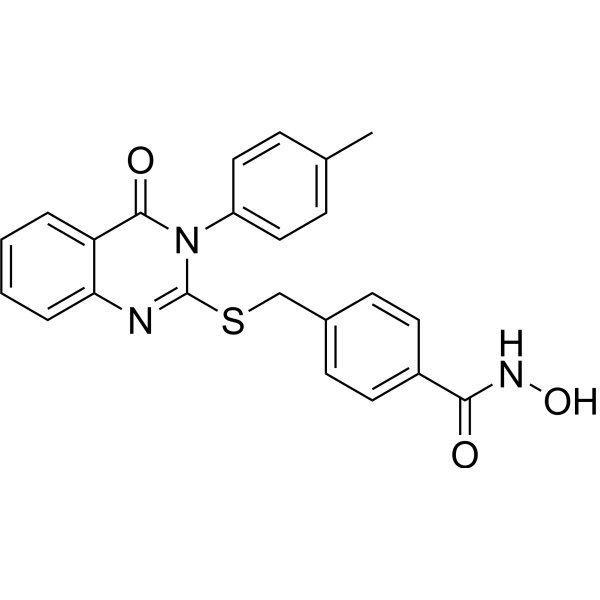
    HDAC6-IN-16 (compound 5c) is a histone deacetylase 6 (HDAC6) inhibitor, based on Quinazolin-4(3H)-One. HDAC6-IN-16 exhibits anticancer effect, inhibits colony-forming. And HDAC6-IN-16 arrests cell cycle at G2 phase and induces apoptosis .
    HDAC6-IN-16
  • HY-120376

    STAT Cancer
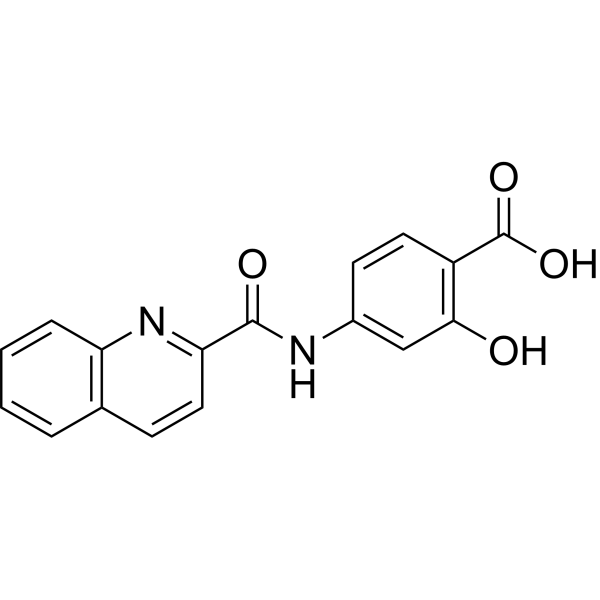
    XZH-5 inhibits the phosphorylation of STAT3 and results in the induction of apoptosis and reduction of colony forming ability .
    XZH-5
  • HY-151915

    ATM/ATR mTOR Cancer
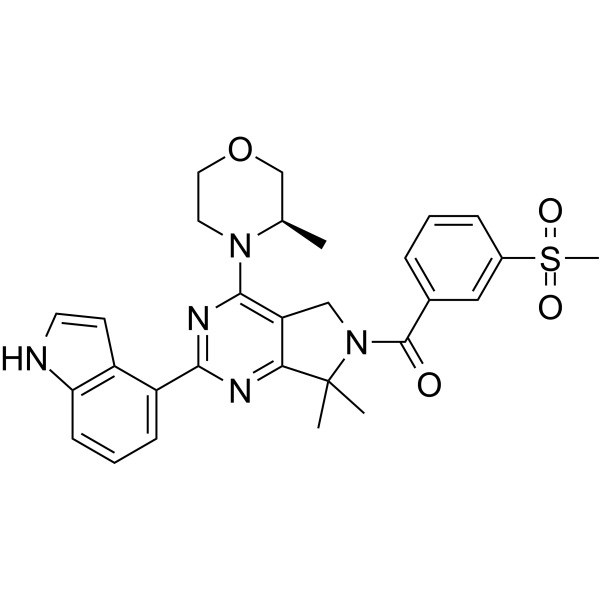
    ATR-IN-20 is a potent ATR (ATM/ATR) inhibitor with an IC50 of 3 nM. ATR-IN-20 possess an inhibitory effect on mTOR (IC50 of 18 nM) while displaying good selectivity against PI3Kα (100 nM), ATM (100 nM), and DNA-PK (662 nM). ATR-IN-20 exhibits excellent pharmacokinetic profile (F = 30%), and has anticancer effects .
    ATR-IN-20
  • HY-155055

    Reactive Oxygen Species (ROS) Cancer
    Antiproliferative agent-26 (compound 4g) is an antiproliferative agent with much broad range of activity targeting Leukemia, CNS, Melanoma, Renal and Breast (at the concentration of 10 μM). Antiproliferative agent-26 inhibits colony forming and arrests cell cycle at G1 phase/S phase at 5 μM and 25 μM, respectively .
    Antiproliferative agent-26
  • HY-143641

    Others Cancer
    Anticancer agent 25 is an anticancer agent. Anticancer agent 25 can arrest the cell cycle at the G1 phase, and significantly inhibit tumor cell colony forming and migration even at low concentrations. Anticancer agent 25 can significantly induce cytoplasmic vacuolation. Anticancer agent 25 can be used for the study of prostate cancer, breast cancer, and colon cancer .
    Anticancer agent 25
  • HY-155243

    DNA/RNA Synthesis Inflammation/Immunology
    12R-LOX-IN-1 (Compound 4a) is a 12R-LOX inhibitor (IC50: 28.25 μM). 12R-LOX-IN-1 inhibits the hyper-proliferative state and colony forming potential of Imiquimod (HY-B0180)-induced psoriatic keratinocytes. 12R-LOX-IN-1 inhibits reactive oxygen species, Ki67, IL-17A, TNF-α and IL-6 production. 12R-LOX-IN-1 can be used for antipsoriatic research .
    12R-LOX-IN-1
  • HY-185344

    TRX01

    NF-κB Cancer
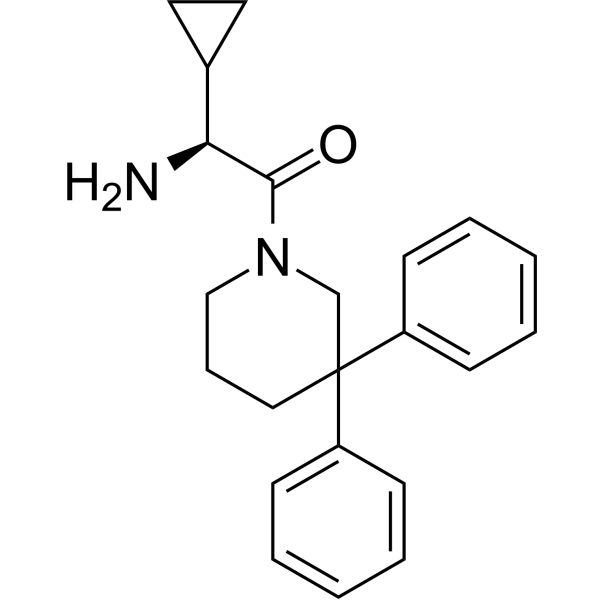
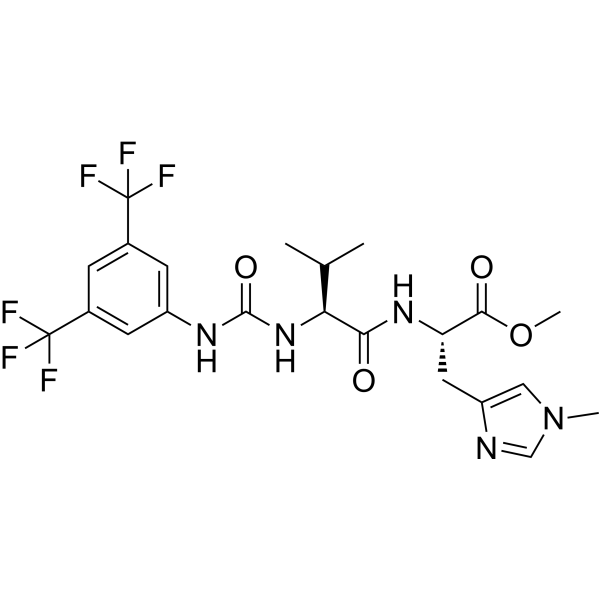
    Ratutrelvir is a NF-κB p65 inhibitor. Ratutrelvir blocks the translocation of NF-κB p65 from the cytoplasm to the nucleus, reduces the phosphorylation levels of NF-κB p65 and IκBα, and inhibits the DNA-binding activity of NF-κB p65. Ratutrelvir inhibits the migration and invasion abilities of breast cancer cells, and reduces their viability and colony-forming capacity. Ratutrelvir can be used for the research of luminal A breast cancer .
    Ratutrelvir
  • HY-180848

    Bcl-2 Family Apoptosis Cancer
    Bcl-2-IN-24 (Compound 11g) is an efficient and selective Bcl-2 inhibitor with a Kd value of 11.3 μM. Bcl-2-IN-24 exhibits anti-proliferative activity against HCT-116 cells and A549 cells. Bcl-2-IN-24 effectively inhibits the colony-forming ability of tumor cells and induces cell apoptosis. Bcl-2-IN-24 can be used for research on colon cancer and lung cancer .
    Bcl-2-IN-24
  • HY-181579

    HDAC Apoptosis PERK Microtubule/Tubulin Cancer
    HDAC6-IN-74 is an orally active, selective histone deacetylase 6 (HDAC6) inhibitor with an IC50 of 0.036 μM. HDAC6-IN-74 induces tumor cell apoptosis, arrests cells at the S phase of the cell cycle, and impairs cell migration, invasion and colony-forming abilities. HDAC6-IN-74 exerts anticancer effects with no obvious toxicity. HDAC6-IN-74 can be used in the research of cancers such as liver cancer .
    HDAC6-IN-74
  • HY-182789

    VEGFR CDK Cancer
    VEGFR2-IN-86 is a dual VEGFR2/CDK2 inhibitor, with an IC50 of 0.06 μM against VEGFR2 and an IC50 of 0.78 μM against CDK2. VEGFR2-IN-86 induces G-phase cell cycle arrest, reduces colony-forming ability and tumor cell migration capacity, and exerts antiproliferative activity in cancer cells. VEGFR2-IN-86 can be used for the research of breast cancer and prostate cancer .
    VEGFR2-IN-86
  • HY-183783

    PROTACs RET STAT ERK Apoptosis Endocrinology Cancer
    PROTAC RET Degrader 2 is a RET degrader with a target IC50 of 0.36 nM. PROTAC RET Degrader 2 is mainly composed of RET-IN-34 (HY-183729) and Thalidomide (HY-14658). PROTAC RET Degrader 2 mediates RET degradation via the ubiquitin-proteasome system. PROTAC RET Degrader 2 induces apoptosis, inhibits colony-forming ability, and exhibits antiproliferative activity in cancer cells. PROTAC RET Degrader 2 suppresses tumor growth in xenograft models. PROTAC RET Degrader 2 can be used in research related to medullary thyroid carcinoma, papillary thyroid carcinoma, and RET fusion-positive lung adenocarcinoma .
    PROTAC RET Degrader 2

Inquiry Online

Your information is safe with us. * Required Fields.

Salutation


Country or Region *

Applicant Name *


Organization Name *

Department *


Email Address *


Product Name *

Cat. No.


Requested quantity *

Phone Number *


Remarks

Inquiry Online

Inquiry Information

Product Name:
Cat. No.:
Quantity:
MCE Japan Authorized Agent:

