

Search Result
Results for "
condensation reactions
" in MedChemExpress (MCE) Product Catalog:
16
Biochemical Assay Reagents
1
Isotope-Labeled Compounds
| Cat. No. |
Product Name |
Target |
Research Areas |
Chemical Structure |
-
- HY-Y1666
-
|
|
Biochemical Assay Reagents
|
Others
|
|
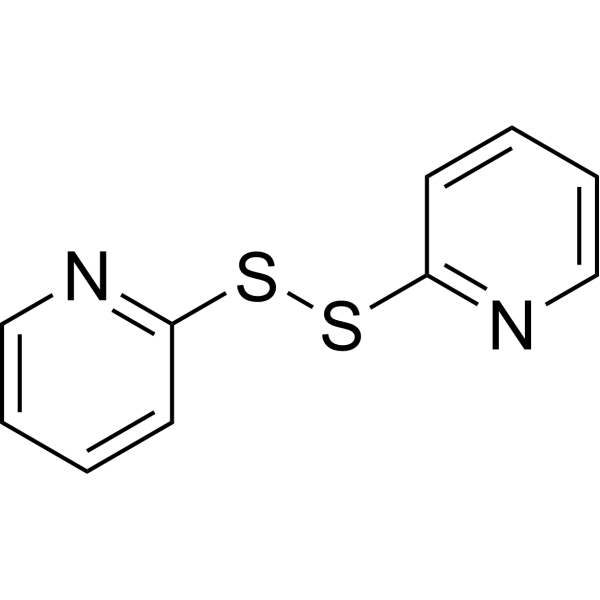
2,2′-Dipyridyl disulfide is a useful reagent for the determination of sulfhydryl groups. 2,2′-Dipyridyl disulfide is a common reagent in peptide chemistry, often used in oxidation–reduction condensations to form peptide bonds or in coupling reactions to form disulfide-linked heterodimers .
|
-
-
- HY-W105426
-
|
[3-(Methacryloyloxy)propyl]trimethoxysilane
|
Biochemical Assay Reagents
|
Others
|
|
3-(Trimethoxysilyl)propyl methacrylate ([3-(Methacryloyloxy)propyl]trimethoxysilane) is a reactive monomer and silane coupling agent with C=C and O-C=O functional groups, acting as a surface modifier and anti-agglomeration agent. 3-(Trimethoxysilyl)propyl methacrylate can be used to prepare nanoparticles .
|
-
-
- HY-P2739
-
|
|
Endogenous Metabolite
|
Others
|
|
Citrate synthase is responsible for catalyzing the first reaction of the citric acid cycle: the condensation of acetyl-CoA and oxaloacetate to form citrate. Citrate synthase is localized within eukaryotic cells in the mitochondrial matrix .
|
-
-
- HY-W011548
-
|
|
Nucleoside Antimetabolite/Analog
|
Others
|
|
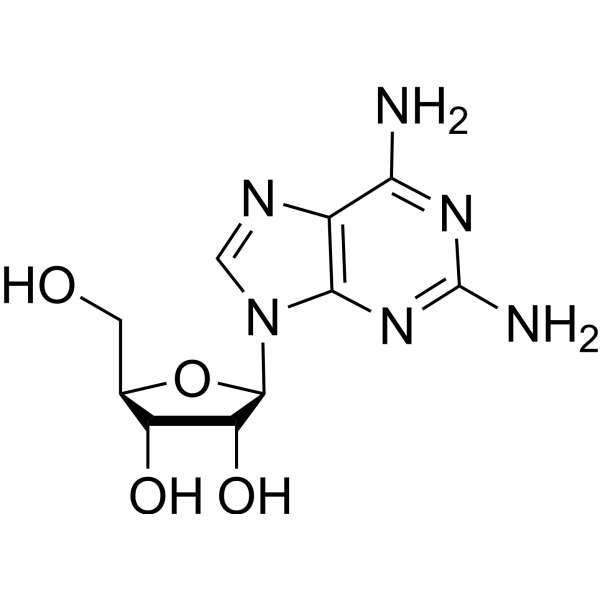
2-Aminoadenosine is a modified adenine base and adenosine analog that stabilizes RNA duplexes and enhances template-directed nucleotide condensation reactions. 2-Aminoadenosine forms three hydrogen bonds with uracil to increase the melting temperature of hybrid strands, thereby stabilizing uracil-containing RNA duplexes .
|
-
-
- HY-Y1078
-
|
N-Dimethoxymethyl-N,N-dimethylamine
|
Biochemical Assay Reagents
|
Others
|
|
DMF-DMA (N-Dimethoxymethyl-N,N-dimethylamine) is a reagent with both condensation and alkylation functions. DMF-DMA can undergo condensation reactions with active methylene groups or amino groups to generate enamine and imino derivatives, and can also act as an alkylating agent to methylate nitrogen and oxygen atoms in heterocyclic structures. DMF-DMA is widely used in the synthesis of enaminones and dimethylamino imine intermediates, as well as in the construction of heterocyclic backbones such as pyridine, pyrimidine and pyrazole. DMF-DMA can also serve as a polar aprotic co-solvent; although DMF-DMA cannot dissolve cellulose alone, it can form an efficient cellulose dissolution system with diallylimidazolium methoxyacetate .
|
-
-
- HY-W090942
-
|
|
Endogenous Metabolite
Sodium Channel
|
Others
|
|
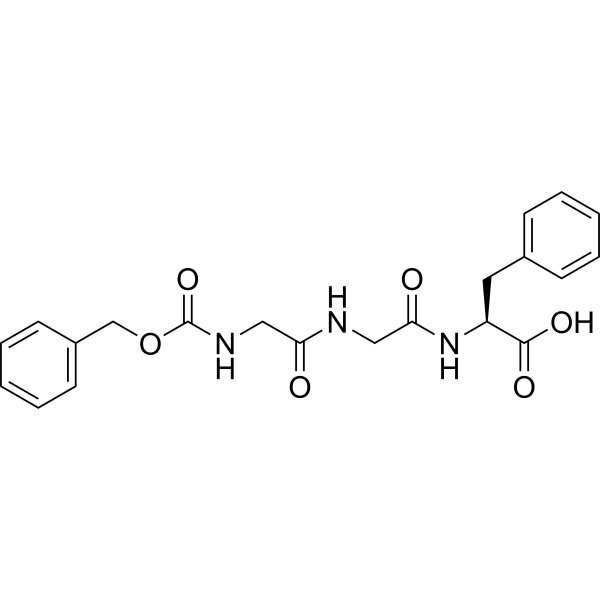
Z-Gly-Gly-Phe-OH is a substrate for pepsin and thermolysin. Z-Gly-Gly-Phe-OH has an IC50 of 15.8 μM for open sodium channels under pepsin catalysis. Z-Gly-Gly-Phe-OH forms peptide bonds with amine components (such as H-Leu-NHPh) through enzyme-catalyzed condensation reactions, and is active as an intermediate in peptide synthesis .
|
-
-
- HY-W012572
-
|
|
Mitochondrial Metabolism
Bacterial
|
Infection
Metabolic Disease
|
|
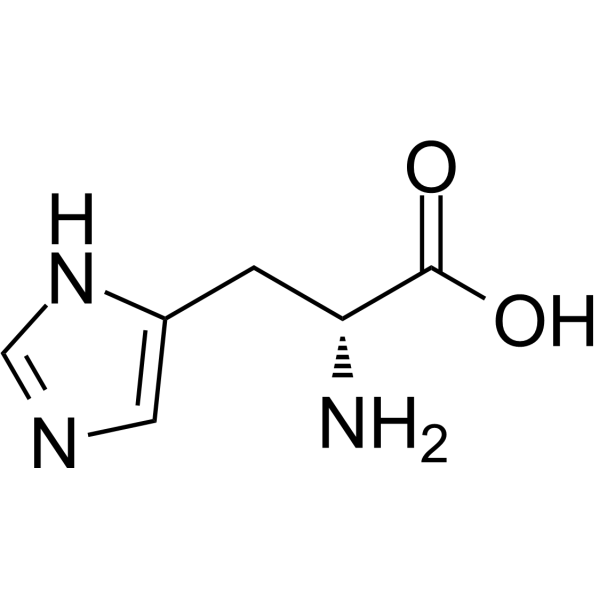
D-Histidine is an anti-biofilm agent that targets bacterial quorum sensing systems (such as RhlI/RhlR pathway) and has antibacterial activity. D-Histidine works by non-covalently binding to bacterial regulatory factors or copper ion complexes, selectively inhibiting bacterial biofilm formation and motility. D-Histidine downregulates quorum sensing-related gene expression, reduces the synthesis of virulence factors (such as alginate and proteases), and interferes with bacterial membrane stability, inhibiting biofilm formation, promoting the disintegration of mature biofilms, and enhancing antibiotic sensitivity. D-Histidine is also an efficient catalyst for the salt-induced peptide formation (SIPF) reaction, which promotes the condensation of amino acids to form dipeptides (such as dialanine and dilysine) by forming a complex with copper ions (Cu 2+) .
|
-
-
- HY-Y0198
-
|
|
Biochemical Assay Reagents
Drug Intermediate
|
Neurological Disease
|
|
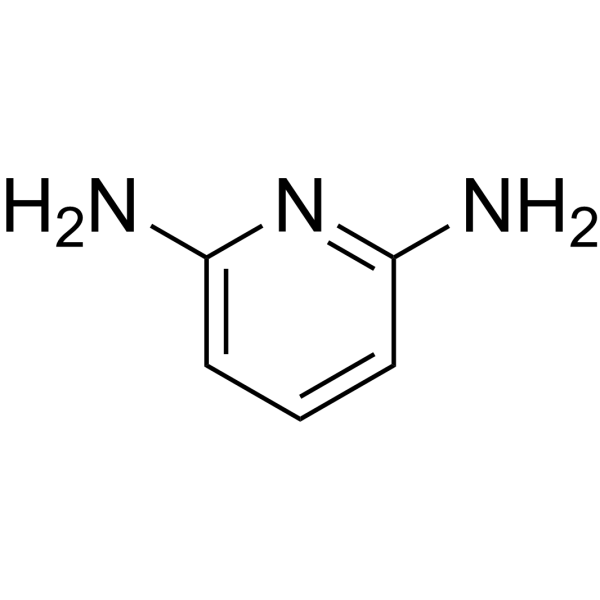
2,6-Diaminopyridine is an intermediate and coupling agent for hair dyes. 2,6-Diaminopyridine participates in organic synthesis reactions such as N-methylation and can bind metal ions by forming macrocyclic ligands through condensation with aldehydes. 2,6-Diaminopyridine can be used to synthesize the analgesic phenazopyridine hydrochloride (HY-B0985) .
|
-
-
- HY-W009411
-
|
|
Fluorescent Dye
|
Others
|
|
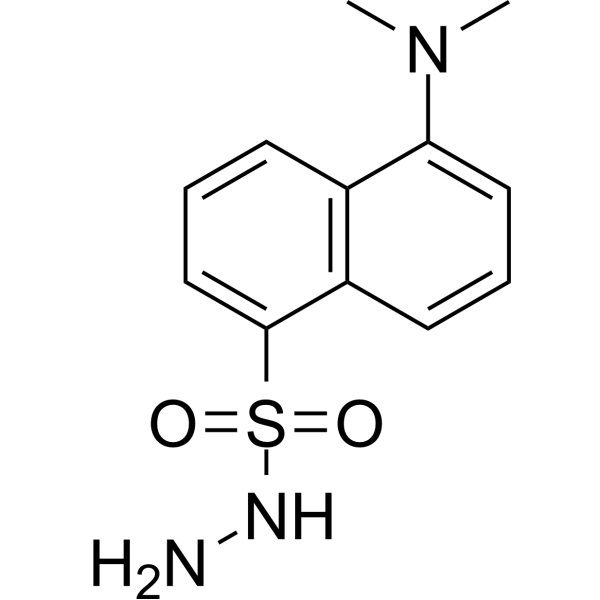
Dansyl hydrazine is a carbohydrate-specific fluorescent dye (Ex/Em = 340 nm/525 nm). Dansyl hydrazine undergoes a condensation reaction with aldehyde groups generated by periodate oxidation on carbohydrate-containing structures to form fluorescent hydrazone compounds. Dansyl hydrazine selectively stains polysaccharides in formalin-fixed, paraffin-embedded human post-mortem brain tissues, revealing detailed structural features. Dansyl hydrazine is applicable to research related to Alzheimer's disease, Lafora disease, and polyglucosan body disease .
|
-
-
- HY-W005176
-
|
Methyl Butyrylacetate; Methyl 3-oxohexanoate
|
Biochemical Assay Reagents
|
Others
|
|
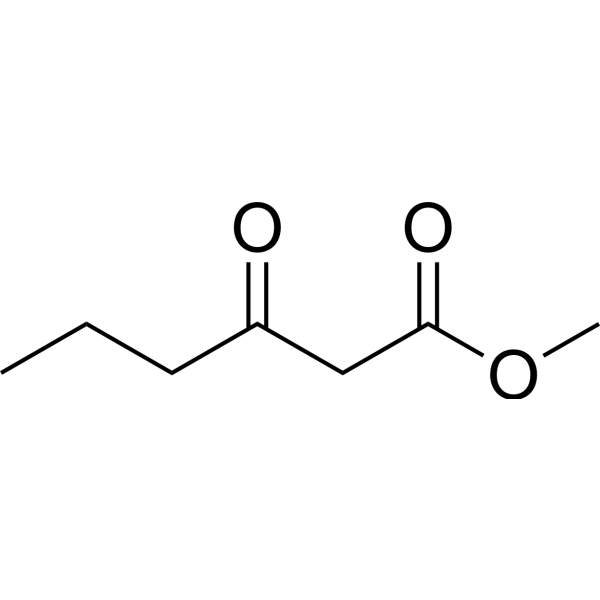
Methyl 3-oxohexanoate (Methyl Butyrylacetate) is an organic compound commonly used in the manufacture of fragrances, drugs, and other chemicals. It can be used as a condensation reagent, a diazotization reagent and an addition reagent, and it plays a catalytic role in some organic synthesis reactions, and can also play a role in some drug synthesis. In addition, the compound is widely used in the food industry, for example in products such as juices, beer and confectionery.
|
-
-
- HY-D2101
-
|
|
Fluorescent Dye
|
Others
|
|
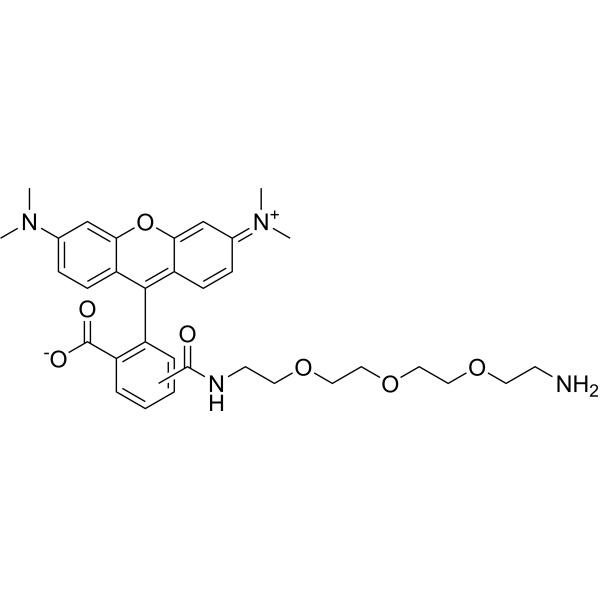
TAMRA-PEG3-NH2 is a dye derivative of TAMRA (HY-135640) containing 3 PEG units. TAMRA-PEG3-NH2 contains NH2 groups, which can undergo condensation reactions with carboxyl groups to form covalent bonds.
|
-
-
- HY-Y1624
-
|
ADDP; SR 4077
|
Free Fatty Acid Receptor
PPAR
|
Metabolic Disease
|
|
1,1'-(Azodicarbonyl)-dipiperidine (ADDP) can be used in the condensation reaction of alcohols with acidic compounds. 1,1'-(Azodicarbonyl)-dipiperidine can also be used in the synthesis of GPR120 agonists with antidiabetic activity, as well as the synthesis of triple agonists for PPARα, PPARγ, and PPARδ. 1,1'-(Azodicarbonyl)-dipiperidine can be used in metabolic disease research .
|
-
-
- HY-W012572A
-
|
|
Mitochondrial Metabolism
Bacterial
|
Infection
Metabolic Disease
|
|
D-Histidine hydrochloride hydrate is an anti-biofilm agent that targets bacterial quorum sensing systems (such as RhlI/RhlR pathway) and has antibacterial activity. D-Histidine hydrochloride hydrate works by non-covalently binding to bacterial regulatory factors or copper ion complexes, selectively inhibiting bacterial biofilm formation and motility. D-Histidine hydrochloride hydrate downregulates quorum sensing-related gene expression, reduces the synthesis of virulence factors (such as alginate and proteases), and interferes with bacterial membrane stability, inhibiting biofilm formation, promoting the disintegration of mature biofilms, and enhancing antibiotic sensitivity. D-Histidine hydrochloride hydrate is also an efficient catalyst for the salt-induced peptide formation (SIPF) reaction, which promotes the condensation of amino acids to form dipeptides (such as dialanine and dilysine) by forming a complex with copper ions (Cu 2+) .
|
-
-
- HY-D2102
-
|
|
Fluorescent Dye
|
Others
|
|
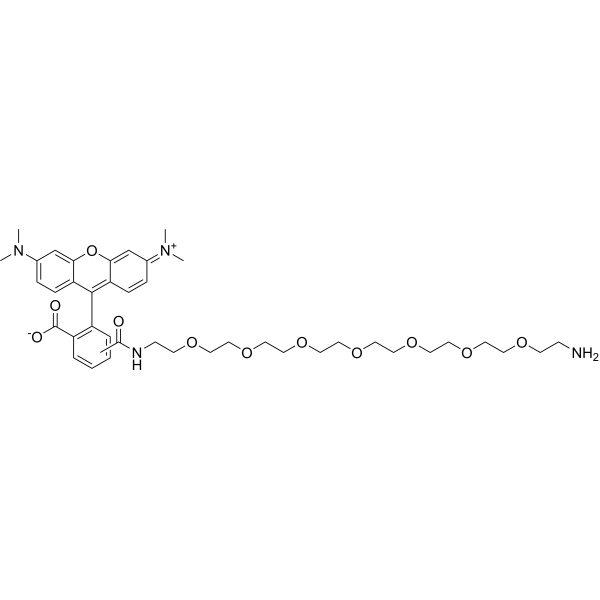
TAMRA-PEG7-NH2 is a dye derivative of TAMRA (HY-135640) containing 7 PEG units. TAMRA-PEG7-NH2 contains NH2 groups, which can undergo condensation reactions with carboxyl groups to form covalent bonds.
|
-
-
- HY-D2154
-
|
|
Fluorescent Dye
|
Others
|
|
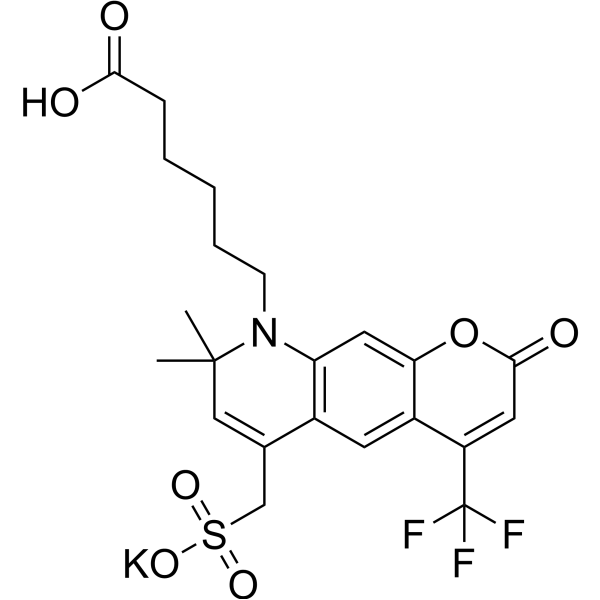
AF 430 carboxylic acid is a derivative of the yellow fluorescent dye AF 430. AF430 has an excitation wavelength of 425 nm and an emission wavelength of 542 nm. AF 430 carboxylic acid can form covalent bonds through a condensation reaction between carboxylic acid groups and molecules containing amino groups. To achieve specific coupling of dye labels and biomolecules .
|
-
-
- HY-W015477
-
|
|
Biochemical Assay Reagents
|
Others
|
|
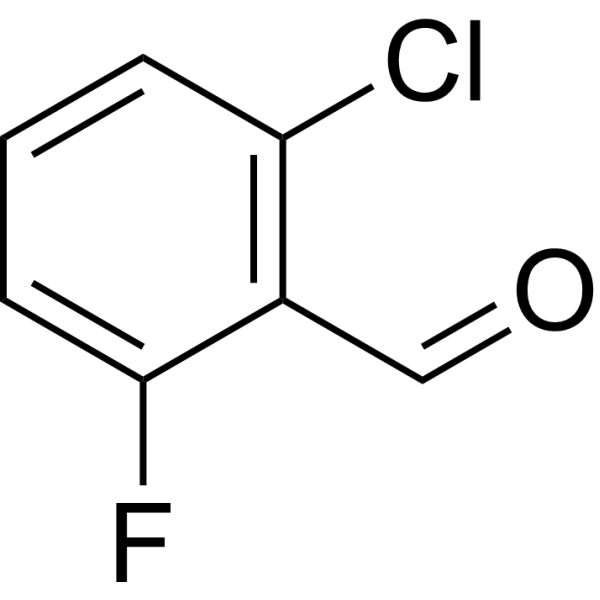
2-Chloro-6-fluorobenzaldehyde is a biochemical reagent that can be used as a biological material or organic compound for life science related research. 2-Chloro-6-fluorobenzaldehyde can be used to synthesize methyl 2-cyano-3-dihalophenyl-2-propenoate through piperidine catalyzed Knoevenagel condensation reaction with methyl cyanoacetate .
|
-
-
- HY-D2098
-
|
|
Fluorescent Dye
|
Others
|
|
TAMRA-PEG2-NH2 is a dye derivative of TAMRA (HY-135640) containing 4 PEG units. TAMRA-PEG2-NH2 contains NH2 groups, which can undergo condensation reactions with carboxyl groups to form covalent bonds.
|
-
-
- HY-D2163
-
|
|
Fluorescent Dye
|
Others
|
|
AF 430 amine is a derivative of the yellow fluorescent dye AF 430. AF430 has an excitation wavelength of 425 nm and an emission wavelength of 542 nm. AF 430 amine can form covalent bonds through a condensation reaction between amino groups and molecules containing carboxyl groups. To achieve specific coupling of dye labels and biomolecules .
|
-
-
- HY-Y0198R
-
|
|
Biochemical Assay Reagents
Reference Standards
Drug Intermediate
|
Neurological Disease
|
|
2,6-Diaminopyridine (Standard) is the analytical standard of 2,6-Diaminopyridine (HY-Y0198). This product is intended for research and analytical applications. 2,6-Diaminopyridine is an intermediate and coupling agent for hair dyes. 2,6-Diaminopyridine participates in organic synthesis reactions such as N-methylation and can bind metal ions by forming macrocyclic ligands through condensation with aldehydes. 2,6-Diaminopyridine can be used to synthesize the analgesic phenazopyridine hydrochloride (HY-B0985) .
|
-
-
- HY-W012572R
-
|
|
Reference Standards
Mitochondrial Metabolism
Bacterial
|
Infection
Metabolic Disease
|
|
D-Histidine (Standard) is the analytical standard of D-Histidine (HY-W012572). This product is intended for research and analytical applications. D-Histidine is an anti-biofilm agent that targets bacterial quorum sensing systems (such as RhlI/RhlR pathway) and has antibacterial activity. D-Histidine works by non-covalently binding to bacterial regulatory factors or copper ion complexes, selectively inhibiting bacterial biofilm formation and motility. D-Histidine downregulates quorum sensing-related gene expression, reduces the synthesis of virulence factors (such as alginate and proteases), and interferes with bacterial membrane stability, inhibiting biofilm formation, promoting the disintegration of mature biofilms, and enhancing antibiotic sensitivity. D-Histidine is also an efficient catalyst for the salt-induced peptide formation (SIPF) reaction, which promotes the condensation of amino acids to form dipeptides (such as dialanine and dilysine) by forming a complex with copper ions (Cu 2+) .
|
-
-
- HY-E71075
-
|
|
Biochemical Assay Reagents
|
Others
|
|
(5-Formylfuran-3-yl)Methyl phosphate synthase (EC 4.2.3.153) catalyses the reaction in the direction of producing (5-Formylfuran-3-yl)Methyl phosphate, an intermediate in the biosynthesis of methanofuran. The sequence of events starts with the removal of a phosphate group, followed by aldol condensation and cyclization.
|
-
-
- HY-183003C
-
|
|
Biochemical Assay Reagents
|
Others
|
|
Mannose-PEG5000-COOH is a conjugate composed of mannose, PEG chains, and carboxyl groups (COOH). Mannose-PEG-COOH combines the targeting recognition ability of mannose with the carboxyl group, which can undergo condensation or esterification reactions with amino and hydroxyl groups, for applications such as targeted drug delivery systems and nanoparticle modification.
|
-
-
- HY-183003D
-
|
|
Biochemical Assay Reagents
|
Others
|
|
Mannose-PEG10000-COOH is a conjugate composed of mannose, PEG chains, and carboxyl groups (COOH). Mannose-PEG-COOH combines the targeting recognition ability of mannose with the carboxyl group, which can undergo condensation or esterification reactions with amino and hydroxyl groups, for applications such as targeted drug delivery systems and nanoparticle modification.
|
-
-
- HY-183003A
-
|
|
Biochemical Assay Reagents
|
Others
|
|
Mannose-PEG2000-COOH is a conjugate composed of mannose, PEG chains, and carboxyl groups (COOH). Mannose-PEG-COOH combines the targeting recognition ability of mannose with the carboxyl group, which can undergo condensation or esterification reactions with amino and hydroxyl groups, for applications such as targeted drug delivery systems and nanoparticle modification.
|
-
-
- HY-183003
-
|
|
Biochemical Assay Reagents
|
Others
|
|
Mannose-PEG1000-COOH is a conjugate composed of mannose, PEG chains, and carboxyl groups (COOH). Mannose-PEG-COOH combines the targeting recognition ability of mannose with the carboxyl group, which can undergo condensation or esterification reactions with amino and hydroxyl groups, for applications such as targeted drug delivery systems and nanoparticle modification.
|
-
-
- HY-183003B
-
|
|
Biochemical Assay Reagents
|
Others
|
|
Mannose-PEG3400-COOH is a conjugate composed of mannose, PEG chains, and carboxyl groups (COOH). Mannose-PEG-COOH combines the targeting recognition ability of mannose with the carboxyl group, which can undergo condensation or esterification reactions with amino and hydroxyl groups, for applications such as targeted drug delivery systems and nanoparticle modification.
|
-
-
- HY-183163D
-
|
|
Biochemical Assay Reagents
|
Others
|
|
Glucose-PEG10000-COOH is a conjugate composed of glucose, PEG chains, and carboxyl groups (COOH). Glucose-PEG10000-COOH combines the targeting recognition ability of glucose with the carboxyl groups capable of condensation or esterification reactions with amino and hydroxyl groups, making it suitable for applications such as targeted drug delivery systems and nanoparticle modification.
|
-
-
- HY-183163B
-
|
|
Biochemical Assay Reagents
|
Others
|
|
Glucose-PEG3400-COOH is a conjugate composed of glucose, PEG chains, and carboxyl groups (COOH). Glucose-PEG3400-COOH combines the targeting recognition ability of glucose with the carboxyl groups capable of condensation or esterification reactions with amino and hydroxyl groups, making it suitable for applications such as targeted drug delivery systems and nanoparticle modification.
|
-
-
- HY-183163
-
|
|
Biochemical Assay Reagents
|
Others
|
|
Glucose-PEG1000-COOH is a conjugate composed of glucose, PEG chains, and carboxyl groups (COOH). Glucose-PEG1000-COOH combines the targeting recognition ability of glucose with the carboxyl groups capable of condensation or esterification reactions with amino and hydroxyl groups, making it suitable for applications such as targeted drug delivery systems and nanoparticle modification.
|
-
-
- HY-183163A
-
|
|
Biochemical Assay Reagents
|
Others
|
|
Glucose-PEG2000-COOH is a conjugate composed of glucose, PEG chains, and carboxyl groups (COOH). Glucose-PEG2000-COOH combines the targeting recognition ability of glucose with the carboxyl groups capable of condensation or esterification reactions with amino and hydroxyl groups, making it suitable for applications such as targeted drug delivery systems and nanoparticle modification.
|
-
-
- HY-183163C
-
|
|
Biochemical Assay Reagents
|
Others
|
|
Glucose-PEG5000-COOH is a conjugate composed of glucose, PEG chains, and carboxyl groups (COOH). Glucose-PEG5000-COOH combines the targeting recognition ability of glucose with the carboxyl groups capable of condensation or esterification reactions with amino and hydroxyl groups, making it suitable for applications such as targeted drug delivery systems and nanoparticle modification.
|
-
-
- HY-W009411S
-
|
|
Isotope-Labeled Compounds
Fluorescent Dye
|
Others
|
|
Dansyl hydrazine- 13C2 is the 13C-labeled Dansyl hydrazine (HY-W009411). Dansyl hydrazine is a carbohydrate-specific fluorescent dye (Ex/Em = 340 nm/525 nm). Dansyl hydrazine undergoes a condensation reaction with aldehyde groups generated by periodate oxidation on carbohydrate-containing structures to form fluorescent hydrazone compounds. Dansyl hydrazine selectively stains polysaccharides in formalin-fixed, paraffin-embedded human post-mortem brain tissues, revealing detailed structural features. Dansyl hydrazine is applicable to research related to Alzheimer's disease, Lafora disease, and polyglucosan body disease.
|
-
| Cat. No. |
Product Name |
Type |
-
- HY-D2101
-
|
|
Fluorescent Dyes
|
|
TAMRA-PEG3-NH2 is a dye derivative of TAMRA (HY-135640) containing 3 PEG units. TAMRA-PEG3-NH2 contains NH2 groups, which can undergo condensation reactions with carboxyl groups to form covalent bonds.
|
-
- HY-D2102
-
|
|
Fluorescent Dyes
|
|
TAMRA-PEG7-NH2 is a dye derivative of TAMRA (HY-135640) containing 7 PEG units. TAMRA-PEG7-NH2 contains NH2 groups, which can undergo condensation reactions with carboxyl groups to form covalent bonds.
|
-
- HY-D2154
-
|
|
Fluorescent Dyes
|
|
AF 430 carboxylic acid is a derivative of the yellow fluorescent dye AF 430. AF430 has an excitation wavelength of 425 nm and an emission wavelength of 542 nm. AF 430 carboxylic acid can form covalent bonds through a condensation reaction between carboxylic acid groups and molecules containing amino groups. To achieve specific coupling of dye labels and biomolecules .
|
-
- HY-D2098
-
|
|
Fluorescent Dyes
|
|
TAMRA-PEG2-NH2 is a dye derivative of TAMRA (HY-135640) containing 4 PEG units. TAMRA-PEG2-NH2 contains NH2 groups, which can undergo condensation reactions with carboxyl groups to form covalent bonds.
|
-
- HY-D2163
-
|
|
Fluorescent Dyes
|
|
AF 430 amine is a derivative of the yellow fluorescent dye AF 430. AF430 has an excitation wavelength of 425 nm and an emission wavelength of 542 nm. AF 430 amine can form covalent bonds through a condensation reaction between amino groups and molecules containing carboxyl groups. To achieve specific coupling of dye labels and biomolecules .
|
| Cat. No. |
Product Name |
Type |
-
- HY-W105426
-
|
[3-(Methacryloyloxy)propyl]trimethoxysilane
|
Biochemical Assay Reagents
|
|
3-(Trimethoxysilyl)propyl methacrylate ([3-(Methacryloyloxy)propyl]trimethoxysilane) is a reactive monomer and silane coupling agent with C=C and O-C=O functional groups, acting as a surface modifier and anti-agglomeration agent. 3-(Trimethoxysilyl)propyl methacrylate can be used to prepare nanoparticles .
|
-
- HY-Y0198
-
|
|
Biochemical Assay Reagents
|
|
2,6-Diaminopyridine is an intermediate and coupling agent for hair dyes. 2,6-Diaminopyridine participates in organic synthesis reactions such as N-methylation and can bind metal ions by forming macrocyclic ligands through condensation with aldehydes. 2,6-Diaminopyridine can be used to synthesize the analgesic phenazopyridine hydrochloride (HY-B0985) .
|
-
- HY-W009411
-
|
|
Biochemical Assay Reagents
|
|
Dansyl hydrazine is a carbohydrate-specific fluorescent dye (Ex/Em = 340 nm/525 nm). Dansyl hydrazine undergoes a condensation reaction with aldehyde groups generated by periodate oxidation on carbohydrate-containing structures to form fluorescent hydrazone compounds. Dansyl hydrazine selectively stains polysaccharides in formalin-fixed, paraffin-embedded human post-mortem brain tissues, revealing detailed structural features. Dansyl hydrazine is applicable to research related to Alzheimer's disease, Lafora disease, and polyglucosan body disease .
|
-
- HY-W005176
-
|
Methyl Butyrylacetate; Methyl 3-oxohexanoate
|
Biochemical Assay Reagents
|
|
Methyl 3-oxohexanoate (Methyl Butyrylacetate) is an organic compound commonly used in the manufacture of fragrances, drugs, and other chemicals. It can be used as a condensation reagent, a diazotization reagent and an addition reagent, and it plays a catalytic role in some organic synthesis reactions, and can also play a role in some drug synthesis. In addition, the compound is widely used in the food industry, for example in products such as juices, beer and confectionery.
|
-
- HY-W015477
-
|
|
Biochemical Assay Reagents
|
|
2-Chloro-6-fluorobenzaldehyde is a biochemical reagent that can be used as a biological material or organic compound for life science related research. 2-Chloro-6-fluorobenzaldehyde can be used to synthesize methyl 2-cyano-3-dihalophenyl-2-propenoate through piperidine catalyzed Knoevenagel condensation reaction with methyl cyanoacetate .
|
-
- HY-Y0198R
-
|
|
Biochemical Assay Reagents
|
|
2,6-Diaminopyridine (Standard) is the analytical standard of 2,6-Diaminopyridine (HY-Y0198). This product is intended for research and analytical applications. 2,6-Diaminopyridine is an intermediate and coupling agent for hair dyes. 2,6-Diaminopyridine participates in organic synthesis reactions such as N-methylation and can bind metal ions by forming macrocyclic ligands through condensation with aldehydes. 2,6-Diaminopyridine can be used to synthesize the analgesic phenazopyridine hydrochloride (HY-B0985) .
|
-
- HY-183003C
-
|
|
Biochemical Assay Reagents
|
|
Mannose-PEG5000-COOH is a conjugate composed of mannose, PEG chains, and carboxyl groups (COOH). Mannose-PEG-COOH combines the targeting recognition ability of mannose with the carboxyl group, which can undergo condensation or esterification reactions with amino and hydroxyl groups, for applications such as targeted drug delivery systems and nanoparticle modification.
|
-
- HY-183003D
-
|
|
Biochemical Assay Reagents
|
|
Mannose-PEG10000-COOH is a conjugate composed of mannose, PEG chains, and carboxyl groups (COOH). Mannose-PEG-COOH combines the targeting recognition ability of mannose with the carboxyl group, which can undergo condensation or esterification reactions with amino and hydroxyl groups, for applications such as targeted drug delivery systems and nanoparticle modification.
|
-
- HY-183003A
-
|
|
Biochemical Assay Reagents
|
|
Mannose-PEG2000-COOH is a conjugate composed of mannose, PEG chains, and carboxyl groups (COOH). Mannose-PEG-COOH combines the targeting recognition ability of mannose with the carboxyl group, which can undergo condensation or esterification reactions with amino and hydroxyl groups, for applications such as targeted drug delivery systems and nanoparticle modification.
|
-
- HY-183003
-
|
|
Biochemical Assay Reagents
|
|
Mannose-PEG1000-COOH is a conjugate composed of mannose, PEG chains, and carboxyl groups (COOH). Mannose-PEG-COOH combines the targeting recognition ability of mannose with the carboxyl group, which can undergo condensation or esterification reactions with amino and hydroxyl groups, for applications such as targeted drug delivery systems and nanoparticle modification.
|
-
- HY-183003B
-
|
|
Biochemical Assay Reagents
|
|
Mannose-PEG3400-COOH is a conjugate composed of mannose, PEG chains, and carboxyl groups (COOH). Mannose-PEG-COOH combines the targeting recognition ability of mannose with the carboxyl group, which can undergo condensation or esterification reactions with amino and hydroxyl groups, for applications such as targeted drug delivery systems and nanoparticle modification.
|
-
- HY-183163D
-
|
|
Biochemical Assay Reagents
|
|
Glucose-PEG10000-COOH is a conjugate composed of glucose, PEG chains, and carboxyl groups (COOH). Glucose-PEG10000-COOH combines the targeting recognition ability of glucose with the carboxyl groups capable of condensation or esterification reactions with amino and hydroxyl groups, making it suitable for applications such as targeted drug delivery systems and nanoparticle modification.
|
-
- HY-183163B
-
|
|
Biochemical Assay Reagents
|
|
Glucose-PEG3400-COOH is a conjugate composed of glucose, PEG chains, and carboxyl groups (COOH). Glucose-PEG3400-COOH combines the targeting recognition ability of glucose with the carboxyl groups capable of condensation or esterification reactions with amino and hydroxyl groups, making it suitable for applications such as targeted drug delivery systems and nanoparticle modification.
|
-
- HY-183163
-
|
|
Biochemical Assay Reagents
|
|
Glucose-PEG1000-COOH is a conjugate composed of glucose, PEG chains, and carboxyl groups (COOH). Glucose-PEG1000-COOH combines the targeting recognition ability of glucose with the carboxyl groups capable of condensation or esterification reactions with amino and hydroxyl groups, making it suitable for applications such as targeted drug delivery systems and nanoparticle modification.
|
-
- HY-183163A
-
|
|
Biochemical Assay Reagents
|
|
Glucose-PEG2000-COOH is a conjugate composed of glucose, PEG chains, and carboxyl groups (COOH). Glucose-PEG2000-COOH combines the targeting recognition ability of glucose with the carboxyl groups capable of condensation or esterification reactions with amino and hydroxyl groups, making it suitable for applications such as targeted drug delivery systems and nanoparticle modification.
|
-
- HY-183163C
-
|
|
Biochemical Assay Reagents
|
|
Glucose-PEG5000-COOH is a conjugate composed of glucose, PEG chains, and carboxyl groups (COOH). Glucose-PEG5000-COOH combines the targeting recognition ability of glucose with the carboxyl groups capable of condensation or esterification reactions with amino and hydroxyl groups, making it suitable for applications such as targeted drug delivery systems and nanoparticle modification.
|
| Cat. No. |
Product Name |
Target |
Research Area |
-
- HY-P1743
-
|
|
Peptides
|
Infection
|
|
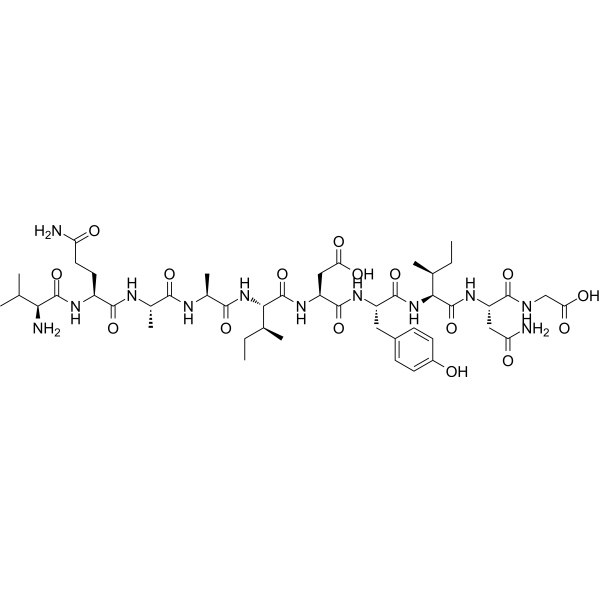
Acyl Carrier Protein (ACP) (65-74) is a key coenzyme fragment of fatty acid synthase (FAS) and participates in fatty acid synthesis as an acyl carrier. Acyl Carrier Protein (ACP) (65-74) mediates condensation, reduction and other cyclic reactions in fatty acid synthesis by covalently binding to acyl chains to form acyl-ACP intermediates, promoting acyl chain extension. Acyl Carrier Protein (ACP) (65-74) can regulate the synthesis ratio of saturated and unsaturated fatty acids. Acyl Carrier Protein (ACP) (65-74) can be used to study the mechanism of bacterial fatty acid synthesis and is a potential target for antibiotics (such as inhibiting the FAS system of pathogens) .
|
-
- HY-W012572A
-
|
|
Mitochondrial Metabolism
Bacterial
|
Infection
Metabolic Disease
|
|
D-Histidine hydrochloride hydrate is an anti-biofilm agent that targets bacterial quorum sensing systems (such as RhlI/RhlR pathway) and has antibacterial activity. D-Histidine hydrochloride hydrate works by non-covalently binding to bacterial regulatory factors or copper ion complexes, selectively inhibiting bacterial biofilm formation and motility. D-Histidine hydrochloride hydrate downregulates quorum sensing-related gene expression, reduces the synthesis of virulence factors (such as alginate and proteases), and interferes with bacterial membrane stability, inhibiting biofilm formation, promoting the disintegration of mature biofilms, and enhancing antibiotic sensitivity. D-Histidine hydrochloride hydrate is also an efficient catalyst for the salt-induced peptide formation (SIPF) reaction, which promotes the condensation of amino acids to form dipeptides (such as dialanine and dilysine) by forming a complex with copper ions (Cu 2+) .
|
| Cat. No. |
Product Name |
Category |
Target |
Chemical Structure |
-
- HY-W012572
-
|
|
Microorganisms
Source Classification
|
Mitochondrial Metabolism
Bacterial
|
|
D-Histidine is an anti-biofilm agent that targets bacterial quorum sensing systems (such as RhlI/RhlR pathway) and has antibacterial activity. D-Histidine works by non-covalently binding to bacterial regulatory factors or copper ion complexes, selectively inhibiting bacterial biofilm formation and motility. D-Histidine downregulates quorum sensing-related gene expression, reduces the synthesis of virulence factors (such as alginate and proteases), and interferes with bacterial membrane stability, inhibiting biofilm formation, promoting the disintegration of mature biofilms, and enhancing antibiotic sensitivity. D-Histidine is also an efficient catalyst for the salt-induced peptide formation (SIPF) reaction, which promotes the condensation of amino acids to form dipeptides (such as dialanine and dilysine) by forming a complex with copper ions (Cu 2+) .
|
-
-
- HY-W012572R
-
|
|
Microorganisms
Source Classification
|
Reference Standards
Mitochondrial Metabolism
Bacterial
|
|
D-Histidine (Standard) is the analytical standard of D-Histidine (HY-W012572). This product is intended for research and analytical applications. D-Histidine is an anti-biofilm agent that targets bacterial quorum sensing systems (such as RhlI/RhlR pathway) and has antibacterial activity. D-Histidine works by non-covalently binding to bacterial regulatory factors or copper ion complexes, selectively inhibiting bacterial biofilm formation and motility. D-Histidine downregulates quorum sensing-related gene expression, reduces the synthesis of virulence factors (such as alginate and proteases), and interferes with bacterial membrane stability, inhibiting biofilm formation, promoting the disintegration of mature biofilms, and enhancing antibiotic sensitivity. D-Histidine is also an efficient catalyst for the salt-induced peptide formation (SIPF) reaction, which promotes the condensation of amino acids to form dipeptides (such as dialanine and dilysine) by forming a complex with copper ions (Cu 2+) .
|
-
| Cat. No. |
Product Name |
Chemical Structure |
-
- HY-W009411S
-
|
|
|
Dansyl hydrazine- 13C2 is the 13C-labeled Dansyl hydrazine (HY-W009411). Dansyl hydrazine is a carbohydrate-specific fluorescent dye (Ex/Em = 340 nm/525 nm). Dansyl hydrazine undergoes a condensation reaction with aldehyde groups generated by periodate oxidation on carbohydrate-containing structures to form fluorescent hydrazone compounds. Dansyl hydrazine selectively stains polysaccharides in formalin-fixed, paraffin-embedded human post-mortem brain tissues, revealing detailed structural features. Dansyl hydrazine is applicable to research related to Alzheimer's disease, Lafora disease, and polyglucosan body disease.
|
-
| Cat. No. |
Product Name |
|
Classification |
-
- HY-W011548
-
|
|
|
Nucleoside Analogs
Adenosine
|
|
2-Aminoadenosine is a modified adenine base and adenosine analog that stabilizes RNA duplexes and enhances template-directed nucleotide condensation reactions. 2-Aminoadenosine forms three hydrogen bonds with uracil to increase the melting temperature of hybrid strands, thereby stabilizing uracil-containing RNA duplexes .
|
Your information is safe with us. * Required Fields.
Inquiry Information
- Product Name:
- Cat. No.:
- Quantity:
- MCE Japan Authorized Agent:

