
29 Results for "

ddY mice

" in MedChemExpress (MCE) Product Catalog:
Products (29)

29 Results for "ddY mice" in MCE Product Catalog:

108
108 Publications Verification
Referencia número: HY-101840
No. CAS: 1154-25-2
Pureza:  99.73%
Synonyms: L593754; MH 12-43; Ethylisopropylamiloride
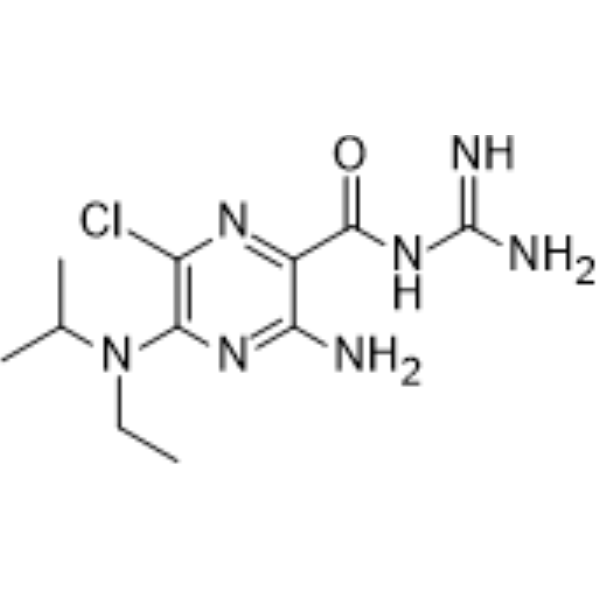
EIPA (L593754) is an orally active TRPP3 channel inhibitor with an IC50 of 10.5 μM. EIPA also enhances autophagy by inhibiting Na +/H +-exchanger 3 (NHE3). EIPA inhibits macropinocytosis as well. EIPA can be used in the research of inflammation and cancers, such as gastric cancer, colon carcinoma, pancreatic carcinoma .
loading...
    loading...
108
108 Publications Verification
Referencia número: HY-101840A
No. CAS: 1345839-28-2
Pureza:  98.31%
Synonyms: L593754 hydrochloride; MH 12-43 hydrochloride; Ethylisopropylamiloride hydrochloride
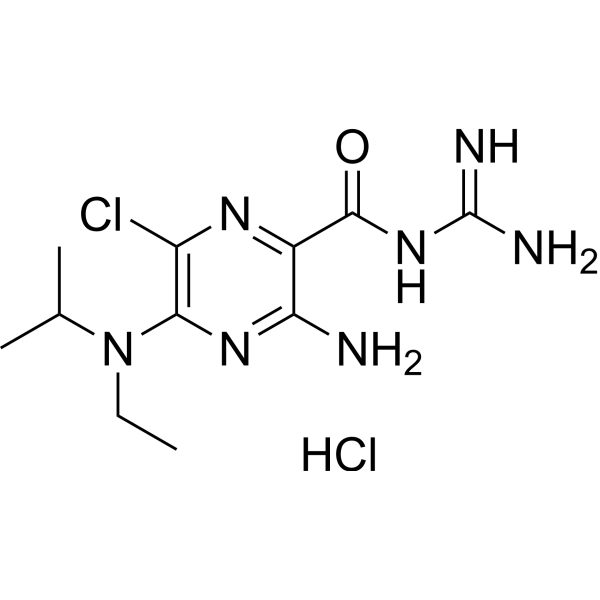
EIPA (L593754) hydrochloride is an orally active TRPP3 channel inhibitor with an IC50 of 10.5 μM. EIPA hydrochloride also enhances autophagy by inhibiting Na +/H +-exchanger 3 (NHE3). EIPA hydrochloride inhibits macropinocytosis as well. EIPA hydrochloride can be used in the research of inflammation and cancers, such as gastric cancer, colon carcinoma, pancreatic carcinoma .
loading...
    loading...
2
2 Cited Publications
Referencia número: HY-P1333
No. CAS: 80448-90-4
Áreas de investigación:  

Neurological Disease

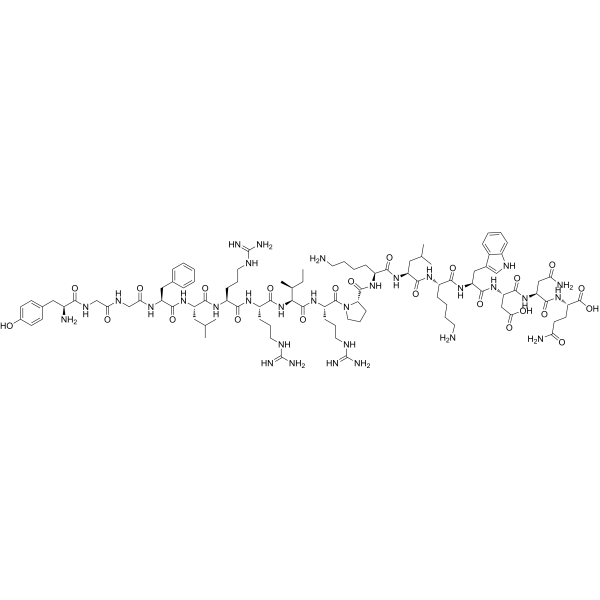
Dynorphin A is an endogenous opioid peptide involved in inhibitory neurotransmission in the central nervous system (CNS). Dynorphin A is a highy potent kappa opioid receptor (KOR) agonist, and is also an agonist for other opioid receptors, such as mu (MOR) and delta (DOR). Dynorphin A can induce neuronal death, and can be used in the research of neurological disease .
loading...
    loading...
1
1 Cited Publications
Referencia número: HY-147557
No. CAS: 2305204-24-2
Pureza:  99.17%
Synonyms: PAC1R antagonist 1
Target:  

PACAP Receptor

Áreas de investigación:  

Neurological Disease

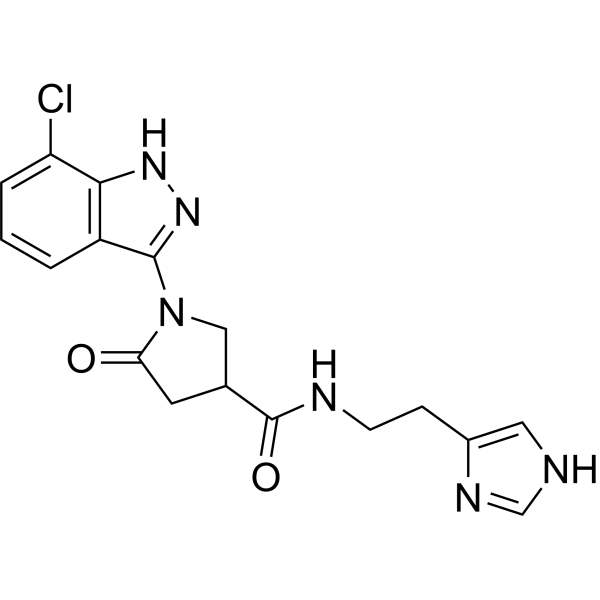
PA-915 (PAC1R antagonist 1) is a potent and orally active antagonist of PAC1 receptor. PA-915 inhibits pituitary adenylate cyclase-activating polypeptide (PACAP)-induced CREB phosphorylation. PA-915 can inhibit PACAP- and nerve injury-induced allodynia. PA-915 can be used for the research of neuropathic pain .
loading...
    loading...
1
1 Cited Publications
Referencia número: HY-N8157
No. CAS: 1464-33-1
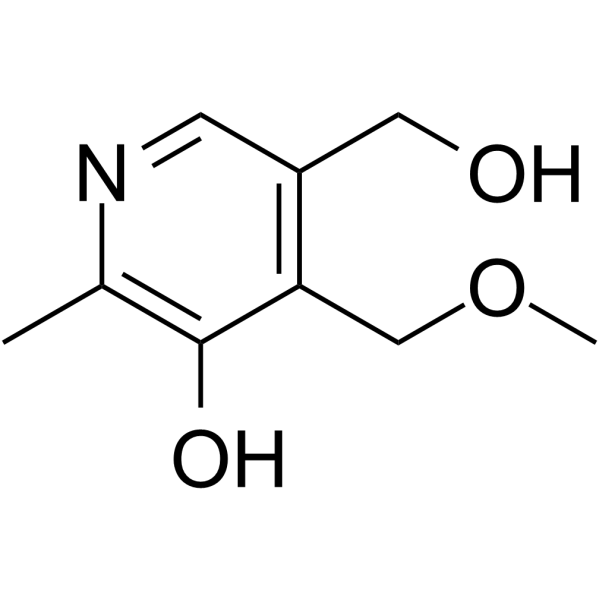
4'-O-Methylpyridoxine is an orally active antivitamin B6 compound found in Ginkgo biloba seeds and leaves. 4'-O-Methylpyridoxine inhibits pyridoxal kinase. 4'-O-Methylpyridoxine reduces brain pyridoxal-5'-phosphate (PLP) levels, decreases gamma-aminobutyric acid/glutamate (GABA/Glu) ratio. 4'-O-Methylpyridoxine increases plasma levels of pyridoxal-5'-phosphate and pyridoxal. 4'-O-Methylpyridoxine induces hyperactivity, convulsions, pathological tissue changes, organ damage in rodent brain and heart .
loading...
    loading...
1
1 Cited Publications
Referencia número: HY-N0307
No. CAS: 114902-16-8
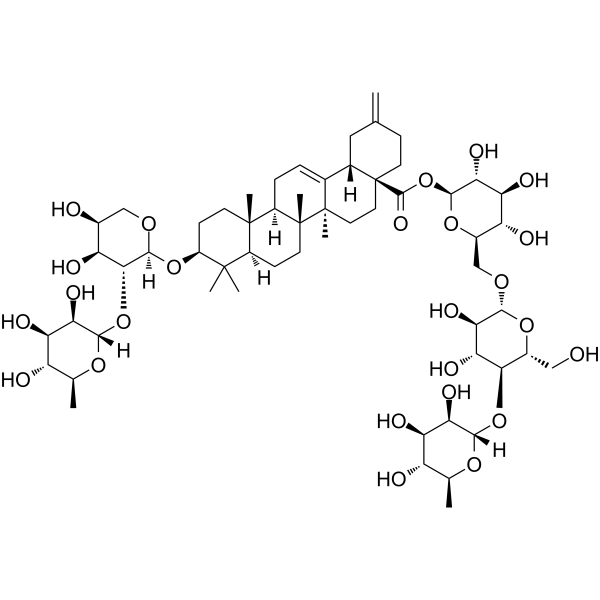
Ciwujianoside B is an orally active, blood-brain barrier penetrable radioprotective agent and memory enhancer. Ciwujianoside B reduces radiation-induced DNA damage, cell cycle arrest and apoptosis, downregulates NF-κB and the Bax/Bcl-2 ratio, and enhances the proliferative capacity of bone marrow cells. Ciwujianoside B enhances object recognition memory in normal mice and induces dendritic extension in primary cultured cortical neurons. Ciwujianoside B can be used in studies related to hematopoietic system radiation injury and memory enhancement .
loading...
    loading...
Referencia número: HY-B1127
No. CAS: 3440-28-6
Synonyms: N-Benzoyl-β-alanine
Target:  

Antibiotic Bacterial

Áreas de investigación:  

Infection Endocrinology

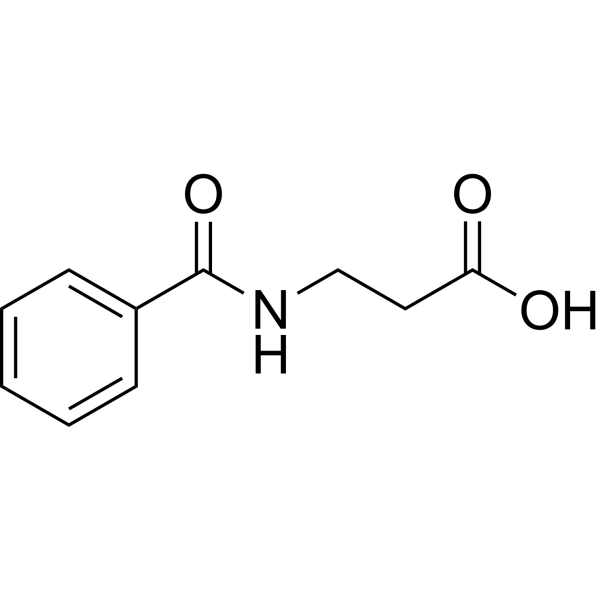
Betamipron (N-benzoyl-β-alanine) is a carbapenem β-lactam antibiotic with antibacterial activity against most Gram-positive and Gram-negative aerobic and anaerobic bacteria. Betamipron can target and inhibit renal organic anion transporters, alleviate renal injury caused by Cisplatin (HY-17394), without interfering with the biological activity of cisplatin. Betamipron is often used in combination with panipenem, which can attenuate the renal effects induced by panipenem and slightly promote the proliferation of Clostridium difficile in the cecum. Betamipron can be used in studies related to renal injury and bacterial infection .
loading...
    loading...
Referencia número: HY-101005
No. CAS: 16503-22-3
Synonyms: Nα-Methylhistamine dihydrochloride
Áreas de investigación:  

Infection

N-Methylhistamine dihydrochloride (Nα-Methylhistamine dihydrochloride) is a non-selective Histamine receptor agonist. N-Methylhistamine dihydrochloride activates histamine H1, H2 and H3 receptors; it stimulates central H1 receptors by activating sympathetic α and β adrenergic receptors to inhibit intestinal transit, exerts dose-dependent inhibition on intestinal transit, reduces histamine turnover in mouse brains, and increases gastric acid secretion without altering plasma gastrin concentrations. N-Methylhistamine dihydrochloride produces a pH-dependent, voltage-independent potentiating effect on acid-sensing ion channel 1a, and shows no significant activity toward homologous ASIC2a channels. N-Methylhistamine dihydrochloride can be used in studies related to Helicobacter pylori infection .
loading...
    loading...
Referencia número: HY-W015616
No. CAS: 2550-26-7
Synonyms: 4-Penylbutan-2-one
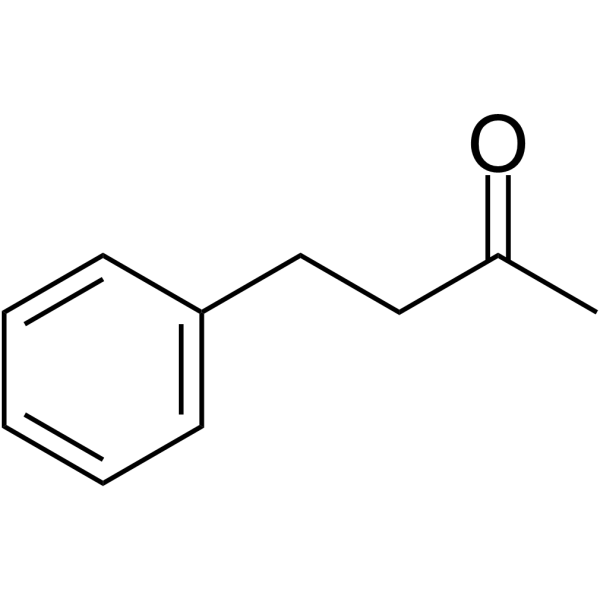
Benzylacetone (4-Penylbutan-2-one) is an aromatic compound. Benzylacetone is a mushroom tyrosinase inhibitor with an IC50 of 2.8 mM, a Ki of 1.25 mM for monophenolase and an IC50 of 0.6 mM, a Ki of 0.39 mM for diphenolase. Benzylacetone inhibits free mushroom tyrosinase and enzyme-substrate complex. Benzylacetone acts as an appetite enhancer via olfactory stimulation, reduces spontaneous locomotor activity, induces weight gain. Benzylacetone exhibits repellent, fumigant, and contact toxicity against Tribolium castaneum adults .
loading...
    loading...
Referencia número: HY-W021450A
No. CAS: 100929-81-5
Áreas de investigación:  

Neurological Disease

DL-Fluorocitric acid barium is a glial cell metabolic inhibitor. DL-Fluorocitric acid barium inhibits mechanical hyperalgesia induced by subcutaneous injection of complete Freund's adjuvant in rats. DL-Fluorocitric acid barium inhibits nociceptive behaviors induced by Histamine (HY-B1204) in mice and blocks the phosphorylation of the NMDA receptor NR1 subunit in the lumbar spinal cord of mice. DL-Fluorocitric acid (barium) can be used in the research of mechanical hyperalgesia and nociceptive pain .
loading...
    loading...
Referencia número: HY-126813
No. CAS: 81552-34-3
Target:  

Antibiotic Fungal

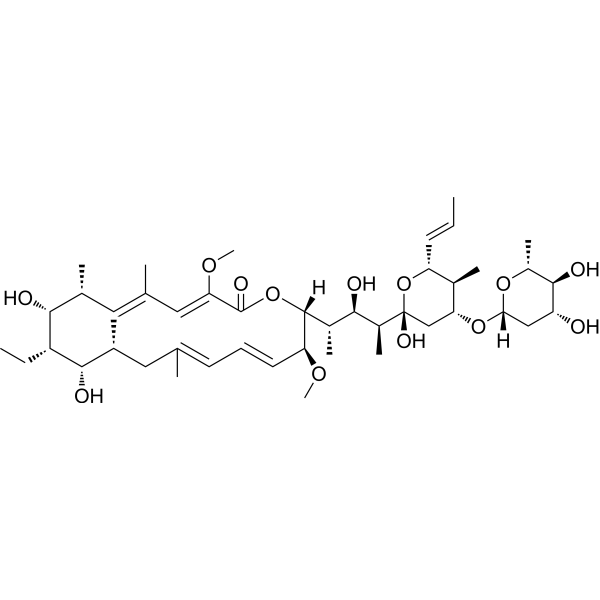
Concanamycin C is a macrolide antibiotic with inhibitory activity against certain fungi and yeasts, but no activity against bacteria. Concanamycin C inhibits the proliferation of mouse splenic lymphocytes. Concanamycin C exhibits acute toxicity in ddY mice. Concanamycin C can be used in studies related to fungal infections and yeast infections .
loading...
    loading...
Referencia número: HY-N8693
No. CAS: 362472-81-9
Withanoside IV is an orally active, blood-brain barrier-permeable withanolide derivative. Withanoside IV specifically binds to the Sudlow I site of HSA, induces secondary structural changes in HSA, and forms stable HSA complexes. Withanoside IV inhibits the enzymatic activity of COX-2. Withanoside IV induces axonal regeneration, peripheral nervous system myelination and increased axonal density in spinal cord tissue, reduces reactive gliosis-related changes, and improves hindlimb motor function. Withanoside IV binds to amyloid-β 1-42 to inhibit its aggregation, induces neurite outgrowth and synapse reconstruction, repairs damaged axons and dendrites, enhances mitochondrial biogenesis, exerts neuroprotective effects via the BDNF and SIRT1 signaling pathways, reduces ROS production and neuronal apoptosis, and ameliorates memory deficits. Withanoside IV inhibits the activity of the SARS-CoV-2 main protease. Withanoside IV can be used in research related to spinal cord injury, Alzheimer's disease, and coronavirus disease 2019 (COVID-19) .
loading...
    loading...
Referencia número: HY-P3134
No. CAS: 2241236-26-8
Áreas de investigación:  

Metabolic Disease

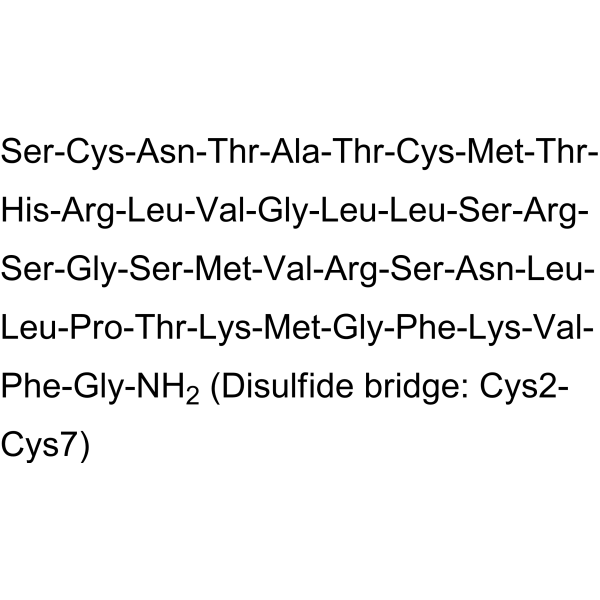
CPN-267 (compound 7b) is a selective neuromedin U receptor 1 (NMUR1) agonist with the EC50 of 0.25 nM. CPN-267 suppresses body weight gain in mice and can be used for study of obesity .
loading...
    loading...
Referencia número: HY-103303
No. CAS: 697327-12-1
Target:  

CGRP Receptor

Áreas de investigación:  

Metabolic Disease

CRSP-1 is short for calcitonin receptor-stimulating peptide-1. CRSP-1 inhibits osteoclast formation by inhibiting the formation and activity of multinucleated osteoclast .
loading...
    loading...
Referencia número: HY-P1333A
Áreas de investigación:  

Neurological Disease

Dynorphin A TFA is an endogenous opioid peptide involved in inhibitory neurotransmission in the central nervous system (CNS). Dynorphin A TFA is a highy potent kappa opioid receptor (KOR) agonist, and is also an agonist for other opioid receptors, such as mu (MOR) and delta (DOR). Dynorphin A TFA can induce neuronal death, and can be used in the research of neurological disease .
loading...
    loading...
Referencia número: HY-101840AR
No. CAS: 1345839-28-2
Synonyms: L593754 hydrochloride (Standard); MH 12-43 hydrochloride (Standard); Ethylisopropylamiloride hydrochloride (Standard)
EIPA (hydrochloride) (Standard) is the analytical standard of EIPA (hydrochloride). This product is intended for research and analytical applications. EIPA (L593754) hydrochloride is an orally active TRPP3 channel inhibitor with an IC50 of 10.5 μM. EIPA hydrochloride also enhances autophagy by inhibiting Na+/H+-exchanger 3 (NHE3). EIPA hydrochloride inhibits macropinocytosis as well. EIPA hydrochloride can be used in the research of inflammation and cancers, such as gastric cancer, colon carcinoma, pancreatic carcinoma .
loading...
    loading...
Referencia número: HY-101840R
No. CAS: 1154-25-2
Synonyms: L593754 (Standard); MH 12-43 (Standard); Ethylisopropylamiloride (Standard)
EIPA (Standard) is the analytical standard of EIPA. This product is intended for research and analytical applications. EIPA (L593754) is an orally active TRPP3 channel inhibitor with an IC50 of 10.5 μM. EIPA also enhances autophagy by inhibiting Na+/H+-exchanger 3 (NHE3). EIPA inhibits macropinocytosis as well. EIPA can be used in the research of inflammation and cancers, such as gastric cancer, colon carcinoma, pancreatic carcinoma .
loading...
    loading...
Referencia número: HY-N18254
No. CAS: 86500-43-8
Hokbusine A is a diterpenic alkaloid and C19 norditerpenoid (aconitine-type) alkaloid that can be found in the roots of Aconitum napellus L. (Swiss variety) and Aconitum jaluense .Hokbusine A exhibits low acute toxicity in ddY mice via intraperitoneal administration, with an LD50 value greater than 1 mg/kg .
loading...
    loading...
Referencia número: HY-178850
No. CAS: 219964-53-1
Target:  

TGF-β Receptor

Áreas de investigación:  

Inflammation/Immunology

TJN-331 is a potent and orally active TGF-β1 Inhibitor. TJN-331 ameliorates anti-glomerular basement membrane (GBM) nephritis in rats by inhibitng TGF-β1 production, thereby reducing extracapillary proliferation in glomeruli. TJN-331 inhibits mesangial expansion in experimental IgA nephropathy in ddY mice. TJN-331 can be used for the research of nephritis and IgA nephropathy .
loading...
    loading...
Referencia número: HY-120291
No. CAS: 1401807-89-3
Áreas de investigación:  

Neurological Disease

ASP9436 is an orally active and blood-brain barrier permeable PDE10A inhibitor with an IC50 of 8 nM against human PDE10A. ASP9436 attenuates locomotor activity in mouse hyperactivity models and ameliorates visual recognition memory impairment in neonatal mice. ASP9436 is applicable to research related to schizophrenia .
loading...
    loading...

