
1. Search Result
Search Result
Pathways Recommended: Neuronal Signaling
Results for "

dopaminergic neuronal

" in MedChemExpress (MCE) Product Catalog:

20

Inhibitors & Agonists

1

Peptides

5

Natural
Products

1

Oligonucleotides

Cat. No. Product Name Target Research Areas Chemical Structure
  • HY-B1065

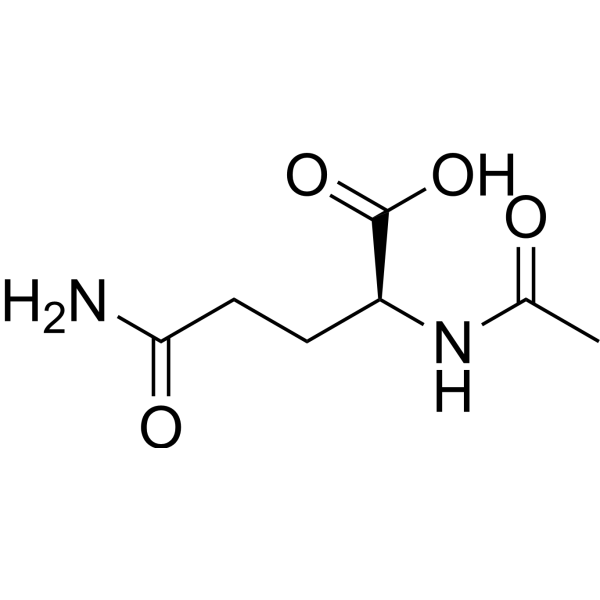
    α-N-Acetyl-L-glutamine; N2-Acetylglutamine

    Keap1-Nrf2 Akt ASK1 Apoptosis Neurological Disease
    Aceglutamide (α-N-Acetyl-L-glutamine; N2-Acetylglutamine) is a neuroprotectant that can penetrate the blood-brain barrier. Aceglutamide can enhance the antioxidant systems of glutathione (GSH), thioredoxin (Trx) and Nrf2. Aceglutamide also inhibits ASK1 and TRAF1, activates the Akt/Bcl-2 anti-apoptotic pathway, enhances the activity of antioxidant enzymes and reduces oxidative damage. Aceglutamide can improve neurological deficits after cerebral ischemia, reduce infarct volume, and inhibit neuronal apoptosis, especially substantia nigra dopaminergic neurons. Aceglutamide can reduce cerebral ischemia/reperfusion injury, improve motor dysfunction, and is used in ischemic stroke-related research .
    Aceglutamide
  • HY-121362

    Bacterial Endogenous Metabolite TrxR Infection Neurological Disease Inflammation/Immunology Cancer
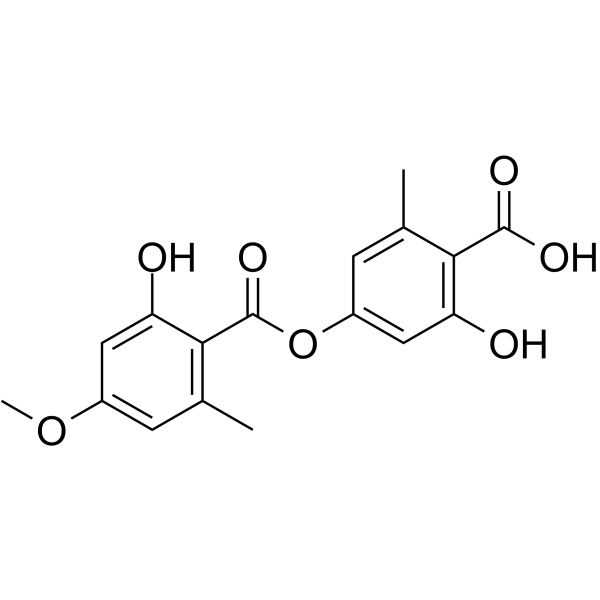
    Evernic Acid is an orally active thioredoxin reductase 1 (TrxR1) inhibitor and antiproliferative agent. Evernic Acid inhibits the proliferation and migration of human breast cancer cells. Evernic Acid blocks the NF-κB pathway by inhibiting p65 nuclear translocation and IκBα phosphorylation, thereby suppressing downstream inflammatory mediators. Evernic Acid acts as an antioxidant, anti-inflammatory agent and neuroprotective agent, protects neurons from cell death, mitochondrial dysfunction and oxidative stress damage, reduces astrocyte activation, and ameliorates dopaminergic neuron loss and neuroinflammation. Evernic Acid inhibits enoyl reductases FabI and FabZ of Plasmodium falciparum. Evernic Acid downregulates the expression of lasB and rhlA genes in Pseudomonas aeruginosa, inhibits quorum sensing and biofilm formation, and exerts antibacterial activity against Gram-positive bacteria, Gram-negative bacteria and fungi. Evernic Acid is applicable to research related to breast cancer, Parkinson's disease, bacterial infections and fungal infections .
    Evernic Acid
  • HY-B0927

    (-)-β-Hydrastine; (1R,9S)-β-Hydrastine

    Tyrosine Hydroxylase Dopamine Receptor OAT Neurological Disease
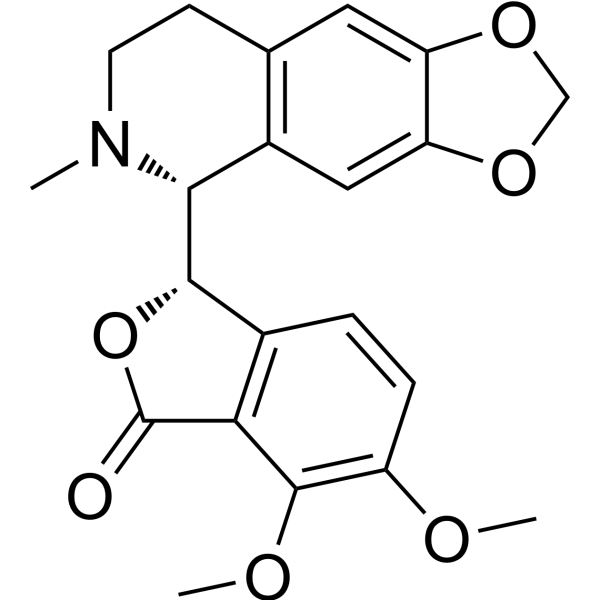
    Hydrastine ((-)-β-Hydrastine; (1R,9S)-β-Hydrastine) is a selective competitive inhibitor of tyrosine hydroxylase (TH), inhibiting dopamine biosynthesis (IC50=20.7 μM, PC12 cells). Hydrastine also inhibits the organic cation transporter OCT1 (IC50=6.6 μM). Hydrastine may cause neuronal toxicity through mitochondrial dysfunction rather than oxidative stress damage, and can aggravate cell apoptosis when combined with L-DOPA. Hydrastine can be used to study Parkinson's disease-related dopaminergic neuronal damage .
    Hydrastine
  • HY-148502
    VU6019650
    2 Publications Verification

    mAChR Neurological Disease
    VU6019650 is a potent and selective orthosteric antagonist of M5 mAChR (IC50=36 nM), can be used for opioid use disorder (OUD) relief. VU6019650 can cross blood brain barrier, potentially modulates the mesolimbic dopaminergic reward circuitry. VU6019650 blocks Oxotremorine M iodide (HY-101372A) induced increases of neuronal firing rates of midbrain dopamine neurons in the ventral tegmental area (VTA) .
    VU6019650
  • HY-P10019

    NLY01

    GCGR Neurological Disease Inflammation/Immunology
    Pegsebrenatide (NLY01) is a blood-brain barrier-penetrant GLP-1R agonist. Pegsebrenatide alleviates retinal inflammation and neuronal death secondary to ocular hypertension . Pegsebrenatide significantly delays onset and reduces disease severity in experimental autoimmune encephalomyelitis . Pegsebrenatide inhibits the formation of A1 reactive astrocytes in nerve cells and reduces the loss of retinal ganglion cells and dopaminergic neurons. Pegsebrenatide exerts neuroprotective effects in a mouse model of Parkinson's disease by directly preventing microglia-mediated conversion of astrocytes to the A1 neurotoxic phenotype. Pegsebrenatide can be used for research on glaucoma, Parkinson's disease, and multiple sclerosis .
    Pegsebrenatide
  • HY-160959

    nAChR Neurological Disease
    AN317 is a selective agonist for α6β2-containing nicotinic acetylcholine receptor (nAChR) with Ki of 6.2 nM and 4.1 nM, for α6/α3β2β3 receptor and α4β2 receptor, respectively. AN317 induces dopamine release in the synaptosomes of the rat striatum, enhances dopaminergic neuronal activity in substantia nigra, and exhibits protective efficacy to rat neurons against dopamine neurotoxin MPP +. AN317 exhibits good pharmacokinetic characteristics in rats. AN317 penetrates the blood-brain barrier (BB) .
    AN317
  • HY-145848

    Estrogen Receptor/ERR Neurological Disease
    ERRγ agonist-1 is a potent ERRγ agonist. ERRγ agonist-1 increases transcriptional activities of ERRγ. ERRγ agonist-1 has the potential for the research of neuropsychological disorders .
    ERRγ agonist-1
  • HY-18610A

    Ro 8-4650

    Dopamine Transporter Adrenergic Receptor 5-HT Receptor Neurological Disease
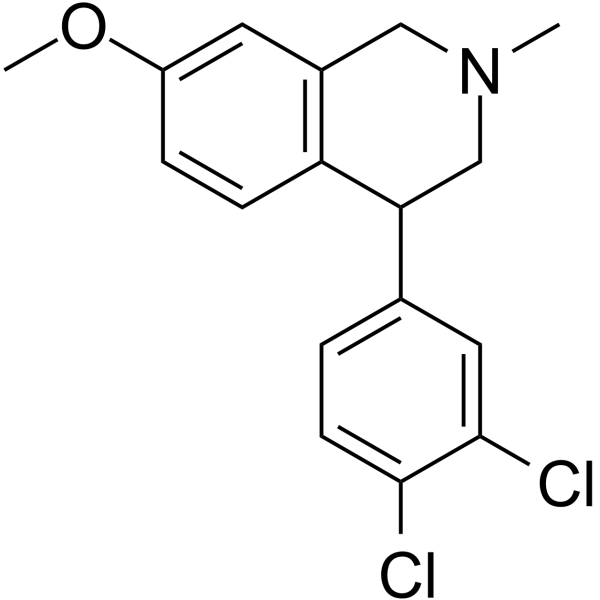
    Diclofensine (Ro 8-46500) is an orally active neuronal monoamine uptake inhibitor. Diclofensine blocks the uptake of dopamine, noradrenaline, and serotonin by rat brain synaptosomes with IC50 values of 0.74, 2.3 and 3.7 nM, respectively. Diclofensine potentiates norepinephrine-induced hypertension and attenuates Tyramine (HY-W007606)-induced hypertension. Diclofensine produces psychostimulant and mood-elevating effects without causing sudden disappearance or withdrawal reactions. Diclofensine can be used in the research of moderate to severe depression .
    Diclofensine
  • HY-125693

    Fungal Infection Neurological Disease
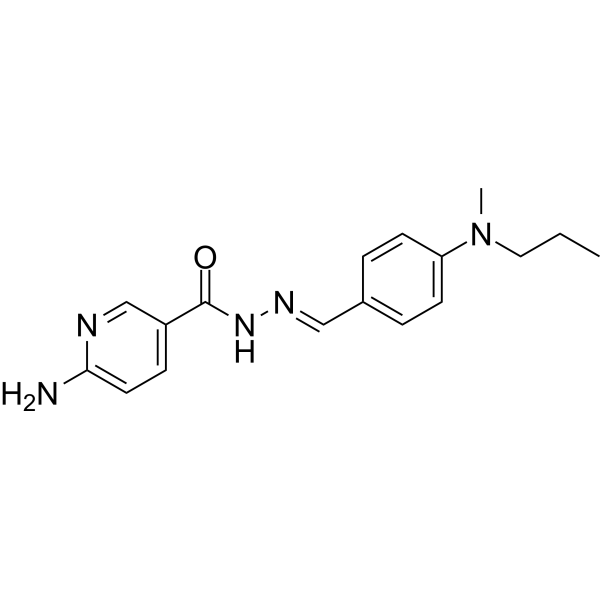
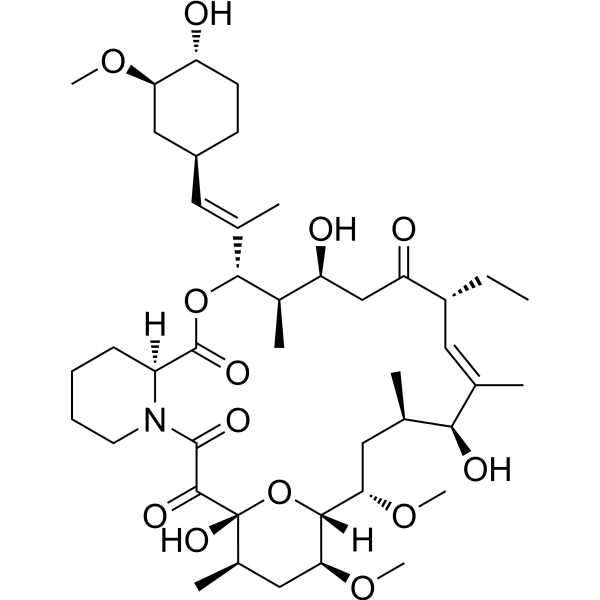
    L685818 is a specific immunophilin ligand. L685818 was neuroregenerative and non-neuroprotective in primary brain cultures. L685818 protects dopaminergic neurons from toxic inhibition of MPP+ and 6-OHDA, reduces tyrosine hydroxylase (TH) loss, and promotes neuronal process regeneration. L685818 is also an antifungal reagent for Cryptococcus neoformans .
    L685818
  • HY-158732

    Monoamine Oxidase Inflammation/Immunology
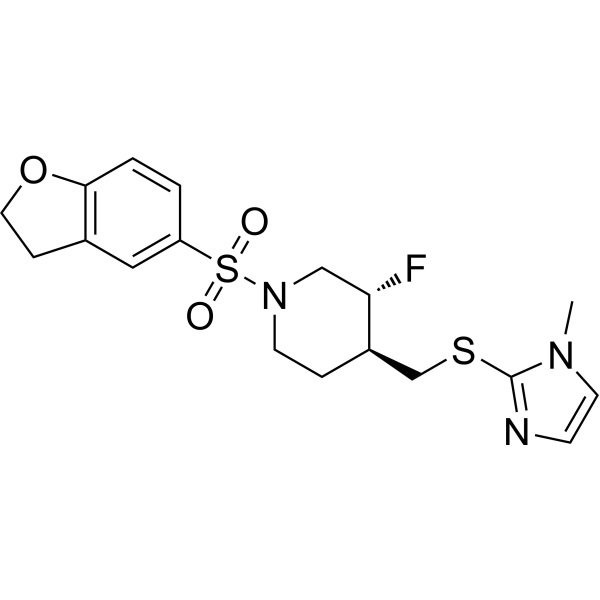
    MAO-B-IN-33 (compound C3) is a potent, reversible and selective monoamine oxidase-B (MAO-B) inhibitor with an IC50 of 0.021 μM and 26.805 μM for MAO-B and MAO-A, respectively. The selectivity of MAO-B-IN-33 is attributed to the steric clash arising from the residue differences between Phe208 (MAO-A) and Ile199 (MAO-B). MAO-B-IN-33 inhibits cerebral MAO-B activity and alleviates MPTP (HY-15608)-induced dopaminergic neuronal loss in the mouse. MAO-B-IN-33 has the potential for Parkinson's disease research .
    MAO-B-IN-33
  • HY-116507

    nAChR Neurological Disease
    AZD0328 is a selective α7 nAChR partial agonist. AZD0328 selectively enhances midbrain dopaminergic neuronal activity and enhances cortical dopamine levels in rats. AZD0328 improves cognitive performance .
    AZD0328
  • HY-174571

    mRNA Neurological Disease
    Human NEUROG2 mRNA encodes a neural-specific basic helix-loop-helix (bHLH) transcription factor that can specify a neuronal fate on ectodermal cells. NEUROG2 plays a role in the differentiation and survival of midbrain dopaminergic neurons.
    Human NEUROG2 mRNA
  • HY-B0927R

    (-)-β-Hydrastine (Standard); (1R,9S)-β-Hydrastine (Standard)

    Reference Standards Tyrosine Hydroxylase Dopamine Receptor OAT Others
    Hydrastine (Standard) is the analytical standard of Hydrastine (HY-B0927). This product is intended for research and analytical applications. Hydrastine ((-)-β-Hydrastine; (1R,9S)-β-Hydrastine) is a selective competitive inhibitor of tyrosine hydroxylase (TH), inhibiting dopamine biosynthesis (IC50=20.7 μM, PC12 cells). Hydrastine also inhibits the organic cation transporter OCT1 (IC50=6.6 μM). Hydrastine may cause neuronal toxicity through mitochondrial dysfunction rather than oxidative stress damage, and can aggravate cell apoptosis when combined with L-DOPA. Hydrastine can be used to study Parkinson's disease-related dopaminergic neuronal damage .
    Hydrastine (Standard)
  • HY-B1065R

    α-N-Acetyl-L-glutamine (Standard); N2-Acetylglutamine (Standard)

    Reference Standards Keap1-Nrf2 Akt ASK1 Apoptosis Neurological Disease
    Aceglutamide (α-N-Acetyl-L-glutamine; N2-Acetylglutamine) (Standard) is the analytical standard of Aceglutamide (HY-B1065). This product is intended for research and analytical applications. Aceglutamide (α-N-Acetyl-L-glutamine; N2-Acetylglutamine) is a neuroprotectant that can penetrate the blood-brain barrier. Aceglutamide can enhance the antioxidant systems of glutathione (GSH), thioredoxin (Trx) and Nrf2. Aceglutamide also inhibits ASK1 and TRAF1, activates the Akt/Bcl-2 anti-apoptotic pathway, enhances the activity of antioxidant enzymes and reduces oxidative damage. Aceglutamide can improve neurological deficits after cerebral ischemia, reduce infarct volume, and inhibit neuronal apoptosis, especially substantia nigra dopaminergic neurons. Aceglutamide can reduce cerebral ischemia/reperfusion injury, improve motor dysfunction, and is used in ischemic stroke-related research .
    Aceglutamide (Standard)
  • HY-180976

    PROTACs α-synuclein Neurological Disease
    Arg-PEG1-Tαsyn is an α-syn PROTAC degrader with a DC50 of 0.28 μM in U251 cells. Arg-PEG1-Tαsyn employs the amino acid arginine (Arg) as the E3 ligase UBR1 ligand and a benzothiazole-aniline variant as the warhead for α-syn. Arg-PEG1-Tαsyn significantly reduces α-syn aggregates and improves the dopaminergic neuronal impairment and the locomotion with safety profile in vivo.Arg-PEG1-Tαsyn shows the high degradation effect in mammalian cells for both wild-type α-syn and the α-syn (A53T) mutant. Arg-PEG1-Tαsyn can be used for Parkinson’s disease research .
    Arg-PEG1-Tαsyn
  • HY-W742645

    Endogenous Metabolite Others
    7α-Hydroxypregnenolone, a bioactive neurosteroid, is a key neuronal modulator of locomotion. 7α-Hydroxypregnenolone stimulates upstream migration by means of the dopaminergic system in salmon .
    7α-Hydroxypregnenolone
  • HY-181665

    Ferroptosis Glutathione Peroxidase Reactive Oxygen Species (ROS) Apoptosis Neurological Disease
    Ferroptosis-IN-23 is an inhibitor of ferroptosis. Ferroptosis-IN-23 exerts a synergistic effect by simultaneously activating Steap4 and glutathione peroxidase 4 (GPX4), thereby maintaining iron metabolism homeostasis. Ferroptosis-IN-23 reverses neuronal ferroptosis and inhibits lipid ROS accumulation in cells. Ferroptosis-IN-23 inhibits ferroptosis in zebrafish, alleviates neuronal apoptosis, ROS accumulation, and dopaminergic neuron damage in a zebrafish model of Parkinson's disease. Ferroptosis-IN-23 can be used for research on Parkinson's disease .
    Ferroptosis-IN-23
  • HY-186105A

    Opioid Receptor Apoptosis Neurological Disease
    (-)-P7C3-S243 is an orally active, blood-brain barrier permeable neuroprotective agent. (-)-P7C3-S243 binds to μ-opioid Receptor and TSPO. (-)-P7C3-S243 inhibits the premature apoptosis death of newborn hippocampal neurons, protects mature nigral dopaminergic neurons, promotes neuronal survival and prevents cognitive impairment. (-)-P7C3-S243 ameliorates depression-like behaviors in rat models. (-)-P7C3-S243 is applicable to research related to Parkinson's disease and Alzheimer's disease .
    (-)-P7C3-S243
  • HY-186105

    NAMPT Neurological Disease
    P7C3-S243 is a brain-penetrant P7C3 class of neuroprotective agent. P7C3-S243 augments synthesis of nicotinamide adenine dinucleotide through activation of the metabolic enzyme nicotinamide phosphoribosyltransferase. P7C3-S243 shows potent neuroprotective efficacy in parkinson’s disease mice models. P7C3-S243 can be used for the research of parkinson’s disease .
    P7C3-S243
  • HY-183665

    Dopamine Receptor Neurological Disease
    GBR-13119 is a blood-brain barrier-permeable inhibitor of the presynaptic dopamine uptake system. GBR-13119 binds to dopamine uptake sites with high selectivity, without being affected by other neurotransmitter reuptake inhibitors. GBR-13119 exhibits a lipophilic systemic distribution profile with extremely low defluorination in rats, while it shows a differential characteristic of slow striatal washout in the brain of primates. GBR-13119 can serve as a PET tracer to achieve visualized imaging of the striatum in primates, and can reflect MPTP-induced dopaminergic neuron degeneration through reduced uptake. GBR-13119 can be widely applied to studies related to Parkinson's disease and dopaminergic neuron degeneration .
    GBR-13119

Inquiry Online

Your information is safe with us. * Required Fields.

Salutation


Country or Region *

Applicant Name *


Organization Name *

Department *


Email Address *


Product Name *

Cat. No.


Requested quantity *

Phone Number *


Remarks

Inquiry Online

Inquiry Information

Product Name:
Cat. No.:
Quantity:
MCE Japan Authorized Agent:

