1. Search Result
Search Result
Results for "

ehrlich carcinoma

" in MedChemExpress (MCE) Product Catalog:

30

Inhibitors & Agonists

2

Peptides

18

Natural
Products

1

Oligonucleotides

Cat. No. Product Name Target Research Areas Chemical Structure
  • HY-13062
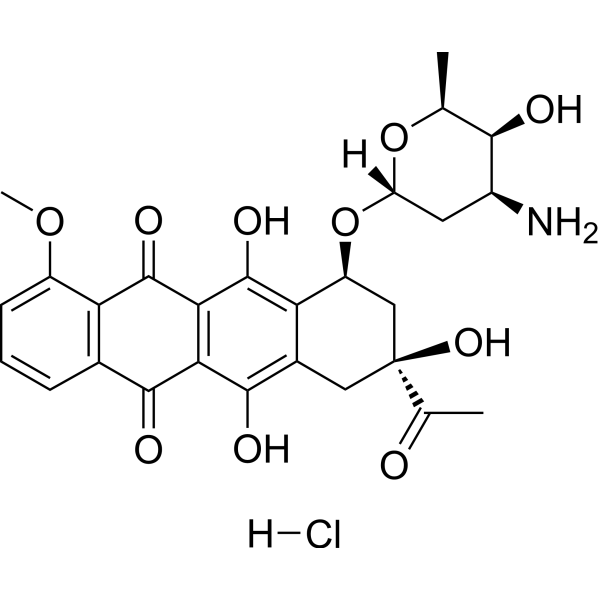
    Daunorubicin hydrochloride
    Maximum Cited Publications
    37 Publications Verification

    Daunomycin hydrochloride; RP 13057 hydrochloride; Rubidomycin hydrochloride

    Topoisomerase DNA/RNA Synthesis ADC Payload Bacterial Autophagy Apoptosis Antibiotic Infection Neurological Disease Cancer
    Daunorubicin (Daunomycin) hydrochloride is a topoisomerase II inhibitor with potent anti-tumor activity. Daunorubicin hydrochloride inhibits DNA and RNA synthesis. Daunorubicin hydrochloride is a cytotoxin that inhibits cancer cell viability and induces apoptosis and necrosis. Daunorubicin hydrochloride is also an anthracycline antibiotic. Daunorubicin hydrochloride can be used in the research of infection and variety of cancers, including leukemia, non-Hodgkin lymphomas, Ewing's sarcoma, Wilms' tumor .
    Daunorubicin hydrochloride
  • HY-13062A
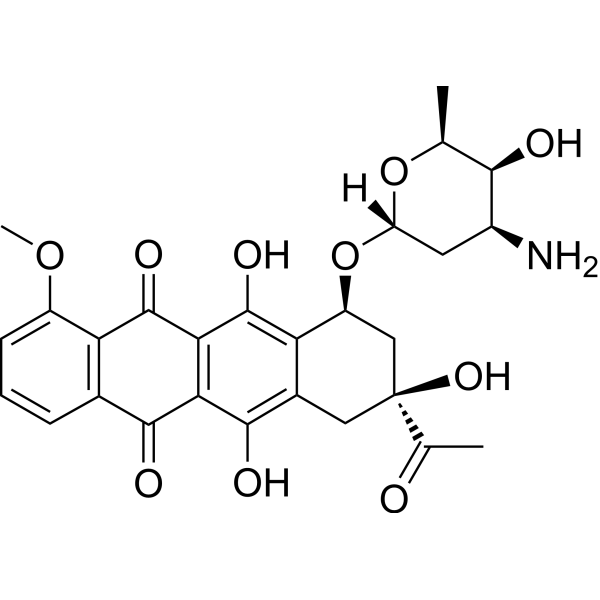
    Daunorubicin
    Maximum Cited Publications
    37 Publications Verification

    Daunomycin; RP 13057; Rubidomycin

    Topoisomerase DNA/RNA Synthesis ADC Payload Autophagy Bacterial Antibiotic Apoptosis Infection Neurological Disease Cancer
    Daunorubicin (Daunomycin) is a topoisomerase II inhibitor with potent anti-tumor activity. Daunorubicin inhibits DNA and RNA synthesis. Daunorubicin is a cytotoxin that inhibits cancer cell viability and induces apoptosis and necrosis. Daunorubicin is also an anthracycline antibiotic. Daunorubicin can be used in the research of infection and variety of cancers, including leukemia, non-Hodgkin lymphomas, Ewing's sarcoma, Wilms' tumor .
    Daunorubicin
  • HY-129983

    HSV Infection Cancer
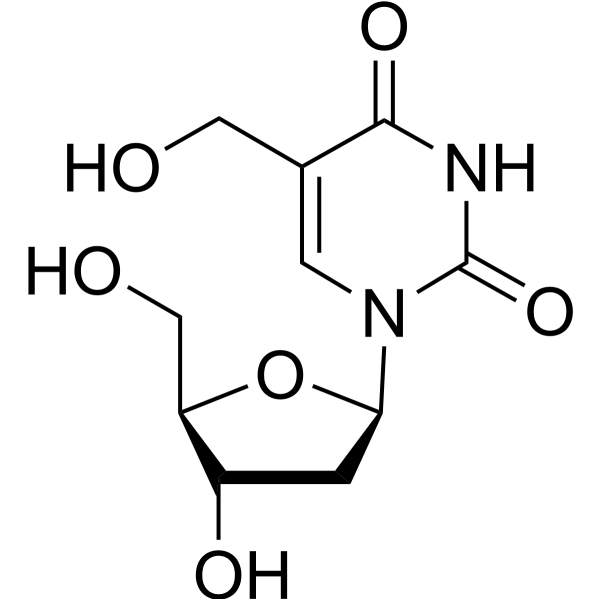
    5-Hydroxymethyl-2'-deoxyuridine is a nucleoside analog. 5-Hydroxymethyl-2'-deoxyuridine inhibits the replication of multiple human leukemia cell lines with IC50 values of 1.7-5.8 μM. 5-Hydroxymethyl-2'-deoxyuridine prolongs the survival of mice carrying L1210 leukemia. 5-Hydroxymethyl-2'-deoxyuridine can be used for the research of cell replication and leukemia .
    5-Hydroxymethyl-2'-deoxyuridine
  • HY-128738
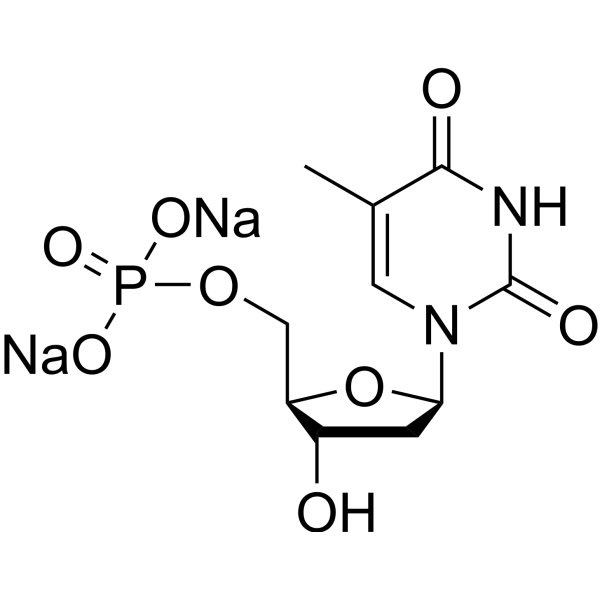
    Thymidine-5'-monophosphate disodium salt
    1 Publications Verification

    TMP disodium salt

    Endogenous Metabolite DNA/RNA Synthesis Metabolic Disease
    Thymidine-5'-monophosphate (TMP) disodium salt is a key nucleotide in pyrimidine metabolism, and its kinase activity can be competitively inhibited by 5'-fluorothymidine. The level of Thymidine-5'-monophosphate disodium salt is closely associated with acute kidney injury .
    Thymidine-5'-monophosphate disodium salt
  • HY-162006

    Pim Apoptosis Autophagy Metabolic Disease Inflammation/Immunology Cancer
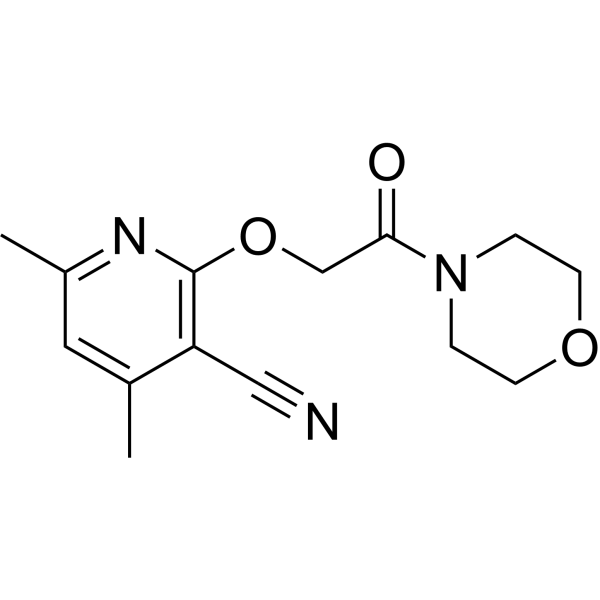
    Pim-1 kinase inhibitor 8 is a potent PIM-1 inhibitor with an IC50 value of 14.3 nM. Pim-1 kinase inhibitor 8 impedes cell proliferation and migration through PIM-1 inhibition and the induction of both apoptosis and autophagy. Pim-1 kinase inhibitor 8 inhibits solid tumor growth in Solid Ehrlich Carcinoma (SEC)-bearing mice. Pim-1 kinase inhibitor 8 can be used for breast and liver cancer research .
    Pim-1 kinase inhibitor 8
  • HY-121794

    (+)-Avarol

    Apoptosis NF-κB Cancer
    Avarol is a sesquiterpene hydroquinone that can be isolated from Dysidea avara sponge. Avarol has the potential for the research of ehrlich carcinoma (EC) and cervical cancer (CC-5) .
    Avarol
  • HY-P2045

    Arp2/3 Complex Cancer
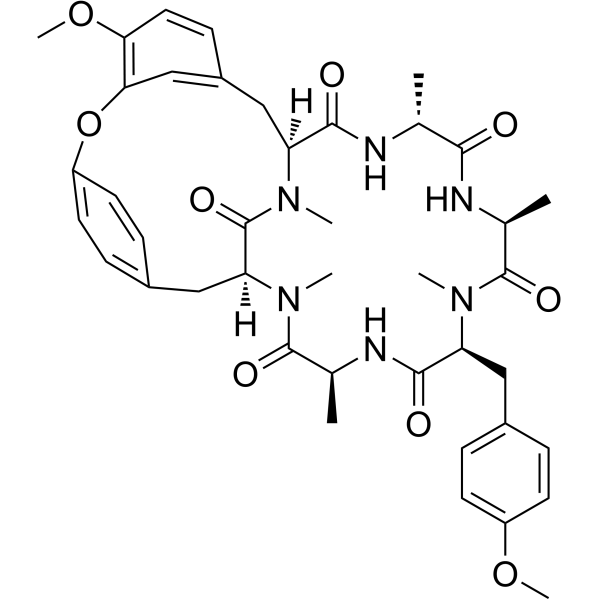
    RA-VII is an antitumor agent that exhibits significant activity against L1210, B-16 melanoma, Lewis lung carcinoma, Colon 38 and Ehrlich carcinoma .
    RA-VII
  • HY-128514

    Oxazinomycin

    Antibiotic Bacterial Infection Cancer
    Minimycin (Oxazinomycin) is a nucleoside antibiotic with a broad-spectrum antibacterial activity. Minimycin has inhibitory effect on mouse Ehrlich ascites carcinoma, ascites type and solid type sarcoma-180 .
    Minimycin
  • HY-121123

    2-Aminoadamantane-2-carboxylic acid

    Aminopeptidase Cancer
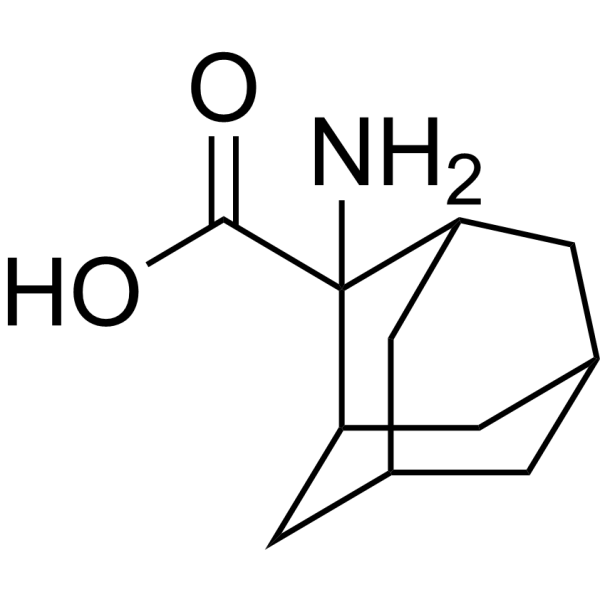
    Adamantanine (2-Aminoadamantane-2-carboxylic acid) inhibits the transport of methionine (Ki is 0.76 mM) and leucine into Ehrlich ascites carcinoma cells. Adamantanine inhibits proliferation of P388 lymphocytic leukemia cells with an IC50 of >1 mM. Adamantanine inhibits the leucine aminopeptidase with an I/S0.5 of 10.5 .
    Adamantanine
  • HY-108876

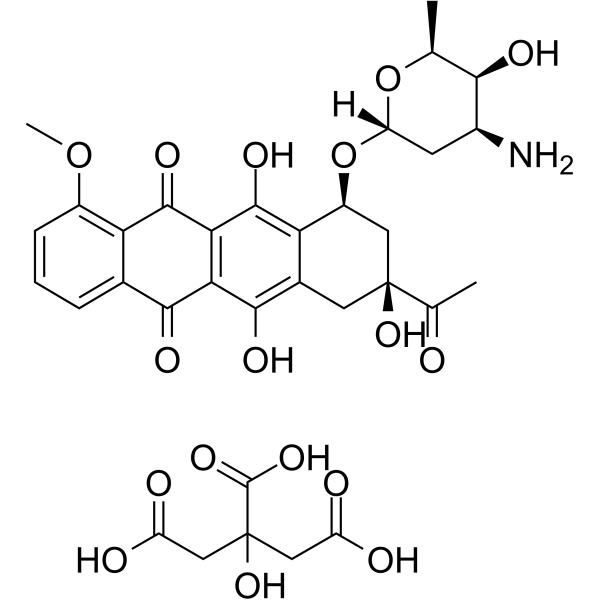
    Daunomycincitrate; RP 13057citrate; Rubidomycincitrate

    Topoisomerase DNA/RNA Synthesis ADC Payload Autophagy Bacterial Antibiotic Apoptosis Infection Neurological Disease Cancer
    Daunorubicin (Daunomycin) citrate is a topoisomerase II inhibitor with potent anti-tumor activity. Daunorubicin citrate inhibits DNA and RNA synthesis. Daunorubicin citrate is a cytotoxin that inhibits cancer cell viability and induces apoptosis and necrosis. Daunorubicin citrate is also an anthracycline antibiotic. Daunorubicin citrate can be used in the research of infection and variety of cancers, including leukemia, non-Hodgkin lymphomas, Ewing's sarcoma, Wilms' tumor .
    Daunorubicin citrate
  • HY-13062R

    Daunomycin hydrochloride (Standard); RP 13057 hydrochloride (Standard); Rubidomycin hydrochloride (Standard)

    Reference Standards Topoisomerase DNA/RNA Synthesis ADC Payload Bacterial Autophagy Apoptosis Antibiotic Infection Neurological Disease Cancer
    Daunorubicin (hydrochloride) (Standard) is the analytical standard of Daunorubicin (hydrochloride). This product is intended for research and analytical applications. Daunorubicin (Daunomycin) hydrochloride is a topoisomerase II inhibitor with potent anti-tumor activity. Daunorubicin hydrochloride inhibits DNA and RNA synthesis. Daunorubicin hydrochloride is a cytotoxin that inhibits cancer cell viability and induces apoptosis and necrosis. Daunorubicin hydrochloride is also an anthracycline antibiotic. Daunorubicin hydrochloride can be used in the research of infection and variety of cancers, including leukemia, non-Hodgkin lymphomas, Ewing's sarcoma, Wilms' tumor .
    Daunorubicin hydrochloride (Standard)
  • HY-129762

    NSC-102627

    DNA/RNA Synthesis Cancer
    Yoshi-864 (NSC-102627) is an alkylsulfonate DNA crosslinker with anticancer activity. Yoshi-864 extends markedly the survival times of mice bearing L1210 leukemia or Ehrlich ascites carcinoma. Yoshi-864 also has a persistent reduction in ability to synthesize DNA in tumor cells from mice bearing the Ehrlich tumor .
    Yoshi-864
  • HY-N13905

    Antibiotic Bacterial Fungal DNA/RNA Synthesis Infection
    Alliacol A is an antibiotic shows weak antibacterial and antifungal activity. Alliacol A inhibits DNA synthesis in cells of the ascitic form of Ehrlich carcinoma .
    Alliacol A
  • HY-N13906

    Antibiotic Bacterial Fungal DNA/RNA Synthesis Infection
    Alliacol B is an antibiotic shows weak antibacterial and antifungal activity. Alliacol B inhibits DNA synthesis in cells of the ascitic form of Ehrlich carcinoma .
    Alliacol B
  • HY-N14659

    Bacterial Fungal Infection
    Pilatin has inhibitory effects on bacteria and fungi, and has strong inhibitory effects on the incorporation of thymidin and ureidin into DNA and RNA in Ehrlich carcinoma ascites cells .
    Pilatin
  • HY-N14028

    Bacterial Infection Cancer
    Coriolin A has anti-Gram-positive bacteria, negative bacteria (weak), yeast and vaginal trichomoniasis activities. Coriolin A of 5 μg/mL can inhibit the growth of yoshida sarcoma 61.6%. Coriolin A has no inhibitory effect on Ehrlich ascites carcinoma in animals .
    Coriolin A
  • HY-N14029

    Bacterial Infection Cancer
    Coriolin B has anti-Gram-positive bacteria, negative bacteria (weak), yeast and vaginal trichomoniasis activities. Coriolin B of 5 μg/mL can inhibit the growth of yoshida sarcoma 61.6%. Coriolin B has no inhibitory effect on Ehrlich ascites carcinoma in animals .
    Coriolin B
  • HY-173224

    CDK Pim Cancer
    CDK2/PIM1-IN-1 is an inhibitor of CDK2 (IC50: 0.27 μM) and PIM1 (IC50: 0.67 μM) kinases. CDK2/PIM1-IN-1 induces apoptosis and reduces tumor-promoting TNF-α expression. CDK2/PIM1-IN-1 has antitumor activity .
    CDK2/PIM1-IN-1
  • HY-169684

    Fungal Infection Cancer
    Vaccarin C (Compound VIII) is a cycloheptapeptide with good antifungal activity against pathogenic fungi and dermatophytes M. audouinii and T. mentagrophytes with MIC values of 6 µg/mL. Vaccarin C also has high cytotoxicity against Dalton's lymphoma ascites (DLA) and Ehrlich's ascites carcinoma (EAC) cell lines with IC50 values of 3.35 and 5.72 μM, respectively .
    Vaccarin C
  • HY-121245

    Antibiotic Bacterial Fungal Infection Cancer
    Capoamycin is an antibiotic. Capoamycin shows antimicrobial and antitumor activity .
    Capoamycin
  • HY-175332

    Apoptosis Bcl-2 Family Caspase MDM-2/p53 Cancer
    Apoptosis inducer 43 is an apoptosis inducer. Apoptosis inducer 43 can induce apoptosis, SubG0-G1 cell cycle arrest, secondary necrosis, and upregulate caspase-3, p53, and Bax/Bcl-2 expression in HCT116 cells. Apoptosis inducer 43 can inhibit tumor growth in a solid Ehrlich carcinoma (SEC) mouse model. Apoptosis inducer 43 can be used to study cancers such as colon cancer, leukemia, and non-small cell lung cancer .
    Apoptosis inducer 43
  • HY-129983R

    HSV Infection Cancer
    5-Hydroxymethyl-2'-deoxyuridine (Standard) is the analytical standard of 5-Hydroxymethyl-2'-deoxyuridine. This product is intended for research and analytical applications. 5-Hydroxymethyl-2'-deoxyuridine is a nucleoside analog. 5-Hydroxymethyl-2'-deoxyuridine inhibits the replication of multiple human leukemia cell lines with IC50 values of 1.7-5.8 μM. 5-Hydroxymethyl-2'-deoxyuridine prolongs the survival of mice carrying L1210 leukemia. 5-Hydroxymethyl-2'-deoxyuridine can be used for the research of cell replication and leukemia .
    5-Hydroxymethyl-2'-deoxyuridine (Standard)
  • HY-158328A

    Carbonic Anhydrase VEGFR Reactive Oxygen Species (ROS) MDM-2/p53 Bcl-2 Family Cytochrome P450 Caspase Cancer
    CA IX/VEGFR-2-IN-2 (compound 5e) is a dual-targeted inhibitor. CA IX/VEGFR-2-IN-2 shows strong inhibitory effects on both CA IX (Ki=3.1 μM) and VEGFR-2 (IC50=32.1 nM). CA IX/VEGFR-2-IN-2 can be used for the study of pancreatic (PANC1), breast cancer (MCF7) and prostate cancer (PC3) .
    CA IX/VEGFR-2-IN-2
  • HY-137566

    Mitochondrial Metabolism Cancer
    Cucumarioside H is a novel triterpene glycoside isolated from the Far Eastern sea cucumber Eupentacta fraudatrix, including H2, H3 and H4. These glycosides have a branched pentasyl structure with a rare 3-O-methyl-D-xylose as the terminal monosaccharide. H2 contains 23,24,25,26,27-pentanolone sterols and has an 18(16)-lactone, which is not common in sea cucumbers. The glycoside portion of H3 contains an extremely rare ethoxyl radical at the 25 position, which may be an artifact formed during the long ethanol extraction process. Studies have shown that H1-3 are cytotoxic to mouse spleen lymphocytes, hemolytic to mouse erythrocytes, and cytotoxic to Ehrlich carcinoma cells. The presence of a 25-hydroxyl group in the glycoside portion significantly reduces these activities.
    Cucumarioside H
  • HY-N19312

    Apoptosis Glutathione S-transferase Topoisomerase Cancer
    Diospyrin is a dinaphthoquinone anticancer agent with pro-apoptotic (apoptosis) activity, glutathione S-transferase (Glutathione S-transferase) inhibitory activity, and topoisomerase (Topoisomerase) I inhibitory activity. Diospyrin is present in the heartwood of various Diospyros plants and can be used for research on Ehrlich ascites carcinoma, acute myeloid leukemia, chronic myeloid leukemia, mammary adenocarcinoma, cervical epithelial carcinoma, malignant cutaneous melanoma, laryngeal epidermoid carcinoma, human osteosarcoma, and human lymphoblastic carcinoma .
    Diospyrin
  • HY-181163

    Caspase COX Cytochrome P450 Steroid Sulfatase Apoptosis Cancer
    Caspase-3/7 activator 4 is a caspase-3 activator and caspase-7 activator. Caspase-3/7 activator 4 inhibits key enzymes in estrogen biosynthesis, including aromatase (IC50 = 38.3 nM) and steroid sulfatase (IC50 = 12.7 µM), and selectively suppresses COX-2 (IC50 = 5.38 µM). Caspase-3/7 activator 4 shows strong antioxidant activity (DPPH: IC50 = 16.26 µM). Caspase-3/7 activator 4 inhibits estrogen synthesis, suppresses estrogen availability, reduces prostaglandin production, increases caspase-3/7 expression, induces G0/G1 cell cycle arrest, induces apoptotic cell death, reduces circulating TNF-α and VEGFR-II levels, restores hepatorenal function markers and histoarchitecture, restores antioxidant defense enzyme activity, reduces lipid peroxidation, exerts antiproliferative activity against breast cancer cells, exerts antitumor activity in the Ehrlich ascites carcinoma models. Caspase-3/7 activator 4 can be used for the research of breast cancer, ehrlich ascites carcinoma .
    Caspase-3/7 activator 4
  • HY-N14030

    Bacterial Infection Cancer
    Coriolin C has anti-Gram-positive bacteria, negative bacteria (weak), yeast and vaginal trichomoniasis activities. Coriolin C of 5 μg/mL can inhibit the growth of yoshida sarcoma 61.6%. Coriolin C has no inhibitory effect on Ehrlich ascites carcinoma in animals .
    Coriolin C
  • HY-N15141

    Insecticide Fungal Infection Cancer
    γ-Thujaplicin is a Hinokitiol (HY-B2230)-related compound that can be isolated from the wood of Thujopsis dolabrata. γ-Thujaplicin shows strong cytotoxic activities against human stomach cancer cell lines KATO-III and Ehrlich’s ascites carcinoma. γ-Thujaplicin exhibits potent and broad-spectrum antifungal activity on wood-rotting fungi, and insecticidal activity on the noxious insects. γ-Thujaplicin can be used for cancer and infection research and pest management .
    γ-Thujaplicin
  • HY-N19808

    Drug Derivative Cancer
    2-Deacetyl-4-tigloylchamissionolide is a heliangolide-type sesquiterpene lactone, a derivative of Chamissonolide (HY-N19727), and a cytotoxic agent. 2-Deacetyl-4-tigloylchamissionolide exerts cytotoxicity via alkylating biological nucleophiles, targeting free thiol groups in proteins to interfere with their functions. 2-Deacetyl-4-tigloylchamissionolide exhibits different chromatographic behaviors in TLC and HPLC. 2-Deacetyl-4-tigloylchamissionolide can be used for the research of Ehrlich ascites carcinoma .
    2-Deacetyl-4-tigloylchamissionolide
  • HY-N15140

    Drug Isomer Bacterial Fungal Carboxypeptidase Infection Cancer
    α-Thujaplicin, the isomer of Hinokitiol (HY-B2230), is an antimicrobial agent. α-Thujaplicin can be isolated from Aomori Hiba (Thujopsis dolabrata SIEB. et ZUCC. var. hondai MAKINO). α-Thujaplicin shows inhibition of Carboxypeptidase A (IC50: 32.4 μM). α-Thujaplicin shows rather strong antifungal activity against seven kinds of plant-pathogenic fungi, their MICs being in the range of 12.0-50.0 μg/mL. α-Thujaplicin shows clear antibacterial activity against Legionella pneumophila SG 1 and L. pneumophila SG 3, and their MICs are in the range of 12.5-50 μg/mL. α-Thujaplicin shows antibacterial activity against Enterococcus faecalis IFO-12965 with a MIC of 1.56 μg/mL. α-Thujaplicin shows germination inhibition toward the seed of Echinochloa utilis Ohwi et Yabuno. α-thujaplicin inhibits lymphocytic leukemia, stomach cancer, Ehrlich’s ascites carcinoma .
    α-Thujaplicin

Inquiry Online

Your information is safe with us. * Required Fields.

Salutation


Country or Region *

Applicant Name *


Organization Name *

Department *


Email Address *


Product Name *

Cat. No.


Requested quantity *

Phone Number *


Remarks

Inquiry Online

Inquiry Information

Product Name:
Cat. No.:
Quantity:
MCE Japan Authorized Agent:

