1. Search Result
Search Result
Results for "

epoxyeicosatrienoic

" in MedChemExpress (MCE) Product Catalog:

20

Inhibitors & Agonists

3

Natural
Products

3

Isotope-Labeled Compounds

1

Click Chemistry

Cat. No. Product Name Target Research Areas Chemical Structure
  • HY-101016
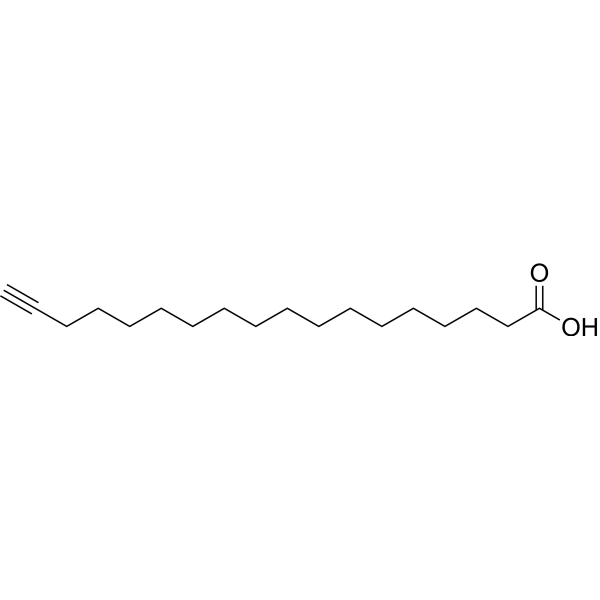
    17-ODYA
    1 Publications Verification

    Cytochrome P450 Apoptosis Cardiovascular Disease
    17-ODYA is a CYP450 ω-hydroxylase inhibitor. 17-ODYA is also a potent inhibitor (IC50<100 nM) of the formation of 20-hydroxyeicosatetraenoic acid (20-HETE), epoxyeicosatrienoic acids and dihydroxyeicosatrienoic acids by rat renal cortical microsomes incubated with arachidonic acid. 17-ODYA completely attenuates the isoproterenol (ISO)-induced apoptosis, and necrosis in cultured cardiomyocytes . 17-ODYA is a click chemistry reagent, it contains an Alkyne group and can undergo copper-catalyzed azide-alkyne cycloaddition (CuAAc) with molecules containing Azide groups.
    17-ODYA
  • HY-113489

    14,15-EET

    Endogenous Metabolite Cardiovascular Disease Neurological Disease
    14,15-Epoxyeicosatrienoic acid (14,15-EET) is a metabolite of Arachidonic acid (HY-109590). 14,15-Epoxyeicosatrienoic acid is a potent inhibitor of in vivo platelet aggregation. 14,15-Epoxyeicosatrienoic acid facilitates astrocytic Aβ clearance. 14,15-Epoxyeicosatrienoic acid can be used for Alzheimer's Disease research .
    14,15-Epoxyeicosatrienoic acid
  • HY-132184

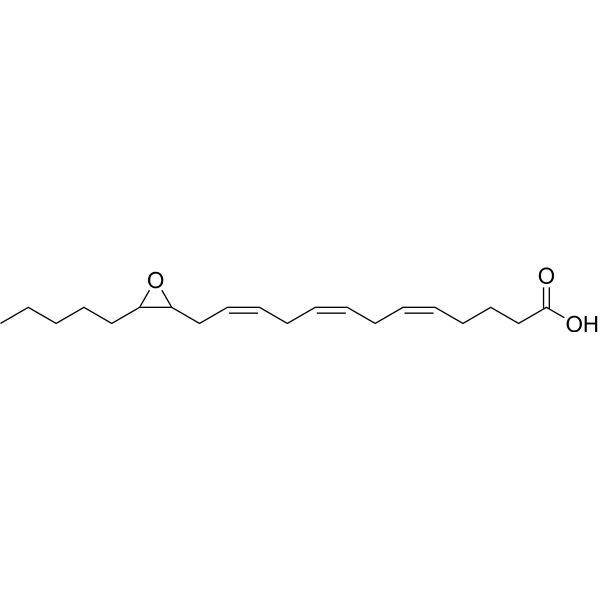
    5,6-EET; (±)5,6-EpETrE

    Adrenergic Receptor Calcium Channel Endocrinology
    5,6-Epoxyeicosatrienoic acid (5,6-EET; (±)5,6-EpETrE) is a fully racemic version of the enantiomeric forms biosynthesized from arachidonic acid by cytochrome P450 enzymes. In solution, 5,6-Epoxyeicosatrienoic acid degrades into 5,6-DiHET and 5,6-δ-lactone, which can be converted to 5,6-DiHET and quantified by GC-MS. In neuroendocrine cells, such as the anterior pituitary and pancreatic islets, 5,6-Epoxyeicosatrienoic acid has been implicated in the mobilization of calcium and hormone secretion. 5,6-Epoxyeicosatrienoic acid is an inhibitor of T-type voltage-gated calcium channels (Cav3) that inhibits isoforms Cav3.1, Cav3.2 (IC50=0.54 μM), and Cav3. and decreases nifedipine-resistant phenylephrine-induced vasoconstriction in isolated mouse mesenteric arteries via Cav3.2 blockade when used at a concentration of 3 μM. In addition, it is a substrate of COX-1 and COX-2.
    5,6-Epoxyeicosatrienoic acid
  • HY-150084

    (±)14(15)-EET

    Cytochrome P450 Mitosis Cancer
    (±)14,15-Epoxyeicosatrienoic acid ((±)14(15)-EET) is the Cytochrome P450 metabolite of arachidonic acid. While CYP3A4 may be involved in breast cancer cell growth, (±)14,15-Epoxyeicosatrienoic acid may promote mitosis and anchorage-dependent cloning through STAT3 affected by CYP3A4. (±)14,15-Epoxyeicosatrienoic acid exhibits STAT3-dependent cell growth promotion and may also participate in the autocrine/paracrine pathway that drives cell growth .
    (±)14,15-Epoxyeicosatrienoic acid
  • HY-N0805A
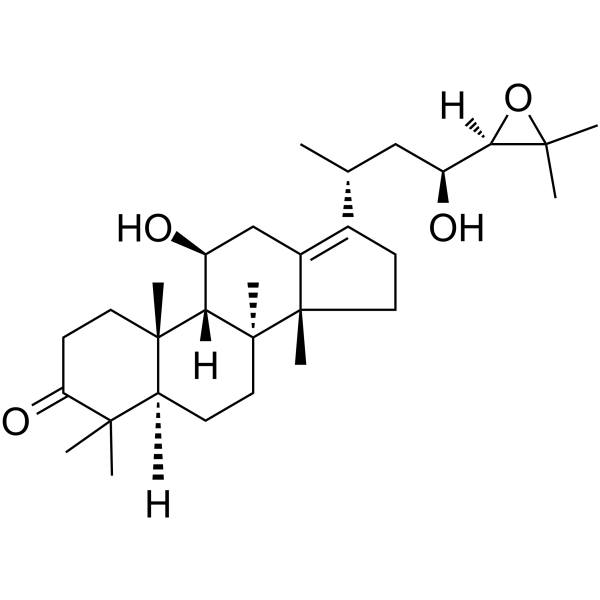
    Alisol B
    1 Publications Verification

    Epoxide Hydrolase CaMK Autophagy Apoptosis Metabolic Disease Inflammation/Immunology Cancer
    Alisol B is a triterpene with diverse biological activities. Alisol B binds human soluble epoxide hydrolase (sEH) with a Ki of 5.97 μM and reduces sEH activity. Alisol B inhibits RANKL-induced JNK phosphorylation, NFATc1 and c-Fos expression, osteoclast formation, mature osteoclast pit-forming and actin ring activity, and SERCA pump activity. Alisol B induces calcium mobilization, CaMKK-AMPK-mTOR pathway activation, autophagic flux, autophagosome formation, G1 phase cell cycle arrest, endoplasmic reticulum stress, unfolded protein responses, and cancer cell apoptosis. Alisol B can be used for the research of hypercalcemia, osteoporosis, rheumatoid arthritis, periodontitis, acute kidney injury, and breast cancer .
    Alisol B
  • HY-135795

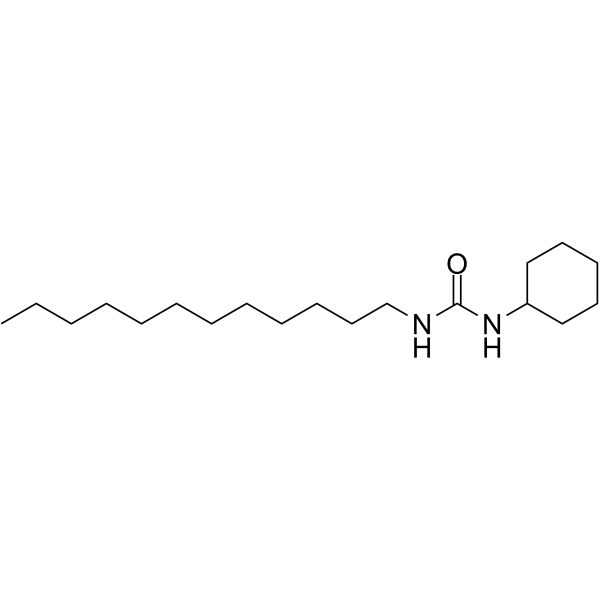
    CDU; N-Cyclohexyl-N-dodecyl urea; NCND

    Epoxide Hydrolase Cardiovascular Disease Metabolic Disease
    1-Cyclohexyl-3-dodecyl urea (CDU; N-Cyclohexyl-N-dodecyl urea; NCND) is a highly selective soluble epoxide hydrolase (sEH) inhibitor. 1-Cyclohexyl-3-dodecyl urea (CDU; N-Cyclohexyl-N-dodecyl urea; NCND) increases epoxyeicosatrienoic acids (EETs) levels and lowers blood pressure in angiotensin II (Ang II) hypertension .
    1-Cyclohexyl-3-dodecyl urea
  • HY-132184S

    5,6-EET-d11; (±)5,6-EpETrE-d11

    Isotope-Labeled Compounds Adrenergic Receptor Cardiovascular Disease Neurological Disease
    5,6-Epoxyeicosatrienoic acid-d11 (5,6-EET-d11) is deuterium labeled 5,6-Epoxyeicosatrienoic acid. 5,6-Epoxyeicosatrienoic acid is one of the four major epoxyeicosatrienoic acid (EET) isomers metabolized from Arachidonic acid (HY-109590). 5,6-Epoxyeicosatrienoic acid induces peripheral vasodilation and lowers blood pressure by inhibiting T-type calcium channels (Cav3.2: IC50 = 0.54 μM). 5,6-Epoxyeicosatrienoic acid causes vasoconstriction in hypoxic pulmonary blood vessels via activating Rho kinase in a membrane depolarization-dependent manner. 5,6-Epoxyeicosatrienoic acid induces mechanical pain by activating TRPA1. 5,6-Epoxyeicosatrienoic acid can be used in studies related to hypoxic pulmonary vasoconstriction, mechanical hyperalgesia and hypertension.
    5,6-Epoxyeicosatrienoic acid-d11
  • HY-101016R

    Reference Standards Cytochrome P450 Apoptosis Cardiovascular Disease
    17-ODYA (Standard) is the analytical standard of 17-ODYA. This product is intended for research and analytical applications. 17-ODYA is a CYP450 ω-hydroxylase inhibitor. 17-ODYA is also a potent inhibitor (IC50<100 nM) of the formation of 20-hydroxyeicosatetraenoic acid (20-HETE), epoxyeicosatrienoic acids and dihydroxyeicosatrienoic acids by rat renal cortical microsomes incubated with arachidonic acid. 17-ODYA completely attenuates the isoproterenol (ISO)-induced apoptosis, and necrosis in cultured cardiomyocytes[1][2][3]. 17-ODYA is a click chemistry reagent, it contains an Alkyne group and can undergo copper-catalyzed azide-alkyne cycloaddition (CuAAc) with molecules containing Azide groups.
    17-ODYA (Standard)
  • HY-174327

    Epoxide Hydrolase Neurological Disease Inflammation/Immunology
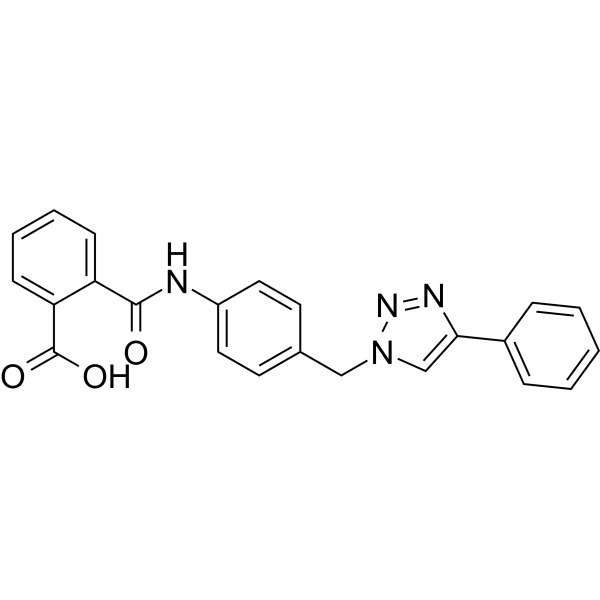
    sEH-IN-3 (Compound 50) is a soluble epoxide hydrolase (sEH) inhibitor (IC50: 0.46 nM). sEH-IN-3 can maintain the anti-inflammatory and analgesic activities of epoxyeicosatrienoic acids (EETs) .
    sEH-IN-3
  • HY-113488

    TRP Channel Endocrinology
    8,9-Epoxyeicosatrienoic acid has an unique protective effect on glomeruli. 8,9-Epoxyeicosatrienoic acid blocks the increase in glomerular albumin permeability caused by circulating permeability factor (FSPF). 8,9-Epoxyeicosatrienoic acid can be used for the research of glomerular dysfunction .
    8,9-Epoxyeicosatrienoic acid
  • HY-N12955

    Endogenous Metabolite Others
    8(R),9(S)-EET is an isomer of Epoxyeicosatrienoic acid (HY-113489). 8(R),9(S)-EET processes its metabolism with cytosolic epoxide hydrolase (cEH), with a binding affinity of Km of 41 μM .
    8(R),9(S)-EET
  • HY-139938

    11,12-EET methyl ester; (±)11,12-EpETrE methyl ester

    Drug Derivative Cardiovascular Disease Inflammation/Immunology
    (±)11(12)-EET methyl ester (11,12-EET-methyl ester) is a methylated derivative of 11,12-epoxyeicosatrienoic acid (11,12-EET) (HY-130494). (±)11(12)-EET methyl ester cannot induce β-arrestin recruitment of the G protein-coupled receptor GPR132. (±)11(12)-EET methyl ester fails to enhance the expression of hematopoietic stem and progenitor cell (HSPC) markers. (±)11(12)-EET methyl ester can be used as a negative control molecule to study the structure-function relationship of 11,12-EET, facilitating the analysis of the role of the oxygenated fatty acid-GPR132 signaling axis in hematopoiesis .
    (±)11(12)-EET methyl ester
  • HY-173568

    Epoxide Hydrolase Inflammation/Immunology
    DJ-89 (Compound 77) is a potent soluble epoxide hydrolase (sEH) inhibitor with an IC50 value of 0.51 nM . DJ-89 inhibits sEH from hydrolyzing epoxyeicosatrienoic acids (EETs), reducing the production of pro-inflammatory substances. DJ-89 is promising for research of acute and chronic inflammatory diseases (such as rheumatoid arthritis) .
    DJ-89
  • HY-143294

    Epoxide Hydrolase Cardiovascular Disease
    sEH inhibitor-2 (compound 5l) is an orally active (predicted percentage absorption: 71.2-88.4%) soluble epoxide hydrolase (sEH) inhibitor, with an IC50 of 0.9 nM. sEH inhibitor-2 can maintain epoxyeicosatrienoic acids (EETs) serum level in high concentrations. sEH inhibitor-2 can be used in study of cardiovascular protection .
    sEH inhibitor-2
  • HY-139938S

    11,12-EET methyl ester-d11; (±)11,12-EpETrE methyl ester-d11

    Isotope-Labeled Compounds Cardiovascular Disease Inflammation/Immunology
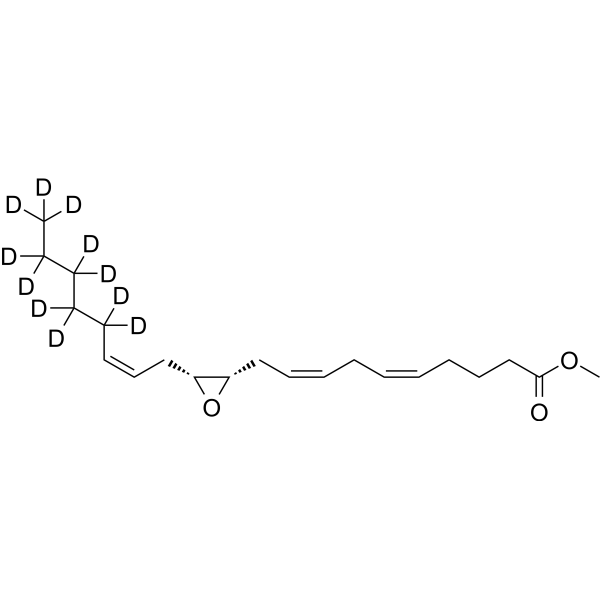
    (±)11(12)-EET-d11 methyl ester (11,12-EET methyl ester-d11) is the deuterium labeled (±)11(12)-EET methyl ester (HY-139938). (±)11(12)-EET methyl ester (11,12-EET-methyl ester) is a methylated derivative of 11,12-epoxyeicosatrienoic acid (11,12-EET) (HY-130494). (±)11(12)-EET methyl ester cannot induce β-arrestin recruitment of the G protein-coupled receptor GPR132. (±)11(12)-EET methyl ester fails to enhance the expression of hematopoietic stem and progenitor cell (HSPC) markers. (±)11(12)-EET methyl ester can be used as a negative control molecule to study the structure-function relationship of 11,12-EET, facilitating the analysis of the role of the oxygenated fatty acid-GPR132 signaling axis in hematopoiesis .
    (±)11(12)-EET methyl ester-d11
  • HY-121642

    Others Others
    SL-017 is a novel photoacoustic sensitizer and a derivative of photofrin B. It can be taken up by cells to the maximum extent within 30 minutes and is mainly localized in mitochondria. After being activated by visible light or ultrasound, SL-017 can significantly increase the production of reactive oxygen species (ROS). Low concentrations of SL-017 can rapidly cause the loss of mitochondrial membrane potential. SL-017 can also cause mitochondrial fragmentation, a process that occurs after the loss of membrane potential. Epoxyeicosatrienoic acids (EETs) can alleviate the loss of mitochondrial membrane potential caused by SL-017, but the antioxidant ascorbic acid has no such effect. These characteristics indicate that SL-017 mainly targets mitochondria and exerts its cytotoxic effect by triggering the collapse of mitochondrial membrane potential, generating ROS, and causing mitochondrial fragmentation. As a novel photoacoustic sensitizer, SL-017 has potential application value in photodynamic therapy and sonodynamic therapy.
    SL-017
  • HY-180461

    Drug Derivative Cancer
    EET analog 7 is an epoxyeicosatrienoic acid (EET) analog that can be conjugated with folate receptor ligands to target kidney cells expressing high levels of folate receptors. EET analog 7 can be used for constructing kidney-targeted drug conjugates .
    EET analog 7
  • HY-113519

    14R(15S)-EpETrE; 14R(15S)-epoxyeicosatrienoic acid

    Drug Metabolite Metabolic Disease
    14R(15S)-EET (14R(15S)-EpETrE) is an oxylipin and a metabolite of Arachidonic acid (HY-109590) .
    14R(15S)-EET
  • HY-179551S

    Isotope-Labeled Compounds Cardiovascular Disease Inflammation/Immunology
    (±)11(12)-EET-d11 Methyl ester is the deuterium labeled (±)11(12)-EET methyl ester (HY-139938). (±)11(12)-EET methyl ester is a methylated derivative of 11,12-epoxyeicosatrienoic acid (11,12-EET) (HY-130494). (±)11(12)-EET methyl ester cannot induce β-arrestin recruitment of the G protein-coupled receptor GPR132. (±)11(12)-EET methyl ester fails to enhance the expression of hematopoietic stem and progenitor cell (HSPC) markers. (±)11(12)-EET methyl ester can be used as a negative control molecule to study the structure-function relationship of 11,12-EET, facilitating the analysis of the role of the oxygenated fatty acid-GPR132 signaling axis in hematopoiesis.
    (±)11(12)-EET-d11 Methyl ester
  • HY-183545

    Epoxide Hydrolase Interleukin Related Inflammation/Immunology
    sEH-IN-24 is an orally active soluble epoxide hydrolase (sEH) inhibitor with an IC50 of 1.9 nM. sEH-IN-24 inhibits the pro-inflammatory cytokines TNF-α and IL-6. sEH-IN-24 exhibits anti-inflammatory effects and exerts analgesic activity in vivo. sEH-IN-24 prevents pancreatic edema, inflammation and parenchymal atrophy. sEH-IN-24 can be used for the research of acute pancreatitis .
    sEH-IN-24

Inquiry Online

Your information is safe with us. * Required Fields.

Salutation


Country or Region *

Applicant Name *


Organization Name *

Department *


Email Address *


Product Name *

Cat. No.


Requested quantity *

Phone Number *


Remarks

Inquiry Online

Inquiry Information

Product Name:
Cat. No.:
Quantity:
MCE Japan Authorized Agent:

