
100 Results for "

fluorescence quenching

" in MedChemExpress (MCE) Product Catalog:
Products (100)

100 Results for "fluorescence quenching" in MCE Product Catalog:

32
32 Publications Verification
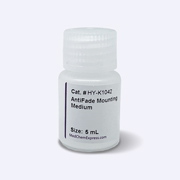
Cat. No.: HY-K1042

MCE AntiFade Mounting Medium can slow the fluorescence quenching of various common fluorescent dyes with simple operation and good anti-fluorescence quenching effect.

loading...
    loading...
17
17 Cited Publications
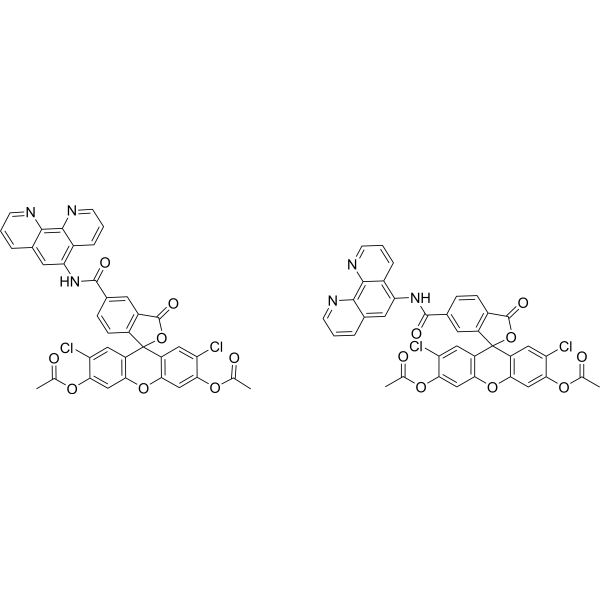
Cat. No.: HY-126823
CAS No.: 234075-45-7
Purity:  95.33%
Synonyms: PGSK diacetate (5/6-mixture)
Target:  

Fluorescent Dye

Research Areas:  

Others

Phen green SK (PGSK) diacetate (PGSK diacetate (5/6-mixture)) is a metal ion-sensitive fluorescent probe that can penetrate cell membranes. Phen green SK (PGSK) diacetate can react with a variety of metal ions, including Fe 2+, Cd 2+, Co 2+, Ni 2+, Zn 2+, etc. Phen green SK (PGSK) diacetate chelates Fe 2+, resulting in fluorescence quenching, which can be restored when a membrane-permeable chelator is added, thereby reflecting the changes in the intracellular chelatable iron pool. The excitation/emission maxima of Phen green SK diacetate are 507/532 nm, respectively .
loading...
    loading...
11
11 Cited Publications
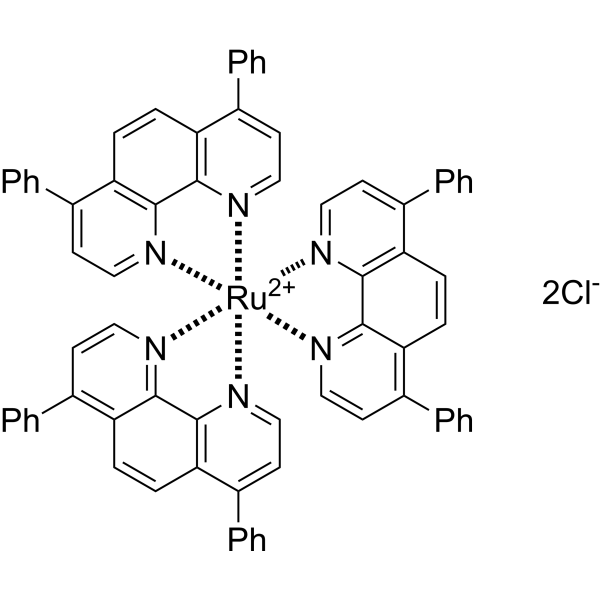
Cat. No.: HY-W074143
CAS No.: 36309-88-3
Synonyms: [Ru(DPP)3]Cl2
Tris(4,7-diphenyl-1,10-phenanthroline)ruthenium(II) dichloride ([Ru(dpp)3] 2+) is an electrochemiluminescent (ECL) probe and oxygen-sensitive sensor. Tris(4,7-diphenyl-1,10-phenanthroline)ruthenium(II) dichloride can be used to modify electrode surfaces for the detection of sulfates (S2O8 2-) and oxalates, based on electrochemical reactions that generate excited-state species, releasing photons through irreversible redox reactions. Tris(4,7-diphenyl-1,10-phenanthroline)ruthenium(II) dichloride utilizes the oxygen quenching of fluorescence mechanism, where fluorescence intensity reflects the metabolic rate of living microorganisms or oxygen levels within cells/tumors, allowing for real-time detection. Tris(4,7-diphenyl-1,10-phenanthroline)ruthenium(II) dichloride's main applications include microbial detection, antibacterial activity studies, and tumor microenvironment research .
loading...
    loading...
9
9 Cited Publications
Cat. No.: HY-K1048

AntiFade Reagent (with DAPI) is used to slow the fluorescence quenching. The 5 mL is defined as the base specification. All larger sizes correspond to incremental volumes of this base.

loading...
    loading...
8
8 Cited Publications
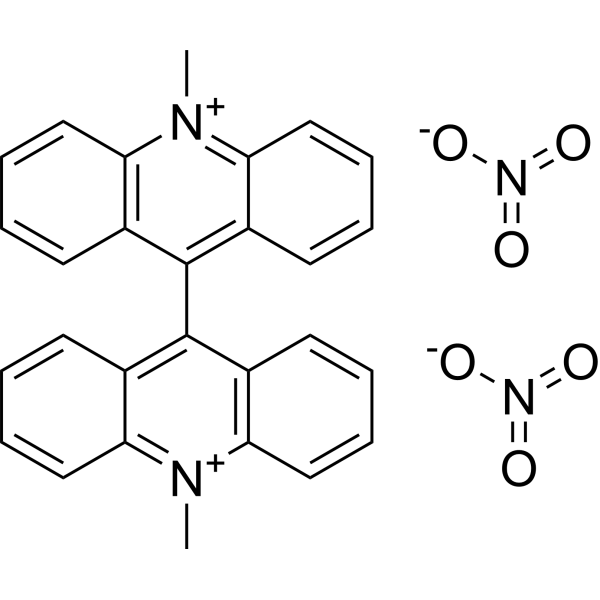
Cat. No.: HY-D0720
CAS No.: 2315-97-1
Synonyms: NSC-151912; L-6868
Lucigenin is a chemiluminescence probe. Lucigenin can be used to detect the production of endogenous superoxide anion radical (O 2-). Lucigenin is extremely sensitive to chloride ions, while it combined with chloride ions, the fluorescence will be quenched. Lucigenin also can be used as a chloride indicator. Ex/Em=455/505 nm .
loading...
    loading...
1
1 Cited Publications
Cat. No.: HY-15943
CAS No.: 91809-67-5
Synonyms: 6-Carboxytetramethylrhodamine
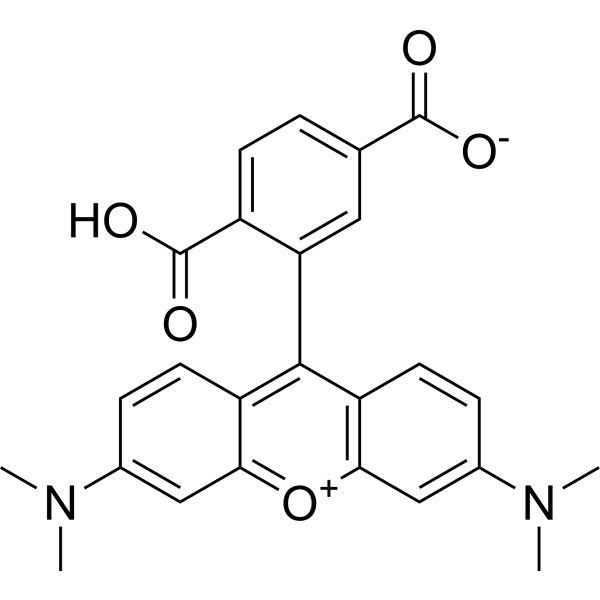
6-TAMRA (6-Carboxytetramethylrhodamine) is a fluorescent dye. 6-TAMRA is often used in combination with 6-FAM (HY-66021) as an acceptor or fluorescence quencher for fluorescence resonance energy transfer (FRET) in biochemical studies such as potassium ion detection and ribonuclease activity assays .
loading...
    loading...
1
1 Cited Publications
Cat. No.: HY-W127703
CAS No.: 65603-19-2
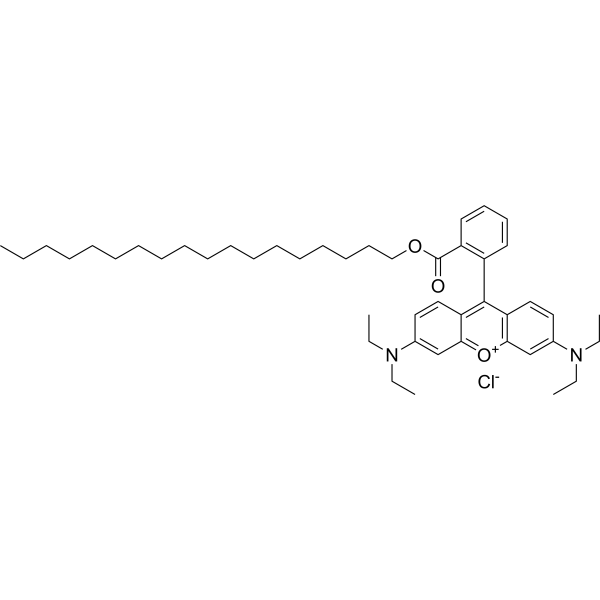
Octadecyl Rhodamine B chloride is an amphiphilic fluorescent probe with both membrane-binding ability and fluorescent properties, which easily forms aggregates in aqueous phase leading to self-quenching. Octadecyl Rhodamine B chloride can be used for cell membrane staining and further applied in membrane biology research. The maximum absorption/emission wavelengths of Octadecyl Rhodamine B chloride monomer in Triton X-100 are 565 nm/585 nm; the absorption peaks of aggregates in water are blue-shifted to 524 nm and 574 nm, with significantly quenched fluorescence .
loading...
    loading...
1
1 Cited Publications
Cat. No.: HY-W017604
CAS No.: 30418-59-8
Synonyms: m-Aminophenylboronic acid
Research Areas:  

Others

3-Aminophenylboronic acid (m-Aminophenylboronic acid) is a phenylboronic acid derivative. 3-Aminophenylboronic acid reacts covalently with cis-diol groups of glycoproteins, enabling selective capture and detection of glycoproteins through fluorescence quenching of APBA-functionalized copper nanoclusters .
loading...
    loading...
1
1 Cited Publications
Cat. No.: HY-W127716
CAS No.: 136724-73-7
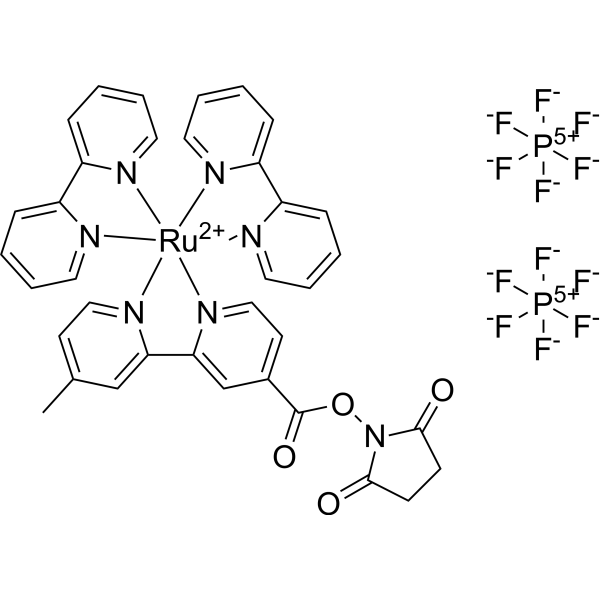
Ru(bpy)2(mcbpy-O-Su-ester)(PF6)2 is a potent ruthenium-based dye. Ru(bpy)2(mcbpy-O-Su-ester)(PF6)2 can bu used as an effective quencher of quantum dots (QDs) fluorescence and the capture probe of virus antigen EV71. Ru(bpy)2(mcbpy-O-Su-ester)(PF6)2 can be used sensitive electrogenerated chemiluminescence (ECL) labels for detection of matrix metalloproteinases (MMPs) .
loading...
    loading...
1
1 Cited Publications
Cat. No.: HY-W000897
CAS No.: 206658-89-1
Research Areas:  

Others

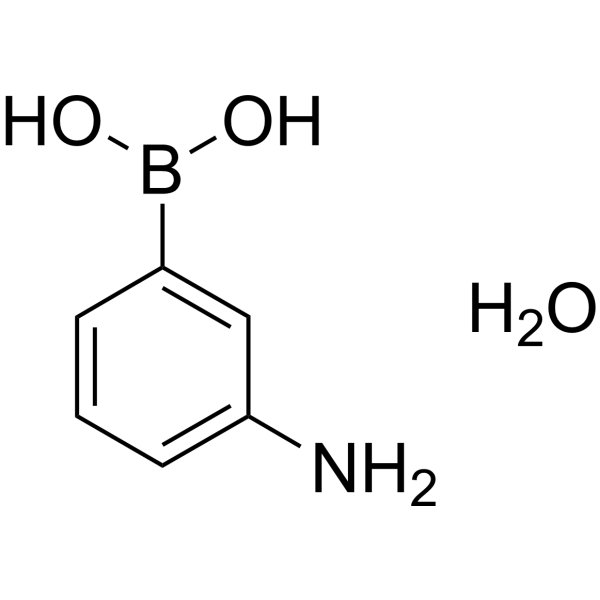
3-Aminophenylboronic acid monohydrate is a phenylboronic acid derivative. 3-Aminophenylboronic acid monohydrate reacts covalently with cis-diol groups of glycoproteins, enabling selective capture and detection of glycoproteins through fluorescence quenching of APBA-functionalized copper nanoclusters .
loading...
    loading...
1
1 Cited Publications
Cat. No.: HY-W007671
CAS No.: 1080-06-4
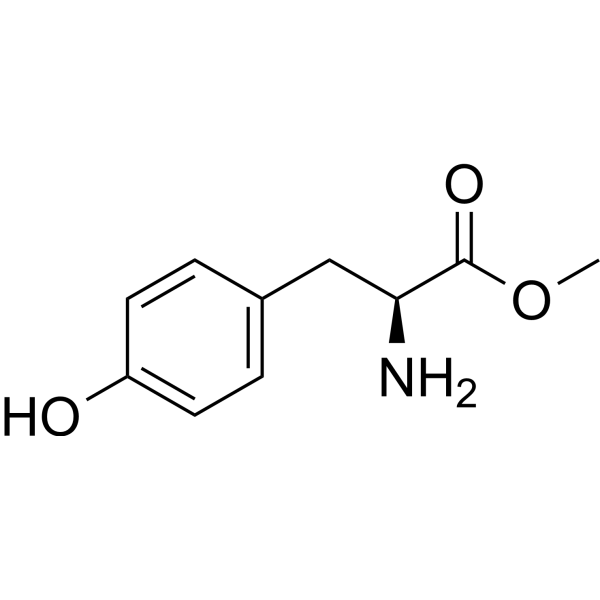
H-Tyr-OMe is an amino acid derivative and also a coordinating ligand for Cu II ions. H-Tyr-OMe can serve as a surface functionalization reagent for carbon dots, and is used to prepare fluorescent probes for biothiol sensing. H-Tyr-OMe is oxidized to quinone under the catalysis of Tyrosinase via its phenolic hydroxyl group, which quenches the fluorescence of carbon dots. H-Tyr-OMe contains potential coordination sites, including carboxyl, amino and phenolic hydroxyl groups .
loading...
    loading...
1
1 Cited Publications
Cat. No.: HY-W012228
CAS No.: 3417-91-2
Research Areas:  

Others

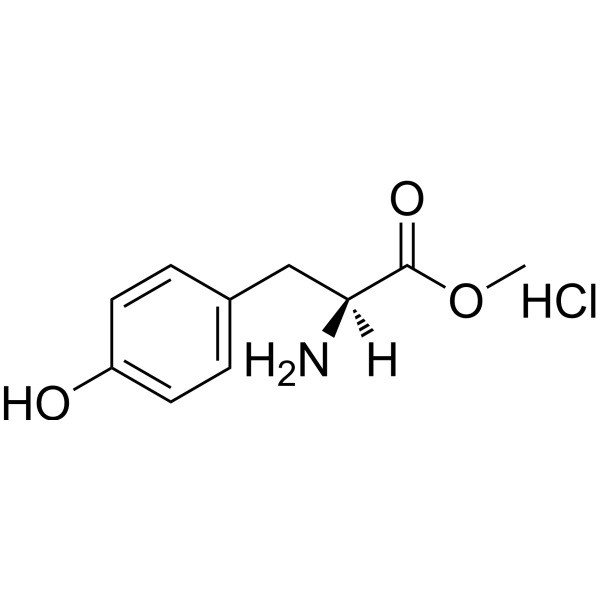
H-Tyr-OMe.HCl is an amino acid derivative and also a coordinating ligand for Cu II ions. H-Tyr-OMe.HCl can serve as a surface functionalization reagent for carbon dots, and is used to prepare fluorescent probes for biothiol sensing. H-Tyr-OMe.HCl is oxidized to quinone under the catalysis of Tyrosinase via its phenolic hydroxyl group, which quenches the fluorescence of carbon dots. H-Tyr-OMe.HCl contains potential coordination sites, including carboxyl, amino and phenolic hydroxyl groups .
loading...
    loading...
Cat. No.: HY-43520
CAS No.: 165599-63-3
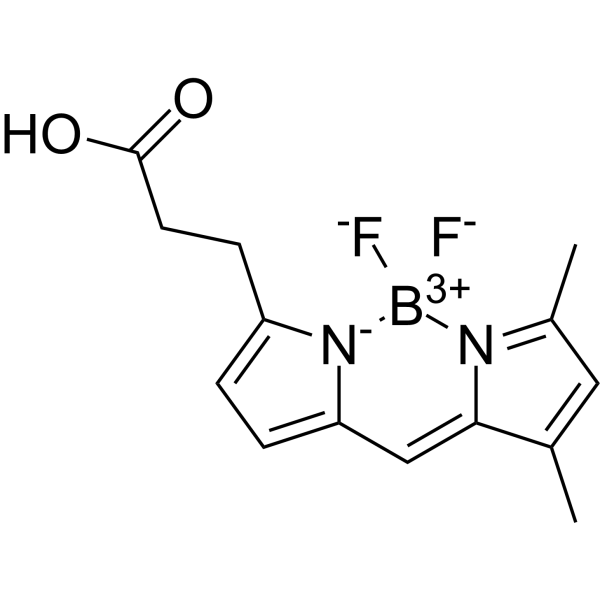
BODIPY-FL is a green fluorescent dye that can be used to label probes or primers. BODIPY-FL fluorescence can be quenched after interacting with uniquely positioned guanine, making it useful for quantifying specific DNA or RNA molecules. The maximum absorption wavelength of BODIPY-FL is 505 nm, and the maximum emission wavelength is 513 nm .
loading...
    loading...
Cat. No.: HY-W012642
CAS No.: 452-06-2
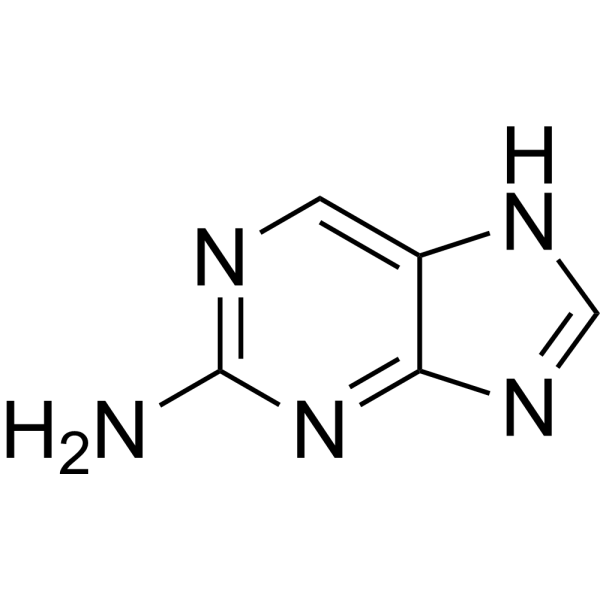
2-Aminopurine, a fluorescent analog of guanosine and adenosine, is a widely used fluorescence-decay-based probe of DNA structure. When 2-Aminopurine is inserted in anoligonucleotide, its fluorescence is highly quenched by stacking with the natural bases. 2-Aminopurine has been used to probe nucleic acid structure and dynamics .
loading...
    loading...
Cat. No.: HY-123630
CAS No.: 25956-17-6
Purity:  98.01%
Synonyms: FD&C RED NO. 40; CI 16035
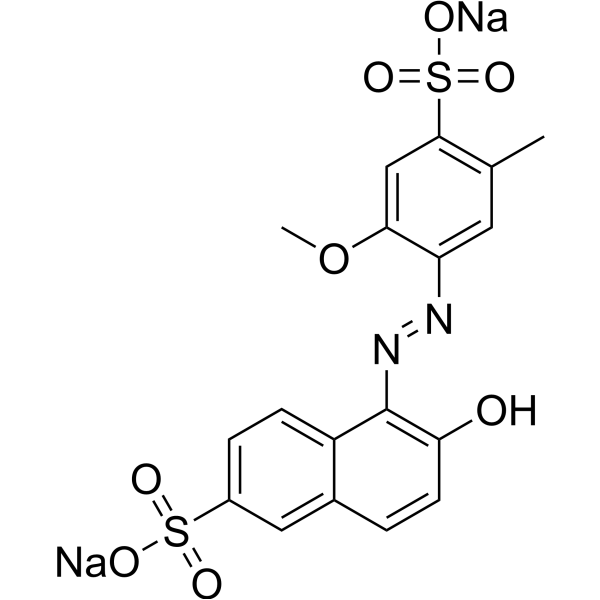
Allura Red AC is a food colorant, appearing as a deep red water-soluble powder or granules, used in various applications such as beverages, syrups, candies, and cereals. Allura Red AC can statically quench the intrinsic fluorescence of HSA. Additionally, Allura Red AC is a 5-hydroxytryptamine (5-HT) pathway-associated pro-inflammatory agent, capable of exacerbating experimental colitis. Allura Red AC holds potential for research in inflammatory bowel disease (IBD), intestinal barrier function, and food additive safety .
loading...
    loading...
Cat. No.: HY-162543
CAS No.: 384833-00-5
Synonyms: 18:1 Lissamine rhodamine PE
Target:  

Fluorescent Dye

Research Areas:  

Others

18:1 Liss Rhod (18:1 Lissamine rhodamine) PE is a fluorescent phospholipid and fluorescent probe.18:1 Liss Rhod PE admixes into phospholipid inks for large-scale monitoring of dip-pen nanolithography-generated lithographic structures via fluorescence microscopy.18:1 Liss Rhod PE undergoes phase separation or self-quenching under certain conditions in thin lipid membrane stacks .
loading...
    loading...
Cat. No.: HY-D2365
CAS No.: 304014-13-9
QSY 21 NHS is a dark quencher and an efficient energy transfer acceptor for far-red and near-infrared fluorescent probes. QSY 21 NHS operates at a wavelength range of 540-750 nm and is commonly used in FRET applications. QSY 21 NHS does not fluoresce under normal conditions. The NHS ester can be used to label primary amines (R-NH2) of proteins, amine-modified oligonucleotides and other amine-containing molecules. QSY 21 NHS can be conjugated with dendritic poly-L-lysine to achieve intramolecular quenching of Cy5 fluorescence .
loading...
    loading...
Cat. No.: HY-D1030
CAS No.: 134759-22-1
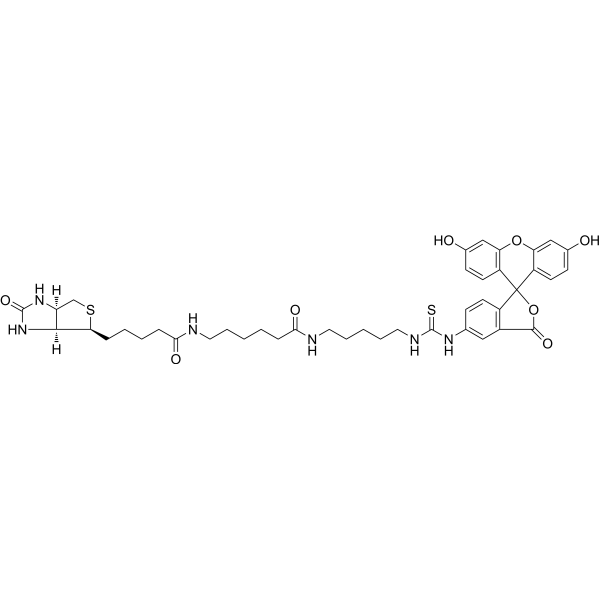
Fluorescein Biotin is a fluorescent modulator with avidin and streptavidin binding activity. Fluorescein Biotin binds to the biotin-binding sites of avidin and streptavidin, and this binding induces significant fluorescence quenching .
loading...
    loading...
Cat. No.: HY-W923198
CAS No.: 480439-15-4
Synonyms: Methacryloyloxy fluorescein
Fluorescein O-methacrylate (Methacryloyloxy fluorescein) is a pH-responsive fluorescent monomeric dye. Fluorescein O-methacrylate exhibits pH-responsive fluorescence properties: its fluorescence is activated under alkaline conditions and quenched under neutral or acidic conditions; reversible switching of fluorescence is achievable by adjusting the pH of the solution. Fluorescein O-methacrylate can be used as a monomer for the synthesis of amphiphilic fluorescein polymers. These polymers can self-assemble into stable polymer nanoparticles with enhanced aqueous-phase fluorescence, and also enable the conjugation of nanoparticles with amine-containing biomolecules to support sensitive optical detection of biomarkers (Ex/Em = 490/520 nm) .
loading...
    loading...
Cat. No.: HY-W013195
CAS No.: 2946-39-6
Research Areas:  

Cancer

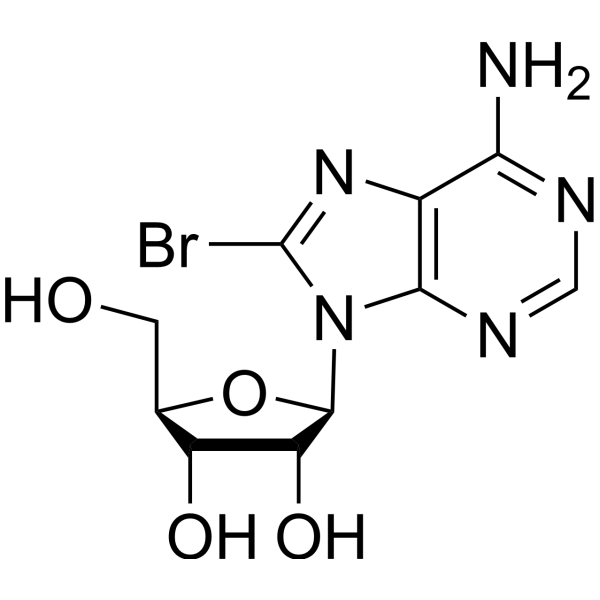
8-Bromoadenosine is an adenosine analog. Adenosine analogs mostly act as smooth muscle vasodilators and have also been shown to inhibit cancer progression. 8-Bromoadenosine can quench the intrinsic fluorescence of human serum albumin (HSA) through static quenching procedure. 8-Bromoadenosine can be used to synthesize adenosine phosphate, such as Acadesine (HY-13417), Clofarabine (HY-A0005), Fludarabine phosphate (HY-B0028) and Vidarabine (HY-B0277) .
loading...
    loading...

