18 Results for "

golden hamsters

" in MedChemExpress (MCE) Product Catalog:
Products (18)

18 Results for "golden hamsters" in MCE Product Catalog:

2
2 Cited Publications
Cat. No.: HY-B2232A
CAS No.: 8001-54-5
Synonyms: Alkyldimethylbenzylammonium chloride (solid)
Research Areas:  

Infection

Benzalkonium chloride (solid) (Alkyldimethylbenzylammonium chloride (solid)) is a quaternary ammonium preservative, cationic surfactant, and antimicrobial (Antimicrobial) agent. Benzalkonium chloride (solid) is toxic .
loading...
    loading...
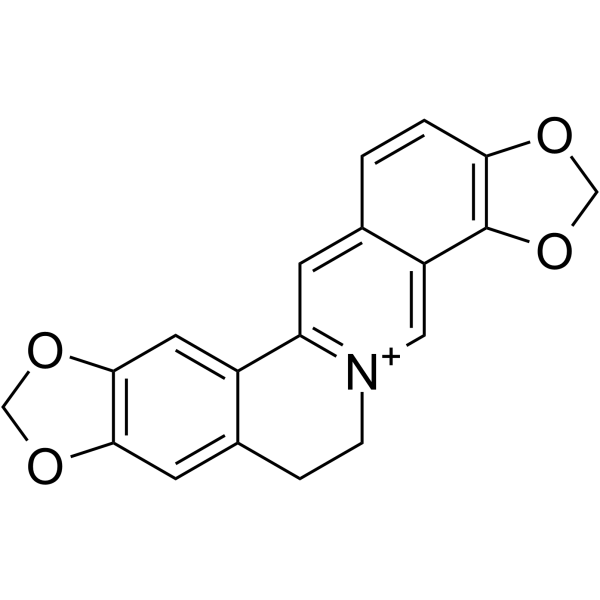
Cat. No.: HY-N0430
CAS No.: 3486-66-6
Synonyms: Coptisin
Coptisine is an orally active and brain-penetrant alkaloid found in Coptis chinensis. Coptisine is a reversible, uncompetitive IDO inhibitor with a Ki of 5.8 μM and an IC50 of 6.3 μM. Coptisine suppresses neuroinflammation, reduces Aβ plaque burden and shows neuroprotective activity. Coptisine shows anti-inflammation activity by blocking NF-κB, MAPK, and PI3K/Akt activation. Coptisine inhibits cancer cells proliferation, induces DNA damage, G2/M phase cell cycle arrest, apoptosis, ROS production and mitochondrial dysfunction. Coptisine inhibits Rho/ROCK pathway activation, reduces arrhythmia, limits cardiac injury marker release, reduces infarct size, and preserves cardiac function in rat myocardial ischemia/reperfusion models. Coptisine downregulates HMGCR and upregulates LDLR and CYP7A1 to modulate cholesterol metabolism, reduces abnormal serum lipid levels, and promotes fecal bile acid excretion. Coptisine can be used for the research of cancer, hypercholesterolemia, Alzheimer’s disease, inflammatory disorders and cardiovascular disease .
loading...
    loading...
Cat. No.: HY-162562
CAS No.: 930017-01-9
Target:  

PCSK9

E28362 is an orally active lipid-lowering agent and a selective PCSK9 antagonist. E28362 blocks the interaction between PCSK9 and LDLR, and induces PCSK9 degradation via the ubiquitin-proteasome pathway. E28362 significantly increases the levels of cell surface and total LDLR proteins, enhances low-density lipoprotein uptake, thereby effectively reducing plasma lipids, hepatic cholesterol and triglyceride levels. E28362 shows no obvious cytotoxicity at high concentrations, and significantly attenuates atherosclerotic lesions in animal models. E28362 is an important molecule in research of hyperlipidemia and atherosclerosis .
loading...
    loading...
Cat. No.: HY-173521
CAS No.: 3026520-19-1
Research Areas:  

Infection

JNJ-9676 is an orally active Coronavirus M protein inhibitor and selective Sarbecovirus inhibitor. JNJ-9676 binds to the M protein dimer and forces the protein into an alternative conformational state with a compound-induced binding pocket. JNJ-9676 demonstrates in vitro nanomolar antiviral activity against SARS-CoV-2, SARS-CoV and Sarbecovirus strains from bat and pangolin zoonotic origin .
loading...
    loading...
Cat. No.: HY-N11722
CAS No.: 89837-52-5
Panduratin A is an orally active natural compound with multiple pharmacological activities. By specifically inhibiting the NF-κB signaling pathway, Panduratin A exerts potent anti-inflammatory and antioxidant effects in intestinal and vascular inflammation models. Panduratin A exerts a definite protective effect against Colistin (HY-113678)-induced nephrotoxicity by alleviating oxidative stress, improving mitochondrial dysfunction and inhibiting cell apoptosis. Panduratin A activates autophagy via an AMPK-dependent pathway and exhibits anti-tuberculosis activity. Panduratin A exerts antiviral effects by inhibiting the methyltransferase (DNA Methyltransferase) of SARS-CoV-2 .
loading...
    loading...
Cat. No.: HY-124064
CAS No.: 128831-46-9
Target:  

Acyltransferase

Research Areas:  

Metabolic Disease

TMP-153 is an orally active inhibitor of ACAT with an IC50 value of approximately 5-10 nM against hepatic and intestinal ACAT in varicose animals. TMP-153 exhibits cholesterol-lowering effects and can be utilized in the research of atherosclerosis .
loading...
    loading...
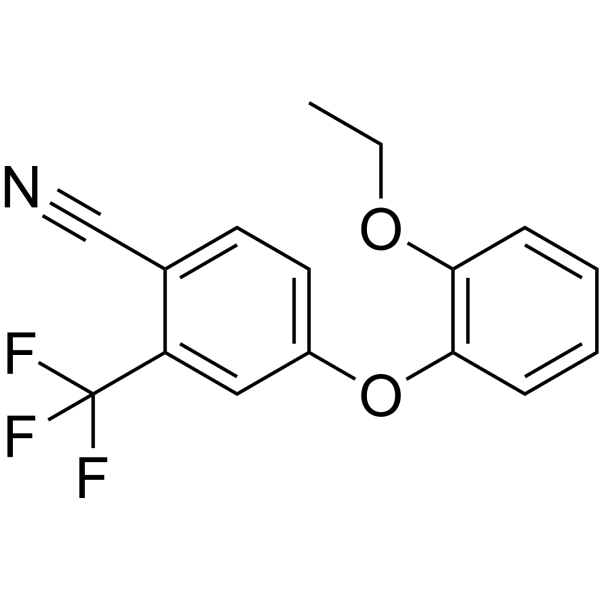
Cat. No.: HY-160659
CAS No.: 876759-87-4
Target:  

Androgen Receptor

Research Areas:  

Endocrinology

Androgen receptor antagonist 10 (compound 6h) is a androgen receptor antagonist. Androgen receptor antagonist 10 reduces the wax esters in the golden syrian hamster model .
loading...
    loading...
Cat. No.: HY-175344
TMP1 is an orally active bispecific inhibitor of M pro (IC50 = 312.5 nM)/TMPRSS2 (IC50 = 1.28 μM, KD = 10.10 μM). TMP1 exhibits broad protection against different SARS-CoV-2 variants in vitro. TMP1 cross-protects against highly pathogenic coronaviruses (SARS-CoV-1, SARS-CoV-2, and MERS-CoV) in vivo and effectively blocks the transmission of SARS-CoV-2. TMP1 can inhibit infection by SARS-CoV-2 escape mutants that are resistant to Nivolumab (HY-P9903). TMP1 can be used in coronavirus research .
loading...
    loading...
Cat. No.: HY-168924
Target:  

Wnt β-catenin

Research Areas:  

Metabolic Disease

Wnt/β-catenin activator 1 (Compound 5m) is the orally active activator for Wnt/β-catenin signaling pathway, that arrests cell cycle at G1 phase, inhibits early proliferation of adipocytes, and inhibits adipogenesis in cell 3T3-L1 with an IC50 of 330 nM. Wnt/β-catenin activator 1 exhibits anti-adipogenic and anti-dyslipidemic activities in high-fat diet fed Syrian golden hamster model .
loading...
    loading...
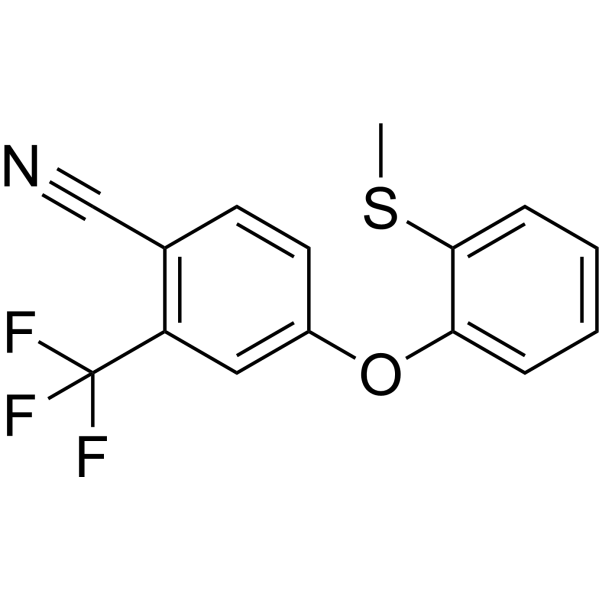
Cat. No.: HY-160680
CAS No.: 876760-08-6
Target:  

Androgen Receptor

Research Areas:  

Endocrinology

AR antagonist 6 (compound 6i) is a diphenyl ether androgen receptor (AR) antagonist that binds AR at a concentration of 120 nM. AR antagonist 6 exhibits low toxicity and in vitro activity against the golden Syrian hamster ear model .
loading...
    loading...
Cat. No.: HY-178445
CAS No.: 3097471-25-2
Target:  

PI3K SARS-CoV

Research Areas:  

Infection

PI3Kδ-IN-27 is an PI3Kδ inhibitor with an IC50 of 355.3 nM. PI3Kδ-IN-27 exhibits anti-SARS-CoV-2 activity. PI3Kδ-IN-27 can be used for the research of infection, such as COVID-19 .
loading...
    loading...
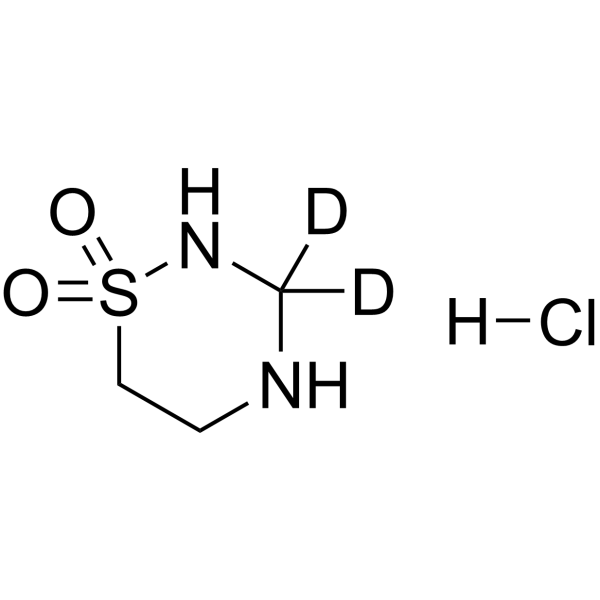
Cat. No.: HY-136820S1
Taurultam-d2 hydrochloride is the d2-labeled Taurultam (HY-136820) hydrochloride. Taurultam is the major active hydrolytic metabolite of Taurolidine (HY-W011522), which selectively activates hTRPA1 to trigger effects in sensory neurons. Taurultam exhibits activity against SARS-CoV-2 variants, influenza A viruses (H1N1, H3N2) and influenza B viruses. Taurultam induces mild tracheal sensory nerve stimulation and CGRP release in mice. Taurultam can be used in studies related to SARS-CoV-2 infection, influenza virus infection, and co-infection with SARS-CoV-2 and influenza A virus.
loading...
    loading...
Cat. No.: HY-106414A
CAS No.: 64291-45-8
Synonyms: NSC 292652 hydrochloride; RP 33921 hydrochloride
Detorubicin hydrochloride (NSC 292652 hydrochloride) is a semi-synthetic analog of Daunorubicin (HY-13062A) and a prodrug of Doxorubicin (HY-15142A). Detorubicin hydrochloride hydrolyzes to release Doxorubicin under neutral pH conditions. Detorubicin hydrochloride forms complexes with DNA. Detorubicin hydrochloride exhibits anti-hematologic tumor and metastatic melanoma activities. Detorubicin hydrochloride causes myocardial injury, skin damage, alopecia, and high mortality in golden hamsters. Detorubicin hydrochloride can be used in research related to leukemia, and metastatic melanoma .
loading...
    loading...
Cat. No.: HY-W209580
CAS No.: 60599-38-4
Target:  

Drug Derivative

Research Areas:  

Cancer

N-Nitrosobis (2-oxopropyl) amine is a nitrosamine compound that has been the subject of significant research interest in the field of chemical carcinogenesis. N-nitrosobis (2-oxopropyl) amine (BOP) -treated Syrian golden hamsters are a chemical carcinogenesis model that represents human pancreatic cancer.
loading...
    loading...
Cat. No.: HY-184214
Antileishmanial agent-44 is a histone deacetylase inhibitor targeting Leishmania donovani Sir2, with an IC50 of 0.652 μM against amastigotes. Antileishmanial agent-44 elevates ROS levels to induce oxidative stress, which causes mitochondrial membrane potential depolarization, cytochrome c release, phosphatidylserine externalization and DNA fragmentation, triggers apoptosis-like cell death, and arrests the cell cycle. Antileishmanial agent-44 upregulates the expression of Th1-type cytokines and NO in macrophages, reshapes host immune responses to eliminate intracellular parasites. Antileishmanial agent-44 inhibits parasites in infected golden hamsters in vivo. Antileishmanial agent-44 can be used for the research of visceral leishmaniasis.
loading...
    loading...
Cat. No.: HY-181520
CAS No.: 2681270-30-2
ABCA1 inducer 3 (Compound 85) is an orally active ABCA1 inducer and lipid-modulating agent. ABCA1 inducer 3 increases ABCA1 expression. ABCA1 inducer 3 upregulates hepatic Abcg5 and Abcg8 mRNA expression. ABCA1 inducer 3 promotes cholesterol efflux. ABCA1 inducer 3 improves hyperlipidemia .
loading...
    loading...
Cat. No.: HY-183185
CAS No.: 3028405-31-1
Target:  

SARS-CoV

Research Areas:  

Infection

BZ-30 is an orally active broad-spectrum SARS-CoV-2 inhibitor. BZ-30 acts on the early stage of the viral life cycle, can partially inhibit the endosomal entry process and reduce viral replication levels. BZ-30 reduces viral load, improves pulmonary pathological conditions, and decreases the lung-to-body weight ratio in hamster models challenged with SARS-CoV-2. BZ-30 can be used for research related to COVID-19 .
loading...
    loading...
Cat. No.: HY-136820
CAS No.: 38668-01-8
Taurultam is the major active hydrolytic metabolite of Taurolidine (HY-W011522), which selectively activates hTRPA1 to trigger effects in sensory neurons. Taurultam exhibits activity against SARS-CoV-2 variants, influenza A viruses (H1N1, H3N2) and influenza B viruses. Taurultam induces mild tracheal sensory nerve stimulation and CGRP release in mice. Taurultam can be used in studies related to SARS-CoV-2 infection, influenza virus infection, and co-infection with SARS-CoV-2 and influenza A virus.
loading...
    loading...
  • 1

